v2.webp)
The Main Opera Hall
Forget the Instagram shots of the glass dome reflected in the pool. The real showstopper is inside: the Main Opera Hall. This is where Beijing’s cultural muscle flexes hardest. The acoustics are engineered for goosebumps, not just applause. You’ll see world-class opera, ballet, and symphony—often with a Chinese twist that’s impossible to replicate elsewhere. The seats are plush, the sightlines are flawless, and the crowd is a mix of tuxedoed regulars and wide-eyed first-timers. If you want to understand how seriously China takes its performing arts, this is the room where it happens.
The Underwater Corridor
Here’s the part nobody tells you about: to get from the entrance to the main halls, you walk through a corridor that’s literally beneath the reflecting pool. It’s not … read more 👉
Forget the Instagram shots of the glass dome reflected in the pool. The real showstopper is inside: the Main Opera Hall. This is where Beijing’s cultural muscle flexes hardest. The acoustics are engineered for goosebumps, not just applause. You’ll see world-class opera, ballet, and symphony—often with a Chinese twist that’s impossible to replicate elsewhere. The seats are plush, the sightlines are flawless, and the crowd is a mix of tuxedoed regulars and wide-eyed first-timers. If you want to understand how seriously China takes its performing arts, this is the room where it happens.
The Underwater Corridor
Here’s the part nobody tells you about: to get from the entrance to the main halls, you walk through a corridor that’s literally beneath the reflecting pool. It’s not … read more 👉
The Main Opera Hall
Forget the Instagram shots of the glass dome reflected in the pool. The real showstopper is inside: the Main Opera Hall. This is where Beijing’s cultural muscle flexes hardest. The acoustics are engineered for goosebumps, not just applause. You’ll see world-class opera, ballet, and symphony—often with a Chinese twist that’s impossible to replicate elsewhere. The seats are plush, the sightlines are flawless, and the crowd is a mix of tuxedoed regulars and wide-eyed first-timers. If you want to understand how seriously China takes its performing arts, this is the room where it happens.
The Underwater Corridor
Here’s the part nobody tells you about: to get from the entrance to the main halls, you walk through a corridor that’s literally beneath the reflecting pool. It’s not a gimmick—it’s a palate cleanser for your senses. The light shifts, the city noise fades, and you get a moment of quiet anticipation before the curtain rises. It’s a rare architectural trick that actually delivers on its promise: you feel like you’re entering another world.
The Egg at Night
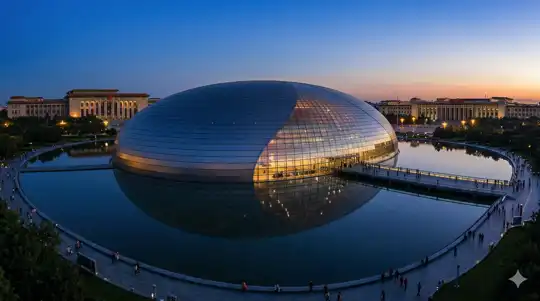
Yes, the building is nicknamed “The Giant Egg,” and yes, it’s been photographed to death. But at night, when the titanium shell glows and the glass oculus lights up, it’s not just a photo op—it’s a spectacle. Locals come out to stroll the perimeter, couples pose for wedding shots, and the whole plaza hums with a kind of low-key excitement. It’s the rare tourist hotspot where the after-dark vibe is just as compelling as the daytime crowds.
Chinese Traditional Performances
You might come for the international headliners, but the real magic is catching a Chinese opera or a folk music concert. The costumes are riotous, the stories are wild, and the audience is deeply invested. You’ll hear instruments you can’t pronounce and see stagecraft that’s been honed over centuries. This isn’t a token gesture for tourists—it’s a living, breathing art form, and the NCPA treats it with the reverence it deserves.
The Public Rehearsals and Open Days
If you’re lucky enough to be in town during an open rehearsal or a public backstage tour, drop everything and go. This is the antidote to the velvet-rope exclusivity of most major venues. You’ll see dancers stretching, musicians tuning, and stagehands working their magic. It’s raw, unscripted, and—honestly—more thrilling than some of the polished performances. This one’s my personal favorite. It’s the closest you’ll get to the heartbeat of the place.
The Rooftop Views
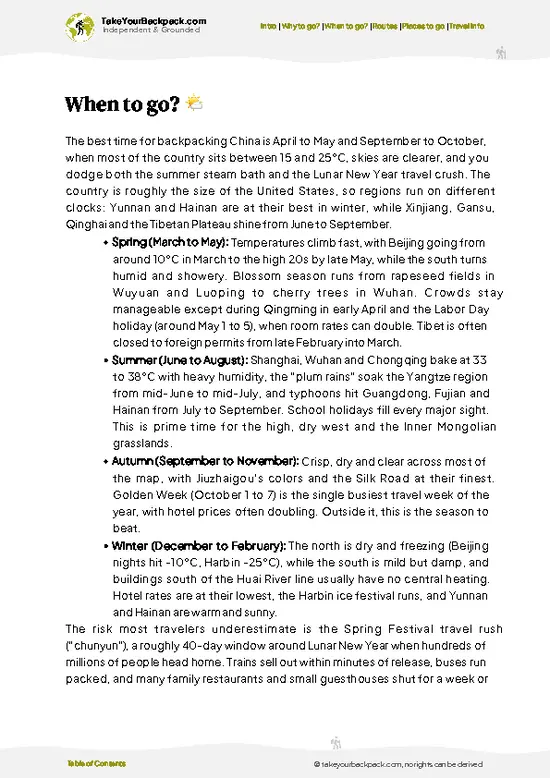
Most people never make it up here, but the rooftop offers a rare, panoramic look at Tiananmen Square and the old city. It’s a sharp contrast: the futuristic dome against the imperial sprawl. If you want a sense of Beijing’s scale and ambition, this is the spot. No filter needed.
Forget the Instagram shots of the glass dome reflected in the pool. The real showstopper is inside: the Main Opera Hall. This is where Beijing’s cultural muscle flexes hardest. The acoustics are engineered for goosebumps, not just applause. You’ll see world-class opera, ballet, and symphony—often with a Chinese twist that’s impossible to replicate elsewhere. The seats are plush, the sightlines are flawless, and the crowd is a mix of tuxedoed regulars and wide-eyed first-timers. If you want to understand how seriously China takes its performing arts, this is the room where it happens.
The Underwater Corridor
Here’s the part nobody tells you about: to get from the entrance to the main halls, you walk through a corridor that’s literally beneath the reflecting pool. It’s not a gimmick—it’s a palate cleanser for your senses. The light shifts, the city noise fades, and you get a moment of quiet anticipation before the curtain rises. It’s a rare architectural trick that actually delivers on its promise: you feel like you’re entering another world.
The Egg at Night
Yes, the building is nicknamed “The Giant Egg,” and yes, it’s been photographed to death. But at night, when the titanium shell glows and the glass oculus lights up, it’s not just a photo op—it’s a spectacle. Locals come out to stroll the perimeter, couples pose for wedding shots, and the whole plaza hums with a kind of low-key excitement. It’s the rare tourist hotspot where the after-dark vibe is just as compelling as the daytime crowds.
Chinese Traditional Performances
You might come for the international headliners, but the real magic is catching a Chinese opera or a folk music concert. The costumes are riotous, the stories are wild, and the audience is deeply invested. You’ll hear instruments you can’t pronounce and see stagecraft that’s been honed over centuries. This isn’t a token gesture for tourists—it’s a living, breathing art form, and the NCPA treats it with the reverence it deserves.
The Public Rehearsals and Open Days
If you’re lucky enough to be in town during an open rehearsal or a public backstage tour, drop everything and go. This is the antidote to the velvet-rope exclusivity of most major venues. You’ll see dancers stretching, musicians tuning, and stagehands working their magic. It’s raw, unscripted, and—honestly—more thrilling than some of the polished performances. This one’s my personal favorite. It’s the closest you’ll get to the heartbeat of the place.
The Rooftop Views
Most people never make it up here, but the rooftop offers a rare, panoramic look at Tiananmen Square and the old city. It’s a sharp contrast: the futuristic dome against the imperial sprawl. If you want a sense of Beijing’s scale and ambition, this is the spot. No filter needed.
Spotted a mistake or missing something? Contact us.

All-inclusive Day Tours: Tiananmen Sq, Forbidden City, Great Wall

Half Day Walking Tour to Tiananmen Square and Forbidden City

Private Forbidden City and Mutianyu Great Wall Day Tour

Private Beijing 3-Day Tour

Tiananmen Square ,Forbidden City ,Summer Palace Private Tour
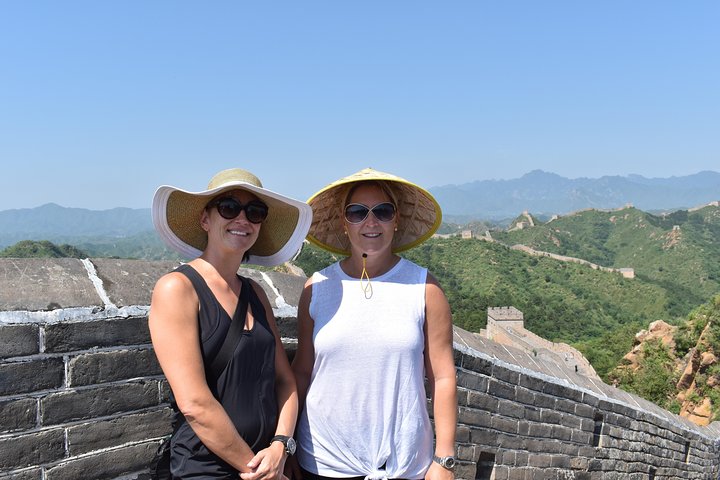
Beijing 3 Days Private Essence Tour Include Airport Pick up and Drop off

Private Layover Tour to Forbidden City and Mutianyu Great Wall

Private Tour :Temple Of Heaven-Tiananmen Square -Forbidden City

Capital Airport Layover Private Tour to Forbidden City & Tiananmen Square

 Best Backpacking
.jpg) Hi, I’m Johan (Netherlands 🇳🇱), the creator of TakeYourBackpack. Over the past 3 decades, I’ve backpacked through 90+ countries across six continents, gaining extensive experience with independent travel, long-term trips, and overland routes.
Hi, I’m Johan (Netherlands 🇳🇱), the creator of TakeYourBackpack. Over the past 3 decades, I’ve backpacked through 90+ countries across six continents, gaining extensive experience with independent travel, long-term trips, and overland routes.