
×
National Museum of China

China🇨🇳 | attractionsNational Museum of Chinaimperial relics, socialist art, chronological galleries | things to do and best time to go

Explore Dali ancient townExplore Shanghai Museum

Backpacking in National Museum of China
👍 Recommendedattraction ranked #11
By Johan Kruseman 🇳🇱 | Updated September 4, 2026

A guard’s shoes squeak on polished marble as you shuffle past a 2,000-year-old jade burial suit, the glass case fogged slightly from the breath of a dozen tourists pressed in for a photo. The air smells faintly of disinfectant and old paper. You’re in the National Museum of China, planted right on the eastern edge of Tiananmen Square—about as central as it gets in Beijing, and, honestly, in all of China.

Let’s cut through the hype: this is not some quiet temple of reflection. It’s a behemoth, both in size and in crowds. You’ll jostle with school groups, selfie sticks, and the occasional grandmother who absolutely will elbow you aside for a better look at the Han Dynasty bronzes. Entry is free, which means everyone comes—locals, tourists, history buffs, and the “just-want-to-cool-off” crowd. But here’s the real magic: nowhere else in China can you trace the arc from ancient oracle bones to Mao-era propaganda posters in a single afternoon. It’s overwhelming, sometimes exhausting, but if you want to understand the soul of China—its contradictions, its pride, its relentless reinvention—this is the place. Just don’t expect serenity. Expect scale, spectacle, and a crash course in what makes China tick.

Discover everything you want to know in the 📖 China Travel Guide.


Get your China guide
130 ranked highlights, routes & tips, works offline (463 pages)
Loading the map 🌍
CLICK TO FILTER
cities
towns
landmarks
national parks
hikes
beaches
attractions
festivals
regions
SHOW COUNTRY’S BESTSHOW ALL

✨ Why go?
Ranked #11 attraction in China
The unique appeal for travelers

The National Museum of China isn’t just another stop on the Beijing checklist—it’s a heavyweight in the story of China’s identity. Sure, it’s massive and yes, it draws crowds that can feel like a tidal wave, especially on weekends or holidays. But here’s the kicker: this place is a vault of China’s soul, packed with artifacts that span millennia, from ancient jade carvings to revolutionary propaganda art. It’s not about ticking a box; it’s about standing in a space where history isn’t just told, it’s felt. Backpackers who make the trek here get more than a museum visit—they get a crash course in the forces that shaped one of the world’s oldest continuous civilizations. The effort to navigate the crowds and the sheer scale pays off because it’s a milestone on any China route, a place where … read more 👉
The National Museum of China isn’t just another stop on the Beijing checklist—it’s a heavyweight in the story of China’s identity. Sure, it’s massive and yes, it draws crowds that can feel like a tidal wave, especially on weekends or holidays. But here’s the kicker: this place is a vault of China’s soul, packed with artifacts that span millennia, from ancient jade carvings to revolutionary propaganda art. It’s not about ticking a box; it’s about standing in a space where history isn’t just told, it’s felt. Backpackers who make the trek here get more than a museum visit—they get a crash course in the forces that shaped one of the world’s oldest continuous civilizations. The effort to navigate the crowds and the sheer scale pays off because it’s a milestone on any China route, a place where you can see the layers of time stacked up in one spot. It’s a reality check against the glossy Instagram shots of China’s modern skyline, grounding you in the grit and grandeur of its past. If you want to understand China beyond the surface, this museum is non-negotiable.
Want to include National Museum of China in your China route?
Create a personalized China itinerary that includes National Museum of China and the places that fit your trip — based on your travel style, budget, and available time. Get your route in seconds.

Generate my trip

💡 HighlightsKey sights and experiences for travelers

The Ancient China Hall
If you want to see the real backbone of Chinese civilization—bronze vessels that predate the Roman Empire, jade burial suits, and pottery that survived dynasties and revolutions—this is where you go. Forget the Instagrammers crowding around the Terracotta Warriors replica; the Ancient China Hall is the museum’s soul. It’s a crash course in 5,000 years of invention, ambition, and sometimes, outright weirdness (hello, Han Dynasty toilet seat). The sheer scale and quality of artifacts here make most Western museums look like thrift shops.

The Road to Rejuvenation
This is not your average dusty history timeline. The Road to Rejuvenation is a sprawling, state-sponsored epic about China’s modern rise, told through propaganda posters, Mao-era relics, and multimedia displays … read more 👉
The Ancient China Hall
If you want to see the real backbone of Chinese civilization—bronze vessels that predate the Roman Empire, jade burial suits, and pottery that survived dynasties and revolutions—this is where you go. Forget the Instagrammers crowding around the Terracotta Warriors replica; the Ancient China Hall is the museum’s soul. It’s a crash course in 5,000 years of invention, ambition, and sometimes, outright weirdness (hello, Han Dynasty toilet seat). The sheer scale and quality of artifacts here make most Western museums look like thrift shops.

The Road to Rejuvenation
This is not your average dusty history timeline. The Road to Rejuvenation is a sprawling, state-sponsored epic about China’s modern rise, told through propaganda posters, Mao-era relics, and multimedia displays that are as slick as they are ideological. It’s part history lesson, part national pep rally. You’ll see the real machinery of myth-making—sometimes subtle, sometimes not. Whether you agree with the narrative or not, it’s a masterclass in how a country tells its own story. Expect crowds, especially around the Mao memorabilia.

The Ancient Buddhist Sculpture Gallery
If you need a break from the crowds and want to feel the weight of centuries, duck into this gallery. The stone Buddhas, serene and battered, are survivors of dynasties, iconoclasm, and time itself. Some are massive, others fit in your palm, but all radiate a quiet power that’s impossible to fake. The lighting is moody, the air is cool, and for a moment, you’ll forget you’re in the middle of Beijing’s political heart.

The Jade Collection
Jade isn’t just a pretty stone in China—it’s a symbol of status, spirituality, and sometimes, obsession. The museum’s collection is a parade of ancient burial suits, ceremonial blades, and intricate carvings that would make a Swiss watchmaker sweat. The craftsmanship is so precise it borders on supernatural. If you’ve ever wondered why emperors hoarded jade like dragons, this is your answer.

The Bronze Gallery (Personal Favorite)
This is where the museum flexes. The bronzes here—ritual vessels, weapons, and bells—are not just old; they’re audacious. Some are covered in cryptic animal masks, others are inscribed with the earliest Chinese writing. The detail is wild, the patina is real, and the sense of age is humbling. I’ve seen bronze collections from Berlin to Boston, but nothing matches the scale and swagger here. Stand in front of the massive ding cauldrons and try not to feel small.

The National Treasures Rotating Exhibit
If you’re lucky, you’ll catch one of the rotating displays of China’s “national treasures”—think oracle bones, imperial seals, or paintings that rarely see the light of day. These are the museum’s crown jewels, and when they’re out, locals line up for hours. Don’t expect peace and quiet, but do expect to see something you’ll never find in a guidebook.
Spotted a mistake or missing something? Contact us.

Things to do around National Museum of China

Ratings based on Tripadvisor reviews. When you book through this link, you support our work at no extra cost to you.

🌤️ When to go?Best time to visit National Museum of China


  • Topic: Weather and Temperature – Beijing’s climate swings hard. Winters (December to February) are bitterly cold, often below -5°C (23°F), which can freeze your enthusiasm. Summers (June to August) roast you with highs around 30-35°C (86-95°F), plus humidity that feels like a sauna. Spring (March to May) and autumn (September to November) offer the sweet spot with mild temps between 15-25°C (59-77°F), perfect for wandering without melting or shivering.

  • Topic: Daylight Hours – Daylight stretches from about 9 hours in winter to 15 in summer. Spring and autumn give you a balanced 11-13 hours, enough time to soak in the museum without rushing or battling early darkness.

  • Topic: Crowds – The museum is a magnet for tourists and locals alike, especially during Chinese public holidays like Golden
read more 👉

  • Topic: Weather and Temperature – Beijing’s climate swings hard. Winters (December to February) are bitterly cold, often below -5°C (23°F), which can freeze your enthusiasm. Summers (June to August) roast you with highs around 30-35°C (86-95°F), plus humidity that feels like a sauna. Spring (March to May) and autumn (September to November) offer the sweet spot with mild temps between 15-25°C (59-77°F), perfect for wandering without melting or shivering.

  • Topic: Daylight Hours – Daylight stretches from about 9 hours in winter to 15 in summer. Spring and autumn give you a balanced 11-13 hours, enough time to soak in the museum without rushing or battling early darkness.

  • Topic: Crowds – The museum is a magnet for tourists and locals alike, especially during Chinese public holidays like Golden Week (early October) and National Day (October 1). Avoid these or brace for shoulder-to-shoulder crowds. Weekdays outside these peak times are your best bet.

  • Topic: Seasonal Activities – The museum hosts special exhibitions mostly in spring and autumn, aligning with cultural festivals. These can add a layer of depth but also draw bigger crowds.

  • Topic: Price Fluctuations – Entry fees are generally stable, but expect higher prices for special exhibitions. Booking tickets online in advance during peak seasons can save you time and sometimes a small premium.


Pro-tip: Aim for late April or early October on a weekday—weather’s kind, crowds thin, and you catch the museum’s pulse without the tourist circus.


source: climatestotravel.comJANJanuary: fair for travelingFEBFebruary: fair for travelingMARMarch: highly recommended for travelingAPRApril: excellent for travelingMAYMay: highly recommended for travelingJUNJune: good for travelingJULJuly: fair for travelingAUGAugust: fair for travelingSEPSeptember: highly recommended for travelingOCTOctober: highly recommended for travelingNOVNovember: highly recommended for travelingDECDecember: fair for traveling
China - National Museum of China

✈️ The backpacker research shortcutChina Travel Guide

An offline-friendly backpacking guide with optimized travel routes, ranked highlights, transport advice, and the best areas to stay.
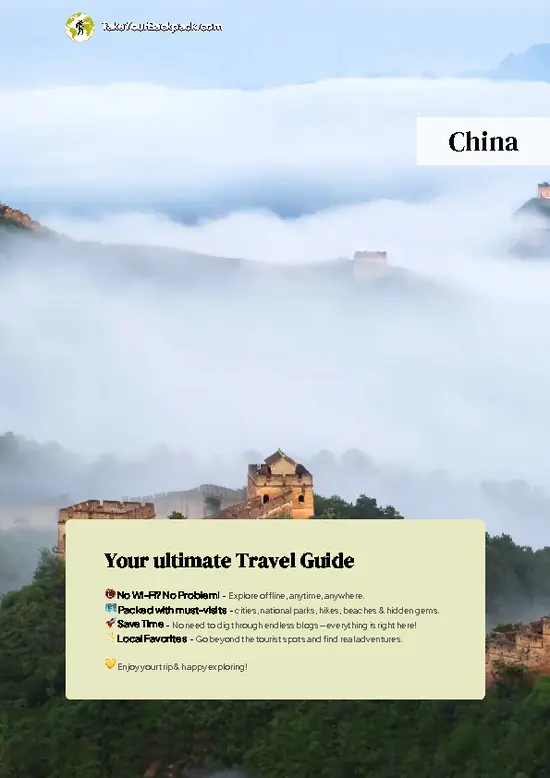
example page 0 from our offline Travel Guide for China
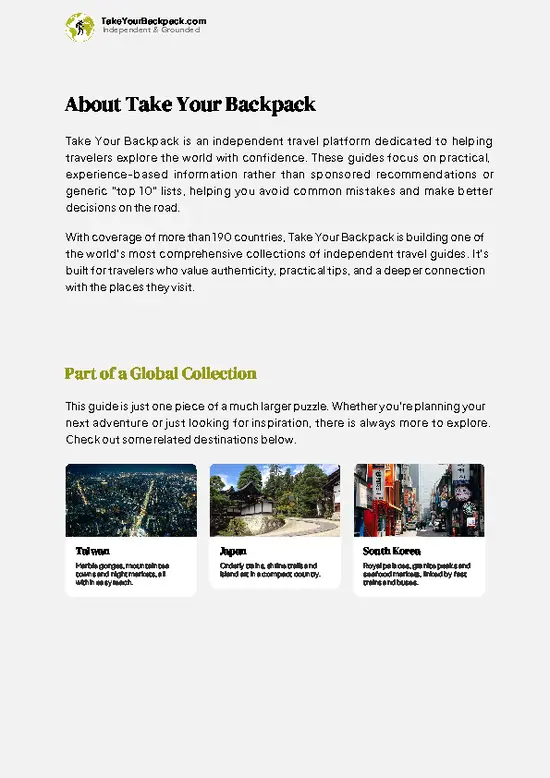
example page 1 from our offline Travel Guide for China
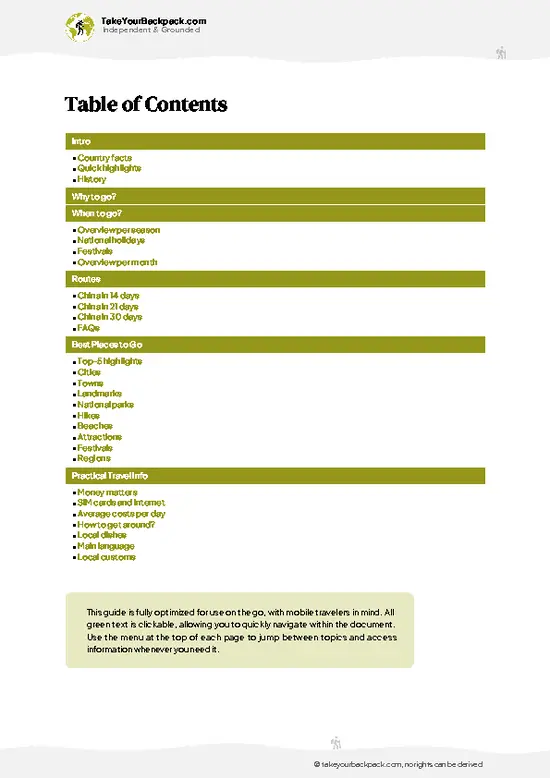
example page 2 from our offline Travel Guide for China
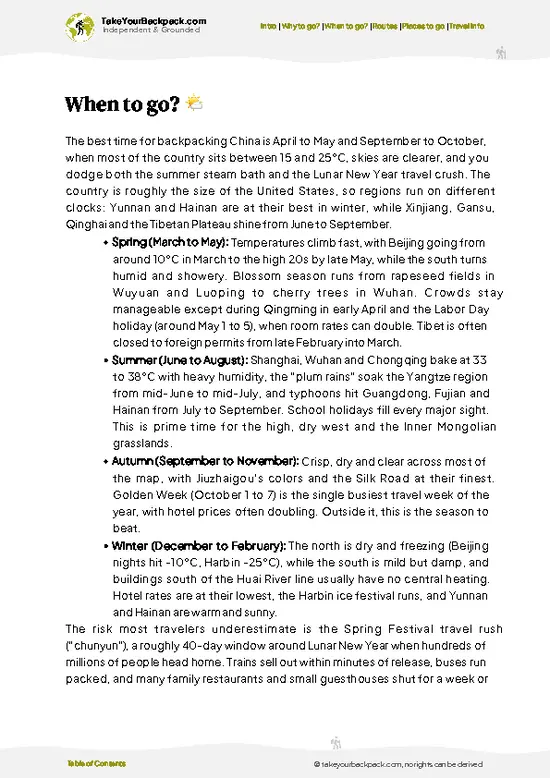
example page 3 from our offline Travel Guide for China
example page 4 from our offline Travel Guide for China
example page 5 from our offline Travel Guide for China
example page 6 from our offline Travel Guide for China
example page 7 from our offline Travel Guide for China
The digital guide (463 pages) contains:
130 highlights, ranked by travel appeal
Optimized 14, 21 & 30-day travel routes
Cities, national parks, landmarks, beaches
How to get around
Offline-friendly for travel without Wi-Fi
👉 Click to see all 30+ guide features

📅 Plan smarter in minutes, not weeks
Month by month travel advice
Festivals & national holidays
Budget expectations

🗺️ Go to the right places, skip the overrated ones
Honest pros & cons of destinations
Top hikes, parks & viewpoints
Lesser-known places most travelers miss
Clear “worth it vs skip it” guidance

🛏️ Travel smoothly without rookie mistakes
Best areas to stay
Transport systems explained simply
Common scams & safety advice
SIM cards, money & practical tips

🌍 Understand the country, not just visit it
Culture & traditions
52 Essential phrases & customs
Festivals worth planning around
Traveler-friendly historical context
Insights that make places more meaningful

📱 Built for real travel conditions
Fully downloadable PDF
Works completely offline
Optimized for phone use
Useful in remote areas & buses
Everything in one place
Save weeks of stressful planning
Get instant access to your full guide. 30‑day money-back guarantee.
+ Add another guide for just US$7.80

By proceeding you agree to our terms.
Sent to your inbox immediately after payment • 100% Secure Checkout
Best Backpacking Travel Advisor 2025 tourism awardBest Backpacking
Travel Advisor
2025
What others say about Take Your Backpack Guides:
⭐⭐⭐⭐⭐
Fantastic, amazing amount of information!
⭐⭐⭐⭐⭐
My goodness this is amazing, it's what I've been looking for hats off too you!
⭐⭐⭐⭐⭐
I think this is absolutely BRILLIANT
⭐⭐⭐⭐
Very complete and informative. It's still missing places, but I gotta to commend you
⭐⭐⭐⭐⭐
This is truly amazing, thank you, can't wait to explore it with my kids!
⭐⭐⭐⭐⭐
Awesome resource, thank you!
⭐⭐⭐⭐⭐
This is amazing! Can't wait to explore the ones I haven't seen
⭐⭐⭐⭐
I love this! Well done, great idea.
⭐⭐⭐⭐⭐
Thanks for taking the time to make this gem!
⭐⭐⭐⭐⭐
This might be the best website I've ever seen.
⭐⭐⭐⭐⭐
Congratulations, and thank you so much for your work; it's incredibly valuable.
⭐⭐⭐⭐
In all seriousness I think you did a great job pointing out the important spots
⭐⭐⭐⭐⭐
10/10 very good
⭐⭐⭐⭐⭐
As someone who's only just starting to visit regularly this is awesome, thank you.
⭐⭐⭐⭐
Thank you very much! I'm going to visit my dad, it's going to be very useful!
⭐⭐⭐⭐⭐
This is really cool! We'll be travelling for the first time and this definitely come in handy.
⭐⭐⭐⭐⭐
You are now our minister of culture, congratulations 👨‍💼
⭐⭐⭐⭐⭐
Just wanted to tell you that this is a pearl! Going to follow your recommendations.
⭐⭐⭐⭐⭐
This is so cool. I'll definitely be using the resource for my travels soon.
⭐⭐⭐⭐⭐
This is very impressive! Good work.
⭐⭐⭐⭐⭐
This is an amazing and informative site. Very well done!

🛏️ Where to stay?How to pick the right area

The National Museum of China sits smack in the heart of Beijing, which means the surrounding area is a whirlwind of tourists, government offices, and heavy security. Don’t expect a quiet, bohemian vibe here. The crowds are real, especially on weekends and holidays, and prices for anything remotely close to the museum tend to lean toward the higher side. But here’s the kicker: staying near Tiananmen Square or Wangfujing Street puts you right in the thick of Beijing’s pulse. These neighborhoods are safe, well-patrolled, and packed with budget-friendly guesthouses and hostels where you’ll find solo … read more 👉
The National Museum of China sits smack in the heart of Beijing, which means the surrounding area is a whirlwind of tourists, government offices, and heavy security. Don’t expect a quiet, bohemian vibe here. The crowds are real, especially on weekends and holidays, and prices for anything remotely close to the museum tend to lean toward the higher side. But here’s the kicker: staying near Tiananmen Square or Wangfujing Street puts you right in the thick of Beijing’s pulse. These neighborhoods are safe, well-patrolled, and packed with budget-friendly guesthouses and hostels where you’ll find solo travelers and backpackers swapping stories over cheap street food. The social scene is alive, with easy access to local markets and late-night snack stalls that give you a taste of Beijing beyond the polished museum walls. If you want to soak in the city’s raw energy while keeping your wallet intact, this is where you want to be.

👛 Costs (as of 4 September 2026)What things cost and how to budget

The National Museum of China has a very low entrance fee, typically around USD 1, with some special exhibitions costing up to USD 5. Additional costs may include audio guides or special exhibition tickets, but general admission is extremely affordable.

source: en.chnmuseum.cn
⚠️ Prices can change and everyone travels differently, so take this as a rough guide. Hope it helps you plan your adventure!

FAQFrequently asked questions about National Museum of China

3 to 4 hours is sufficient to explore the main exhibits at the National Museum of China. This allows time to see key artifacts and temporary exhibitions without rushing. Longer visits are recommended for history enthusiasts who want to delve deeper.
Yes, the National Museum of China is worth the entrance fee, which is free but requires online reservation. It offers extensive collections covering Chinese history and culture, making it a valuable educational experience. The quality and scale of exhibits justify the visit.
Take Beijing Subway Line 1 to Tiananmen East Station or Tiananmen West Station for direct access to the museum. It is located on the eastern side of Tiananmen Square, within walking distance from these stations. Buses and taxis are also convenient options depending on your starting point.
⚠️ Things can change over time, so always validate details locally before you go.

Other Chinese attractions near National Museum of China

Explore more nearby:


💡 Not sure where to go next?
Create a personalized itinerary for China including National Museum of China and the places that fit your trip.

Generate my itinerary

👉 Discover all attractions

Or checkout all China has to offer (think cities, towns, villages, national parks, hikes, beaches, festivals)
Country photo of China

We 💚 feedbackSumming up the experience

The National Museum of China is a heavyweight for anyone serious about Chinese history—its sheer scale and depth of artifacts hit you like a cultural freight train. But brace yourself: it’s packed, especially on weekends, and navigating the crowds can drain your energy fast. Still, if you push through the chaos, the stories these relics tell—centuries of empire, revolution, and artistry—are worth every jostle and minute spent in line.

✈️ When did I visit China?
As part of my 1.5 year travel around the world trip, I visited China in August 2015, coming from Mongolia by the TransMongolia Express.

✍️ Help improve this page!
The information on this page is based on my own backpacking experience in China, supplemented with up-to-date research and feedback from other travelers. Travel details can change, so if you notice anything outdated or incomplete, feel free to let me know.


🙋‍♂️ Give feedback

👋 Meet the founderWho’s Behind Take Your Backpack?

Johan, backpacker and founder of TakeYourBackpackHi, I’m Johan (Netherlands 🇳🇱), the creator of TakeYourBackpack. Over the past decade, I’ve backpacked through 80+ countries across six continents, gaining extensive experience with independent travel, long-term trips, and overland routes.

This site is built on a combination of firsthand travel experience and carefully curated insights from other backpackers. Many guides are based on places I’ve personally visited, while others bring together tips, observations, and practical advice shared by trusted travelers I’ve met along the way.

The goal is to provide realistic, experience-driven guidance — not generic itineraries — so you can explore destinations with better context, clearer expectations, and more confidence.

Get full China guide •
Instant download • 130 highlights • Full Offline guide