×

China🇨🇳 | attractionsThe Palace MuseumForbidden City, imperial halls, lacquerware | things to do and best time to go

Explore National Centre for the Performing ArtsExplore Terracotta Warriors and Horses Museum

Backpacking in The Palace Museum
🏆 Top pickattraction ranked #1
By Johan Kruseman 🇳🇱 | Updated September 4, 2026

Forget the fantasy of wandering alone through echoing, gold-tipped halls—The Palace Museum (a.k.a. the Forbidden City) is not some tranquil, secret relic waiting for your solo discovery. It’s the beating, selfie-stick-thick heart of Beijing, right at the city’s core, and it’s almost always packed. But here’s the real magic: even with the crowds, the scale and detail are jaw-dropping. You’re not just looking at old buildings; you’re walking through the nerve center of Chinese imperial power, with enough history and drama to make Game of Thrones look like a soap opera. Yes, tickets are pricier than most Chinese museums, and you’ll need to book ahead—spontaneity is not rewarded here. But the payoff is real: the architecture, the artifacts, the sense of standing where emperors schemed and dynasties toppled. It’s chaotic, overwhelming, and absolutely worth it—just don’t expect a meditative stroll. This is China’s blockbuster, and it knows it.

Discover everything you want to know in the 📖 China Travel Guide.


Get your China guide
130 ranked highlights, routes & tips, works offline (463 pages)
Loading the map 🌍
CLICK TO FILTER
cities
towns
landmarks
national parks
hikes
beaches
attractions
festivals
regions
SHOW COUNTRY’S BESTSHOW ALL

✨ Why go?
Ranked #1 attraction in China
Why The Palace Museum should be on your travel list

The Palace Museum in Beijing, often called the Forbidden City, is not just another tourist stop—it’s a heavyweight in China’s cultural lineup. Yes, it’s crowded. Yes, the entrance fee isn’t pocket change for a backpacker. But here’s the deal: this place is the epicenter of Chinese imperial history, a sprawling complex where every corner, corridor, and courtyard tells a story that shaped a civilization. You’re not just looking at old buildings; you’re stepping into the power plays, artistry, and daily lives of emperors who ruled for centuries. The scale alone is jaw-dropping—over 9,000 rooms packed with artifacts that span dynasties.

For backpackers, it’s a milestone, a cultural checkpoint that demands respect. The effort to navigate the crowds and the cost is outweighed by the sheer depth … read more 👉
The Palace Museum in Beijing, often called the Forbidden City, is not just another tourist stop—it’s a heavyweight in China’s cultural lineup. Yes, it’s crowded. Yes, the entrance fee isn’t pocket change for a backpacker. But here’s the deal: this place is the epicenter of Chinese imperial history, a sprawling complex where every corner, corridor, and courtyard tells a story that shaped a civilization. You’re not just looking at old buildings; you’re stepping into the power plays, artistry, and daily lives of emperors who ruled for centuries. The scale alone is jaw-dropping—over 9,000 rooms packed with artifacts that span dynasties.

For backpackers, it’s a milestone, a cultural checkpoint that demands respect. The effort to navigate the crowds and the cost is outweighed by the sheer depth of history and the adrenaline rush of standing where emperors once walked. This isn’t a quick photo op; it’s an immersive dive into China’s soul. Skip it, and you miss a foundational piece of the country’s story that no guidebook hype can fully capture.
Want to include The Palace Museum in your China route?
Create a personalized China itinerary that includes The Palace Museum and the places that fit your trip — based on your travel style, budget, and available time. Get your route in seconds.

Generate my trip

💡 HighlightsPlaces and moments you shouldn't skip

Meridian Gate (Wu Men)
Let’s get real: you’ll enter with a mob. The Meridian Gate is the main entrance, and yes, everyone wants that iconic photo. But this is not just a backdrop for selfies. Stand under those looming eaves and you’ll feel the psychological weight of imperial power—this was the stage for imperial edicts and, occasionally, public floggings. The scale is meant to humble you. It works.


Hall of Supreme Harmony (Taihe Dian)
This is the blockbuster set piece, the throne room of the emperors. It’s massive, theatrical, and always swarming with tour groups waving little flags. But look past the crowds and focus on the details: the dragon thrones, the carved marble ramps, the incense-burned air. This is where emperors were crowned and the fate of dynasties was decided. It’s not subtle, … read more 👉
Meridian Gate (Wu Men)
Let’s get real: you’ll enter with a mob. The Meridian Gate is the main entrance, and yes, everyone wants that iconic photo. But this is not just a backdrop for selfies. Stand under those looming eaves and you’ll feel the psychological weight of imperial power—this was the stage for imperial edicts and, occasionally, public floggings. The scale is meant to humble you. It works.


Hall of Supreme Harmony (Taihe Dian)
This is the blockbuster set piece, the throne room of the emperors. It’s massive, theatrical, and always swarming with tour groups waving little flags. But look past the crowds and focus on the details: the dragon thrones, the carved marble ramps, the incense-burned air. This is where emperors were crowned and the fate of dynasties was decided. It’s not subtle, but it’s pure spectacle—imperial China at its most unapologetically grand.


Palace of Heavenly Purity (Qianqing Gong)
If you want to feel the pulse of palace intrigue, this is the spot. The emperor’s actual living quarters, surprisingly austere compared to the ceremonial halls. The real drama happened here: secret meetings, midnight decisions, and the infamous “secret succession” box. The sense of history is thick, and the crowds thin out just enough for you to imagine the paranoia and plotting that once filled these rooms.


Imperial Garden (Yuhuayuan)
Here’s your breather. The garden is compact, but every inch is loaded with symbolism—ancient cypress trees, rockeries that look like miniature mountain ranges, and pavilions for poetry and chess. It’s a rare pocket of tranquility in a place built for intimidation. If you’re lucky enough to catch it at dusk, with the last tour groups gone, it’s quietly magical. This is my personal favorite: a reminder that even emperors needed a place to escape the grind.


Treasure Gallery (Zhenbao Guan)
Skip the generic museum shops and pay extra for this. The Treasure Gallery is where the real loot is stashed: jade carvings, imperial seals, gold filigree, and jewelry that makes modern bling look like costume props. It’s a crash course in imperial excess, and the craftsmanship is mind-bending. If you want to see what absolute power looks like in material form, this is your window.


Clocks and Watches Gallery (Zhongbiao Guan)
This one is pure entertainment. The Qing emperors were obsessed with mechanical gadgets, and the collection here is wild—European automata, chiming clocks, and elaborate timepieces that do everything but make tea. Some still work, and if you time it right, you’ll see them in action. It’s a weird, wonderful detour from the solemnity of the rest of the palace.
Spotted a mistake or missing something? Contact us.

Things to do around The Palace Museum

Ratings based on Tripadvisor reviews. When you book through this link, you support our work at no extra cost to you.

🌤️ When to go?Best time to visit The Palace Museum


  • Weather: The Palace Museum is in Beijing, where winters (December to February) are bone-chilling, often below -5°C (23°F), making outdoor exploration miserable. Summers (June to August) hit 30-35°C (86-95°F) with sticky humidity that drains your energy fast.

  • Temperature: Spring (March to May) and autumn (September to November) offer the sweet spot—mild 15-25°C (59-77°F) days that let you wander without overheating or freezing.

  • Daylight Hours: Longer days in spring and summer mean more time to soak in the sprawling complex. Winter days shrink to about 9 hours, cutting your sightseeing window.

  • Crowds: The Palace Museum is a magnet year-round, but expect the heaviest crush during Chinese public holidays like Golden Week (early October) and National Day (October 1-7). Early spring and
read more 👉

  • Weather: The Palace Museum is in Beijing, where winters (December to February) are bone-chilling, often below -5°C (23°F), making outdoor exploration miserable. Summers (June to August) hit 30-35°C (86-95°F) with sticky humidity that drains your energy fast.

  • Temperature: Spring (March to May) and autumn (September to November) offer the sweet spot—mild 15-25°C (59-77°F) days that let you wander without overheating or freezing.

  • Daylight Hours: Longer days in spring and summer mean more time to soak in the sprawling complex. Winter days shrink to about 9 hours, cutting your sightseeing window.

  • Crowds: The Palace Museum is a magnet year-round, but expect the heaviest crush during Chinese public holidays like Golden Week (early October) and National Day (October 1-7). Early spring and late autumn see fewer tourists, giving you breathing room.

  • Seasonal Activities: Spring brings blooming gardens inside the Forbidden City, while autumn paints the ancient trees in fiery reds and golds—both add a layer of magic beyond the architecture.

  • Price Fluctuations: Ticket prices stay fairly stable, but accommodation and flights spike during peak tourist seasons (May Day, Golden Week). Booking outside these windows saves serious cash.


Pro-tip: Aim for late April or mid-October mornings—cool temps, manageable crowds, and the palace’s colors at their best. Get there right when it opens to dodge the worst of the swarm.


source: climatestotravel.comJANJanuary: fair for travelingFEBFebruary: fair for travelingMARMarch: highly recommended for travelingAPRApril: excellent for travelingMAYMay: good for travelingJUNJune: fair for travelingJULJuly: fair for travelingAUGAugust: fair for travelingSEPSeptember: highly recommended for travelingOCTOctober: good for travelingNOVNovember: highly recommended for travelingDECDecember: fair for traveling
when-to-go

✈️ The backpacker research shortcutChina Travel Guide

An offline-friendly backpacking guide with optimized travel routes, ranked highlights, transport advice, and the best areas to stay.
example page 0 from our offline Travel Guide for China
example page 1 from our offline Travel Guide for China
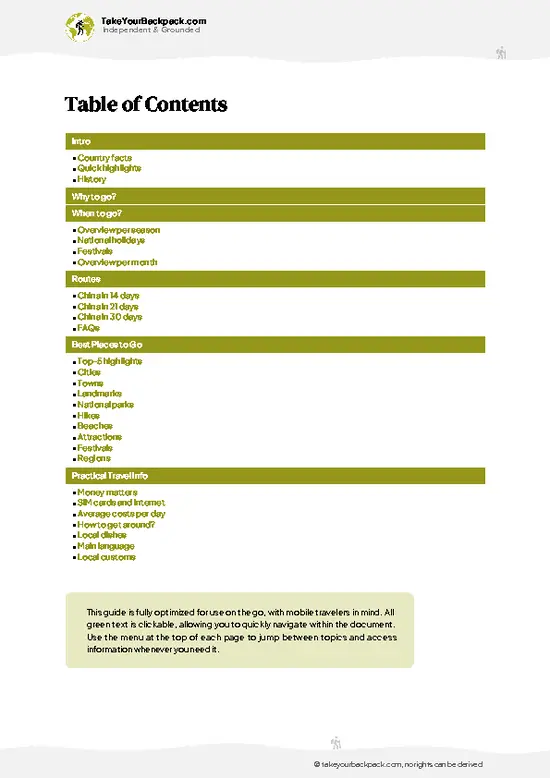
example page 2 from our offline Travel Guide for China
example page 3 from our offline Travel Guide for China
example page 4 from our offline Travel Guide for China
example page 5 from our offline Travel Guide for China
example page 6 from our offline Travel Guide for China
example page 7 from our offline Travel Guide for China
The digital guide (463 pages) contains:
130 highlights, ranked by travel appeal
Optimized 14, 21 & 30-day travel routes
Cities, national parks, landmarks, beaches
How to get around
Offline-friendly for travel without Wi-Fi
👉 Click to see all 30+ guide features

📅 Plan smarter in minutes, not weeks
Month by month travel advice
Festivals & national holidays
Budget expectations

🗺️ Go to the right places, skip the overrated ones
Honest pros & cons of destinations
Top hikes, parks & viewpoints
Lesser-known places most travelers miss
Clear “worth it vs skip it” guidance

🛏️ Travel smoothly without rookie mistakes
Best areas to stay
Transport systems explained simply
Common scams & safety advice
SIM cards, money & practical tips

🌍 Understand the country, not just visit it
Culture & traditions
52 Essential phrases & customs
Festivals worth planning around
Traveler-friendly historical context
Insights that make places more meaningful

📱 Built for real travel conditions
Fully downloadable PDF
Works completely offline
Optimized for phone use
Useful in remote areas & buses
Everything in one place
Save weeks of stressful planning
Get instant access to your full guide. 30‑day money-back guarantee.
+ Add another guide for just US$7.80

By proceeding you agree to our terms.
Sent to your inbox immediately after payment • 100% Secure Checkout
Best Backpacking Travel Advisor 2025 tourism awardBest Backpacking
Travel Advisor
2025
What others say about Take Your Backpack Guides:
⭐⭐⭐⭐⭐
Fantastic, amazing amount of information!
⭐⭐⭐⭐⭐
My goodness this is amazing, it's what I've been looking for hats off too you!
⭐⭐⭐⭐⭐
I think this is absolutely BRILLIANT
⭐⭐⭐⭐
Very complete and informative. It's still missing places, but I gotta to commend you
⭐⭐⭐⭐⭐
This is truly amazing, thank you, can't wait to explore it with my kids!
⭐⭐⭐⭐⭐
Awesome resource, thank you!
⭐⭐⭐⭐⭐
This is amazing! Can't wait to explore the ones I haven't seen
⭐⭐⭐⭐
I love this! Well done, great idea.
⭐⭐⭐⭐⭐
Thanks for taking the time to make this gem!
⭐⭐⭐⭐⭐
This might be the best website I've ever seen.
⭐⭐⭐⭐⭐
Congratulations, and thank you so much for your work; it's incredibly valuable.
⭐⭐⭐⭐
In all seriousness I think you did a great job pointing out the important spots
⭐⭐⭐⭐⭐
10/10 very good
⭐⭐⭐⭐⭐
As someone who's only just starting to visit regularly this is awesome, thank you.
⭐⭐⭐⭐
Thank you very much! I'm going to visit my dad, it's going to be very useful!
⭐⭐⭐⭐⭐
This is really cool! We'll be travelling for the first time and this definitely come in handy.
⭐⭐⭐⭐⭐
You are now our minister of culture, congratulations 👨‍💼
⭐⭐⭐⭐⭐
Just wanted to tell you that this is a pearl! Going to follow your recommendations.
⭐⭐⭐⭐⭐
This is so cool. I'll definitely be using the resource for my travels soon.
⭐⭐⭐⭐⭐
This is very impressive! Good work.
⭐⭐⭐⭐⭐
This is an amazing and informative site. Very well done!

🛏️ Where to stay?Best areas and accommodation options

The Palace Museum, aka the Forbidden City, is a beast of a tourist magnet. Expect crowds that swarm like bees, especially mid-morning and weekends. It’s not a secret, and it’s not a quiet stroll through history. The entry fee is reasonable, but the real cost is your patience and time spent navigating the sea of selfie sticks. Now, if you’re here for the ‘Instagram moment’ alone, you’ll leave feeling a bit like you’ve been herded through a theme park.

But here’s the real deal: staying near the Palace Museum puts you in the heart of Beijing’s old city, where the soul of the place lives beyond the … read more 👉
The Palace Museum, aka the Forbidden City, is a beast of a tourist magnet. Expect crowds that swarm like bees, especially mid-morning and weekends. It’s not a secret, and it’s not a quiet stroll through history. The entry fee is reasonable, but the real cost is your patience and time spent navigating the sea of selfie sticks. Now, if you’re here for the ‘Instagram moment’ alone, you’ll leave feeling a bit like you’ve been herded through a theme park.

But here’s the real deal: staying near the Palace Museum puts you in the heart of Beijing’s old city, where the soul of the place lives beyond the palace walls. The best spots for backpackers are the hutong neighborhoods just south and east of the museum. These narrow alleys are a maze of traditional courtyard homes, local noodle shops, and street vendors selling everything from dumplings to quirky souvenirs. It’s safe, lively, and packed with fellow travelers who want to swap stories over cheap beer or hot tea.

This area is social without the tourist trap vibe. You’re close enough to walk to the Palace Museum early to beat the crowds, but also close to authentic Beijing life. It’s where you get the real texture of the city—gritty, noisy, and utterly captivating. Forget fancy hotels; this is where you meet the city’s heartbeat.

👛 Costs (as of 4 September 2026)What things cost and how to budget

The Palace Museum ticket prices range from about USD10 to 15 depending on the season and specific exhibition access. Additional costs may include audio guides or special exhibition tickets, which can add around USD5 to 10. Entry is free for children under 1.2 meters and seniors over 60 with valid ID.
⚠️ Prices can change and everyone travels differently, so take this as a rough guide. Hope it helps you plan your adventure!

FAQCommon questions from travelers

At least 3 to 4 hours are needed to visit The Palace Museum thoroughly, but a full day is recommended to explore its vast collections and grounds without rushing.
Yes, The Palace Museum is worth the entrance fee, which is around 60 CNY (about 9 USD) in peak season. It offers an unparalleled glimpse into Chinese imperial history and architecture, making it a valuable cultural experience.
The Palace Museum is located in the center of Beijing, accessible by subway via Tiananmen East or Tiananmen West stations on Line 1. It is also reachable by numerous bus routes stopping near the Forbidden City entrance.
⚠️ Things can change over time, so always validate details locally before you go.

Other Chinese attractions near The Palace Museum

Explore more nearby:


💡 Not sure where to go next?
Create a personalized itinerary for China including The Palace Museum and the places that fit your trip.

Generate my itinerary

👉 Discover all attractions

Or checkout all China has to offer (think cities, towns, villages, national parks, hikes, beaches, festivals)
Country photo of China

We 💚 feedbackKey takeaways before you go

The Palace Museum is a beast of history and scale—no other place packs imperial China’s power plays and artistry into one sprawling complex quite like this. But brace yourself: the crowds can feel like a tidal wave, especially on weekends and holidays, which can drain the magic fast. Still, if you push through the chaos, the sheer craftsmanship and stories carved into every corner make it a rare, raw encounter with China’s soul.

✈️ When did I visit China?
As part of my 1.5 year travel around the world trip, I visited China in August 2015, coming from Mongolia by the TransMongolia Express.

✍️ Help improve this page!
The information on this page is based on my own backpacking experience in China, supplemented with up-to-date research and feedback from other travelers. Travel details can change, so if you notice anything outdated or incomplete, feel free to let me know.


🙋‍♂️ Give feedback

👋 Meet the founderWho’s Behind Take Your Backpack?

Johan, backpacker and founder of TakeYourBackpackHi, I’m Johan (Netherlands 🇳🇱), the creator of TakeYourBackpack. Over the past decade, I’ve backpacked through 80+ countries across six continents, gaining extensive experience with independent travel, long-term trips, and overland routes.

This site is built on a combination of firsthand travel experience and carefully curated insights from other backpackers. Many guides are based on places I’ve personally visited, while others bring together tips, observations, and practical advice shared by trusted travelers I’ve met along the way.

The goal is to provide realistic, experience-driven guidance — not generic itineraries — so you can explore destinations with better context, clearer expectations, and more confidence.

Get full China guide •
Instant download • 130 highlights • Full Offline guide