v2.webp)

- Sideng Market Square (四等市) — The real pulse of Shaxi: a wide, cobbled square where the old Tea-Horse Road caravans met, now filled with stalls, local traders and the odd impromptu performance. Go when the market’s on to feel the town’s traditional trade rhythm.
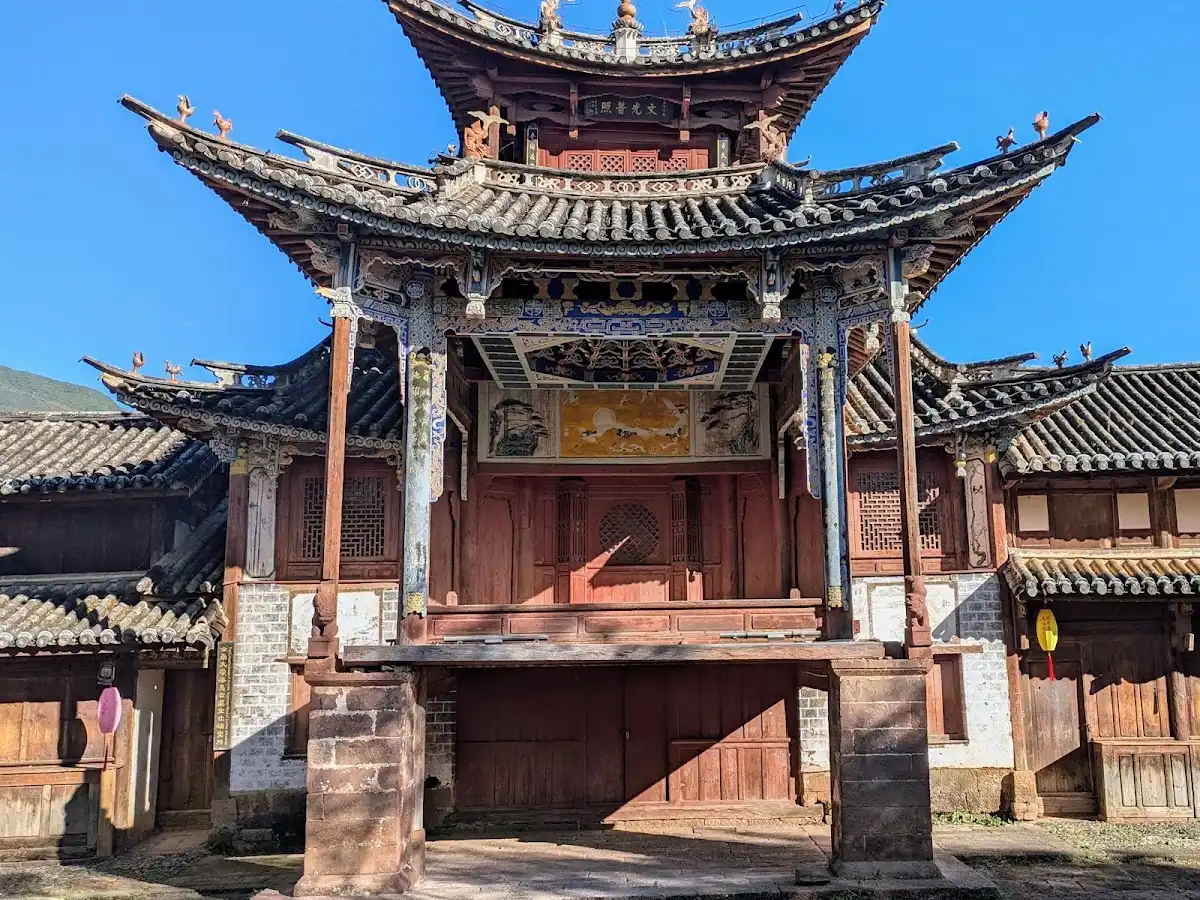
- The Old Theatre Stage (戏台) in the square — A wooden, raised stage facing Sideng where traditional operas and local plays were performed. It’s atmospheric even when empty; on performance nights it’s a direct line to the town’s social life and performing traditions.
- Xingjiao Temple (兴教寺) — A compact Buddhist temple complex inside the old town with carved beams, quiet courtyards and surviving murals. It’s a good spot to see religious continuity—monks, worshippers and the same architectural styles that serviced caravans centuries ago.
- Sideng Market Square (四等市) — The real pulse of Shaxi: a wide, cobbled square where the old Tea-Horse Road caravans met, now filled with stalls, local traders and the odd impromptu performance. Go when the market’s on to feel the town’s traditional trade rhythm.
- The Old Theatre Stage (戏台) in the square — A wooden, raised stage facing Sideng where traditional operas and local plays were performed. It’s atmospheric even when empty; on performance nights it’s a direct line to the town’s social life and performing traditions.
- Xingjiao Temple (兴教寺) — A compact Buddhist temple complex inside the old town with carved beams, quiet courtyards and surviving murals. It’s a good spot to see religious continuity—monks, worshippers and the same architectural styles that serviced caravans centuries ago.
- Sections of the Tea-Horse Road / caravan lanes — Shaxi’s stone lanes are literal pieces of the old trade route: narrow, graded, and lined with merchant houses. Walking them gives a clearer sense of why this town mattered on the map for packhorses and traders.
- Traditional Bai courtyard houses — Scattered through the village, these whitewashed courtyard homes (some open to visitors or operating as guesthouses) show how local families lived: carved doors, stonework, inner patios and living traditions that you won’t get from photos alone.
- Market-day mornings and local food stalls — The early markets (vegetables, dried goods, occasional livestock) and tiny street food stalls are deceptively rich cultural highlights — real people, real food, and a chance to try local Bai snacks and tea in authentic surroundings.
- Stone paifang (memorial archways) and engraved steles — The town’s arches and stone tablets commemorate donors, events and local elite families. They’re short reads in stone that tell you who mattered here and why; good for slow sightseeing and photography.
- Small craft workshops (wood carving, tie-dye, weaving) — There are functioning family workshops in town where you can watch (and sometimes try) traditional wood carving, Bai-style tie-dye and weaving. You’ll leave with something handmade and a better idea of local skills.
- Converted caravan inns and teahouses — Old inns that once sheltered traders have been repurposed as cafés, boutique guesthouses and teahouses. Sit in one for an hour — the rooms, beams and courtyards are living museum pieces you can usefully relax in.
- Stone bridges and little riverside shrines — Small, arched stone bridges cross the town’s streams; beside many are tiny shrines or prayer flags. They’re quiet, photo-friendly spots that capture the everyday spirituality and architecture of Shaxi away from the main square.
Spotted a mistake or missing something? Contact us.

9 days Ancient Town Tour

Private 8 Day Yunnan Tour Kunming, Dali Lijiang Shangrila

7 Days Yunnan Charming Old Town Tour

14-Days Private Tour from Yunnan to Guizhou

4-Day Private Tour from Dali to Lijiang and overnight in Shaxi

All Inclusive Private Day Tour to Shaxi Ancient Town from Lijiang

All Inclusive Private Day Tour to Shaxi Ancient Town from Dali

12 Day Yunnan and Chengdu Tour to Lijiang Shangri La and Pandas
7-Days tour from Kunming to Shangri-La and overnight in Tiger Leaping Gorge

 Best Backpacking
.jpg) Hi, I’m Johan (Netherlands 🇳🇱), the creator of TakeYourBackpack. Over the past 3 decades, I’ve backpacked through 90+ countries across six continents, gaining extensive experience with independent travel, long-term trips, and overland routes.
Hi, I’m Johan (Netherlands 🇳🇱), the creator of TakeYourBackpack. Over the past 3 decades, I’ve backpacked through 90+ countries across six continents, gaining extensive experience with independent travel, long-term trips, and overland routes.