
×

China🇨🇳 | citiesLijiangcanal network, Naxi culture, old town squares | things to do and best time to go

Explore Hong KongExplore Lijiang Ancient Town

Backpacking in Lijiang
🏆 Top pickcity ranked #8
By Johan Kruseman 🇳🇱 | Updated June 12, 2026

Most people online sell Lijiang as a preserved “ancient town,” but what shocks backpackers is how aggressively commercial it feels in the core streets—yet it’s still one of the best bases for cheap access to wild, high-altitude Yunnan. Lijiang sits in northwestern Yunnan province, between Dali and Shangri-La on the classic overland route. The old town’s cobbled alleys, canals, and Naxi courtyard houses are photogenic, but you earn the magic by dodging selfie sticks and bar streets blasting EDM. It’s safe, walkable, and logistically easy, with dense guesthouse options and simple bus links to Tiger Leaping Gorge and Jade Dragon Snow Mountain. Costs are higher than Dali but lower than Shangri-La. Meeting other travelers is straightforward in hostels, though the city itself feels more curated stage set than lived-in town.

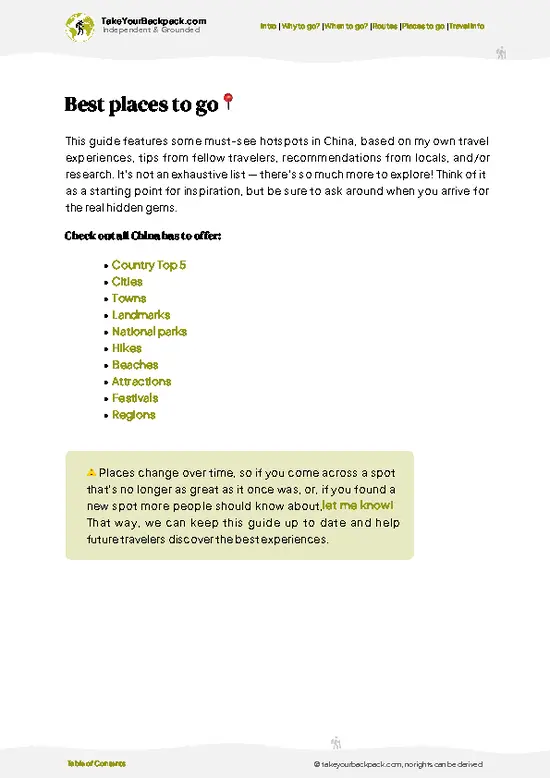
Discover everything you want to know in the 📖 China Travel Guide.


Get your China guide
139 ranked highlights, routes & tips, works offline (496 pages)
Loading the map 🌍
CLICK TO FILTER
cities
towns
landmarks
national parks
hikes
beaches
attractions
festivals
regions
SHOW COUNTRY’S BESTSHOW ALL

✨ Why go?
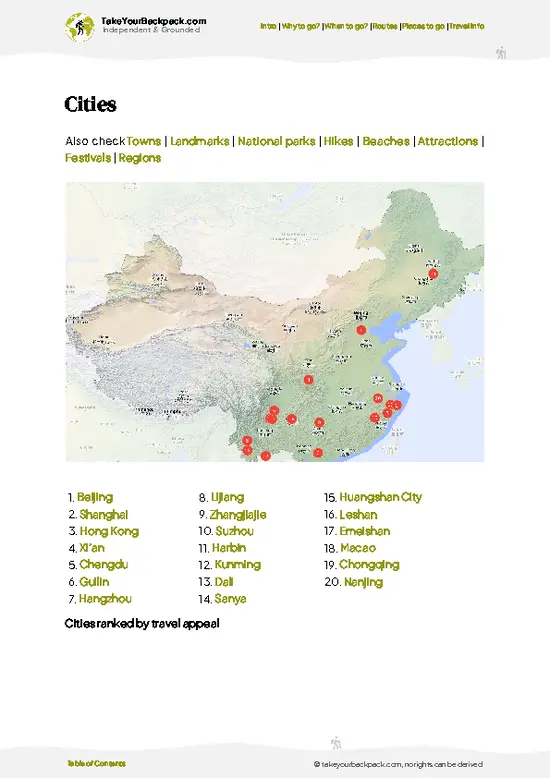
Ranked #8 city in China
The unique appeal for travelers

Lijiang is a backpacker’s hub that strikes a balance between comfort and adventure. It’s not just about the highlights; it’s the basecamp value that draws travelers in. You can easily launch day trips to stunning landscapes, but the city itself offers a rich tapestry of culture and food. The walkability of Lijiang makes it a breeze to explore its charming streets, filled with local eateries and vibrant markets.

Accommodations range from cozy hostels to boutique guesthouses, catering to every budget while fostering a sense of community. When the sun sets, the nightlife buzzes with energy, offering everything from quiet bars to lively dance spots. Plus, Lijiang’s transport links make onward travel simple, whether you’re heading to Dali or the mountains.

For those seeking a blend of relaxationread more 👉
Lijiang is a backpacker’s hub that strikes a balance between comfort and adventure. It’s not just about the highlights; it’s the basecamp value that draws travelers in. You can easily launch day trips to stunning landscapes, but the city itself offers a rich tapestry of culture and food. The walkability of Lijiang makes it a breeze to explore its charming streets, filled with local eateries and vibrant markets.

Accommodations range from cozy hostels to boutique guesthouses, catering to every budget while fostering a sense of community. When the sun sets, the nightlife buzzes with energy, offering everything from quiet bars to lively dance spots. Plus, Lijiang’s transport links make onward travel simple, whether you’re heading to Dali or the mountains.

For those seeking a blend of relaxation and exploration, Lijiang is more than a stop; it’s a strategic choice that enhances your journey through Yunnan.
Want to include Lijiang in your China route?
Create a personalized China itinerary that includes Lijiang and the places that fit your trip — based on your travel style, budget, and available time. Get your route in seconds.

Generate my trip

💡 HighlightsThe experiences that define the visit

  1. Dayan Old Town (Lijiang Old Town) — The heart and obvious must-see: a living UNESCO site of canals, timber houses, cobbled lanes and Naxi culture. Wander the tight alleys early or late to see the place between tour groups, and you’ll get the best feel for how people still live and work here.
  2. Black Dragon Pool (Heilongtan Park) — A calm park with classic reflections of the surrounding pines and, on clear days, Jade Dragon Snow Mountain. Great for photography, short walks, and seeing local elders practicing tai chi — a serene contrast to Old Town’s bustle.
  3. Mufu Palace (Mu Family Palace) — The former residence of Lijiang’s ruling Mu clan: the largest historical private compound in the area. It’s a tidy dose of Ming-Qing architecture, carved woodwork, and displays about local politics and
read more 👉
  1. Dayan Old Town (Lijiang Old Town) — The heart and obvious must-see: a living UNESCO site of canals, timber houses, cobbled lanes and Naxi culture. Wander the tight alleys early or late to see the place between tour groups, and you’ll get the best feel for how people still live and work here.
  2. Black Dragon Pool (Heilongtan Park) — A calm park with classic reflections of the surrounding pines and, on clear days, Jade Dragon Snow Mountain. Great for photography, short walks, and seeing local elders practicing tai chi — a serene contrast to Old Town’s bustle.
  3. Mufu Palace (Mu Family Palace) — The former residence of Lijiang’s ruling Mu clan: the largest historical private compound in the area. It’s a tidy dose of Ming-Qing architecture, carved woodwork, and displays about local politics and society you won’t get just wandering the Old Town streets.
  4. Wangu Tower & Lion Hill — Climb for the straightforward reason: the best panoramic lookout over Dayan Old Town and the surrounding valley. The walk’s short and steep, and the view helps you mentally place everything you’ve been exploring.
  5. Baisha Village & the Baisha Murals — A quieter, older Naxi village north of Old Town where 14th-18th century murals survive. The art mixes Tibetan, Han and Naxi motifs and gives real context to the Dongba religion and local myths.
  6. Shuhe Ancient Town — Often overlooked in favor of Dayan, Shuhe is a smaller Tea-Horse Road stop with mellow canals, fewer souvenir shops, and a nicer pace for people who want authenticity without the crush. Excellent for a lazy afternoon and local cafés.
  7. Dongba Culture Museum (Naxi Dongba Cultural Center) — If you want to understand Naxi script, ritual and daily life, this is where to go. Small exhibits, original manuscripts, and knowledgeable guides make the intangible culture tangible.
  8. Naxi Ancient Music & Performance Spaces — Hearing the Naxi orchestra and local folk performances in a small theater or courtyard is one of those experiences that sticks — it’s not flashy, it’s musical anthropology: preserved melodies sung in a living language.
  9. Yuhu Village (Jade Water Village) — A short drive from Old Town, this peaceful village sits beneath Jade Dragon Snow Mountain and ties into Joseph Rock’s history and early Western exploration of the region. Walkable farms, friendly households, and mountain views make it quietly memorable.
  10. Lashi Lake — A shallow wetland west of Lijiang where reedbeds, fishing boats and migratory birds gather. It’s a low-cost boat trip and a nice escape from stone streets — great for sunset, birdwatching, and a different landscape than the high peaks.
A few nearby day-trip highlights outside the city: Jade Dragon (Yulong) Snow Mountain, Tiger Leaping Gorge, and the Baishuitai (White Water Terraces) — my personal favorite for a dramatic mountain outing is Jade Dragon Snow Mountain.
Spotted a mistake or missing something? Contact us.

Things to do in Lijiang

Ratings based on Tripadvisor reviews. When you book through this link, you support our work at no extra cost to you.

🏘️ NeighborhoodsUnderstanding the local layout

Lijiang is a captivating blend of ancient culture and modern convenience, making it a prime spot for backpackers. Here’s how the neighborhoods stack up:

Old Town: This UNESCO World Heritage site is the heart of Lijiang. Cobblestone streets, traditional architecture, and vibrant markets create a lively atmosphere. It’s walkable, with plenty of guesthouses and eateries. Expect higher prices here, especially for food and lodging. Nightlife is buzzing, with bars and live music, perfect for short stays.

Shuhe Ancient Town: A quieter alternative to Old Town, Shuhe offers a more relaxed vibe. It’s less touristy, making it ideal for longer stays. The walkability is excellent, with charming cafes and shops. Prices are generally lower than in Old Town, and the nightlife is subdued, focusing more on … read more 👉
Lijiang is a captivating blend of ancient culture and modern convenience, making it a prime spot for backpackers. Here’s how the neighborhoods stack up:

Old Town: This UNESCO World Heritage site is the heart of Lijiang. Cobblestone streets, traditional architecture, and vibrant markets create a lively atmosphere. It’s walkable, with plenty of guesthouses and eateries. Expect higher prices here, especially for food and lodging. Nightlife is buzzing, with bars and live music, perfect for short stays.

Shuhe Ancient Town: A quieter alternative to Old Town, Shuhe offers a more relaxed vibe. It’s less touristy, making it ideal for longer stays. The walkability is excellent, with charming cafes and shops. Prices are generally lower than in Old Town, and the nightlife is subdued, focusing more on intimate gatherings than raucous parties.

Black Dragon Pool Park Area: This area is a serene escape, featuring stunning views of the Jade Dragon Snow Mountain. It’s perfect for nature lovers and those seeking peace. While it’s a bit farther from the nightlife, it’s still accessible via public transport. Prices for accommodations are moderate, and it’s suitable for both short and long stays.

New Town: A bustling hub with modern amenities, New Town is great for budget-conscious travelers. It’s less picturesque but offers affordable lodging and dining. The area is well-connected by public transport, making it easy to explore. Nightlife is minimal, focusing more on local eateries than bars, making it better for longer stays.

⌛️ 1 day1-day itinerary for Lijiang

Lijiang, a UNESCO World Heritage site, is a tapestry of ancient architecture and vibrant culture nestled in the foothills of the Himalayas. Its cobblestone streets and traditional Naxi houses invite you to explore, while the backdrop of snow-capped mountains adds a dramatic flair.

Start your day in the Old Town, where the morning light dances off the wooden beams of the buildings. Grab a cup of locally brewed coffee at a small café near Sifang Street. The aroma is rich, and the atmosphere is laid-back—perfect for soaking in the early buzz of the city. After your caffeine fix, wander through the narrow alleys, stopping by the iconic Black Dragon Pool. The reflections of the mountains in the water are a sight to behold, and it’s less crowded in the morning.

As the day unfolds, make your way … read more 👉
Lijiang, a UNESCO World Heritage site, is a tapestry of ancient architecture and vibrant culture nestled in the foothills of the Himalayas. Its cobblestone streets and traditional Naxi houses invite you to explore, while the backdrop of snow-capped mountains adds a dramatic flair.

Start your day in the Old Town, where the morning light dances off the wooden beams of the buildings. Grab a cup of locally brewed coffee at a small café near Sifang Street. The aroma is rich, and the atmosphere is laid-back—perfect for soaking in the early buzz of the city. After your caffeine fix, wander through the narrow alleys, stopping by the iconic Black Dragon Pool. The reflections of the mountains in the water are a sight to behold, and it’s less crowded in the morning.

As the day unfolds, make your way to the Baisha Village, a short ride from the Old Town. This area is often overlooked by tourists, but it’s a treasure trove of Naxi culture. Visit the Baisha Murals, which tell stories of the region’s history and mythology. You might even catch a glimpse of local artisans at work, crafting traditional handicrafts.

In the afternoon, return to the Old Town and explore the bustling markets. Sample some local snacks—try the yak meat skewers; they’re a game-changer. As evening approaches, head to the Lion Hill for a panoramic view of the city. The sunset paints the sky in hues of orange and pink, a perfect backdrop for reflection.

Wrap up your day with dinner at a family-run restaurant, where you can savor authentic Naxi dishes. The warmth of the locals and the flavors of the food will linger long after you leave. Lijiang isn’t just a destination; it’s an experience that stays with you.
Turn your Lijiang visit into an China adventure
Build a complete China route with Lijiang, hidden gems, must-see destinations, and realistic travel times included.

Generate my trip

🌤️ When to go?Weather, crowds, and seasonal trade-offs


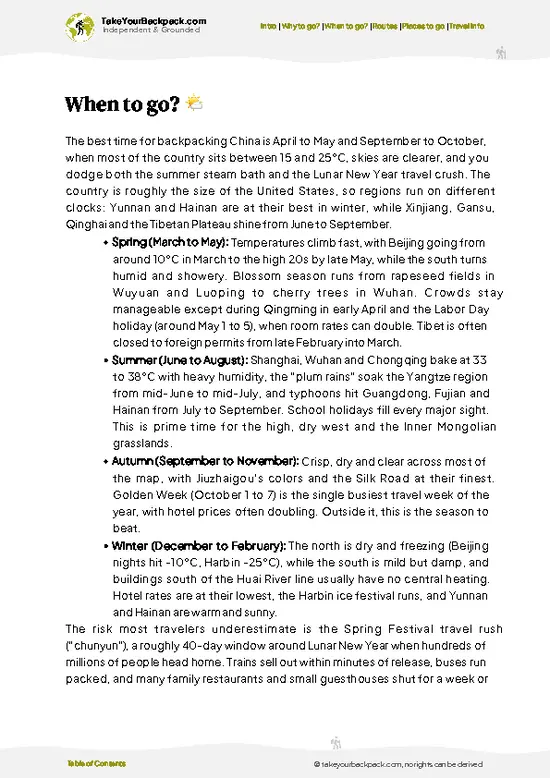
  • Weather: Lijiang’s climate swings between dry winters and wet summers. April to June offers mild, pleasant days with less rain, while July and August bring heavy monsoon showers that can disrupt hiking and outdoor plans.

  • Temperature: Spring and autumn hover around 15-22°C (59-72°F), ideal for trekking without overheating or freezing. Winters dip to 0-10°C (32-50°F), which can be crisp but manageable if you pack layers.

  • Daylight Hours: From March to September, expect 12-14 hours of daylight—perfect for squeezing in long hikes or exploring the Old Town. Shorter winter days limit outdoor time, so plan accordingly.

  • Crowds: Peak tourist season hits July and August, swelling the Old Town with visitors and hiking trails with groups. Shoulder seasons (April-June, September-October) offer
read more 👉

  • Weather: Lijiang’s climate swings between dry winters and wet summers. April to June offers mild, pleasant days with less rain, while July and August bring heavy monsoon showers that can disrupt hiking and outdoor plans.

  • Temperature: Spring and autumn hover around 15-22°C (59-72°F), ideal for trekking without overheating or freezing. Winters dip to 0-10°C (32-50°F), which can be crisp but manageable if you pack layers.

  • Daylight Hours: From March to September, expect 12-14 hours of daylight—perfect for squeezing in long hikes or exploring the Old Town. Shorter winter days limit outdoor time, so plan accordingly.

  • Crowds: Peak tourist season hits July and August, swelling the Old Town with visitors and hiking trails with groups. Shoulder seasons (April-June, September-October) offer a quieter, more authentic vibe without sacrificing good weather.

  • Seasonal Activities: Spring showcases blooming rhododendrons and vibrant festivals, while autumn brings harvest celebrations and crisp air. Winter’s quieter streets let you experience local life without the tourist buzz.

  • Price Fluctuations: Accommodation and tours spike during summer and major festivals. Booking in shoulder seasons often nets better deals and more negotiating power.


Pro-tip: Target late April to early June or September to October for the smartest balance of weather, crowd size, and cost—your backpacking sweet spot in Lijiang.


source: climatestotravel.comJANJanuary: good for travelingFEBFebruary: good for travelingMARMarch: highly recommended for travelingAPRApril: excellent for travelingMAYMay: excellent for travelingJUNJune: excellent for travelingJULJuly: fair for travelingAUGAugust: fair for travelingSEPSeptember: excellent for travelingOCTOctober: excellent for travelingNOVNovember: good for travelingDECDecember: good for traveling
when-to-go

✈️ The backpacker research shortcutChina Travel Guide

An offline-friendly backpacking guide with optimized travel routes, ranked highlights, transport advice, and the best areas to stay.
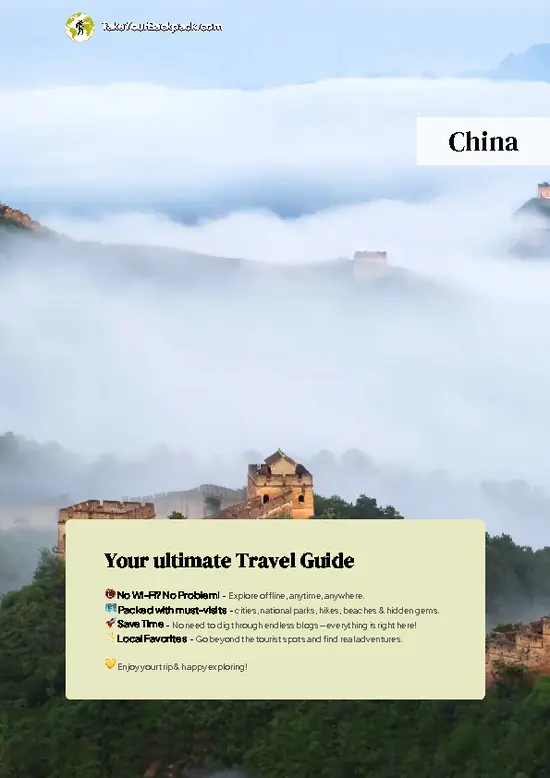
example page 0 from our offline Travel Guide for China
example page 1 from our offline Travel Guide for China
example page 2 from our offline Travel Guide for China
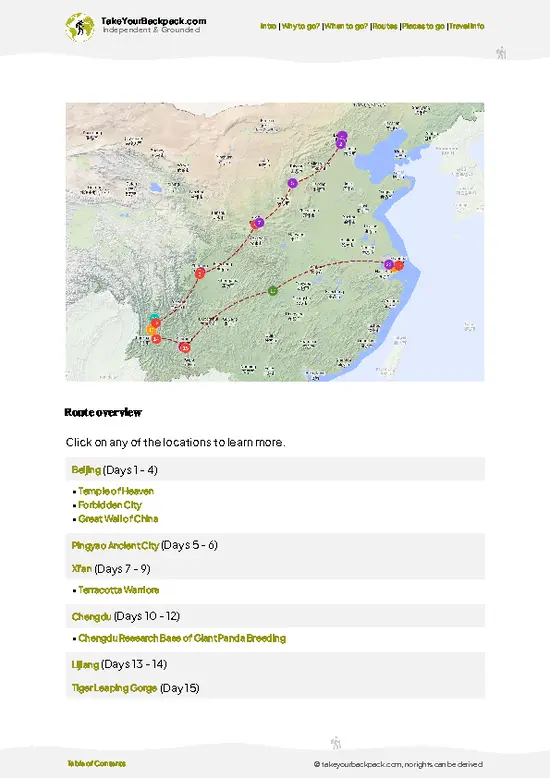
example page 3 from our offline Travel Guide for China
example page 4 from our offline Travel Guide for China
example page 5 from our offline Travel Guide for China
example page 6 from our offline Travel Guide for China
example page 7 from our offline Travel Guide for China
The digital guide (496 pages) contains:
139 highlights, ranked by travel appeal
Optimized 14, 21 & 30-day travel routes
Cities, national parks, landmarks, beaches
How to get around
Offline-friendly for travel without Wi-Fi
👉 Click to see all 30+ guide features

📅 Plan smarter in minutes, not weeks
Month by month travel advice
Festivals & national holidays
Budget expectations

🗺️ Go to the right places, skip the overrated ones
Honest pros & cons of destinations
Top hikes, parks & viewpoints
Lesser-known places most travelers miss
Clear “worth it vs skip it” guidance

🛏️ Travel smoothly without rookie mistakes
Best areas to stay
Transport systems explained simply
Common scams & safety advice
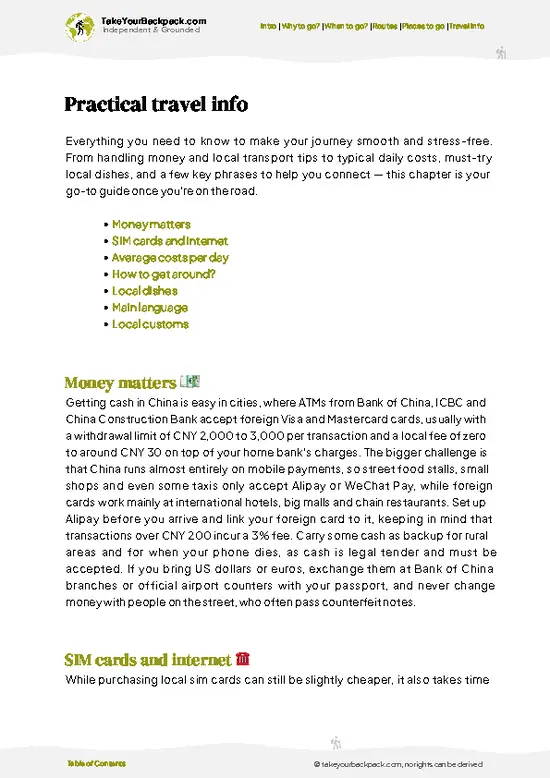
SIM cards, money & practical tips

🌍 Understand the country, not just visit it
Culture & traditions
52 Essential phrases & customs
Festivals worth planning around
Traveler-friendly historical context
Insights that make places more meaningful

📱 Built for real travel conditions
Fully downloadable PDF
Works completely offline
Optimized for phone use
Useful in remote areas & buses
Everything in one place
Save weeks of stressful planning
Get instant access to your full guide. 30‑day money-back guarantee.


By proceeding you agree to our terms.
Sent to your inbox immediately after payment • 100% Secure Checkout
Best Backpacking Travel Advisor 2025 tourism awardBest Backpacking
Travel Advisor
2025
What others say about Take Your Backpack Guides:
⭐⭐⭐⭐⭐
Fantastic, amazing amount of information!
⭐⭐⭐⭐⭐
My goodness this is amazing, it's what I've been looking for hats off too you!
⭐⭐⭐⭐⭐
I think this is absolutely BRILLIANT
⭐⭐⭐⭐
Very complete and informative. It's still missing places, but I gotta to commend you
⭐⭐⭐⭐⭐
This is truly amazing, thank you, can't wait to explore it with my kids!
⭐⭐⭐⭐⭐
Awesome resource, thank you!
⭐⭐⭐⭐⭐
This is amazing! Can't wait to explore the ones I haven't seen
⭐⭐⭐⭐
I love this! Well done, great idea.
⭐⭐⭐⭐⭐
Thanks for taking the time to make this gem!
⭐⭐⭐⭐⭐
This might be the best website I've ever seen.
⭐⭐⭐⭐⭐
Congratulations, and thank you so much for your work; it's incredibly valuable.
⭐⭐⭐⭐
In all seriousness I think you did a great job pointing out the important spots
⭐⭐⭐⭐⭐
10/10 very good
⭐⭐⭐⭐⭐
As someone who's only just starting to visit regularly this is awesome, thank you.
⭐⭐⭐⭐
Thank you very much! I'm going to visit my dad, it's going to be very useful!
⭐⭐⭐⭐⭐
This is really cool! We'll be travelling for the first time and this definitely come in handy.
⭐⭐⭐⭐⭐
You are now our minister of culture, congratulations 👨‍💼
⭐⭐⭐⭐⭐
Just wanted to tell you that this is a pearl! Going to follow your recommendations.
⭐⭐⭐⭐⭐
This is so cool. I'll definitely be using the resource for my travels soon.
⭐⭐⭐⭐⭐
This is very impressive! Good work.
⭐⭐⭐⭐⭐
This is an amazing and informative site. Very well done!

🛏️ Where to stay?How to pick the right area

In Lijiang, the Old Town area is the undeniable hub for backpackers who want to dive into the city’s pulse without draining their wallets. This neighborhood is a maze of cobblestone streets, buzzing with fellow travelers, street performers, and night markets that stretch late into the evening. It’s safe, well-trodden, and packed with hostels that cater to solo adventurers looking to swap stories over cheap beers or join group tours. The vibe here is social but not overwhelming—perfect for those who want to balance connection with some solo downtime.

Compared to the quieter, more residential areas … read more 👉
In Lijiang, the Old Town area is the undeniable hub for backpackers who want to dive into the city’s pulse without draining their wallets. This neighborhood is a maze of cobblestone streets, buzzing with fellow travelers, street performers, and night markets that stretch late into the evening. It’s safe, well-trodden, and packed with hostels that cater to solo adventurers looking to swap stories over cheap beers or join group tours. The vibe here is social but not overwhelming—perfect for those who want to balance connection with some solo downtime.

Compared to the quieter, more residential areas on the city’s outskirts, Old Town offers instant access to cultural landmarks and nightlife, saving you time and transport costs. However, if you crave a bit more peace and a slower pace, the nearby Shuhe Ancient Town provides a calmer alternative with fewer tourists but still enough hostels to keep you in the loop. Both areas offer a solid mix of comfort and budget, but Old Town’s energy makes it the smartest choice for backpackers who want to maximize social opportunities without sacrificing safety or affordability.

🚌 Getting aroundHow to get from A to B

Lijiang moves at a rhythm that’s part ancient village, part modern tourist hub. It’s not a place where you’ll find strict timetables etched in stone, but neither is it a free-for-all chaos. Instead, the city flows with a kind of intuitive patience—locals and visitors alike navigate narrow cobblestone streets and winding alleys with a sense of relaxed purpose. You’ll feel the pulse of the old town’s pedestrian zones, where walking is king, but beyond that, the city’s transport options reveal a layered trade-off between time, money, and comfort. Knowing how to play this game means you’re not just getting from A to B—you’re choosing your own adventure in efficiency and experience.


  • Walking: The heart of Lijiang’s old town is best explored on foot. Free, flexible, and immersive, walking lets
read more 👉
Lijiang moves at a rhythm that’s part ancient village, part modern tourist hub. It’s not a place where you’ll find strict timetables etched in stone, but neither is it a free-for-all chaos. Instead, the city flows with a kind of intuitive patience—locals and visitors alike navigate narrow cobblestone streets and winding alleys with a sense of relaxed purpose. You’ll feel the pulse of the old town’s pedestrian zones, where walking is king, but beyond that, the city’s transport options reveal a layered trade-off between time, money, and comfort. Knowing how to play this game means you’re not just getting from A to B—you’re choosing your own adventure in efficiency and experience.


  • Walking: The heart of Lijiang’s old town is best explored on foot. Free, flexible, and immersive, walking lets you soak in every detail at your own pace. It’s slow but priceless for atmosphere—expect to spend hours wandering if you want to really get it.


  • Local Bus: Runs roughly from 6:30 AM to 9:30 PM, with fares around 1-2 RMB. Buses cover the city outskirts and connect to the old town, but they’re often crowded and slow, especially during peak tourist hours. A budget-friendly choice if you’re not in a rush and want to stretch your legs less.


  • Shared Electric Scooters: Available via apps, these scooters cost about 1 RMB to unlock plus 0.5 RMB per minute. They’re faster than walking and more flexible than buses, but require a bit of balance and street savvy. Great for short hops when you want to save time without splurging on taxis.


  • Taxi: Starting fare is around 8 RMB, with rides within the city usually under 20 RMB. Taxis offer door-to-door comfort and speed but can get stuck in traffic near popular spots. Best when you’re carrying gear or running late, though it’s the priciest option for budget travelers.


  • Airport Shuttle Bus: Runs from early morning until late evening, costing about 30 RMB. It’s the cheapest way to get to and from Lijiang Sanyi Airport, but expect a 40-50 minute ride with multiple stops. A solid balance of cost and convenience if your schedule is flexible.

👛 Costs (as of 30 January 2025)Typical daily expenses

Backpacking in Lijiang, China, comes with a clear set of trade-offs between time, money, and comfort. Understanding these costs lets you decide where to stretch and where to splurge for the best experience.
  • Dorm Accommodation (High Season): Expect to pay around $10-$15 per night. High season, typically spring and autumn, drives prices up due to demand, especially in popular hostels near the Old Town.
  • Dorm Accommodation (Off-Season): Prices drop to about $6-$10 per night. Winter months see fewer tourists, so you can snag a bed in a decent hostel for less, but some places may close or reduce services.
  • Meals: Street food and local eateries offer meals for $2-$5. A simple breakfast or lunch might be closer to $2, while a more filling dinner with local specialties can push toward $5. Western-style
read more 👉
Backpacking in Lijiang, China, comes with a clear set of trade-offs between time, money, and comfort. Understanding these costs lets you decide where to stretch and where to splurge for the best experience.
  • Dorm Accommodation (High Season): Expect to pay around $10-$15 per night. High season, typically spring and autumn, drives prices up due to demand, especially in popular hostels near the Old Town.
  • Dorm Accommodation (Off-Season): Prices drop to about $6-$10 per night. Winter months see fewer tourists, so you can snag a bed in a decent hostel for less, but some places may close or reduce services.
  • Meals: Street food and local eateries offer meals for $2-$5. A simple breakfast or lunch might be closer to $2, while a more filling dinner with local specialties can push toward $5. Western-style cafes or restaurants will cost more, around $7-$10 per meal.
  • Local Transport: Short taxi rides within the city typically cost $1-$3. Buses are cheaper, around $0.30-$0.50 per ride, but slower and less frequent.
  • City Transport Pass: Lijiang doesn’t have a formal city transport pass system like bigger cities. Budget for daily bus rides if you plan to use public transport extensively, roughly $1-$2 per day.
  • Basic Activities/Entry Fees: Entrance to the Old Town is free, but some attractions like the Black Dragon Pool or museums charge $3-$7. Day trips to nearby natural sites or cultural villages can cost $10-$20 if you join a group tour or hire a driver.
  • Miscellaneous Expenses: This includes bottled water, snacks, occasional laundry, or small souvenirs, averaging $2-$5 daily depending on your habits.

Add it all up, and you’re looking at a daily budget of roughly $20-$40 for a backpacker who balances comfort and economy. Push for the lower end by sticking to off-season dorms, street food, and buses, or lean toward the higher end if you want a bit more convenience and some paid activities. Knowing these trade-offs means you can plan your days and nights with confidence, turning the logistics into a strategic game rather than a guessing mess.


source: lijiang.gov.cn
⚠️ Prices can change and everyone travels differently, so take this as a rough guide. Hope it helps you plan your adventure!

🚌 Day tripsEasy escapes and nearby places

Lijiang is a fantastic launchpad for day trips that blend culture, nature, and adventure. Here’s how to maximize your experience without breaking the bank.

Tiger Leaping Gorge
This iconic gorge is a must-see for its breathtaking views and exhilarating hiking trails. Just a two-hour bus ride from Lijiang, you can tackle the famous trek along the gorge’s edge. The scenery is jaw-dropping, with towering cliffs and roaring rivers. Expect to spend around 50 RMB for the bus and a few more for snacks along the way. The best time to go is from April to October, when the weather is mild. A common mistake? Underestimating the trail’s difficulty; wear sturdy shoes and pack plenty of water.
👉 Explore Tiger Leaping Gorge

Shangri-La
About three hours from Lijiang, this Tibetan-influenced town offers … read more 👉
Lijiang is a fantastic launchpad for day trips that blend culture, nature, and adventure. Here’s how to maximize your experience without breaking the bank.

Tiger Leaping Gorge
This iconic gorge is a must-see for its breathtaking views and exhilarating hiking trails. Just a two-hour bus ride from Lijiang, you can tackle the famous trek along the gorge’s edge. The scenery is jaw-dropping, with towering cliffs and roaring rivers. Expect to spend around 50 RMB for the bus and a few more for snacks along the way. The best time to go is from April to October, when the weather is mild. A common mistake? Underestimating the trail’s difficulty; wear sturdy shoes and pack plenty of water.
👉 Explore Tiger Leaping Gorge

Shangri-La
About three hours from Lijiang, this Tibetan-influenced town offers a rich cultural experience. Explore the Songzanlin Monastery, the largest in Yunnan, and wander through the old town’s narrow streets. The round-trip bus fare is around 100 RMB, and you can easily spend a day soaking in the atmosphere. Late spring and early fall are ideal for pleasant weather. Many first-timers miss the chance to try local yak dishes—don’t skip the food!


Black Dragon Pool
Just a short 30-minute bus ride from Lijiang, this serene park is perfect for a leisurely day. The pool offers stunning views of the Jade Dragon Snow Mountain, and the entrance fee is only about 30 RMB. Bring a picnic and enjoy the tranquility. The best time to visit is early morning when the light is magical. A common oversight is rushing through; take your time to soak in the peaceful surroundings.


Baisha Village
A quick 30-minute ride from Lijiang, Baisha is a charming village that showcases traditional Naxi culture. Visit the ancient murals and local artisans, and enjoy a cup of tea in a quiet café. The trip costs around 20 RMB, making it an affordable escape. Spring and autumn are ideal for pleasant strolls. Many backpackers overlook this spot, so you’ll find it less crowded than Lijiang.


Yulong Snow Mountain
Roughly 40 minutes from Lijiang, this majestic mountain range offers stunning views and various hiking options. The cable car ride is a bit pricey at around 200 RMB, but the vistas are worth it. Best visited in the summer months, when the weather is clear. A common mistake is not acclimatizing to the altitude; take it slow to enjoy the experience fully.
Want to know what more China offers?
The China Travel Guide describes 139 highlights, from cities to national parks, from beaches to hikes

Get the Travel Guide -

🍲 FoodEating & Drinking in Lijiang

In Lijiang, food is a vibrant tapestry of flavors that tells the story of its rich culture. You can’t miss the Naxi cuisine, where dishes like grilled fish and pork with pickled vegetables shine. Street vendors serve up Yunnan rice noodles, a comforting bowl that warms you from the inside out. The spicy mushroom hotpot is a must-try, especially when shared with fellow travelers.

Markets buzz with life, offering a sensory overload of sizzling meats and fragrant spices. Grab a seat at a casual eatery, where the locals gather, and dive into crossing-the-bridge noodles—a dish that’s as much about the experience as the taste.

When it comes to drinks, don’t overlook the local pu-erh tea. It’s not just a beverage; it’s a ritual. Expect to sip slowly, savoring the earthy notes while chatting with … read more 👉
In Lijiang, food is a vibrant tapestry of flavors that tells the story of its rich culture. You can’t miss the Naxi cuisine, where dishes like grilled fish and pork with pickled vegetables shine. Street vendors serve up Yunnan rice noodles, a comforting bowl that warms you from the inside out. The spicy mushroom hotpot is a must-try, especially when shared with fellow travelers.

Markets buzz with life, offering a sensory overload of sizzling meats and fragrant spices. Grab a seat at a casual eatery, where the locals gather, and dive into crossing-the-bridge noodles—a dish that’s as much about the experience as the taste.

When it comes to drinks, don’t overlook the local pu-erh tea. It’s not just a beverage; it’s a ritual. Expect to sip slowly, savoring the earthy notes while chatting with new friends.

Etiquette here is relaxed but respectful. Sharing food is common, so don’t hesitate to pass your dish around. Embrace the communal spirit; it’s what makes dining in Lijiang truly special.

🛡️ SafetyTraveler Safety Guide

Lijiang is generally safe for backpackers, but a few areas and situations warrant your attention. The Old Town, while charming, can get crowded, making it a hotspot for pickpockets. Keep your belongings close, especially in bustling markets or during festivals.

If you’re traveling solo, be mindful when wandering after dark. Stick to well-lit streets and avoid isolated alleys. The atmosphere is lively, but it’s wise to trust your instincts.

Scams are rare, but some vendors may inflate prices for tourists. Always negotiate and ask locals for fair rates. A common annoyance is the persistent sales tactics in markets; a polite but firm “no” usually does the trick. Carry yourself confidently, and you’ll navigate Lijiang’s streets with ease, enjoying the experience without unnecessary stress.

Other Chinese cities near Lijiang

Explore more nearby:

  • Lijiang Ancient Town—Stone bridges, Naxi courtyards, mountain backdrop| 2 km away
  • Dali—Bai minority, mountain backdrop, lakeside town| 139 km away
  • Lincang—tea mountains, border trade, Dai villages| 331 km away

💡 Not sure where to go next?
Create a personalized itinerary for China including Lijiang and the places that fit your trip.

Generate my itinerary

👉 Discover all cities

Or checkout all China has to offer (think cities, towns, villages, national parks, hikes, beaches, festivals)
Country photo of China

We 💚 feedbackParting advice and final tips

Lijiang’s ancient town is a time capsule, where cobblestone streets whisper stories of the Naxi culture. You’ll find yourself lost in its charm, but be ready for the crowds. Peak tourist seasons can feel like a parade, which might dampen the magic. Still, if you can navigate the busy moments, the rich history and stunning landscapes are absolutely worth it. Embrace the chaos; it’s part of the adventure.

✈️ When did I visit China?
As part of my 1.5 year travel around the world trip, I visited China in August 2015, coming from Mongolia by the TransMongolia Express.

✍️ Help improve this page!
The information on this page is based on my own backpacking experience in China, supplemented with up-to-date research and feedback from other travelers. Travel details can change, so if you notice anything outdated or incomplete, feel free to let me know.


🙋‍♂️ Give feedback

👋 Meet the founderWho’s Behind Take Your Backpack?

Johan, backpacker and founder of TakeYourBackpackHi, I’m Johan (Netherlands 🇳🇱), the creator of TakeYourBackpack. Over the past decade, I’ve backpacked through 80+ countries across six continents, gaining extensive experience with independent travel, long-term trips, and overland routes.

This site is built on a combination of firsthand travel experience and carefully curated insights from other backpackers. Many guides are based on places I’ve personally visited, while others bring together tips, observations, and practical advice shared by trusted travelers I’ve met along the way.

The goal is to provide realistic, experience-driven guidance — not generic itineraries — so you can explore destinations with better context, clearer expectations, and more confidence.

Get full China guide •
Instant download • 139 highlights • Full Offline guide