×

China🇨🇳 | regionsSichuan Giant Panda SanctuariesBamboo forest, panda habitat, misty mountains | things to do and best time to go

Explore Shangri-La regionExplore South China Karst

Backpacking in Sichuan Giant Panda Sanctuaries
UNESCO World Heritage site
🌟 Highlightregion ranked #5
By Johan Kruseman 🇳🇱 | Updated May 19, 2026

Most people only realize on the last day that the real win at the Sichuan Giant Panda Sanctuaries is how close you can actually get to quiet mountain trails once the tour buses leave; you’re not just ticking off pandas, you’re buying yourself cool, misty hiking hours that feel like a different trip. The sanctuaries sit in western Sichuan, in the mountains northwest of Chengdu, spread around places like Wolong, Dujiangyan, and Baoxing. For backpackers, it’s a weirdly good mix: yes, the panda bases are crowded and a bit theme-park, but step one valley over and it’s cheap guesthouses, card-playing locals, and forest that smells like wet stone and fir. Transport is slower and more chaotic than in eastern China, and weather can shut roads, but compared with nearby Chengdu or Emei Shan, you trade convenience for quieter trails and a lot more actual wilderness.

Discover everything you want to know in the 📖 China Travel Guide.


Get your China guide
139 ranked highlights, routes & tips, works offline (496 pages)
Loading the map 🌍
CLICK TO FILTER
cities
towns
landmarks
national parks
hikes
beaches
attractions
festivals
regions
SHOW COUNTRY’S BESTSHOW ALL

✨ Why go?
Ranked #5 region in China
Why visitors keep coming back

Backpackers flock to the Sichuan Giant Panda Sanctuaries for a reason: it’s a playground of variety. You’ve got lush bamboo forests, rolling hills, and even some rugged mountains, all within a stone’s throw. This means you can soak in diverse landscapes without the hassle of constant relocation.

Transport here is a breeze. Buses and shared rides make it easy to hop between panda reserves, quaint villages, and vibrant markets. You can spend a morning watching those adorable pandas munching away, then stroll through a local market in the afternoon, sampling spicy Sichuan cuisine.

The beauty of this region is in its flexibility. You can choose to hike a challenging trail or take a leisurely walk through the serene countryside. This mix of nature and culture allows for a deeper connection … read more 👉
Backpackers flock to the Sichuan Giant Panda Sanctuaries for a reason: it’s a playground of variety. You’ve got lush bamboo forests, rolling hills, and even some rugged mountains, all within a stone’s throw. This means you can soak in diverse landscapes without the hassle of constant relocation.

Transport here is a breeze. Buses and shared rides make it easy to hop between panda reserves, quaint villages, and vibrant markets. You can spend a morning watching those adorable pandas munching away, then stroll through a local market in the afternoon, sampling spicy Sichuan cuisine.

The beauty of this region is in its flexibility. You can choose to hike a challenging trail or take a leisurely walk through the serene countryside. This mix of nature and culture allows for a deeper connection to the area, making slow travel feel rewarding.

So, if you’re looking for a spot where you can balance comfort and adventure, while also feeling like a savvy local, Sichuan is your ticket. It’s not just about the pandas; it’s about the entire experience.
Want to include Sichuan Giant Panda Sanctuaries in your China route?
Create a personalized China itinerary that includes Sichuan Giant Panda Sanctuaries and the places that fit your trip — based on your travel style, budget, and available time. Get your route in seconds.

Generate my trip

💡 HighlightsThe experiences that define the visit

  1. Mount Siguniang (Four Sisters Mountain) — Rugged, snow-capped peaks, huge alpine meadows and honest-to-goodness Tibetan villages at the base. You can do day hikes (easy to serious), camp on the meadows in summer, and the mountain’s mix of Sichuan mountain ecology plus Tibetan culture is a combo you won’t get elsewhere. (Personal favorite — the late-afternoon light on the valleys is unforgettable.)
  2. Rilong Tibetan Village & market — The little gateway town for Siguniang that actually feels like a proper mountain village: family-run guesthouses, yak-butter tea stalls, and a weekly market where locals trade meat, cheese and handmade gear. Great for low-cost homestays and to see Tibetan daily life without the staged “culture show.”
  3. Wolong Reserve bamboo valleys (non-research trails) — Skip
read more 👉
  1. Mount Siguniang (Four Sisters Mountain) — Rugged, snow-capped peaks, huge alpine meadows and honest-to-goodness Tibetan villages at the base. You can do day hikes (easy to serious), camp on the meadows in summer, and the mountain’s mix of Sichuan mountain ecology plus Tibetan culture is a combo you won’t get elsewhere. (Personal favorite — the late-afternoon light on the valleys is unforgettable.)
  2. Rilong Tibetan Village & market — The little gateway town for Siguniang that actually feels like a proper mountain village: family-run guesthouses, yak-butter tea stalls, and a weekly market where locals trade meat, cheese and handmade gear. Great for low-cost homestays and to see Tibetan daily life without the staged “culture show.”
  3. Wolong Reserve bamboo valleys (non-research trails) — Skip the breeding centers and head to the wild bamboo slopes and backcountry trails in Wolong’s protected zones. You’re walking prime panda habitat: layered bamboo, misty ravines, and more bird/songlife than people. Best done with a local ranger or experienced guide to reduce disturbance.
  4. Bifengxia Gorge & bamboo forest park — A steep, green canyon with boardwalks, small waterfalls and enormous stands of bamboo that funnel into narrow river gorges. It’s scenic, easy to reach from Ya’an, and quieter than the big-name attractions — solid for afternoon hikes and river photography.
  5. Tangjiahe National Nature Reserve — Dense, old-growth montane forest that still holds wild panda sign and large mammals; fewer visitors, which means more chance of hearing the forest at dawn. Trails are raw and honest — expect mud, roots, and real wildlife watching rather than polished paths.
  6. Fengtongzhai Nature Reserve & waterfall circuits — Waterfalls, misty cedar-fir stands and steep valley views make this a dramatic half-day to full-day outing. It’s botanically rich (lots of endemic understory plants) and less-developed than Wolong, so it feels properly wild.
  7. Baoxing Old Town & panda heritage trail (hidden gem) — Small, lived-in town famous as the location where western naturalists first documented the giant panda. The town’s narrow lanes, old tea houses and short heritage trails give a real sense of local history — plus a chance to sample countryside Sichuan cooking without tourist prices.
  8. Xiaoxiangling Mountains — A compact, rugged range with continuous bamboo ridges; a true “off the beaten track” panda habitat. Few organized tours come here, so you’ll mostly find local hunters, shepherds and excellent wildlife-tracking opportunities. Bring solid boots and expect simple trails.
  9. Sections of the Ancient Tea-Horse Road in the sanctuary foothills (hidden gem) — Walkable stretches of the historic trade route that threaded tea and salt through these mountains. The stone steps, old mule tracks and tiny teahouses along the way are a direct link to regional trade history and a great low-key overnight trek.
  10. Local tea terraces and family tea tastings near Ya’an (hidden gem) — Small, family-run tea plots on the lower slopes inside the sanctuary area where you can taste freshly processed green tea, tour tiny drying rooms, and learn the local tea culture from growers rather than showrooms. It’s grounded, cheap, and distinctly Sichuanese.
Spotted a mistake or missing something? Contact us.

⌛️ 5 daysA smart one-week plan

Day 1: Chengdu
You’ll kick off in Chengdu, the gateway to the Sichuan Giant Panda Sanctuaries. This city is your launchpad, with a well-connected transport system that makes getting around a breeze. Spend your morning at the Chengdu Research Base of Giant Panda Breeding. Arrive early to beat the crowds and catch those adorable pandas at their most active. After lunch, explore the local food scene—don’t miss the spicy hotpot. The evening is perfect for a stroll through Jinli Ancient Street, where you can soak in the vibrant atmosphere and pick up some local snacks.

Day 2: Dujiangyan
Take a short bus ride to Dujiangyan, about an hour away. This ancient irrigation system is a UNESCO World Heritage site and a marvel of engineering. Spend your day wandering the scenic paths and learning about … read more 👉
Day 1: Chengdu
You’ll kick off in Chengdu, the gateway to the Sichuan Giant Panda Sanctuaries. This city is your launchpad, with a well-connected transport system that makes getting around a breeze. Spend your morning at the Chengdu Research Base of Giant Panda Breeding. Arrive early to beat the crowds and catch those adorable pandas at their most active. After lunch, explore the local food scene—don’t miss the spicy hotpot. The evening is perfect for a stroll through Jinli Ancient Street, where you can soak in the vibrant atmosphere and pick up some local snacks.

Day 2: Dujiangyan
Take a short bus ride to Dujiangyan, about an hour away. This ancient irrigation system is a UNESCO World Heritage site and a marvel of engineering. Spend your day wandering the scenic paths and learning about its history. The tranquility here contrasts nicely with Chengdu’s hustle. In the afternoon, visit the nearby Qingcheng Mountain for a bit of hiking. The fresh air and stunning views are a refreshing change.

Day 3: Wolong
Now, it’s time to head to Wolong, a bit more remote but worth the trek. The bus ride takes around two hours, but the scenery is captivating. Wolong is less touristy, allowing for a more intimate panda experience. Spend your day at the Wolong Panda Center, where you can see pandas in a more natural setting. The peace here is palpable, and you might even spot some other wildlife.

Day 4: Bifengxia
From Wolong, take a bus to Bifengxia, about an hour away. This area is known for its breathtaking gorges and the Bifengxia Panda Base. Spend your day hiking the trails and enjoying the stunning landscapes. The panda base here is less crowded, giving you a chance to see these creatures up close without the tourist rush.

Day 5: Off-Path Reward - Mount Emei
For a final adventure, take a detour to Mount Emei, a couple of hours from Bifengxia. This sacred Buddhist mountain offers incredible views and a chance to experience local culture. The hike to the summit is rewarding, and you’ll find temples along the way.

If you can only choose one day, make it Day 3 in Wolong. The combination of fewer crowds and a more authentic panda experience makes it the highlight of your trip. You’ll leave feeling like you’ve truly connected with these incredible creatures.
Turn your Sichuan Giant Panda Sanctuaries visit into an China adventure
Build a complete China route with Sichuan Giant Panda Sanctuaries, hidden gems, must-see destinations, and realistic travel times included.

Generate my trip

🌤️ When to go?Best time to visit Sichuan Giant Panda Sanctuaries


  • Topic: Weather and Temperature – Spring (March to May) and autumn (September to November) offer the best weather. Expect mild temps around 15-22°C (59-72°F), perfect for trekking without sweating buckets or freezing your toes off. Summers get hot and humid, winters cold and damp.

  • Topic: Daylight Hours – In spring and autumn, you get roughly 11-13 hours of daylight. That’s enough time to explore without rushing but not so much that you’re dragging through the afternoon heat or dark early.

  • Topic: Crowds – Peak panda-spotting season is spring when baby pandas are most active. It’s adorable but expect more tourists. Autumn is quieter, giving you a better shot at peaceful encounters and photos without elbowing your way through.

  • Topic: Seasonal Activities – Spring brings blooming rhododendrons
read more 👉

  • Topic: Weather and Temperature – Spring (March to May) and autumn (September to November) offer the best weather. Expect mild temps around 15-22°C (59-72°F), perfect for trekking without sweating buckets or freezing your toes off. Summers get hot and humid, winters cold and damp.

  • Topic: Daylight Hours – In spring and autumn, you get roughly 11-13 hours of daylight. That’s enough time to explore without rushing but not so much that you’re dragging through the afternoon heat or dark early.

  • Topic: Crowds – Peak panda-spotting season is spring when baby pandas are most active. It’s adorable but expect more tourists. Autumn is quieter, giving you a better shot at peaceful encounters and photos without elbowing your way through.

  • Topic: Seasonal Activities – Spring brings blooming rhododendrons and fresh greenery, while autumn offers crisp air and colorful foliage. Both seasons enhance the sanctuary’s natural vibe beyond just panda watching.

  • Topic: Price Fluctuations – Spring’s popularity pushes prices up on accommodation and tours. Autumn tends to be more budget-friendly, with fewer crowds and better deals on guesthouses and local transport.


Pro-tip: Aim for late October—cool, quiet, and wallet-friendly. You’ll catch the tail end of autumn colors and dodge the springtime panda stampede.


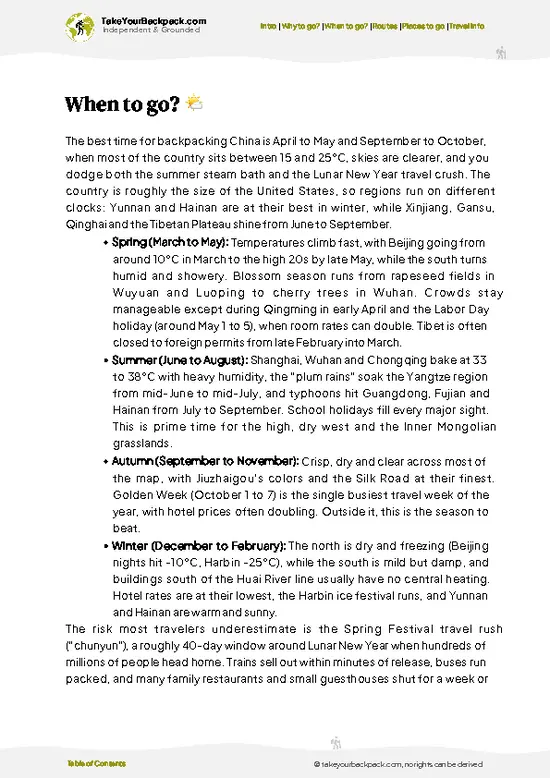
source: climatestotravel.comJANJanuary: fair for travelingFEBFebruary: fair for travelingMARMarch: highly recommended for travelingAPRApril: excellent for travelingMAYMay: highly recommended for travelingJUNJune: fair for travelingJULJuly: below average for travelingAUGAugust: below average for travelingSEPSeptember: highly recommended for travelingOCTOctober: excellent for travelingNOVNovember: highly recommended for travelingDECDecember: fair for traveling
when-to-go

✈️ The backpacker research shortcutChina Travel Guide

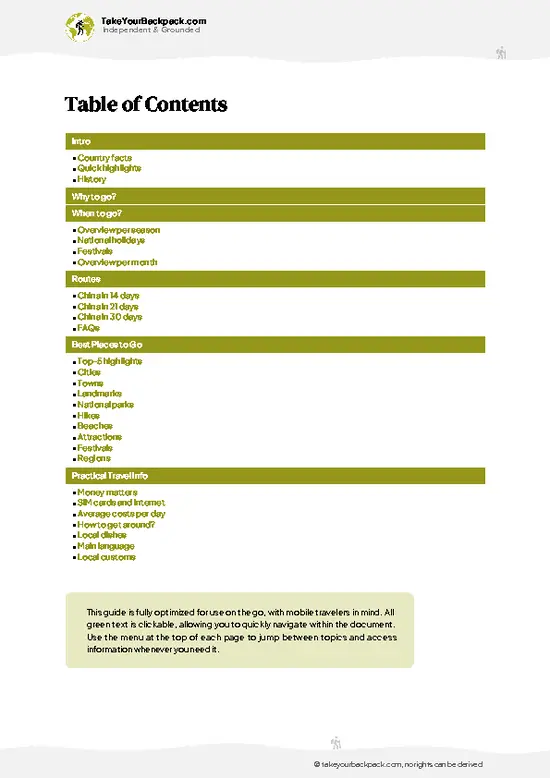
An offline-friendly backpacking guide with optimized travel routes, ranked highlights, transport advice, and the best areas to stay.
example page 0 from our offline Travel Guide for China
example page 1 from our offline Travel Guide for China
example page 2 from our offline Travel Guide for China
example page 3 from our offline Travel Guide for China
example page 4 from our offline Travel Guide for China
example page 5 from our offline Travel Guide for China
example page 6 from our offline Travel Guide for China
example page 7 from our offline Travel Guide for China
The digital guide (496 pages) contains:
139 highlights, ranked by travel appeal
Optimized 14, 21 & 30-day travel routes
Cities, national parks, landmarks, beaches
How to get around
Offline-friendly for travel without Wi-Fi
👉 Click to see all 30+ guide features

📅 Plan smarter in minutes, not weeks
Month by month travel advice
Festivals & national holidays
Budget expectations

🗺️ Go to the right places, skip the overrated ones
Honest pros & cons of destinations
Top hikes, parks & viewpoints
Lesser-known places most travelers miss
Clear “worth it vs skip it” guidance

🛏️ Travel smoothly without rookie mistakes
Best areas to stay
Transport systems explained simply
Common scams & safety advice
SIM cards, money & practical tips

🌍 Understand the country, not just visit it
Culture & traditions
52 Essential phrases & customs
Festivals worth planning around
Traveler-friendly historical context
Insights that make places more meaningful

📱 Built for real travel conditions
Fully downloadable PDF
Works completely offline
Optimized for phone use
Useful in remote areas & buses
Everything in one place
Save weeks of stressful planning
Get instant access to your full guide. 30‑day money-back guarantee.


By proceeding you agree to our terms.
Sent to your inbox immediately after payment • 100% Secure Checkout
Best Backpacking Travel Advisor 2025 tourism awardBest Backpacking
Travel Advisor
2025
What others say about Take Your Backpack Guides:
⭐⭐⭐⭐⭐
Fantastic, amazing amount of information!
⭐⭐⭐⭐⭐
My goodness this is amazing, it's what I've been looking for hats off too you!
⭐⭐⭐⭐⭐
I think this is absolutely BRILLIANT
⭐⭐⭐⭐
Very complete and informative. It's still missing places, but I gotta to commend you
⭐⭐⭐⭐⭐
This is truly amazing, thank you, can't wait to explore it with my kids!
⭐⭐⭐⭐⭐
Awesome resource, thank you!
⭐⭐⭐⭐⭐
This is amazing! Can't wait to explore the ones I haven't seen
⭐⭐⭐⭐
I love this! Well done, great idea.
⭐⭐⭐⭐⭐
Thanks for taking the time to make this gem!
⭐⭐⭐⭐⭐
This might be the best website I've ever seen.
⭐⭐⭐⭐⭐
Congratulations, and thank you so much for your work; it's incredibly valuable.
⭐⭐⭐⭐
In all seriousness I think you did a great job pointing out the important spots
⭐⭐⭐⭐⭐
10/10 very good
⭐⭐⭐⭐⭐
As someone who's only just starting to visit regularly this is awesome, thank you.
⭐⭐⭐⭐
Thank you very much! I'm going to visit my dad, it's going to be very useful!
⭐⭐⭐⭐⭐
This is really cool! We'll be travelling for the first time and this definitely come in handy.
⭐⭐⭐⭐⭐
You are now our minister of culture, congratulations 👨‍💼
⭐⭐⭐⭐⭐
Just wanted to tell you that this is a pearl! Going to follow your recommendations.
⭐⭐⭐⭐⭐
This is so cool. I'll definitely be using the resource for my travels soon.
⭐⭐⭐⭐⭐
This is very impressive! Good work.
⭐⭐⭐⭐⭐
This is an amazing and informative site. Very well done!

🛏️ Where to stay?Best areas to stay in China

When you’re diving into the Sichuan Giant Panda Sanctuaries, you want to land in spots that feel alive and welcoming. Chengdu is the obvious first stop. It’s a bustling city with a vibrant food scene and plenty of backpacker-friendly neighborhoods. Stay in areas like Jinli Ancient Street or the Wuhou District. You’ll find street food galore and easy access to panda tours. Plus, the social vibe here is electric; you’ll meet fellow travelers over spicy hot pot.

Next up, consider Dujiangyan. This town is less touristy but offers a genuine slice of local life. It’s close to the panda base and has … read more 👉
When you’re diving into the Sichuan Giant Panda Sanctuaries, you want to land in spots that feel alive and welcoming. Chengdu is the obvious first stop. It’s a bustling city with a vibrant food scene and plenty of backpacker-friendly neighborhoods. Stay in areas like Jinli Ancient Street or the Wuhou District. You’ll find street food galore and easy access to panda tours. Plus, the social vibe here is electric; you’ll meet fellow travelers over spicy hot pot.

Next up, consider Dujiangyan. This town is less touristy but offers a genuine slice of local life. It’s close to the panda base and has a laid-back atmosphere. You can explore ancient irrigation systems and hike nearby trails. The community here is friendly, making it easy to connect with locals and other backpackers.

Don’t overlook Bifengxia, either. This village is home to a panda base that’s less crowded than the one in Chengdu. The scenery is stunning, and the hiking trails are a bonus. You’ll find a more intimate experience with nature and the pandas, plus the chance to bond with fellow travelers in a cozy setting.

Choose wisely, and you’ll unlock the real heart of Sichuan.

🚌 Getting aroundTransportation options and practical tips

The Sichuan Giant Panda Sanctuaries pulse with a rhythm that’s part serene and part chaotic. Picture this: bamboo forests swaying gently in the breeze, while the occasional roar of a bus engine disrupts the tranquility. Here, schedules can feel more like suggestions than hard rules. You might find yourself waiting for a ride that’s late or hopping on a shared van that’s packed to the brim with fellow travelers. It’s a place where intuition often trumps rigid planning, and that’s part of the charm. Embrace the flow, and you’ll discover that the journey is just as rewarding as the destination.


  • Public Buses: These are your budget-friendly lifelines. They run from Chengdu to various points in the sanctuaries, with the first bus leaving around 7 AM and the last one at 6 PM. Expect to pay about
read more 👉
The Sichuan Giant Panda Sanctuaries pulse with a rhythm that’s part serene and part chaotic. Picture this: bamboo forests swaying gently in the breeze, while the occasional roar of a bus engine disrupts the tranquility. Here, schedules can feel more like suggestions than hard rules. You might find yourself waiting for a ride that’s late or hopping on a shared van that’s packed to the brim with fellow travelers. It’s a place where intuition often trumps rigid planning, and that’s part of the charm. Embrace the flow, and you’ll discover that the journey is just as rewarding as the destination.


  • Public Buses: These are your budget-friendly lifelines. They run from Chengdu to various points in the sanctuaries, with the first bus leaving around 7 AM and the last one at 6 PM. Expect to pay about 40-60 RMB. They can be slow, but you’ll get a real taste of local life.


  • Shared Vans: A step up in comfort and speed, these vans often leave when full, which can be a blessing or a curse. Prices range from 60-100 RMB, and they usually take about 2-3 hours. You’ll have a bit more legroom, and they’re a great way to meet fellow adventurers.


  • Private Taxis: If you’re feeling flush, a private taxi can whisk you away at your own pace. Expect to pay around 300-500 RMB for a one-way trip. It’s fast and comfortable, but you’ll miss out on the local vibe. Perfect for those early morning panda visits when you want to beat the crowds.


  • Bicycle Rentals: For the adventurous spirit, renting a bike can be a game-changer. Prices hover around 30-50 RMB per day. You’ll get up close and personal with the landscape, but be prepared for some steep hills. It’s a workout, but the freedom is worth it.


  • Guided Tours: If you want a hassle-free experience, consider a guided tour that includes transportation. Prices vary widely, but you can expect to pay anywhere from 300-800 RMB depending on the package. This option often includes entry fees and a knowledgeable guide, making it a solid choice for first-timers.


Here’s your tactical tip: download a local transport app before you arrive. It’ll help you navigate bus schedules and shared van routes like a pro. Knowing when and where to catch a ride can save you time and keep your adventure flowing smoothly.

🍲 FoodLocal Flavors for Backpackers

In the Sichuan Giant Panda Sanctuaries, food is a vibrant affair. You can’t miss the spicy hot pot, where bubbling broth mingles with an array of ingredients. Dive into mapo tofu, a dish that packs a punch with its numbing Sichuan peppercorns. The flavors are bold, and the heat is real. Pair these with a local beer or a glass of Sichuan rice wine for a true taste of the region.

For a backpacker, the street food scene is where the magic happens. Stroll through bustling markets, where vendors serve up chuan chuan—skewered meats grilled to perfection. The aroma of grilled chili and garlic fills the air, drawing you in. Don’t skip the dumplings; they’re often made fresh right before your eyes.

Dining here is a communal experience. Expect to share dishes, so don’t be shy about reaching across … read more 👉
In the Sichuan Giant Panda Sanctuaries, food is a vibrant affair. You can’t miss the spicy hot pot, where bubbling broth mingles with an array of ingredients. Dive into mapo tofu, a dish that packs a punch with its numbing Sichuan peppercorns. The flavors are bold, and the heat is real. Pair these with a local beer or a glass of Sichuan rice wine for a true taste of the region.

For a backpacker, the street food scene is where the magic happens. Stroll through bustling markets, where vendors serve up chuan chuan—skewered meats grilled to perfection. The aroma of grilled chili and garlic fills the air, drawing you in. Don’t skip the dumplings; they’re often made fresh right before your eyes.

Dining here is a communal experience. Expect to share dishes, so don’t be shy about reaching across the table. It’s customary to leave a bit of food on your plate as a sign of satisfaction. And remember, slurping your noodles is not just acceptable; it’s encouraged! Embrace the chaos, savor the flavors, and you’ll feel like a local in no time.

Other Chinese regions near Sichuan Giant Panda Sanctuaries

Explore more nearby:

  • Huanglong—Travertine pools, alpine meadows, high-altitude valley| 337 km away
  • Shangri-La region—Tibetan villages, alpine lakes, prayer flags| 401 km away
  • South China Karst—Limestone towers, underground rivers, cave systems| 692 km away

💡 Not sure where to go next?
Create a personalized itinerary for China including Sichuan Giant Panda Sanctuaries and the places that fit your trip.

Generate my itinerary

👉 Discover all regions

Or checkout all China has to offer (think cities, towns, villages, national parks, hikes, beaches, festivals)
Country photo of China

We 💚 feedbackKey takeaways before you go

Visiting the Sichuan Giant Panda Sanctuaries is like stepping into a living, breathing nature documentary. Watching those fluffy giants munch bamboo is pure joy. But here’s the kicker: it can get crowded, especially during peak season. If you want that intimate experience, aim for early mornings or weekdays. Trust me, the early bird gets the panda magic. Just be ready for a bit of a trek to get there—totally worth it for the memories.

✈️ When did I visit China?
As part of my 1.5 year travel around the world trip, I visited China in August 2015, coming from Mongolia by the TransMongolia Express.

✍️ Help improve this page!
The information on this page is based on my own backpacking experience in China, supplemented with up-to-date research and feedback from other travelers. Travel details can change, so if you notice anything outdated or incomplete, feel free to let me know.


🙋‍♂️ Give feedback

👋 Meet the founderWho’s Behind Take Your Backpack?

Johan, backpacker and founder of TakeYourBackpackHi, I’m Johan (Netherlands 🇳🇱), the creator of TakeYourBackpack. Over the past decade, I’ve backpacked through 80+ countries across six continents, gaining extensive experience with independent travel, long-term trips, and overland routes.

This site is built on a combination of firsthand travel experience and carefully curated insights from other backpackers. Many guides are based on places I’ve personally visited, while others bring together tips, observations, and practical advice shared by trusted travelers I’ve met along the way.

The goal is to provide realistic, experience-driven guidance — not generic itineraries — so you can explore destinations with better context, clearer expectations, and more confidence.

Get full China guide •
Instant download • 139 highlights • Full Offline guide