×

China🇨🇳 | regionsSouth China KarstLimestone towers, underground rivers, cave systems | things to do and best time to go

Explore Sichuan Giant Panda SanctuariesExplore Tibet and the Himalayas

Backpacking in South China Karst
UNESCO World Heritage site
👍 Recommendedregion ranked #9
By Johan Kruseman 🇳🇱 | Updated June 1, 2026

You land in Guilin or Guiyang and the first big decision hits: do you burn cash on fast trains, cable cars, and boutique guesthouses so you can see more karst in less time, or go slow and cheap on buses and village stays and accept that you’ll see fewer spots but feel the place more deeply? That trade-off matters here because South China Karst is spread across Guangxi, Guizhou, Yunnan, and parts of Chongqing – huge distances, wildly different vibes. For backpackers, it’s a jackpot of limestone peaks, rice terraces, caves, and minority villages, but also tour-bus chaos in places like Yangshuo’s West Street. Costs are mid-range by China standards: cheap street food and dorms, but park tickets and shuttles add up. Transport between towns is easy on paper (high-speed rail, frequent buses) yet still eats hours, so hopping from Guilin–Yangshuo–Longji to Guizhou’s Libo or Yunnan’s Shilin means constant packing and repacking. The payoff is big: sunrise over Longji rice terraces, river drifts that actually feel quiet if you go early, and small Miao or Dong villages that still feel lived-in, not staged. Compared with nearby regions like coastal Guangdong or mega-city Chongqing, South China Karst is less about nightlife and food scenes and more about landscapes and slow, slightly muddy days – magical if you lean into it, frustrating if you expect everything to be smooth and polished.

Discover everything you want to know in the 📖 China Travel Guide.


Get your China guide
139 ranked highlights, routes & tips, works offline (496 pages)
Loading the map 🌍
CLICK TO FILTER
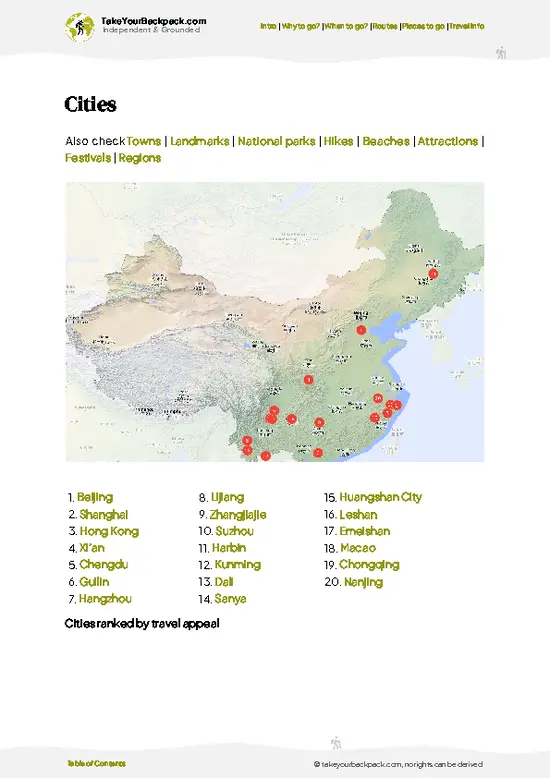
cities
towns
landmarks
national parks
hikes
beaches
attractions
festivals
regions
SHOW COUNTRY’S BESTSHOW ALL

✨ Why go?
Ranked #9 region in China
Reasons people choose to visit here

Backpackers flock to the South China Karst for a reason. The variety of landscapes is jaw-dropping. You’ve got limestone peaks, lush rice paddies, and winding rivers all in one spot. It’s like nature’s buffet, and you can sample it all without the hassle of constant relocation.

Transport here is a breeze. You can hop on a bus or rent a bike, giving you the flexibility to explore at your own pace. Want to linger in a village? Go for it. Prefer to chase sunsets over karst formations? You’ve got that option too.

What really sets this region apart is the chance to mix nature and culture seamlessly. You can hike through stunning scenery in the morning and then dive into local markets or traditional performances in the afternoon. This is slow travel at its finest, allowing you to soak in the … read more 👉
Backpackers flock to the South China Karst for a reason. The variety of landscapes is jaw-dropping. You’ve got limestone peaks, lush rice paddies, and winding rivers all in one spot. It’s like nature’s buffet, and you can sample it all without the hassle of constant relocation.

Transport here is a breeze. You can hop on a bus or rent a bike, giving you the flexibility to explore at your own pace. Want to linger in a village? Go for it. Prefer to chase sunsets over karst formations? You’ve got that option too.

What really sets this region apart is the chance to mix nature and culture seamlessly. You can hike through stunning scenery in the morning and then dive into local markets or traditional performances in the afternoon. This is slow travel at its finest, allowing you to soak in the essence of the place without feeling rushed. It’s all about savoring the experience, not just ticking boxes.
Want to include South China Karst in your China route?
Create a personalized China itinerary that includes South China Karst and the places that fit your trip — based on your travel style, budget, and available time. Get your route in seconds.

Generate my trip

💡 HighlightsWhat this place is best known for

  1. Li River (Guilin to Yangshuo) — The textbook image of South China Karst: steep limestone towers rising out of a slow, jade-green river. Float on a bamboo raft between Guilin and Yangshuo at dawn, and you’ll understand why painters and photographers obsess over this particular set of hills — the combo of karst peaks, river terraces and small riverside villages is surprisingly singular and hard to reproduce elsewhere.
  2. Yangshuo countryside & Moon Hill — Not just a climbing spot: this is where you rent a bike, loop quiet lanes under karst ridges and drop into tiny noodle shops that haven’t changed in decades. Moon Hill is a neat natural arch to hike up for a panorama that sums up the region; the surrounding backroads are the real draw for slow, local life.
  3. Shilin Stone Forest (Shilin County,
read more 👉
  1. Li River (Guilin to Yangshuo) — The textbook image of South China Karst: steep limestone towers rising out of a slow, jade-green river. Float on a bamboo raft between Guilin and Yangshuo at dawn, and you’ll understand why painters and photographers obsess over this particular set of hills — the combo of karst peaks, river terraces and small riverside villages is surprisingly singular and hard to reproduce elsewhere.
  2. Yangshuo countryside & Moon Hill — Not just a climbing spot: this is where you rent a bike, loop quiet lanes under karst ridges and drop into tiny noodle shops that haven’t changed in decades. Moon Hill is a neat natural arch to hike up for a panorama that sums up the region; the surrounding backroads are the real draw for slow, local life.
  3. Shilin Stone Forest (Shilin County, Yunnan) — Towering limestone “forests” that look like petrified waves or jagged city skylines — running through them feels like walking inside a natural cathedral. Add local Yi minority culture and stone-carving traditions, and you get a place that’s both geologically unusual and culturally textured.
  4. Libo Zhangjiang Scenic Area (Xiaoqikong & Seven Small Arches) — Lush, jungle-like karst with crystal-clear streams, filigree limestone bridges and small, photogenic waterfalls tucked into a subtropical valley. It’s humid, green and less polished than Guilin, which makes the scenery feel intimate and refreshingly local — personal favorite for that reason.
  5. Wulong Karst (Three Natural Bridges & Furong Cave, Chongqing) — Massive natural bridges spanning a gorge, cavern systems and dramatic sinkholes that are literally flooring-to-skyscale. The sense of scale here is what sets it apart: these are structures you can walk beneath or through and still feel tiny, and the area’s karst geomorphology is unusually exposed and dramatic.
  6. Leye-Fengshan Karst (Leye County, Guangxi) — Hidden gem: an enormous cluster of tower karst, cave networks and huge sinkholes sprinkled through farmland and minority villages. It’s where serious spelunkers and photographers go for remote, dramatic karst that hasn’t been fully “visitor-ized,” and where evenings are full of real local rhythms rather than tourist troupes.
  7. Shibing Karst (Shibing County, Guizhou) — Hidden gem: a finer-grained, almost vertical karst landscape — long ridgelines and needle-like peaks dropping into valleys — that feels stricter and stranger than the softer Guilin towers. Trails here lead past tiny hamlets and along exposed ridges; it’s quieter, richer geologically, and great for hikers who want the rocks to do the talking.
  8. Maling River Canyon (Xingyi, Guizhou) — A deep, serpentine canyon cut through karst with eye-catching loops, cliffs and a calm river threading the bottom. There are dramatic viewpoints and suspension bridges, but it’s the canyon’s sense of enclosure and the sudden scale changes that make it uniquely memorable in this karst belt.
  9. Huanjiang karst & Maonan villages (Huanjiang County, Guangxi) — Hidden gem: rolling karst hills punctuated by small Maonan minority villages, stilt houses and festivals. This is where the human story meets karst at a day-to-day level — folk architecture, village lanes that hug limestone bases, and local markets that feel authentic because mostly only locals are there.
  10. Zhijin Cave & Geological Park (Zhijin County, Guizhou) — One of China’s largest and most cavernous limestone cave systems: huge chambers, dense stalactite forests and dramatic underground halls. Pair a cave visit with short hikes around the karst forests above for contrast — underworld and overland in one day.
Spotted a mistake or missing something? Contact us.

Things to do near South China Karst

Ratings based on Tripadvisor reviews. When you book through this link, you support our work at no extra cost to you.

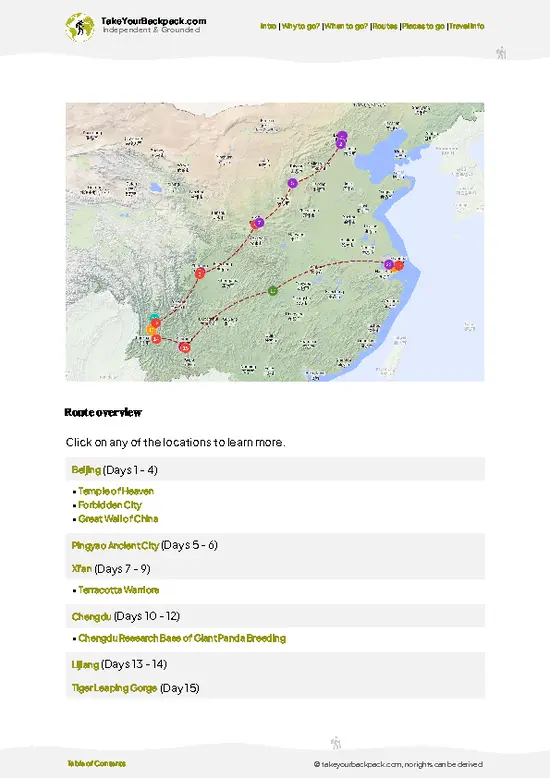
⌛️ 5 days5-day itinerary for South China Karst

Day 1: Guilin
Guilin is your gateway. Fly in, soak up the karst landscape, and get your bearings. The city’s transport is efficient, with buses and taxis ready to whisk you to the Li River. Spend the afternoon exploring the Reed Flute Cave; it’s a classic but worth it for the otherworldly formations. The evening? Stroll along the Two Rivers and Four Lakes area. The lights reflecting off the water create a magical vibe.

Day 2: Yangshuo
Hop on a bus to Yangshuo, about an hour away. This is where the real adventure begins. The town is a hub for outdoor activities, and the scenery is jaw-dropping. Rent a bike and explore the countryside. The ride to Moon Hill is a must; the climb is steep but the view is your reward. Don’t miss the evening light show, a spectacle that brings the mountains … read more 👉
Day 1: Guilin
Guilin is your gateway. Fly in, soak up the karst landscape, and get your bearings. The city’s transport is efficient, with buses and taxis ready to whisk you to the Li River. Spend the afternoon exploring the Reed Flute Cave; it’s a classic but worth it for the otherworldly formations. The evening? Stroll along the Two Rivers and Four Lakes area. The lights reflecting off the water create a magical vibe.

Day 2: Yangshuo
Hop on a bus to Yangshuo, about an hour away. This is where the real adventure begins. The town is a hub for outdoor activities, and the scenery is jaw-dropping. Rent a bike and explore the countryside. The ride to Moon Hill is a must; the climb is steep but the view is your reward. Don’t miss the evening light show, a spectacle that brings the mountains to life.

Day 3: Xingping
Take a boat ride to Xingping, a small village that feels like stepping back in time. The transport here is scenic, gliding along the Li River. Spend the day hiking to the viewpoint that overlooks the famous scene from the 20 yuan note. It’s a bit of a trek, but the tranquility is unmatched.

Day 4: Off-Path Reward - Longji Rice Terraces
Take a day trip to the Longji Rice Terraces. The bus ride is longer, but the terraces are a stunning sight. The intricate patterns carved into the mountainside are breathtaking. Enjoy a local meal in a village and connect with the culture.

Day 5: Return to Guilin
Head back to Guilin for your departure. Use this day to revisit any spots you loved or explore the local markets for last-minute souvenirs.

The must-do day? Day 2 in Yangshuo. The combination of biking, stunning views, and vibrant nightlife encapsulates the spirit of the South China Karst. It’s the experience that will linger long after you’ve left.
Turn your South China Karst visit into an China adventure
Build a complete China route with South China Karst, hidden gems, must-see destinations, and realistic travel times included.

Generate my trip

🌤️ When to go?Seasonal considerations and timing


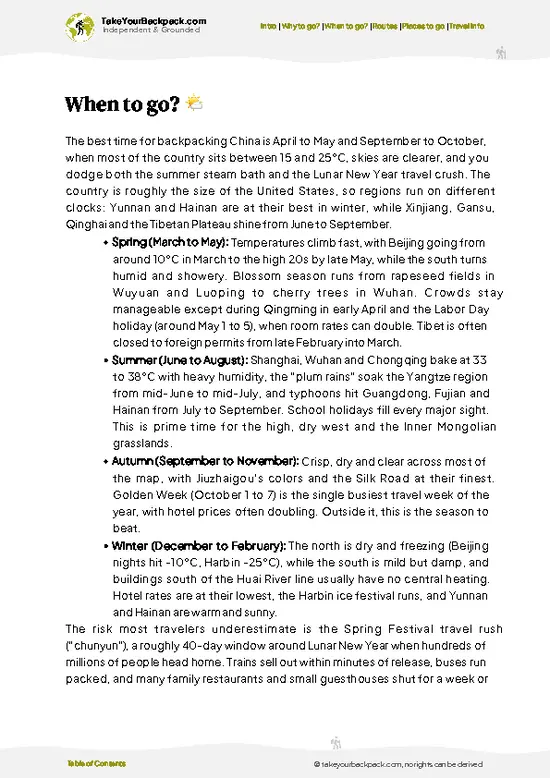
  • Weather: Spring (April to June) and autumn (September to November) bring mild, dry conditions perfect for hiking. Summers are hot and humid, often above 30°C (86°F), with heavy rains that can turn trails slippery and rivers swollen.

  • Temperature: Expect 15-25°C (59-77°F) in spring and autumn—ideal for long days on the trail without overheating or freezing. Winter dips to 5-10°C (41-50°F), which can be crisp but manageable if you pack layers.

  • Daylight Hours: Around 12-14 hours in spring and autumn, giving you plenty of daylight to explore without rushing. Winter shortens days to about 10 hours, limiting your hiking window.

  • Crowds: Peak tourist season hits in summer and Chinese national holidays, especially May Day and October Golden Week. Spring and autumn see fewer visitors, letting
read more 👉

  • Weather: Spring (April to June) and autumn (September to November) bring mild, dry conditions perfect for hiking. Summers are hot and humid, often above 30°C (86°F), with heavy rains that can turn trails slippery and rivers swollen.

  • Temperature: Expect 15-25°C (59-77°F) in spring and autumn—ideal for long days on the trail without overheating or freezing. Winter dips to 5-10°C (41-50°F), which can be crisp but manageable if you pack layers.

  • Daylight Hours: Around 12-14 hours in spring and autumn, giving you plenty of daylight to explore without rushing. Winter shortens days to about 10 hours, limiting your hiking window.

  • Crowds: Peak tourist season hits in summer and Chinese national holidays, especially May Day and October Golden Week. Spring and autumn see fewer visitors, letting you enjoy the karst formations without elbowing through selfie sticks.

  • Seasonal Activities: Rice terraces flood in spring, creating mirror-like reflections—a photographer’s dream. Autumn harvest colors add a warm glow to the landscape. Summer festivals can be lively but come with the trade-off of heat and crowds.

  • Price Fluctuations: Accommodation and transport costs spike during summer and national holidays. Booking in shoulder seasons (spring and autumn) often nets better deals and more flexible options.


Pro-tip: Aim for late April or early October—cool temps, fewer crowds, and the landscape is at its storytelling best without the tourist circus.


source: climatestotravel.comJANJanuary: good for travelingFEBFebruary: good for travelingMARMarch: highly recommended for travelingAPRApril: excellent for travelingMAYMay: highly recommended for travelingJUNJune: highly recommended for travelingJULJuly: fair for travelingAUGAugust: fair for travelingSEPSeptember: excellent for travelingOCTOctober: excellent for travelingNOVNovember: highly recommended for travelingDECDecember: good for traveling
when-to-go

✈️ The backpacker research shortcutChina Travel Guide

An offline-friendly backpacking guide with optimized travel routes, ranked highlights, transport advice, and the best areas to stay.
example page 0 from our offline Travel Guide for China
example page 1 from our offline Travel Guide for China
example page 2 from our offline Travel Guide for China
example page 3 from our offline Travel Guide for China
example page 4 from our offline Travel Guide for China
example page 5 from our offline Travel Guide for China
example page 6 from our offline Travel Guide for China
example page 7 from our offline Travel Guide for China
The digital guide (496 pages) contains:
139 highlights, ranked by travel appeal
Optimized 14, 21 & 30-day travel routes
Cities, national parks, landmarks, beaches
How to get around
Offline-friendly for travel without Wi-Fi
👉 Click to see all 30+ guide features

📅 Plan smarter in minutes, not weeks
Month by month travel advice
Festivals & national holidays
Budget expectations

🗺️ Go to the right places, skip the overrated ones
Honest pros & cons of destinations
Top hikes, parks & viewpoints
Lesser-known places most travelers miss
Clear “worth it vs skip it” guidance

🛏️ Travel smoothly without rookie mistakes
Best areas to stay
Transport systems explained simply
Common scams & safety advice
SIM cards, money & practical tips

🌍 Understand the country, not just visit it
Culture & traditions
52 Essential phrases & customs
Festivals worth planning around
Traveler-friendly historical context
Insights that make places more meaningful

📱 Built for real travel conditions
Fully downloadable PDF
Works completely offline
Optimized for phone use
Useful in remote areas & buses
Everything in one place
Save weeks of stressful planning
Get instant access to your full guide. 30‑day money-back guarantee.


By proceeding you agree to our terms.
Sent to your inbox immediately after payment • 100% Secure Checkout
Best Backpacking Travel Advisor 2025 tourism awardBest Backpacking
Travel Advisor
2025
What others say about Take Your Backpack Guides:
⭐⭐⭐⭐⭐
Fantastic, amazing amount of information!
⭐⭐⭐⭐⭐
My goodness this is amazing, it's what I've been looking for hats off too you!
⭐⭐⭐⭐⭐
I think this is absolutely BRILLIANT
⭐⭐⭐⭐
Very complete and informative. It's still missing places, but I gotta to commend you
⭐⭐⭐⭐⭐
This is truly amazing, thank you, can't wait to explore it with my kids!
⭐⭐⭐⭐⭐
Awesome resource, thank you!
⭐⭐⭐⭐⭐
This is amazing! Can't wait to explore the ones I haven't seen
⭐⭐⭐⭐
I love this! Well done, great idea.
⭐⭐⭐⭐⭐
Thanks for taking the time to make this gem!
⭐⭐⭐⭐⭐
This might be the best website I've ever seen.
⭐⭐⭐⭐⭐
Congratulations, and thank you so much for your work; it's incredibly valuable.
⭐⭐⭐⭐
In all seriousness I think you did a great job pointing out the important spots
⭐⭐⭐⭐⭐
10/10 very good
⭐⭐⭐⭐⭐
As someone who's only just starting to visit regularly this is awesome, thank you.
⭐⭐⭐⭐
Thank you very much! I'm going to visit my dad, it's going to be very useful!
⭐⭐⭐⭐⭐
This is really cool! We'll be travelling for the first time and this definitely come in handy.
⭐⭐⭐⭐⭐
You are now our minister of culture, congratulations 👨‍💼
⭐⭐⭐⭐⭐
Just wanted to tell you that this is a pearl! Going to follow your recommendations.
⭐⭐⭐⭐⭐
This is so cool. I'll definitely be using the resource for my travels soon.
⭐⭐⭐⭐⭐
This is very impressive! Good work.
⭐⭐⭐⭐⭐
This is an amazing and informative site. Very well done!

🛏️ Where to stay?Choosing the right base

When you’re diving into the South China Karst, a few spots stand out for backpackers craving that sweet blend of safety, social vibes, and budget-friendly options.

Start in Yangshuo. This town is a backpacker’s playground, buzzing with energy. The limestone peaks create a backdrop that’s hard to beat. You’ll find a mix of travelers here, making it easy to strike up conversations over a cheap bowl of noodles. Rent a bike and explore the countryside; it’s a rite of passage.

Next up is Guilin. While it’s a bit more touristy, it’s still a solid base. The Li River cruises are a must, and you can … read more 👉
When you’re diving into the South China Karst, a few spots stand out for backpackers craving that sweet blend of safety, social vibes, and budget-friendly options.

Start in Yangshuo. This town is a backpacker’s playground, buzzing with energy. The limestone peaks create a backdrop that’s hard to beat. You’ll find a mix of travelers here, making it easy to strike up conversations over a cheap bowl of noodles. Rent a bike and explore the countryside; it’s a rite of passage.

Next up is Guilin. While it’s a bit more touristy, it’s still a solid base. The Li River cruises are a must, and you can find plenty of budget eateries. The night market is a social hub, perfect for mingling with fellow adventurers.

Don’t overlook Ping’an. This village is smaller but offers stunning rice terraces and a more intimate atmosphere. It’s quieter, ideal for those looking to recharge.

Each of these spots has its own charm, so choose based on your vibe. You’ll make memories that stick.

🚌 Getting aroundTransportation options and practical tips

The South China Karst is a realm where time bends and flows like the Li River itself. Here, rigid schedules are more of a suggestion than a rule. You’ll find yourself swept up in a delightful chaos, where the rhythm of life is dictated by the whims of the weather and the chatter of locals. This is a place where you can hop on a bus and end up in a village that wasn’t even on your map, or share a ride with a farmer and hear stories that make your heart race. It’s all about intuition and spontaneity, so embrace the unpredictability and let it guide your adventure.


  • Buses: The backbone of budget travel here. They run frequently between major towns like Yangshuo and Guilin, with prices around 30-50 RMB. Expect a ride of about 1.5 to 2 hours. Just keep an eye on the schedule; they can leave early
read more 👉
The South China Karst is a realm where time bends and flows like the Li River itself. Here, rigid schedules are more of a suggestion than a rule. You’ll find yourself swept up in a delightful chaos, where the rhythm of life is dictated by the whims of the weather and the chatter of locals. This is a place where you can hop on a bus and end up in a village that wasn’t even on your map, or share a ride with a farmer and hear stories that make your heart race. It’s all about intuition and spontaneity, so embrace the unpredictability and let it guide your adventure.


  • Buses: The backbone of budget travel here. They run frequently between major towns like Yangshuo and Guilin, with prices around 30-50 RMB. Expect a ride of about 1.5 to 2 hours. Just keep an eye on the schedule; they can leave early if full.


  • Shared Minivans: A faster option, these can whisk you from one spot to another in about an hour. Prices hover around 50-80 RMB, and they’re often more comfortable than buses. Just be ready to squeeze in with a few locals and their bags.


  • Bicycles: Rent one in Yangshuo for about 20 RMB a day. This is the ultimate way to soak in the stunning karst landscapes at your own pace. Just remember, the roads can be bumpy, but the views are worth every pedal stroke.


  • Boats: For a unique experience, hop on a bamboo raft along the Yulong River. Prices vary, but expect to pay around 100 RMB for a leisurely ride. It’s a slow-paced journey that lets you soak in the scenery while sipping a cold drink.


  • Trains: For longer distances, like heading to Kunming, trains are a solid choice. Prices range from 100-300 RMB depending on the class. They’re comfortable, and you can enjoy the views as you glide through the countryside.


For a tactical tip: download a local transport app like Didi or Baidu Maps. They’ll help you navigate schedules and routes like a local, cutting down on confusion and maximizing your time in this enchanting region.

🍲 FoodLocal Flavors for Backpackers

In the South China Karst, food is a vibrant tapestry of flavors that tells the story of the land. Dive into rice noodles, a staple here, often served in a fragrant broth with fresh herbs and a kick of chili. Don’t skip the stir-fried river shrimp; they’re sweet and succulent, best enjoyed with a splash of local rice wine that warms you from the inside out.

Street food stalls are your best friends. Picture yourself at a bustling market, the air thick with the aroma of grilled meats and spicy dumplings. Grab a skewer of bbq lamb or a bowl of spicy wontons—they’re quick, cheap, and bursting with flavor. Cafés dot the landscape, offering a cozy spot to sip on local teas while watching the world go by.

Dining here is a communal affair. Expect to share dishes, so don’t be shy about reaching for … read more 👉
In the South China Karst, food is a vibrant tapestry of flavors that tells the story of the land. Dive into rice noodles, a staple here, often served in a fragrant broth with fresh herbs and a kick of chili. Don’t skip the stir-fried river shrimp; they’re sweet and succulent, best enjoyed with a splash of local rice wine that warms you from the inside out.

Street food stalls are your best friends. Picture yourself at a bustling market, the air thick with the aroma of grilled meats and spicy dumplings. Grab a skewer of bbq lamb or a bowl of spicy wontons—they’re quick, cheap, and bursting with flavor. Cafés dot the landscape, offering a cozy spot to sip on local teas while watching the world go by.

Dining here is a communal affair. Expect to share dishes, so don’t be shy about reaching for that plate of pickled vegetables. And remember, it’s polite to offer your drink to others first before filling your own glass. Embrace the local customs, and you’ll feel like a true insider.

Other Chinese regions near South China Karst

Explore more nearby:


💡 Not sure where to go next?
Create a personalized itinerary for China including South China Karst and the places that fit your trip.

Generate my itinerary

👉 Discover all regions

Or checkout all China has to offer (think cities, towns, villages, national parks, hikes, beaches, festivals)
Country photo of China

We 💚 feedbackKey takeaways before you go

The South China Karst is a jaw-dropper. Those limestone peaks and winding rivers? They’ll make you feel like you’ve stepped into a painting. But here’s the kicker: it’s remote. Getting around can be a hassle, and English isn’t widely spoken. Embrace the challenge, though; it’s part of the adventure. You’ll leave with stories that no guidebook can capture. Just be ready for a bit of grit along the way.

✈️ When did I visit China?
As part of my 1.5 year travel around the world trip, I visited China in August 2015, coming from Mongolia by the TransMongolia Express.

✍️ Help improve this page!
The information on this page is based on my own backpacking experience in China, supplemented with up-to-date research and feedback from other travelers. Travel details can change, so if you notice anything outdated or incomplete, feel free to let me know.


🙋‍♂️ Give feedback

👋 Meet the founderWho’s Behind Take Your Backpack?

Johan, backpacker and founder of TakeYourBackpackHi, I’m Johan (Netherlands 🇳🇱), the creator of TakeYourBackpack. Over the past decade, I’ve backpacked through 80+ countries across six continents, gaining extensive experience with independent travel, long-term trips, and overland routes.

This site is built on a combination of firsthand travel experience and carefully curated insights from other backpackers. Many guides are based on places I’ve personally visited, while others bring together tips, observations, and practical advice shared by trusted travelers I’ve met along the way.

The goal is to provide realistic, experience-driven guidance — not generic itineraries — so you can explore destinations with better context, clearer expectations, and more confidence.

Get full China guide •
Instant download • 139 highlights • Full Offline guide