

×

Colombia🇨🇴 | national parksEl Parque Nacional Natural Farallones de Calisteep ridges, cloud forest, endemic birds | things to do and best time to go

Explore Cordillera de los Picachos National ParkExplore Chicamocha Canyon

Backpacking in El Parque Nacional Natural Farallones de Cali
By Johan Kruseman 🇳🇱 | Updated September 4, 2026

Most travelers only realize after the fact that Farallones de Cali’s best trails and wildlife hotspots are practically empty on weekdays—if you plan right, you’ll have cloud forests and waterfalls to yourself, not just in photos but in real life. The park sits just outside Cali, in Colombia’s southwest, where the Andes split and the Pacific humidity collides with mountain air. Farallones isn’t the easiest park to access—public transport drops you at the edge, and from there, it’s a slog or a pricey 4x4 ride to the trailheads. But if you’re willing to work for it, you get a raw, rugged slice of Colombia: steep jungle, misty ridges, and the kind of birdlife that makes even non-birders pause. Entrance fees are moderate, but guides are often required for the best routes, which adds cost. Camping is basic, sometimes muddy, and there’s no backpacker hostel scene—just a few rustic fincas and tent spots. Compared to the more manicured Cocora Valley or the busy Tayrona coast, Farallones feels wild, less curated, and refreshingly indifferent to Instagram. If you want a park that rewards effort and doesn’t spoon-feed the experience, this is it.

Discover everything you want to know in the 📖 Colombia Travel Guide.
Loading the map 🌍
CLICK TO FILTER
cities
towns
villages
landmarks
national parks
hikes
beaches
attractions
festivals
regions
SHOW COUNTRY’S BESTSHOW ALL

✨ Why go?
Ranked #99 national park in Colombia
The unique appeal for travelers

Backpackers pick El Parque Nacional Natural Farallones de Cali because it offers a rare blend of independent exploration and manageable logistics. Unlike parks that funnel you into guided tours, Farallones lets you choose your own pace. The trail variety ranges from short hikes to multi-day treks, so you can tailor your adventure without feeling boxed in. This flexibility is a big deal if you want to avoid the rigid schedules and inflated costs of organized groups.

Budget travelers will appreciate the camping options inside the park and the affordable hostels in nearby Cali. These choices keep your expenses down without sacrificing access to the park’s diverse ecosystems. Just be ready to carry your own gear and plan your water and food carefully—services inside the park are limited, and … read more 👉
Backpackers pick El Parque Nacional Natural Farallones de Cali because it offers a rare blend of independent exploration and manageable logistics. Unlike parks that funnel you into guided tours, Farallones lets you choose your own pace. The trail variety ranges from short hikes to multi-day treks, so you can tailor your adventure without feeling boxed in. This flexibility is a big deal if you want to avoid the rigid schedules and inflated costs of organized groups.

Budget travelers will appreciate the camping options inside the park and the affordable hostels in nearby Cali. These choices keep your expenses down without sacrificing access to the park’s diverse ecosystems. Just be ready to carry your own gear and plan your water and food carefully—services inside the park are limited, and that’s part of why it stays authentic.

If you’re the type who values self-guided discovery over packaged experiences, Farallones is a solid pick. The park’s trails are well-marked but not overly commercialized, so you get a genuine connection with the landscape. Just don’t underestimate the terrain; it demands respect and preparation, but that’s the trade-off for a more personal, less crowded experience.
Want to include El Parque Nacional Natural Farallones de Cali in your Colombia route?
Create a personalized Colombia itinerary that includes El Parque Nacional Natural Farallones de Cali and the places that fit your trip — based on your travel style, budget, and available time. Get your route in seconds.

Generate my trip

💡 HighlightsKey sights and experiences for travelers

Cerro de las Tres Cruces
This ridge is the park’s most accessible high point from Cali, and it’s a rite of passage for locals. The climb is steep, direct, and honest—no switchbacks to coddle you. At the top, you get a panoramic view of Cali sprawling out below, with the Farallones’ jagged silhouette looming to the west. It’s not remote wilderness, but it’s the best place to feel the city’s pulse fade as the Andes take over. Go early to avoid the midday heat and the crowds. If you only have a morning, this is the move.


Pico de Loro
The “Parrot’s Beak” is the park’s classic summit hike. It’s a demanding, muddy climb through cloud forest, with roots and rocks conspiring to trip you at every turn. The payoff is a knife-edge ridge with views that stretch from the Pacific lowlands to the city. … read more 👉
Cerro de las Tres Cruces
This ridge is the park’s most accessible high point from Cali, and it’s a rite of passage for locals. The climb is steep, direct, and honest—no switchbacks to coddle you. At the top, you get a panoramic view of Cali sprawling out below, with the Farallones’ jagged silhouette looming to the west. It’s not remote wilderness, but it’s the best place to feel the city’s pulse fade as the Andes take over. Go early to avoid the midday heat and the crowds. If you only have a morning, this is the move.


Pico de Loro
The “Parrot’s Beak” is the park’s classic summit hike. It’s a demanding, muddy climb through cloud forest, with roots and rocks conspiring to trip you at every turn. The payoff is a knife-edge ridge with views that stretch from the Pacific lowlands to the city. On a clear day, you’ll see the Farallones’ granite spires in full relief. This is the hike for those who want to earn their scenery. Bring real boots and a rain shell—this is cloud forest, not a stroll in the park. My personal favorite, because the sense of scale and isolation at the top is hard to match anywhere near a major city.


Anchicayá Valley
If you’re a birder, this is the jackpot. The Anchicayá Valley is legendary among ornithologists for its sheer diversity—over 500 bird species recorded, including tanagers, toucans, and the elusive Andean cock-of-the-rock. The road from Cali to the valley is rough, but the payoff is a corridor of primary forest that feels primeval. Even if you’re not a birder, the sheer density of life—frogs, butterflies, orchids—makes this stretch of the park feel like a living encyclopedia.


Pance River
The Pance is where Cali comes to cool off. The river’s upper reaches, inside the park boundary, are clean and cold, with swimming holes shaded by towering trees. It’s not wilderness solitude, but it’s a slice of real Colombian life. On weekends, families picnic and splash in the shallows. Go on a weekday for more peace. The water is safe to swim in upstream, but don’t wander downstream toward the city—pollution increases fast.


Laguna de los Cristales
This high-altitude lagoon is a reward for those willing to trek deep into the park. The water is clear, cold, and ringed by páramo vegetation—think spiky frailejones and mossy hummocks. It’s a fragile ecosystem, so tread lightly. The sense of isolation here is total; you’re hours from the nearest road, with only the wind and the occasional Andean condor for company. This is the Farallones at their wildest.
Spotted a mistake or missing something? Contact us.

Things to do near El Parque Nacional Natural Farallones de Cali

Ratings based on Tripadvisor reviews. When you book through this link, you support our work at no extra cost to you.

🌤️ When to go?Choosing the right time of year


  • Topic: Weather – The dry season from December to March offers the most reliable weather for hiking, with less rain and muddier trails. April to November sees frequent showers, especially in October, which can turn paths slippery and slow your pace.

  • Topic: Temperature – Expect daytime highs around 20-25°C (68-77°F) in the lower elevations, dropping to 10-15°C (50-59°F) at higher altitudes. Nights can get chilly year-round, so pack layers. Temperature swings are more pronounced during the dry season.

  • Topic: Daylight Hours – Near the equator, daylight is fairly consistent year-round, roughly 11 to 12 hours. Sunrise is around 6:00 AM, and sunset near 6:00 PM, giving you a solid window for trekking without early darkness surprises.

  • Topic: Crowds – Peak visitor numbers align with Colombian
read more 👉

  • Topic: Weather – The dry season from December to March offers the most reliable weather for hiking, with less rain and muddier trails. April to November sees frequent showers, especially in October, which can turn paths slippery and slow your pace.

  • Topic: Temperature – Expect daytime highs around 20-25°C (68-77°F) in the lower elevations, dropping to 10-15°C (50-59°F) at higher altitudes. Nights can get chilly year-round, so pack layers. Temperature swings are more pronounced during the dry season.

  • Topic: Daylight Hours – Near the equator, daylight is fairly consistent year-round, roughly 11 to 12 hours. Sunrise is around 6:00 AM, and sunset near 6:00 PM, giving you a solid window for trekking without early darkness surprises.

  • Topic: Crowds – Peak visitor numbers align with Colombian holidays and the dry season, especially December and January. If you want solitude, aim for the shoulder months like February or March, when the weather is still good but fewer people show up.

  • Topic: Seasonal Activities – Birdwatching peaks during the dry months when species are more active and visible. Waterfalls are more impressive just after the rainy season, but trails may be tougher then.

  • Topic: Price Fluctuations – Accommodation and guided tours tend to be pricier during the December-January dry season and local holidays. Booking ahead is wise to avoid last-minute surges.


Pro-tip: Prioritize the dry season for trail conditions and daylight, but consider early dry months like February for a balance of good weather, fewer crowds, and better prices.


source: climatestotravel.comJANJanuary: highly recommended for travelingFEBFebruary: excellent for travelingMARMarch: excellent for travelingAPRApril: good for travelingMAYMay: good for travelingJUNJune: good for travelingJULJuly: good for travelingAUGAugust: good for travelingSEPSeptember: good for travelingOCTOctober: fair for travelingNOVNovember: good for travelingDECDecember: highly recommended for traveling
when-to-go

✈️ The backpacker research shortcutColombia Travel Guide

An offline-friendly backpacking guide with optimized travel routes, ranked highlights, transport advice, and the best areas to stay.
example page 0 from our offline Travel Guide for Colombia
example page 1 from our offline Travel Guide for Colombia
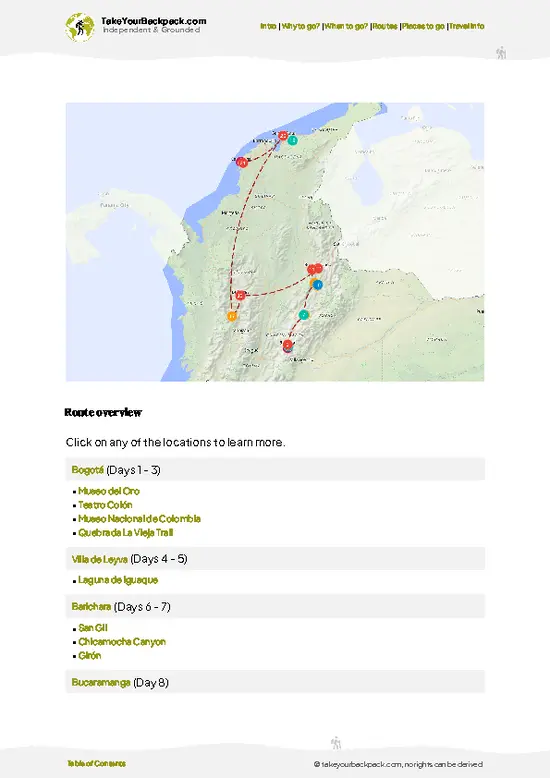
example page 2 from our offline Travel Guide for Colombia
example page 3 from our offline Travel Guide for Colombia
example page 4 from our offline Travel Guide for Colombia
example page 5 from our offline Travel Guide for Colombia
example page 6 from our offline Travel Guide for Colombia
example page 7 from our offline Travel Guide for Colombia
The digital guide (464 pages) contains:
122 highlights, ranked by travel appeal
Optimized 7, 14 & 21-day travel routes
Cities, national parks, landmarks, beaches
How to get around
Offline-friendly for travel without Wi-Fi
👉 Click to see all 30+ guide features

📅 Plan smarter in minutes, not weeks
Month by month travel advice
Festivals & national holidays
Budget expectations

🗺️ Go to the right places, skip the overrated ones
Honest pros & cons of destinations
Top hikes, parks & viewpoints
Lesser-known places most travelers miss
Clear “worth it vs skip it” guidance

🛏️ Travel smoothly without rookie mistakes
Best areas to stay
Transport systems explained simply
Common scams & safety advice
SIM cards, money & practical tips

🌍 Understand the country, not just visit it
Culture & traditions
52 Essential phrases & customs
Festivals worth planning around
Traveler-friendly historical context
Insights that make places more meaningful

📱 Built for real travel conditions
Fully downloadable PDF
Works completely offline
Optimized for phone use
Useful in remote areas & buses
Everything in one place
Save weeks of stressful planning
Get instant access to your full guide. 30‑day money-back guarantee.
+ Add another guide for just US$7.80

By proceeding you agree to our terms.
Sent to your inbox immediately after payment • 100% Secure Checkout
Best Backpacking Travel Advisor 2025 tourism awardBest Backpacking
Travel Advisor
2025
What others say about Take Your Backpack Guides:
⭐⭐⭐⭐⭐
Fantastic, amazing amount of information!
⭐⭐⭐⭐⭐
My goodness this is amazing, it's what I've been looking for hats off too you!
⭐⭐⭐⭐⭐
I think this is absolutely BRILLIANT
⭐⭐⭐⭐
Very complete and informative. It's still missing places, but I gotta to commend you
⭐⭐⭐⭐⭐
This is truly amazing, thank you, can't wait to explore it with my kids!
⭐⭐⭐⭐⭐
Awesome resource, thank you!
⭐⭐⭐⭐⭐
This is amazing! Can't wait to explore the ones I haven't seen
⭐⭐⭐⭐
I love this! Well done, great idea.
⭐⭐⭐⭐⭐
Thanks for taking the time to make this gem!
⭐⭐⭐⭐⭐
This might be the best website I've ever seen.
⭐⭐⭐⭐⭐
Congratulations, and thank you so much for your work; it's incredibly valuable.
⭐⭐⭐⭐
In all seriousness I think you did a great job pointing out the important spots
⭐⭐⭐⭐⭐
10/10 very good
⭐⭐⭐⭐⭐
As someone who's only just starting to visit regularly this is awesome, thank you.
⭐⭐⭐⭐
Thank you very much! I'm going to visit my dad, it's going to be very useful!
⭐⭐⭐⭐⭐
This is really cool! We'll be travelling for the first time and this definitely come in handy.
⭐⭐⭐⭐⭐
You are now our minister of culture, congratulations 👨‍💼
⭐⭐⭐⭐⭐
Just wanted to tell you that this is a pearl! Going to follow your recommendations.
⭐⭐⭐⭐⭐
This is so cool. I'll definitely be using the resource for my travels soon.
⭐⭐⭐⭐⭐
This is very impressive! Good work.
⭐⭐⭐⭐⭐
This is an amazing and informative site. Very well done!

🛏️ Where to stay?Best areas to stay in Colombia

El Parque Nacional Natural Farallones de Cali is a rugged, biodiverse stretch of the Western Andes, and it’s not the kind of place where you’ll find hotels or hostels inside the park boundaries. The park’s strict conservation rules mean overnight stays are limited to designated campsites, which require permits and careful planning. If you’re not set up for backcountry camping, you’ll want to base yourself outside the park.

The closest city with real infrastructure is Cali, about 30 to 40 kilometers away. Cali is your best bet for budget hostels, guesthouses, and reliable transport options. It’s … read more 👉
El Parque Nacional Natural Farallones de Cali is a rugged, biodiverse stretch of the Western Andes, and it’s not the kind of place where you’ll find hotels or hostels inside the park boundaries. The park’s strict conservation rules mean overnight stays are limited to designated campsites, which require permits and careful planning. If you’re not set up for backcountry camping, you’ll want to base yourself outside the park.

The closest city with real infrastructure is Cali, about 30 to 40 kilometers away. Cali is your best bet for budget hostels, guesthouses, and reliable transport options. It’s a bustling city, so expect a mix of urban noise and the occasional traffic headache, but it’s the practical gateway for exploring the park. From Cali, you can arrange guided hikes or day trips into the park, which is the safest and most efficient way to experience the area without risking getting lost or running into permit issues.

Another option is the smaller town of Pance, closer to the park’s southern entrance. It’s quieter and more rural, with a few basic lodges and homestays, but don’t expect luxury or a wide range of services. This is for travelers who want to stay near the park’s edge and dive straight into nature.

Bottom line: don’t expect to just show up and camp inside Farallones without a plan. Book your accommodations in Cali or Pance, secure your permits early, and prepare for a rugged, rewarding experience that demands respect for the park’s rules and terrain. This approach saves you from wasting time and energy scrambling for last-minute options or risking fines.

👛 Costs (as of 4 September 2026)What things cost and how to budget

As of February 2026, the entrance fees for El Parque Nacional Natural Farallones de Cali are:

- National or foreign residents in Colombia or members of the Andean Community (6 to 25 years old): COP 8,000

- Adults (over 25 years old): COP 16,500

- Foreigners not residing in Colombia or members of the Andean Community: COP 40,000

These fees are subject to change; it's advisable to check the official website for the most current information. ([parquesnacionales.gov.co](https://www.parquesnacionales.gov.co/nuestros-parques/pnn-farallones-de-cali/?utm_source=openai))

source: parquesnacionales.gov.co
⚠️ Prices can change and everyone travels differently, so take this as a rough guide. Hope it helps you plan your adventure!

🥾 TrailsHiking El Parque Nacional Natural Farallones de Cali national park: highlights and difficulty

El Parque Nacional Natural Farallones de Cali offers a rugged, authentic hiking experience that demands respect and preparation. The terrain is a mix of steep Andean slopes, dense cloud forests, and patches of paramo, which means you’re dealing with a variety of microclimates and footing challenges. Trails can be slippery and uneven, especially after rain, so sturdy boots and a steady pace are non-negotiable. Wildlife is abundant but elusive—expect to see toucans, spectacled bears, and a chorus of frogs and insects. The park’s remoteness means fewer crowds, but that also translates to limited … read more 👉
El Parque Nacional Natural Farallones de Cali offers a rugged, authentic hiking experience that demands respect and preparation. The terrain is a mix of steep Andean slopes, dense cloud forests, and patches of paramo, which means you’re dealing with a variety of microclimates and footing challenges. Trails can be slippery and uneven, especially after rain, so sturdy boots and a steady pace are non-negotiable. Wildlife is abundant but elusive—expect to see toucans, spectacled bears, and a chorus of frogs and insects. The park’s remoteness means fewer crowds, but that also translates to limited facilities and a need for self-sufficiency.

One of the main trails is Sendero El Salado, which is a favorite for those wanting a manageable yet rewarding hike.
  • Length: Approximately 8 kilometers round trip
  • Estimated Duration: 4 to 5 hours
  • Difficulty Level: Moderate, with some steep sections and uneven ground
  • Key Features: Waterfalls, dense cloud forest, panoramic views of the Cauca Valley
  • Terrain: Rocky paths, muddy patches, and occasional wooden bridges
Another option is Camino a la Laguna de las Yeguas, which is longer and more demanding but rewards with a high-altitude lake and chances to spot rare bird species.
  • Length: About 12 kilometers one way
  • Estimated Duration: 6 to 8 hours
  • Difficulty Level: Challenging, with steep ascents and variable weather
  • Key Features: Alpine wetlands, paramo vegetation, wildlife observation points
  • Terrain: Rocky, steep, and exposed in parts

Getting to the park isn’t a walk in the park itself. Public transport options exist from Cali, but they’re infrequent and often require a combination of bus and taxi. The last stretch to trailheads may need a local guide or a 4x4 vehicle, especially in the rainy season. This isn’t a place to show up without a plan or backup. The park is not typically crowded, which is a blessing if you want solitude, but it also means you won’t find many amenities or emergency services nearby. Entrance fees are modest but mandatory, and the funds go toward conservation efforts, so don’t skip that step.

The real secret to enjoying Farallones de Cali is pacing yourself and respecting the environment. The trails aren’t groomed theme park paths; they’re wild, sometimes unforgiving, and always rewarding if you come prepared. Don’t underestimate the altitude changes and weather swings—bring layers, water, and a solid map or GPS. This park isn’t about ticking off a checklist; it’s about immersing yourself in a landscape that feels untouched and alive. The payoff is in the quiet moments by a waterfall or the sudden glimpse of a rare bird through the mist. That’s where your energy and budget should go—not on last-minute taxi rides or overpriced snacks at the trailhead.
⚠️ Hiking info can sometimes be outdated or inaccurate. Before you hit the trail, check the latest conditions with locals. If you do spot anything that's off, I'd love to hear from you, so I can update it for fellow travelers.

🛡️ SafetySafety Tips and Common Scams in El Parque Nacional Natural Farallones de Cali

El Parque Nacional Natural Farallones de Cali offers a rugged experience that demands respect for its shifting conditions. Weather can flip quickly—sunny mornings often give way to afternoon mist or rain, so layering is non-negotiable. The altitude isn’t extreme but expect cooler temps as you climb, especially above 2,500 meters. Trails vary from well-marked paths to sections where footing gets tricky—mud and loose rocks are common, so sturdy, grippy boots are essential. River crossings happen but rarely pose serious challenges; still, timing your hike to avoid heavy rains reduces risk and keeps trails manageable.

Wildlife encounters are mostly limited to birds and small mammals; snakes are present but avoidable if you watch your step and don’t poke around under logs or rocks. Carrying a … read more 👉
El Parque Nacional Natural Farallones de Cali offers a rugged experience that demands respect for its shifting conditions. Weather can flip quickly—sunny mornings often give way to afternoon mist or rain, so layering is non-negotiable. The altitude isn’t extreme but expect cooler temps as you climb, especially above 2,500 meters. Trails vary from well-marked paths to sections where footing gets tricky—mud and loose rocks are common, so sturdy, grippy boots are essential. River crossings happen but rarely pose serious challenges; still, timing your hike to avoid heavy rains reduces risk and keeps trails manageable.

Wildlife encounters are mostly limited to birds and small mammals; snakes are present but avoidable if you watch your step and don’t poke around under logs or rocks. Carrying a basic first-aid kit and knowing how to treat minor scrapes or bites is smart. Navigation is straightforward on main routes, but side trails can confuse newcomers—download offline maps or use a GPS device. Pace yourself, start early to beat afternoon weather shifts, and respect the park’s quiet rhythms. This approach keeps your energy focused on the views, not the setbacks.

FAQCommon questions from travelers

3 to 4 days are recommended to explore El Parque Nacional Natural Farallones de Cali thoroughly, allowing time for hiking and wildlife observation. Some trails can take a full day, so plan accordingly for acclimatization and rest.
Yes, you can visit El Parque Nacional Natural Farallones de Cali without a car. Public transportation and organized tours from Cali city are available, but expect some walking or additional transport to reach trailheads.
Yes, an entrance fee or permit is required to enter El Parque Nacional Natural Farallones de Cali. Fees vary but typically range around 20,000 to 30,000 COP, and permits should be arranged in advance through the park authorities.
⚠️ Things can change over time, so always validate details locally before you go.

Other Colombian national parks near El Parque Nacional Natural Farallones de Cali

Explore more nearby:


💡 Not sure where to go next?
Create a personalized itinerary for Colombia including El Parque Nacional Natural Farallones de Cali and the places that fit your trip.

Generate my itinerary

👉 Discover all national parks

Or checkout all Colombia has to offer (think cities, towns, villages, national parks, hikes, beaches, festivals)
Country photo of Colombia

We 💚 feedbackIs it worth it?

El Parque Nacional Natural Farallones de Cali delivers a rare chance to disconnect into thick jungle and rugged peaks without the crowds that plague more famous spots. But don’t underestimate the terrain—steep trails and sudden weather shifts demand solid boots and patience. If you’re not prepared for slow, deliberate hiking, you’ll burn energy fast and miss the subtle wildlife moments that make this park worth the effort. Respect the challenge, and it rewards you quietly but deeply.

✈️ When did I visit Colombia?
Did a good 3-week trip around Colombia in August 2014.

✍️ Help improve this page!
The information on this page is based on my own backpacking experience in Colombia, supplemented with up-to-date research and feedback from other travelers. Travel details can change, so if you notice anything outdated or incomplete, feel free to let me know.


🙋‍♂️ Give feedback

👋 Meet the founderWho’s Behind Take Your Backpack?

Johan, backpacker and founder of TakeYourBackpackHi, I’m Johan (Netherlands 🇳🇱), the creator of TakeYourBackpack. Over the past decade, I’ve backpacked through 80+ countries across six continents, gaining extensive experience with independent travel, long-term trips, and overland routes.

This site is built on a combination of firsthand travel experience and carefully curated insights from other backpackers. Many guides are based on places I’ve personally visited, while others bring together tips, observations, and practical advice shared by trusted travelers I’ve met along the way.

The goal is to provide realistic, experience-driven guidance — not generic itineraries — so you can explore destinations with better context, clearer expectations, and more confidence.

Get full Colombia guide •
Instant download • 122 highlights • Full Offline guide