×

Colombia🇨🇴 | best national parksEssential 10 national parks to Explore in Colombia

Colombia’s national parks are a treasure trove for backpackers and independent travelers, each offering a unique blend of landscapes, wildlife, and adventure opportunities. Defined by their rich biodiversity and stunning ecosystems, these parks vary significantly across the country, from the lush Amazon rainforest to the stark beauty of the Andes.

Choosing the right park can dramatically influence your experience. For instance, Tayrona National Park is known for its beautiful beaches and vibrant culture, while Los Nevados offers high-altitude trekking and breathtaking views. Seasonal nuances also play a crucial role; some parks are best visited during the dry season for easier access and better wildlife sightings.

Your selection impacts not just the vibe and budget, but also safety and ease of travel. Understanding these factors is essential for maximizing your adventure and immersing yourself in Colombia’s diverse cultures.

By Johan Kruseman 🇳🇱 | Updated July 17, 2026
Explore the best hikes in Colombia

Why go?Why Travelers Love These Spots

Colombia’s national parks are a unique treasure in the world of biodiversity and adventure. With over 59 parks, the country boasts a staggering variety of ecosystems, from tropical rainforests to high-altitude paramo. This diversity is not just a backdrop; it’s a living, breathing entity that shapes the experience of every visitor. Unlike many other countries, Colombia’s parks are often less commercialized, offering a more authentic connection to nature.

However, this authenticity comes with trade-offs. Many parks are located in remote areas, which can mean long travel times. The journey may be arduous, but it often leads to deeper exploration and a more intimate understanding of the landscape. Accessibility can be a double-edged sword; while some parks are easily reachable, they may lack … read more 👉
Colombia’s national parks are a unique treasure in the world of biodiversity and adventure. With over 59 parks, the country boasts a staggering variety of ecosystems, from tropical rainforests to high-altitude paramo. This diversity is not just a backdrop; it’s a living, breathing entity that shapes the experience of every visitor. Unlike many other countries, Colombia’s parks are often less commercialized, offering a more authentic connection to nature.

However, this authenticity comes with trade-offs. Many parks are located in remote areas, which can mean long travel times. The journey may be arduous, but it often leads to deeper exploration and a more intimate understanding of the landscape. Accessibility can be a double-edged sword; while some parks are easily reachable, they may lack the immersive experiences found in more secluded locations. Travelers must weigh the convenience of access against the richness of the experience.

Colombia’s geographic diversity also plays a significant role in the park experience. The Andes mountains slice through the country, creating varied climates and habitats that are home to countless species. This means that each park offers something distinct, but it also requires careful planning. Weather can change rapidly, and conditions may vary significantly between regions. Understanding these climatic factors is crucial for maximizing enjoyment and safety.

Culturally, Colombia’s parks are steeped in history, often intertwined with indigenous traditions and conservation efforts. This adds a layer of depth to the experience, but it also means that visitors should approach with respect and awareness of local customs. The infrastructure in some areas may not be as developed as in other countries, which can impact comfort levels but also enhances the sense of adventure.

In summary, Colombia’s national parks are a dynamic blend of stunning landscapes, rich biodiversity, and cultural significance. However, travelers should be prepared for the realities of accessibility and infrastructure to fully appreciate what these parks have to offer.
Behind the Scenes of Selection
The list of best national parks in Colombia is created based on landscapes, wildlife, adventure opportunities, facilities, and overall experience. If you feel a national park is missing in this list, please let us know.

When to go?When to Plan Your Trip

Colombia’s national parks experience distinct seasonal patterns that significantly influence wildlife visibility, rainfall, and trail conditions. The country generally has two main seasons: the dry season and the wet season. The dry season typically runs from December to March and July to August. During these months, trails are more accessible, and wildlife is often easier to spot as animals congregate around water sources. However, this is also when parks can become crowded, leading to a less tranquil experience.

Rainfall is a major factor to consider. The wet season, which spans from April to November, brings heavy rains that can make trails muddy and challenging. While the lush landscapes are at their peak during this time, visibility can be compromised, and certain areas may be less accessible. … read more 👉
Colombia’s national parks experience distinct seasonal patterns that significantly influence wildlife visibility, rainfall, and trail conditions. The country generally has two main seasons: the dry season and the wet season. The dry season typically runs from December to March and July to August. During these months, trails are more accessible, and wildlife is often easier to spot as animals congregate around water sources. However, this is also when parks can become crowded, leading to a less tranquil experience.

Rainfall is a major factor to consider. The wet season, which spans from April to November, brings heavy rains that can make trails muddy and challenging. While the lush landscapes are at their peak during this time, visibility can be compromised, and certain areas may be less accessible. Wildlife is still active, but spotting them may require more patience and luck.

Shoulder seasons—the periods just before and after the peak seasons—offer a balance. These months can provide lower costs and fewer crowds, but the trade-off may include unpredictable weather. Conditions can vary widely, and some trails may still be muddy or slippery.

Temperature extremes also play a role. In higher elevations, nights can get chilly, even in the dry season. Conversely, lowland areas can be sweltering, especially during peak daytime hours.

Understanding these seasonal constraints allows for better planning. Choosing the right time to visit can enhance the experience, ensuring that the focus remains on the breathtaking beauty and unique wildlife of Colombia’s national parks, rather than navigating the challenges of weather and crowds.

national park hoppingPlanning Your Route Efficiently

Combining national parks in Colombia requires strategic planning and an understanding of the country’s geography. Start by clustering parks regionally. The Andes, Amazon, and Caribbean coasts each offer distinct ecosystems and experiences. Prioritize your interests—whether it’s biodiversity, hiking, or cultural immersion.

Traveling from Bogotá, consider heading south to parks like Parque Nacional Natural Los Nevados and Parque Nacional Natural Puracé. This route allows for stunning mountain scenery and diverse wildlife. From there, move east toward the Amazon, where Parque Nacional Natural Amacayacu awaits. The transition from high-altitude landscapes to lush rainforest is a breathtaking shift.

Time management is crucial. Allocate at least two to three days per park to truly absorb the
read more 👉
Combining national parks in Colombia requires strategic planning and an understanding of the country’s geography. Start by clustering parks regionally. The Andes, Amazon, and Caribbean coasts each offer distinct ecosystems and experiences. Prioritize your interests—whether it’s biodiversity, hiking, or cultural immersion.

Traveling from Bogotá, consider heading south to parks like Parque Nacional Natural Los Nevados and Parque Nacional Natural Puracé. This route allows for stunning mountain scenery and diverse wildlife. From there, move east toward the Amazon, where Parque Nacional Natural Amacayacu awaits. The transition from high-altitude landscapes to lush rainforest is a breathtaking shift.

Time management is crucial. Allocate at least two to three days per park to truly absorb the environment. Rushing through will lead to fatigue and missed opportunities. A common mistake is underestimating travel times between parks. Colombia’s roads can be challenging, and internal flights may be necessary for distant locations like Parque Nacional Natural Tayrona on the Caribbean coast.

Flexibility is key. Weather can be unpredictable, especially in the Amazon. Be prepared to adjust your plans. Balancing speed with depth of experience is essential. Spending longer in one park can lead to richer experiences, while a whirlwind tour may leave you feeling unsatisfied.

Budget considerations also come into play. Some parks have entry fees, and accommodation options vary widely. Weigh comfort against cost; sometimes, a splurge on a cozy lodge can enhance your experience significantly.

Ultimately, the goal is to create a trip that resonates with your interests while allowing for the unexpected joys of exploration. Prioritize what matters most to you, and let that guide your journey through Colombia’s national parks.

The ListHighly Recommended national parks of Colombia

1 Tayrona National Park

beach coves, rainforest trails, archaeological ruins

Swim in sheltered bays, walk shaded jungle paths, and discover remnants of ancient settlements along the Caribbean coast.

Colombia - Tayrona National Park

2 Sierra Nevada de Santa Marta National Park

coastal mountains, indigenous villages, biodiversity hotspot

Climb from tropical foothills to snow-capped peaks, passing through distinct ecological zones and culturally significant landscapes.

3 Los Nevados National Park

volcanic summits, thermal springs, frailejón fields

Ascend volcanic slopes past surreal plant life and steaming pools, experiencing rapid weather shifts and varied terrain.

4 El Cocuy National Park

glaciated peaks, alpine trails, snowfields

Trek among icy summits and exposed ridges, navigating high-altitude routes that demand preparation and reward with panoramic vistas.

5 Chingaza National Park

páramo ecosystem, high-altitude lakes, spectacled bears

Traverse open moorlands and tranquil lagoons, encountering unique flora and elusive mammals in a landscape shaped by water and altitude.

6 Utría National Park

mangrove inlets, Pacific beaches, humpback whales

Paddle through tidal channels, watch for migrating whales, and explore rainforest that meets the ocean in a humid coastal zone.

7 Gorgona Island National Park

tropical island, coral reefs, prison ruins

Dive among vibrant marine life, walk rainforest trails, and explore abandoned structures on a remote Pacific island.

8 Amacayacu National Park

Amazon riverbanks, flooded forest, pink dolphins

Navigate waterways lined with dense jungle, spotting river wildlife and experiencing seasonal changes in water level and access.

9 Puracé National Natural Park

active volcano, thermal rivers, Andean condors

Climb volcanic slopes, soak in mineral-rich streams, and scan the sky for large raptors in a rugged, geologically active region.

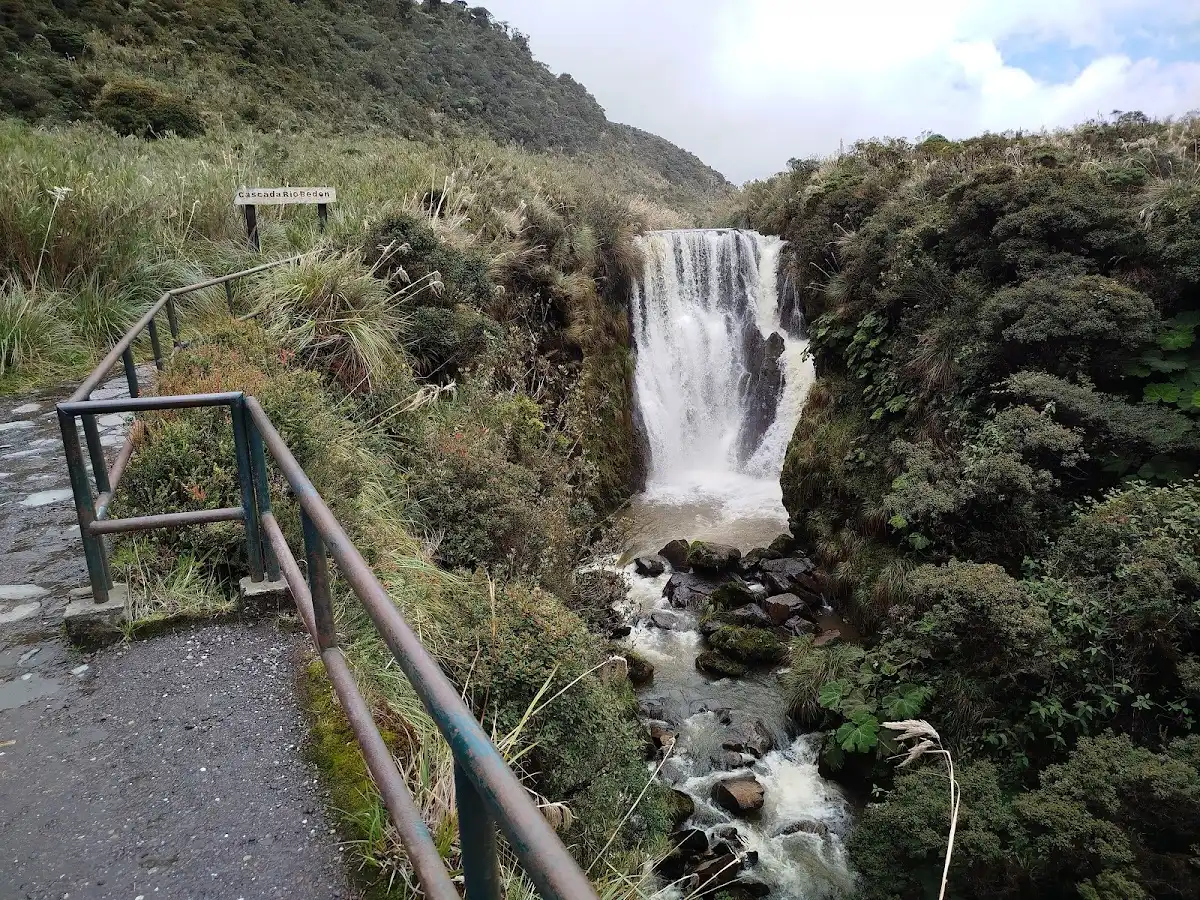
colombia-national-park-purace-national-natural-park
© Google |

10 Serranía de la Macarena National Park

rocky outcrops, Caño Cristales river, savanna patches

Walk among sandstone formations and swim in multicolored streams, exploring a mosaic of forest, grassland, and river habitats.

11 Farallones de Cali National Park

granite cliffs, montane forest, river canyons

Scramble up rocky outcrops and descend into deep valleys, encountering varied habitats shaped by dramatic geological features.

12 Los Katíos National Park

lowland rainforest, river floodplains, Central American fauna

Cross humid forests and broad rivers, encountering species typical of both South and Central America in a UNESCO-listed reserve.

13 Macuira National Natural Park

desert mountains, oasis springs, Wayuu culture

Cross arid dunes and isolated hills, encountering rare water sources and traditional communities in a remote peninsula setting.

14 Isla de Salamanca National Park

coastal barrier, bird migration, brackish lagoons

Observe seasonal bird movements and explore a mix of saltwater and freshwater environments along a narrow Caribbean land strip.

15 Cueva de los Guácharos National Park

limestone caves, oilbird colonies, subtropical forest

Venture into cavern systems inhabited by nocturnal birds, then emerge to hike forested slopes rich in plant and animal life.

16 Valle de Cocora

wax palm forest, green valley, cloud-shrouded hills

Wander beneath towering palms in a lush valley, following muddy tracks through misty pastures and rolling Andean foothills.

Colombia - Valle de Cocora

17 Sanquianga National Park

coastal wetlands, mangrove labyrinths, tidal flats

Glide through intricate waterways, observing birdlife and shifting tides in a vast estuarine environment along the Pacific coast.

18 Chiribiquete National Park

tepui plateaus, ancient rock art, remote rainforest

Fly over vast, inaccessible jungle to glimpse sandstone mesas and prehistoric paintings in a region closed to ground exploration.

colombia-national-park-chiribiquete-national-park
© Google | Eva Zuckerman

19 La Paya National Park

whitewater rivers, flooded jungle, Amazonian flora

Travel by canoe through seasonally inundated forest, observing diverse plant species and the rhythms of riverine life.

20 Paramillo National Park

dense rainforest, rugged mountains, endemic amphibians

Navigate steep, forested terrain where high rainfall and isolation support rare species and challenging trekking conditions.

21 Serranía de los Yariguíes National Park

steep escarpments, cloud forest, endemic butterflies

Climb through misty forests and sharp ridges, observing unique insects and plant species in a little-visited Andean range.

22 Sumapaz National Park

high-altitude moor, glacial lakes, open grasslands

Traverse expansive páramo landscapes, passing cold lakes and wind-swept plains at one of the world’s highest plateaus.

23 Pisba National Park

páramo valleys, cold streams, Andean flora

Hike through chilly uplands and boggy meadows, encountering rare plants and isolated trails in a remote mountain setting.

24 Tinigua National Park

tropical rainforest, river confluences, primate habitat

Paddle or hike through dense jungle, watching for monkeys and birds where major rivers meet in the Amazon foothills.

25 Cordillera de los Picachos National Park

steep mountains, cloud forest, river headwaters

Ascend rugged slopes and cross misty forests, tracing the origins of major rivers in a largely undeveloped region.

Think you know Colombia?

Prove you’re a true local — uncover 15 lesser-known national parks in Colombia that locals tend to keep to themselves.
Loading the map 🌍

Expert viewInsights from Locals and Experts

Terrain

Colombia’s national parks are a patchwork of ecosystems, each with its own character. From the Andes’ towering peaks to the Amazon’s dense jungles, the terrain varies dramatically. If you’re a fan of high-altitude hikes, parks like Parque Nacional Natural Los Nevados offer breathtaking views but come with altitude sickness risks. Expect steep trails and chilly nights. On the flip side, the lush landscapes of Parque Nacional Natural Tayrona are more forgiving, with coastal paths that lead you through palm-fringed beaches and vibrant wildlife.

The trade-off? You’ll need to balance your time. If you’re trekking in the Andes, you might spend days acclimatizing and exploring fewer parks. In contrast, the coastal parks can be covered more quickly, but you might miss out on the depth of … read more 👉

Terrain

Colombia’s national parks are a patchwork of ecosystems, each with its own character. From the Andes’ towering peaks to the Amazon’s dense jungles, the terrain varies dramatically. If you’re a fan of high-altitude hikes, parks like Parque Nacional Natural Los Nevados offer breathtaking views but come with altitude sickness risks. Expect steep trails and chilly nights. On the flip side, the lush landscapes of Parque Nacional Natural Tayrona are more forgiving, with coastal paths that lead you through palm-fringed beaches and vibrant wildlife.

The trade-off? You’ll need to balance your time. If you’re trekking in the Andes, you might spend days acclimatizing and exploring fewer parks. In contrast, the coastal parks can be covered more quickly, but you might miss out on the depth of experience that comes with longer stays in mountainous regions. Choose wisely based on your interests and physical readiness.

Park Infrastructure

Infrastructure varies widely across Colombia’s national parks. Some parks, like Parque Nacional Natural El Cocuy, have limited facilities. Expect basic campsites and few amenities. This can be a blessing for those seeking solitude but a challenge for those who prefer comfort. Bring your own gear and be prepared for self-sufficiency.

In contrast, parks like Tayrona offer more developed infrastructure, including lodges and restaurants. This makes it easier to enjoy the natural beauty without sacrificing too much comfort. However, the trade-off here is that these parks can feel more crowded, especially during peak seasons. If you want to avoid the throngs, consider visiting during off-peak times or exploring lesser-known trails.

Wildlife Activity

Wildlife is a major draw in Colombia’s national parks, but your chances of spotting animals can vary significantly. Parks like Parque Nacional Natural Amacayacu are teeming with biodiversity, from monkeys to exotic birds. However, the dense jungle can make wildlife sightings hit or miss. Patience is key, and early morning or late afternoon hikes yield the best results.

On the other hand, parks like Los Nevados have fewer species but offer unique opportunities to see high-altitude fauna, such as the endangered frailejón plant and the elusive Andean condor. The trade-off here is time; if you’re focused on wildlife, you might want to dedicate more days to parks with richer biodiversity. But if you’re short on time, consider a mix of parks to experience both the highlands and the lowlands.

Time and Budget

When planning your trip, consider how many parks you realistically want to visit. I recommend focusing on three to five parks for a well-rounded experience. This allows you to dive deeper into each park’s unique offerings without feeling rushed. Expect to spend at least a week to ten days if you want to explore multiple parks, factoring in travel time between them.

Budget-wise, Colombia is generally affordable, but costs can add up quickly in popular parks. Entrance fees, transportation, and accommodation can vary. Some parks have free entry, while others charge a fee that supports conservation efforts. Always check ahead, as some parks may require advance reservations, especially during peak seasons. This is where planning pays off; avoid the last-minute scramble and ensure you have a spot secured.

Planning and Prioritizing

Prioritize parks based on your interests and physical capabilities. If you’re an avid hiker, Los Nevados and El Cocuy should be at the top of your list. If you’re more into relaxing and soaking up the sun, Tayrona is your go-to.

Consider regional variations too. The Andes can be chilly and wet, while the Caribbean coast is hot and humid. Pack accordingly, and don’t forget insect repellent for the jungles. Safety is another consideration; while Colombia has made strides in improving safety for travelers, always stay informed about current conditions and follow local advice.

Cultural experiences can enhance your visit. Engage with local communities, try traditional foods, and respect local customs. This adds depth to your journey and supports the regions you’re exploring.

In short, Colombia’s national parks offer a rich tapestry of experiences, but planning is crucial. Know your limits, budget wisely, and immerse yourself in the natural beauty and cultural richness. The rewards are worth the effort.

✈️ The backpacker research shortcutColombia Travel Guide

An offline-friendly backpacking guide with optimized travel routes, ranked highlights, transport advice, and the best areas to stay.
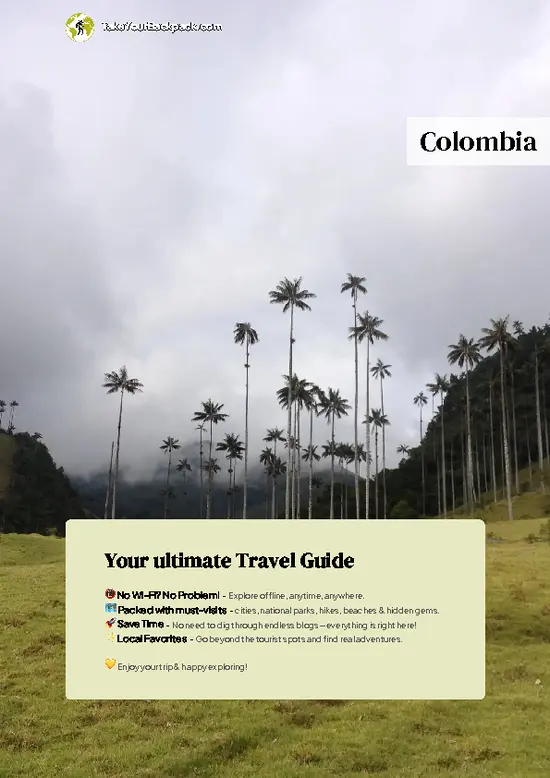
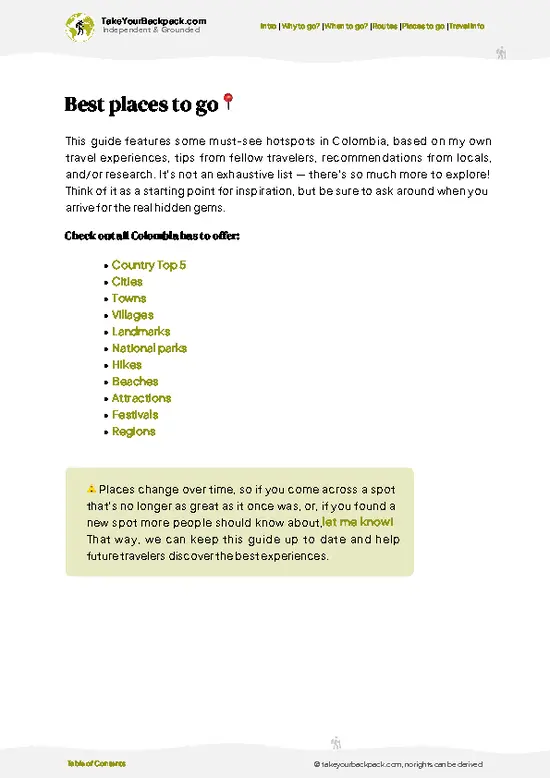
example page 0 from our offline Travel Guide for Colombia
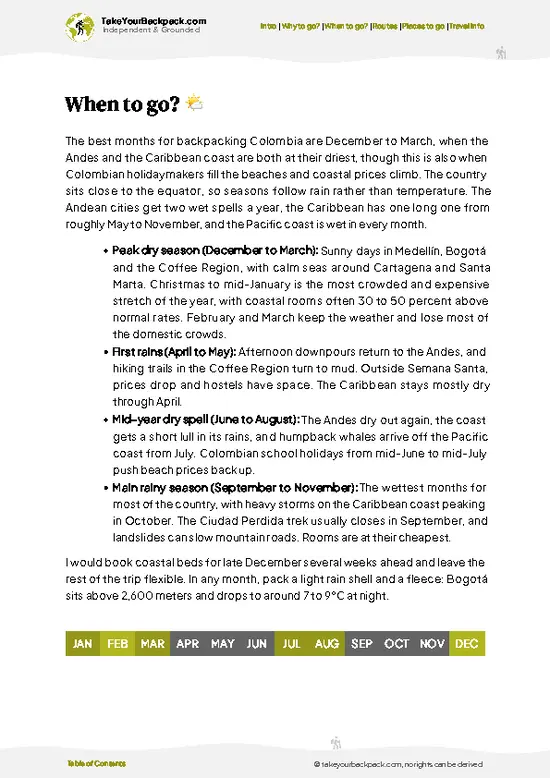
example page 1 from our offline Travel Guide for Colombia
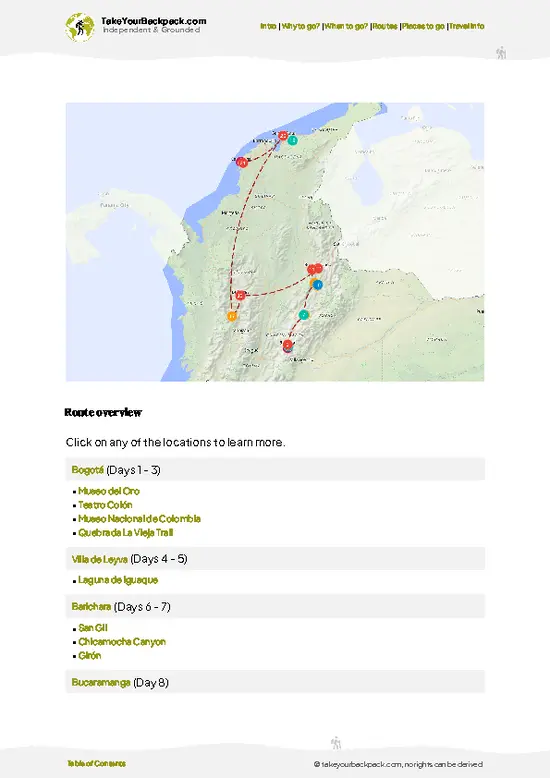
example page 2 from our offline Travel Guide for Colombia
example page 3 from our offline Travel Guide for Colombia
example page 4 from our offline Travel Guide for Colombia
example page 5 from our offline Travel Guide for Colombia
example page 6 from our offline Travel Guide for Colombia
example page 7 from our offline Travel Guide for Colombia
The digital guide (464 pages) contains:
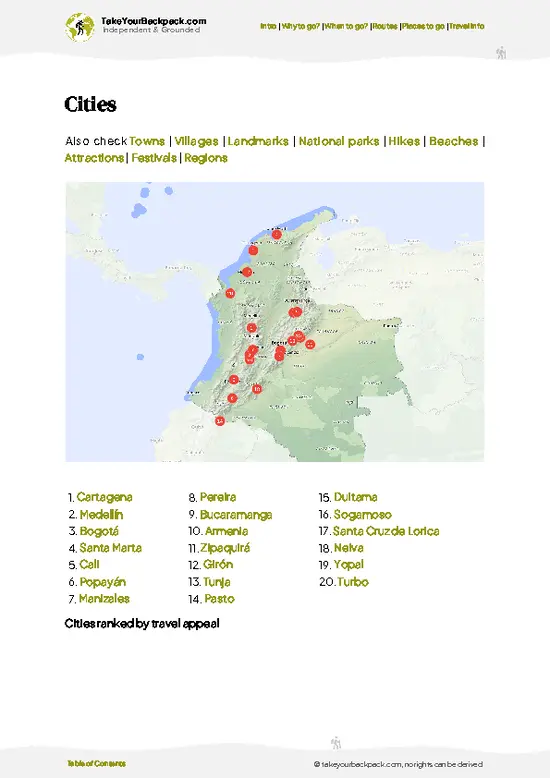
122 highlights, ranked by travel appeal
Optimized 7, 14 & 21-day travel routes
Cities, national parks, landmarks, beaches
How to get around
Offline-friendly for travel without Wi-Fi
👉 Click to see all 30+ guide features

📅 Plan smarter in minutes, not weeks
Month by month travel advice
Festivals & national holidays
Budget expectations

🗺️ Go to the right places, skip the overrated ones
Honest pros & cons of destinations
Top hikes, parks & viewpoints
Lesser-known places most travelers miss
Clear “worth it vs skip it” guidance

🛏️ Travel smoothly without rookie mistakes
Best areas to stay
Transport systems explained simply
Common scams & safety advice
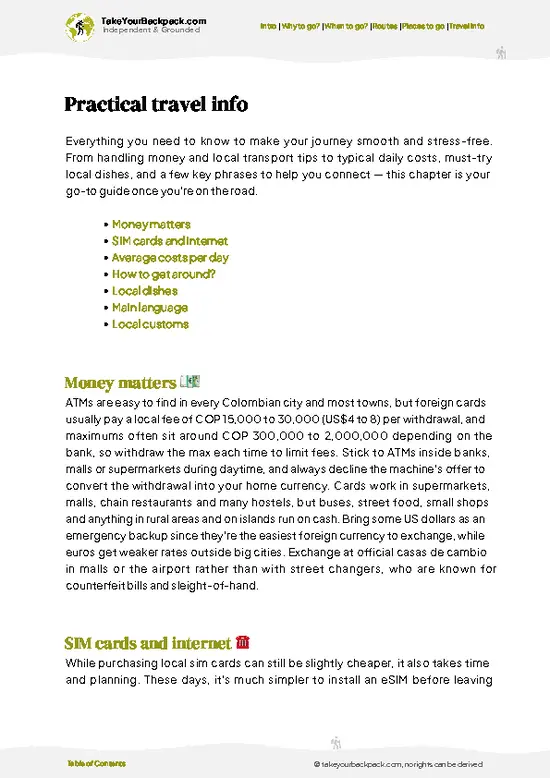
SIM cards, money & practical tips

🌍 Understand the country, not just visit it
Culture & traditions
52 Essential phrases & customs
Festivals worth planning around
Traveler-friendly historical context
Insights that make places more meaningful

📱 Built for real travel conditions
Fully downloadable PDF
Works completely offline
Optimized for phone use
Useful in remote areas & buses
Everything in one place
Save weeks of stressful planning
Get instant access to your full guide. 30‑day money-back guarantee.


By proceeding you agree to our terms.
Sent to your inbox immediately after payment • 100% Secure Checkout
Best Backpacking Travel Advisor 2025 tourism awardBest Backpacking
Travel Advisor
2025
What others say about Take Your Backpack Guides:
⭐⭐⭐⭐⭐
Fantastic, amazing amount of information!
⭐⭐⭐⭐⭐
My goodness this is amazing, it's what I've been looking for hats off too you!
⭐⭐⭐⭐⭐
I think this is absolutely BRILLIANT
⭐⭐⭐⭐
Very complete and informative. It's still missing places, but I gotta to commend you
⭐⭐⭐⭐⭐
This is truly amazing, thank you, can't wait to explore it with my kids!
⭐⭐⭐⭐⭐
Awesome resource, thank you!
⭐⭐⭐⭐⭐
This is amazing! Can't wait to explore the ones I haven't seen
⭐⭐⭐⭐
I love this! Well done, great idea.
⭐⭐⭐⭐⭐
Thanks for taking the time to make this gem!
⭐⭐⭐⭐⭐
This might be the best website I've ever seen.
⭐⭐⭐⭐⭐
Congratulations, and thank you so much for your work; it's incredibly valuable.
⭐⭐⭐⭐
In all seriousness I think you did a great job pointing out the important spots
⭐⭐⭐⭐⭐
10/10 very good
⭐⭐⭐⭐⭐
As someone who's only just starting to visit regularly this is awesome, thank you.
⭐⭐⭐⭐
Thank you very much! I'm going to visit my dad, it's going to be very useful!
⭐⭐⭐⭐⭐
This is really cool! We'll be travelling for the first time and this definitely come in handy.
⭐⭐⭐⭐⭐
You are now our minister of culture, congratulations 👨‍💼
⭐⭐⭐⭐⭐
Just wanted to tell you that this is a pearl! Going to follow your recommendations.
⭐⭐⭐⭐⭐
This is so cool. I'll definitely be using the resource for my travels soon.
⭐⭐⭐⭐⭐
This is very impressive! Good work.
⭐⭐⭐⭐⭐
This is an amazing and informative site. Very well done!

🛏️ Where to stay?Best Places to Stay in Colombia

Yes — Colombia has abundant hostels and budget accommodation in major cities and tourist towns, concentrated in Bogotá (La Candelaria, Chapinero), Medellín (El Poblado, Laureles), Cartagena (Getsemaní, Centro Histórico), Santa Marta/Taganga, and Salento.

La Candelaria: very cheap and central for museums but uneven safety at night; Chapinero: more modern options, good nightlife and daytime cafés but slightly pricier; El Poblado: biggest hostel variety and nightlife with easy transport but busier and costlier; Laureles: quieter, more local and cheaper with safer nights; Getsemaní: backpacker hub, nightlife and steps to the walled city but noisy and tourist-priced; Centro Histórico: best for sights … read more 👉
Yes — Colombia has abundant hostels and budget accommodation in major cities and tourist towns, concentrated in Bogotá (La Candelaria, Chapinero), Medellín (El Poblado, Laureles), Cartagena (Getsemaní, Centro Histórico), Santa Marta/Taganga, and Salento.

La Candelaria: very cheap and central for museums but uneven safety at night; Chapinero: more modern options, good nightlife and daytime cafés but slightly pricier; El Poblado: biggest hostel variety and nightlife with easy transport but busier and costlier; Laureles: quieter, more local and cheaper with safer nights; Getsemaní: backpacker hub, nightlife and steps to the walled city but noisy and tourist-priced; Centro Histórico: best for sights and day trips but crowded and higher rates; Taganga: cheapest beach/party base with direct Tayrona access but basic services and safety concerns after dark; Salento: small-town hostels ideal for Valle de Cocora treks, peaceful but limited amenities.

If you enjoy meeting fellow travelers, consider choosing hostels with high ratings for atmosphere. On the other hand, if you prefer having your own space, a hotel might be a better option.

ColombiaExplore Colombia

👋 Meet the founderWho’s Behind Take Your Backpack?

Johan, backpacker and founder of TakeYourBackpackHi, I’m Johan (Netherlands 🇳🇱), the creator of TakeYourBackpack. Over the past decade, I’ve backpacked through 80+ countries across six continents, gaining extensive experience with independent travel, long-term trips, and overland routes.

This site is built on a combination of firsthand travel experience and carefully curated insights from other backpackers. Many guides are based on places I’ve personally visited, while others bring together tips, observations, and practical advice shared by trusted travelers I’ve met along the way.

The goal is to provide realistic, experience-driven guidance — not generic itineraries — so you can explore destinations with better context, clearer expectations, and more confidence.

Get full Colombia guide •
Instant download • 122 highlights • Full Offline guide