v2.webp)
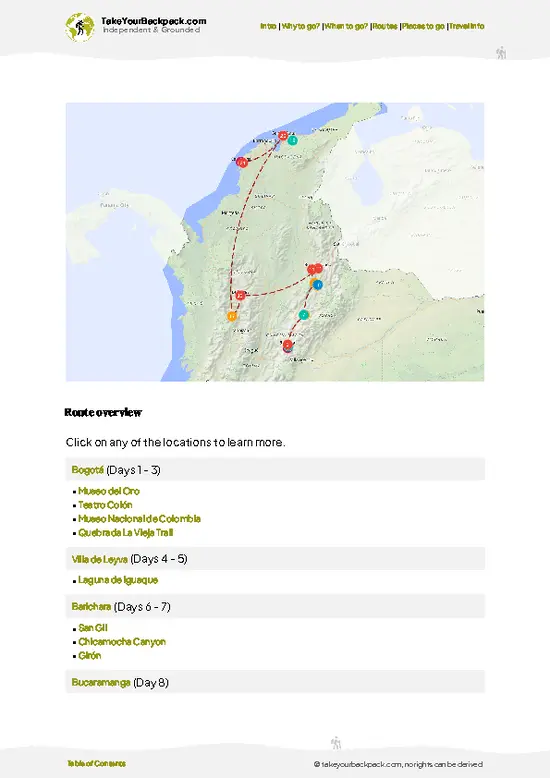
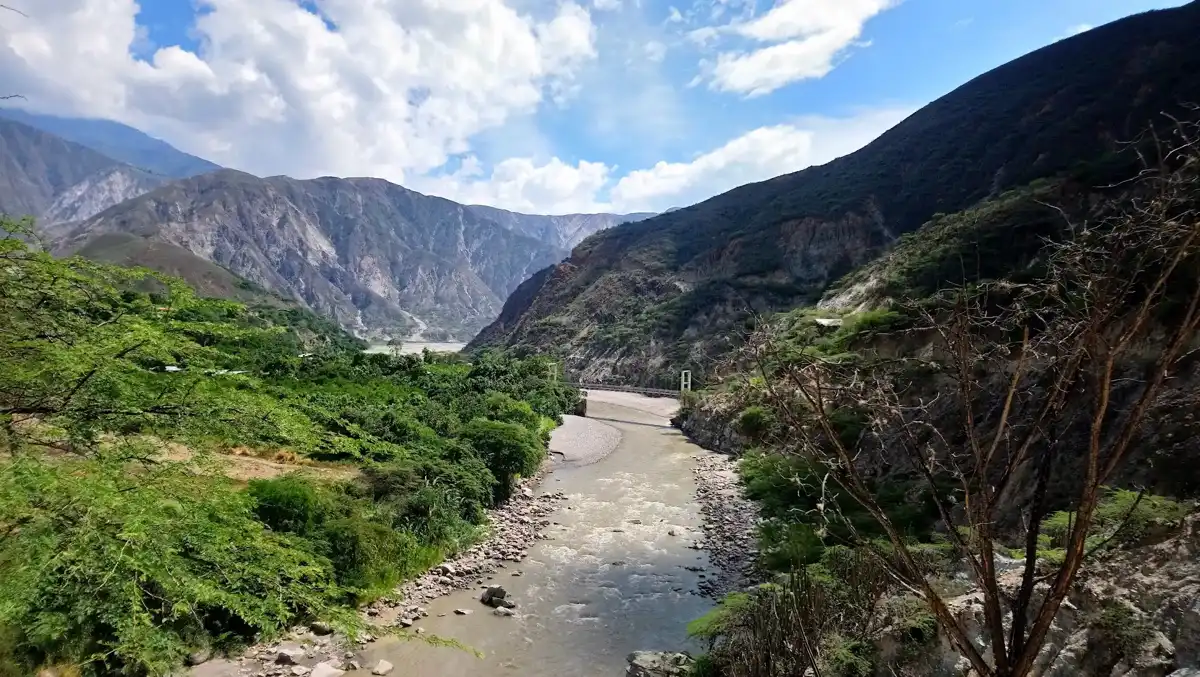
- Parque Nacional del Chicamocha (Panachi): the headline attraction, with a cable car that crosses the canyon over the river far below and viewpoints that show the full scale of the cut. Entry is separate from the ride.
- Monumento a la Santandereanidad: a large sculpture group at Panachi depicting regional history, set on the rim with the canyon behind it.
- Mesa de los Santos: a cooler plateau above the canyon with big drops, fruit farms and a laid-back feel.
- Cueva de la Vaca: a cave in Curití explored with a local guide, with chambers you reach on foot.
- Aratoca: a small town with a quiet plaza, close to the rim, that most travelers pass without stopping.
- Curití: known for woven fique fiber crafts, where you can see workshops making bags and sandals.
- Barichara: whitewashed streets, stone churches and
- Parque Nacional del Chicamocha (Panachi): the headline attraction, with a cable car that crosses the canyon over the river far below and viewpoints that show the full scale of the cut. Entry is separate from the ride.
- Monumento a la Santandereanidad: a large sculpture group at Panachi depicting regional history, set on the rim with the canyon behind it.
- Mesa de los Santos: a cooler plateau above the canyon with big drops, fruit farms and a laid-back feel.
- Cueva de la Vaca: a cave in Curití explored with a local guide, with chambers you reach on foot.
- Aratoca: a small town with a quiet plaza, close to the rim, that most travelers pass without stopping.
- Curití: known for woven fique fiber crafts, where you can see workshops making bags and sandals.
- Barichara: whitewashed streets, stone churches and a calm pace, easily the prettiest village around the canyon.
- Camino Real Barichara to Guane: an old cobbled trail through farmland, ideal for a half-day walk.
- Guane: a tiny village with a small museum and a plaza, often empty of crowds, where you can eat slowly.
Spotted a mistake or missing something? Contact us.

Paragliding Chicamocha

Paragliding in the grand canyon of chicamocha

BEST White Rafting in Colombia Suarez 4/5

Rafting Rio Fonce Class 2/3

Rafting in Chicamocha Canyon

Rafting Rio Chicamocha 2/3

Camino Real from Barichara to Guane Day Tour

Juan Curi Waterfall and Adventure Park Day Tour

Quad Bike in Curiti and Natural Pool Tour

 Best Backpacking
.jpg) Hi, I’m Johan (Netherlands 🇳🇱), the creator of TakeYourBackpack. Over the past 3 decades, I’ve backpacked through 90+ countries across six continents, gaining extensive experience with independent travel, long-term trips, and overland routes.
Hi, I’m Johan (Netherlands 🇳🇱), the creator of TakeYourBackpack. Over the past 3 decades, I’ve backpacked through 90+ countries across six continents, gaining extensive experience with independent travel, long-term trips, and overland routes.