×

Colombia🇨🇴 | beachesPlaya BlancaPowder-white sand, knee-deep shallows, thatched huts, Barú day boats | things to do and best time to go

Explore PalominoExplore Playa Uva

Backpacking in Playa Blanca
🌟 Highlightbeach ranked #3
By Johan Kruseman 🇳🇱 | Updated October 19, 2026

Playa Blanca is the simplest way to get proper white sand from Cartagena, and you can arrange the trip the same morning you go. It sits on the Barú peninsula, on the Caribbean coast in the north of Colombia, southwest of the city. The sand is fine and pale, the water is shallow and clear, and that is the whole case for it. Skip the midday hours on a weekend or holiday, when day boats pack the shore, vendors pitch massages and lobster every few minutes, and rival shacks run their speakers at full volume. I took the road route, and the driver stopped at a roadside stand where a woman hacked open green coconuts with a machete, so we drank them while the rutted track dried behind us. Snorkeling right here is thin, so save it for the boat trips out. What stays with you is the row of thatched huts with hammocks swaying under them.

Discover everything you want to know in the 📖 Colombia Travel Guide.


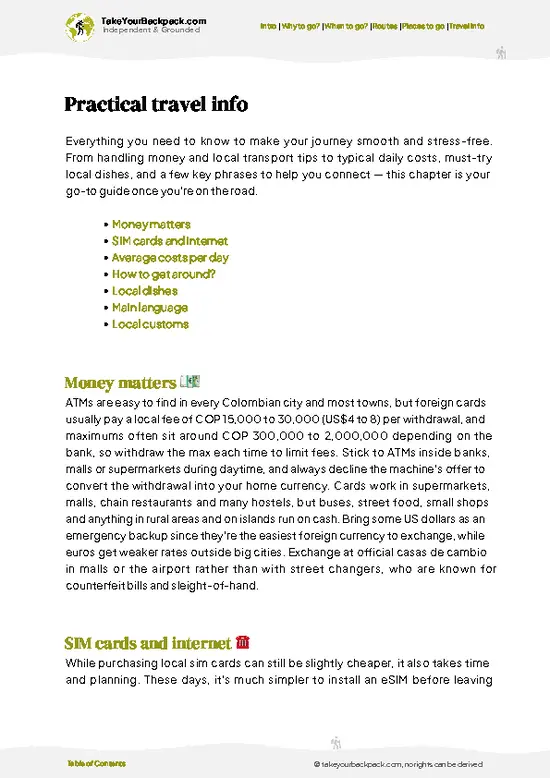
example page 0 from our offline Travel Guide for Colombia
example page 1 from our offline Travel Guide for Colombia
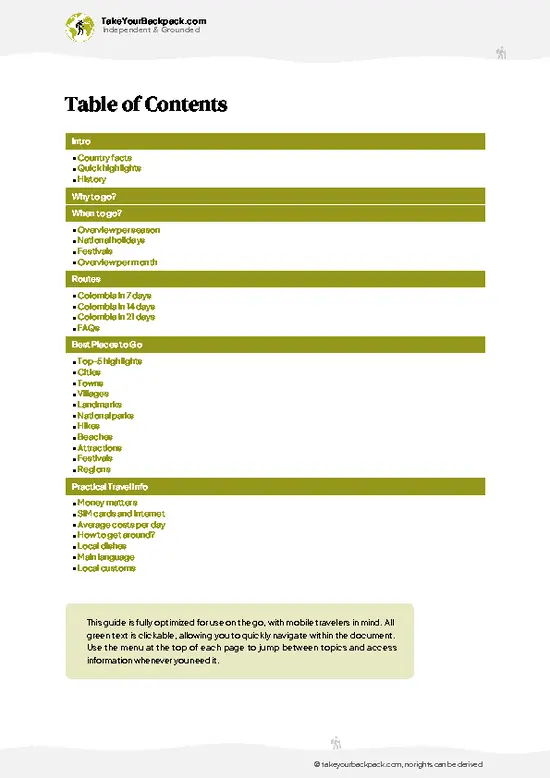
example page 2 from our offline Travel Guide for Colombia
example page 3 from our offline Travel Guide for Colombia
example page 4 from our offline Travel Guide for Colombia
example page 5 from our offline Travel Guide for Colombia
example page 6 from our offline Travel Guide for Colombia
example page 7 from our offline Travel Guide for Colombia
Loading the map 🌍
CLICK TO FILTER
cities
towns
villages
landmarks
national parks
hikes
beaches
attractions
festivals
regions
SHOW COUNTRY’S BESTSHOW ALL

✨ Why go?
Ranked #3 beach in Colombia
Reasons people choose to visit here

Playa Blanca works as a pause because it gives you a beach day without leaving the Cartagena orbit. The Barú peninsula setting means shallow, calm water you can wade out into for a long way, with no surf to read and no reef to cut your feet on. That makes it an easy first Caribbean beach for someone still finding their travel legs.

The other reason is the overnight option. Once the last boats leave in the late afternoon, the crowd drains away and the bamboo cabañas and hammock rows become the real accommodation. You sleep close to the water, eat fried fish and coconut rice from the shacks along the sand, and meet other travelers who stayed on purpose. Lights are few, so the stars show clearly.

It also connects to the wider coast. Boats run from here toward the Rosario Islands and the Cholón … read more 👉
Playa Blanca works as a pause because it gives you a beach day without leaving the Cartagena orbit. The Barú peninsula setting means shallow, calm water you can wade out into for a long way, with no surf to read and no reef to cut your feet on. That makes it an easy first Caribbean beach for someone still finding their travel legs.

The other reason is the overnight option. Once the last boats leave in the late afternoon, the crowd drains away and the bamboo cabañas and hammock rows become the real accommodation. You sleep close to the water, eat fried fish and coconut rice from the shacks along the sand, and meet other travelers who stayed on purpose. Lights are few, so the stars show clearly.

It also connects to the wider coast. Boats run from here toward the Rosario Islands and the Cholón sandbar, and you can stitch them into a loop that returns you to Cartagena or carries on toward Tolú and the Gulf of Morrosquillo. Treat it as a place to stay a night, not a place to hurry through.

💡 HighlightsDon't-miss highlights and experiences

  1. The white-sand shallows. The main stretch is the reason anyone comes: powder-pale sand and a shelf of knee-to-waist-deep water that stays calm and a clear turquoise. Walk well past the first cluster of huts and the water gets quieter, with fewer boats and fewer people to dodge.
  2. A night in a hammock or beach cabaña. Staying over is the best use of Playa Blanca. After the day boats leave, the music drops, the shore empties and you sleep to the sound of small waves. Bring a light layer and a headlamp, because lighting is minimal.
  3. Fresh fish lunch on the sand. The shacks grill or fry whole mojarra and serve it with coconut rice, patacones and a squeeze of lime, with your feet in the sand. Choose a place where the fish is shown to you whole and the oil looks clean. Lobster is offered everywhere,
… read more 👉
  1. The white-sand shallows. The main stretch is the reason anyone comes: powder-pale sand and a shelf of knee-to-waist-deep water that stays calm and a clear turquoise. Walk well past the first cluster of huts and the water gets quieter, with fewer boats and fewer people to dodge.
  2. A night in a hammock or beach cabaña. Staying over is the best use of Playa Blanca. After the day boats leave, the music drops, the shore empties and you sleep to the sound of small waves. Bring a light layer and a headlamp, because lighting is minimal.
  3. Fresh fish lunch on the sand. The shacks grill or fry whole mojarra and serve it with coconut rice, patacones and a squeeze of lime, with your feet in the sand. Choose a place where the fish is shown to you whole and the oil looks clean. Lobster is offered everywhere, so agree on the full price before anything is cooked.
  4. Boat trips to the Rosario Islands and Cholón. Snorkeling off the main beach is limited, so this is how you reach clearer water and coral patches. Local boatmen run trips to the islands and to the shallow Cholón sandbar, usually sold as a half-day. Bring your own mask if you are picky about fit, as rented gear can be worn.
  5. The beach walk toward the quieter ends. Following the shoreline away from the main huts takes you past palms, fishing boats pulled onto the sand and empty patches where you can lay a towel without a vendor arriving. It is the cheapest and most peaceful thing here, and it works especially well in the last hours of the afternoon.
Most visitors leave on the afternoon boats, so they never see the beach after dark, when the sand empties and the stars come out over the water.
Spotted a mistake or missing something? Contact us.

Things to do around Playa Blanca

Ratings based on Tripadvisor reviews. When you book through this link, you support our work at no extra cost to you.

🌤️ When to go?Seasonal considerations and timing

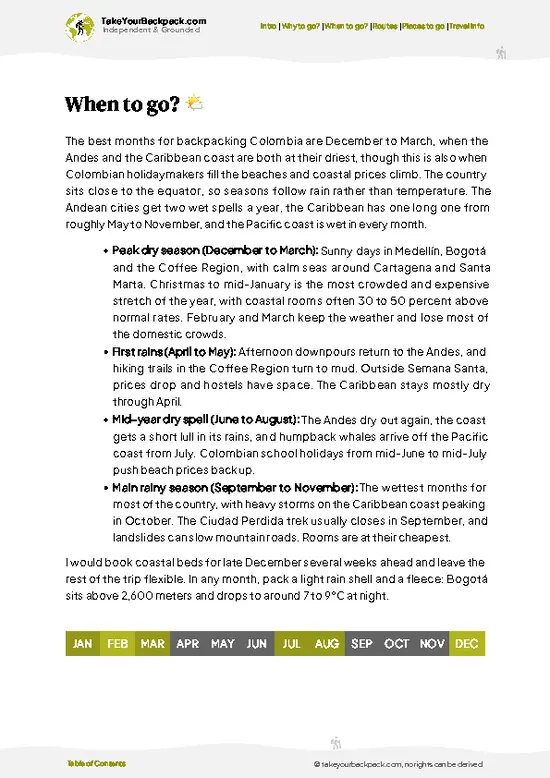
  • Dry Season (December to March): Playa Blanca is at its calmest, with hot, breezy days of 29 to 32°C (84 to 90°F), mostly clear skies and flat, clear water. Daylight lasts roughly 11.5 to 12 hours. Prices jump around Christmas, New Year and Carnival, and the sand fills with day-trippers.
  • Short Dry Spell (June to August): Showers ease and the sea stays pleasant at 28 to 31°C (82 to 88°F). Colombian school holidays bring weekend crowds, though weekdays stay manageable.
  • Rainy Season (April to May, September to November): Afternoon downpours and humid heat of 27 to 32°C (81 to 90°F) are normal, and October is usually the wettest month. Boats sometimes cancel in rough weather. Beach huts and island tours cost less, and you get far more room on the sand.
  • Weekdays versus weekends: Tuesday to Thursday
… read more 👉
  • Dry Season (December to March): Playa Blanca is at its calmest, with hot, breezy days of 29 to 32°C (84 to 90°F), mostly clear skies and flat, clear water. Daylight lasts roughly 11.5 to 12 hours. Prices jump around Christmas, New Year and Carnival, and the sand fills with day-trippers.
  • Short Dry Spell (June to August): Showers ease and the sea stays pleasant at 28 to 31°C (82 to 88°F). Colombian school holidays bring weekend crowds, though weekdays stay manageable.
  • Rainy Season (April to May, September to November): Afternoon downpours and humid heat of 27 to 32°C (81 to 90°F) are normal, and October is usually the wettest month. Boats sometimes cancel in rough weather. Beach huts and island tours cost less, and you get far more room on the sand.
  • Weekdays versus weekends: Tuesday to Thursday is quiet. Saturday and Sunday and public holiday long weekends bring the largest tour groups from Cartagena.
Arrive before 10 a.m. or stay overnight, and the beach is yours once the day boats leave around 3 p.m.


source: climatestotravel.comJANJanuary: excellent for travelingFEBFebruary: excellent for travelingMARMarch: excellent for travelingAPRApril: highly recommended for travelingMAYMay: fair for travelingJUNJune: fair for travelingJULJuly: fair for travelingAUGAugust: fair for travelingSEPSeptember: fair for travelingOCTOctober: fair for travelingNOVNovember: highly recommended for travelingDECDecember: excellent for traveling
colombia-beach-playa-blanca
© Google | J Marvin Viajero

✈️ The backpacker research shortcutColombia Travel Guide

An offline-friendly backpacking guide with optimized travel routes, ranked highlights, transport advice, and the best areas to stay.
example page 0 from our offline Travel Guide for Colombia
example page 1 from our offline Travel Guide for Colombia
example page 2 from our offline Travel Guide for Colombia
example page 3 from our offline Travel Guide for Colombia
example page 4 from our offline Travel Guide for Colombia
example page 5 from our offline Travel Guide for Colombia
example page 6 from our offline Travel Guide for Colombia
example page 7 from our offline Travel Guide for Colombia
The digital guide (349 pages) contains:
✅ 115 highlights, ranked by travel appeal
✅ Optimized 7, 14 & 21-day travel routes
✅ Cities, national parks, landmarks, beaches
✅ How to get around
✅ Offline-friendly for travel without Wi-Fi
👉 Click to see all 30+ guide features

📅 Plan smarter in minutes, not weeks
✅ Month by month travel advice
✅ Festivals & national holidays
✅ Budget expectations

🗺️ Go to the right places, skip the overrated ones
✅ Honest pros & cons of destinations
✅ Top hikes, parks & viewpoints
✅ Lesser-known places most travelers miss
✅ Clear “worth it vs skip it” guidance

🛏️ Travel smoothly without rookie mistakes
✅ Best areas to stay
✅ Transport systems explained simply
✅ Common scams & safety advice
✅ SIM cards, money & practical tips

🌍 Understand the country, not just visit it
✅ Culture & traditions
✅ 52 Essential phrases & customs
✅ Festivals worth planning around
✅ Traveler-friendly historical context
✅ Insights that make places more meaningful

📱 Built for real travel conditions
✅ Fully downloadable PDF
✅ Works completely offline
✅ Optimized for phone use
✅ Useful in remote areas & buses
✅ Everything in one place
Stop searching, start planning
Get instant access to your full guide. 30‑day money-back guarantee.
+ Add another guide for just

By proceeding you agree to our terms.
Sent to your inbox immediately after payment • 100% Secure Checkout
Best Backpacking Travel Advisor 2025 tourism awardBest Backpacking
Travel Advisor
2025
What others say about Take Your Backpack Guides:
⭐⭐⭐⭐⭐
Fantastic, amazing amount of information!
⭐⭐⭐⭐⭐
My goodness this is amazing, it's what I've been looking for hats off too you!
⭐⭐⭐⭐⭐
I think this is absolutely BRILLIANT
⭐⭐⭐⭐
Very complete and informative. It's still missing places, but I gotta to commend you
⭐⭐⭐⭐⭐
This is truly amazing, thank you, can't wait to explore it with my kids!
⭐⭐⭐⭐⭐
Awesome resource, thank you!
⭐⭐⭐⭐⭐
This is amazing! Can't wait to explore the ones I haven't seen
⭐⭐⭐⭐
I love this! Well done, great idea.
⭐⭐⭐⭐⭐
Thanks for taking the time to make this gem!
⭐⭐⭐⭐⭐
This might be the best website I've ever seen.
⭐⭐⭐⭐⭐
Congratulations, and thank you so much for your work; it's incredibly valuable.
⭐⭐⭐⭐
In all seriousness I think you did a great job pointing out the important spots
⭐⭐⭐⭐⭐
10/10 very good
⭐⭐⭐⭐⭐
As someone who's only just starting to visit regularly this is awesome, thank you.
⭐⭐⭐⭐
Thank you very much! I'm going to visit my dad, it's going to be very useful!
⭐⭐⭐⭐⭐
This is really cool! We'll be travelling for the first time and this definitely come in handy.
⭐⭐⭐⭐⭐
You are now our minister of culture, congratulations 👨‍💼
⭐⭐⭐⭐⭐
Just wanted to tell you that this is a pearl! Going to follow your recommendations.
⭐⭐⭐⭐⭐
This is so cool. I'll definitely be using the resource for my travels soon.
⭐⭐⭐⭐⭐
This is very impressive! Good work.
⭐⭐⭐⭐⭐
This is an amazing and informative site. Very well done!

🛏️ Where to stay?Best areas and accommodation options

The best option for most backpackers is to sleep right on Playa Blanca itself, in the simple beachfront cabins and hammock huts along the sand, at roughly US$10 to 25 a person. This is where you get the quiet evening after the day boats leave, when the sky fills with stars and the only light comes from a few bars and fires. Expect basic rooms, cold-water showers, limited electricity and no real nightlife beyond sharing drinks and fish dinners with other travelers. Hammocks are the cheapest and most social choice, and neighbors on the next hammock tend to become your dinner group.

The other approach … read more 👉
The best option for most backpackers is to sleep right on Playa Blanca itself, in the simple beachfront cabins and hammock huts along the sand, at roughly US$10 to 25 a person. This is where you get the quiet evening after the day boats leave, when the sky fills with stars and the only light comes from a few bars and fires. Expect basic rooms, cold-water showers, limited electricity and no real nightlife beyond sharing drinks and fish dinners with other travelers. Hammocks are the cheapest and most social choice, and neighbors on the next hammock tend to become your dinner group.

The other approach is to stay in Cartagena, in the Getsemaní neighborhood, which is the main hub for hostels, rooftop bars and tour desks. From there you can make Playa Blanca a day trip by boat or via Barú by road, and you keep more comfort, reliable showers and wifi. Getsemaní suits you if you want a social scene and plan to see the beach only once. Choose the beach itself if you want to wake up on the sand before anyone arrives. Book ahead on weekends and holidays, since the cabins are limited in number.

🛡️ SafetyTraveler Safety Guide

Playa Blanca is a calm, shallow beach where most swimmers wade out far before the water reaches the chest, and waves are small on typical days. Currents are mild, but wind in the rainy months can kick up chop and make boat transfers bumpy. Sea urchins live on rocky patches and in some seagrass near the edges, so wear water shoes if you plan to snorkel around the reef sections. Jellyfish are uncommon.

The sun is the main concern. Shade is limited, and the white sand reflects heat, so bring reef-safe sunscreen, a hat and plenty of water. Midday from 11 a.m. to 2 p.m. is the harshest.

Vendors offer massages, food and boat rides, and a simple polite no is accepted. Agree on prices before you buy. Keep valuables with you or locked in your cabin rather than on the sand while you swim, and confirm your return boat time with the operator.

FAQFrequently asked questions about Playa Blanca

Boats from Cartagena are the most common way, taking about 45 to 60 minutes from the Muelle de la Bodeguita and costing around US$25 to 35 for a round trip including tour extras. You can also go by road via the Barú peninsula, a ride of roughly 45 minutes to 1 hour from Cartagena, using a taxi or a shared tour van from about US$10 to 15 each way. Many hostels in Getsemaní sell combined transport and lunch packages.
Swimming is excellent, with warm, shallow, calm and clear water that suits beginners and families. Snorkeling is possible near the reef sections, but visibility is modest compared with the Rosario Islands, so many people take a boat tour for it at roughly US$30 to 60. Surfing is not an option because the waves are tiny.
Entry to the sand itself is free, though some stretches may require you to buy food, drinks or rent a chair from the beachfront vendors. Sun loungers and umbrellas usually cost US$4 to 8, and cabins run US$10 to 25 a person for overnight stays. If you come on a boat tour, the fare covers the boat, and the Barú route may involve a small local fee, so carry cash in Colombian pesos.
⚠️ Things can change over time, so always validate details locally before you go.

Other Colombian beaches near Playa Blanca

Explore more nearby:

  • Playa Uva—Fried-fish shacks, working fishing boats, easy swimming, low-key evenings| 35 km away
  • Isla Fuerte—Car-free island, reef snorkeling, grilled snapper, boat access| 112 km away
  • Cabo San Juan—Boulder-ringed bay, rock hammock hut, Tayrona jungle trail, calm swimming| 217 km away

💡 Not sure where to go next?
Create a personalized itinerary for Colombia including Playa Blanca and the places that fit your trip.

Generate my itinerary

👉 Discover all beaches

Or checkout all Colombia has to offer (think cities, towns, villages, national parks, hikes, beaches, festivals)
Country photo of Colombia

We 💚 feedbackIs it worth it?

Playa Blanca is at its best from mid-afternoon into the morning after, once the day boats have gone and the shore belongs to the people sleeping there. I would come on a weekday in the dry months from December to March and stay one night in a hammock. Skip Saturday noon entirely.

✈️ When did I visit Colombia?
Did a good 3-week trip around Colombia in August 2014.

✍️ Help improve this page!
The information on this page is based on my own backpacking experience in Colombia, supplemented with up-to-date research and feedback from other travelers. Travel details can change, so if you notice anything outdated or incomplete, feel free to let me know.


🙋‍♂️ Give feedback

👋 Meet the founderWho’s Behind Take Your Backpack?

Johan, backpacker and founder of TakeYourBackpackHi, I’m Johan (Netherlands 🇳🇱), the creator of TakeYourBackpack. Over the past 3 decades, I’ve backpacked through 90+ countries across six continents, gaining extensive experience with independent travel, long-term trips, and overland routes.

This site is built on a combination of firsthand travel experience and carefully curated insights from other backpackers. Many guides are based on places I’ve personally visited, while others bring together tips, observations, and practical advice shared by trusted travelers I’ve met along the way.

The goal is to provide realistic, experience-driven guidance — not generic itineraries — so you can explore destinations with better context, clearer expectations, and more confidence.