×

Colombia🇨🇴 | beachesCabo San JuanBoulder-ringed bay, rock hammock hut, Tayrona jungle trail, calm swimming | things to do and best time to go

Explore Bioparque UkumaríExplore Cabo de la Vela

Backpacking in Cabo San Juan
🏆 Top pickbeach ranked #1
By Johan Kruseman 🇳🇱 | Updated October 18, 2026

Cabo San Juan beach sits inside a national park that closes to visitors for short spells each year so Indigenous communities can hold ceremonies, so check dates before you commit. It lies in the north of Colombia, east of Santa Marta, at the end of a jungle trail through Tayrona National Park. The scenery is the draw: boulders the size of buses, palms leaning over pale sand, and a calm bay where you can actually swim, which is rare on this coast. The hammock hut on the rock is worth the money. The food is overpriced and average, so skip the big meals and bring snacks. Crowds peak at weekends and holidays, and the bay gets loud. I asked a hammock host if the sunset rock was worth the wait, and he grinned and said, “Llegue temprano o duerma abajo.” Arrive early or sleep below. Do that. Compared with Arrecifes, where currents make swimming dangerous, Cabo is the safer beach.

Discover everything you want to know in the 📖 Colombia Travel Guide.


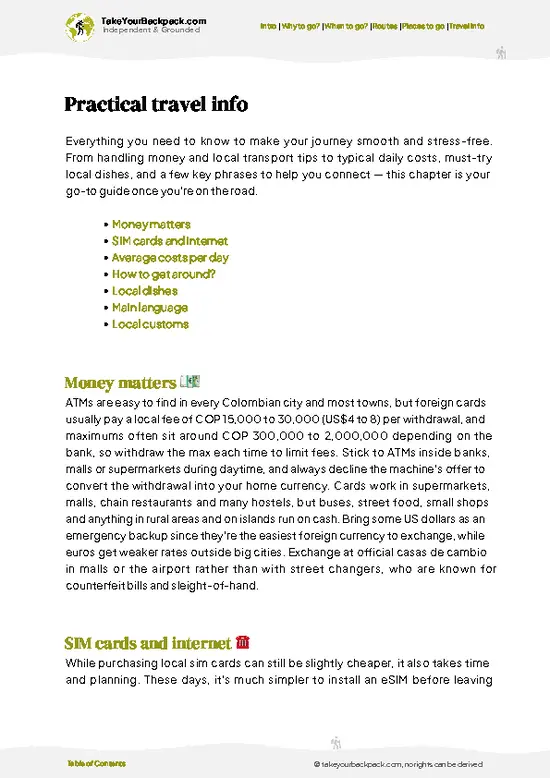
example page 0 from our offline Travel Guide for Colombia
example page 1 from our offline Travel Guide for Colombia
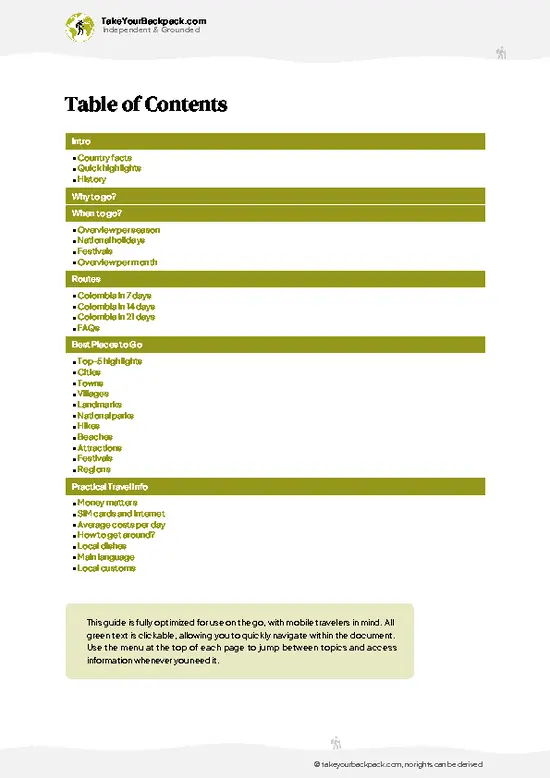
example page 2 from our offline Travel Guide for Colombia
example page 3 from our offline Travel Guide for Colombia
example page 4 from our offline Travel Guide for Colombia
example page 5 from our offline Travel Guide for Colombia
example page 6 from our offline Travel Guide for Colombia
example page 7 from our offline Travel Guide for Colombia
Loading the map 🌍
CLICK TO FILTER
cities
towns
villages
landmarks
national parks
hikes
beaches
attractions
festivals
regions
SHOW COUNTRY’S BESTSHOW ALL

✨ Why go?
Ranked #1 beach in Colombia
The unique appeal for travelers

Cabo San Juan beach is where Tayrona’s long trek finally pays off. Most backpackers stop for the hammock platform on the headland, a wooden hut perched on rocks with sea on three sides. Sleeping there, with waves below and a breeze through the open walls, is the whole point of the trip, and it is cheap compared with a hotel. The second reason is the water. Much of the park’s coastline has rip currents and flags, but the twin sheltered bays here let you float and paddle without anxiety. After days on dusty trails, that matters. The third reason is the place on the route. Cabo is the far end of the main coastal path, so everyone you met on the walk in ends up here by evening, and strangers swap stories over dinner while sharing a table. Camping and hammocks fill up fast, which pushes people … read more 👉
Cabo San Juan beach is where Tayrona’s long trek finally pays off. Most backpackers stop for the hammock platform on the headland, a wooden hut perched on rocks with sea on three sides. Sleeping there, with waves below and a breeze through the open walls, is the whole point of the trip, and it is cheap compared with a hotel. The second reason is the water. Much of the park’s coastline has rip currents and flags, but the twin sheltered bays here let you float and paddle without anxiety. After days on dusty trails, that matters. The third reason is the place on the route. Cabo is the far end of the main coastal path, so everyone you met on the walk in ends up here by evening, and strangers swap stories over dinner while sharing a table. Camping and hammocks fill up fast, which pushes people together. Some then use it as a launch point for the trail to Pueblito, the old Tayrona settlement in the hills. Few beaches combine a bed, a swim and a trail head this neatly.

💡 HighlightsWhat this place is best known for

  1. The mirador hammock hut on the rock. This is the image everyone searches for: a wooden platform on a granite outcrop above the bay, with hammocks strung beneath a thatched roof. Climb up at dusk for the best view of both bays, and expect to share it.
  2. Swimming in the main bay. The cove is protected by boulders and the water is calm, clear and warm. It is the park’s safest and most popular swim, and the sand is fine and pale, though crowded after midday.
  3. Snorkeling off the rocks. The rocky edges of the bay hold fish and some coral. Visibility changes with the swell, so go in the calm morning and bring your own mask, since the sand has little to rent.
  4. The trail to Pueblito Chairama. From the beach area, a steep path climbs through forest to the ruins of a Tayrona settlement with stone terraces and
… read more 👉
  1. The mirador hammock hut on the rock. This is the image everyone searches for: a wooden platform on a granite outcrop above the bay, with hammocks strung beneath a thatched roof. Climb up at dusk for the best view of both bays, and expect to share it.
  2. Swimming in the main bay. The cove is protected by boulders and the water is calm, clear and warm. It is the park’s safest and most popular swim, and the sand is fine and pale, though crowded after midday.
  3. Snorkeling off the rocks. The rocky edges of the bay hold fish and some coral. Visibility changes with the swell, so go in the calm morning and bring your own mask, since the sand has little to rent.
  4. The trail to Pueblito Chairama. From the beach area, a steep path climbs through forest to the ruins of a Tayrona settlement with stone terraces and circular foundations. It is demanding and humid, so start early and carry water. Respect any signs asking you to keep out of Indigenous areas.
  5. A night on the sand under the stars. With no clubs and little light, the evenings belong to the sea and the sky. Hammocks, tents and the sound of waves replace nightlife, and the stars over the bay are bright on clear nights. Take a headlamp, since the paths are dark.
The quiet path behind the headland leads to a smaller second bay that most people walk past on their way to the hammocks.
Spotted a mistake or missing something? Contact us.

Things to do near Cabo San Juan

Ratings based on Tripadvisor reviews. When you book through this link, you support our work at no extra cost to you.

🌤️ When to go?Seasonal considerations and timing

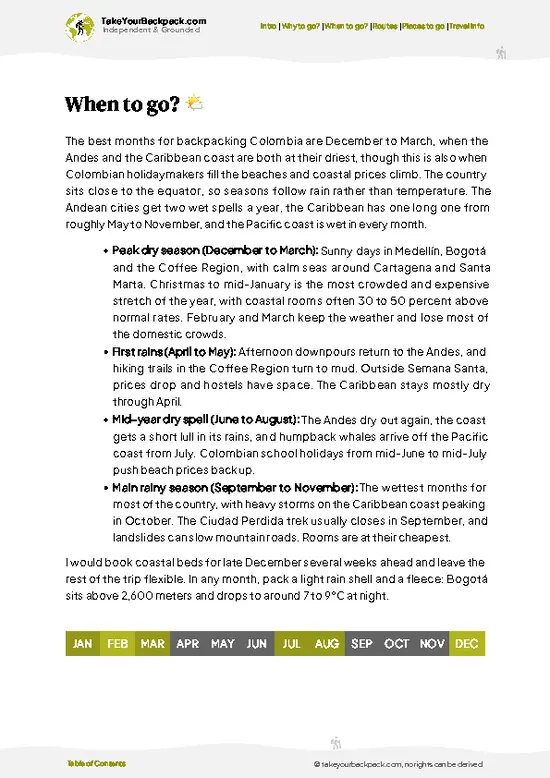
  • Dry Season (December to March): Cabo San Juan is at its best, with sunny days around 29 to 32°C (84 to 90°F), nights near 24°C (75°F) and a steady sea breeze. Daylight runs roughly 11.5 to 12.5 hours. Crowds and prices peak, and the tent and hammock spots fill up.
  • Holiday Peaks (late December to mid-January, Semana Santa, long Colombian weekends): Colombian holidaymakers arrive in numbers. Expect the beach to be packed, lunch lines to grow and lodging to cost 30 to 50 percent more.
  • Early Wet Season (April to June): Showers come in short afternoon bursts, temperatures stay around 30°C (86°F), humidity climbs and the park is quieter.
  • Peak Rains (September to November): Heavy downpours can last for hours, trails inside Tayrona turn to mud and the sea gets rougher. Prices drop and you may nearly
… read more 👉
  • Dry Season (December to March): Cabo San Juan is at its best, with sunny days around 29 to 32°C (84 to 90°F), nights near 24°C (75°F) and a steady sea breeze. Daylight runs roughly 11.5 to 12.5 hours. Crowds and prices peak, and the tent and hammock spots fill up.
  • Holiday Peaks (late December to mid-January, Semana Santa, long Colombian weekends): Colombian holidaymakers arrive in numbers. Expect the beach to be packed, lunch lines to grow and lodging to cost 30 to 50 percent more.
  • Early Wet Season (April to June): Showers come in short afternoon bursts, temperatures stay around 30°C (86°F), humidity climbs and the park is quieter.
  • Peak Rains (September to November): Heavy downpours can last for hours, trails inside Tayrona turn to mud and the sea gets rougher. Prices drop and you may nearly have the beach to yourself between storms.
  • Mid-Year (July to August): Drier spells return and Colombian school holidays bring moderate crowds.
I would arrive on a weekday in late January or early February, and reach the beach by mid-morning, before the day-trip boats and hikers do.


source: climatestotravel.comJANJanuary: excellent for travelingFEBFebruary: excellent for travelingMARMarch: excellent for travelingAPRApril: fair for travelingMAYMay: fair for travelingJUNJune: fair for travelingJULJuly: fair for travelingAUGAugust: fair for travelingSEPSeptember: fair for travelingOCTOctober: fair for travelingNOVNovember: good for travelingDECDecember: highly recommended for traveling
colombia-beach-cabo-san-juan
© Google | Lucas

✈️ The backpacker research shortcutColombia Travel Guide

An offline-friendly backpacking guide with optimized travel routes, ranked highlights, transport advice, and the best areas to stay.
example page 0 from our offline Travel Guide for Colombia
example page 1 from our offline Travel Guide for Colombia
example page 2 from our offline Travel Guide for Colombia
example page 3 from our offline Travel Guide for Colombia
example page 4 from our offline Travel Guide for Colombia
example page 5 from our offline Travel Guide for Colombia
example page 6 from our offline Travel Guide for Colombia
example page 7 from our offline Travel Guide for Colombia
The digital guide (349 pages) contains:
✅ 115 highlights, ranked by travel appeal
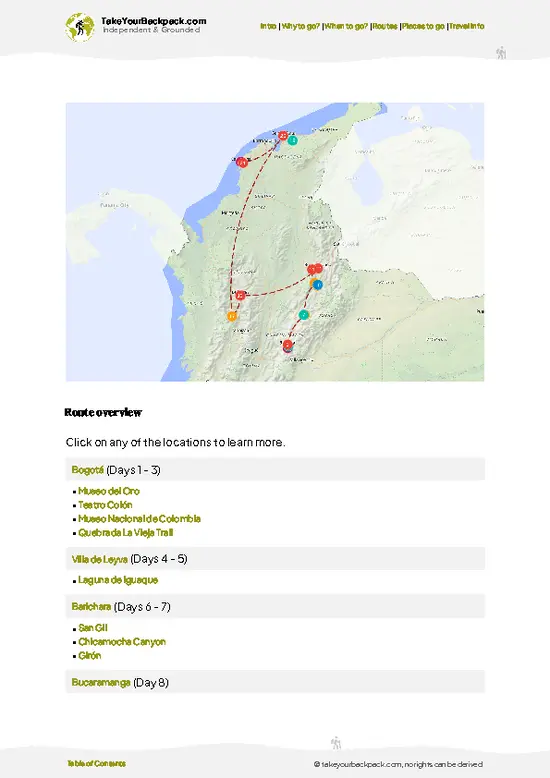
✅ Optimized 7, 14 & 21-day travel routes
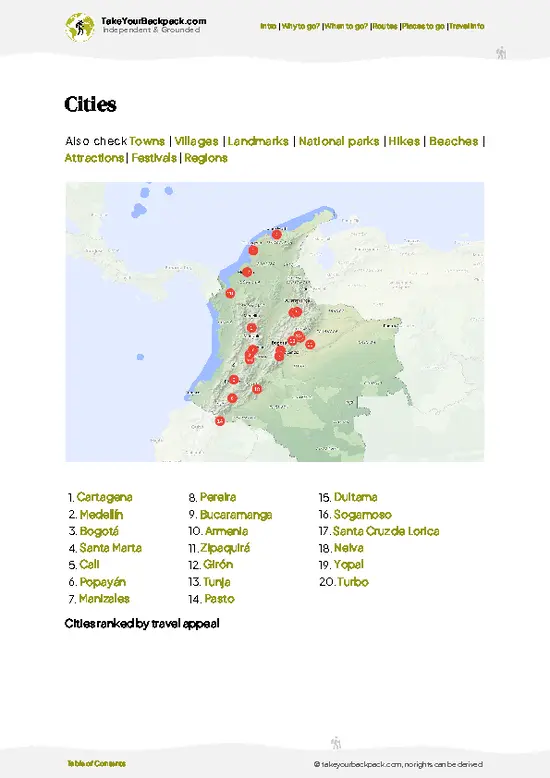
✅ Cities, national parks, landmarks, beaches
✅ How to get around
✅ Offline-friendly for travel without Wi-Fi
👉 Click to see all 30+ guide features

📅 Plan smarter in minutes, not weeks
✅ Month by month travel advice
✅ Festivals & national holidays
✅ Budget expectations

🗺️ Go to the right places, skip the overrated ones
✅ Honest pros & cons of destinations
✅ Top hikes, parks & viewpoints
✅ Lesser-known places most travelers miss
✅ Clear “worth it vs skip it” guidance

🛏️ Travel smoothly without rookie mistakes
✅ Best areas to stay
✅ Transport systems explained simply
✅ Common scams & safety advice
✅ SIM cards, money & practical tips

🌍 Understand the country, not just visit it
✅ Culture & traditions
✅ 52 Essential phrases & customs
✅ Festivals worth planning around
✅ Traveler-friendly historical context
✅ Insights that make places more meaningful

📱 Built for real travel conditions
✅ Fully downloadable PDF
✅ Works completely offline
✅ Optimized for phone use
✅ Useful in remote areas & buses
✅ Everything in one place
Stop searching, start planning
Get instant access to your full guide. 30‑day money-back guarantee.
+ Add another guide for just

By proceeding you agree to our terms.
Sent to your inbox immediately after payment • 100% Secure Checkout
Best Backpacking Travel Advisor 2025 tourism awardBest Backpacking
Travel Advisor
2025
What others say about Take Your Backpack Guides:
⭐⭐⭐⭐⭐
Fantastic, amazing amount of information!
⭐⭐⭐⭐⭐
My goodness this is amazing, it's what I've been looking for hats off too you!
⭐⭐⭐⭐⭐
I think this is absolutely BRILLIANT
⭐⭐⭐⭐
Very complete and informative. It's still missing places, but I gotta to commend you
⭐⭐⭐⭐⭐
This is truly amazing, thank you, can't wait to explore it with my kids!
⭐⭐⭐⭐⭐
Awesome resource, thank you!
⭐⭐⭐⭐⭐
This is amazing! Can't wait to explore the ones I haven't seen
⭐⭐⭐⭐
I love this! Well done, great idea.
⭐⭐⭐⭐⭐
Thanks for taking the time to make this gem!
⭐⭐⭐⭐⭐
This might be the best website I've ever seen.
⭐⭐⭐⭐⭐
Congratulations, and thank you so much for your work; it's incredibly valuable.
⭐⭐⭐⭐
In all seriousness I think you did a great job pointing out the important spots
⭐⭐⭐⭐⭐
10/10 very good
⭐⭐⭐⭐⭐
As someone who's only just starting to visit regularly this is awesome, thank you.
⭐⭐⭐⭐
Thank you very much! I'm going to visit my dad, it's going to be very useful!
⭐⭐⭐⭐⭐
This is really cool! We'll be travelling for the first time and this definitely come in handy.
⭐⭐⭐⭐⭐
You are now our minister of culture, congratulations 👨‍💼
⭐⭐⭐⭐⭐
Just wanted to tell you that this is a pearl! Going to follow your recommendations.
⭐⭐⭐⭐⭐
This is so cool. I'll definitely be using the resource for my travels soon.
⭐⭐⭐⭐⭐
This is very impressive! Good work.
⭐⭐⭐⭐⭐
This is an amazing and informative site. Very well done!

🛏️ Where to stay?Choosing the right base

The best base for Cabo San Juan is the beach itself, where the single camping and hammock area sits on the headland between the two bays, with simple cabins close by. Sleeping here means you are on the sand for sunrise and for the quiet after the last day-trippers leave around late afternoon. Hammocks in the raised central lookout pavilion are the classic backpacker choice: expect roughly US$20 to 35 a night, and a tent pitch costs a bit less. Evenings are social, with travelers swapping trail stories at the shared dining area, and the lights go out early.

If Cabo is full or too pricey, the neighboring … read more 👉
The best base for Cabo San Juan is the beach itself, where the single camping and hammock area sits on the headland between the two bays, with simple cabins close by. Sleeping here means you are on the sand for sunrise and for the quiet after the last day-trippers leave around late afternoon. Hammocks in the raised central lookout pavilion are the classic backpacker choice: expect roughly US$20 to 35 a night, and a tent pitch costs a bit less. Evenings are social, with travelers swapping trail stories at the shared dining area, and the lights go out early.

If Cabo is full or too pricey, the neighboring beaches within the park are a one to two hour walk away. Arrecifes and La Piscina have more campsites and are cheaper in many cases, though the sea is rougher there. Park entry is charged separately.

For a wider budget range, stay outside the park. Santa Marta’s El Rodadero and the historic center have many hostels with dorm beds around US$8 to 15, easy bus links and a livelier nightlife. The fishing village of Taganga, about 20 minutes from Santa Marta, is popular with divers and solo travelers. Beyond the park’s El Zaino entrance, the roadside villages offer quieter and cheaper rooms, with pickups the next morning.

🛡️ SafetyTraveler Safety Guide

Cabo San Juan has two sheltered bays that are the most swimmable in Tayrona, and you can swim in the one with the calmer water where the lifeguard-free sand slopes gently. The bay beyond the rocks has the strong waves and rip currents that make Tayrona’s other beaches famous for drownings, so stay out of the water on the exposed side and heed the red warning signs. Local rangers and boat crews will tell you which side is safe on a given day.

The sun here is intense even through cloud. Cover up between 10 a.m. and 3 p.m., and bring more water than you expect, since the hike in is hot and humid. Afternoon storms can roll in quickly in the wet months, so head back to shelter at the first thunder.

Theft is uncommon but not absent. Keep valuables in your bag while you sleep, use the lockers or … read more 👉
Cabo San Juan has two sheltered bays that are the most swimmable in Tayrona, and you can swim in the one with the calmer water where the lifeguard-free sand slopes gently. The bay beyond the rocks has the strong waves and rip currents that make Tayrona’s other beaches famous for drownings, so stay out of the water on the exposed side and heed the red warning signs. Local rangers and boat crews will tell you which side is safe on a given day.

The sun here is intense even through cloud. Cover up between 10 a.m. and 3 p.m., and bring more water than you expect, since the hike in is hot and humid. Afternoon storms can roll in quickly in the wet months, so head back to shelter at the first thunder.

Theft is uncommon but not absent. Keep valuables in your bag while you sleep, use the lockers or the staff’s storage if offered, and avoid leaving phones on the sand. Coconuts fall from palms, so skip pitching a hammock directly under them.

FAQTraveler FAQ

Take a bus from Santa Marta’s market area to the El Zaino park entrance, about 45 to 60 minutes and US$2 to 3, then walk or catch a shuttle to the trailhead. From there the hike to Cabo San Juan takes roughly 1.5 to 2 hours through jungle and along the coast. Alternatively, boats run from Taganga or Santa Marta to the beach for about US$25 to 40 return, depending on the season and the sea.
Cabo San Juan beach is good for swimming in the calmer bay and for relaxed snorkeling when the water is clear, mostly in the dry months from December to March. Surfing is not a thing here, as the exposed waves and currents are for looking at rather than riding. Bring your own mask since rental choices are limited, and do not swim on the rougher side of the headland.
No, Cabo San Juan beach sits inside Tayrona National Park, so you pay a park entrance fee of roughly US$12 to 25 depending on whether you are a foreigner and the season, plus a small insurance charge. Camping or hammocks cost extra at about US$20 to 35 a night, and prices climb during holidays. Buy tickets online in advance in the high season, as daily visitor numbers are limited.
⚠️ Things can change over time, so always validate details locally before you go.

Other Colombian beaches near Cabo San Juan

Explore more nearby:

  • Palomino—Rip currents, river tubing, palm-lined strand, Sierra Nevada backdrop| 45 km away
  • Playa Blanca—Powder-white sand, knee-deep shallows, thatched huts, Barú day boats| 217 km away
  • Cabo de la Vela—Kitesurf wind, desert-meets-sea, Pilón de Azúcar, hammock rancherías| 220 km away

💡 Not sure where to go next?
Create a personalized itinerary for Colombia including Cabo San Juan and the places that fit your trip.

Generate my itinerary

👉 Discover all beaches

Or checkout all Colombia has to offer (think cities, towns, villages, national parks, hikes, beaches, festivals)
Country photo of Colombia

We 💚 feedbackParting advice and final tips

Cabo San Juan beach looks like one bay, but it is really two, and the smaller one behind the rocks empties out while everyone crowds the main sand. I would claim a hammock early, drop my bag, then walk over there for a calm swim. Bring cash and snacks, because supplies run short.

✈️ When did I visit Colombia?
Did a good 3-week trip around Colombia in August 2014.

✍️ Help improve this page!
The information on this page is based on my own backpacking experience in Colombia, supplemented with up-to-date research and feedback from other travelers. Travel details can change, so if you notice anything outdated or incomplete, feel free to let me know.


🙋‍♂️ Give feedback

👋 Meet the founderWho’s Behind Take Your Backpack?

Johan, backpacker and founder of TakeYourBackpackHi, I’m Johan (Netherlands 🇳🇱), the creator of TakeYourBackpack. Over the past 3 decades, I’ve backpacked through 90+ countries across six continents, gaining extensive experience with independent travel, long-term trips, and overland routes.

This site is built on a combination of firsthand travel experience and carefully curated insights from other backpackers. Many guides are based on places I’ve personally visited, while others bring together tips, observations, and practical advice shared by trusted travelers I’ve met along the way.

The goal is to provide realistic, experience-driven guidance — not generic itineraries — so you can explore destinations with better context, clearer expectations, and more confidence.