×

Cook Islands🇨🇰 | best landmarksWhere to Find the Best landmarks in Cook Islands

Landmarks in the Cook Islands are mostly natural and cultural, not built monuments, and they work best for independent travelers who like a loose plan. Rarotonga is where you get easy access, free or cheap entry and scooter-friendly roads. The outer islands cost more to reach but feel almost private. Go early, since mornings are quiet and cooler.

By Johan Kruseman 🇳🇱 | Updated October 23, 2026
Explore the best national parks in Cook Islands

Why go?Why Travelers Love These Spots

The Cook Islands are 15 small islands spread over about 2 million square kilometers of ocean, so landmarks here come from volcanic geography, coral lagoons and a living Polynesian heritage rather than grand architecture. Many sites sit on customary land, so access can depend on a landowner’s permission, and some are only reached with a local guide who knows the ground and the stories. Expect no big ticket queues, short distances on the main island and flights that set the pace everywhere else. Bring cash in New Zealand dollars (the country’s currency), because small operators often skip cards. Church services on Sunday are a real part of island life, and many places slow down or close that day, so plan your visits around it.
How the List Was Created
The list of best unique sites in Cook Islands is created based on history or culture, wow factor, atmosphere, quirks, and memorability. If you feel a unique site is missing in this list, please let us know.

When to go?Optimal Periods for Travel

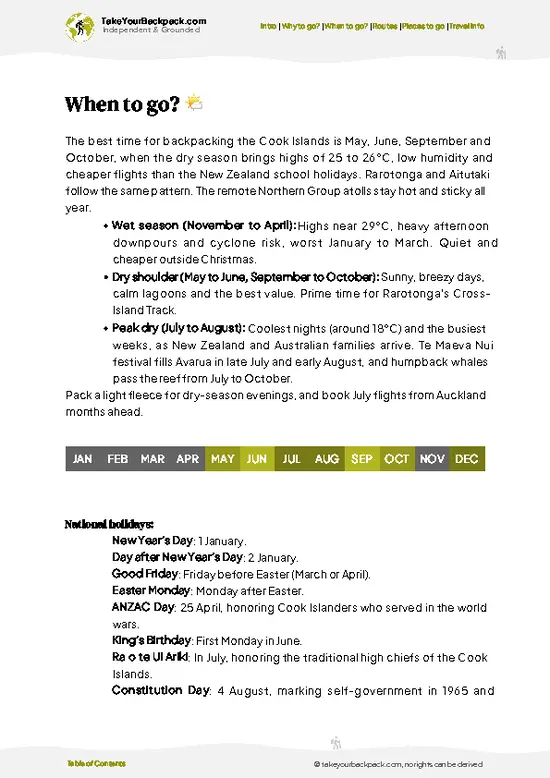
Best months and weather: The best months are May to October, when days run about 25 to 28°C, humidity drops and rain stays light, which keeps tracks dry and views clear. Shoulder and peak periods: April and November are the shoulder months, with fewer visitors and lower prices. July and August bring the biggest crowds and highest rates, so book flights and rooms early. Wet season: From December to March temperatures climb to 28 to 31°C with heavy downpours and a cyclone risk, though the season peaks from January to March. Muddy trails and canceled inter-island flights are more likely then, yet accommodation can be 20 to 30 percent cheaper. Go outdoors in the morning, before afternoon cloud builds.

unique site hoppingOptimizing Your Multi-Stop Itinerary

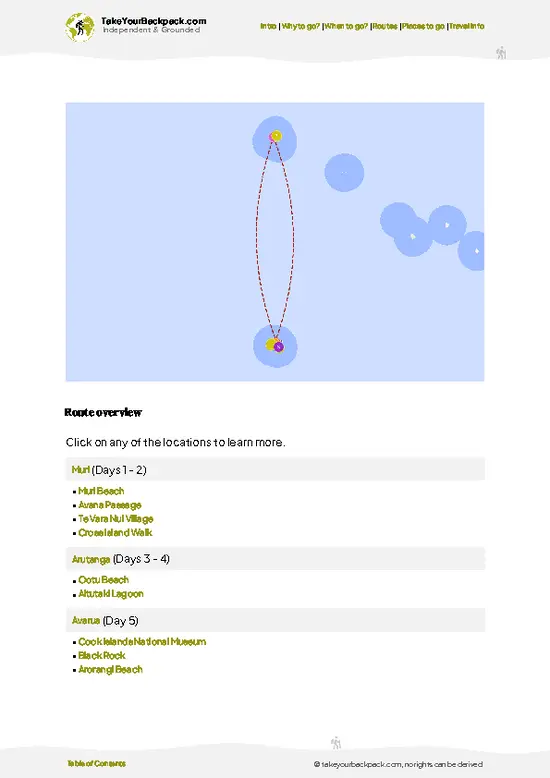
How long to plan: A trip combining several landmarks needs 7 to 12 days. Order and pacing: Start on Rarotonga, where the international airport is, and allow 3 to 5 days there, since most stops take only 2 to 4 hours and the 32-kilometer coast road circles the island in under an hour. Then fly to Aitutaki, about 45 minutes from Rarotonga, and give it 2 to 3 days. Add other outer islands only if you have a full extra week, because flights are limited and costly. Common planning mistakes: Travelers often cram too much into the first days, or book an inter-island flight the day before their international departure. Leave a one-day buffer, since weather delays are common, and keep Sundays loose, when many services pause.

The ListMust-Visit landmarks in Cook Islands

1 Avana Passage

Reef gap, canoe departure point, memorial stones

Walk the sandy harbor edge where tradition says voyaging canoes left for Aotearoa, then read the memorial markers and watch small boats thread the channel.

Loading the map 🌍

Expert viewPro Tips for Exploring the Best

How many to visit: I would advise 6 to 8 landmarks in total. That is enough to cover the island’s variety without turning each day into a checklist, and it leaves room for lagoon time, which is the real draw here. Which kind to prioritize: Budget travelers get the most from natural and cultural sites on Rarotonga, since many are free or cost little and cost you only time. If you like hiking, put the inland and ridge walks first, as a local guide for a cross-island walk typically costs NZ$70 to 100 (about US$42 to 60) and adds history you cannot get alone. If culture is your priority, choose a guided heritage visit over a self-driven loop, since landowner stories make the sites make sense. A lagoon tour from the outer islands runs NZ$100 to 150 (about US$60 to 90), which is the biggest splurge, … read more 👉
How many to visit: I would advise 6 to 8 landmarks in total. That is enough to cover the island’s variety without turning each day into a checklist, and it leaves room for lagoon time, which is the real draw here. Which kind to prioritize: Budget travelers get the most from natural and cultural sites on Rarotonga, since many are free or cost little and cost you only time. If you like hiking, put the inland and ridge walks first, as a local guide for a cross-island walk typically costs NZ$70 to 100 (about US$42 to 60) and adds history you cannot get alone. If culture is your priority, choose a guided heritage visit over a self-driven loop, since landowner stories make the sites make sense. A lagoon tour from the outer islands runs NZ$100 to 150 (about US$60 to 90), which is the biggest splurge, though worth it once. Daily budget: Plan on NZ$100 to 170 a day (about US$60 to 100) including a hostel bed or basic room, food from markets and a scooter hire at NZ$15 to 25 a day. Individual entry or guide fees usually run NZ$0 to 100. Safety and respect: Wear a helmet on scooters, because roads are narrow and gravel is common, and a local license is required, which you can get at the police station in Avarua for a modest fee. Ask before crossing private land or entering sacred sites, and never remove stones or shells. Dress modestly in villages and churches, and treat Sundays as a rest day. Take water and sun protection on every walk, and avoid ridge trails after heavy rain, since they get slick.

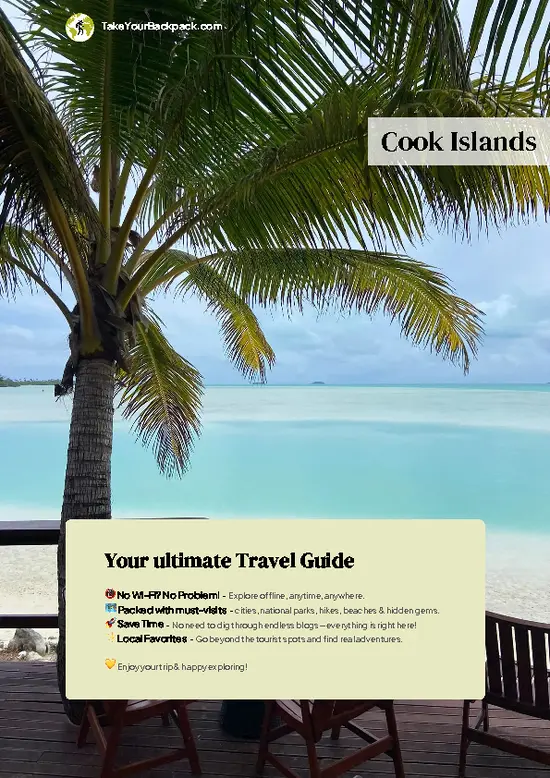
✈️ The backpacker research shortcutCook Islands Travel Guide

An offline-friendly backpacking guide with optimized travel routes, ranked highlights, transport advice, and the best areas to stay.
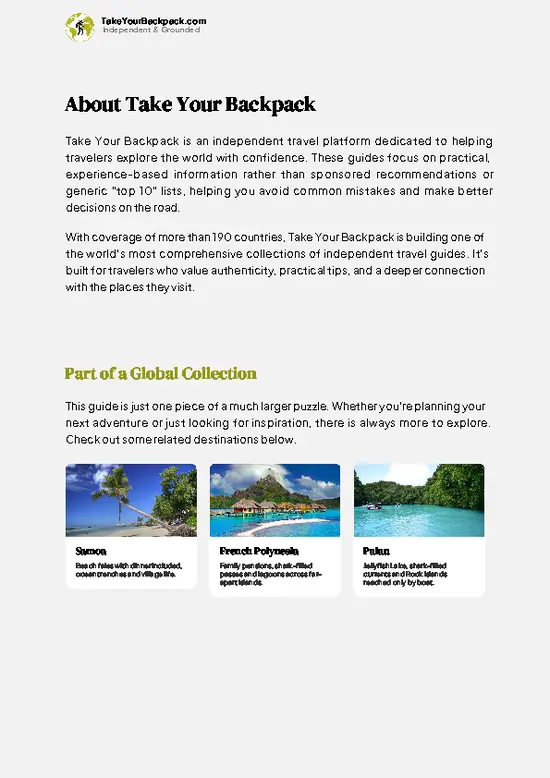
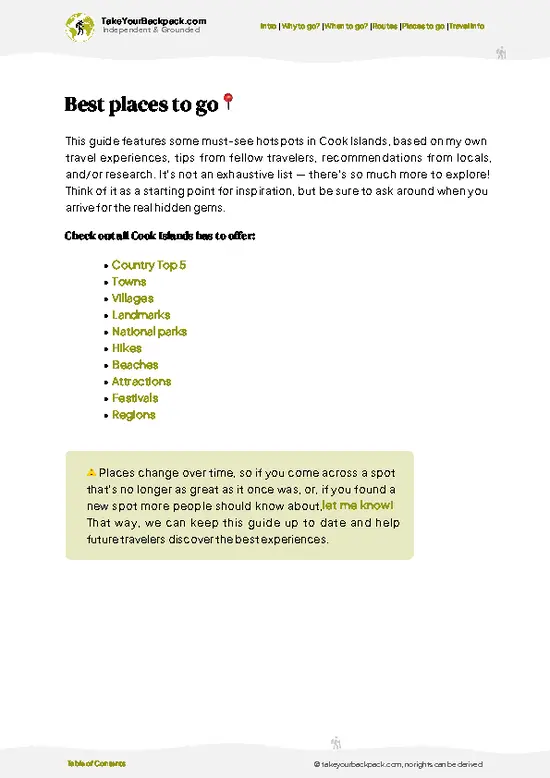
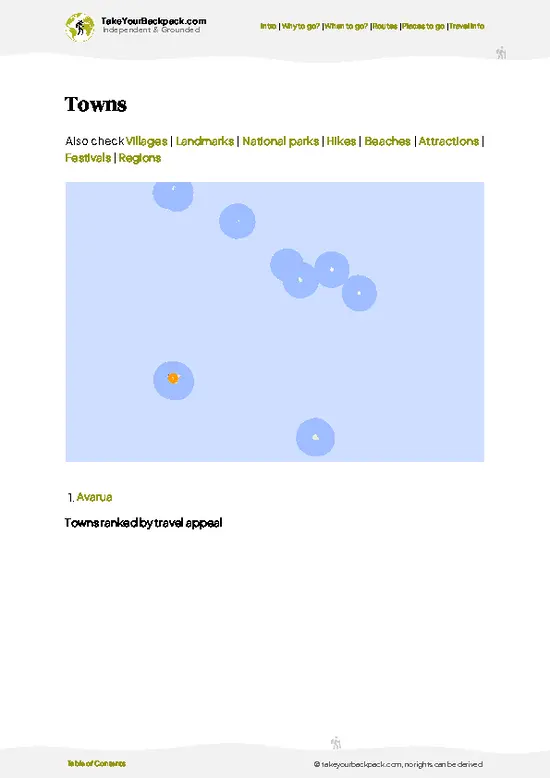
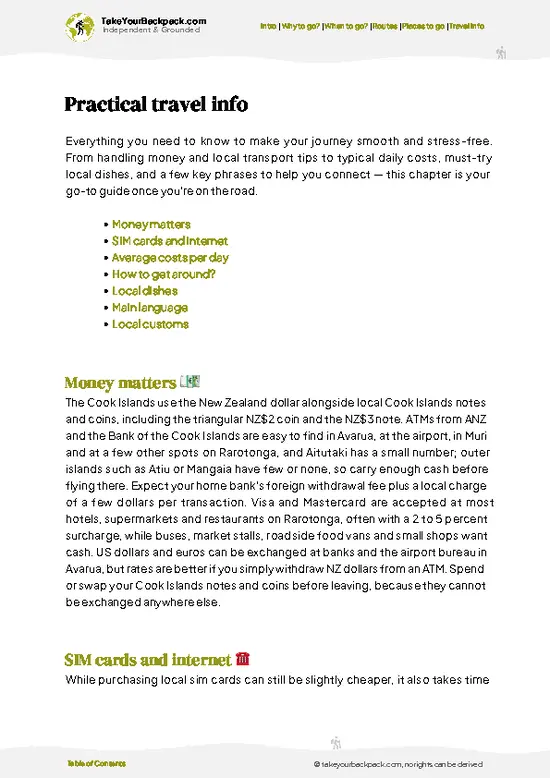
example page 0 from our offline Travel Guide for Cook Islands
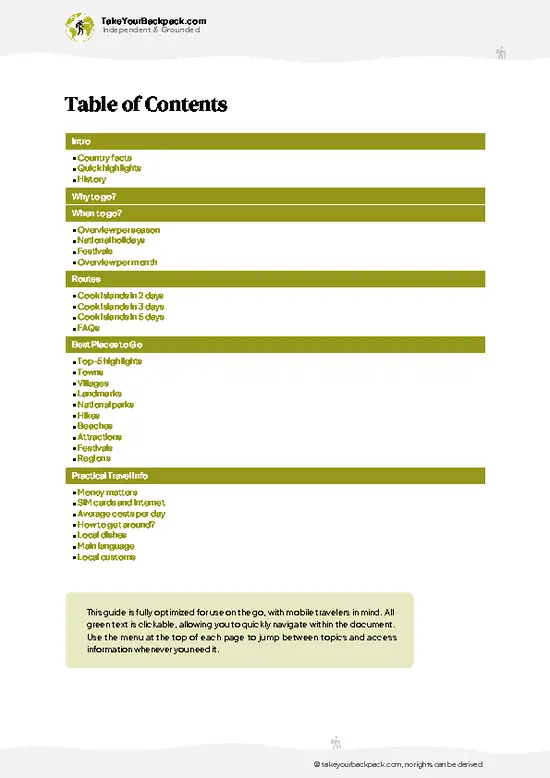
example page 1 from our offline Travel Guide for Cook Islands
example page 2 from our offline Travel Guide for Cook Islands
example page 3 from our offline Travel Guide for Cook Islands
example page 4 from our offline Travel Guide for Cook Islands
example page 5 from our offline Travel Guide for Cook Islands
example page 6 from our offline Travel Guide for Cook Islands
example page 7 from our offline Travel Guide for Cook Islands
The digital guide (99 pages) contains:
✅ 24 highlights, ranked by travel appeal
✅ Optimized 2, 3 & 5-day travel routes
✅ Cities, national parks, landmarks, beaches
✅ How to get around
✅ Offline-friendly for travel without Wi-Fi
👉 Click to see all 30+ guide features

📅 Plan smarter in minutes, not weeks
✅ Month by month travel advice
✅ Festivals & national holidays
✅ Budget expectations

🗺️ Go to the right places, skip the overrated ones
✅ Honest pros & cons of destinations
✅ Top hikes, parks & viewpoints
✅ Lesser-known places most travelers miss
✅ Clear “worth it vs skip it” guidance

🛏️ Travel smoothly without rookie mistakes
✅ Best areas to stay
✅ Transport systems explained simply
✅ Common scams & safety advice
✅ SIM cards, money & practical tips

🌍 Understand the country, not just visit it
✅ Culture & traditions
✅ 52 Essential phrases & customs
✅ Festivals worth planning around
✅ Traveler-friendly historical context
✅ Insights that make places more meaningful

📱 Built for real travel conditions
✅ Fully downloadable PDF
✅ Works completely offline
✅ Optimized for phone use
✅ Useful in remote areas & buses
✅ Everything in one place
Stop searching, start planning
Get instant access to your full guide. 30‑day money-back guarantee.
+ Add another guide for just

By proceeding you agree to our terms.
Sent to your inbox immediately after payment • 100% Secure Checkout
Best Backpacking Travel Advisor 2025 tourism awardBest Backpacking
Travel Advisor
2025
What others say about Take Your Backpack Guides:
⭐⭐⭐⭐⭐
Fantastic, amazing amount of information!
⭐⭐⭐⭐⭐
My goodness this is amazing, it's what I've been looking for hats off too you!
⭐⭐⭐⭐⭐
I think this is absolutely BRILLIANT
⭐⭐⭐⭐
Very complete and informative. It's still missing places, but I gotta to commend you
⭐⭐⭐⭐⭐
This is truly amazing, thank you, can't wait to explore it with my kids!
⭐⭐⭐⭐⭐
Awesome resource, thank you!
⭐⭐⭐⭐⭐
This is amazing! Can't wait to explore the ones I haven't seen
⭐⭐⭐⭐
I love this! Well done, great idea.
⭐⭐⭐⭐⭐
Thanks for taking the time to make this gem!
⭐⭐⭐⭐⭐
This might be the best website I've ever seen.
⭐⭐⭐⭐⭐
Congratulations, and thank you so much for your work; it's incredibly valuable.
⭐⭐⭐⭐
In all seriousness I think you did a great job pointing out the important spots
⭐⭐⭐⭐⭐
10/10 very good
⭐⭐⭐⭐⭐
As someone who's only just starting to visit regularly this is awesome, thank you.
⭐⭐⭐⭐
Thank you very much! I'm going to visit my dad, it's going to be very useful!
⭐⭐⭐⭐⭐
This is really cool! We'll be travelling for the first time and this definitely come in handy.
⭐⭐⭐⭐⭐
You are now our minister of culture, congratulations 👨‍💼
⭐⭐⭐⭐⭐
Just wanted to tell you that this is a pearl! Going to follow your recommendations.
⭐⭐⭐⭐⭐
This is so cool. I'll definitely be using the resource for my travels soon.
⭐⭐⭐⭐⭐
This is very impressive! Good work.
⭐⭐⭐⭐⭐
This is an amazing and informative site. Very well done!

🛏️ Where to stay?Top Areas to Stay

The Cook Islands have a small but solid spread of backpacker lodges, hostels and simple guesthouses, almost all on Rarotonga, with dorm beds around NZ$35 to 50 (US$21 to 30) and private rooms from roughly NZ$70 to 120 (US$42 to 72). Avarua puts you near the airport, supermarkets, the Saturday market and the island’s few late bars, though its lagoon is poor for swimming, while Muri on the southeast coast has the best swimming lagoon, kayak rentals and night food stalls, but sleeps early and costs a little more. Arorangi on the west coast is the quietest and cheapest of the three, with sunset views and easy reef snorkeling, but you’ll lean on the round-island bus or a rented scooter for everything … read more 👉
The Cook Islands have a small but solid spread of backpacker lodges, hostels and simple guesthouses, almost all on Rarotonga, with dorm beds around NZ$35 to 50 (US$21 to 30) and private rooms from roughly NZ$70 to 120 (US$42 to 72). Avarua puts you near the airport, supermarkets, the Saturday market and the island’s few late bars, though its lagoon is poor for swimming, while Muri on the southeast coast has the best swimming lagoon, kayak rentals and night food stalls, but sleeps early and costs a little more. Arorangi on the west coast is the quietest and cheapest of the three, with sunset views and easy reef snorkeling, but you’ll lean on the round-island bus or a rented scooter for everything else, and on Aitutaki budget beds are scarce, so book well ahead.

If you enjoy meeting fellow travelers, consider choosing hostels with high ratings for atmosphere. On the other hand, if you prefer having your own space, a hotel might be a better option.

Cook IslandsDiscover the Country

👋 Meet the founderWho’s Behind Take Your Backpack?

Johan, backpacker and founder of TakeYourBackpackHi, I’m Johan (Netherlands 🇳🇱), the creator of TakeYourBackpack. Over the past 3 decades, I’ve backpacked through 90+ countries across six continents, gaining extensive experience with independent travel, long-term trips, and overland routes.

This site is built on a combination of firsthand travel experience and carefully curated insights from other backpackers. Many guides are based on places I’ve personally visited, while others bring together tips, observations, and practical advice shared by trusted travelers I’ve met along the way.

The goal is to provide realistic, experience-driven guidance — not generic itineraries — so you can explore destinations with better context, clearer expectations, and more confidence.