
×

Cook Islands🇨🇰 | landmarksAvana PassageReef gap, canoe departure point, memorial stones | things to do and best time to go

Explore AvaruaExplore Muri

Backpacking in Avana Passage
🏆 Top pickunique site ranked #1
By Johan Kruseman 🇳🇱 | Updated October 22, 2026

The passage is the one gap in the reef on Rarotonga’s eastern side, and tradition names it as the launch point for the voyaging canoes said to have sailed to Aotearoa in the 14th century. You’ll find it at Ngatangiia on the southeast coast of the Cook Islands, a short ride from Muri Lagoon. On the ground it’s quiet: a sandy harbor edge, moored boats, the Ara Metua back road under frangipani and coconut palms, and a soft hum of surf where the reef breaks. Come early, before the Muri tour groups, and you can stand at the water’s edge with the whole channel to yourself. The wow-factor is modest and historical, not dramatic, and the photo potential is best in low morning light. It costs nothing, and a bicycle or scooter gets you there easily. Anyone who likes stories attached to places will love it; if you want big thrills or a packed itinerary, you’ll be done in an hour.

Discover everything you want to know in the 📖 Cook Islands Travel Guide.


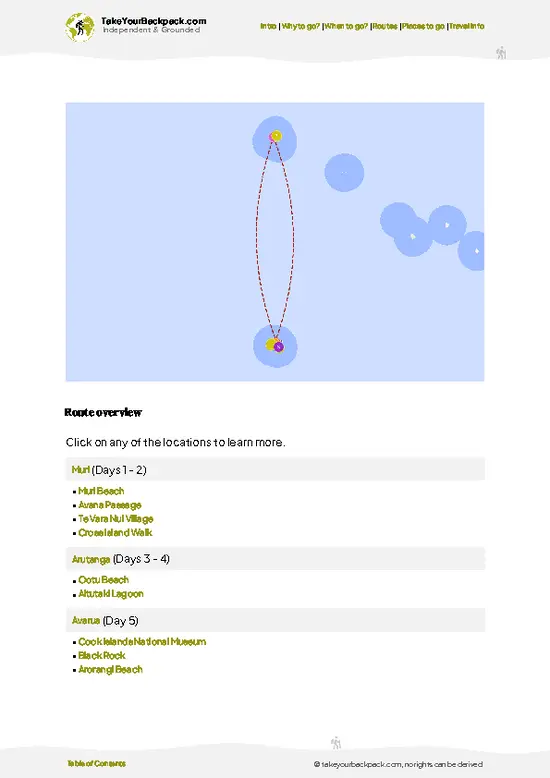
example page 0 from our offline Travel Guide for Cook Islands
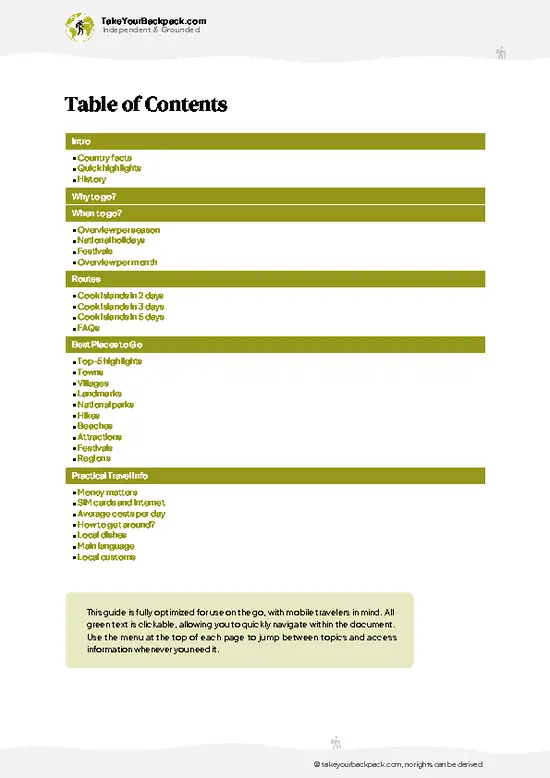
example page 1 from our offline Travel Guide for Cook Islands
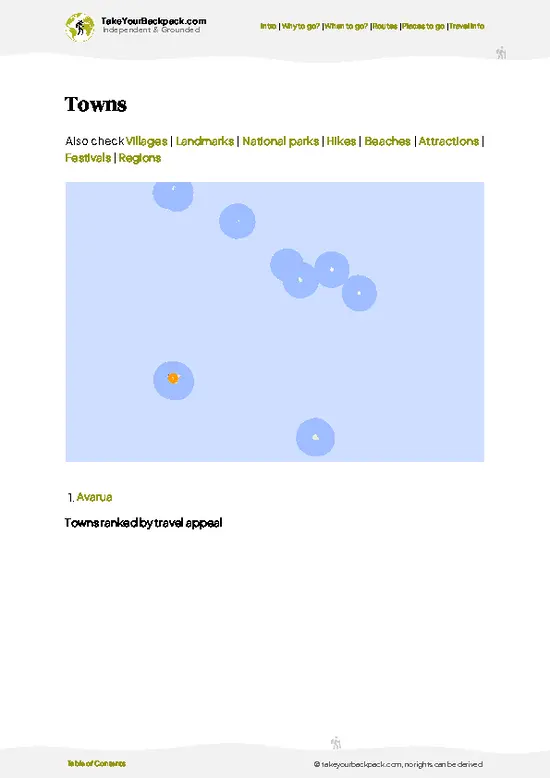
example page 2 from our offline Travel Guide for Cook Islands
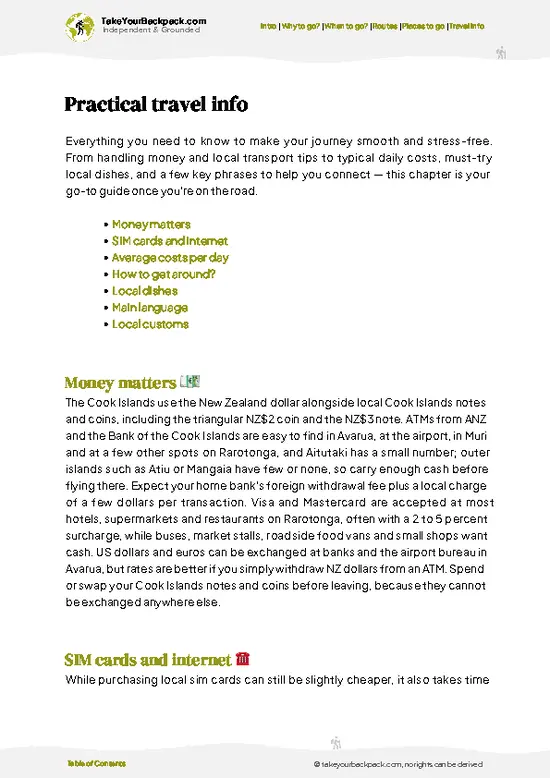
example page 3 from our offline Travel Guide for Cook Islands
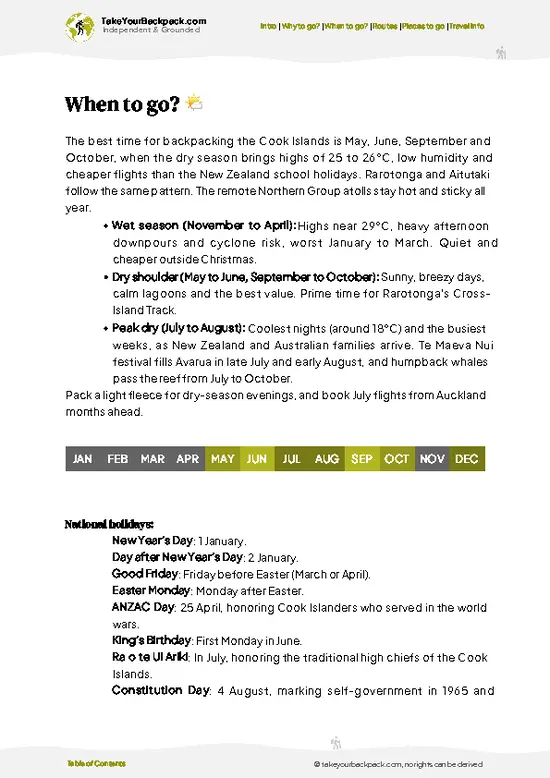
example page 4 from our offline Travel Guide for Cook Islands
example page 5 from our offline Travel Guide for Cook Islands
example page 6 from our offline Travel Guide for Cook Islands
example page 7 from our offline Travel Guide for Cook Islands
Loading the map 🌍
CLICK TO FILTER
towns
villages
landmarks
national parks
hikes
beaches
attractions
festivals
regions
SHOW COUNTRY’S BESTSHOW ALL

✨ Why go?
Ranked #1 unique site in Cook Islands
Why Avana Passage should be on your travel list

Avana is where Polynesian navigation stops being an abstract museum topic and becomes a place you can touch. Tradition holds that the Takitumu canoe and others set out through this gap toward New Zealand, and Māori descendants still trace their lineage back here. Standing at the harbor edge, you see exactly why sailors chose it: the reef opens to deep blue water right in front of you.
The second reason is how easily it fits a day. It sits on the east coast road beside the Muri Lagoon and its four small islets, so you can pair a heritage stop with a kayak or snorkel session in the same morning. Few Pacific sites let you go from navigation history to a swim in clear water without a tour.
The third is the neighborhood. Ngatangiia has a church and a memorial within a walk of each other, so you get … read more 👉
Avana is where Polynesian navigation stops being an abstract museum topic and becomes a place you can touch. Tradition holds that the Takitumu canoe and others set out through this gap toward New Zealand, and Māori descendants still trace their lineage back here. Standing at the harbor edge, you see exactly why sailors chose it: the reef opens to deep blue water right in front of you.
The second reason is how easily it fits a day. It sits on the east coast road beside the Muri Lagoon and its four small islets, so you can pair a heritage stop with a kayak or snorkel session in the same morning. Few Pacific sites let you go from navigation history to a swim in clear water without a tour.
The third is the neighborhood. Ngatangiia has a church and a memorial within a walk of each other, so you get context without a guide. It’s a good stop for travelers who want Rarotonga to mean more than beaches.

💡 HighlightsTop highlights of Avana Passage

  1. Avana Passage and Ngatangiia Harbour: The reef gap itself, where the water turns from pale green to deep blue. Tradition names it as the departure point of the canoes bound for Aotearoa, and watching a small boat slip through the channel makes the story easy to picture.
  2. Canoe memorial stones: A commemorative marker at the harbor honors the voyagers and the canoe names linked to the departure. Read it slowly. It ties the quiet shoreline to Māori genealogies that stretch across the Pacific.
  3. Ngatangiia Church: The Cook Islands Christian Church here is a white coral-style building typical of Rarotonga’s villages. On Sundays, visitors are welcome to hear the harmonized hymn singing, which is a highlight of the island. Dress modestly and arrive a little early.
  4. Muri Lagoon islets: Just along the coast,
… read more 👉
  1. Avana Passage and Ngatangiia Harbour: The reef gap itself, where the water turns from pale green to deep blue. Tradition names it as the departure point of the canoes bound for Aotearoa, and watching a small boat slip through the channel makes the story easy to picture.
  2. Canoe memorial stones: A commemorative marker at the harbor honors the voyagers and the canoe names linked to the departure. Read it slowly. It ties the quiet shoreline to Māori genealogies that stretch across the Pacific.
  3. Ngatangiia Church: The Cook Islands Christian Church here is a white coral-style building typical of Rarotonga’s villages. On Sundays, visitors are welcome to hear the harmonized hymn singing, which is a highlight of the island. Dress modestly and arrive a little early.
  4. Muri Lagoon islets: Just along the coast, four small islets (motu) sit on the reef edge. Kayak out in the morning when the water is calm, and snorkel the shallow coral gardens around them.
  5. Ara Metua back road: The old road runs inland of the main ring road through taro patches, gardens and village houses. A bicycle ride from here gives you ordinary island life away from traffic.
  6. Harbor boat watching: Small fishing boats and sailing craft use the channel. Late afternoon, when they return, is the best time to sit on the sea wall and watch them cross the reef line.
For a first visit, start with the harbor edge and the canoe memorial stones, because standing at the channel is what makes the story real.
Spotted a mistake or missing something? Contact us.

Things to do near Avana Passage

Ratings based on Tripadvisor reviews. When you book through this link, you support our work at no extra cost to you.

🌤️ When to go?Seasonal considerations and timing

  • May to October (dry, cooler): Rarotonga’s best window for snorkeling the passage, with daytime highs of 24 to 27°C (75 to 81°F), low humidity and little rain. In July, daylight runs roughly 7:15 am to 6:10 pm, so plan water time before late afternoon.
  • July to August (peak crowds): Northern hemisphere and New Zealand school holidays fill the Muri and Avarua side of the island. Expect the highest room rates and booked-out rental scooters.
  • November to April (wet, hot): Highs reach 28 to 31°C (82 to 88°F) with humid air and heavy showers that cloud the lagoon after storms. Prices drop, beaches empty out, and cyclone season runs December to April, though direct hits are rare.
  • Whale season (July to October): Humpbacks pass off the south coast, and you can sometimes spot them beyond the reef from the
… read more 👉
  • May to October (dry, cooler): Rarotonga’s best window for snorkeling the passage, with daytime highs of 24 to 27°C (75 to 81°F), low humidity and little rain. In July, daylight runs roughly 7:15 am to 6:10 pm, so plan water time before late afternoon.
  • July to August (peak crowds): Northern hemisphere and New Zealand school holidays fill the Muri and Avarua side of the island. Expect the highest room rates and booked-out rental scooters.
  • November to April (wet, hot): Highs reach 28 to 31°C (82 to 88°F) with humid air and heavy showers that cloud the lagoon after storms. Prices drop, beaches empty out, and cyclone season runs December to April, though direct hits are rare.
  • Whale season (July to October): Humpbacks pass off the south coast, and you can sometimes spot them beyond the reef from the shore.
Book snorkeling for a calm morning near high tide, when the water over the reef is deepest and clearest.


source: climatestotravel.comJANJanuary: fair for travelingFEBFebruary: fair for travelingMARMarch: fair for travelingAPRApril: fair for travelingMAYMay: highly recommended for travelingJUNJune: highly recommended for travelingJULJuly: highly recommended for travelingAUGAugust: highly recommended for travelingSEPSeptember: highly recommended for travelingOCTOctober: highly recommended for travelingNOVNovember: fair for travelingDECDecember: fair for traveling
when-to-go

✈️ The backpacker research shortcutCook Islands Travel Guide

An offline-friendly backpacking guide with optimized travel routes, ranked highlights, transport advice, and the best areas to stay.
example page 0 from our offline Travel Guide for Cook Islands
example page 1 from our offline Travel Guide for Cook Islands
example page 2 from our offline Travel Guide for Cook Islands
example page 3 from our offline Travel Guide for Cook Islands
example page 4 from our offline Travel Guide for Cook Islands
example page 5 from our offline Travel Guide for Cook Islands
example page 6 from our offline Travel Guide for Cook Islands
example page 7 from our offline Travel Guide for Cook Islands
The digital guide (99 pages) contains:
✅ 24 highlights, ranked by travel appeal
✅ Optimized 2, 3 & 5-day travel routes
✅ Cities, national parks, landmarks, beaches
✅ How to get around
✅ Offline-friendly for travel without Wi-Fi
👉 Click to see all 30+ guide features

📅 Plan smarter in minutes, not weeks
✅ Month by month travel advice
✅ Festivals & national holidays
✅ Budget expectations

🗺️ Go to the right places, skip the overrated ones
✅ Honest pros & cons of destinations
✅ Top hikes, parks & viewpoints
✅ Lesser-known places most travelers miss
✅ Clear “worth it vs skip it” guidance

🛏️ Travel smoothly without rookie mistakes
✅ Best areas to stay
✅ Transport systems explained simply
✅ Common scams & safety advice
✅ SIM cards, money & practical tips

🌍 Understand the country, not just visit it
✅ Culture & traditions
✅ 52 Essential phrases & customs
✅ Festivals worth planning around
✅ Traveler-friendly historical context
✅ Insights that make places more meaningful

📱 Built for real travel conditions
✅ Fully downloadable PDF
✅ Works completely offline
✅ Optimized for phone use
✅ Useful in remote areas & buses
✅ Everything in one place
Stop searching, start planning
Get instant access to your full guide. 30‑day money-back guarantee.
+ Add another guide for just

By proceeding you agree to our terms.
Sent to your inbox immediately after payment • 100% Secure Checkout
Best Backpacking Travel Advisor 2025 tourism awardBest Backpacking
Travel Advisor
2025
What others say about Take Your Backpack Guides:
⭐⭐⭐⭐⭐
Fantastic, amazing amount of information!
⭐⭐⭐⭐⭐
My goodness this is amazing, it's what I've been looking for hats off too you!
⭐⭐⭐⭐⭐
I think this is absolutely BRILLIANT
⭐⭐⭐⭐
Very complete and informative. It's still missing places, but I gotta to commend you
⭐⭐⭐⭐⭐
This is truly amazing, thank you, can't wait to explore it with my kids!
⭐⭐⭐⭐⭐
Awesome resource, thank you!
⭐⭐⭐⭐⭐
This is amazing! Can't wait to explore the ones I haven't seen
⭐⭐⭐⭐
I love this! Well done, great idea.
⭐⭐⭐⭐⭐
Thanks for taking the time to make this gem!
⭐⭐⭐⭐⭐
This might be the best website I've ever seen.
⭐⭐⭐⭐⭐
Congratulations, and thank you so much for your work; it's incredibly valuable.
⭐⭐⭐⭐
In all seriousness I think you did a great job pointing out the important spots
⭐⭐⭐⭐⭐
10/10 very good
⭐⭐⭐⭐⭐
As someone who's only just starting to visit regularly this is awesome, thank you.
⭐⭐⭐⭐
Thank you very much! I'm going to visit my dad, it's going to be very useful!
⭐⭐⭐⭐⭐
This is really cool! We'll be travelling for the first time and this definitely come in handy.
⭐⭐⭐⭐⭐
You are now our minister of culture, congratulations 👨‍💼
⭐⭐⭐⭐⭐
Just wanted to tell you that this is a pearl! Going to follow your recommendations.
⭐⭐⭐⭐⭐
This is so cool. I'll definitely be using the resource for my travels soon.
⭐⭐⭐⭐⭐
This is very impressive! Good work.
⭐⭐⭐⭐⭐
This is an amazing and informative site. Very well done!

🛏️ Where to stay?Where staying makes the most sense

The southeast coast around Muri Beach is the strongest base for backpackers, though Avana Passage itself sits on the southeast side near Ngatangiia Harbour, a short ride along the coast road from the lagoon strip. Muri has the island’s densest cluster of budget beds, hostel dorms, cheap self-catering units and small cafés. It is the social hub, with kayak and paddleboard rentals on the lagoon and a steady flow of solo travelers, so meeting people takes no effort. Night streets are quiet and well lit, and walking back after dinner feels safe.

Avarua, the capital on the north coast, suits you if … read more 👉
The southeast coast around Muri Beach is the strongest base for backpackers, though Avana Passage itself sits on the southeast side near Ngatangiia Harbour, a short ride along the coast road from the lagoon strip. Muri has the island’s densest cluster of budget beds, hostel dorms, cheap self-catering units and small cafés. It is the social hub, with kayak and paddleboard rentals on the lagoon and a steady flow of solo travelers, so meeting people takes no effort. Night streets are quiet and well lit, and walking back after dinner feels safe.

Avarua, the capital on the north coast, suits you if you want cheaper groceries, the Saturday market and a wider choice of local eateries. Rooms are fewer but you pay less, and you can reach the southeast by the island bus (clockwise and anticlockwise routes circle the whole coast) in about 30 minutes.

Titikaveka and Ngatangiia sit closer to the passage, with a few guesthouses and quiet lagoon frontage. They are calmer and better if you prefer early mornings on the water to nightlife, but food options are thin, so stock up on supplies first. Wherever you sleep, stay close to the main ring road, because buses and scooters are the only practical ways to move around.

👛 Costs (as of 22 October 2026)What things cost and how to budget

A day around Avana Passage, the reef channel at Ngatangiia on Rarotonga’s southeast coast, costs about US$95 to 130 for a backpacker in high season, and the passage itself is free to see. Prices below are in US dollars, though you pay in New Zealand dollars on the island.
CategoryBudget RangeLocal Reality
Site accessUS$0The harbor and passage are public. Viewing from the shore or the harbor edge costs nothing.
Accommodation (high season)US$30 to 45Dorm beds and basic rooms are limited and fill early between June and October. Off-season rates drop to roughly US$25 to 35.
FoodUS$20 to 32Groceries and takeaway from roadside stalls keep costs down. A sit-down main course is about US$15 to 25.
Local transportUS$3 to 8The island bus circles the coast, around US$3 per ride, or a day pass of about US$12
… read more 👉
A day around Avana Passage, the reef channel at Ngatangiia on Rarotonga’s southeast coast, costs about US$95 to 130 for a backpacker in high season, and the passage itself is free to see. Prices below are in US dollars, though you pay in New Zealand dollars on the island.
CategoryBudget RangeLocal Reality
Site accessUS$0The harbor and passage are public. Viewing from the shore or the harbor edge costs nothing.
Accommodation (high season)US$30 to 45Dorm beds and basic rooms are limited and fill early between June and October. Off-season rates drop to roughly US$25 to 35.
FoodUS$20 to 32Groceries and takeaway from roadside stalls keep costs down. A sit-down main course is about US$15 to 25.
Local transportUS$3 to 8The island bus circles the coast, around US$3 per ride, or a day pass of about US$12 to 15 if you ride a lot.
Scooter rental (optional)US$12 to 18A daily rental is cheaper per day over several days. A local license or temporary permit is required.
Paddling or snorkel gearUS$10 to 40Kayak or snorkel hire runs about US$10 to 25 for a few hours. Guided lagoon tours cost US$40 to 90.
Drinks and extrasUS$5 to 12Beer is pricey at about US$4 to 6 a bottle. Bottled water is cheaper from supermarkets.
Total Daily BudgetUS$95 to 130Per person, per day, in high season.
⚠️ Prices can change and everyone travels differently, so take this as a rough guide. Hope it helps you plan your adventure!

FAQFrequently asked questions about Avana Passage

Avana Passage is a natural channel through the fringing reef on Rarotonga’s southeast coast, beside Ngatangiia Harbour. It is the break in the reef that voyagers are traditionally said to have used to leave for Aotearoa, and it still serves as the boat route for small craft. Today the lagoon around it is popular for snorkeling, kayaking and paddleboarding.
Allow 2 to 3 hours if you just want to see the passage and swim or snorkel, or a half day if you add kayak hire and time at nearby Muri Beach. Rarotonga’s ring road is about 32 km long, so the site fits easily into a single day of island exploring. Visiting is free, and rentals for water gear cost roughly NZ$10 to 35.
Fly into Rarotonga International Airport, with direct flights from Auckland taking about 4 hours. From the airport, the passage is about 15 to 20 minutes by scooter or car along the coast road, or around 30 to 40 minutes by island bus (about NZ$5 single) to the Ngatangiia stop. Taxis are available but cost noticeably more, so most backpackers hire a scooter for around NZ$20 to 30 a day.
⚠️ Things can change over time, so always validate details locally before you go.

Where to go next

Avana Passage isn’t the only highlight in Cook Islands. Explore all what Cook Islands has to offer.
Country photo of Cook Islands

We 💚 feedbackSumming up the experience

Treat Avana as a morning stop on an east-coast loop. Ride in early for the memorial and the harbor, then roll straight on to Muri Lagoon for a kayak out to the islets before the tour boats arrive. Finish with lunch at the Muri night-market area if you’re there on the right evening, and bring reef shoes, because the lagoon floor is sharp.

✍️ Help improve this page!
The information on this page is based on in-depth research, insights shared by experienced travelers, and feedback from the local travel community in Cook Islands. While every effort is made to keep the information accurate and current, conditions can change — so if you spot anything incorrect or outdated, please get in touch.


🙋‍♂️ Give feedback

👋 Meet the founderWho’s Behind Take Your Backpack?

Johan, backpacker and founder of TakeYourBackpackHi, I’m Johan (Netherlands 🇳🇱), the creator of TakeYourBackpack. Over the past 3 decades, I’ve backpacked through 90+ countries across six continents, gaining extensive experience with independent travel, long-term trips, and overland routes.

This site is built on a combination of firsthand travel experience and carefully curated insights from other backpackers. Many guides are based on places I’ve personally visited, while others bring together tips, observations, and practical advice shared by trusted travelers I’ve met along the way.

The goal is to provide realistic, experience-driven guidance — not generic itineraries — so you can explore destinations with better context, clearer expectations, and more confidence.