×

Costa Rica🇨🇷 | townsBijaguaTenorio Volcano, rural lodges, cloud forest trails | things to do and best time to go

Explore Santa CruzExplore San Isidro de El General

Backpacking in Bijagua
👍 Recommendedtown ranked #13
By Johan Kruseman 🇳🇱 | Updated September 4, 2026

Most blogs sell Bijagua as “the Rio Celeste town,” but the surprise is how little of your time is actually spent at the waterfall and how much is about slow, rural life in between volcanoes. Bijagua sits in northern Costa Rica, on the saddle between Tenorio and Miravalles, a few hours inland from both coasts. For backpackers, it’s a pause button: misty mornings, roosters, woodsmoke, and buses that don’t care about your schedule. Pros: easy access to Tenorio National Park, cloud-forest style trails, homestays, birdlife that feels like a private show. Cons: spread-out village, limited cheap food at night, and a “lights out early” rhythm. Evenings are quiet, more shared rice-and-beans than bar crawl, with social energy clustered in a few guesthouses. Compared to La Fortuna, Bijagua is calmer, less polished, more genuinely small-town.

Discover everything you want to know in the 📖 Costa Rica Travel Guide.
Loading the map 🌍
CLICK TO FILTER
cities
towns
villages
landmarks
national parks
hikes
beaches
attractions
festivals
regions
SHOW COUNTRY’S BESTSHOW ALL

✨ Why go?
Ranked #13 town in Costa Rica
What makes this town worth visiting

Bijagua is a breath of fresh air on the backpacking trail through Costa Rica. Nestled between the lush foothills of the Tenorio Volcano and the tranquil sounds of nature, this village offers a slower pace that feels like a warm hug after busier stops. The local character shines through in its friendly faces and small eateries serving up hearty, homemade meals.

For hikers, Bijagua is a gateway to stunning trails, including the Tenorio Volcano National Park, where you can chase waterfalls and soak in hot springs. The village serves as a perfect pause between more tourist-heavy spots like La Fortuna and Monteverde, allowing you to recharge.

Travelers often linger here, especially slow travelers and solo adventurers seeking a moment of calm. The atmosphere is inviting, yet quiet enough for … read more 👉
Bijagua is a breath of fresh air on the backpacking trail through Costa Rica. Nestled between the lush foothills of the Tenorio Volcano and the tranquil sounds of nature, this village offers a slower pace that feels like a warm hug after busier stops. The local character shines through in its friendly faces and small eateries serving up hearty, homemade meals.

For hikers, Bijagua is a gateway to stunning trails, including the Tenorio Volcano National Park, where you can chase waterfalls and soak in hot springs. The village serves as a perfect pause between more tourist-heavy spots like La Fortuna and Monteverde, allowing you to recharge.

Travelers often linger here, especially slow travelers and solo adventurers seeking a moment of calm. The atmosphere is inviting, yet quiet enough for reflection. If you’re looking for a place to connect with nature and locals without the rush, Bijagua is your spot.
Want to include Bijagua in your Costa Rica route?
Create a personalized Costa Rica itinerary that includes Bijagua and the places that fit your trip — based on your travel style, budget, and available time. Get your route in seconds.

Generate my trip

💡 HighlightsKey sights and experiences for travelers

  • Parque Central de Bijagua — The small grassy square is the social heart of town: kids play, people sit under the trees, and you’ll overhear the best travel tips. Great place to people-watch and orient yourself before heading out.
  • Iglesia Católica de Bijagua — The modest town church next to the plaza is an actual community hub; worth a quick visit for the simple architecture, the local calendar of fiestas, and the chance to see everyday life up close.
  • Tenorio National Park information point (in-town ranger desk) — The local park/ranger desk in Bijagua is where you get practical info, register for Rio Celeste hikes, and hire certified guides. It’s the real gateway to the area and saves you from guessing trail logistics.
  • Mercado municipal / farmer stalls — Early-morning market stalls around
read more 👉
  • Parque Central de Bijagua — The small grassy square is the social heart of town: kids play, people sit under the trees, and you’ll overhear the best travel tips. Great place to people-watch and orient yourself before heading out.
  • Iglesia Católica de Bijagua — The modest town church next to the plaza is an actual community hub; worth a quick visit for the simple architecture, the local calendar of fiestas, and the chance to see everyday life up close.
  • Tenorio National Park information point (in-town ranger desk) — The local park/ranger desk in Bijagua is where you get practical info, register for Rio Celeste hikes, and hire certified guides. It’s the real gateway to the area and saves you from guessing trail logistics.
  • Mercado municipal / farmer stalls — Early-morning market stalls around the main street sell fresh fruit, eggs, plantains and homemade tortillas. It’s small but authentic—ideal for sampling local flavors and chatting with producers.
  • Cluster of family-run sodas (local eateries) on Calle Principal — These unpretentious eateries serve honest casados, rice-and-beans breakfasts, and the kind of hospitality you don’t get in big tourist restaurants. Perfect for cheap, filling meals and friendly local conversation.
  • Local artisan and coffee stalls — Scattered along the central street you’ll find small shops and stalls selling roasted beans, handmade crafts and small souvenirs. Not flashy, but good for picking up something made nearby and supporting families.
  • Community tourism desk / guide meeting point — Several local guides and micro-agencies operate from the plaza area; meeting them in town makes it easy to book home-stays, short walks, or private transfers without going through big companies.
  • Short municipal trails and river access inside town limits — Bijagua has a few walkable dirt paths and crossing points along the local streams where you can wander, bird-watch, and see fishermen or farmers at work—simple nature that shows daily life beside the water.
  • Town viewpoint (public mirador) — A brief climb from the village center takes you to a local vantage spot with clear views over the valley toward Tenorio. It’s a low-effort way to get a sense of the landscape without a full hike.
  • Community center, school murals and festival spots — The community center and school compound often host murals, cultural events or patron-saint celebrations. If your timing’s right, a local fiesta is where Bijagua’s spirit really shows—music, food and neighborhood camaraderie.
For day trips: Tenorio Volcano National Park and the famous Río Celeste (my personal favorite), a handful of nearby private hot-springs and waterfall tours, and several small family-run farms and birding spots just outside town — all easy to do from Bijagua.
Spotted a mistake or missing something? Contact us.

Things to do near Bijagua

Ratings based on Tripadvisor reviews. When you book through this link, you support our work at no extra cost to you.

🏘️ NeighborhoodsHow different areas shape the experience

Bijagua is a small town where the air carries the scent of wet earth and fresh coffee, setting the tone for your stay. Knowing where to base yourself here can turn a good trip into a seamless one.

Central Bijagua is the heartbeat of the town. It’s where you’ll find the main street lined with local shops, eateries, and the bus stop. The vibe is low-key but lively enough to keep you connected. Walkability is excellent—everything you need is within a few minutes on foot. It’s perfect for short stays or if you want to be in the thick of things without noise bleeding into your room at night.

La Fortuna Road Area lies just outside the center, quieter and more spread out. This area suits longer stays where you want a bit more breathing room and don’t mind a short taxi or bike ride into town. The … read more 👉
Bijagua is a small town where the air carries the scent of wet earth and fresh coffee, setting the tone for your stay. Knowing where to base yourself here can turn a good trip into a seamless one.

Central Bijagua is the heartbeat of the town. It’s where you’ll find the main street lined with local shops, eateries, and the bus stop. The vibe is low-key but lively enough to keep you connected. Walkability is excellent—everything you need is within a few minutes on foot. It’s perfect for short stays or if you want to be in the thick of things without noise bleeding into your room at night.

La Fortuna Road Area lies just outside the center, quieter and more spread out. This area suits longer stays where you want a bit more breathing room and don’t mind a short taxi or bike ride into town. The cost here tends to be lower, and the atmosphere leans toward peaceful mornings with birdsong rather than nightlife buzz.

Near Tenorio Volcano National Park Entrance is ideal if your priority is early access to hiking. It’s rustic and less developed, so expect fewer amenities but unbeatable proximity to trails. This spot is for the backpacker who values nature over convenience and doesn’t mind arranging transport to town for supplies or evening meals.

Each area offers a distinct rhythm—choose based on whether you want to dive into local life, unwind in quiet, or jump straight into adventure.

⌛️ 1 dayA smart one-day plan

Bijagua feels like stepping into a quieter, greener corner of Costa Rica where the air carries the scent of wet earth and wild orchids. It’s a small town, but it’s a gateway to the Tenorio Volcano National Park, home to the famous Río Celeste, a river so blue it almost looks unreal. The town itself isn’t flashy, but that’s the point—it’s a place to slow down and tune into nature’s rhythms.

Start your morning with a walk through the town’s modest center, where the local bakery fills the air with fresh bread and the chatter of early risers. Grab a strong Costa Rican coffee and a sweet pastry from a corner café—this is the fuel you’ll need. Then head out to the Río Celeste trail. It’s about a 20-minute drive from town, and the hike is a steady climb through dense rainforest. The payoff is that … read more 👉
Bijagua feels like stepping into a quieter, greener corner of Costa Rica where the air carries the scent of wet earth and wild orchids. It’s a small town, but it’s a gateway to the Tenorio Volcano National Park, home to the famous Río Celeste, a river so blue it almost looks unreal. The town itself isn’t flashy, but that’s the point—it’s a place to slow down and tune into nature’s rhythms.

Start your morning with a walk through the town’s modest center, where the local bakery fills the air with fresh bread and the chatter of early risers. Grab a strong Costa Rican coffee and a sweet pastry from a corner café—this is the fuel you’ll need. Then head out to the Río Celeste trail. It’s about a 20-minute drive from town, and the hike is a steady climb through dense rainforest. The payoff is that surreal turquoise water cascading over volcanic rock, a sight that feels like a secret revealed only to those willing to put in the effort. The light filtering through the canopy here is soft and green, casting a calm glow that makes the river’s color pop even more.

In the afternoon, skip the usual tourist spots and visit the nearby village of La Fortuna de San Carlos, just a short drive away. It’s less polished than the better-known La Fortuna near Arenal Volcano but offers a more authentic vibe. Wander through the local market, where you can sample fresh tropical fruits and chat with vendors about their crafts. If you’re up for it, stop by the Bijagua neighborhood of La Casona, where a small community-run butterfly garden offers a quiet, colorful detour away from the crowds.

As evening falls, return to Bijagua’s main street. The sunset here isn’t dramatic but gentle, with the sky shifting through soft pastels behind the silhouette of the mountains. Find a local soda (a small, family-run eatery) and order casado—rice, beans, plantains, and fresh fish or chicken. The food is simple but honest, the kind that tastes like home. Sit outside if you can, listen to the night sounds of frogs and crickets, and let the day’s quiet adventure settle in. Bijagua isn’t about flashy thrills; it’s about earning your moments of calm and color through real connection with the land and its people.
Turn your Bijagua visit into an Costa Rica adventure
Build a complete Costa Rica route with Bijagua, hidden gems, must-see destinations, and realistic travel times included.

Generate my trip

🌤️ When to go?Choosing the right time of year


  • Weather: Bijagua sits in a tropical rainforest zone, so expect heavy rains from May through November. The dry season, December to April, offers clearer skies and trails that don’t turn into mud baths. This means easier hiking and less gear maintenance.

  • Temperature: Daytime temps hover around 22-27°C (72-81°F) year-round, but mornings and evenings can dip to 15°C (59°F), especially in the dry season. Pack layers to handle this subtle swing without overheating on the trail.

  • Daylight Hours: Near the equator, daylight is steady—about 11.5 to 12.5 hours daily. This consistency lets you plan long hikes without worrying about early sunsets cutting your adventure short.

  • Crowds: The dry season draws more tourists, especially from December to February. Trails and lodges fill up, so booking
read more 👉

  • Weather: Bijagua sits in a tropical rainforest zone, so expect heavy rains from May through November. The dry season, December to April, offers clearer skies and trails that don’t turn into mud baths. This means easier hiking and less gear maintenance.

  • Temperature: Daytime temps hover around 22-27°C (72-81°F) year-round, but mornings and evenings can dip to 15°C (59°F), especially in the dry season. Pack layers to handle this subtle swing without overheating on the trail.

  • Daylight Hours: Near the equator, daylight is steady—about 11.5 to 12.5 hours daily. This consistency lets you plan long hikes without worrying about early sunsets cutting your adventure short.

  • Crowds: The dry season draws more tourists, especially from December to February. Trails and lodges fill up, so booking ahead is smart. The rainy season offers solitude and a lush landscape but expect fewer services open.

  • Seasonal Activities: Dry months are prime for wildlife spotting, especially birds and butterflies, as animals gather near shrinking water sources. The wet season bursts with waterfalls and vibrant greenery but can limit access to some trails.

  • Price Fluctuations: Expect higher prices during the dry season’s peak months due to demand. The rainy season often brings discounts on lodging and tours, making it a budget-friendly option if you’re prepared for wet conditions.


Pro-tip: Visit just before the dry season peaks—in late November—to catch the tail end of the rains when the forest is soaked and vibrant, but trails start drying, and prices haven’t spiked yet.


source: climatestotravel.comJANJanuary: excellent for travelingFEBFebruary: excellent for travelingMARMarch: excellent for travelingAPRApril: highly recommended for travelingMAYMay: fair for travelingJUNJune: fair for travelingJULJuly: fair for travelingAUGAugust: fair for travelingSEPSeptember: fair for travelingOCTOctober: fair for travelingNOVNovember: highly recommended for travelingDECDecember: excellent for traveling
when-to-go

✈️ The backpacker research shortcutCosta Rica Travel Guide

An offline-friendly backpacking guide with optimized travel routes, ranked highlights, transport advice, and the best areas to stay.
example page 0 from our offline Travel Guide for Costa Rica
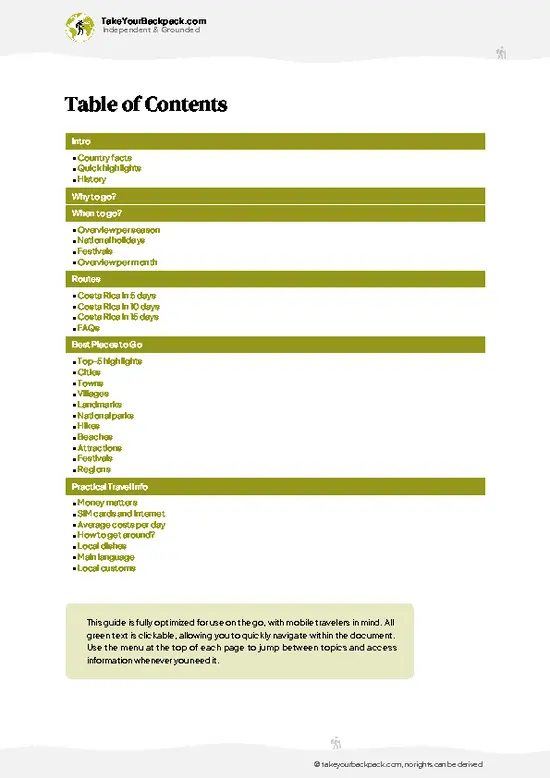
example page 1 from our offline Travel Guide for Costa Rica
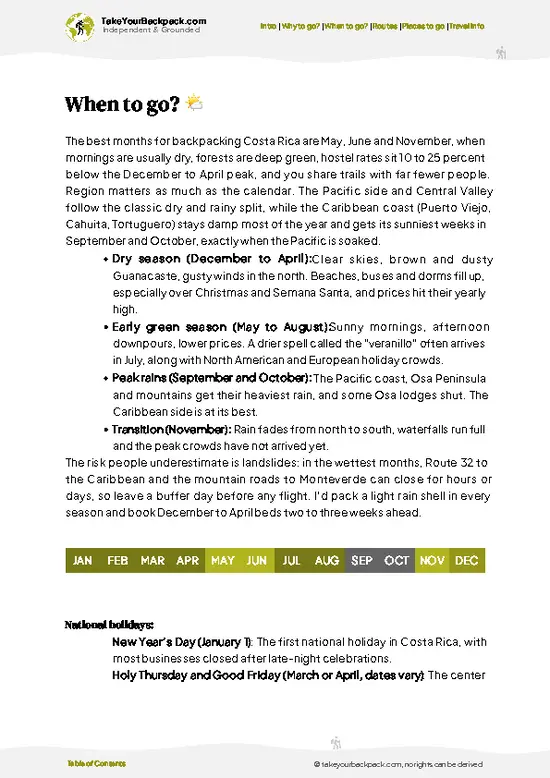
example page 2 from our offline Travel Guide for Costa Rica
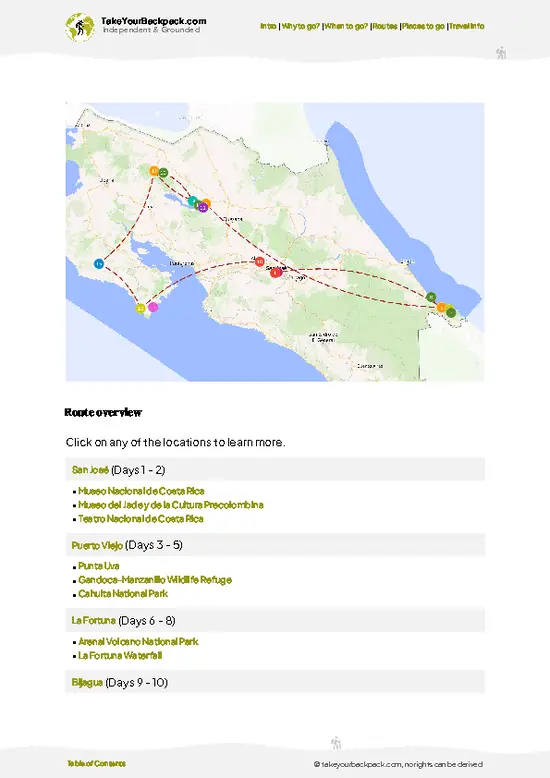
example page 3 from our offline Travel Guide for Costa Rica
example page 4 from our offline Travel Guide for Costa Rica
example page 5 from our offline Travel Guide for Costa Rica
example page 6 from our offline Travel Guide for Costa Rica
example page 7 from our offline Travel Guide for Costa Rica
The digital guide (366 pages) contains:
93 highlights, ranked by travel appeal
Optimized 5, 10 & 15-day travel routes
Cities, national parks, landmarks, beaches
How to get around
Offline-friendly for travel without Wi-Fi
👉 Click to see all 30+ guide features

📅 Plan smarter in minutes, not weeks
Month by month travel advice
Festivals & national holidays
Budget expectations

🗺️ Go to the right places, skip the overrated ones
Honest pros & cons of destinations
Top hikes, parks & viewpoints
Lesser-known places most travelers miss
Clear “worth it vs skip it” guidance

🛏️ Travel smoothly without rookie mistakes
Best areas to stay
Transport systems explained simply
Common scams & safety advice
SIM cards, money & practical tips

🌍 Understand the country, not just visit it
Culture & traditions
52 Essential phrases & customs
Festivals worth planning around
Traveler-friendly historical context
Insights that make places more meaningful

📱 Built for real travel conditions
Fully downloadable PDF
Works completely offline
Optimized for phone use
Useful in remote areas & buses
Everything in one place
Save weeks of stressful planning
Get instant access to your full guide. 30‑day money-back guarantee.
+ Add another guide for just US$7.80

By proceeding you agree to our terms.
Sent to your inbox immediately after payment • 100% Secure Checkout
Best Backpacking Travel Advisor 2025 tourism awardBest Backpacking
Travel Advisor
2025
What others say about Take Your Backpack Guides:
⭐⭐⭐⭐⭐
Fantastic, amazing amount of information!
⭐⭐⭐⭐⭐
My goodness this is amazing, it's what I've been looking for hats off too you!
⭐⭐⭐⭐⭐
I think this is absolutely BRILLIANT
⭐⭐⭐⭐
Very complete and informative. It's still missing places, but I gotta to commend you
⭐⭐⭐⭐⭐
This is truly amazing, thank you, can't wait to explore it with my kids!
⭐⭐⭐⭐⭐
Awesome resource, thank you!
⭐⭐⭐⭐⭐
This is amazing! Can't wait to explore the ones I haven't seen
⭐⭐⭐⭐
I love this! Well done, great idea.
⭐⭐⭐⭐⭐
Thanks for taking the time to make this gem!
⭐⭐⭐⭐⭐
This might be the best website I've ever seen.
⭐⭐⭐⭐⭐
Congratulations, and thank you so much for your work; it's incredibly valuable.
⭐⭐⭐⭐
In all seriousness I think you did a great job pointing out the important spots
⭐⭐⭐⭐⭐
10/10 very good
⭐⭐⭐⭐⭐
As someone who's only just starting to visit regularly this is awesome, thank you.
⭐⭐⭐⭐
Thank you very much! I'm going to visit my dad, it's going to be very useful!
⭐⭐⭐⭐⭐
This is really cool! We'll be travelling for the first time and this definitely come in handy.
⭐⭐⭐⭐⭐
You are now our minister of culture, congratulations 👨‍💼
⭐⭐⭐⭐⭐
Just wanted to tell you that this is a pearl! Going to follow your recommendations.
⭐⭐⭐⭐⭐
This is so cool. I'll definitely be using the resource for my travels soon.
⭐⭐⭐⭐⭐
This is very impressive! Good work.
⭐⭐⭐⭐⭐
This is an amazing and informative site. Very well done!

🛏️ Where to stay?Best areas and accommodation options

Bijagua is a small village tucked into the foothills of Costa Rica’s northern highlands, where the air carries the sharp scent of pine and earth after rain. For backpackers, the best places to stay aren’t flashy resorts but simple lodges and hostels that plug you directly into the local rhythm.

Start with Cabinas Bijagua. It’s basic but clean, with hammocks strung under wide eaves where you can watch the mist roll over the hills at dawn. The owners are locals who know the trails and can point you to the best spots for wildlife watching without the tourist crowds. Staying here means you’re not … read more 👉
Bijagua is a small village tucked into the foothills of Costa Rica’s northern highlands, where the air carries the sharp scent of pine and earth after rain. For backpackers, the best places to stay aren’t flashy resorts but simple lodges and hostels that plug you directly into the local rhythm.

Start with Cabinas Bijagua. It’s basic but clean, with hammocks strung under wide eaves where you can watch the mist roll over the hills at dawn. The owners are locals who know the trails and can point you to the best spots for wildlife watching without the tourist crowds. Staying here means you’re not just passing through; you’re part of the village’s pulse.

If you want a bit more social buzz, Bijagua Hostel offers dorm beds and a communal kitchen. It’s where you’ll swap stories with other travelers over coffee brewed strong enough to wake the volcanoes. The vibe is relaxed but purposeful—everyone’s here for the same reason: to explore the nearby Tenorio Volcano National Park and Rio Celeste’s surreal blue waters.

Choosing these spots means you avoid the isolation of remote lodges that hike you out of the village’s heartbeat. Instead, you get the scent of fresh coffee, the chatter of locals, and the chance to step out your door into the wild without a complicated commute. That’s the kind of stay that turns a trip into a story worth telling.

🚌 Getting aroundTransportation options and practical tips

Bijagua moves at the pace of the forest around it—unhurried but deliberate. The air is thick with the scent of damp earth and wild orchids, and the town’s rhythm is less about strict timetables and more about catching the right moment. Here, the sun’s angle matters more than a clock, and the locals’ smiles often mark the start of your next ride rather than a posted schedule. You won’t find a transit system that runs like clockwork, but you will find options that, when timed right, feel like a backstage pass to the real Costa Rican countryside.


  • Walking: Bijagua’s compact center is best explored on foot. The streets are uneven but shaded by towering trees, and walking lets you soak in the scent of fresh coffee roasting nearby or the distant roar of the Tenorio Volcano’s waterfalls. Most
read more 👉
Bijagua moves at the pace of the forest around it—unhurried but deliberate. The air is thick with the scent of damp earth and wild orchids, and the town’s rhythm is less about strict timetables and more about catching the right moment. Here, the sun’s angle matters more than a clock, and the locals’ smiles often mark the start of your next ride rather than a posted schedule. You won’t find a transit system that runs like clockwork, but you will find options that, when timed right, feel like a backstage pass to the real Costa Rican countryside.


  • Walking: Bijagua’s compact center is best explored on foot. The streets are uneven but shaded by towering trees, and walking lets you soak in the scent of fresh coffee roasting nearby or the distant roar of the Tenorio Volcano’s waterfalls. Most guesthouses and eateries are within a 10-15 minute stroll, making this the cheapest and most immersive way to get around.


  • Local Bus: The bus is the budget traveler’s backbone here. It runs roughly from 6:00 AM to 6:00 PM, with departures every 1-2 hours. Expect a modest fare around $1.50-$2.50. Buses are basic—wooden benches, open windows, and the occasional rooster crowing from a passenger’s bag—but they connect Bijagua to nearby towns like Upala and Fortuna. Timing is flexible; buses leave when full, so patience is your currency.


  • Shared Taxis (Colectivos): These operate on a loose schedule, often departing when enough passengers gather. They’re faster than buses and cost about $3-$5 for common routes. The ride is bumpy but direct, with the driver often chatting or blasting local tunes. Ideal if you want to save time without splurging on private transport.


  • Motorbike Rentals: For the adventurous on a budget, renting a motorbike is a game-changer. Prices hover around $25-$30 per day. The roads can be rough and muddy after rain, so a sturdy bike and some off-road savvy are essential. This option unlocks hidden trails and waterfalls that buses don’t reach, giving you freedom to chase light and shadow across the landscape.


  • Private Shuttle Services: While pricier (starting at $40), shuttles offer door-to-door comfort and speed, perfect if you’re carrying heavy gear or tight on time. They run on demand rather than fixed schedules, so booking ahead is key. The ride is smooth, air-conditioned, and often includes helpful local insights from the driver.

👛 Costs (as of 4 September 2026)What things cost and how to budget

Backpacking in Bijagua, Costa Rica, offers a refreshing blend of nature and small-town charm, but knowing the daily costs helps you plan without surprises.
  • Dorm Accommodation: Expect to pay around $10 to $15 USD per night for a bed in a basic hostel dorm. These places are simple but clean, often with shared bathrooms and a relaxed vibe that fits the town’s laid-back atmosphere.
  • Meals: Local sodas (small eateries) serve hearty Costa Rican meals for about $4 to $7 USD. Breakfasts like gallo pinto or fresh fruit bowls are on the lower end, while dinners with rice, beans, and protein push toward the higher side. If you shop at local markets and cook, you can trim costs further.
  • Local Transport: Bijagua is small, so many spots are walkable. For longer trips, local buses cost roughly $1 to $3
read more 👉
Backpacking in Bijagua, Costa Rica, offers a refreshing blend of nature and small-town charm, but knowing the daily costs helps you plan without surprises.
  • Dorm Accommodation: Expect to pay around $10 to $15 USD per night for a bed in a basic hostel dorm. These places are simple but clean, often with shared bathrooms and a relaxed vibe that fits the town’s laid-back atmosphere.
  • Meals: Local sodas (small eateries) serve hearty Costa Rican meals for about $4 to $7 USD. Breakfasts like gallo pinto or fresh fruit bowls are on the lower end, while dinners with rice, beans, and protein push toward the higher side. If you shop at local markets and cook, you can trim costs further.
  • Local Transport: Bijagua is small, so many spots are walkable. For longer trips, local buses cost roughly $1 to $3 USD per ride. Taxis or shared shuttles to nearby attractions might run $10 to $20 USD, depending on distance.
  • Basic Activities/Entry Fees: Entry to popular spots like Tenorio Volcano National Park or Rio Celeste is about $12 to $15 USD. Guided hikes or tours can add $20 to $40 USD, but going solo on marked trails keeps costs down.
  • Miscellaneous Expenses: Bottled water, snacks, or a coffee from a local café usually cost $1 to $3 USD. Wi-Fi is often included in hostels, but buying a local SIM card for data runs around $10 to $15 USD for a decent package.

All told, you’re looking at roughly $30 to $50 USD per day to cover the essentials without cutting corners. Bijagua’s charm is in its simplicity, so spending smart here means more time soaking in the misty mornings and vibrant green landscapes rather than stressing over your wallet.


source: visitcostarica.com
⚠️ Prices can change and everyone travels differently, so take this as a rough guide. Hope it helps you plan your adventure!

🚌 Day tripsExploring the surroundings

Bijagua is a backpacker’s dream base, nestled between lush mountains and vibrant wildlife. It’s the perfect launchpad for unforgettable day trips that blend adventure with the rich culture of Costa Rica.

Tenorio Volcano National Park
Just a 30-minute drive from Bijagua, this park is a must for nature lovers. The hike to the Celeste River, with its striking turquoise waters, is about 5 kilometers one way. Expect to spend around $10 for entrance fees and transportation. The trail winds through dense rainforest, where the air is thick with the scent of damp earth and blooming flowers. A common mistake? Underestimating the trail’s muddy sections—bring sturdy shoes. The best time to visit is during the dry season, from December to April, when the trails are more manageable. 👉 Explore Bijagua
read more 👉
Bijagua is a backpacker’s dream base, nestled between lush mountains and vibrant wildlife. It’s the perfect launchpad for unforgettable day trips that blend adventure with the rich culture of Costa Rica.

Tenorio Volcano National Park
Just a 30-minute drive from Bijagua, this park is a must for nature lovers. The hike to the Celeste River, with its striking turquoise waters, is about 5 kilometers one way. Expect to spend around $10 for entrance fees and transportation. The trail winds through dense rainforest, where the air is thick with the scent of damp earth and blooming flowers. A common mistake? Underestimating the trail’s muddy sections—bring sturdy shoes. The best time to visit is during the dry season, from December to April, when the trails are more manageable. 👉 Explore Bijagua

La Fortuna Waterfall
About an hour away, La Fortuna is worth the trip for its breathtaking 70-meter drop. The entrance fee is around $15, and the hike down to the waterfall is steep but rewarding. You’ll hear the roar of the water long before you see it, and the mist cools you off as you approach. Many first-timers skip the swim—don’t! The water is refreshing and invigorating. Plan your visit early in the day to avoid crowds and soak in the serene atmosphere. 👉 Explore Bijagua

Rio Celeste
This stunning river is a bit of a trek, roughly 45 minutes from Bijagua, but the vibrant blue waters are a sight to behold. The hike is about 6 kilometers round trip, and the entrance fee is around $12. The best time to go is during the dry season, when the colors pop. A common mistake is rushing through the trail; take your time to enjoy the diverse flora and fauna. The air is filled with the earthy scent of the forest, making every step feel like a mini-adventure. 👉 Explore Bijagua

Bijagua’s Hot Springs
For a more relaxed day, head to the nearby hot springs. Just 20 minutes away, you can soak in naturally heated pools surrounded by lush vegetation. Entry fees vary, but expect to pay around $10. The best time to visit is late afternoon when the sun begins to set, casting a warm glow over the landscape. Many travelers overlook this gem, thinking they need to go to La Fortuna for hot springs. Don’t make that mistake—these are less crowded and just as soothing. 👉 Explore Bijagua
Want to know what more Costa Rica offers?
The Costa Rica Travel Guide describes 93 highlights, from cities to national parks, from beaches to hikes

Get the Travel Guide -

🛡️ SafetyStaying Safe: What Travelers Should Know

Bijagua is a quiet town where the biggest safety tip is to stay aware of your surroundings, especially after dark. The streets are peaceful, but lighting can be patchy, so stick to well-traveled routes if you’re out late. Solo travelers blend in easily here, but it’s smart to avoid wandering into isolated areas after sunset—not because of crime, but because the uneven sidewalks and stray dogs can turn a casual stroll into a stumble.

Scams are rare, but the occasional overcharge can pop up in taxis or small shops if you don’t confirm prices upfront. A simple “¿Cuánto cuesta?” before you commit saves hassle. Keep your belongings close, especially in busy spots like the local market, where distracted moments invite pickpocketing more than anything else. Overall, Bijagua’s calm vibe rewards … read more 👉
Bijagua is a quiet town where the biggest safety tip is to stay aware of your surroundings, especially after dark. The streets are peaceful, but lighting can be patchy, so stick to well-traveled routes if you’re out late. Solo travelers blend in easily here, but it’s smart to avoid wandering into isolated areas after sunset—not because of crime, but because the uneven sidewalks and stray dogs can turn a casual stroll into a stumble.

Scams are rare, but the occasional overcharge can pop up in taxis or small shops if you don’t confirm prices upfront. A simple “¿Cuánto cuesta?” before you commit saves hassle. Keep your belongings close, especially in busy spots like the local market, where distracted moments invite pickpocketing more than anything else. Overall, Bijagua’s calm vibe rewards respectful, grounded travel—move confidently, and you’ll feel right at home.

FAQCommon questions from travelers

Yes, Bijagua is worth visiting for its proximity to the Tenorio Volcano National Park and the Rio Celeste waterfall, a unique natural attraction with striking blue water. It offers a quieter, less touristy experience compared to other Costa Rican destinations.
You need 2 to 3 days in Bijagua to fully explore the national park, enjoy hiking trails, and visit local hot springs. This allows enough time to appreciate the natural beauty without rushing.
Yes, Bijagua can be visited as a day trip from nearby towns like La Fortuna, but it requires an early start and a long day due to the 1.5 to 2-hour drive each way. Staying overnight is recommended to avoid a rushed visit.
⚠️ Things can change over time, so always validate details locally before you go.

Other Costa Rican towns near Bijagua

Explore more nearby:

  • Liberia—whitewashed buildings, regional airport, cattle ranching| 43 km away
  • Liberia City—historic center, Guanacaste culture, transport crossroads| 43 km away
  • La Fortuna—Arenal Volcano, hot springs, adventure tours| 54 km away

💡 Not sure where to go next?
Create a personalized itinerary for Costa Rica including Bijagua and the places that fit your trip.

Generate my itinerary

👉 Discover all towns

Or checkout all Costa Rica has to offer (think cities, towns, villages, national parks, hikes, beaches, festivals)
Country photo of Costa Rica

We 💚 feedbackSumming up the experience

Bijagua is a slice of paradise, where the air is thick with the scent of damp earth and the calls of howler monkeys echo through the trees. The chance to hike to the stunning Rio Celeste is worth every step. But be ready for the humidity; it can feel like a sauna. Embrace the sweat, and you’ll find that the beauty here is a reward earned, not just given.

✈️ When did I visit Costa Rica?
Cost Rica I visited during my half year trip through South and Central America back in 2003

✍️ Help improve this page!
The information on this page is based on my own backpacking experience in Costa Rica, supplemented with up-to-date research and feedback from other travelers. Travel details can change, so if you notice anything outdated or incomplete, feel free to let me know.


🙋‍♂️ Give feedback

👋 Meet the founderWho’s Behind Take Your Backpack?

Johan, backpacker and founder of TakeYourBackpackHi, I’m Johan (Netherlands 🇳🇱), the creator of TakeYourBackpack. Over the past decade, I’ve backpacked through 80+ countries across six continents, gaining extensive experience with independent travel, long-term trips, and overland routes.

This site is built on a combination of firsthand travel experience and carefully curated insights from other backpackers. Many guides are based on places I’ve personally visited, while others bring together tips, observations, and practical advice shared by trusted travelers I’ve met along the way.

The goal is to provide realistic, experience-driven guidance — not generic itineraries — so you can explore destinations with better context, clearer expectations, and more confidence.

Get full Costa Rica guide •
Instant download • 93 highlights • Full Offline guide