×

Costa Rica🇨🇷 | festivalsFestival Internacional de las ArtesTen days in March, La Sabana stages, Teatro Nacional, free street shows | things to do and best time to go

Explore Fiestas de PalmaresExplore Limón Carnival

Backpacking in Internacional de las Artes
👍 Recommendedfestival ranked #5
By Johan Kruseman 🇳🇱 | Updated October 23, 2026

The Festival Internacional de las Artes spreads across San José rather than sitting in one hall, and most of it is free. It takes place in Costa Rica’s capital, with Parque Metropolitano La Sabana as the main outdoor venue and the Teatro Nacional and Teatro Popular Melico Salazar hosting ticketed shows. Over about ten days in March, the park fills with food carts, kids on grass, and stages running dance, circus and music from Costa Rica and abroad. Between acts, you smell fried plantain and wet asphalt. I asked a woman selling empanadas which stage to head for, and she told me to follow the drums, then pointed me toward a Afro-Caribbean group I would never have found. Crowds are thick, sound bleeds between stages, and city traffic never fully fades. Curious travelers on a budget will love it. Anyone wanting a remote, quiet escape will not.

Discover everything you want to know in the 📖 Costa Rica Travel Guide.


example page 0 from our offline Travel Guide for Costa Rica
example page 1 from our offline Travel Guide for Costa Rica
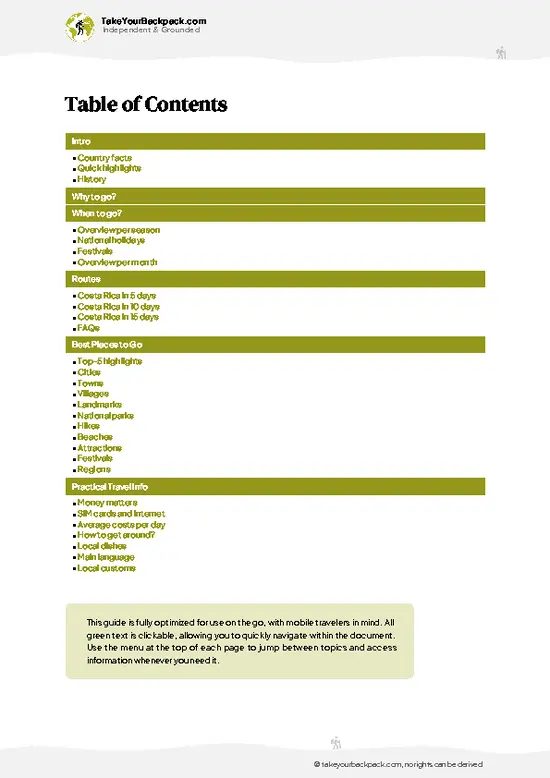
example page 2 from our offline Travel Guide for Costa Rica
example page 3 from our offline Travel Guide for Costa Rica
example page 4 from our offline Travel Guide for Costa Rica
example page 5 from our offline Travel Guide for Costa Rica
example page 6 from our offline Travel Guide for Costa Rica
example page 7 from our offline Travel Guide for Costa Rica
Loading the map 🌍
CLICK TO FILTER
cities
towns
villages
landmarks
national parks
hikes
beaches
attractions
festivals
regions
SHOW COUNTRY’S BESTSHOW ALL

✨ Why go?
Ranked #5 festival in Costa Rica
What makes this festival worth celebrating

Festival Internacional de las Artes pulls backpackers into San José, a city most travelers rush through on the way to the coast. That is the reason to go. Between free open-air shows in plazas and parks, you can watch Costa Rican and international artists without a ticket, which makes it far cheaper than a typical music festival. Locals fill these crowds, so you end up chatting with families, students, and artists rather than other backpackers, and strangers sharing a bench become your festival community for the afternoon. The second draw is the setting. Performances around the Teatro Nacional and the downtown pedestrian streets let you see a side of the capital that guidebooks skim over. It also fits neatly into a longer trip: a few days in the city before heading to the volcanoes, cloud … read more 👉
Festival Internacional de las Artes pulls backpackers into San José, a city most travelers rush through on the way to the coast. That is the reason to go. Between free open-air shows in plazas and parks, you can watch Costa Rican and international artists without a ticket, which makes it far cheaper than a typical music festival. Locals fill these crowds, so you end up chatting with families, students, and artists rather than other backpackers, and strangers sharing a bench become your festival community for the afternoon. The second draw is the setting. Performances around the Teatro Nacional and the downtown pedestrian streets let you see a side of the capital that guidebooks skim over. It also fits neatly into a longer trip: a few days in the city before heading to the volcanoes, cloud forest, or Caribbean coast gives your route a cultural anchor beyond nature stops.

💡 HighlightsKey sights and experiences for travelers

  1. Parque Metropolitano La Sabana: The main venue, a big green park on the western edge of central San José. Free outdoor stages, art installations and food stalls make it the easiest way in, and families spread out on the lawns for the evening shows.
  2. Teatro Nacional: Costa Rica’s grand 19th-century theater, with gilded ceilings, velvet seats and painted allegories. Seeing a festival performance here costs a ticket, but the interior alone justifies it. Book ahead, since the best shows fill early.
  3. Teatro Popular Melico Salazar: A downtown theater that hosts music, dance and theater programs during the festival. It feels less formal than the Teatro Nacional, with a more local crowd and often a lower ticket price.
  4. Free street and plaza performances: Parades, dance troupes and street theater spill into
… read more 👉
  1. Parque Metropolitano La Sabana: The main venue, a big green park on the western edge of central San José. Free outdoor stages, art installations and food stalls make it the easiest way in, and families spread out on the lawns for the evening shows.
  2. Teatro Nacional: Costa Rica’s grand 19th-century theater, with gilded ceilings, velvet seats and painted allegories. Seeing a festival performance here costs a ticket, but the interior alone justifies it. Book ahead, since the best shows fill early.
  3. Teatro Popular Melico Salazar: A downtown theater that hosts music, dance and theater programs during the festival. It feels less formal than the Teatro Nacional, with a more local crowd and often a lower ticket price.
  4. Free street and plaza performances: Parades, dance troupes and street theater spill into public spaces around the festival, so you can catch a show on a walk without buying anything. Expect drums echoing between buildings and crowds that gather without warning.
  5. International and Costa Rican guest companies: The festival invites groups from around the world alongside national artists, so one evening can take you from contemporary dance to folk music. This mix is the festival’s signature, and it lets you sample cultures you would otherwise need a long trip to see.
Allow three to four days to catch the park stages and one or two theater shows, or a full week if you want to see most of it.
Spotted a mistake or missing something? Contact us.

Things to do around Festival Internacional de las Artes

Ratings based on Tripadvisor reviews. When you book through this link, you support our work at no extra cost to you.

🌤️ When to go?When is the celebration of Festival Internacional de las Artes?

Festival Internacional de las Artes (FIA) runs for about ten days in March, with dates set by the organizers, and its stages are spread across San José, with Parque Metropolitano La Sabana as the main venue and shows at the Teatro Nacional and Teatro Popular Melico Salazar.
  • Best days: Opening weekend brings the big free street shows and parades. Weekday evenings are calmer, with easier seats for theater and dance.
  • Weather: March is dry in the Central Valley, with highs of 25 to 28°C (77 to 82°F) and cool nights near 15 to 17°C (59 to 63°F). Bring sunscreen, a hat, a light jacket for night shows and a refillable bottle.
  • Booking: Reserve ticketed shows and beds two to four weeks ahead. Rooms in central San José may rise 10 to 25 percent on opening weekend.
  • Crowds: Arrive in the city by mid-afternoon
… read more 👉
Festival Internacional de las Artes (FIA) runs for about ten days in March, with dates set by the organizers, and its stages are spread across San José, with Parque Metropolitano La Sabana as the main venue and shows at the Teatro Nacional and Teatro Popular Melico Salazar.
  • Best days: Opening weekend brings the big free street shows and parades. Weekday evenings are calmer, with easier seats for theater and dance.
  • Weather: March is dry in the Central Valley, with highs of 25 to 28°C (77 to 82°F) and cool nights near 15 to 17°C (59 to 63°F). Bring sunscreen, a hat, a light jacket for night shows and a refillable bottle.
  • Booking: Reserve ticketed shows and beds two to four weeks ahead. Rooms in central San José may rise 10 to 25 percent on opening weekend.
  • Crowds: Arrive in the city by mid-afternoon and avoid the 4 to 7 pm commuter jams. Leave after the late show by taxi or rideshare, since buses thin out at night.
Book the Teatro Nacional performances first, because they sell out before the free outdoor events fill up.


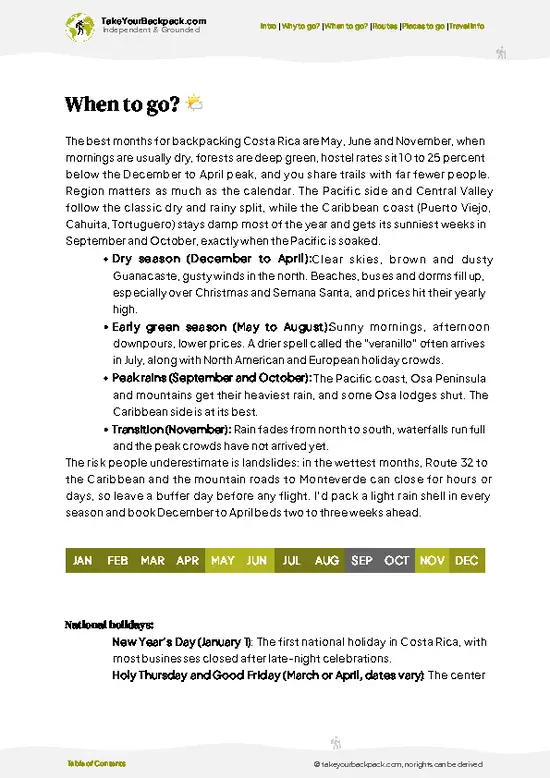
source: climatestotravel.comJANJanuary: excellent for travelingFEBFebruary: not recommended for travelingMARMarch: not recommended for travelingAPRApril: not recommended for travelingMAYMay: not recommended for travelingJUNJune: not recommended for travelingJULJuly: not recommended for travelingAUGAugust: not recommended for travelingSEPSeptember: not recommended for travelingOCTOctober: not recommended for travelingNOVNovember: not recommended for travelingDECDecember: not recommended for traveling

✈️ The backpacker research shortcutCosta Rica Travel Guide

An offline-friendly backpacking guide with optimized travel routes, ranked highlights, transport advice, and the best areas to stay.
example page 0 from our offline Travel Guide for Costa Rica
example page 1 from our offline Travel Guide for Costa Rica
example page 2 from our offline Travel Guide for Costa Rica
example page 3 from our offline Travel Guide for Costa Rica
example page 4 from our offline Travel Guide for Costa Rica
example page 5 from our offline Travel Guide for Costa Rica
example page 6 from our offline Travel Guide for Costa Rica
example page 7 from our offline Travel Guide for Costa Rica
The digital guide (287 pages) contains:
✅ 90 highlights, ranked by travel appeal
✅ Optimized 5, 10 & 15-day travel routes
✅ Cities, national parks, landmarks, beaches
✅ How to get around
✅ Offline-friendly for travel without Wi-Fi
👉 Click to see all 30+ guide features

📅 Plan smarter in minutes, not weeks
✅ Month by month travel advice
✅ Festivals & national holidays
✅ Budget expectations

🗺️ Go to the right places, skip the overrated ones
✅ Honest pros & cons of destinations
✅ Top hikes, parks & viewpoints
✅ Lesser-known places most travelers miss
✅ Clear “worth it vs skip it” guidance

🛏️ Travel smoothly without rookie mistakes
✅ Best areas to stay
✅ Transport systems explained simply
✅ Common scams & safety advice
✅ SIM cards, money & practical tips

🌍 Understand the country, not just visit it
✅ Culture & traditions
✅ 52 Essential phrases & customs
✅ Festivals worth planning around
✅ Traveler-friendly historical context
✅ Insights that make places more meaningful

📱 Built for real travel conditions
✅ Fully downloadable PDF
✅ Works completely offline
✅ Optimized for phone use
✅ Useful in remote areas & buses
✅ Everything in one place
Stop searching, start planning
Get instant access to your full guide. 30‑day money-back guarantee.
+ Add another guide for just

By proceeding you agree to our terms.
Sent to your inbox immediately after payment • 100% Secure Checkout
Best Backpacking Travel Advisor 2025 tourism awardBest Backpacking
Travel Advisor
2025
What others say about Take Your Backpack Guides:
⭐⭐⭐⭐⭐
Fantastic, amazing amount of information!
⭐⭐⭐⭐⭐
My goodness this is amazing, it's what I've been looking for hats off too you!
⭐⭐⭐⭐⭐
I think this is absolutely BRILLIANT
⭐⭐⭐⭐
Very complete and informative. It's still missing places, but I gotta to commend you
⭐⭐⭐⭐⭐
This is truly amazing, thank you, can't wait to explore it with my kids!
⭐⭐⭐⭐⭐
Awesome resource, thank you!
⭐⭐⭐⭐⭐
This is amazing! Can't wait to explore the ones I haven't seen
⭐⭐⭐⭐
I love this! Well done, great idea.
⭐⭐⭐⭐⭐
Thanks for taking the time to make this gem!
⭐⭐⭐⭐⭐
This might be the best website I've ever seen.
⭐⭐⭐⭐⭐
Congratulations, and thank you so much for your work; it's incredibly valuable.
⭐⭐⭐⭐
In all seriousness I think you did a great job pointing out the important spots
⭐⭐⭐⭐⭐
10/10 very good
⭐⭐⭐⭐⭐
As someone who's only just starting to visit regularly this is awesome, thank you.
⭐⭐⭐⭐
Thank you very much! I'm going to visit my dad, it's going to be very useful!
⭐⭐⭐⭐⭐
This is really cool! We'll be travelling for the first time and this definitely come in handy.
⭐⭐⭐⭐⭐
You are now our minister of culture, congratulations 👨‍💼
⭐⭐⭐⭐⭐
Just wanted to tell you that this is a pearl! Going to follow your recommendations.
⭐⭐⭐⭐⭐
This is so cool. I'll definitely be using the resource for my travels soon.
⭐⭐⭐⭐⭐
This is very impressive! Good work.
⭐⭐⭐⭐⭐
This is an amazing and informative site. Very well done!

🛏️ Where to stay?Where staying makes the most sense

Barrio Escalante, Barrio Amón and Barrio Otoya are the best areas for backpackers, because each sits within a short walk or cheap ride of the festival stages in central San José.
Barrio Amón and Barrio Otoya are historic districts of old mansions, with the most social budget hostels in the city. Dorms there fill with solo travelers, and common rooms make it easy to find someone to go to a show with. You can walk to the Teatro Nacional and Plaza de la Cultura in 10 to 20 minutes by day, though a rideshare (about US$2 to 4) is wiser after dark.
Barrio Escalante is the food district, with bars, cafes … read more 👉
Barrio Escalante, Barrio Amón and Barrio Otoya are the best areas for backpackers, because each sits within a short walk or cheap ride of the festival stages in central San José.
Barrio Amón and Barrio Otoya are historic districts of old mansions, with the most social budget hostels in the city. Dorms there fill with solo travelers, and common rooms make it easy to find someone to go to a show with. You can walk to the Teatro Nacional and Plaza de la Cultura in 10 to 20 minutes by day, though a rideshare (about US$2 to 4) is wiser after dark.
Barrio Escalante is the food district, with bars, cafes and a lively evening street scene. It suits travelers who want to eat well after performances, and it feels safer at night than much of downtown thanks to the crowds and restaurants.
Stay near the Paseo Colón and La Sabana side if your shows are at the park or museums. It is quieter, with simple guesthouses and easy bus access to the center.
Avoid sleeping near the Coca-Cola bus terminal area, which is rough after dark. Whichever area you choose, book early for the opening weekend.

👛 Costs (as of 23 October 2026)Typical daily expenses

Festival Internacional de las Artes costs a backpacker about US$32 to 113 a day, counting a dorm bed, local transport, food and a couple of ticketed shows, with many events free.
CategoryBudget RangeLocal Reality
Festival ticketsUS$0 to 25Street shows and plaza concerts are free. Theater, dance and concert tickets run about US$10 to 25. Budget US$12 per day on average.
AccommodationUS$15 to 35Dorm beds in San José cost US$15 to 25 normally and rise a little during the festival. Private rooms start near US$40. Budget US$25.
Local transportUS$2 to 8City buses cost under US$1 a ride. Rideshares across the center cost US$2 to 5 and are best at night. Budget US$5.
Food & drinksUS$12 to 30A casado at a soda costs US$6 to 9. Street snacks cost US$2 to 4, and a beer US$2.50 to 4. Budget US$20.
MiscellaneousUS$3
… read more 👉
Festival Internacional de las Artes costs a backpacker about US$32 to 113 a day, counting a dorm bed, local transport, food and a couple of ticketed shows, with many events free.
CategoryBudget RangeLocal Reality
Festival ticketsUS$0 to 25Street shows and plaza concerts are free. Theater, dance and concert tickets run about US$10 to 25. Budget US$12 per day on average.
AccommodationUS$15 to 35Dorm beds in San José cost US$15 to 25 normally and rise a little during the festival. Private rooms start near US$40. Budget US$25.
Local transportUS$2 to 8City buses cost under US$1 a ride. Rideshares across the center cost US$2 to 5 and are best at night. Budget US$5.
Food & drinksUS$12 to 30A casado at a soda costs US$6 to 9. Street snacks cost US$2 to 4, and a beer US$2.50 to 4. Budget US$20.
MiscellaneousUS$3 to 15Water, sunscreen, small souvenirs, a SIM or tips. Budget US$8.
Total Daily BudgetUS$32 to 113About US$70 for a typical festival day.


source: costarica.com
⚠️ Prices can change and everyone travels differently, so take this as a rough guide. Hope it helps you plan your adventure!

🍲 FoodLocal Flavors for Backpackers

Expect casados and street snacks to anchor your festival eating, with food trucks and small stalls appearing around the main plazas during the big free events.
A casado (rice, beans, plantain, salad and a protein) at a downtown soda is the best-value plate in San José, and it is worth eating at least once between shows. At stalls, look for empanadas, tamales (especially around lunch), chicharrones and patacones with bean dip. Fresh fruit cups sprinkled with lime and salt are a good answer to the afternoon sun.
For drinks, try refrescos naturales such as tamarind, horchata or cas, plus strong Costa Rican coffee before a matinee. Local craft beer and Imperial are the standard evening pour, and cheap guaro cocktails turn up at bars near the venues.
Etiquette is easy. Lines are orderly and people … read more 👉
Expect casados and street snacks to anchor your festival eating, with food trucks and small stalls appearing around the main plazas during the big free events.
A casado (rice, beans, plantain, salad and a protein) at a downtown soda is the best-value plate in San José, and it is worth eating at least once between shows. At stalls, look for empanadas, tamales (especially around lunch), chicharrones and patacones with bean dip. Fresh fruit cups sprinkled with lime and salt are a good answer to the afternoon sun.
For drinks, try refrescos naturales such as tamarind, horchata or cas, plus strong Costa Rican coffee before a matinee. Local craft beer and Imperial are the standard evening pour, and cheap guaro cocktails turn up at bars near the venues.
Etiquette is easy. Lines are orderly and people are patient. Carry small colones bills and coins, because stalls often prefer cash, while sit-down restaurants take cards. Many sodas add a service charge of 10 percent, so tipping extra is optional. Portions are generous, so sharing a plate with a hostel friend works well.

FAQTraveler FAQ

Festival Internacional de las Artes takes place in March, usually over about ten days, with exact dates announced by the organizers each year. Most of the program is in San José, with La Sabana as the main venue and shows at the Teatro Nacional. Opening weekend has the largest free outdoor shows, so arrive by Friday.
Attending Festival Internacional de las Artes costs little if you stick to the free events, which make up a large part of the program. Ticketed theater, dance and concert shows usually run about US$10 to 25 each. A backpacker spending on a dorm bed, food, transport and a couple of shows should plan roughly US$70 a day.
Festival Internacional de las Artes does not require tickets for its free street and plaza events, so you can simply show up. Ticketed shows at venues such as the Teatro Nacional should be booked one to three weeks ahead, as popular ones sell out. Buy through the official festival channels, and bring ID and a printed or digital confirmation.
⚠️ Things can change over time, so always validate details locally before you go.

Other Costa Rican festivals near Internacional de las Artes

Explore more nearby:


💡 Not sure where to go next?
Create a personalized itinerary for Costa Rica including Internacional de las Artes and the places that fit your trip.

Generate my itinerary

👉 Discover all festivals

Or checkout all Costa Rica has to offer (think cities, towns, villages, national parks, hikes, beaches, festivals)
Country photo of Costa Rica

We 💚 feedbackWhat to keep in mind

Festival Internacional de las Artes works best if you wander the side streets and small parks, where free shows are easy to miss when you only chase the Teatro Nacional. I would pick one paid evening there, then spend the rest of the days on foot downtown, carrying a small bag and a rain jacket.

✈️ When did I visit Costa Rica?
Costa Rica I visited during my half year trip through South and Central America back in 2003

✍️ Help improve this page!
The information on this page is based on my own backpacking experience in Costa Rica, supplemented with up-to-date research and feedback from other travelers. Travel details can change, so if you notice anything outdated or incomplete, feel free to let me know.


🙋‍♂️ Give feedback

👋 Meet the founderWho’s Behind Take Your Backpack?

Johan, backpacker and founder of TakeYourBackpackHi, I’m Johan (Netherlands 🇳🇱), the creator of TakeYourBackpack. Over the past 3 decades, I’ve backpacked through 90+ countries across six continents, gaining extensive experience with independent travel, long-term trips, and overland routes.

This site is built on a combination of firsthand travel experience and carefully curated insights from other backpackers. Many guides are based on places I’ve personally visited, while others bring together tips, observations, and practical advice shared by trusted travelers I’ve met along the way.

The goal is to provide realistic, experience-driven guidance — not generic itineraries — so you can explore destinations with better context, clearer expectations, and more confidence.