×

Costa Rica🇨🇷 | national parksPalo Verde National ParkTempisque River, wetland birds, crocodile banks, dry-forest trails | things to do and best time to go

Explore Monteverde Cloud Forest ReserveExplore Rincón de la Vieja National Park

Backpacking in Palo Verde
👀 For curious travelersnational park ranked #16
By Johan Kruseman 🇳🇱 | Updated October 22, 2026

The first thing that hit me at the gate was the noise: a wall of cicadas, then a sudden squawk as a flock of whistling ducks lifted off a marsh the color of weak tea. Palo Verde National Park sits in the northwest of Costa Rica, on the Tempisque River floodplain. Wetland birds are the draw, and trails are short, flat and shady. Public transport stops far from the entrance, so arrange a ride before you arrive. Book the station lodging ahead and bring your own food, since supplies are thin. Mosquitoes were fat and patient on the boardwalk, and a howler troop was already grumbling in the canopy.

Discover everything you want to know in the 📖 Costa Rica Travel Guide.


example page 0 from our offline Travel Guide for Costa Rica
example page 1 from our offline Travel Guide for Costa Rica
example page 2 from our offline Travel Guide for Costa Rica
example page 3 from our offline Travel Guide for Costa Rica
example page 4 from our offline Travel Guide for Costa Rica
example page 5 from our offline Travel Guide for Costa Rica
example page 6 from our offline Travel Guide for Costa Rica
example page 7 from our offline Travel Guide for Costa Rica
Loading the map 🌍
CLICK TO FILTER
cities
towns
villages
landmarks
national parks
hikes
beaches
attractions
festivals
regions
SHOW COUNTRY’S BESTSHOW ALL

✨ Why go?
Ranked #16 national park in Costa Rica
The unique appeal for travelers

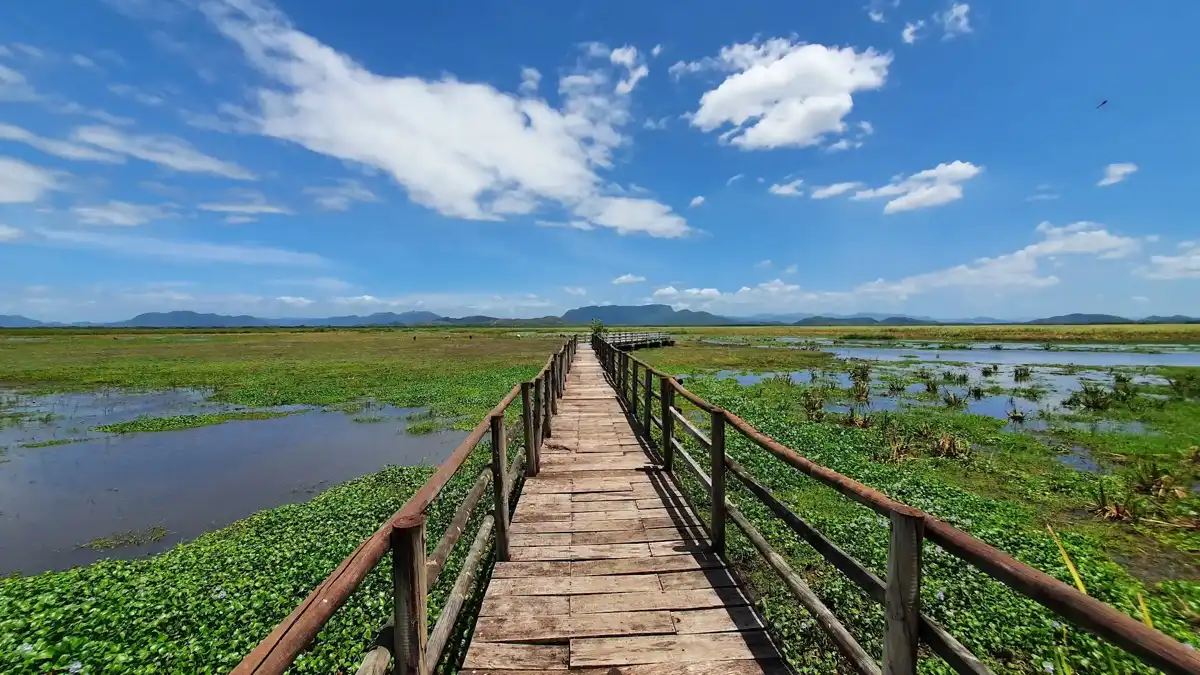
Palo Verde National Park suits independent travelers who want birds without a guide bill stacking up. The seasonal wetland draws more than 300 bird species, and the flat trails around the Organization for Tropical Studies station are easy to walk alone at dawn, when the animals are most active. Resident ranger-station staff can point you to where the jabiru storks are feeding that week. The other pull is the Tempisque River boat trips, which put you level with crocodiles and roosting herons in a way no trail can. Wildlife density here beats most of the country's rainforest parks, because you can actually see it through the open dry forest and marsh.

💡 HighlightsWhat this place is best known for

  1. Bird colony on Isla Pájaros: A small limestone island in the Tempisque River where herons, egrets, ibises and roseate spoonbills nest in large numbers, best seen from a boat.
  2. Tempisque River boat trip: Slow drifts past big American crocodiles, basking iguanas, and storks on the mud banks.
  3. Mirador Guayacán: A short climb to a limestone overlook above the marsh, with a wide view of the wetland and river.
  4. Palo Verde marsh: Seasonal wetland carpeted with cattails and water lilies, thick with whistling ducks, wood storks and jacanas.
  5. Jabiru stork sightings: Costa Rica's tallest flying bird, with a wingspan over 2 meters, often seen feeding in the shallows.
  6. Sendero La Venada: A trail along the lagoon and through dry forest where monkeys, coatis, deer and iguanas show up in the open woodland.
  7. Night walk
… read more 👉
  1. Bird colony on Isla Pájaros: A small limestone island in the Tempisque River where herons, egrets, ibises and roseate spoonbills nest in large numbers, best seen from a boat.
  2. Tempisque River boat trip: Slow drifts past big American crocodiles, basking iguanas, and storks on the mud banks.
  3. Mirador Guayacán: A short climb to a limestone overlook above the marsh, with a wide view of the wetland and river.
  4. Palo Verde marsh: Seasonal wetland carpeted with cattails and water lilies, thick with whistling ducks, wood storks and jacanas.
  5. Jabiru stork sightings: Costa Rica's tallest flying bird, with a wingspan over 2 meters, often seen feeding in the shallows.
  6. Sendero La Venada: A trail along the lagoon and through dry forest where monkeys, coatis, deer and iguanas show up in the open woodland.
  7. Night walk at the station: Guided walks reveal owls, nightjars, snakes, frogs and sometimes kinkajous.
For a first visit, take the river boat trip, because it gives the best wildlife viewing with the least effort.
Spotted a mistake or missing something? Contact us.

Things to do around Palo Verde National Park

Ratings based on Tripadvisor reviews. When you book through this link, you support our work at no extra cost to you.

🌤️ When to go?Seasonal considerations and timing

  • Dry Season (December to April): Days run 30 to 36°C (86 to 97°F) with almost no rain, and the Tempisque River wetlands shrink so waterbirds crowd the remaining pools. Wildlife viewing peaks, as do prices and bookings.
  • Green Season (May to November): Afternoon downpours, 26 to 33°C (79 to 91°F), and flooded marshes. September and October are wettest, and some roads and trails close.
  • Bird Migration (November to March): Thousands of ducks and herons gather, and lodges raise rates.
Book the OTS station or nearby lodges early for January through March, and start hikes at dawn before the heat builds.

source: climatestotravel.comJANJanuary: excellent for travelingFEBFebruary: excellent for travelingMARMarch: excellent for travelingAPRApril: excellent for travelingMAYMay: highly recommended for travelingJUNJune: fair for travelingJULJuly: fair for travelingAUGAugust: fair for travelingSEPSeptember: fair for travelingOCTOctober: fair for travelingNOVNovember: highly recommended for travelingDECDecember: excellent for traveling
costa-rica-national-park-palo-verde-national-park
© Google | Damián Soto

✈️ The backpacker research shortcutCosta Rica Travel Guide

An offline-friendly backpacking guide with optimized travel routes, ranked highlights, transport advice, and the best areas to stay.
example page 0 from our offline Travel Guide for Costa Rica
example page 1 from our offline Travel Guide for Costa Rica
example page 2 from our offline Travel Guide for Costa Rica
example page 3 from our offline Travel Guide for Costa Rica
example page 4 from our offline Travel Guide for Costa Rica
example page 5 from our offline Travel Guide for Costa Rica
example page 6 from our offline Travel Guide for Costa Rica
example page 7 from our offline Travel Guide for Costa Rica
The digital guide (287 pages) contains:
✅ 92 highlights, ranked by travel appeal
✅ Optimized 5, 10 & 15-day travel routes
✅ Cities, national parks, landmarks, beaches
✅ How to get around
✅ Offline-friendly for travel without Wi-Fi
👉 Click to see all 30+ guide features

📅 Plan smarter in minutes, not weeks
✅ Month by month travel advice
✅ Festivals & national holidays
✅ Budget expectations

🗺️ Go to the right places, skip the overrated ones
✅ Honest pros & cons of destinations
✅ Top hikes, parks & viewpoints
✅ Lesser-known places most travelers miss
✅ Clear “worth it vs skip it” guidance

🛏️ Travel smoothly without rookie mistakes
✅ Best areas to stay
✅ Transport systems explained simply
✅ Common scams & safety advice
✅ SIM cards, money & practical tips

🌍 Understand the country, not just visit it
✅ Culture & traditions
✅ 52 Essential phrases & customs
✅ Festivals worth planning around
✅ Traveler-friendly historical context
✅ Insights that make places more meaningful

📱 Built for real travel conditions
✅ Fully downloadable PDF
✅ Works completely offline
✅ Optimized for phone use
✅ Useful in remote areas & buses
✅ Everything in one place
Stop searching, start planning
Get instant access to your full guide. 30‑day money-back guarantee.
+ Add another guide for just

By proceeding you agree to our terms.
Sent to your inbox immediately after payment • 100% Secure Checkout
Best Backpacking Travel Advisor 2025 tourism awardBest Backpacking
Travel Advisor
2025
What others say about Take Your Backpack Guides:
⭐⭐⭐⭐⭐
Fantastic, amazing amount of information!
⭐⭐⭐⭐⭐
My goodness this is amazing, it's what I've been looking for hats off too you!
⭐⭐⭐⭐⭐
I think this is absolutely BRILLIANT
⭐⭐⭐⭐
Very complete and informative. It's still missing places, but I gotta to commend you
⭐⭐⭐⭐⭐
This is truly amazing, thank you, can't wait to explore it with my kids!
⭐⭐⭐⭐⭐
Awesome resource, thank you!
⭐⭐⭐⭐⭐
This is amazing! Can't wait to explore the ones I haven't seen
⭐⭐⭐⭐
I love this! Well done, great idea.
⭐⭐⭐⭐⭐
Thanks for taking the time to make this gem!
⭐⭐⭐⭐⭐
This might be the best website I've ever seen.
⭐⭐⭐⭐⭐
Congratulations, and thank you so much for your work; it's incredibly valuable.
⭐⭐⭐⭐
In all seriousness I think you did a great job pointing out the important spots
⭐⭐⭐⭐⭐
10/10 very good
⭐⭐⭐⭐⭐
As someone who's only just starting to visit regularly this is awesome, thank you.
⭐⭐⭐⭐
Thank you very much! I'm going to visit my dad, it's going to be very useful!
⭐⭐⭐⭐⭐
This is really cool! We'll be travelling for the first time and this definitely come in handy.
⭐⭐⭐⭐⭐
You are now our minister of culture, congratulations 👨‍💼
⭐⭐⭐⭐⭐
Just wanted to tell you that this is a pearl! Going to follow your recommendations.
⭐⭐⭐⭐⭐
This is so cool. I'll definitely be using the resource for my travels soon.
⭐⭐⭐⭐⭐
This is very impressive! Good work.
⭐⭐⭐⭐⭐
This is an amazing and informative site. Very well done!

🛏️ Where to stay?Choosing the right base

The only beds inside Palo Verde National Park are at the Organization for Tropical Studies research station, which takes visitors in simple dorm-style rooms with meals included, for roughly US$85 to 110 per person per night, and you book ahead. Rangers also run a basic ranger-station area near the Palo Verde entrance with limited, no-frills lodging that you arrange in advance. Outside the park, a handful of family-run lodges sit along the dirt road from Bagaces, often with shared bathrooms and cheaper rates of US$25 to 60 for a bed or private room. Bagaces itself, about 30 minutes from the park … read more 👉
The only beds inside Palo Verde National Park are at the Organization for Tropical Studies research station, which takes visitors in simple dorm-style rooms with meals included, for roughly US$85 to 110 per person per night, and you book ahead. Rangers also run a basic ranger-station area near the Palo Verde entrance with limited, no-frills lodging that you arrange in advance. Outside the park, a handful of family-run lodges sit along the dirt road from Bagaces, often with shared bathrooms and cheaper rates of US$25 to 60 for a bed or private room. Bagaces itself, about 30 minutes from the park entrance by car, has the cheapest sodas and guesthouses. Cañas, a bit farther south, offers more hotels and a bigger supermarket. Liberia is the best hub for buses and ATMs. I would stay in Bagaces or at a lodge on the access road, so you reach the trails early when birds and monkeys are most active.

👛 Costs (as of 22 October 2026)How expensive it really is

A backpacker should plan on roughly US$75 to 163 a day at Palo Verde National Park, including the entrance fee, a bed, meals and local transport. The table below breaks it down.
CategoryBudget RangeLocal Reality
Entrance feeUS$15 to 18Charged to foreign adults at the ranger station, paid in colones or dollars.
AccommodationUS$20 to 60Simple lodges in Bagaces or Bebedero; the research station costs more with meals included.
FoodUS$10 to 25Sodas serve a rice-and-beans casado for about US$5 to 8.
Local transportUS$5 to 15Buses along the highway are cheap; the last stretch to the park needs a taxi or shuttle.
Boat tourUS$25 to 45Tempisque River trips from Bebedero, optional but good for crocodiles and birds.
Total Daily BudgetUS$75 to 163Lower end with a basic room and no tour.


source: costarica.com
⚠️ Prices can change and everyone travels differently, so take this as a rough guide. Hope it helps you plan your adventure!

🥾 TrailsTrail guide for Palo Verde national park

Palo Verde National Park is a place for short, flat walks rather than long treks, with the main trails radiating from the ranger and research stations. Terrain is dry forest, limestone outcrops and marsh edges, and the heat is steady, so start at first light.
  • Sendero Mirador Guayacán: About 1.5 km, roughly 1 hour, a steep climb over limestone hills to the Guayacán and El Cactus lookouts over the wetland.
  • Sendero La Venada: About 2 km, around 1 hour, flat, partly along the edge of the Palo Verde lagoon, good for waterbirds.
  • Sendero La Roca: A loop of about 540 m, easy, to a lookout over the lagoon,
… read more 👉
Palo Verde National Park is a place for short, flat walks rather than long treks, with the main trails radiating from the ranger and research stations. Terrain is dry forest, limestone outcrops and marsh edges, and the heat is steady, so start at first light.
  • Sendero Mirador Guayacán: About 1.5 km, roughly 1 hour, a steep climb over limestone hills to the Guayacán and El Cactus lookouts over the wetland.
  • Sendero La Venada: About 2 km, around 1 hour, flat, partly along the edge of the Palo Verde lagoon, good for waterbirds.
  • Sendero La Roca: A loop of about 540 m, easy, to a lookout over the lagoon, the Tempisque River and the Gulf of Nicoya.
  • Sendero La Cantera: About 1.4 km, under an hour, easy, to a lookout over the winding Tempisque River.
  • Sendero El Mapache: About 700 m, easy, through deciduous, limestone and evergreen forest, good for monkeys and birds.
Access is by road from the Interamericana highway through the town of Bagaces, then a rough gravel track of about 28 km to the station, so a high-clearance vehicle helps in the wet months. Buses only reach Bagaces, so most backpackers arrange a taxi or shuttle. Crowds are light, mostly small tour groups and researchers. An entrance fee applies, and cash is useful at the station.
⚠️ Hiking info can sometimes be outdated or inaccurate. Before you hit the trail, check the latest conditions with locals. If you do spot anything that's off, I'd love to hear from you, so I can update it for fellow travelers.

🛡️ SafetyScams, Hazards, and Annoyances

Palo Verde is straightforward, but heat is the main hazard. In the dry season, temperatures climb past 35°C (95°F) and shade is patchy, so start walking at first light, carry at least 3 liters of water, and wear a hat and light long sleeves. Trails are flat but muddy in the green season, and insects get thick, so bring repellent. Crocodiles live in the river and lagoons, so keep your distance from the water’s edge and never swim. Snakes and howler monkeys are common; give them space and stay on marked paths.

FAQFrequently asked questions about Palo Verde

Two days works well for Palo Verde National Park. That gives you one morning for the trails near the ranger station, such as El Mapache and La Venada, and a second morning for a Tempisque River boat trip. Add a third day if you want the climb to the Guayacán lookout and extra birding in the wetlands.
Yes, but it takes planning. Buses from Liberia or San José run along the Pan-American Highway to Bagaces (about 45 minutes from Liberia), and from there you need a taxi or lodge shuttle for the 25 to 30 km of rough road to the park. Many travelers book a guided tour or boat trip from Bebedero instead.
Yes, Palo Verde National Park charges an entrance fee, roughly US$15 to 18 for foreign adults, paid at the ranger station. No special permit is needed for day visits and marked trails. Overnight stays at the research station require advance reservations, and guides cost extra.
⚠️ Things can change over time, so always validate details locally before you go.

Other Costa Rican national parks near Palo Verde

Explore more nearby:


💡 Not sure where to go next?
Create a personalized itinerary for Costa Rica including Palo Verde and the places that fit your trip.

Generate my itinerary

👉 Discover all national parks

Or checkout all Costa Rica has to offer (think cities, towns, villages, national parks, hikes, beaches, festivals)
Country photo of Costa Rica

We 💚 feedbackSumming up the experience

Palo Verde National Park rewards two nights, not a rushed day. That gives you a dawn walk, a river boat outing and a night walk without cramming. I would bring insect repellent, a hat and plenty of snacks, then skip the midday heat and rest.

✈️ When did I visit Costa Rica?
Costa Rica I visited during my half year trip through South and Central America back in 2003

✍️ Help improve this page!
The information on this page is based on my own backpacking experience in Costa Rica, supplemented with up-to-date research and feedback from other travelers. Travel details can change, so if you notice anything outdated or incomplete, feel free to let me know.


🙋‍♂️ Give feedback

👋 Meet the founderWho’s Behind Take Your Backpack?

Johan, backpacker and founder of TakeYourBackpackHi, I’m Johan (Netherlands 🇳🇱), the creator of TakeYourBackpack. Over the past 3 decades, I’ve backpacked through 90+ countries across six continents, gaining extensive experience with independent travel, long-term trips, and overland routes.

This site is built on a combination of firsthand travel experience and carefully curated insights from other backpackers. Many guides are based on places I’ve personally visited, while others bring together tips, observations, and practical advice shared by trusted travelers I’ve met along the way.

The goal is to provide realistic, experience-driven guidance — not generic itineraries — so you can explore destinations with better context, clearer expectations, and more confidence.