
×

Costa Rica🇨🇷 | citiesSan JoséGold and jade museums, opera house, Barrio Escalante, market casados | things to do and best time to go

Explore Playas del CocoExplore Alajuela

Backpacking in San José
🏆 Top pickcity ranked #1
By Johan Kruseman 🇳🇱 | Updated October 22, 2026

The bus from the airport spills me onto Avenida Segunda, and the first thing that hits is diesel and frying plantain, then the clatter of a vendor’s cart over cracked pavement while a man shouts lottery numbers over a speaker. That was my first impression of San José: loud, gray, a little rough, and oddly honest. It sits in the Central Valley, in Costa Rica’s capital, ringed by green mountains you can only glimpse between concrete blocks. Don’t come for beauty. The architecture is mostly forgettable and traffic is relentless. Do come for the museums, the central market, the coffee and the cheap, excellent casados. Give it a day or two, no more. Culture seekers, foodies and anyone connecting flights will like it most. Beach-and-jungle purists and travelers wanting postcard colonial streets will find it a letdown.

Discover everything you want to know in the 📖 Costa Rica Travel Guide.


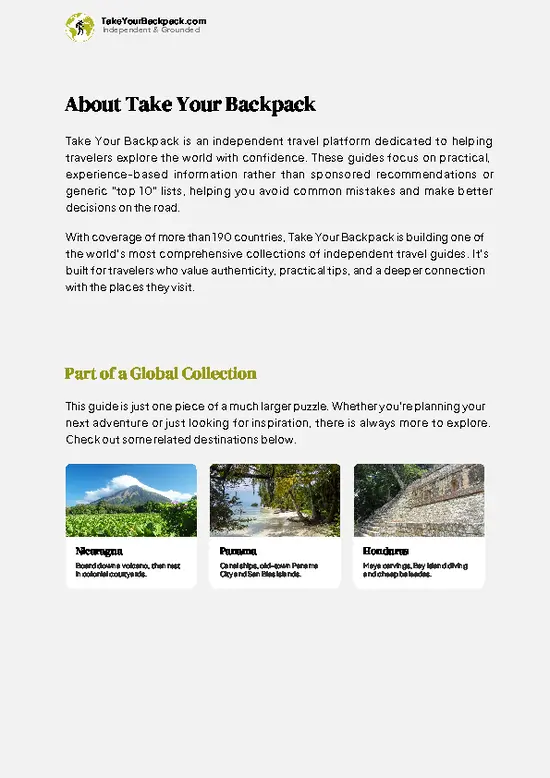
example page 0 from our offline Travel Guide for Costa Rica
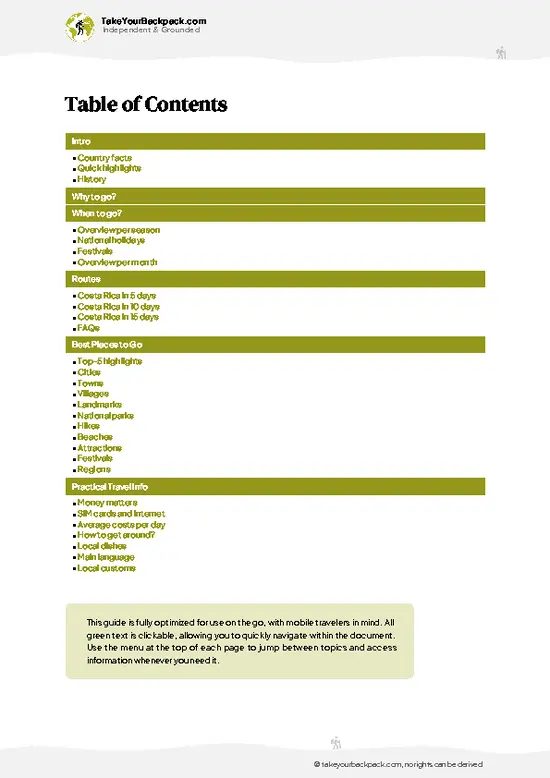
example page 1 from our offline Travel Guide for Costa Rica
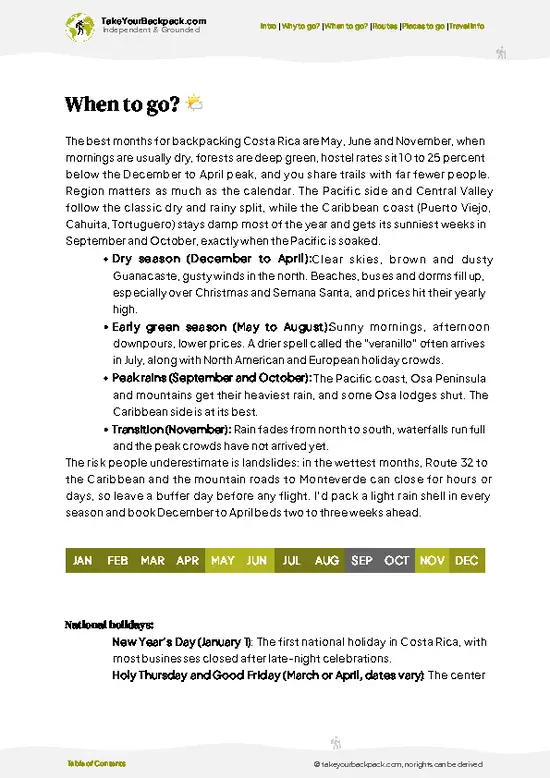
example page 2 from our offline Travel Guide for Costa Rica
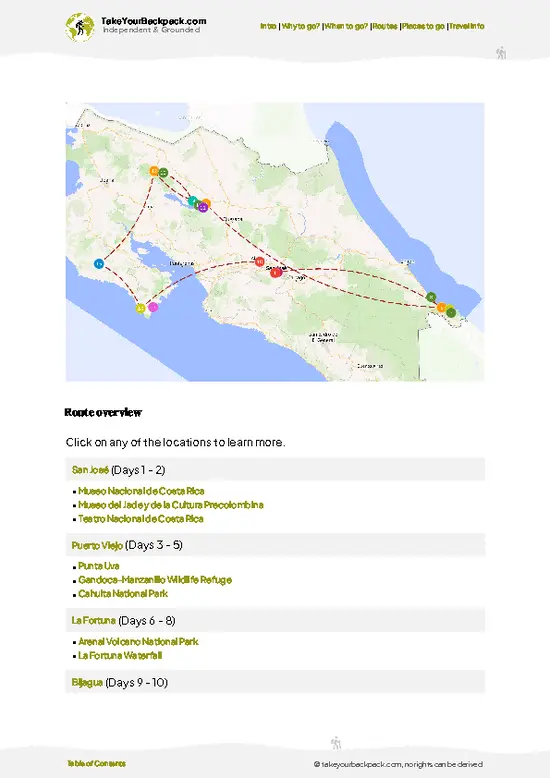
example page 3 from our offline Travel Guide for Costa Rica
example page 4 from our offline Travel Guide for Costa Rica
example page 5 from our offline Travel Guide for Costa Rica
example page 6 from our offline Travel Guide for Costa Rica
example page 7 from our offline Travel Guide for Costa Rica
Loading the map 🌍
CLICK TO FILTER
cities
towns
villages
landmarks
national parks
hikes
beaches
attractions
festivals
regions
SHOW COUNTRY’S BESTSHOW ALL

✨ Why go?
Ranked #1 city in Costa Rica
What makes it a must-see city

San José earns a place on a Costa Rica route because almost everything funnels through it, and a short stay here makes the rest of the country easier. Buses to the Caribbean coast, the Pacific, the cloud forests and the Nicaraguan and Panamanian borders all leave from within a few city blocks, so you can sort onward plans in one afternoon. The capital is also where the country’s best museums sit, including the Gold Museum and the Jade Museum, and you can reach both on foot from most central hostels. Food is the other draw. Sodas (small family diners) serve a full plate of rice, beans, plantain and meat for far less than tourist-zone restaurants, and the Mercado Central is a maze of coffee sellers, bakeries and lunch counters. Barrio Escalante has a real craft-beer and restaurant scene. Nightlife … read more 👉
San José earns a place on a Costa Rica route because almost everything funnels through it, and a short stay here makes the rest of the country easier. Buses to the Caribbean coast, the Pacific, the cloud forests and the Nicaraguan and Panamanian borders all leave from within a few city blocks, so you can sort onward plans in one afternoon. The capital is also where the country’s best museums sit, including the Gold Museum and the Jade Museum, and you can reach both on foot from most central hostels. Food is the other draw. Sodas (small family diners) serve a full plate of rice, beans, plantain and meat for far less than tourist-zone restaurants, and the Mercado Central is a maze of coffee sellers, bakeries and lunch counters. Barrio Escalante has a real craft-beer and restaurant scene. Nightlife is decent in Barrio Amón and Escalante. Treat it as a short, useful stop: two nights is plenty, and the volcanoes, coffee farms and beaches are what you came for.

💡 HighlightsMust-see experiences and standout moments

  1. Museo del Oro Precolombino: Gold figures, ornaments and tools from pre-Columbian cultures, displayed beneath the Plaza de la Cultura. It is compact and well labeled in English. Go on a weekday morning to avoid school groups. Entry runs about US$15 to 17 and you need 1.5 to 2 hours.
  2. Museo del Jade: The world’s largest collection of American jade, plus ceramics and stone carvings, in a modern building with city views. Mornings are quiet. Entry is roughly US$10 to 15, and 1.5 to 2 hours is enough.
  3. Teatro Nacional: A late-19th-century opera house with a marble lobby, painted ceilings and gilded details, and a café that serves a decent coffee. Visit in the morning for a guided tour or catch an evening performance. Tours cost about US$10 to 15 and take 45 minutes.
  4. Mercado Central: A covered market
… read more 👉
  1. Museo del Oro Precolombino: Gold figures, ornaments and tools from pre-Columbian cultures, displayed beneath the Plaza de la Cultura. It is compact and well labeled in English. Go on a weekday morning to avoid school groups. Entry runs about US$15 to 17 and you need 1.5 to 2 hours.
  2. Museo del Jade: The world’s largest collection of American jade, plus ceramics and stone carvings, in a modern building with city views. Mornings are quiet. Entry is roughly US$10 to 15, and 1.5 to 2 hours is enough.
  3. Teatro Nacional: A late-19th-century opera house with a marble lobby, painted ceilings and gilded details, and a café that serves a decent coffee. Visit in the morning for a guided tour or catch an evening performance. Tours cost about US$10 to 15 and take 45 minutes.
  4. Mercado Central: A covered market from the 1880s with narrow aisles, sizzling grills, herb stalls and leather goods. Go for lunch before 2 PM, when stalls start to close. Spending is small, around US$5 to 10 for a meal, and you need 1 to 1.5 hours. Watch your pockets.
  5. Museo Nacional de Costa Rica: Housed in the Bellavista Fortress, still pocked with bullet holes from the 1948 civil war. Exhibits cover archaeology, history and a butterfly garden. Late morning works best. Entry is around US$8 to 10, with 1.5 hours needed.
  6. Barrio Escalante: An eastern neighborhood of renovated houses turned into restaurants, breweries and coffee bars. Come in the late afternoon or evening. Costs vary by what you order, and a leisurely wander with a meal takes 2 to 3 hours.
  7. Parque La Sabana and the Museo de Arte Costarricense: The art museum sits in the old airport terminal and is free or near free, with a golden relief of Costa Rican history in one hall. The huge park beside it is good for a late-afternoon stroll. Allow 1.5 to 2 hours.
For day trips from San José, Poás Volcano, the Irazú crater, the colonial ruins of Cartago and the coffee towns around Heredia and Alajuela are all within reach. Start with the Museo del Oro on your first morning, since it sets context for everything else and its cool galleries make a gentle introduction to the city.
Spotted a mistake or missing something? Contact us.

Things to do in San José

Ratings based on Tripadvisor reviews. When you book through this link, you support our work at no extra cost to you.

🏘️ NeighborhoodsHow different areas shape the experience

San José rewards the traveler who picks three or four districts and skips the rest, because the center is a grid of noisy, gray avenues with a few excellent pockets.
  • Barrio Amón and Barrio Otoya: Worth your first afternoon. Old coffee-baron mansions with wooden shutters and tiled porches line quiet streets, and some now hold galleries and cafés that smell of roasting beans. Fully walkable, and calm after dark compared with downtown.
  • Downtown (Avenida Central): A pedestrian strip of shoe stores, preachers and street vendors, loud from 8 am. The Mercado Central is the reason to come: sodas frying chicharrones, dark coffee stalls, and the Teatro Nacional and Gold Museum a few blocks off. Go in daylight and leave by evening.
  • Barrio Escalante: The food district, and the best use of a night. Tree-lined
… read more 👉
San José rewards the traveler who picks three or four districts and skips the rest, because the center is a grid of noisy, gray avenues with a few excellent pockets.
  • Barrio Amón and Barrio Otoya: Worth your first afternoon. Old coffee-baron mansions with wooden shutters and tiled porches line quiet streets, and some now hold galleries and cafés that smell of roasting beans. Fully walkable, and calm after dark compared with downtown.
  • Downtown (Avenida Central): A pedestrian strip of shoe stores, preachers and street vendors, loud from 8 am. The Mercado Central is the reason to come: sodas frying chicharrones, dark coffee stalls, and the Teatro Nacional and Gold Museum a few blocks off. Go in daylight and leave by evening.
  • Barrio Escalante: The food district, and the best use of a night. Tree-lined streets carry craft breweries, small bakeries and tasting-menu kitchens, with open doors and live music on weekends. Walkable, though a short taxi home is wise.
  • La Sabana: The big park on the west side, with joggers, a lake and the national stadium. Good for a morning stroll and the art museum in the old airport terminal. Nothing to do here at night.
  • Los Yoses and San Pedro: University territory with cheap lunches, bars with loud speakers and students packing the sidewalks. Livelier than it looks, and fine on foot between the two.
  • Barrio México and the Pacific side: Mostly local and gritty. Skip it unless you have a specific reason.

⌛️ 1 dayHow to make the most of one day

8:00 AM, Mercado Central: Start here because the stalls are lively and breakfast is cheap. Order gallo pinto with eggs and a cup of local coffee at a counter, then wander the aisles while shutters are rolling up. Keep your bag in front of you. From here it is a ten-minute walk east.
9:30 AM, Teatro Nacional: Take the short tour of the marble foyer, painted ceilings and gilded balconies. The café next door is a good place to sit for a few minutes. Walk one block to the plaza below.
11:00 AM, Museo del Oro Precolombino: Underground beneath the Plaza de la Cultura, this is the best place in the city to understand the country’s indigenous past. Give it nearly two hours, since the cases are dense and the air-conditioning is welcome. Afterward, walk through the plaza pigeons toward Avenida Central. … read more 👉
8:00 AM, Mercado Central: Start here because the stalls are lively and breakfast is cheap. Order gallo pinto with eggs and a cup of local coffee at a counter, then wander the aisles while shutters are rolling up. Keep your bag in front of you. From here it is a ten-minute walk east.
9:30 AM, Teatro Nacional: Take the short tour of the marble foyer, painted ceilings and gilded balconies. The café next door is a good place to sit for a few minutes. Walk one block to the plaza below.
11:00 AM, Museo del Oro Precolombino: Underground beneath the Plaza de la Cultura, this is the best place in the city to understand the country’s indigenous past. Give it nearly two hours, since the cases are dense and the air-conditioning is welcome. Afterward, walk through the plaza pigeons toward Avenida Central.
1:30 PM, Lunch at a soda: Choose any busy local diner near the pedestrian boulevard and order a casado. It is filling, simple and the best value in town. Then catch a short taxi or walk north to Barrio Amón.
3:00 PM, Barrio Amón and Barrio Otoya: This is the less-visited part of a San José visit. Streets of old coffee-era mansions, some restored, some peeling, sit quietly with little traffic. Look for tiled facades and wooden porches. It takes about an hour and you will meet few tourists.
5:00 PM, Barrio Escalante: Take a taxi east. Settle at a craft-beer bar or a coffee shop as the light fades, then eat dinner in one of the converted houses. Return by taxi after dark.

🌤️ When to go?Weather, crowds, and seasonal trade-offs

December to April is the driest stretch for San José, with clear mornings and almost no rain.
  • Dry Season (December to April): Days reach 25 to 28°C (77 to 82°F), nights drop to 15 to 17°C (59 to 63°F). Sunshine is steady, and daylight lasts about 11 to 12 hours. Hostel beds and rental cars cost the most, and Christmas and Easter fill everything.
  • Green Season (May to November): Mornings stay bright, then afternoon downpours roll in from about 2 pm. Highs hover near 24 to 27°C (75 to 81°F). Crowds thin and dorm prices ease, and September and October are the wettest.
  • Transition Months (May and November): Rain is patchy and the hills turn green. Prices sit between the two extremes.
  • Events: The Festival de la Luz parade in December and the Semana Santa processions in spring bring crowds to downtown
… read more 👉
December to April is the driest stretch for San José, with clear mornings and almost no rain.
  • Dry Season (December to April): Days reach 25 to 28°C (77 to 82°F), nights drop to 15 to 17°C (59 to 63°F). Sunshine is steady, and daylight lasts about 11 to 12 hours. Hostel beds and rental cars cost the most, and Christmas and Easter fill everything.
  • Green Season (May to November): Mornings stay bright, then afternoon downpours roll in from about 2 pm. Highs hover near 24 to 27°C (75 to 81°F). Crowds thin and dorm prices ease, and September and October are the wettest.
  • Transition Months (May and November): Rain is patchy and the hills turn green. Prices sit between the two extremes.
  • Events: The Festival de la Luz parade in December and the Semana Santa processions in spring bring crowds to downtown streets.
Plan sightseeing before lunch in any month, and book Christmas beds a couple of months ahead.


source: climatestotravel.comJANJanuary: excellent for travelingFEBFebruary: excellent for travelingMARMarch: excellent for travelingAPRApril: highly recommended for travelingMAYMay: good for travelingJUNJune: fair for travelingJULJuly: fair for travelingAUGAugust: fair for travelingSEPSeptember: below average for travelingOCTOctober: fair for travelingNOVNovember: good for travelingDECDecember: highly recommended for traveling
costa-rica-city-san-jose
© Google | David Phipps

✈️ The backpacker research shortcutCosta Rica Travel Guide

An offline-friendly backpacking guide with optimized travel routes, ranked highlights, transport advice, and the best areas to stay.
example page 0 from our offline Travel Guide for Costa Rica
example page 1 from our offline Travel Guide for Costa Rica
example page 2 from our offline Travel Guide for Costa Rica
example page 3 from our offline Travel Guide for Costa Rica
example page 4 from our offline Travel Guide for Costa Rica
example page 5 from our offline Travel Guide for Costa Rica
example page 6 from our offline Travel Guide for Costa Rica
example page 7 from our offline Travel Guide for Costa Rica
The digital guide (287 pages) contains:
✅ 90 highlights, ranked by travel appeal
✅ Optimized 5, 10 & 15-day travel routes
✅ Cities, national parks, landmarks, beaches
✅ How to get around
✅ Offline-friendly for travel without Wi-Fi
👉 Click to see all 30+ guide features

📅 Plan smarter in minutes, not weeks
✅ Month by month travel advice
✅ Festivals & national holidays
✅ Budget expectations

🗺️ Go to the right places, skip the overrated ones
✅ Honest pros & cons of destinations
✅ Top hikes, parks & viewpoints
✅ Lesser-known places most travelers miss
✅ Clear “worth it vs skip it” guidance

🛏️ Travel smoothly without rookie mistakes
✅ Best areas to stay
✅ Transport systems explained simply
✅ Common scams & safety advice
✅ SIM cards, money & practical tips

🌍 Understand the country, not just visit it
✅ Culture & traditions
✅ 52 Essential phrases & customs
✅ Festivals worth planning around
✅ Traveler-friendly historical context
✅ Insights that make places more meaningful

📱 Built for real travel conditions
✅ Fully downloadable PDF
✅ Works completely offline
✅ Optimized for phone use
✅ Useful in remote areas & buses
✅ Everything in one place
Stop searching, start planning
Get instant access to your full guide. 30‑day money-back guarantee.
+ Add another guide for just

By proceeding you agree to our terms.
Sent to your inbox immediately after payment • 100% Secure Checkout
Best Backpacking Travel Advisor 2025 tourism awardBest Backpacking
Travel Advisor
2025
What others say about Take Your Backpack Guides:
⭐⭐⭐⭐⭐
Fantastic, amazing amount of information!
⭐⭐⭐⭐⭐
My goodness this is amazing, it's what I've been looking for hats off too you!
⭐⭐⭐⭐⭐
I think this is absolutely BRILLIANT
⭐⭐⭐⭐
Very complete and informative. It's still missing places, but I gotta to commend you
⭐⭐⭐⭐⭐
This is truly amazing, thank you, can't wait to explore it with my kids!
⭐⭐⭐⭐⭐
Awesome resource, thank you!
⭐⭐⭐⭐⭐
This is amazing! Can't wait to explore the ones I haven't seen
⭐⭐⭐⭐
I love this! Well done, great idea.
⭐⭐⭐⭐⭐
Thanks for taking the time to make this gem!
⭐⭐⭐⭐⭐
This might be the best website I've ever seen.
⭐⭐⭐⭐⭐
Congratulations, and thank you so much for your work; it's incredibly valuable.
⭐⭐⭐⭐
In all seriousness I think you did a great job pointing out the important spots
⭐⭐⭐⭐⭐
10/10 very good
⭐⭐⭐⭐⭐
As someone who's only just starting to visit regularly this is awesome, thank you.
⭐⭐⭐⭐
Thank you very much! I'm going to visit my dad, it's going to be very useful!
⭐⭐⭐⭐⭐
This is really cool! We'll be travelling for the first time and this definitely come in handy.
⭐⭐⭐⭐⭐
You are now our minister of culture, congratulations 👨‍💼
⭐⭐⭐⭐⭐
Just wanted to tell you that this is a pearl! Going to follow your recommendations.
⭐⭐⭐⭐⭐
This is so cool. I'll definitely be using the resource for my travels soon.
⭐⭐⭐⭐⭐
This is very impressive! Good work.
⭐⭐⭐⭐⭐
This is an amazing and informative site. Very well done!

🛏️ Where to stay?Best areas to stay in Costa Rica

Barrio Escalante and Barrio Amón are the best neighborhoods for a budget bed in San José, and Amón has the deepest supply of hostels and cheap guesthouses.
Amón and its neighbor Otoya sit a 10 to 15 minute walk north of the center, with dorms around US$12 to 20 and private rooms from about US$35. Streets are quiet at night, though the edges toward downtown and the blocks near the Parque Morazán area get seedy after dark, so take a taxi or Uber back late. Buses to the airport and the main terminals are reachable within a short ride.
Escalante lies east of downtown and has fewer budget beds, but those … read more 👉
Barrio Escalante and Barrio Amón are the best neighborhoods for a budget bed in San José, and Amón has the deepest supply of hostels and cheap guesthouses.
Amón and its neighbor Otoya sit a 10 to 15 minute walk north of the center, with dorms around US$12 to 20 and private rooms from about US$35. Streets are quiet at night, though the edges toward downtown and the blocks near the Parque Morazán area get seedy after dark, so take a taxi or Uber back late. Buses to the airport and the main terminals are reachable within a short ride.
Escalante lies east of downtown and has fewer budget beds, but those that exist are in a safer, tree-lined area with cafés on the corner. Noise comes from bars and music at weekends, so ask for a back room if you sleep lightly. Uber is quick and cheap from here to bus stops.
Los Yoses and San Pedro are a third option for longer stays, with student rentals and a handful of dorms near a main bus line. Avoid sleeping directly beside the main bus terminals in the old center, which feel rough at night.
Book ahead from December to April and around Easter. Choose a place with a locker and hot water, and check that the front door is staffed or locked after dark.

🚌 Getting aroundMoving around without the hassle

Your own feet, plus Uber, will cover most of what you need in San José, because the central districts sit within about 3 km of each other and rides are cheap.
Traffic is the city's real character. Rush hours (6 to 9 am and 4 to 7 pm) turn avenues into long rivers of idling buses and motorbikes, and exhaust hangs in the air by evening. Sidewalks are narrow, uneven and sometimes broken, so watch each step.
  • Walking: The best way through downtown, Barrio Amón and Barrio Escalante. Pedestrian streets on Avenida Central and Avenida 4 are flat, and you cross between sights in 10 to 20 minutes. Look down for open drains and loose tiles, and carry a rain jacket after noon in green season.
  • Uber: The easiest option after dark and for farther areas like La Sabana or San Pedro. Most rides cost US$3 to 8,
… read more 👉
Your own feet, plus Uber, will cover most of what you need in San José, because the central districts sit within about 3 km of each other and rides are cheap.
Traffic is the city's real character. Rush hours (6 to 9 am and 4 to 7 pm) turn avenues into long rivers of idling buses and motorbikes, and exhaust hangs in the air by evening. Sidewalks are narrow, uneven and sometimes broken, so watch each step.
  • Walking: The best way through downtown, Barrio Amón and Barrio Escalante. Pedestrian streets on Avenida Central and Avenida 4 are flat, and you cross between sights in 10 to 20 minutes. Look down for open drains and loose tiles, and carry a rain jacket after noon in green season.
  • Uber: The easiest option after dark and for farther areas like La Sabana or San Pedro. Most rides cost US$3 to 8, and the airport ride runs about US$15 to 25. Cars arrive quickly and there is no bargaining.
  • Local buses: Cheap at roughly US$0.60 to 1.50, and they run from about 5 am until 9 or 10 pm on most lines. They are crowded and hot at peak times, and there are no clear route maps, so use Google Maps. Pay in colones or with exact change.
  • Taxis: Official red cars with a yellow triangle and a meter called a “maría”. Short rides cost US$3 to 7. Insist on the meter. Good if your phone is dead, otherwise Uber is simpler.
  • Intercity buses: For day trips and onward travel, terminals are scattered in the center and fares run US$1 to 15. Some routes leave from small unmarked lots, so check the departure spot the day before. The airport lies about 17 km northwest, and public buses from Alajuela take about 45 minutes for roughly US$1.
I skip rental cars within the city. Parking is scarce and one-way streets are confusing. Rent only when you leave town.

👛 Costs (as of 22 October 2026)How expensive it really is

San José costs most backpackers about US$55 to 60 a day, with a dorm bed, soda meals, buses and a museum or two.
CategoryBudget RangeLocal Reality
Dorm (high season)US$14 to 22Four to eight bed rooms in Amón or Escalante, often with breakfast.
Dorm (off-season)US$11 to 17Prices drop May to November, and discounts for longer stays are common.
MealsUS$14 to 20Casado at a soda is US$5 to 8, and a café breakfast around US$4 to 6.
Local transportUS$3 to 8Buses cost US$0.60 to 1.50, and Uber US$3 to 8 for most rides.
City transport passNoneNo pass exists, and you pay each bus ride in cash.
Activities and entry feesUS$8 to 15Teatro Nacional tours are about US$10 to 15, and the Gold Museum is around US$15.
MiscellaneousUS$5 to 8Water, coffee, SIM data and laundry.
Total Daily BudgetUS$57Based on high-season
… read more 👉
San José costs most backpackers about US$55 to 60 a day, with a dorm bed, soda meals, buses and a museum or two.
CategoryBudget RangeLocal Reality
Dorm (high season)US$14 to 22Four to eight bed rooms in Amón or Escalante, often with breakfast.
Dorm (off-season)US$11 to 17Prices drop May to November, and discounts for longer stays are common.
MealsUS$14 to 20Casado at a soda is US$5 to 8, and a café breakfast around US$4 to 6.
Local transportUS$3 to 8Buses cost US$0.60 to 1.50, and Uber US$3 to 8 for most rides.
City transport passNoneNo pass exists, and you pay each bus ride in cash.
Activities and entry feesUS$8 to 15Teatro Nacional tours are about US$10 to 15, and the Gold Museum is around US$15.
MiscellaneousUS$5 to 8Water, coffee, SIM data and laundry.
Total Daily BudgetUS$57Based on high-season dorm, mid-range meals and moderate activities.
Eat your main meal at lunch, when sodas sell a set casado for less than dinner menus charge.
⚠️ Prices can change and everyone travels differently, so take this as a rough guide. Hope it helps you plan your adventure!

🚌 Day tripsExploring the surroundings

San José sits in a high valley ringed by volcanoes, coffee farms and mountain towns, so most day trips need only a bus ride of one to three hours.Poás Volcano: Poás has a crater lake that steams through cloud, and the national park is about 1.5 to 2 hours from the city. Entry is roughly US$15 and you must reserve a time slot online in advance. Go early, before clouds close in around 10 am, and plan US$30 to 45 in total with buses. Dry months give the best views. First-timers often arrive without a reservation and get turned away.
Cartago and Irazú Volcano: Cartago is the old colonial capital, with the ruined church and the basilica of Our Lady of the Angels, 45 minutes away by direct bus for about US$1. Irazú, farther up, has a green crater lake and sometimes a view of both coasts. The park … read more 👉
San José sits in a high valley ringed by volcanoes, coffee farms and mountain towns, so most day trips need only a bus ride of one to three hours.Poás Volcano: Poás has a crater lake that steams through cloud, and the national park is about 1.5 to 2 hours from the city. Entry is roughly US$15 and you must reserve a time slot online in advance. Go early, before clouds close in around 10 am, and plan US$30 to 45 in total with buses. Dry months give the best views. First-timers often arrive without a reservation and get turned away.
Cartago and Irazú Volcano: Cartago is the old colonial capital, with the ruined church and the basilica of Our Lady of the Angels, 45 minutes away by direct bus for about US$1. Irazú, farther up, has a green crater lake and sometimes a view of both coasts. The park ticket is around US$15, and a tour or taxi costs US$25 to 40. Morning is best. Pack a jacket since it is near 10°C (50°F) at the summit.
Sarchí: Sarchí is known for bright painted oxcarts and workshops where you watch the wheels being made. The ride takes about 1.5 hours by bus via Alajuela and costs under US$4. Add Zarcero, with its topiary garden, for another US$3 or so in fares. Visit on a weekday when shops are open and dry months for easy walks. People often over-buy furniture they cannot carry.
👉 Explore SarchíTurrialba: Turrialba gives a quieter route through coffee and sugarcane country, with Guayabo National Monument and its pre-Columbian stone paths. Buses take about 2 hours and cost around US$3 each way, plus about US$10 for the site. A midday downpour is common, so start early.

🍲 FoodEating & Drinking in San José

San José eats like the Central Valley, which means gallo pinto at breakfast with sour cream, and a heavy dose of chicharrones, fried pork bits served with yuca and a sharp lime squeeze. The best everyday meal is at a soda, a small family kitchen where the casado of rice, beans, salad and stewed meat usually costs US$5 to 8.
The Mercado Central is the place to smell it all at once: frying oil, cinnamon, fresh tortillas, and strong coffee poured through a cloth filter. Look for olla de carne on weekends, a beef and vegetable soup with corn and plantain, and tamales, which appear at Christmas time and cost about US$2 to 3 each. Sweet arroz con leche and cold horchata or fresco de cas are cheap and common.
For coffee, a third-wave café in Barrio Escalante or Amón serves cups from nearby highland … read more 👉
San José eats like the Central Valley, which means gallo pinto at breakfast with sour cream, and a heavy dose of chicharrones, fried pork bits served with yuca and a sharp lime squeeze. The best everyday meal is at a soda, a small family kitchen where the casado of rice, beans, salad and stewed meat usually costs US$5 to 8.
The Mercado Central is the place to smell it all at once: frying oil, cinnamon, fresh tortillas, and strong coffee poured through a cloth filter. Look for olla de carne on weekends, a beef and vegetable soup with corn and plantain, and tamales, which appear at Christmas time and cost about US$2 to 3 each. Sweet arroz con leche and cold horchata or fresco de cas are cheap and common.
For coffee, a third-wave café in Barrio Escalante or Amón serves cups from nearby highland farms for about US$2 to 4. Escalante also has craft beer taprooms, with pints near US$4 to 6, and nearby Barrio Aranjuez holds the Feria Verde, an organic market on Saturday mornings with local cheeses and baked goods. Watch the plate when you order: sodas often serve lunch only, and many close by 4 or 5 pm.

🛡️ SafetyScams, Hazards, and Annoyances

San José is broadly safe if you act like a city traveler, and petty theft is what actually catches people out. Phone snatching and bag slashing happen around the Coca-Cola bus terminal, the Mercado Central and crowded buses, so keep your phone in a front pocket and your daypack on your lap. Downtown empties after dark and some blocks feel rough, especially near the old bus terminals and the red-light zone around Calle 6. Stay in Escalante, Amón or Los Yoses at night and use Uber instead of walking. Solo travelers, including women, do fine in daylight, though catcalling is common and ignoring it works best. Do not leave bags visible in a parked rental car, since break-ins happen even at attended lots. Fake helpers at ATMs and unofficial taxi drivers who skip the meter are the usual annoyances. … read more 👉
San José is broadly safe if you act like a city traveler, and petty theft is what actually catches people out. Phone snatching and bag slashing happen around the Coca-Cola bus terminal, the Mercado Central and crowded buses, so keep your phone in a front pocket and your daypack on your lap. Downtown empties after dark and some blocks feel rough, especially near the old bus terminals and the red-light zone around Calle 6. Stay in Escalante, Amón or Los Yoses at night and use Uber instead of walking. Solo travelers, including women, do fine in daylight, though catcalling is common and ignoring it works best. Do not leave bags visible in a parked rental car, since break-ins happen even at attended lots. Fake helpers at ATMs and unofficial taxi drivers who skip the meter are the usual annoyances. Use machines inside banks or malls and keep only one day of cash on you.

FAQFrequently asked questions about San José

Two full days cover San José itself, with one for the Mercado Central, the Teatro Nacional and the Gold Museum, and another for Barrio Amón and Barrio Escalante. Add a third or fourth day for Poás or Irazú volcano, both within 1.5 to 2 hours by road. Most backpackers treat the city as a short stop of one to three nights before heading to the coasts.
San José is reasonably safe for solo backpackers who stay alert, and the main risk is petty theft rather than violent crime. Stick to Barrio Amón, Escalante or Los Yoses for sleeping, and take Uber (US$3 to 8) after dark rather than walking downtown. Keep phones out of sight near the Coca-Cola bus terminal and on crowded buses.
San José is known for its coffee, its gateway position to volcanoes and rainforest, and the gold-filled Museo del Oro. The Teatro Nacional is the city’s grandest building, and tours run about US$10 to 15. Poás and Irazú volcanoes lie 1.5 to 2 hours from town, and Barrio Escalante has the city’s best café and craft beer scene.
⚠️ Things can change over time, so always validate details locally before you go.

Other Costa Rican cities near San José

Explore more nearby:

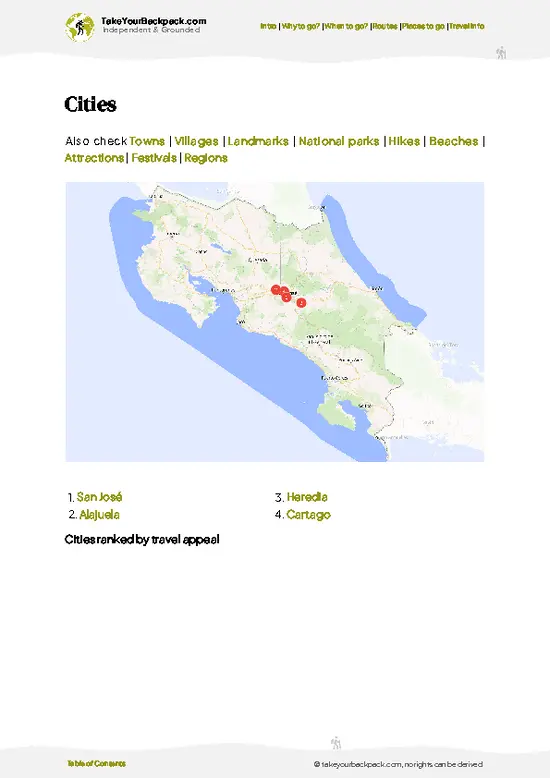
  • Heredia—Stone Fortín tower, coffee-scented plaza, university crowd, calm grid| 8 km away
  • Alajuela—Airport-adjacent, mango-tree plaza, Saturday farmers’ market, early-closing nights| 17 km away
  • Cartago—Pilgrimage basilica, roofless church ruins, La Negrita spring, drizzly highlands| 20 km away

💡 Not sure where to go next?
Create a personalized itinerary for Costa Rica including San José and the places that fit your trip.

Generate my itinerary

👉 Discover all cities

Or checkout all Costa Rica has to offer (think cities, towns, villages, national parks, hikes, beaches, festivals)
Country photo of Costa Rica

We 💚 feedbackSumming up the experience

San José suits curious, flexible travelers who like museums, markets and good coffee, and who treat a capital as a place to regroup rather than a destination. If you want beaches or wildlife, move on quickly. I would spend two nights, base myself near Barrio Amón or Escalante, and take taxis after dark.

✈️ When did I visit Costa Rica?
Costa Rica I visited during my half year trip through South and Central America back in 2003

✍️ Help improve this page!
The information on this page is based on my own backpacking experience in Costa Rica, supplemented with up-to-date research and feedback from other travelers. Travel details can change, so if you notice anything outdated or incomplete, feel free to let me know.


🙋‍♂️ Give feedback

👋 Meet the founderWho’s Behind Take Your Backpack?

Johan, backpacker and founder of TakeYourBackpackHi, I’m Johan (Netherlands 🇳🇱), the creator of TakeYourBackpack. Over the past 3 decades, I’ve backpacked through 90+ countries across six continents, gaining extensive experience with independent travel, long-term trips, and overland routes.

This site is built on a combination of firsthand travel experience and carefully curated insights from other backpackers. Many guides are based on places I’ve personally visited, while others bring together tips, observations, and practical advice shared by trusted travelers I’ve met along the way.

The goal is to provide realistic, experience-driven guidance — not generic itineraries — so you can explore destinations with better context, clearer expectations, and more confidence.