×

Côte d’Ivoire🇨🇮 | festivalsAbissa FestivalN’zima new year, nighttime truth-telling, quarter dance contests, Grand-Bassam square | things to do and best time to go

Explore Festival of the AkwabaExplore Mount Nimba Trail

Backpacking in Abissa
👀 For curious travelersfestival ranked #9
By Johan Kruseman 🇳🇱 | Updated October 22, 2026

Abissa Festival has no ticket office, no gated grounds and no headline acts: the whole thing plays out in the open, in Grand-Bassam, and most of it is free to watch. The town sits on the coast of Côte d’Ivoire, east of Abidjan. The N’zima people mark their new year here, so expect drumming that starts under streetlamps and carries past midnight, the smell of woodsmoke and fried fish, sand underfoot and sweat in the humid air. Crowds press in tight at the main square, and a night of chanting can leave you hoarse. The tone swings from teasing to ceremonial, with a week of public “truth-telling” before dancing takes over. Curious, flexible travelers who like street culture will love it. Anyone wanting polished stages, reserved seating or quiet nights should skip it.

Discover everything you want to know in the 📖 Côte d’Ivoire Travel Guide.


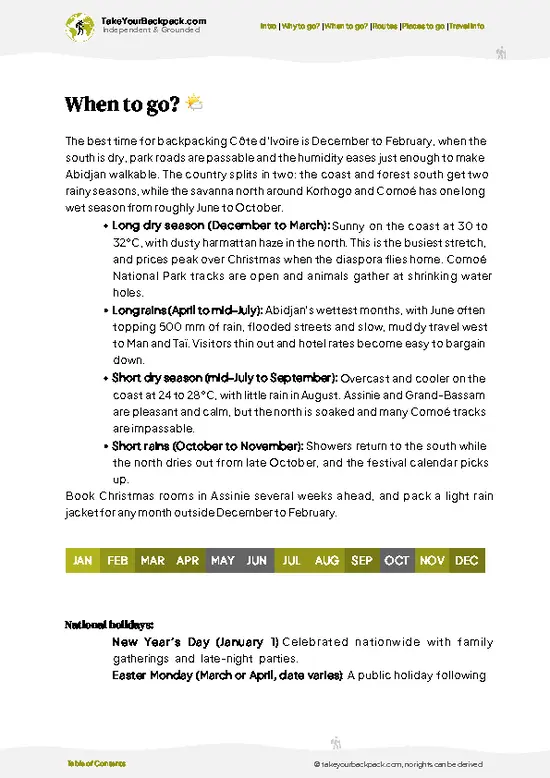
example page 0 from our offline Travel Guide for Côte d’Ivoire
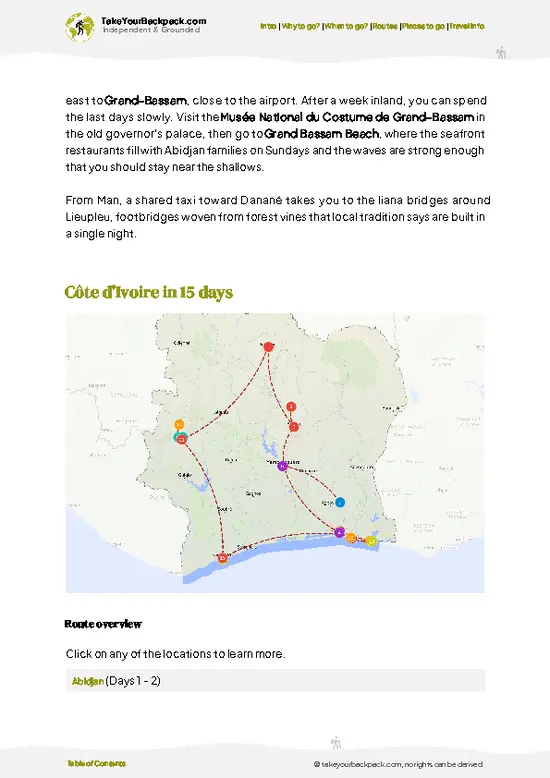
example page 1 from our offline Travel Guide for Côte d’Ivoire
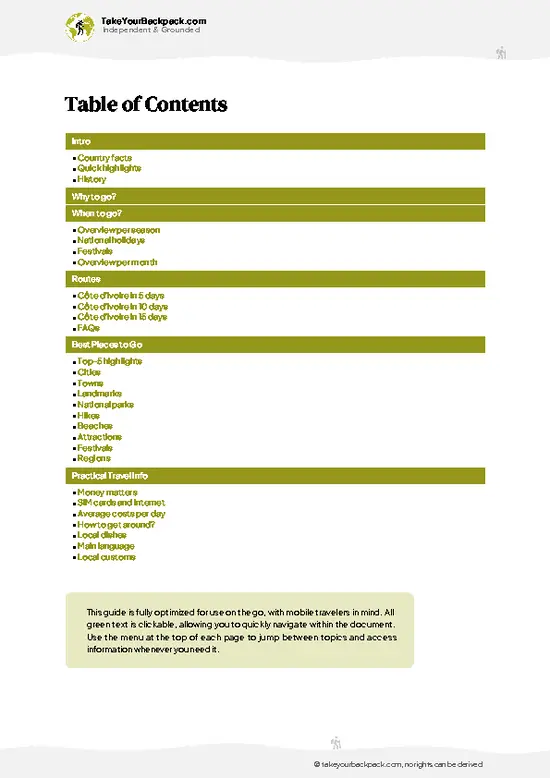
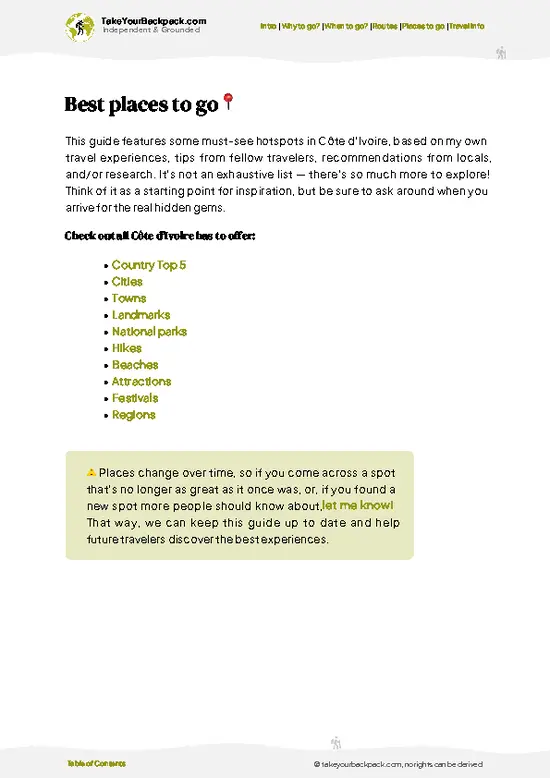
example page 2 from our offline Travel Guide for Côte d’Ivoire
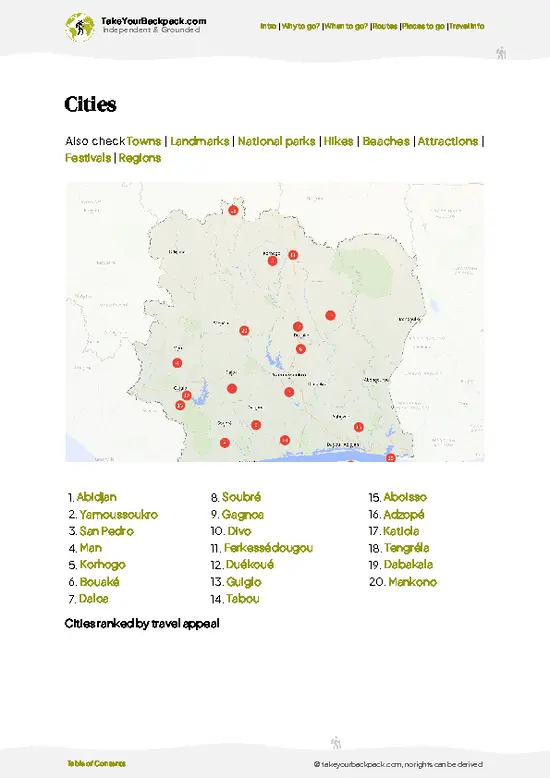
example page 3 from our offline Travel Guide for Côte d’Ivoire
example page 4 from our offline Travel Guide for Côte d’Ivoire
example page 5 from our offline Travel Guide for Côte d’Ivoire
example page 6 from our offline Travel Guide for Côte d’Ivoire
example page 7 from our offline Travel Guide for Côte d’Ivoire
Loading the map 🌍
CLICK TO FILTER
cities
towns
landmarks
national parks
hikes
beaches
attractions
festivals
regions
SHOW COUNTRY’S BESTSHOW ALL

✨ Why go?
Ranked #9 festival in Côte d’Ivoire
Reasons people choose to celebrate the here

Abissa Festival is one of the few events in West Africa where a visitor can stand shoulder to shoulder with a community renewing itself, and nobody asks you to pay for the privilege. The N’zima new year rite of airing grievances, then forgiving them, gives the week a purpose you can feel even without the language. Drumming groups from each quarter of town rehearse and perform in public, so you meet people simply by lingering.

It also fits a coastal route neatly. Grand-Bassam’s colonial quarter and long beaches fill the daytime hours, while evenings belong to the festival. Compared with ticketed music festivals elsewhere, this is cheap, unscripted and led by locals rather than promoters. Dates follow the community calendar, usually around late October into November, so check locally before locking in flights.

💡 HighlightsPlaces and moments you shouldn't skip

  1. Procession of the Abissa Tam-Tams: Drummers and dancers from the town’s N’zima quarters parade in matching cloth, with deep wooden drums and call-and-response singing that you feel in your chest.
  2. Nighttime Truth-Telling (Yaba): Elders and speakers publicly voice society’s faults and personal quarrels, wrapped in humor and proverb. Even if you miss the words, the crowd’s laughter and gasps tell the story.
  3. Dance Contests Between Quarters: Groups compete in the central square with choreographed steps and rhythmic chants. Rivalries are friendly but loud, and the energy peaks late at night.
  4. Ceremonial Dress and Cloth: Participants wear bold wrappers and beads, often in white or coordinated patterns for key rites. Photography is easy to ask about and usually welcomed.
  5. Closing Ceremony and Feast: The
… read more 👉
  1. Procession of the Abissa Tam-Tams: Drummers and dancers from the town’s N’zima quarters parade in matching cloth, with deep wooden drums and call-and-response singing that you feel in your chest.
  2. Nighttime Truth-Telling (Yaba): Elders and speakers publicly voice society’s faults and personal quarrels, wrapped in humor and proverb. Even if you miss the words, the crowd’s laughter and gasps tell the story.
  3. Dance Contests Between Quarters: Groups compete in the central square with choreographed steps and rhythmic chants. Rivalries are friendly but loud, and the energy peaks late at night.
  4. Ceremonial Dress and Cloth: Participants wear bold wrappers and beads, often in white or coordinated patterns for key rites. Photography is easy to ask about and usually welcomed.
  5. Closing Ceremony and Feast: The festival ends with a symbolic cleansing and a shared celebration. Street food, palm wine and music spill into the surrounding lanes, and you are likely to be invited to join in.
To catch the main rites and the finale, plan on about five to seven days around the festival week, with evenings the busiest.
Spotted a mistake or missing something? Contact us.

Things to do near Abissa Festival

Ratings based on Tripadvisor reviews. When you book through this link, you support our work at no extra cost to you.

🌤️ When to go?When is the celebration of Abissa Festival?

Abissa Festival runs for about a week in late October or early November in Grand-Bassam, with the Ivorian N’Zima people celebrating on the town’s Quartier France and Impérial riverside grounds near the lagoon.
  • Best day: The closing night, with the parade of clans and the drumming, draws the biggest crowds. Weekdays earlier in the week are calmer and easier for talking with performers.
  • Weather: Expect 24 to 31°C (75 to 88°F), high humidity and a chance of showers. Bring a light rain jacket, a hat and sandals you can get muddy.
  • Booking: Reserve beds two to four weeks ahead for the final weekend. Prices can rise 30 to 50 percent.
  • Transport: Leave Abidjan before midday, since evening traffic on the road back jams badly after the final night.
Arrive the day before the closing night so you can settle in and still get a good viewing spot.

source: climatestotravel.comJANJanuary: excellent for travelingFEBFebruary: not recommended for travelingMARMarch: not recommended for travelingAPRApril: not recommended for travelingMAYMay: not recommended for travelingJUNJune: not recommended for travelingJULJuly: not recommended for travelingAUGAugust: not recommended for travelingSEPSeptember: not recommended for travelingOCTOctober: not recommended for travelingNOVNovember: not recommended for travelingDECDecember: not recommended for traveling

✈️ The backpacker research shortcutCôte d’Ivoire Travel Guide

An offline-friendly backpacking guide with optimized travel routes, ranked highlights, transport advice, and the best areas to stay.
example page 0 from our offline Travel Guide for Côte d’Ivoire
example page 1 from our offline Travel Guide for Côte d’Ivoire
example page 2 from our offline Travel Guide for Côte d’Ivoire
example page 3 from our offline Travel Guide for Côte d’Ivoire
example page 4 from our offline Travel Guide for Côte d’Ivoire
example page 5 from our offline Travel Guide for Côte d’Ivoire
example page 6 from our offline Travel Guide for Côte d’Ivoire
example page 7 from our offline Travel Guide for Côte d’Ivoire
The digital guide (279 pages) contains:
✅ 64 highlights, ranked by travel appeal
✅ Optimized 5, 10 & 15-day travel routes
✅ Cities, national parks, landmarks, beaches
✅ How to get around
✅ Offline-friendly for travel without Wi-Fi
👉 Click to see all 30+ guide features

📅 Plan smarter in minutes, not weeks
✅ Month by month travel advice
✅ Festivals & national holidays
✅ Budget expectations

🗺️ Go to the right places, skip the overrated ones
✅ Honest pros & cons of destinations
✅ Top hikes, parks & viewpoints
✅ Lesser-known places most travelers miss
✅ Clear “worth it vs skip it” guidance

🛏️ Travel smoothly without rookie mistakes
✅ Best areas to stay
✅ Transport systems explained simply
✅ Common scams & safety advice
✅ SIM cards, money & practical tips

🌍 Understand the country, not just visit it
✅ Culture & traditions
✅ 52 Essential phrases & customs
✅ Festivals worth planning around
✅ Traveler-friendly historical context
✅ Insights that make places more meaningful

📱 Built for real travel conditions
✅ Fully downloadable PDF
✅ Works completely offline
✅ Optimized for phone use
✅ Useful in remote areas & buses
✅ Everything in one place
Stop searching, start planning
Get instant access to your full guide. 30‑day money-back guarantee.
+ Add another guide for just

By proceeding you agree to our terms.
Sent to your inbox immediately after payment • 100% Secure Checkout
Best Backpacking Travel Advisor 2025 tourism awardBest Backpacking
Travel Advisor
2025
What others say about Take Your Backpack Guides:
⭐⭐⭐⭐⭐
Fantastic, amazing amount of information!
⭐⭐⭐⭐⭐
My goodness this is amazing, it's what I've been looking for hats off too you!
⭐⭐⭐⭐⭐
I think this is absolutely BRILLIANT
⭐⭐⭐⭐
Very complete and informative. It's still missing places, but I gotta to commend you
⭐⭐⭐⭐⭐
This is truly amazing, thank you, can't wait to explore it with my kids!
⭐⭐⭐⭐⭐
Awesome resource, thank you!
⭐⭐⭐⭐⭐
This is amazing! Can't wait to explore the ones I haven't seen
⭐⭐⭐⭐
I love this! Well done, great idea.
⭐⭐⭐⭐⭐
Thanks for taking the time to make this gem!
⭐⭐⭐⭐⭐
This might be the best website I've ever seen.
⭐⭐⭐⭐⭐
Congratulations, and thank you so much for your work; it's incredibly valuable.
⭐⭐⭐⭐
In all seriousness I think you did a great job pointing out the important spots
⭐⭐⭐⭐⭐
10/10 very good
⭐⭐⭐⭐⭐
As someone who's only just starting to visit regularly this is awesome, thank you.
⭐⭐⭐⭐
Thank you very much! I'm going to visit my dad, it's going to be very useful!
⭐⭐⭐⭐⭐
This is really cool! We'll be travelling for the first time and this definitely come in handy.
⭐⭐⭐⭐⭐
You are now our minister of culture, congratulations 👨‍💼
⭐⭐⭐⭐⭐
Just wanted to tell you that this is a pearl! Going to follow your recommendations.
⭐⭐⭐⭐⭐
This is so cool. I'll definitely be using the resource for my travels soon.
⭐⭐⭐⭐⭐
This is very impressive! Good work.
⭐⭐⭐⭐⭐
This is an amazing and informative site. Very well done!

🛏️ Where to stay?How to pick the right area

Staying in Grand-Bassam itself is the smartest move, because the festival grounds are walkable and you avoid the evening road back to Abidjan. The old colonial quarter, Quartier France, is the most atmospheric option, with guesthouses and small hotels within a short walk of the events, plus restaurants and bars where you will meet other travelers and festival-goers. Book early, since rooms fill fast on the final weekend. The beach area at Bassam’s ocean side has laid-back lodgings and a sociable crowd, though it is a short taxi ride from the main action, and swimming there is unsafe because of … read more 👉
Staying in Grand-Bassam itself is the smartest move, because the festival grounds are walkable and you avoid the evening road back to Abidjan. The old colonial quarter, Quartier France, is the most atmospheric option, with guesthouses and small hotels within a short walk of the events, plus restaurants and bars where you will meet other travelers and festival-goers. Book early, since rooms fill fast on the final weekend. The beach area at Bassam’s ocean side has laid-back lodgings and a sociable crowd, though it is a short taxi ride from the main action, and swimming there is unsafe because of strong currents. If Bassam is full, Abidjan’s Marcory and Cocody districts have hostels and budget hotels, and shared taxis and minibuses run to Bassam in roughly 45 to 90 minutes depending on traffic. Travelers on their own should arrange the return ride before dark. The center is generally calm at night during the festival, but keep valuables close in the crowds.

👛 Costs (as of 22 October 2026)Money, prices, and spending tips

Abissa Festival costs roughly €45 to 80 a day for an independent traveler, including a bed in Grand-Bassam or nearby Abidjan.
CategoryBudget RangeLocal Reality
Festival tickets€0 to 8Most street parades and ceremonies are free, while reserved seats at some evening shows cost a few euros.
Accommodation€15 to 50Basic guesthouse rooms in Grand-Bassam run about €15 to 30 normally and up to €50 on the final weekend.
Local transport€3 to 10Shared taxis and minibuses from Abidjan cost around €2 to 4 each way, and local rides in town cost under €1.
Food & drinks€8 to 18Maquis meals of fish or chicken with attiéké cost about €3 to 6, and beers cost around €1 to 2.
Miscellaneous expenses€3 to 10Budget for water, rain gear, tips for guides and small souvenirs. Pay in cash.
Total Daily Budget€79Based on high-season rates around the closing weekend.
⚠️ Prices can change and everyone travels differently, so take this as a rough guide. Hope it helps you plan your adventure!

🍲 FoodEating & Drinking in Abissa

Grand-Bassam’s festival stalls and riverside maquis (open-air restaurants) serve the food you will remember, and the town’s lagoon location means fresh fish is everywhere. Look for grilled tilapia and braised fish served with attiéké (grated cassava) and spicy onion-tomato sauce, usually for about €3 to 6. Kedjenou, a slow-cooked chicken stew, shows up at sit-down places, and aloco (fried plantain with chili sauce) is the easy snack to eat standing up. The N’Zima community also sells palm wine and bangui, plus local beer such as Flag and Bock, often around €1 to 2 a bottle.
Carry small cash, since stalls rarely take cards and vendors struggle with big notes. Lines move slowly but are friendly, and portions are generous, so sharing a fish between two people is normal. Ask the price before ordering … read more 👉
Grand-Bassam’s festival stalls and riverside maquis (open-air restaurants) serve the food you will remember, and the town’s lagoon location means fresh fish is everywhere. Look for grilled tilapia and braised fish served with attiéké (grated cassava) and spicy onion-tomato sauce, usually for about €3 to 6. Kedjenou, a slow-cooked chicken stew, shows up at sit-down places, and aloco (fried plantain with chili sauce) is the easy snack to eat standing up. The N’Zima community also sells palm wine and bangui, plus local beer such as Flag and Bock, often around €1 to 2 a bottle.
Carry small cash, since stalls rarely take cards and vendors struggle with big notes. Lines move slowly but are friendly, and portions are generous, so sharing a fish between two people is normal. Ask the price before ordering grilled fish, as it is sold by size. Eat where the locals queue.

FAQTraveler FAQ

Abissa Festival takes place in Grand-Bassam each year, usually in late October or early November. It runs for about a week and ends with a closing night that draws the largest crowds. The date moves with the N’Zima calendar, so check shortly before booking. Grand-Bassam sits roughly 45 to 90 minutes east of Abidjan by road.
Attending Abissa Festival is cheap, since most parades and ceremonies are free to watch. Some seated evening events charge about €2 to 8. A realistic daily spend including a bed, meals and transport is about €45 to 80, with accommodation the biggest cost on the final weekend.
Abissa Festival does not require tickets in advance for most of its street events, parades and drumming, which are open to the public. Seated or reserved evening shows may sell tickets on site for a few euros. What you should book early is your bed, ideally two to four weeks ahead for the closing weekend in Grand-Bassam.
⚠️ Things can change over time, so always validate details locally before you go.

Other Ivorian festivals near Abissa

Explore more nearby:

  • Popo Carnival—Bonoua town, satirical floats, masquerade, community competitions| 18 km away
  • Fêtes des ignames—yam harvest, village feasts, thanksgiving rituals, seasonal renewal| 27 km away
  • Festival of the Djaka—Agnéby region, agricultural rituals, yam offerings, rural feasts| 29 km away

💡 Not sure where to go next?
Create a personalized itinerary for Côte d’Ivoire including Abissa and the places that fit your trip.

Generate my itinerary

👉 Discover all festivals

Or checkout all Côte d’Ivoire has to offer (think cities, towns, villages, national parks, hikes, beaches, festivals)
Country photo of Côte d’Ivoire

We 💚 feedbackKey takeaways before you go

Abissa Festival is easy to treat as a night-time spectacle, but the quieter rehearsals in the neighborhoods beforehand are where you meet the dancers and learn the rhythms. I would stay in town for the whole week, bring earplugs for sleeping, and wear closed shoes for the packed square.

✍️ Help improve this page!
The information on this page is based on in-depth research, insights shared by experienced travelers, and feedback from the local travel community in Côte d’Ivoire. While every effort is made to keep the information accurate and current, conditions can change — so if you spot anything incorrect or outdated, please get in touch.


🙋‍♂️ Give feedback

👋 Meet the founderWho’s Behind Take Your Backpack?

Johan, backpacker and founder of TakeYourBackpackHi, I’m Johan (Netherlands 🇳🇱), the creator of TakeYourBackpack. Over the past 3 decades, I’ve backpacked through 90+ countries across six continents, gaining extensive experience with independent travel, long-term trips, and overland routes.

This site is built on a combination of firsthand travel experience and carefully curated insights from other backpackers. Many guides are based on places I’ve personally visited, while others bring together tips, observations, and practical advice shared by trusted travelers I’ve met along the way.

The goal is to provide realistic, experience-driven guidance — not generic itineraries — so you can explore destinations with better context, clearer expectations, and more confidence.