
×

Côte d’Ivoire🇨🇮 | beachesSan Pedro BeachDawn fish landings, cocoa port, beach maquis, long Atlantic swells | things to do and best time to go

Explore Grand Bassam BeachExplore Abidjan

Backpacking in San Pedro Beach
👌 Worth visitingbeach ranked #3
By Johan Kruseman 🇳🇱 | Updated October 22, 2026

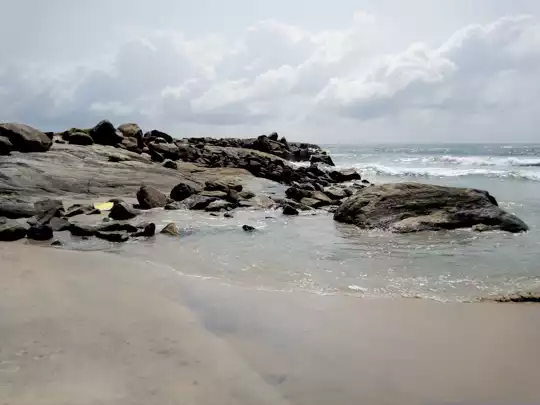
San Pedro Beach is a working shoreline beside a cocoa-export port, and swimmers who expect a calm resort lagoon meet Atlantic surf and rip currents instead. It lies in the southwest of Côte d’Ivoire, on the Gulf of Guinea coast. The sand is coarse and warm, the palms lean over it, and the air smells of salt, woodsmoke and fish frying. Waves thump in long sets, so wading and watching beats serious swimming. The sand is cleaner where locals gather than near the fish landings, where nets, plastic and gulls compete for space. Crowds stay modest on weekdays and swell on weekends with families and music from beach maquis. Cheap grilled fish and basic guesthouses sit in town, a short ride away, though prices climb for anything with air-conditioning and sea views. Snorkeling is poor, and surf is for experienced riders only. Compared with Monogaga’s quieter, more rural sands, San Pedro Beach is louder, easier to reach and far better fed.

Discover everything you want to know in the 📖 Côte d’Ivoire Travel Guide.


example page 0 from our offline Travel Guide for Côte d’Ivoire
example page 1 from our offline Travel Guide for Côte d’Ivoire
example page 2 from our offline Travel Guide for Côte d’Ivoire
example page 3 from our offline Travel Guide for Côte d’Ivoire
example page 4 from our offline Travel Guide for Côte d’Ivoire
example page 5 from our offline Travel Guide for Côte d’Ivoire
example page 6 from our offline Travel Guide for Côte d’Ivoire
example page 7 from our offline Travel Guide for Côte d’Ivoire
Loading the map 🌍
CLICK TO FILTER
cities
towns
landmarks
national parks
hikes
beaches
attractions
festivals
regions
SHOW COUNTRY’S BESTSHOW ALL

✨ Why go?
Ranked #3 beach in Côte d’Ivoire
What makes it a must-see beach

San Pedro Beach earns its stop because it is the practical, sociable pause on the southwest coast road. You arrive in a port city with banks, markets and onward transport, and the sea sits within easy reach. That convenience is rare on this stretch, where many villages are a long haul over rough roads. The second draw is the fishing pirogues hauled up at dawn, when buyers haggle over the catch and you can eat fish grilled within hours of landing, usually with attiéké and a fiery pepper sauce. Third is the maquis scene on the sand, where students, port workers and travelers share plastic tables, cold local beer and loud coupé-décalé on weekends. It is an easy place to meet Ivorians who will tell you which village beaches to visit next. Use it to rest, resupply, change money and plan the push … read more 👉
San Pedro Beach earns its stop because it is the practical, sociable pause on the southwest coast road. You arrive in a port city with banks, markets and onward transport, and the sea sits within easy reach. That convenience is rare on this stretch, where many villages are a long haul over rough roads. The second draw is the fishing pirogues hauled up at dawn, when buyers haggle over the catch and you can eat fish grilled within hours of landing, usually with attiéké and a fiery pepper sauce. Third is the maquis scene on the sand, where students, port workers and travelers share plastic tables, cold local beer and loud coupé-décalé on weekends. It is an easy place to meet Ivorians who will tell you which village beaches to visit next. Use it to rest, resupply, change money and plan the push toward Monogaga, Grand-Béréby or Taï National Park.

💡 HighlightsPlaces and moments you shouldn't skip

  1. Dawn fish landings: Pirogues push onto the sand in the early morning and women bargain over baskets of snapper, barracuda and shrimp. It is loud, smelly and wonderfully real, and it shows what the coast runs on besides cocoa.
  2. Grilled fish at the beach maquis: Pick a fish from the ice, watch it go on the coals, and eat it with attiéké, onions and pepper sauce at a table on the sand. Lunch is the best time, when the smoke drifts along the shore.
  3. Watching the cargo port: Ships wait offshore and cranes work the quay, a reminder that San Pedro is one of the world’s major cocoa-exporting ports. The view from the beach gives the shoreline an industrial edge you will not find at resort beaches.
  4. Wave-watching and shoreline walks: Long Atlantic swells roll in under big skies, and the firm sand near the
… read more 👉
  1. Dawn fish landings: Pirogues push onto the sand in the early morning and women bargain over baskets of snapper, barracuda and shrimp. It is loud, smelly and wonderfully real, and it shows what the coast runs on besides cocoa.
  2. Grilled fish at the beach maquis: Pick a fish from the ice, watch it go on the coals, and eat it with attiéké, onions and pepper sauce at a table on the sand. Lunch is the best time, when the smoke drifts along the shore.
  3. Watching the cargo port: Ships wait offshore and cranes work the quay, a reminder that San Pedro is one of the world’s major cocoa-exporting ports. The view from the beach gives the shoreline an industrial edge you will not find at resort beaches.
  4. Wave-watching and shoreline walks: Long Atlantic swells roll in under big skies, and the firm sand near the waterline is good for a barefoot stroll. Keep to wading depth, because the currents here are strong.
  5. Weekend evenings on the sand: Speakers, grills and cold beer turn the beachfront social on Friday and Saturday nights. It is a relaxed way to meet locals, with music in the air and the surf as backing track.
San Pedro Beach itself is free to enter, and the only thing worth arranging ahead is a pirogue ride, which you negotiate with a boatman the day before.
Spotted a mistake or missing something? Contact us.

🌤️ When to go?Choosing the right time of year

  • Main Dry Season (December to February): Days run 30 to 33°C (86 to 91°F), with the Harmattan haze sometimes dulling the sky. Sea is calmest and beach time is easiest. Daylight stays close to 12 hours all year.
  • Short Dry Spell (August to September): Rain eases, highs sit near 27 to 28°C (81 to 82°F), and the beach is quiet.
  • Long Rains (March to July): Heavy downpours peak in May and June, with 25 to 30°C (77 to 86°F) and humid air. Swell builds and red flags go up more often. Rooms are easier to haggle down.
  • Short Rains (October to November): Showers are shorter and warm, around 27 to 30°C (81 to 86°F).
  • Holidays: Christmas and New Year bring Ivorian families to the coast, and beach bars and rooms fill on weekends.
Arrive on a weekday in January or February for calm water and room to spread your towel.

source: climatestotravel.comJANJanuary: excellent for travelingFEBFebruary: excellent for travelingMARMarch: highly recommended for travelingAPRApril: fair for travelingMAYMay: fair for travelingJUNJune: fair for travelingJULJuly: fair for travelingAUGAugust: fair for travelingSEPSeptember: fair for travelingOCTOctober: fair for travelingNOVNovember: highly recommended for travelingDECDecember: excellent for traveling
cote-divoire-beach-san-pedro-beach v1
© Google |

✈️ The backpacker research shortcutCôte d’Ivoire Travel Guide

An offline-friendly backpacking guide with optimized travel routes, ranked highlights, transport advice, and the best areas to stay.
example page 0 from our offline Travel Guide for Côte d’Ivoire
example page 1 from our offline Travel Guide for Côte d’Ivoire
example page 2 from our offline Travel Guide for Côte d’Ivoire
example page 3 from our offline Travel Guide for Côte d’Ivoire
example page 4 from our offline Travel Guide for Côte d’Ivoire
example page 5 from our offline Travel Guide for Côte d’Ivoire
example page 6 from our offline Travel Guide for Côte d’Ivoire
example page 7 from our offline Travel Guide for Côte d’Ivoire
The digital guide (279 pages) contains:
✅ 64 highlights, ranked by travel appeal
✅ Optimized 5, 10 & 15-day travel routes
✅ Cities, national parks, landmarks, beaches
✅ How to get around
✅ Offline-friendly for travel without Wi-Fi
👉 Click to see all 30+ guide features

📅 Plan smarter in minutes, not weeks
✅ Month by month travel advice
✅ Festivals & national holidays
✅ Budget expectations

🗺️ Go to the right places, skip the overrated ones
✅ Honest pros & cons of destinations
✅ Top hikes, parks & viewpoints
✅ Lesser-known places most travelers miss
✅ Clear “worth it vs skip it” guidance

🛏️ Travel smoothly without rookie mistakes
✅ Best areas to stay
✅ Transport systems explained simply
✅ Common scams & safety advice
✅ SIM cards, money & practical tips

🌍 Understand the country, not just visit it
✅ Culture & traditions
✅ 52 Essential phrases & customs
✅ Festivals worth planning around
✅ Traveler-friendly historical context
✅ Insights that make places more meaningful

📱 Built for real travel conditions
✅ Fully downloadable PDF
✅ Works completely offline
✅ Optimized for phone use
✅ Useful in remote areas & buses
✅ Everything in one place
Stop searching, start planning
Get instant access to your full guide. 30‑day money-back guarantee.
+ Add another guide for just

By proceeding you agree to our terms.
Sent to your inbox immediately after payment • 100% Secure Checkout
Best Backpacking Travel Advisor 2025 tourism awardBest Backpacking
Travel Advisor
2025
What others say about Take Your Backpack Guides:
⭐⭐⭐⭐⭐
Fantastic, amazing amount of information!
⭐⭐⭐⭐⭐
My goodness this is amazing, it's what I've been looking for hats off too you!
⭐⭐⭐⭐⭐
I think this is absolutely BRILLIANT
⭐⭐⭐⭐
Very complete and informative. It's still missing places, but I gotta to commend you
⭐⭐⭐⭐⭐
This is truly amazing, thank you, can't wait to explore it with my kids!
⭐⭐⭐⭐⭐
Awesome resource, thank you!
⭐⭐⭐⭐⭐
This is amazing! Can't wait to explore the ones I haven't seen
⭐⭐⭐⭐
I love this! Well done, great idea.
⭐⭐⭐⭐⭐
Thanks for taking the time to make this gem!
⭐⭐⭐⭐⭐
This might be the best website I've ever seen.
⭐⭐⭐⭐⭐
Congratulations, and thank you so much for your work; it's incredibly valuable.
⭐⭐⭐⭐
In all seriousness I think you did a great job pointing out the important spots
⭐⭐⭐⭐⭐
10/10 very good
⭐⭐⭐⭐⭐
As someone who's only just starting to visit regularly this is awesome, thank you.
⭐⭐⭐⭐
Thank you very much! I'm going to visit my dad, it's going to be very useful!
⭐⭐⭐⭐⭐
This is really cool! We'll be travelling for the first time and this definitely come in handy.
⭐⭐⭐⭐⭐
You are now our minister of culture, congratulations 👨‍💼
⭐⭐⭐⭐⭐
Just wanted to tell you that this is a pearl! Going to follow your recommendations.
⭐⭐⭐⭐⭐
This is so cool. I'll definitely be using the resource for my travels soon.
⭐⭐⭐⭐⭐
This is very impressive! Good work.
⭐⭐⭐⭐⭐
This is an amazing and informative site. Very well done!

🛏️ Where to stay?Best areas to stay in Côte d’Ivoire

The most practical base is the town of San Pedro itself, in the neighborhoods closest to the shore, because the beach is a short moto-taxi or walk away and you have shops, ATMs and restaurants on hand. Budget rooms here cost roughly €15 to 35 a night. The central area around the main market and the port road suits solo travelers: it is lively until late, transport leaves from here, and you can eat grilled fish and attiéké cheaply at maquis (local open-air restaurants) without needing a taxi. The Bardot neighborhood and the strip toward the coast are calmer and give quicker access to the sand, … read more 👉
The most practical base is the town of San Pedro itself, in the neighborhoods closest to the shore, because the beach is a short moto-taxi or walk away and you have shops, ATMs and restaurants on hand. Budget rooms here cost roughly €15 to 35 a night. The central area around the main market and the port road suits solo travelers: it is lively until late, transport leaves from here, and you can eat grilled fish and attiéké cheaply at maquis (local open-air restaurants) without needing a taxi. The Bardot neighborhood and the strip toward the coast are calmer and give quicker access to the sand, with small guesthouses and family-run places where you will meet other travelers mostly over breakfast. Social hostel culture is thin in this part of the country, so expect to meet people at beach bars, on weekend surf sessions and at the transport hub instead of in dorm common rooms. Staying near the sand on a weekend books out quickly, so message ahead. Choose somewhere with a generator or backup power, as outages happen, and ask for a fan or air conditioning in the humid months.

🛡️ SafetySafety Tips and Common Scams in San Pedro Beach

San Pedro Beach is a lived-in town beach, and the main hazard is the Atlantic itself. Waves are powerful, the shore drops quickly, and rip currents form along the coast, especially in the rainy months from March to July. Swim where local families do, stay within your depth, and treat a red flag or an empty stretch of water as a sign to stay on the sand. Surfers use the swell, so keep clear of boards. Sun is intense year-round at this latitude, so cover up between late morning and mid-afternoon and carry water. Sea life is not a big concern, though stepping on rocks near the port side can cut feet. Daytime is relaxed, with vendors and fishermen around. After dark, avoid walking the empty sand alone and take a taxi back. Keep phone and cash on you rather than leaving them on a towel while you swim.

FAQFrequently asked questions about San Pedro Beach

From Abidjan, buses from the Adjamé and Yopougon stations run to San Pedro in about 6 to 8 hours for roughly €10 to 15, and shared taxis take a similar time. The beach lies a few minutes from the center of San Pedro by moto-taxi or taxi, costing about €1 to 3. San Pedro also has a small airport with occasional flights from Abidjan, taking about an hour.
San Pedro Beach is best for surfing and sunbathing, with swimming only in calm spells. Waves are strong and rips occur, especially from March to July, so swim cautiously and watch local swimmers. The surf scene is small but active, and boards can be arranged locally for around €10 to 20 a session. Snorkeling is not a draw because water clarity is poor.
Yes, San Pedro Beach is free to enter and has no gate or ticket, so you can walk down any time of day. Costs come from extras such as a beer or grilled fish at a beach maquis (around €3 to 8), or a sunbed where offered. Moto-taxis from town run about €1 to 3, and you pay in West African CFA francs, so carry cash.
⚠️ Things can change over time, so always validate details locally before you go.

Other Ivorian beaches near San Pedro Beach

Explore more nearby:

  • Grand Bassam Beach—colonial architecture, artisanal markets, wide shoreline| 323 km away
  • Assinie Beach—lagoon-side resorts, palm-lined sand, water sports| 373 km away

💡 Not sure where to go next?
Create a personalized itinerary for Côte d’Ivoire including San Pedro Beach and the places that fit your trip.

Generate my itinerary

👉 Discover all beaches

Or checkout all Côte d’Ivoire has to offer (think cities, towns, villages, national parks, hikes, beaches, festivals)
Country photo of Côte d’Ivoire

We 💚 feedbackKey takeaways before you go

San Pedro Beach suits travelers who like sand with a story: curious, social types heading along the coast who want fresh fish, local company and a working-port edge more than a postcard lagoon. I would go early for the landings, eat lunch on the sand, and keep my swimming to the shallows.

✍️ Help improve this page!
The information on this page is based on in-depth research, insights shared by experienced travelers, and feedback from the local travel community in Côte d’Ivoire. While every effort is made to keep the information accurate and current, conditions can change — so if you spot anything incorrect or outdated, please get in touch.


🙋‍♂️ Give feedback

👋 Meet the founderWho’s Behind Take Your Backpack?

Johan, backpacker and founder of TakeYourBackpackHi, I’m Johan (Netherlands 🇳🇱), the creator of TakeYourBackpack. Over the past 3 decades, I’ve backpacked through 90+ countries across six continents, gaining extensive experience with independent travel, long-term trips, and overland routes.

This site is built on a combination of firsthand travel experience and carefully curated insights from other backpackers. Many guides are based on places I’ve personally visited, while others bring together tips, observations, and practical advice shared by trusted travelers I’ve met along the way.

The goal is to provide realistic, experience-driven guidance — not generic itineraries — so you can explore destinations with better context, clearer expectations, and more confidence.