×

Côte d’Ivoire🇨🇮 | regionsTchologo Regionnorthern plains, Senufo culture, seasonal festivals, borderland trade | things to do and best time to go

Explore Bélier RegionExplore Grand-Bassam

Backpacking in Tchologo Region
👍 Recommendedregion ranked #2
By Johan Kruseman 🇳🇱 | Updated September 3, 2026

Here’s what nobody tells you: Tchologo Region is where you’ll find some of Côte d’Ivoire’s wildest, most affordable adventures—yet you’ll rarely see another backpacker. Most online guides skip right over it, but this northern region, hugging the borders with Mali and Burkina Faso, is the real deal for travelers who want bragging rights and stories that don’t sound like everyone else’s. Tchologo’s landscape is a patchwork of savannah, baobab-dotted plains, and villages where the rhythm of life hasn’t been hijacked by mass tourism. You’ll spend less here—food, transport, even the odd guesthouse—but you’ll trade comfort for authenticity: think bush taxis that leave when full, not when you’re ready, and markets where you’re the only foreigner for miles. Ferkessédougou is the main hub, but the real magic is in the smaller towns and the untamed corners of Comoé National Park. Compared to the south’s beachy, party-friendly regions, Tchologo is raw, real, and refreshingly unpolished.

Discover everything you want to know in the 📖 Côte d’Ivoire Travel Guide.
Loading the map 🌍
CLICK TO FILTER
cities
towns
landmarks
national parks
hikes
beaches
attractions
festivals
regions
SHOW COUNTRY’S BESTSHOW ALL

✨ Why go?
Ranked #2 region in Côte d’Ivoire
What sets this place apart

In the Tchologo Region of Côte d’Ivoire, backpackers find a sweet spot where time, money, and comfort meet. This area is a treasure trove of varied landscapes—think lush forests, rolling hills, and vibrant villages. You can soak it all in without the hassle of constant relocation.

Imagine waking up in a cozy guesthouse, then wandering through bustling markets or hiking to a stunning waterfall—all within a short distance. This flexibility in transport means you can explore at your own pace, whether you’re hopping on a local bus or renting a bike.

What’s even better? You can seamlessly blend nature and culture. Spend a morning trekking through the Taï National Park, then dive into the local scene with a cooking class in a nearby village. This slow travel approach allows you to truly connect … read more 👉
In the Tchologo Region of Côte d’Ivoire, backpackers find a sweet spot where time, money, and comfort meet. This area is a treasure trove of varied landscapes—think lush forests, rolling hills, and vibrant villages. You can soak it all in without the hassle of constant relocation.

Imagine waking up in a cozy guesthouse, then wandering through bustling markets or hiking to a stunning waterfall—all within a short distance. This flexibility in transport means you can explore at your own pace, whether you’re hopping on a local bus or renting a bike.

What’s even better? You can seamlessly blend nature and culture. Spend a morning trekking through the Taï National Park, then dive into the local scene with a cooking class in a nearby village. This slow travel approach allows you to truly connect with the people and places around you, making every moment feel rich and rewarding.

So, if you’re looking for high-value experiences that don’t break the bank or wear you out, the Tchologo Region is your playground. Embrace the adventure!
Want to include Tchologo Region in your Côte d’Ivoire route?
Create a personalized Côte d’Ivoire itinerary that includes Tchologo Region and the places that fit your trip — based on your travel style, budget, and available time. Get your route in seconds.

Generate my trip

💡 HighlightsDon't-miss highlights and experiences

  1. Kong — Old Sultanate Quarter and Great Mosque — The historic heart of Kong preserves the ruins and layout of the Kong Sultanate: mud-brick palace remains, narrow streets and the distinctive Great Mosque architecture. This is the clearest living trace of the region’s pre-colonial political and religious history and feels unlike the coastal cities of Côte d’Ivoire.
  2. Kong Royal Tombs and Sultan’s Palace Site — A short walk from the mosque, the royal tombs and palace footprint give a tangible sense of the old court’s scale and ritual life. Locals still point out clan tombs and tell stories here; it’s simple, atmospheric history you can walk through.
  3. Ferkessédougou Central Market — Ferké’s market is the region’s trading hub for cotton, mangoes, spices and daily goods. The market is where farmers,
read more 👉
  1. Kong — Old Sultanate Quarter and Great Mosque — The historic heart of Kong preserves the ruins and layout of the Kong Sultanate: mud-brick palace remains, narrow streets and the distinctive Great Mosque architecture. This is the clearest living trace of the region’s pre-colonial political and religious history and feels unlike the coastal cities of Côte d’Ivoire.
  2. Kong Royal Tombs and Sultan’s Palace Site — A short walk from the mosque, the royal tombs and palace footprint give a tangible sense of the old court’s scale and ritual life. Locals still point out clan tombs and tell stories here; it’s simple, atmospheric history you can walk through.
  3. Ferkessédougou Central Market — Ferké’s market is the region’s trading hub for cotton, mangoes, spices and daily goods. The market is where farmers, transporters and artisans converge; it’s the best place to see regional produce, watch cotton baling, and buy locally woven textiles and simple leather goods.
  4. Ouangolodougou Border Market and Cross-Border Trade Corridor — The busy market and transport node near the Burkina Faso border is a real everyday spectacle of Sahelian trade: long-distance trucks, traders from multiple ethnic groups, and food stalls serving cross-border tastes. It’s a working market that reveals the region’s economic rhythms and is a genuine local experience most tourists skip.
  5. Senoufo / Senufo Craft Villages around Kong (hidden gem) — Small nearby villages where master carvers and weavers still produce traditional masks, stools and ceremonial objects. Visiting these workshops gives insight into mask styles, carving techniques and the role of masquerade in local life — an intimate cultural stop that few standard tours include.
Spotted a mistake or missing something? Contact us.
⌛️ 5 daysSeeing the highlights in 5 days

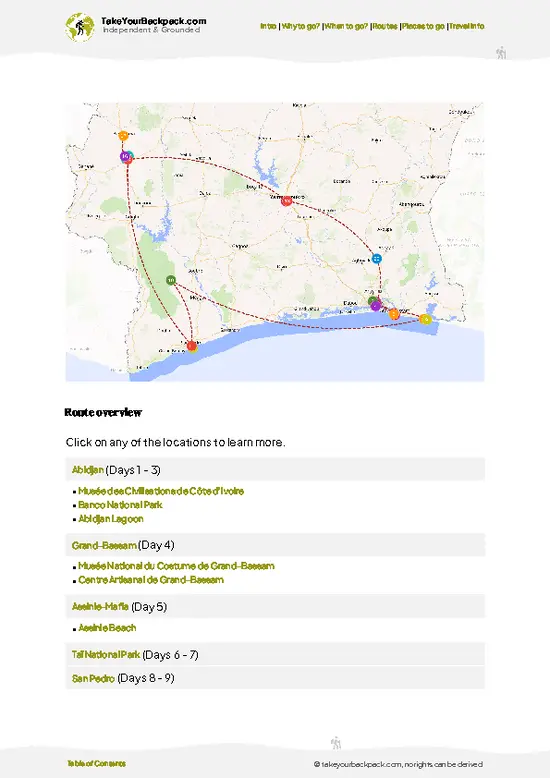
Day 1: Yamoussoukro
The journey kicks off in Yamoussoukro, the political capital. You’ll want to spend your first day here soaking in the surrealism of the Basilica of Our Lady of Peace. It’s a sight that feels more like a scene from a movie than reality. The transport system is straightforward; you can hop on a bus or take a shared taxi from Abidjan. This sets the pace for your trip—efficient but not rushed.

Day 2: Yamoussoukro to Bouaké
On Day 2, head to Bouaké, the second-largest city. The bus ride is about two hours, and it’s a chance to see the countryside unfold. Bouaké has a vibrant market scene. Spend your afternoon exploring the local stalls and tasting street food. This is where you’ll feel the pulse of daily life. The transport here is reliable, but be prepared for a bit of … read more 👉
Day 1: Yamoussoukro
The journey kicks off in Yamoussoukro, the political capital. You’ll want to spend your first day here soaking in the surrealism of the Basilica of Our Lady of Peace. It’s a sight that feels more like a scene from a movie than reality. The transport system is straightforward; you can hop on a bus or take a shared taxi from Abidjan. This sets the pace for your trip—efficient but not rushed.

Day 2: Yamoussoukro to Bouaké
On Day 2, head to Bouaké, the second-largest city. The bus ride is about two hours, and it’s a chance to see the countryside unfold. Bouaké has a vibrant market scene. Spend your afternoon exploring the local stalls and tasting street food. This is where you’ll feel the pulse of daily life. The transport here is reliable, but be prepared for a bit of waiting. It’s all part of the experience.

Day 3: Bouaké to Korhogo
Day 3 takes you to Korhogo, about three hours north. The road is bumpy, but the scenery is worth it. Korhogo is known for its rich cultural heritage. Visit the artisan workshops and engage with local craftspeople. This is where you can pick up unique souvenirs that tell a story. The transport options are limited, so plan your departure early to maximize your time.

Day 4: Korhogo to Tchologo Region
On Day 4, venture deeper into the Tchologo Region. This is where the real adventure begins. The transport may be less frequent, but the landscapes are breathtaking. You’ll encounter traditional villages and lush greenery. Take a guided tour to learn about the local customs. This is your Off-Path Reward; it’s a detour that immerses you in authentic experiences.

Day 5: Return to Yamoussoukro
Wrap up your trip by heading back to Yamoussoukro. Reflect on your journey while enjoying a leisurely day. The must-do experience is the Basilica, but now you’ll appreciate it even more after seeing the heart of the region. This day ties everything together, making the trip feel complete.
Turn your Tchologo Region visit into an Côte d’Ivoire adventure
Build a complete Côte d’Ivoire route with Tchologo Region, hidden gems, must-see destinations, and realistic travel times included.

Generate my trip

🌤️ When to go?Seasonal considerations and timing


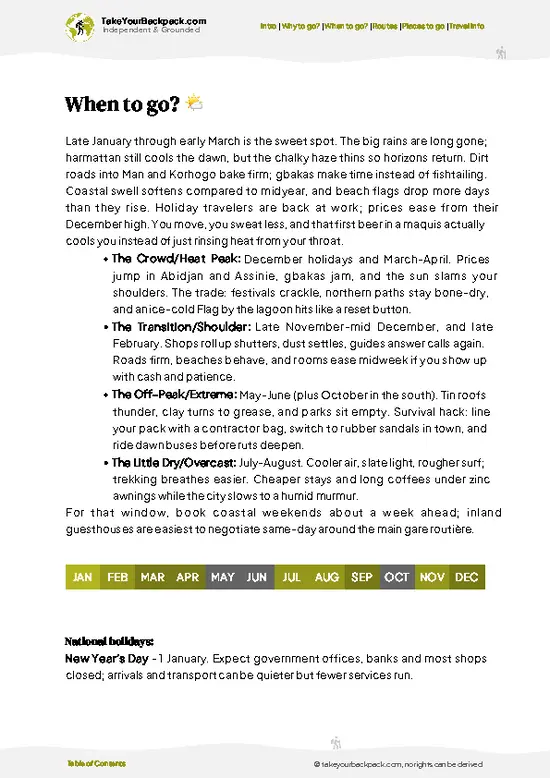
  • Weather: The dry season from November to March is your best bet. Expect mostly clear skies and minimal rain, which means trails stay manageable and your gear won’t be constantly soggy. The wet season (April to October) brings heavy rains that can turn paths into mudslides—fun for the locals, less so for backpackers.

  • Temperature: Daytime temps hover around 28-32°C (82-90°F) during the dry season, cooling off to a comfortable 22-24°C (72-75°F) at night. The wet season is hotter and more humid, pushing highs to 34°C (93°F) and making every step feel like a sauna session.

  • Daylight Hours: Daylight is pretty steady year-round, roughly 11 to 12 hours. Sunrise around 6:30 AM, sunset near 6:30 PM. Early starts are your friend to beat the heat and maximize exploring time.

  • Crowds: The dry season
read more 👉

  • Weather: The dry season from November to March is your best bet. Expect mostly clear skies and minimal rain, which means trails stay manageable and your gear won’t be constantly soggy. The wet season (April to October) brings heavy rains that can turn paths into mudslides—fun for the locals, less so for backpackers.

  • Temperature: Daytime temps hover around 28-32°C (82-90°F) during the dry season, cooling off to a comfortable 22-24°C (72-75°F) at night. The wet season is hotter and more humid, pushing highs to 34°C (93°F) and making every step feel like a sauna session.

  • Daylight Hours: Daylight is pretty steady year-round, roughly 11 to 12 hours. Sunrise around 6:30 AM, sunset near 6:30 PM. Early starts are your friend to beat the heat and maximize exploring time.

  • Crowds: The dry season draws more visitors, especially December and January. But don’t expect tourist hordes—this region stays low-key. The wet season sees fewer travelers, so if solitude is your vibe, that’s your window.

  • Seasonal Activities: Dry months are prime for cultural festivals and outdoor markets, giving you a real taste of local life. Wet season limits outdoor events but brings lush landscapes if you’re into photography or nature walks.

  • Price Fluctuations: Expect a slight bump in accommodation and transport costs during the dry season, especially around holidays. The wet season offers better deals but comes with the trade-off of less predictable weather and some closed services.


Pro-tip: Arrive just before the dry season kicks in—late October to early November—to snag lower prices, avoid crowds, and enjoy the best weather as it settles in.


source: climatestotravel.comJANJanuary: excellent for travelingFEBFebruary: excellent for travelingMARMarch: excellent for travelingAPRApril: fair for travelingMAYMay: fair for travelingJUNJune: fair for travelingJULJuly: fair for travelingAUGAugust: fair for travelingSEPSeptember: fair for travelingOCTOctober: good for travelingNOVNovember: highly recommended for travelingDECDecember: excellent for traveling
when-to-go

✈️ The backpacker research shortcutCôte d’Ivoire Travel Guide

An offline-friendly backpacking guide with optimized travel routes, ranked highlights, transport advice, and the best areas to stay.
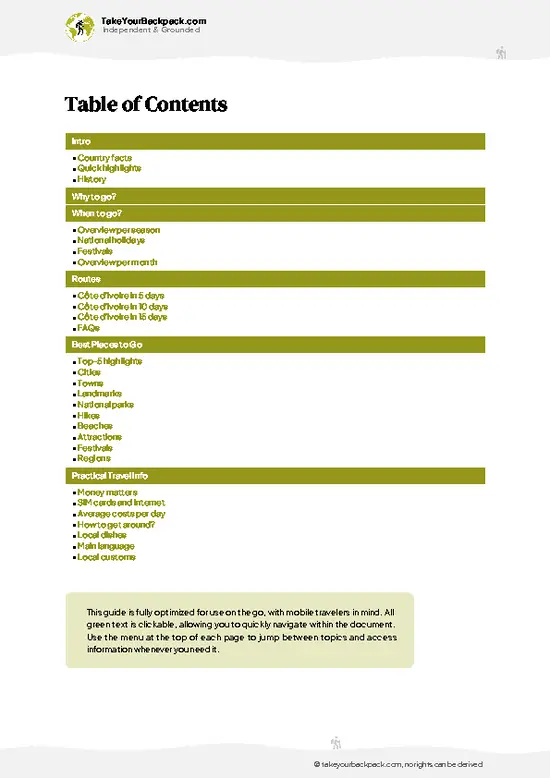
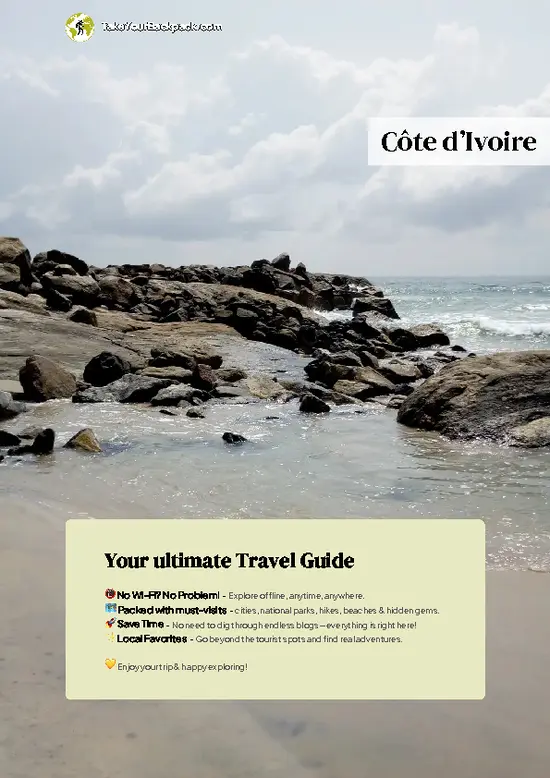
example page 0 from our offline Travel Guide for Côte d’Ivoire
example page 1 from our offline Travel Guide for Côte d’Ivoire
example page 2 from our offline Travel Guide for Côte d’Ivoire
example page 3 from our offline Travel Guide for Côte d’Ivoire
example page 4 from our offline Travel Guide for Côte d’Ivoire
example page 5 from our offline Travel Guide for Côte d’Ivoire
example page 6 from our offline Travel Guide for Côte d’Ivoire
example page 7 from our offline Travel Guide for Côte d’Ivoire
The digital guide (323 pages) contains:
82 highlights, ranked by travel appeal
Optimized 5, 10 & 15-day travel routes
Cities, national parks, landmarks, beaches
How to get around
Offline-friendly for travel without Wi-Fi
👉 Click to see all 30+ guide features

📅 Plan smarter in minutes, not weeks
Month by month travel advice
Festivals & national holidays
Budget expectations

🗺️ Go to the right places, skip the overrated ones
Honest pros & cons of destinations
Top hikes, parks & viewpoints
Lesser-known places most travelers miss
Clear “worth it vs skip it” guidance

🛏️ Travel smoothly without rookie mistakes
Best areas to stay
Transport systems explained simply
Common scams & safety advice
SIM cards, money & practical tips

🌍 Understand the country, not just visit it
Culture & traditions
52 Essential phrases & customs
Festivals worth planning around
Traveler-friendly historical context
Insights that make places more meaningful

📱 Built for real travel conditions
Fully downloadable PDF
Works completely offline
Optimized for phone use
Useful in remote areas & buses
Everything in one place
Save weeks of stressful planning
Get instant access to your full guide. 30‑day money-back guarantee.
+ Add another guide for just US$7.80

By proceeding you agree to our terms.
Sent to your inbox immediately after payment • 100% Secure Checkout
Best Backpacking Travel Advisor 2025 tourism awardBest Backpacking
Travel Advisor
2025
What others say about Take Your Backpack Guides:
⭐⭐⭐⭐⭐
Fantastic, amazing amount of information!
⭐⭐⭐⭐⭐
My goodness this is amazing, it's what I've been looking for hats off too you!
⭐⭐⭐⭐⭐
I think this is absolutely BRILLIANT
⭐⭐⭐⭐
Very complete and informative. It's still missing places, but I gotta to commend you
⭐⭐⭐⭐⭐
This is truly amazing, thank you, can't wait to explore it with my kids!
⭐⭐⭐⭐⭐
Awesome resource, thank you!
⭐⭐⭐⭐⭐
This is amazing! Can't wait to explore the ones I haven't seen
⭐⭐⭐⭐
I love this! Well done, great idea.
⭐⭐⭐⭐⭐
Thanks for taking the time to make this gem!
⭐⭐⭐⭐⭐
This might be the best website I've ever seen.
⭐⭐⭐⭐⭐
Congratulations, and thank you so much for your work; it's incredibly valuable.
⭐⭐⭐⭐
In all seriousness I think you did a great job pointing out the important spots
⭐⭐⭐⭐⭐
10/10 very good
⭐⭐⭐⭐⭐
As someone who's only just starting to visit regularly this is awesome, thank you.
⭐⭐⭐⭐
Thank you very much! I'm going to visit my dad, it's going to be very useful!
⭐⭐⭐⭐⭐
This is really cool! We'll be travelling for the first time and this definitely come in handy.
⭐⭐⭐⭐⭐
You are now our minister of culture, congratulations 👨‍💼
⭐⭐⭐⭐⭐
Just wanted to tell you that this is a pearl! Going to follow your recommendations.
⭐⭐⭐⭐⭐
This is so cool. I'll definitely be using the resource for my travels soon.
⭐⭐⭐⭐⭐
This is very impressive! Good work.
⭐⭐⭐⭐⭐
This is an amazing and informative site. Very well done!

🛏️ Where to stay?Best areas to stay in Côte d’Ivoire

In the Tchologo Region of Côte d’Ivoire, you’ve got some solid options that balance safety, social vibes, and budget-friendliness.

Start with Korhogo, the capital of the region. It’s a bustling hub where you can dive into local culture. The markets are alive with chatter, and you’ll find plenty of street food to fuel your adventures. The atmosphere is welcoming, making it easy to connect with fellow travelers and locals alike.

Next up is Ferkessédougou. This town has a more laid-back feel, perfect for those looking to chill after a day of exploring. It’s less touristy, which means you can … read more 👉
In the Tchologo Region of Côte d’Ivoire, you’ve got some solid options that balance safety, social vibes, and budget-friendliness.

Start with Korhogo, the capital of the region. It’s a bustling hub where you can dive into local culture. The markets are alive with chatter, and you’ll find plenty of street food to fuel your adventures. The atmosphere is welcoming, making it easy to connect with fellow travelers and locals alike.

Next up is Ferkessédougou. This town has a more laid-back feel, perfect for those looking to chill after a day of exploring. It’s less touristy, which means you can experience authentic Ivorian life. The local cafes are great spots to meet other backpackers and swap stories over a cup of attiéké.

Don’t overlook Tengrela, a smaller village known for its serene lakes. It’s a bit off the beaten path, but that’s where the magic happens. You’ll find a tight-knit community and opportunities for hiking and birdwatching.

Each of these spots offers a unique slice of life in Tchologo, so you can choose based on your vibe—whether you want the hustle of Korhogo or the tranquility of Tengrela.

🚌 Getting aroundTransportation options and practical tips

The Tchologo Region in Côte d’Ivoire pulses with a rhythm that’s anything but predictable. Here, transport isn’t just about getting from A to B; it’s an adventure in itself. Schedules? They’re more like guidelines, bending to the whims of the day. You might find yourself waiting for a shared taxi that arrives when it feels like it, or hopping on a bush taxi that’s packed tighter than a can of sardines. But that’s the charm! Embrace the chaos, and you’ll discover the heart of the region—where every ride is a chance to connect with locals and soak in the vibrant atmosphere.


  • Shared Taxis: These are your go-to for quick hops between towns. They usually run from early morning until around 6 PM. Expect to pay about 1,500 to 3,000 CFA depending on the distance. They’re fast and can be a bit cramped,
read more 👉
The Tchologo Region in Côte d’Ivoire pulses with a rhythm that’s anything but predictable. Here, transport isn’t just about getting from A to B; it’s an adventure in itself. Schedules? They’re more like guidelines, bending to the whims of the day. You might find yourself waiting for a shared taxi that arrives when it feels like it, or hopping on a bush taxi that’s packed tighter than a can of sardines. But that’s the charm! Embrace the chaos, and you’ll discover the heart of the region—where every ride is a chance to connect with locals and soak in the vibrant atmosphere.


  • Shared Taxis: These are your go-to for quick hops between towns. They usually run from early morning until around 6 PM. Expect to pay about 1,500 to 3,000 CFA depending on the distance. They’re fast and can be a bit cramped, but you’ll get a taste of local life.


  • Bush Taxis: The backbone of intercity travel, these can take you to more remote areas. They leave when full, often around 5 AM to 7 PM. Prices range from 2,000 to 5,000 CFA. Comfort varies, but you’ll meet fellow travelers and locals, which adds to the experience.


  • Motorbike Taxis (Zemidjan): For short distances, these are a fun and efficient option. They’re available throughout the day, and rides typically cost between 500 to 1,500 CFA. You’ll feel the wind in your hair, but hold on tight—traffic can be wild!


  • Private Car Rentals: If you prefer a bit more comfort and control, consider renting a car. Prices start around 30,000 CFA per day. This option gives you the freedom to explore at your own pace, but be prepared for the local driving style, which can be a bit chaotic.


  • Bicycles: For the adventurous, renting a bike can be a rewarding way to explore the region. Daily rentals are about 2,000 CFA. It’s a slower pace, but you’ll see things you’d miss from a vehicle, and you can stop whenever something catches your eye.


Here’s the insider tip: always negotiate your fare before hopping in, especially with motorbike taxis and bush taxis. It’s part of the game, and you’ll feel like a local in no time. Plus, if you can, travel during off-peak hours—early mornings or late afternoons—when the roads are less congested and the atmosphere is just right for adventure.

🍲 FoodEating & Drinking in Tchologo Region

In the Tchologo Region, food is a celebration, a vibrant tapestry of flavors that tells the story of its people. Dive into fufu, a starchy staple made from cassava or yam, often paired with a rich sauce like sauce arachide—a peanut-based delight that’s creamy and comforting. Don’t miss out on attiéké, fermented cassava that’s tangy and perfect with grilled fish or chicken, often seasoned with a sprinkle of local spices.

Street food is where the magic happens. Picture bustling markets filled with sizzling skewers of kebabs, the aroma wafting through the air, mingling with the scent of fried plantains. Grab a bowl of garba, a local dish of attiéké topped with fried fish and spicy sauce, from a vendor who’s been perfecting it for decades. It’s casual, communal, and oh-so-satisfying.

When it … read more 👉
In the Tchologo Region, food is a celebration, a vibrant tapestry of flavors that tells the story of its people. Dive into fufu, a starchy staple made from cassava or yam, often paired with a rich sauce like sauce arachide—a peanut-based delight that’s creamy and comforting. Don’t miss out on attiéké, fermented cassava that’s tangy and perfect with grilled fish or chicken, often seasoned with a sprinkle of local spices.

Street food is where the magic happens. Picture bustling markets filled with sizzling skewers of kebabs, the aroma wafting through the air, mingling with the scent of fried plantains. Grab a bowl of garba, a local dish of attiéké topped with fried fish and spicy sauce, from a vendor who’s been perfecting it for decades. It’s casual, communal, and oh-so-satisfying.

When it comes to drinks, try the bissap, a refreshing hibiscus tea that’s both tart and sweet, or the local palm wine, a slightly fermented drink that’s a rite of passage for many.

Dining here is relaxed; locals often share meals, so don’t hesitate to join in. Just remember to greet with a smile and maybe a handshake—it’s all about connection. Embrace the flavors, and you’ll feel like you’ve stepped into the heart of Ivorian culture.

FAQCommon questions from travelers

3 to 4 days are sufficient to explore the main attractions of Tchologo Region, including the city of Ferkessédougou and nearby natural sites. This allows time to visit local markets, cultural sites, and nearby parks. Longer stays are recommended if you want to explore rural villages or participate in local festivals.
You can get around Tchologo Region without a car by using bush taxis, which are common and inexpensive, typically costing around 500 to 1500 CFA francs for short trips. Motorbike taxis are also widely available for shorter distances within towns. Walking is feasible in smaller towns but not practical for long distances between villages.
Tchologo Region is known for its agricultural production, especially cotton and cashew nuts. It also has cultural significance with traditional festivals and crafts. The region's natural environment includes savannah landscapes and wildlife, attracting eco-tourists and nature enthusiasts.
⚠️ Things can change over time, so always validate details locally before you go.

Where to go next

Tchologo Region isn’t the only highlight in Côte d’Ivoire. Explore all what Côte d’Ivoire has to offer.
Country photo of Côte d’Ivoire

We 💚 feedbackFinal thoughts on visiting Tchologo Region

In Tchologo, the vibe is raw and genuine. You’ll find locals who are more than willing to share a laugh or a story. The best surprise? The vibrant markets—where the colors and scents hit you like a warm hug. Just a heads-up: the roads can be a bit rough, so plan for some bumpy rides. Embrace it; it’s part of the adventure. Trust me, those moments will stick with you long after you leave.

✍️ Help improve this page!
The information on this page is based on in-depth research, insights shared by experienced travelers, and feedback from the local travel community in Côte d’Ivoire. While every effort is made to keep the information accurate and current, conditions can change — so if you spot anything incorrect or outdated, please get in touch.


🙋‍♂️ Give feedback

👋 Meet the founderWho’s Behind Take Your Backpack?

Johan, backpacker and founder of TakeYourBackpackHi, I’m Johan (Netherlands 🇳🇱), the creator of TakeYourBackpack. Over the past decade, I’ve backpacked through 80+ countries across six continents, gaining extensive experience with independent travel, long-term trips, and overland routes.

This site is built on a combination of firsthand travel experience and carefully curated insights from other backpackers. Many guides are based on places I’ve personally visited, while others bring together tips, observations, and practical advice shared by trusted travelers I’ve met along the way.

The goal is to provide realistic, experience-driven guidance — not generic itineraries — so you can explore destinations with better context, clearer expectations, and more confidence.

Get full country guide •
Instant download • 82 highlights • Full Offline guide