v2.webp)
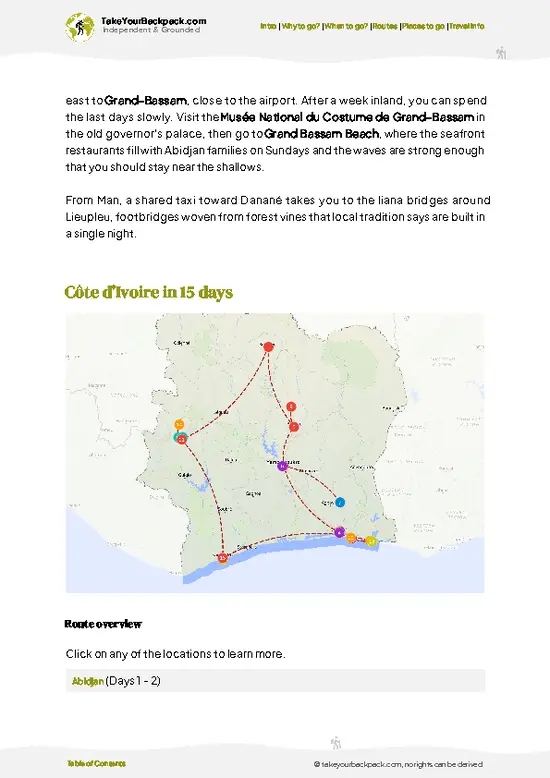
- Ancien Bassam (the Old Colonial Town) — The raison d’être of the town: a compact, UNESCO-listed quarter of faded colonial villas, government buildings and shady streets that tell the story of Ivory Coast’s first contact with the French. Wander slowly and the architecture and old storefronts do the history lesson for you.
- Musée National du Costume — Small but satisfying: a focused museum showcasing traditional Ivorian textiles, ceremonial dress and photography. It’s one of the best places in town to see cultural continuity up close and ask local curators questions.
- Le marché artisanal (craft market) — A lively cluster of stalls and small shops in/around the old town where local woodcarvers, weavers and bead-workers sell everything from woven hats to masks and batik. Great for souvenirs
- Ancien Bassam (the Old Colonial Town) — The raison d’être of the town: a compact, UNESCO-listed quarter of faded colonial villas, government buildings and shady streets that tell the story of Ivory Coast’s first contact with the French. Wander slowly and the architecture and old storefronts do the history lesson for you.
- Musée National du Costume — Small but satisfying: a focused museum showcasing traditional Ivorian textiles, ceremonial dress and photography. It’s one of the best places in town to see cultural continuity up close and ask local curators questions.
- Le marché artisanal (craft market) — A lively cluster of stalls and small shops in/around the old town where local woodcarvers, weavers and bead-workers sell everything from woven hats to masks and batik. Great for souvenirs and for watching artisans work.
- Grande Plage (the main beach) — Wide sand, palm-shaded stands and sunset views. It’s not a manicured resort beach; it’s where locals swim, vendors grill fish and pirogues line the sand — real life on the coast.
- Fishermen’s quarter and pirogues — Early morning is the time to see wooden pirogues coming in and the day’s catch being sorted. It’s raw, noisy, and a fantastic place to buy ultra-fresh fish or watch traditional boat maintenance.
- Colonial villas and administrative buildings walk — The old governor’s houses, former administrative offices and colorful private villas make for a great self-guided architecture walk. Look for carved doors, shutters and faded signage that hint at the town’s past.
- Marché central (local food market) — A proper West African market with fresh produce, spices, grilled fish and street snacks. It’s noisy and a little chaotic, but perfect if you want to taste local dishes and watch daily life at close range.
- Artisan workshops and batik studios — Scattered through the old town you’ll find small studios where artists dye, carve and sew. Many will show their process (and some will let you try a simple batik print), which is a nicer way to spend money than buying a mass-produced souvenir.
- Colonial cemetery and memorial sites — Quiet, shaded spots with old gravestones and memorial plaques that give perspective on the town’s colonial era and the people who lived and worked here. Good for thoughtful walks away from the beaches.
- Seafront pier / estuary viewpoint — A short walk from the beach will bring you to a simple pier or shoreline outlook where you can watch the ebb and flow of the Ébrié estuary, birdlife and small boat traffic. It’s a calm spot for photos and people-watching.
Spotted a mistake or missing something? Contact us.

Découverte Bini Lagune

Abidjan Walking Tour (French and English)

Abidjan and Grand Bassam A Tour of Two Cities

Alternative City Tour

Grand Bassam City Tour & Workshop

Private Tour of Abidjan

Our Lady of Peace Basilica Yamoussoukro Private Tour

Yamoussoukro - Largest Cathedral in the World (Francais or English)

Hippos Watching Tour


 Best Backpacking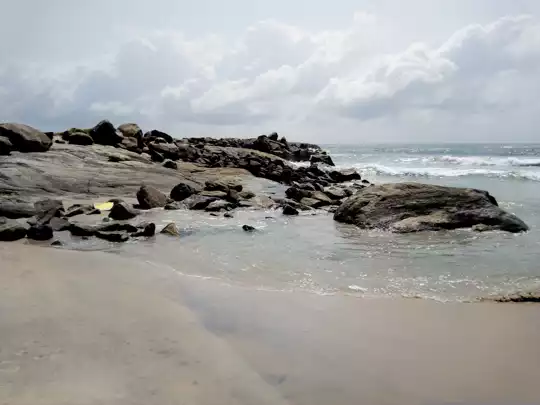
.jpg) Hi, I’m Johan (Netherlands 🇳🇱), the creator of TakeYourBackpack. Over the past 3 decades, I’ve backpacked through 90+ countries across six continents, gaining extensive experience with independent travel, long-term trips, and overland routes.
Hi, I’m Johan (Netherlands 🇳🇱), the creator of TakeYourBackpack. Over the past 3 decades, I’ve backpacked through 90+ countries across six continents, gaining extensive experience with independent travel, long-term trips, and overland routes.