×

Côte d’Ivoire🇨🇮 | best regionsExplore the 2 Best regions in Côte d’Ivoire

In Ivory Coast, the regions pulse with distinct rhythms, each offering a unique backdrop for backpacking adventures. From the lush coastal plains of the south to the rolling hills of the west, the landscape shapes your journey. The climate varies significantly; the dry season invites exploration, while the rainy months can transform trails into muddy challenges.

Choosing the right region impacts your vibe—the bustling markets of Abidjan contrast sharply with the tranquil villages of the north. Safety, ease of travel, and cultural immersion hinge on these choices, making it essential to align your itinerary with local nuances. Understanding these dynamics ensures a richer, more rewarding experience in this diverse country.

By Johan Kruseman 🇳🇱 | Updated June 6, 2026
Explore the best cities in Côte d’Ivoire

Why go?Why These region Stand Out

Côte d’Ivoire stands out for its climatic diversity, ranging from coastal regions to savannahs and rainforests. This variety shapes not just the landscape but also the cultural character of its people. Each region offers a unique blend of traditions, languages, and culinary delights, making it a microcosm of West African culture.

Travelers should note that while the country is relatively compact, the infrastructure can be a mixed bag. Major roads connect key areas, but secondary routes may be less reliable, impacting travel time. This means that while you can cover ground quickly, deeper exploration often requires patience and flexibility. The trade-off here is significant: a longer journey might yield richer experiences in remote villages, while a quicker route could lead to more tourist-centric … read more 👉
Côte d’Ivoire stands out for its climatic diversity, ranging from coastal regions to savannahs and rainforests. This variety shapes not just the landscape but also the cultural character of its people. Each region offers a unique blend of traditions, languages, and culinary delights, making it a microcosm of West African culture.

Travelers should note that while the country is relatively compact, the infrastructure can be a mixed bag. Major roads connect key areas, but secondary routes may be less reliable, impacting travel time. This means that while you can cover ground quickly, deeper exploration often requires patience and flexibility. The trade-off here is significant: a longer journey might yield richer experiences in remote villages, while a quicker route could lead to more tourist-centric spots.

The geographic layout also plays a role. The coastal areas provide stunning beaches and vibrant markets, while the interior reveals lush landscapes and wildlife. However, the climate can be a constraint; the rainy season can limit access to certain regions, making timing crucial for optimal exploration.

Ultimately, Côte d’Ivoire offers a tapestry of experiences, but understanding these nuances will enhance the journey, allowing travelers to appreciate the depth of its offerings.
Why These Made the Cut
The list of best regions in Côte d’Ivoire is created based on landscapes, local culture, attractions, vibes, and overall appeal. If you feel a region is missing in this list, please let us know.

When to go?Seasonal Guide to Visiting

Climate and Seasonal Highlights


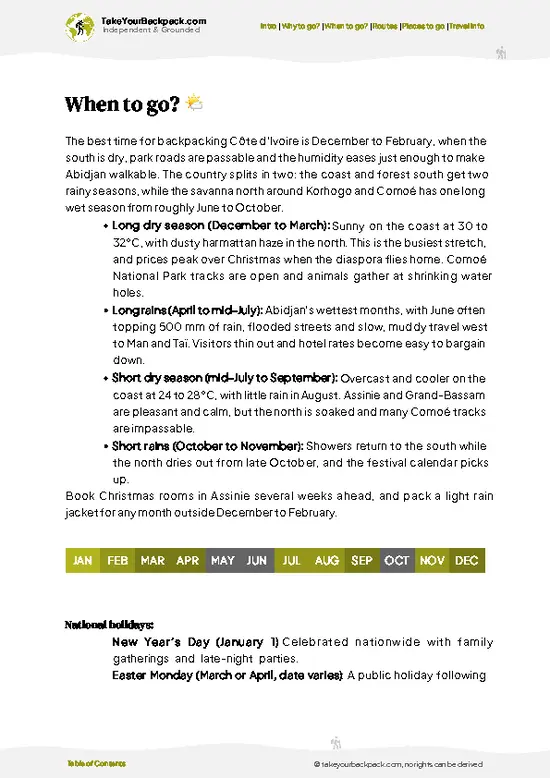
Côte d’Ivoire experiences a tropical climate, characterized by two main seasons: the wet and the dry. The dry season, from November to March, offers comfortable temperatures and lower humidity, making it ideal for exploration. This period aligns with the Harmattan winds, bringing cooler nights and clear skies.

During the wet season, from April to October, the landscape transforms. Rainfall can be heavy, particularly from May to July, leading to lush greenery and vibrant wildlife. However, travel can be challenging due to muddy roads and increased humidity.

Optimal Months and Shoulder Seasons


The best months to visit are typically December to February, when the weather is most pleasant. This peak season attracts more tourists, resulting in higher costs … read more 👉

Climate and Seasonal Highlights


Côte d’Ivoire experiences a tropical climate, characterized by two main seasons: the wet and the dry. The dry season, from November to March, offers comfortable temperatures and lower humidity, making it ideal for exploration. This period aligns with the Harmattan winds, bringing cooler nights and clear skies.

During the wet season, from April to October, the landscape transforms. Rainfall can be heavy, particularly from May to July, leading to lush greenery and vibrant wildlife. However, travel can be challenging due to muddy roads and increased humidity.

Optimal Months and Shoulder Seasons


The best months to visit are typically December to February, when the weather is most pleasant. This peak season attracts more tourists, resulting in higher costs and crowded attractions.

Shoulder seasons, like late October and early November, present a trade-off. Travelers can enjoy fewer crowds and lower prices, but must contend with unpredictable weather as the rains taper off.

Festivals and Cultural Events


Cultural festivals often occur during the dry season, showcasing local traditions and vibrant celebrations. These events can enhance the travel experience but may also lead to increased accommodation demand.

Understanding these seasonal patterns allows for better planning, balancing comfort with the desire to engage in local culture and natural beauty.

region hoppingOptimizing Your Multi-Stop Itinerary

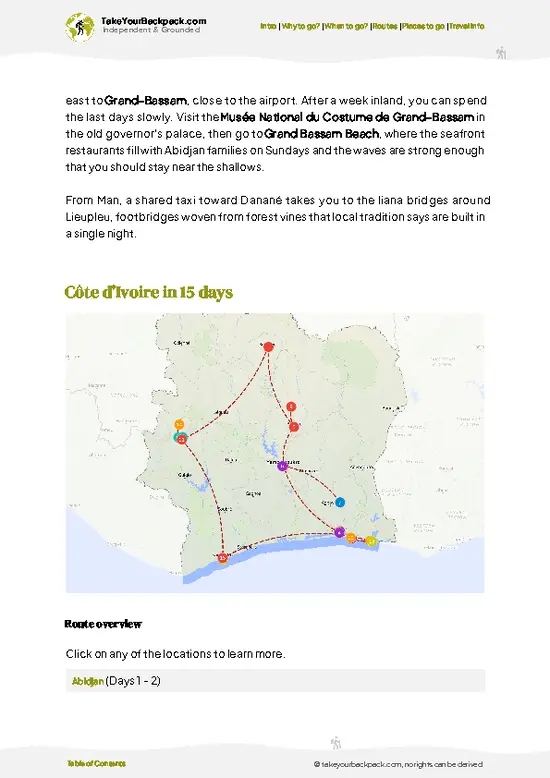
Traveling through Côte d’Ivoire requires a strategic approach to make the most of its diverse regions. Start in the bustling economic hub of Abidjan, where the urban pulse offers a stark contrast to the natural beauty found elsewhere. From there, head west to the lush landscapes of the Moyen-Cavally region. The drive is about three to four hours, and the scenery shifts dramatically, with rolling hills and dense forests.

Next, consider a route north to Yamoussoukro, the political capital. This leg takes roughly two hours, and the iconic Basilica of Our Lady of Peace is a must-see. The architecture is striking, and the surrounding gardens provide a serene atmosphere.

For those seeking coastal relaxation, a detour to San Pedro is worthwhile. The beaches here are less crowded, and the seafood
read more 👉
Traveling through Côte d’Ivoire requires a strategic approach to make the most of its diverse regions. Start in the bustling economic hub of Abidjan, where the urban pulse offers a stark contrast to the natural beauty found elsewhere. From there, head west to the lush landscapes of the Moyen-Cavally region. The drive is about three to four hours, and the scenery shifts dramatically, with rolling hills and dense forests.

Next, consider a route north to Yamoussoukro, the political capital. This leg takes roughly two hours, and the iconic Basilica of Our Lady of Peace is a must-see. The architecture is striking, and the surrounding gardens provide a serene atmosphere.

For those seeking coastal relaxation, a detour to San Pedro is worthwhile. The beaches here are less crowded, and the seafood is fresh. Allocate at least two days to soak in the sun and enjoy local cuisine.

Common pitfalls include over-scheduling and underestimating travel times. Balancing speed with depth is crucial; rushing through regions can lead to missed experiences. Aim for a mix of urban and rural stops, allowing for flexibility in your itinerary. This way, the journey becomes as rewarding as the destinations themselves.

The ListMust-Visit regions in Côte d’Ivoire

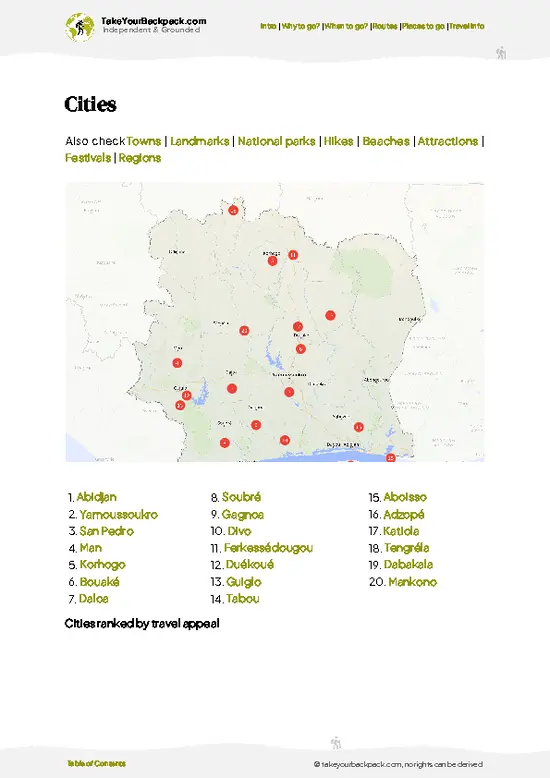
1 Bélier Region

rolling savannah, Baoulé villages, yam fields, colonial-era towns

Travel through Bélier to encounter Baoulé traditions, agricultural landscapes, and towns where local markets and crafts shape daily life.

cote-divoire-region-belier-region v1
© Google |

2 Tchologo Region

northern plains, Senufo culture, seasonal festivals, borderland trade

Experience Tchologo’s open landscapes, Senufo artistic heritage, and the rhythms of cross-border commerce and rural festivities.

Loading the map 🌍

Expert viewPro Tips for Exploring the Best

Geographic Diversity
Côte d’Ivoire is a patchwork of landscapes, each region offering its own flavor. From the coastal plains of the south to the rolling hills and savannahs in the north, the country’s geographic diversity is striking. The humid, tropical climate near the coast gives way to drier, more temperate conditions as you head inland. This transition isn’t just about scenery; it affects everything from the local cuisine to the pace of life. Expect the coastal areas to be bustling, with vibrant markets and a laid-back vibe, while the northern regions feel more traditional, with a slower rhythm and a stronger connection to cultural roots.

Traveling between these regions can be a mixed bag. The roads are often in varying states of repair, and public transport can be an adventure in … read more 👉
Geographic Diversity
Côte d’Ivoire is a patchwork of landscapes, each region offering its own flavor. From the coastal plains of the south to the rolling hills and savannahs in the north, the country’s geographic diversity is striking. The humid, tropical climate near the coast gives way to drier, more temperate conditions as you head inland. This transition isn’t just about scenery; it affects everything from the local cuisine to the pace of life. Expect the coastal areas to be bustling, with vibrant markets and a laid-back vibe, while the northern regions feel more traditional, with a slower rhythm and a stronger connection to cultural roots.

Traveling between these regions can be a mixed bag. The roads are often in varying states of repair, and public transport can be an adventure in itself. Buses and shared taxis are common, but don’t expect them to run on a strict schedule. Factor in extra time for delays, especially during the rainy season when roads can become impassable. If you’re short on time, prioritize the regions that resonate most with your interests—whether that’s the cultural richness of the center or the natural beauty of the west.

Cultural Variation
Each region has its own cultural identity, shaped by history and local traditions. The Akan people dominate the south, where you’ll find lively festivals and a rich tapestry of art and music. In contrast, the north is home to the Mandé and Gour people, whose customs and languages differ significantly. This cultural mosaic means you can experience everything from traditional drumming and dance to unique culinary delights.

However, this diversity comes with its own set of challenges. Language can be a barrier, especially in rural areas where French is less commonly spoken. Learning a few phrases in local dialects can go a long way in building rapport. Additionally, be mindful of cultural norms; dress modestly in rural areas and be respectful of local customs. Engaging with the community can enhance your experience, but it requires a willingness to step outside your comfort zone.

Transport and Infrastructure
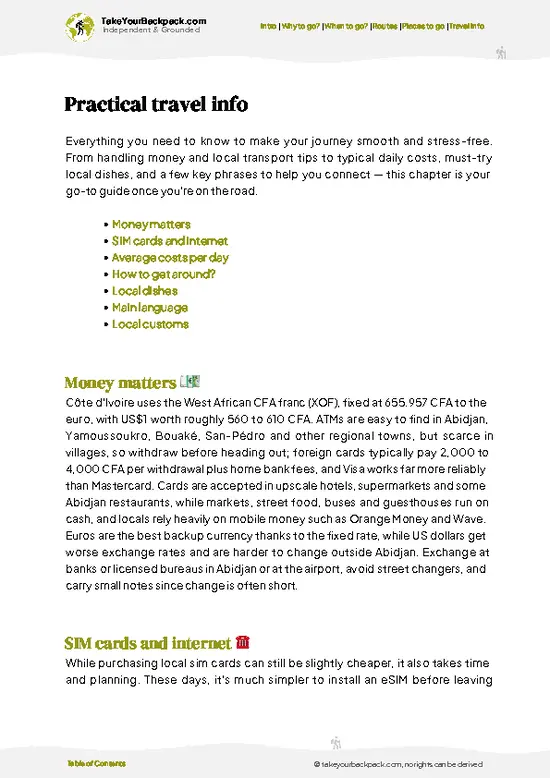
Infrastructure varies widely across the country. Major highways connect key regions, but rural roads can be rough and poorly marked. If you’re planning to explore off the beaten path, a 4x4 vehicle is often necessary. Domestic flights can save time but may not always be reliable. Expect to spend a significant portion of your travel time navigating these logistical hurdles.

Budget-wise, you can find options ranging from budget hostels to mid-range hotels, but the quality can fluctuate. It’s wise to book accommodations in advance, especially in popular areas. If you’re traveling during peak seasons, prices can spike, so plan accordingly.

Pacing Trade-offs
When planning your itinerary, consider how much time you want to spend in each region. A rushed trip might leave you feeling like you’ve only skimmed the surface. Ideally, aim to visit at least three to four regions to appreciate the country’s richness fully. This allows for a balance between exploration and relaxation.

If you’re short on time, focus on one or two regions that offer a mix of experiences—cultural, natural, and culinary. This way, you can dive deeper into the local lifestyle without feeling like you’re constantly on the move.

Safety and Cultural Considerations
Safety is generally good in Côte d’Ivoire, but it’s wise to stay informed about local conditions. Avoid traveling at night, especially in rural areas, and keep your belongings secure. Engaging with locals can provide valuable insights into safe practices and cultural etiquette.

Ultimately, the beauty of Côte d’Ivoire lies in its contrasts. Embrace the grit of the streets and the warmth of the people, and you’ll find that the effort pays off in unforgettable experiences.

✈️ The backpacker research shortcutCôte d’Ivoire Travel Guide

An offline-friendly backpacking guide with optimized travel routes, ranked highlights, transport advice, and the best areas to stay.
The digital guide (337 pages) contains:
85 highlights, ranked by travel appeal
Optimized 5, 10 & 15-day travel routes
Cities, national parks, landmarks, beaches
How to get around
Offline-friendly for travel without Wi-Fi
👉 Click to see all 30+ guide features

📅 Plan smarter in minutes, not weeks
Month by month travel advice
Festivals & national holidays
Budget expectations

🗺️ Go to the right places, skip the overrated ones
Honest pros & cons of destinations
Top hikes, parks & viewpoints
Lesser-known places most travelers miss
Clear “worth it vs skip it” guidance

🛏️ Travel smoothly without rookie mistakes
Best areas to stay
Transport systems explained simply
Common scams & safety advice
SIM cards, money & practical tips

🌍 Understand the country, not just visit it
Culture & traditions
52 Essential phrases & customs
Festivals worth planning around
Traveler-friendly historical context
Insights that make places more meaningful

📱 Built for real travel conditions
Fully downloadable PDF
Works completely offline
Optimized for phone use
Useful in remote areas & buses
Everything in one place
Save weeks of stressful planning
Get instant access to your full guide. 30‑day money-back guarantee.


By proceeding you agree to our terms.
Sent to your inbox immediately after payment • 100% Secure Checkout
Best Backpacking Travel Advisor 2025 tourism awardBest Backpacking
Travel Advisor
2025
What others say about Take Your Backpack Guides:
⭐⭐⭐⭐⭐
Fantastic, amazing amount of information!
⭐⭐⭐⭐⭐
My goodness this is amazing, it's what I've been looking for hats off too you!
⭐⭐⭐⭐⭐
I think this is absolutely BRILLIANT
⭐⭐⭐⭐
Very complete and informative. It's still missing places, but I gotta to commend you
⭐⭐⭐⭐⭐
This is truly amazing, thank you, can't wait to explore it with my kids!
⭐⭐⭐⭐⭐
Awesome resource, thank you!
⭐⭐⭐⭐⭐
This is amazing! Can't wait to explore the ones I haven't seen
⭐⭐⭐⭐
I love this! Well done, great idea.
⭐⭐⭐⭐⭐
Thanks for taking the time to make this gem!
⭐⭐⭐⭐⭐
This might be the best website I've ever seen.
⭐⭐⭐⭐⭐
Congratulations, and thank you so much for your work; it's incredibly valuable.
⭐⭐⭐⭐
In all seriousness I think you did a great job pointing out the important spots
⭐⭐⭐⭐⭐
10/10 very good
⭐⭐⭐⭐⭐
As someone who's only just starting to visit regularly this is awesome, thank you.
⭐⭐⭐⭐
Thank you very much! I'm going to visit my dad, it's going to be very useful!
⭐⭐⭐⭐⭐
This is really cool! We'll be travelling for the first time and this definitely come in handy.
⭐⭐⭐⭐⭐
You are now our minister of culture, congratulations 👨‍💼
⭐⭐⭐⭐⭐
Just wanted to tell you that this is a pearl! Going to follow your recommendations.
⭐⭐⭐⭐⭐
This is so cool. I'll definitely be using the resource for my travels soon.
⭐⭐⭐⭐⭐
This is very impressive! Good work.
⭐⭐⭐⭐⭐
This is an amazing and informative site. Very well done!

🛏️ Where to stay?Accommodation Highlights

Yes — hostels and budget guesthouses are available across Côte d’Ivoire, concentrated mainly in Abidjan and in coastal towns like Grand-Bassam and San Pedro.
In Abidjan the best concentration of budget options is in Marcory (Zone 4) and Treichville for cheap stays, Plateau for central access to museums and ferry links, and Cocody for safer, quieter guesthouses that tend to cost more.
Favor Marcory/Zone 4 for nightlife and easy transport but expect noise and mixed safety, pick Treichville for lowest prices and local markets with basic facilities, use Plateau for daytime sightseeing and quieter nights, choose Cocody when safety and proximity to beaches matter at a premium, and head to Grand-Bassam … read more 👉
Yes — hostels and budget guesthouses are available across Côte d’Ivoire, concentrated mainly in Abidjan and in coastal towns like Grand-Bassam and San Pedro.
In Abidjan the best concentration of budget options is in Marcory (Zone 4) and Treichville for cheap stays, Plateau for central access to museums and ferry links, and Cocody for safer, quieter guesthouses that tend to cost more.
Favor Marcory/Zone 4 for nightlife and easy transport but expect noise and mixed safety, pick Treichville for lowest prices and local markets with basic facilities, use Plateau for daytime sightseeing and quieter nights, choose Cocody when safety and proximity to beaches matter at a premium, and head to Grand-Bassam or San Pedro for beachfront budget stays with fewer services while inland towns like Yamoussoukro and Man offer only limited budget options best suited to short visits.

If you enjoy meeting fellow travelers, consider choosing hostels with high ratings for atmosphere. On the other hand, if you prefer having your own space, a hotel might be a better option.

Côte d’IvoireSee More of Côte d’Ivoire

👋 Meet the founderWho’s Behind Take Your Backpack?

Johan, backpacker and founder of TakeYourBackpackHi, I’m Johan (Netherlands 🇳🇱), the creator of TakeYourBackpack. Over the past decade, I’ve backpacked through 80+ countries across six continents, gaining extensive experience with independent travel, long-term trips, and overland routes.

This site is built on a combination of firsthand travel experience and carefully curated insights from other backpackers. Many guides are based on places I’ve personally visited, while others bring together tips, observations, and practical advice shared by trusted travelers I’ve met along the way.

The goal is to provide realistic, experience-driven guidance — not generic itineraries — so you can explore destinations with better context, clearer expectations, and more confidence.

Get full country guide •
Instant download • 85 highlights • Full Offline guide