
×

Cuba🇨🇺 | citiesBayamoAnthem birthplace, car-free core, horse coaches, Céspedes house | things to do and best time to go

Explore HolguínExplore Santa Clara

Backpacking in Bayamo
🌟 Highlightcity ranked #9
By Johan Kruseman 🇳🇱 | Updated October 22, 2026

Bayamo has a car-free historic core where horse-drawn coches still carry locals, and the city is where Cuba’s national anthem was first sung in 1868. It sits in the east of Cuba, in Granma Province, about 120 km from Santiago de Cuba. I came in on a shared taxi from Camagüey, and the driver stopped twice to let a farmer lift a pig-sized sack of mangoes onto the roof. That is Bayamo: unhurried and practical. Spend your time on the pedestrian Calle General García, the plazas and the history; skip any hunt for nightlife or beaches, because there are none. It suits history lovers and slow travelers, and bores anyone chasing big-ticket sights. Carry small bills, since cash is how most things get paid.

Discover everything you want to know in the 📖 Cuba Travel Guide.


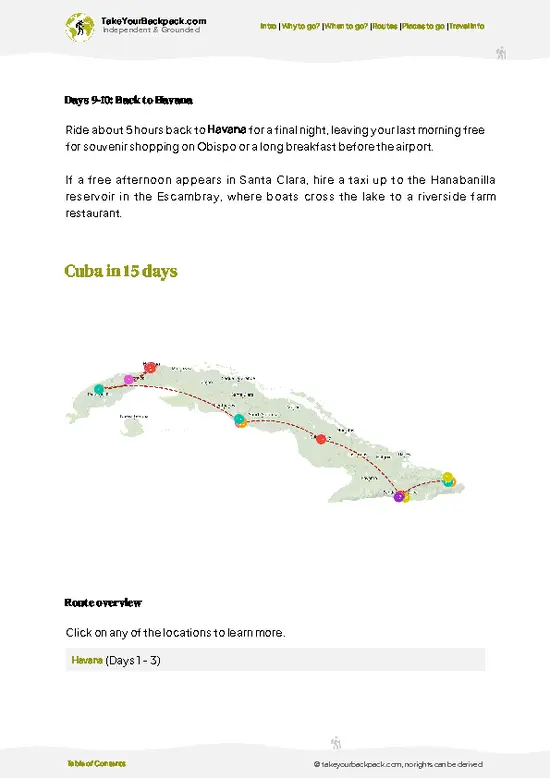
example page 0 from our offline Travel Guide for Cuba
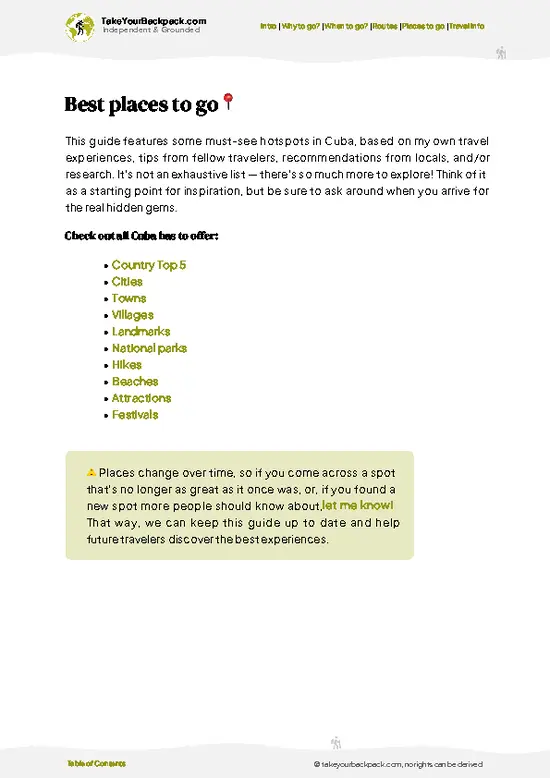
example page 1 from our offline Travel Guide for Cuba
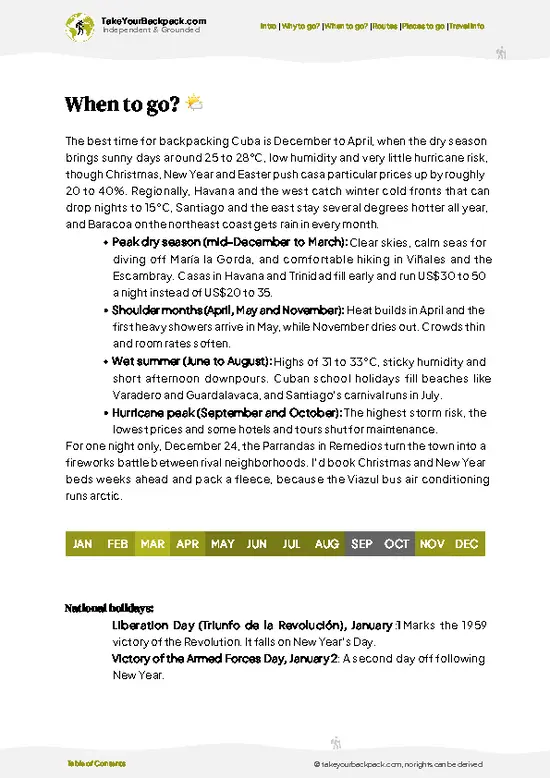
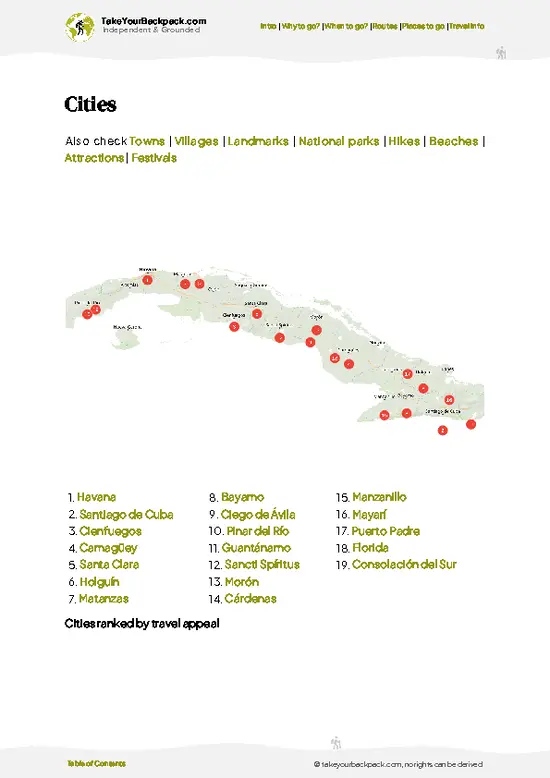
example page 2 from our offline Travel Guide for Cuba
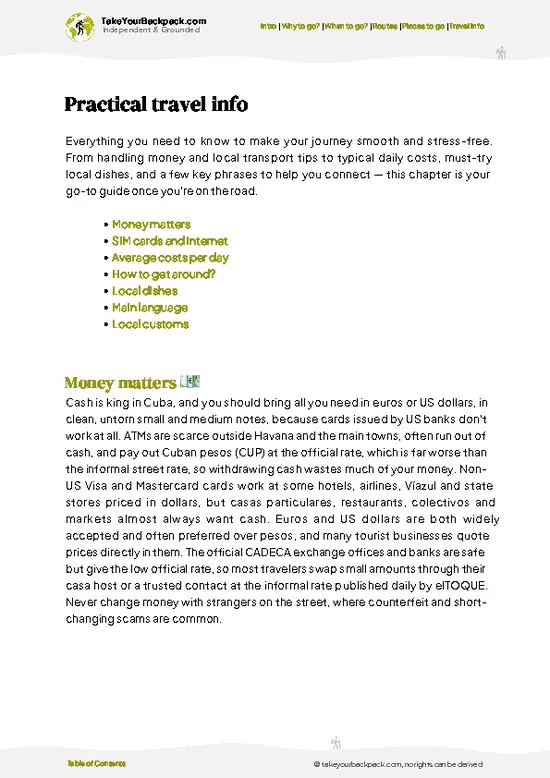
example page 3 from our offline Travel Guide for Cuba
example page 4 from our offline Travel Guide for Cuba
example page 5 from our offline Travel Guide for Cuba
example page 6 from our offline Travel Guide for Cuba
example page 7 from our offline Travel Guide for Cuba
Loading the map 🌍
CLICK TO FILTER
cities
towns
villages
landmarks
national parks
hikes
beaches
attractions
festivals
SHOW COUNTRY’S BESTSHOW ALL

✨ Why go?
Ranked #9 city in Cuba
What makes it a must-see city

Bayamo works as a calm, walkable pause between Santiago de Cuba and Camagüey, and it earns that slot for good reasons. The center is flat and compact, so you can cover the main plazas on foot in a morning and never touch a taxi. Casas particulares are plentiful, and many hosts cook generous dinners, which saves you hunting for restaurants. The city is the cradle of Cuban independence, so the sights come with real stories, and the pedestrian street of Calle General García gives you evening people-watching without any hassle. Bayamo is also a handy base for the Sierra Maestra foothills and rebel history to the south. Nightlife is modest, mostly live music at the plaza and a few bars, so it suits a one- or two-night stop better than a long stay. Onward connections by bus and shared taxi are easy.

💡 HighlightsTop highlights of Bayamo

  1. Plaza del Himno: The birthplace of the Cuban anthem, with a statue of Perucho Figueredo and a lively evening crowd. Go at dusk when families gather. Free, 30 to 45 minutes.
  2. Casa Natal de Carlos Manuel de Céspedes: The childhood home of the independence leader, with period furniture and personal items. Mornings are quietest. About US$1 to 2, 45 minutes.
  3. Parque Céspedes: The main square, with a statue of Céspedes, the old city hall and shaded benches. Late afternoon is best for people-watching. Free, 30 minutes.
  4. Museo Provincial Manuel Muñoz Cedeño: A provincial history museum covering the independence wars and local life. Go in the morning. About US$1 to 2, 1 hour.
  5. Iglesia Parroquial Mayor San Salvador: A church rebuilt after the 1869 burning of the city; its Capilla de la Dolorosa, with a gilded
… read more 👉
  1. Plaza del Himno: The birthplace of the Cuban anthem, with a statue of Perucho Figueredo and a lively evening crowd. Go at dusk when families gather. Free, 30 to 45 minutes.
  2. Casa Natal de Carlos Manuel de Céspedes: The childhood home of the independence leader, with period furniture and personal items. Mornings are quietest. About US$1 to 2, 45 minutes.
  3. Parque Céspedes: The main square, with a statue of Céspedes, the old city hall and shaded benches. Late afternoon is best for people-watching. Free, 30 minutes.
  4. Museo Provincial Manuel Muñoz Cedeño: A provincial history museum covering the independence wars and local life. Go in the morning. About US$1 to 2, 1 hour.
  5. Iglesia Parroquial Mayor San Salvador: A church rebuilt after the 1869 burning of the city; its Capilla de la Dolorosa, with a gilded wooden altar, survived the fire. Visit between services. Free or a small donation, 20 to 30 minutes.
  6. Calle General García: The pedestrian street lined with shops, cafés and musicians, lively after 5 PM. Free, 1 hour.
  7. Museo de Cera: A small wax museum showing figures from Bayamo’s history. Best mid-morning. About US$1, 30 minutes.
Beyond the city, Bayamo works as a base for day trips to the Sierra Maestra, the Comandancia de la Plata rebel headquarters and Dos Ríos, where José Martí fell. The Plaza del Himno and Calle General García combine well in one evening, since they sit a few minutes apart.
Spotted a mistake or missing something? Contact us.

🏘️ NeighborhoodsKey areas and districts to know

Bayamo is small enough that you can judge it in an afternoon, and the center does most of the work.
  • Plaza del Himno and the historic center: Spend most of your time here. The plaza has the Casa Natal de Carlos Manuel de Céspedes, the Plaza de la Revolución and the cathedral area within a few minutes’ walk. Everything is flat and walkable, and cafés and paladares line the pedestrian streets.
  • Calle General García (Bulevar): The long pedestrian strip is where Bayamo actually lives. Horse carts clop at the edges, kids kick balls, and music drifts from small bars at night. Walk it once in the evening and once in the morning.
  • Parque Céspedes and the Iglesia de San Salvador: Worth a short stop for the old church and the shaded benches. It is quiet, so it suits a coffee break more than a full visit.
  • Outer
… read more 👉
Bayamo is small enough that you can judge it in an afternoon, and the center does most of the work.
  • Plaza del Himno and the historic center: Spend most of your time here. The plaza has the Casa Natal de Carlos Manuel de Céspedes, the Plaza de la Revolución and the cathedral area within a few minutes’ walk. Everything is flat and walkable, and cafés and paladares line the pedestrian streets.
  • Calle General García (Bulevar): The long pedestrian strip is where Bayamo actually lives. Horse carts clop at the edges, kids kick balls, and music drifts from small bars at night. Walk it once in the evening and once in the morning.
  • Parque Céspedes and the Iglesia de San Salvador: Worth a short stop for the old church and the shaded benches. It is quiet, so it suits a coffee break more than a full visit.
  • Outer residential districts: Skip these. Wide, plain streets with few sights and long gaps between cafés, and you will not gain anything by wandering them on foot. Use a bici-taxi if you must cross them.

⌛️ 1 day1-day itinerary for Bayamo

8:30 AM: Parque Céspedes Start with coffee on a bench and look at the Céspedes statue and the old city hall. Walk two minutes to the next stop.
9:30 AM: Casa Natal de Carlos Manuel de Céspedes Tour the rooms of the independence leader’s home to understand why Bayamo matters. Then stroll to the church.
11:00 AM: Iglesia Parroquial Mayor San Salvador Step inside for the altar and the chapel that survived the 1869 fire. Continue on foot to the museum.
12:00 PM: Museo Provincial Manuel Muñoz Cedeño A compact introduction to the independence wars and the region. Lunch afterward at a paladar on a side street.
2:30 PM: Barrio outside the center Wander a few blocks west of the main plazas, where locals trade, fix bicycles and sit on porches. It is not on the tourist route, and you will see everyday Bayamo. … read more 👉
8:30 AM: Parque Céspedes Start with coffee on a bench and look at the Céspedes statue and the old city hall. Walk two minutes to the next stop.
9:30 AM: Casa Natal de Carlos Manuel de Céspedes Tour the rooms of the independence leader’s home to understand why Bayamo matters. Then stroll to the church.
11:00 AM: Iglesia Parroquial Mayor San Salvador Step inside for the altar and the chapel that survived the 1869 fire. Continue on foot to the museum.
12:00 PM: Museo Provincial Manuel Muñoz Cedeño A compact introduction to the independence wars and the region. Lunch afterward at a paladar on a side street.
2:30 PM: Barrio outside the center Wander a few blocks west of the main plazas, where locals trade, fix bicycles and sit on porches. It is not on the tourist route, and you will see everyday Bayamo. Take a horse-drawn coche back for a small fare.
5:30 PM: Calle General García Walk the pedestrian street as shops reopen and musicians tune up.
7:00 PM: Plaza del Himno Finish with the anthem statue and the evening crowd, then eat dinner nearby.

🌤️ When to go?Choosing the right time of year

November to April is the most comfortable window for Bayamo, with dry air and manageable heat.
  • Dry Season (Nov to Apr): Highs run 28 to 31°C (82 to 88°F), nights 18 to 21°C (64 to 70°F). Days are clear and sightseeing is easy. Casa prices climb a little around December and January.
  • Hot, Wet Season (May to Oct): Highs of 33 to 36°C (91 to 97°F) and heavy afternoon downpours. Humidity is draining by midday. Crowds are thin and rooms are easier to haggle.
  • Hurricane Risk (Aug to Oct): Storms can disrupt roads and power. Check forecasts before moving on.
  • Festivals: The Fiesta de la Cubanía in October brings music and street events, and rooms fill up fast.
Book a room ahead if you plan to arrive for the October festival.

source: climatestotravel.comJANJanuary: highly recommended for travelingFEBFebruary: highly recommended for travelingMARMarch: highly recommended for travelingAPRApril: highly recommended for travelingMAYMay: fair for travelingJUNJune: fair for travelingJULJuly: good for travelingAUGAugust: fair for travelingSEPSeptember: fair for travelingOCTOctober: fair for travelingNOVNovember: highly recommended for travelingDECDecember: highly recommended for traveling
when-to-go

✈️ The backpacker research shortcutCuba Travel Guide

An offline-friendly backpacking guide with optimized travel routes, ranked highlights, transport advice, and the best areas to stay.
example page 0 from our offline Travel Guide for Cuba
example page 1 from our offline Travel Guide for Cuba
example page 2 from our offline Travel Guide for Cuba
example page 3 from our offline Travel Guide for Cuba
example page 4 from our offline Travel Guide for Cuba
example page 5 from our offline Travel Guide for Cuba
example page 6 from our offline Travel Guide for Cuba
example page 7 from our offline Travel Guide for Cuba
The digital guide (327 pages) contains:
✅ 113 highlights, ranked by travel appeal
✅ Optimized 5, 10 & 15-day travel routes
✅ Cities, national parks, landmarks, beaches
✅ How to get around
✅ Offline-friendly for travel without Wi-Fi
👉 Click to see all 30+ guide features

📅 Plan smarter in minutes, not weeks
✅ Month by month travel advice
✅ Festivals & national holidays
✅ Budget expectations

🗺️ Go to the right places, skip the overrated ones
✅ Honest pros & cons of destinations
✅ Top hikes, parks & viewpoints
✅ Lesser-known places most travelers miss
✅ Clear “worth it vs skip it” guidance

🛏️ Travel smoothly without rookie mistakes
✅ Best areas to stay
✅ Transport systems explained simply
✅ Common scams & safety advice
✅ SIM cards, money & practical tips

🌍 Understand the country, not just visit it
✅ Culture & traditions
✅ 52 Essential phrases & customs
✅ Festivals worth planning around
✅ Traveler-friendly historical context
✅ Insights that make places more meaningful

📱 Built for real travel conditions
✅ Fully downloadable PDF
✅ Works completely offline
✅ Optimized for phone use
✅ Useful in remote areas & buses
✅ Everything in one place
Stop searching, start planning
Get instant access to your full guide. 30‑day money-back guarantee.
+ Add another guide for just

By proceeding you agree to our terms.
Sent to your inbox immediately after payment • 100% Secure Checkout
Best Backpacking Travel Advisor 2025 tourism awardBest Backpacking
Travel Advisor
2025
What others say about Take Your Backpack Guides:
⭐⭐⭐⭐⭐
Fantastic, amazing amount of information!
⭐⭐⭐⭐⭐
My goodness this is amazing, it's what I've been looking for hats off too you!
⭐⭐⭐⭐⭐
I think this is absolutely BRILLIANT
⭐⭐⭐⭐
Very complete and informative. It's still missing places, but I gotta to commend you
⭐⭐⭐⭐⭐
This is truly amazing, thank you, can't wait to explore it with my kids!
⭐⭐⭐⭐⭐
Awesome resource, thank you!
⭐⭐⭐⭐⭐
This is amazing! Can't wait to explore the ones I haven't seen
⭐⭐⭐⭐
I love this! Well done, great idea.
⭐⭐⭐⭐⭐
Thanks for taking the time to make this gem!
⭐⭐⭐⭐⭐
This might be the best website I've ever seen.
⭐⭐⭐⭐⭐
Congratulations, and thank you so much for your work; it's incredibly valuable.
⭐⭐⭐⭐
In all seriousness I think you did a great job pointing out the important spots
⭐⭐⭐⭐⭐
10/10 very good
⭐⭐⭐⭐⭐
As someone who's only just starting to visit regularly this is awesome, thank you.
⭐⭐⭐⭐
Thank you very much! I'm going to visit my dad, it's going to be very useful!
⭐⭐⭐⭐⭐
This is really cool! We'll be travelling for the first time and this definitely come in handy.
⭐⭐⭐⭐⭐
You are now our minister of culture, congratulations 👨‍💼
⭐⭐⭐⭐⭐
Just wanted to tell you that this is a pearl! Going to follow your recommendations.
⭐⭐⭐⭐⭐
This is so cool. I'll definitely be using the resource for my travels soon.
⭐⭐⭐⭐⭐
This is very impressive! Good work.
⭐⭐⭐⭐⭐
This is an amazing and informative site. Very well done!

🛏️ Where to stay?Best areas to stay in Cuba

The historic center around Plaza del Himno and Calle General García is the best place for a budget bed in Bayamo. Casas particulares are plentiful there, typically US$15 to 30 a room, and hostel-style dorms are essentially absent, so expect private rooms with breakfast offered for a few extra dollars. Everything is a short walk away, including cafés, markets and the bus-taxi stands, which saves you ride costs.
Nights are calm and safe for walking, though a few bars near the Bulevar play music until late. Ask for a room at the back if you sleep lightly.
The quieter streets a few blocks off the Bulevar … read more 👉
The historic center around Plaza del Himno and Calle General García is the best place for a budget bed in Bayamo. Casas particulares are plentiful there, typically US$15 to 30 a room, and hostel-style dorms are essentially absent, so expect private rooms with breakfast offered for a few extra dollars. Everything is a short walk away, including cafés, markets and the bus-taxi stands, which saves you ride costs.
Nights are calm and safe for walking, though a few bars near the Bulevar play music until late. Ask for a room at the back if you sleep lightly.
The quieter streets a few blocks off the Bulevar work well as a second choice. Rooms there are often cheaper and the hosts have more time to chat, arrange taxis and cook dinner. Avoid staying near the main bus terminals, since they are far from the sights and offer few food options after dark.

🚌 Getting aroundHow to get around Bayamo

The historic center of Bayamo is flat and compact, so you can walk it end to end in about 20 minutes, but walking stops making sense once you head to the bus terminals or the outer districts, which sit a few kilometers out in the heat. Traffic is light and dominated by bikes, horse carts and old cars. Public buses exist but are unreliable and not worth planning around.
  • Walking: Free, and the best way to see the plazas and the pedestrian Bulevar. Go early or after 5 pm, since midday sun makes it tiring.
  • Bici-taxi: Three-wheeled pedal taxis cost about US$1 to 2 per short ride. They are slow but fun and good for the station run with a light pack. Agree the price first.
  • Horse cart (coche): Cheap, around US$0.25 to 1 on fixed routes, and slightly chaotic. Worth trying once for the experience, not
… read more 👉
The historic center of Bayamo is flat and compact, so you can walk it end to end in about 20 minutes, but walking stops making sense once you head to the bus terminals or the outer districts, which sit a few kilometers out in the heat. Traffic is light and dominated by bikes, horse carts and old cars. Public buses exist but are unreliable and not worth planning around.
  • Walking: Free, and the best way to see the plazas and the pedestrian Bulevar. Go early or after 5 pm, since midday sun makes it tiring.
  • Bici-taxi: Three-wheeled pedal taxis cost about US$1 to 2 per short ride. They are slow but fun and good for the station run with a light pack. Agree the price first.
  • Horse cart (coche): Cheap, around US$0.25 to 1 on fixed routes, and slightly chaotic. Worth trying once for the experience, not for efficiency.
  • Taxi (car): Old American cars and modern taxis charge roughly US$3 to 6 across town and US$25 to 40 for longer day trips. Best for early departures when nothing else runs.
  • Viazul bus and shared taxis: For leaving Bayamo, Viazul buses reach Santiago de Cuba, Camagüey and Havana for roughly US$10 to 50 depending on the route. Shared taxis are faster but cost more, around US$15 to 30 a seat to Santiago. Book Viazul a day ahead since seats are limited.

👛 Costs (as of 22 October 2026)Travel costs and budget guide for Bayamo

Bayamo costs backpackers roughly US$32 to 55 a day, and a high-season total of US$47 is realistic.
CategoryBudget RangeLocal Reality
Dorm accommodation (high season)US$15 to 20A private casa room split, as dorms are rare
Dorm accommodation (off-season)US$10 to 15Easier to haggle in the hot, wet months
MealsUS$12 to 18Casa breakfast, street snacks, paladar dinner
Local transportUS$2 to 4Bici-taxis and horse carts
City transport passNot availablePay per ride
Basic activities and entry feesUS$2 to 5Museums charge small fees
MiscellaneousUS$3 to 5Water, tips, sunscreen
Total Daily BudgetUS$47Using high-season accommodation
Eat dinner at your casa and share taxis for day trips to cut costs. Travelers pay in Cuban pesos or foreign currency depending on the venue, and cash is far more useful than cards.

source: cubatravel.cu
⚠️ Prices can change and everyone travels differently, so take this as a rough guide. Hope it helps you plan your adventure!

🚌 Day tripsWhere to go beyond the main area

Bayamo works well as a base for day trips that reach the Sierra Maestra foothills and the Granma coast, mostly via shared or private taxis.
Parque Nacional La Demajagua:
This is the site of the sugar mill where Céspedes freed his slaves in 1868, at the start of Cuba’s independence struggle. It is about 1.5 to 2 hours by taxi, so expect US$40 to 60 round trip if you split it. The dry season is best. First-timers often forget to arrange a waiting driver.

Dos Ríos:
A quiet monument marks where José Martí died in 1895. It is roughly 1 hour by taxi, and a car costs about US$30 to 50 round trip. Go in the cooler morning, since there is almost no shade.

Manzanillo:
A port town with Moorish-style architecture and a lively evening scene on the main plaza. It is about 1.5 hours by shared taxi or bus … read more 👉
Bayamo works well as a base for day trips that reach the Sierra Maestra foothills and the Granma coast, mostly via shared or private taxis.
Parque Nacional La Demajagua:
This is the site of the sugar mill where Céspedes freed his slaves in 1868, at the start of Cuba’s independence struggle. It is about 1.5 to 2 hours by taxi, so expect US$40 to 60 round trip if you split it. The dry season is best. First-timers often forget to arrange a waiting driver.

Dos Ríos:
A quiet monument marks where José Martí died in 1895. It is roughly 1 hour by taxi, and a car costs about US$30 to 50 round trip. Go in the cooler morning, since there is almost no shade.

Manzanillo:
A port town with Moorish-style architecture and a lively evening scene on the main plaza. It is about 1.5 hours by shared taxi or bus at around US$3 to 6 each way. Go in November to April for dry roads.
👉 Explore Manzanillo
Comandancia de La Plata:
Fidel Castro’s mountain headquarters in the Sierra Maestra. The route takes longer, 3 to 4 hours each way, so it is a long day, but the hike up from Santo Domingo is satisfying. Expect US$80 to 120 for a shared car plus entry. Wear shoes with grip, as the muddy trail catches out sandal wearers.

🍲 FoodLocal Cuisine & Drinks

Bayamo’s kitchens lean on the eastern Cuban habit of pork, root vegetables and sweet fruit, and the local twist is the strong, sweet guarapo, fresh cane juice pressed on the spot and often mixed with a splash of rum. Look for tamales in leaf and cucuruchos, a coconut and honey sweet more at home in Baracoa but sold by street vendors in the region.
For casual meals, head to the Bulevar and the streets around Plaza del Himno, where paladares serve pork with rice and beans for roughly US$4 to 8. Small street stands sell pizza, sandwiches and fried snacks for US$0.50 to 2. Local agromercados are good for mangoes, guavas and cheap coffee.
Evenings are social: rum in small bars or a cold Bucanero beer on the Bulevar, where families and musicians crowd the benches. Casas often cook dinner for US$6 … read more 👉
Bayamo’s kitchens lean on the eastern Cuban habit of pork, root vegetables and sweet fruit, and the local twist is the strong, sweet guarapo, fresh cane juice pressed on the spot and often mixed with a splash of rum. Look for tamales in leaf and cucuruchos, a coconut and honey sweet more at home in Baracoa but sold by street vendors in the region.
For casual meals, head to the Bulevar and the streets around Plaza del Himno, where paladares serve pork with rice and beans for roughly US$4 to 8. Small street stands sell pizza, sandwiches and fried snacks for US$0.50 to 2. Local agromercados are good for mangoes, guavas and cheap coffee.
Evenings are social: rum in small bars or a cold Bucanero beer on the Bulevar, where families and musicians crowd the benches. Casas often cook dinner for US$6 to 10, and it is usually the best meal you will have.

🛡️ SafetyTraveler Safety Guide

Bayamo is calm, and violent crime against travelers is rare. The main annoyance is persistent touts (jineteros) offering taxis, cigars or restaurants for a commission, which pushes prices up. A polite no and a steady pace usually end it. Pickpocketing is uncommon, but keep your phone and cash out of back pockets in crowded spots such as the Bulevar at night. Solo travelers, including women, walk the center after dark comfortably, though side streets are poorly lit, so watch for broken pavement. Use only official or agreed-price taxis and confirm the fare before getting in. Carry cash in small bills, since change is often scarce.

FAQFrequently asked questions about Bayamo

Two days is enough for Bayamo itself, covering Plaza del Himno, the Bulevar and the Céspedes house. Add a third day for La Demajagua, about 1.5 to 2 hours by taxi, or Manzanillo. Four days allows the long Comandancia de La Plata trip into the Sierra Maestra.
Yes, Bayamo is a comfortable city for solo backpackers, and the center is walkable after dark. Touts offering taxis and restaurants are the main nuisance, and they back off with a firm no. Keep small bills handy and use only taxis with an agreed fare, usually US$3 to 6 for a ride across town.
Bayamo is known as the cradle of Cuban independence, since Céspedes launched the 1868 uprising nearby and his birthplace stands on Parque Céspedes. It is also where the national anthem was first sung in 1868. Horse carts, bikes and the pedestrian Calle General García give it a slower, more local feel than Havana or Santiago.
⚠️ Things can change over time, so always validate details locally before you go.

Other Cuban cities near Bayamo

Explore more nearby:

  • Manzanillo—Moorish gazebo, gulf seawall, hillside steps, music nights| 51 km away
  • Holguín—458 steps, Taíno axe, trova house, shell museum| 69 km away
  • Puerto Padre—Spanish fortín, bay malecón, La Boca beach| 91 km away

💡 Not sure where to go next?
Create a personalized itinerary for Cuba including Bayamo and the places that fit your trip.

Generate my itinerary

👉 Discover all cities

Or checkout all Cuba has to offer (think cities, towns, villages, national parks, hikes, beaches, festivals)
Country photo of Cuba

We 💚 feedbackKey takeaways before you go

Bayamo suits history-minded travelers and anyone who likes slow evenings in a plaza more than clubs. It is a pleasant stop, not a destination to build a week around. I would give it one night, eat dinner at your casa particular, and save your energy for the Sierra Maestra.

✈️ When did I visit Cuba?
As part of my 1.5 year travel around the world trip, I visited Cuba for 6 weeks in February, March 2016, being extremely lucky that that coincided with the free concert of The Rolling Stones.

✍️ Help improve this page!
The information on this page is based on my own backpacking experience in Cuba, supplemented with up-to-date research and feedback from other travelers. Travel details can change, so if you notice anything outdated or incomplete, feel free to let me know.


🙋‍♂️ Give feedback

👋 Meet the founderWho’s Behind Take Your Backpack?

Johan, backpacker and founder of TakeYourBackpackHi, I’m Johan (Netherlands 🇳🇱), the creator of TakeYourBackpack. Over the past 3 decades, I’ve backpacked through 90+ countries across six continents, gaining extensive experience with independent travel, long-term trips, and overland routes.

This site is built on a combination of firsthand travel experience and carefully curated insights from other backpackers. Many guides are based on places I’ve personally visited, while others bring together tips, observations, and practical advice shared by trusted travelers I’ve met along the way.

The goal is to provide realistic, experience-driven guidance — not generic itineraries — so you can explore destinations with better context, clearer expectations, and more confidence.