×

Cuba🇨🇺 | citiesHolguínhilltop views, leafy plazas, city parks | things to do and best time to go

Explore MatanzasExplore Bayamo

Backpacking in Holguín
🌟 Highlightcity ranked #7
By Johan Kruseman 🇳🇱 | Updated September 4, 2026

Old Holguín was the Cuba people bragged about finding “before it changed”: slow streets, almost no foreign voices, and nights that ended with rum, guitars, and neighbors, not bar crawls. Today it’s still calmer than Havana or Santiago, but you feel the shift—more casas particulares, more menus in euros, more taxi hustling around Parque Calixto García. Holguín sits in eastern Cuba, inland from the north coast beaches like Guardalavaca, and it feels like a working city first, travel hub second. That’s the charm and the friction. It’s cheap, safe by global standards, and easy enough to navigate, but meeting other backpackers can take effort outside a couple of central bars. You trade big-city chaos and colonial drama for a more low-key, everyday-Cuba vibe that rewards patience more than instant thrills.

Discover everything you want to know in the 📖 Cuba Travel Guide.


Get your Cuba guide
121 ranked highlights, routes & tips, works offline (450 pages)
Loading the map 🌍
CLICK TO FILTER
cities
towns
villages
landmarks
national parks
hikes
beaches
attractions
festivals
regions
SHOW COUNTRY’S BESTSHOW ALL

✨ Why go?
Ranked #7 city in Cuba
What sets this place apart

Holguín is a strategic basecamp for backpackers exploring Cuba. It offers a blend of affordability and accessibility that makes it appealing. The hostels here are budget-friendly, often with vibrant atmospheres where you can meet fellow travelers. The food scene is diverse, from street vendors serving up local fare to cozy cafes that won’t break the bank.

The city is walkable, allowing you to soak in the local vibe without the hassle of transport. Plus, the nightlife is lively but not overwhelming, with bars and music venues that cater to a range of tastes.

What really sets Holguín apart is its potential for day trips to stunning beaches and natural parks, making it a perfect launchpad for adventures. If you’re looking for a place that balances comfort and value while keeping you connected … read more 👉
Holguín is a strategic basecamp for backpackers exploring Cuba. It offers a blend of affordability and accessibility that makes it appealing. The hostels here are budget-friendly, often with vibrant atmospheres where you can meet fellow travelers. The food scene is diverse, from street vendors serving up local fare to cozy cafes that won’t break the bank.

The city is walkable, allowing you to soak in the local vibe without the hassle of transport. Plus, the nightlife is lively but not overwhelming, with bars and music venues that cater to a range of tastes.

What really sets Holguín apart is its potential for day trips to stunning beaches and natural parks, making it a perfect launchpad for adventures. If you’re looking for a place that balances comfort and value while keeping you connected to the heart of Cuba, Holguín is worth more than just a quick stop. It’s a smart choice for the savvy backpacker.
Want to include Holguín in your Cuba route?
Create a personalized Cuba itinerary that includes Holguín and the places that fit your trip — based on your travel style, budget, and available time. Get your route in seconds.

Generate my trip

💡 HighlightsPlaces and moments you shouldn't skip

  1. Parque Calixto García — Holguín’s main square and the real meeting point of the city: shaded benches, a statue of Calixto García, colonial facades, street vendors and a good spot to start wandering or listen to people talk about local life.
  2. Loma de la Cruz — a steep climb up to the cross that watches over the city. The walk (lots of steps) pays off with a panoramic view you won’t get anywhere else in Holguín and a feel for local traditions—folks still hike up for festivals and to leave small offerings.
  3. Museo Provincial ”La Periquera” — the provincial history museum housed in an old manor. It’s compact but packed with artifacts, photos and exhibits that explain the region’s Indigenous past, colonial era and independence struggles—great context for the rest of what you’ll see in town.
  4. Casa
read more 👉
  1. Parque Calixto García — Holguín’s main square and the real meeting point of the city: shaded benches, a statue of Calixto García, colonial facades, street vendors and a good spot to start wandering or listen to people talk about local life.
  2. Loma de la Cruz — a steep climb up to the cross that watches over the city. The walk (lots of steps) pays off with a panoramic view you won’t get anywhere else in Holguín and a feel for local traditions—folks still hike up for festivals and to leave small offerings.
  3. Museo Provincial ”La Periquera” — the provincial history museum housed in an old manor. It’s compact but packed with artifacts, photos and exhibits that explain the region’s Indigenous past, colonial era and independence struggles—great context for the rest of what you’ll see in town.
  4. Casa Natal de Calixto García — the birthplace-turned-museum of one of Cuba’s independence leaders. Visiting gives you a tangible link to 19th-century Cuban history and the local pride that still shapes Holguín’s identity.
  5. Teatro Eddy Suñol — the city’s classic theater where you can catch music, dance or a play. Even if you don’t go to a show, the building and the surrounding plaza show Holguín’s cultural side and evening rhythm.
  6. Calle Maceo (paseo peatonal) — the main pedestrian artery for shopping and people-watching. Old buildings, small cafes, street vendors and everyday life folded into one stretch—perfect for a slow stroll and low-cost snacks.
  7. Casa de la Trova / Casas de música — informal music spots near the central parks where local musicians play trova, son and other Cuban styles. Nighttime here is honest, lively and a great way to hear music away from tourist kitsch.
  8. Parque San José — one of Holguín’s smaller, characterful squares where you’ll see neighborhood life up close: domino players, impromptu performances, street food stalls and artisans. These little parks are the city’s true living rooms.
  9. Galería de Arte Provincial — the provincial art gallery showcasing contemporary and folk artists from Holguín. Small but worthwhile for paintings and sculptures you won’t see elsewhere, and to get a feel for local artistic trends.
  10. La Marqueta / mercado municipal — the local market area where you can buy fruit, snacks, simple crafts and watch daily commerce in action. It’s less polished than a tourist shop and better for real encounters and cheap bites.
A few great day trips outside the city: the beaches at Guardalavaca, the lovely fishing-and-film town of Gibara, and Cayo Saetía — my personal favorite for a day trip is Gibara.
Spotted a mistake or missing something? Contact us.

🏘️ NeighborhoodsWhere things are and how it's laid out

Holguín offers a unique blend of culture and accessibility for backpackers, making it a strategic base for exploring Cuba. Here’s how the neighborhoods stack up:

Centro Histórico: This is the heart of Holguín, where colonial architecture meets local life. It’s walkable, with affordable eateries and shops. The vibe is lively, especially around Parque Calixto García. Perfect for short stays, you’ll find transport options to other cities easily accessible.

La Loma de la Cruz: Known for its iconic hill and stunning views, this area is quieter but still close to the action. It’s a bit of a climb, but the panoramic sights are worth it. Ideal for longer stays, you can enjoy the local ambiance without the hustle.

Reparto Eléctrico: A residential neighborhood that feels authentic and laid-back. … read more 👉
Holguín offers a unique blend of culture and accessibility for backpackers, making it a strategic base for exploring Cuba. Here’s how the neighborhoods stack up:

Centro Histórico: This is the heart of Holguín, where colonial architecture meets local life. It’s walkable, with affordable eateries and shops. The vibe is lively, especially around Parque Calixto García. Perfect for short stays, you’ll find transport options to other cities easily accessible.

La Loma de la Cruz: Known for its iconic hill and stunning views, this area is quieter but still close to the action. It’s a bit of a climb, but the panoramic sights are worth it. Ideal for longer stays, you can enjoy the local ambiance without the hustle.

Reparto Eléctrico: A residential neighborhood that feels authentic and laid-back. It’s less touristy, offering a glimpse into daily Cuban life. Costs here are lower, and while nightlife is minimal, you can find local bars for a casual drink. Great for those wanting a peaceful retreat.

Playa Guardalavaca: While technically outside Holguín, it’s a must-mention for beach lovers. It’s a bit pricier, but the stunning beaches make it worth the splurge. Perfect for a longer stay if you want to mix relaxation with your city explorations. Transport back to Holguín is straightforward.

⌛️ 1 day1-day itinerary for Holguín

Holguín, Cuba, often flies under the radar, but it’s a treasure trove of culture and charm. Known for its lush parks and vibrant streets, this city invites you to explore its local life without the tourist crowds.

Start your morning at Parque Calixto García, the heart of the city. Grab a café con leche from a nearby vendor and soak in the atmosphere. The park is surrounded by colonial architecture, and you can often catch locals playing dominos or chatting. After your coffee, stroll over to the nearby Museo de Historia Natural. It’s a small but fascinating spot where you can learn about Cuba’s unique ecosystems and history, often overlooked by travelers.

As the sun climbs, head to the Loma de la Cruz. This hill offers a panoramic view of the city and the surrounding landscape. The climb … read more 👉
Holguín, Cuba, often flies under the radar, but it’s a treasure trove of culture and charm. Known for its lush parks and vibrant streets, this city invites you to explore its local life without the tourist crowds.

Start your morning at Parque Calixto García, the heart of the city. Grab a café con leche from a nearby vendor and soak in the atmosphere. The park is surrounded by colonial architecture, and you can often catch locals playing dominos or chatting. After your coffee, stroll over to the nearby Museo de Historia Natural. It’s a small but fascinating spot where you can learn about Cuba’s unique ecosystems and history, often overlooked by travelers.

As the sun climbs, head to the Loma de la Cruz. This hill offers a panoramic view of the city and the surrounding landscape. The climb is a bit steep, but the sight is worth every step. You’ll find a mix of locals and a few curious travelers, creating a friendly vibe.

For lunch, make your way to the bustling Calle Maceo. Here, you’ll find small eateries serving up traditional Cuban fare. Try the ropa vieja or a simple but delicious sandwich.

In the afternoon, explore the neighborhood of La Periquera, where you can visit the Casa de la Cultura. This place often hosts local art exhibitions and music performances, giving you a taste of the vibrant cultural scene.

As evening approaches, unwind at the Plaza de la Marqueta. It’s a lively spot where you can enjoy live music while sipping a mojito. The atmosphere is electric, filled with laughter and the sounds of salsa.

Holguín may not be on every tourist’s radar, but spending a day here reveals the soul of Cuba, making it a high-value experience you won’t forget.
Turn your Holguín visit into an Cuba adventure
Build a complete Cuba route with Holguín, hidden gems, must-see destinations, and realistic travel times included.

Generate my trip

🌤️ When to go?Choosing the right time of year


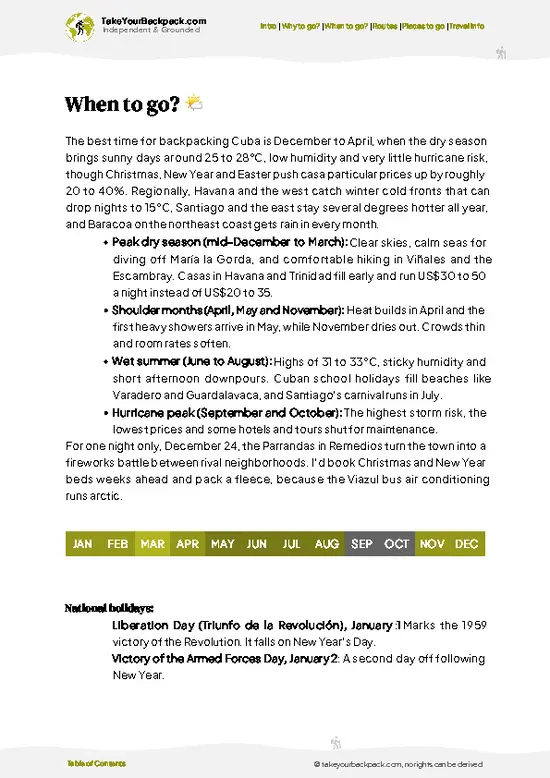
  • Weather: Holguín’s dry season runs November to April, offering sunny days and low humidity—ideal for trekking and exploring without the sticky discomfort of tropical sweat. The wet season, May to October, brings heavy showers and higher humidity, which can slow you down and soak your gear.

  • Temperature: Expect highs around 28-31°C (82-88°F) in the dry season, with cooler nights dipping to 18-21°C (64-70°F). The wet season heats up to 32-34°C (90-93°F), making midday hikes tougher and rest stops more frequent.

  • Daylight Hours: Daylight is fairly consistent year-round, about 11-12 hours daily, but longer evenings in winter months give you more time to soak in local nightlife or plan early starts.

  • Crowds: Peak tourist influx hits December through March, especially around Christmas and
read more 👉

  • Weather: Holguín’s dry season runs November to April, offering sunny days and low humidity—ideal for trekking and exploring without the sticky discomfort of tropical sweat. The wet season, May to October, brings heavy showers and higher humidity, which can slow you down and soak your gear.

  • Temperature: Expect highs around 28-31°C (82-88°F) in the dry season, with cooler nights dipping to 18-21°C (64-70°F). The wet season heats up to 32-34°C (90-93°F), making midday hikes tougher and rest stops more frequent.

  • Daylight Hours: Daylight is fairly consistent year-round, about 11-12 hours daily, but longer evenings in winter months give you more time to soak in local nightlife or plan early starts.

  • Crowds: Peak tourist influx hits December through March, especially around Christmas and Easter. Expect busier hostels and higher prices. Off-peak months see fewer travelers, giving you more breathing room and authentic local interactions.

  • Seasonal Activities: Cultural festivals like the Holguín Carnival in July add color and energy but coincide with the rainy season. If you want the vibe without the mud, aim for late dry season events or smaller local gatherings.

  • Price Fluctuations: Accommodation and transport costs spike during the dry season and holidays. Booking ahead is smart. The wet season offers better deals but factor in the trade-off with weather discomfort and fewer open tourist spots.


Pro-tip: For the smartest balance of comfort, cost, and crowd control, target late November or early April—dry enough for adventure, cool enough to enjoy, and just shy of the tourist rush.


source: climatestotravel.comJANJanuary: highly recommended for travelingFEBFebruary: highly recommended for travelingMARMarch: highly recommended for travelingAPRApril: highly recommended for travelingMAYMay: fair for travelingJUNJune: fair for travelingJULJuly: good for travelingAUGAugust: fair for travelingSEPSeptember: fair for travelingOCTOctober: fair for travelingNOVNovember: highly recommended for travelingDECDecember: highly recommended for traveling
when-to-go

✈️ The backpacker research shortcutCuba Travel Guide

An offline-friendly backpacking guide with optimized travel routes, ranked highlights, transport advice, and the best areas to stay.
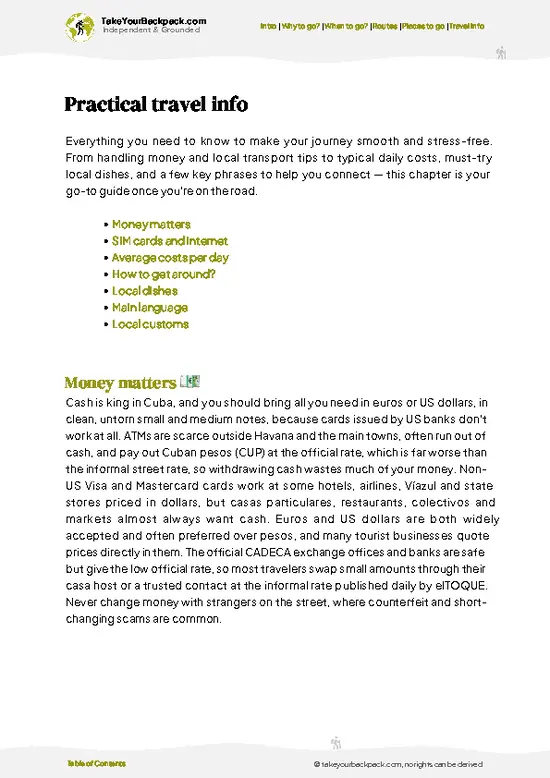
example page 0 from our offline Travel Guide for Cuba
example page 1 from our offline Travel Guide for Cuba
example page 2 from our offline Travel Guide for Cuba
example page 3 from our offline Travel Guide for Cuba
example page 4 from our offline Travel Guide for Cuba
example page 5 from our offline Travel Guide for Cuba
example page 6 from our offline Travel Guide for Cuba
example page 7 from our offline Travel Guide for Cuba
The digital guide (450 pages) contains:
121 highlights, ranked by travel appeal
Optimized 5, 10 & 15-day travel routes
Cities, national parks, landmarks, beaches
How to get around
Offline-friendly for travel without Wi-Fi
👉 Click to see all 30+ guide features

📅 Plan smarter in minutes, not weeks
Month by month travel advice
Festivals & national holidays
Budget expectations

🗺️ Go to the right places, skip the overrated ones
Honest pros & cons of destinations
Top hikes, parks & viewpoints
Lesser-known places most travelers miss
Clear “worth it vs skip it” guidance

🛏️ Travel smoothly without rookie mistakes
Best areas to stay
Transport systems explained simply
Common scams & safety advice
SIM cards, money & practical tips

🌍 Understand the country, not just visit it
Culture & traditions
52 Essential phrases & customs
Festivals worth planning around
Traveler-friendly historical context
Insights that make places more meaningful

📱 Built for real travel conditions
Fully downloadable PDF
Works completely offline
Optimized for phone use
Useful in remote areas & buses
Everything in one place
Save weeks of stressful planning
Get instant access to your full guide. 30‑day money-back guarantee.
+ Add another guide for just US$7.80

By proceeding you agree to our terms.
Sent to your inbox immediately after payment • 100% Secure Checkout
Best Backpacking Travel Advisor 2025 tourism awardBest Backpacking
Travel Advisor
2025
What others say about Take Your Backpack Guides:
⭐⭐⭐⭐⭐
Fantastic, amazing amount of information!
⭐⭐⭐⭐⭐
My goodness this is amazing, it's what I've been looking for hats off too you!
⭐⭐⭐⭐⭐
I think this is absolutely BRILLIANT
⭐⭐⭐⭐
Very complete and informative. It's still missing places, but I gotta to commend you
⭐⭐⭐⭐⭐
This is truly amazing, thank you, can't wait to explore it with my kids!
⭐⭐⭐⭐⭐
Awesome resource, thank you!
⭐⭐⭐⭐⭐
This is amazing! Can't wait to explore the ones I haven't seen
⭐⭐⭐⭐
I love this! Well done, great idea.
⭐⭐⭐⭐⭐
Thanks for taking the time to make this gem!
⭐⭐⭐⭐⭐
This might be the best website I've ever seen.
⭐⭐⭐⭐⭐
Congratulations, and thank you so much for your work; it's incredibly valuable.
⭐⭐⭐⭐
In all seriousness I think you did a great job pointing out the important spots
⭐⭐⭐⭐⭐
10/10 very good
⭐⭐⭐⭐⭐
As someone who's only just starting to visit regularly this is awesome, thank you.
⭐⭐⭐⭐
Thank you very much! I'm going to visit my dad, it's going to be very useful!
⭐⭐⭐⭐⭐
This is really cool! We'll be travelling for the first time and this definitely come in handy.
⭐⭐⭐⭐⭐
You are now our minister of culture, congratulations 👨‍💼
⭐⭐⭐⭐⭐
Just wanted to tell you that this is a pearl! Going to follow your recommendations.
⭐⭐⭐⭐⭐
This is so cool. I'll definitely be using the resource for my travels soon.
⭐⭐⭐⭐⭐
This is very impressive! Good work.
⭐⭐⭐⭐⭐
This is an amazing and informative site. Very well done!

🛏️ Where to stay?Choosing the right base

Holguín’s backpacker sweet spot is the area around the city center, especially near Parque Calixto García. This neighborhood strikes a smart balance between safety, social buzz, and budget options. It’s where you’ll find the most hostels geared toward solo travelers and groups looking to connect without breaking the bank. The streets here hum with local life—cafés, small eateries, and plazas where you can swap stories with fellow travelers or locals over a cheap coffee or a cold Cuban beer.

Compared to the quieter, more residential outskirts, staying near the center means you’re never far from … read more 👉
Holguín’s backpacker sweet spot is the area around the city center, especially near Parque Calixto García. This neighborhood strikes a smart balance between safety, social buzz, and budget options. It’s where you’ll find the most hostels geared toward solo travelers and groups looking to connect without breaking the bank. The streets here hum with local life—cafés, small eateries, and plazas where you can swap stories with fellow travelers or locals over a cheap coffee or a cold Cuban beer.

Compared to the quieter, more residential outskirts, staying near the center means you’re never far from the pulse of the city. It’s walkable, so you save time and money on transport, which is a big win in Cuba’s sometimes unpredictable transit scene. The vibe is relaxed but lively, with enough going on to keep you entertained without the tourist overload of bigger Cuban cities.

Other neighborhoods might offer more comfort or luxury, but they often come with a price hike or isolation from the social scene. For backpackers, the city center’s mix of accessibility, affordability, and atmosphere makes it the clear choice.

🚌 Getting aroundMoving around without the hassle

Holguín moves at its own pace—a blend of laid-back Caribbean rhythm and bursts of urban hustle. It’s not a city where you’ll find strict timetables etched in stone; instead, it’s a dance between patience and intuition. The flow here rewards those who read the street, catch the right wave of local energy, and accept that sometimes, the clock is just a suggestion. Your choices in getting around will reflect this balance: some options demand flexibility, others offer speed or comfort, but rarely all three at once. Understanding these trade-offs is your key to mastering Holguín’s transit game.


  • Walking: The ultimate budget move. Holguín’s central areas are compact enough to explore on foot, giving you full control over your pace and route. Zero cost, full immersion, but prepare for heat and
read more 👉
Holguín moves at its own pace—a blend of laid-back Caribbean rhythm and bursts of urban hustle. It’s not a city where you’ll find strict timetables etched in stone; instead, it’s a dance between patience and intuition. The flow here rewards those who read the street, catch the right wave of local energy, and accept that sometimes, the clock is just a suggestion. Your choices in getting around will reflect this balance: some options demand flexibility, others offer speed or comfort, but rarely all three at once. Understanding these trade-offs is your key to mastering Holguín’s transit game.


  • Walking: The ultimate budget move. Holguín’s central areas are compact enough to explore on foot, giving you full control over your pace and route. Zero cost, full immersion, but prepare for heat and uneven sidewalks.

  • Local Buses (Guaguas): Dirt-cheap at around 0.20 CUC, these buses run roughly from 6:00 AM to 8:00 PM. They’re slow, often crowded, and schedules are loose—think “whenever the bus fills up.” Comfort is minimal, but they’re a direct line to authentic daily life.

  • Shared Taxis (Colectivos): Faster and more comfortable than buses, colectivos operate on flexible schedules, usually from early morning until late evening. Expect to pay about 1-2 CUC depending on distance. They’re a smart middle ground if you want to save time without breaking the bank.

  • Private Taxis: The quickest and most comfortable option, but also the priciest. Rates start around 10 CUC for short trips and climb with distance. Ideal if you’re short on time or traveling with gear, but not a daily budget staple.

  • Bicycle Rentals: A niche but rewarding choice. Renting a bike costs roughly 5-7 CUC per day. It’s faster than walking, gives you freedom, and lets you cover more ground without the unpredictability of public transit. Comfort depends on your fitness and the terrain.

👛 Costs (as of 4 September 2026)Typical daily expenses

Backpacking in Holguín, Cuba, is a balancing act between modest costs and the occasional splurge for comfort or convenience. Here’s how the daily expenses typically stack up for an independent traveler navigating this city.
  • Dorm Accommodation (High Season): Expect to pay around $10-$15 USD per night for a bed in a shared dormitory. High season pushes prices up due to demand, especially in centrally located casas particulares.
  • Dorm Accommodation (Off-Season): Prices drop to about $7-$10 USD per night. Off-season means fewer tourists, so you can negotiate better deals or find quieter spots with similar comfort.
  • Meals: Street food and local paladares (private eateries) offer meals for $3-$7 USD. A typical lunch might be rice, beans, and some protein, filling but simple. If you want to eat
read more 👉
Backpacking in Holguín, Cuba, is a balancing act between modest costs and the occasional splurge for comfort or convenience. Here’s how the daily expenses typically stack up for an independent traveler navigating this city.
  • Dorm Accommodation (High Season): Expect to pay around $10-$15 USD per night for a bed in a shared dormitory. High season pushes prices up due to demand, especially in centrally located casas particulares.
  • Dorm Accommodation (Off-Season): Prices drop to about $7-$10 USD per night. Off-season means fewer tourists, so you can negotiate better deals or find quieter spots with similar comfort.
  • Meals: Street food and local paladares (private eateries) offer meals for $3-$7 USD. A typical lunch might be rice, beans, and some protein, filling but simple. If you want to eat at tourist-oriented restaurants, expect to pay closer to $10-$15 USD per meal.
  • Local Transport: Short rides on local buses or shared taxis cost around $0.25-$0.50 USD. These are the cheapest ways to get around but can be slow and crowded.
  • City Transport Pass: Holguín doesn’t have a formal city transport pass system like bigger cities. Budget around $1-$2 USD daily if you rely on multiple taxi rides or private transport options.
  • Basic Activities/Entry Fees: Museums and small cultural sites charge between $2-$5 USD. Some parks or viewpoints might be free or ask for a small donation. Guided tours or special experiences can push this higher.
  • Miscellaneous Expenses: This includes bottled water, snacks, occasional tips, or small souvenirs. Budget around $2-$5 USD daily to cover these incidental costs without surprises.

All told, a savvy backpacker in Holguín can expect to spend roughly $15-$30 USD per day. The lower end means sticking to dorms, street food, and local transport, while the higher end allows for more comfort and occasional extras. Knowing where to save and where to spend turns your trip into a strategic win rather than a budget scramble.


source: cubatravel.cu
⚠️ Prices can change and everyone travels differently, so take this as a rough guide. Hope it helps you plan your adventure!

🚌 Day tripsBest day trips from Holguín

Holguín, Cuba, is a fantastic launchpad for day trips that pack a punch without draining your wallet or time. Here’s how to make the most of your adventures.

Guardalavaca Beach
Just a quick 40-minute bus ride from Holguín, Guardalavaca Beach is a slice of paradise. The soft, white sand and clear turquoise waters are perfect for a day of sunbathing or swimming. You can grab a meal at a local paladar for around $10, making it a budget-friendly escape. The best time to visit is during the dry season from November to April. A common mistake? Overpacking your beach gear; just bring the essentials and enjoy the laid-back vibe.


Biran
About an hour away, Biran is the birthplace of Fidel Castro and offers a glimpse into Cuba’s revolutionary history. The site includes a modest museum and the … read more 👉
Holguín, Cuba, is a fantastic launchpad for day trips that pack a punch without draining your wallet or time. Here’s how to make the most of your adventures.

Guardalavaca Beach
Just a quick 40-minute bus ride from Holguín, Guardalavaca Beach is a slice of paradise. The soft, white sand and clear turquoise waters are perfect for a day of sunbathing or swimming. You can grab a meal at a local paladar for around $10, making it a budget-friendly escape. The best time to visit is during the dry season from November to April. A common mistake? Overpacking your beach gear; just bring the essentials and enjoy the laid-back vibe.


Biran
About an hour away, Biran is the birthplace of Fidel Castro and offers a glimpse into Cuba’s revolutionary history. The site includes a modest museum and the Castro family home, which you can explore for a small entrance fee. This trip is ideal for history buffs and those looking to understand Cuba beyond the tourist facade. Aim for a visit in the cooler months for a more comfortable experience. Many first-timers overlook the local guides who can provide rich context—don’t miss out!


Sierra de Nipe
For the adventurous spirit, the Sierra de Nipe is a hidden treasure just under two hours from Holguín. This mountainous region offers hiking trails with stunning views and the chance to see local wildlife. Pack a picnic and enjoy the serenity of nature. The best time to hike is during the dry season, but be prepared for sudden weather changes. A common pitfall is underestimating the trail difficulty; wear sturdy shoes and stay hydrated.


Cayo Saetía
Roughly two hours away, Cayo Saetía is an island known for its wildlife and pristine beaches. You can take a jeep safari to spot deer and other animals roaming freely. The entrance fee is reasonable, and you can easily spend the day exploring. Visit during the dry season for the best experience. Many travelers forget to bring cash for snacks or drinks on the island, so plan ahead.
👉 Explore Cayo Saetía
Want to know what more Cuba offers?
The Cuba Travel Guide describes 121 highlights, from cities to national parks, from beaches to hikes

Get the Travel Guide -

🍲 FoodWhat to Eat & Drink

In Holguín, food and drinks are a vibrant part of the local culture, offering a delightful mix of flavors that tell the story of the region. You can’t miss trying congrí, a savory blend of rice and black beans, often paired with ropa vieja, shredded beef simmered in a rich tomato sauce. For a lighter bite, grab a tostón, crispy fried plantains that are perfect for snacking.

Street food is where the magic happens. Vendors line the streets, serving up empanadas stuffed with everything from cheese to spiced meat. The aroma of grilled meats wafts through the air, drawing you in. Markets buzz with energy, where locals gather to share meals and stories.

When it comes to drinks, don’t overlook a refreshing mojito or a glass of Cuban rum. It’s customary to toast with “¡Salud!” before sipping. Eating … read more 👉
In Holguín, food and drinks are a vibrant part of the local culture, offering a delightful mix of flavors that tell the story of the region. You can’t miss trying congrí, a savory blend of rice and black beans, often paired with ropa vieja, shredded beef simmered in a rich tomato sauce. For a lighter bite, grab a tostón, crispy fried plantains that are perfect for snacking.

Street food is where the magic happens. Vendors line the streets, serving up empanadas stuffed with everything from cheese to spiced meat. The aroma of grilled meats wafts through the air, drawing you in. Markets buzz with energy, where locals gather to share meals and stories.

When it comes to drinks, don’t overlook a refreshing mojito or a glass of Cuban rum. It’s customary to toast with “¡Salud!” before sipping. Eating is often communal, so don’t be surprised if you’re invited to share a table or a plate. Embrace the warmth of the locals; it’s all part of the experience.

🛡️ SafetyTraveler Safety Guide

Holguín is generally safe for backpackers, but a few smart choices can enhance your experience. Stick to well-lit areas at night, especially if you’re solo. The main square and popular streets are lively and secure, but stray too far into quieter neighborhoods after dark, and you might feel uneasy.

Be aware of common scams, like taxi drivers inflating fares. Always agree on a price before you hop in. Street vendors can be persistent, but a polite “no, gracias” usually does the trick.

Keep your belongings close, especially in crowded areas. A crossbody bag can deter pickpockets. Overall, trust your instincts and stay aware. With a little mindfulness, you can navigate Holguín confidently and enjoy its vibrant culture without unnecessary hassle.

FAQFrequently asked questions about Holguín

3 to 4 days are sufficient to explore Holguín and nearby attractions. This allows time to visit the city’s main parks, museums, and the nearby beaches like Guardalavaca. Day trips to natural sites such as Loma de la Cruz are also manageable within this timeframe.
Yes, Holguín is generally safe for solo backpackers. Normal precautions like avoiding poorly lit areas at night and keeping valuables secure are advised. The local community is friendly, and petty crime is relatively low compared to larger Cuban cities.
Holguín is known for its natural beauty, including lush landscapes and nearby beaches like Guardalavaca. It is also famous for Loma de la Cruz, a hill with panoramic views of the city. The city has a rich cultural scene with museums and colonial architecture.
⚠️ Things can change over time, so always validate details locally before you go.

Other Cuban cities near Holguín

Explore more nearby:

  • Puerto Padre—windy bay, lighthouse, sugar port| 49 km away
  • Mayarí—mining town, mountain views, river valley| 65 km away
  • Bayamo—horse-drawn carriages, independence history, quiet streets| 69 km away

💡 Not sure where to go next?
Create a personalized itinerary for Cuba including Holguín and the places that fit your trip.

Generate my itinerary

👉 Discover all cities

Or checkout all Cuba has to offer (think cities, towns, villages, national parks, hikes, beaches, festivals)
Country photo of Cuba

We 💚 feedbackSumming up the experience

Holguín’s charm lies in its vibrant local culture and the warmth of its people. You’ll find authentic experiences that feel like a breath of fresh air compared to more touristy spots. However, be prepared for limited infrastructure; some roads are rough, and services can be slow. Embrace the slower pace, and you’ll uncover the city’s true essence. It’s a trade-off, but one that’s worth making for genuine connection.

✈️ When did I visit Cuba?
As part of my 1.5 year travel around the world trip, I visited Cuba for 6 weeks in February, March 2016, being extremely lucky that that coincided with the free concert of The Rolling Stones.

✍️ Help improve this page!
The information on this page is based on my own backpacking experience in Cuba, supplemented with up-to-date research and feedback from other travelers. Travel details can change, so if you notice anything outdated or incomplete, feel free to let me know.


🙋‍♂️ Give feedback

👋 Meet the founderWho’s Behind Take Your Backpack?

Johan, backpacker and founder of TakeYourBackpackHi, I’m Johan (Netherlands 🇳🇱), the creator of TakeYourBackpack. Over the past decade, I’ve backpacked through 80+ countries across six continents, gaining extensive experience with independent travel, long-term trips, and overland routes.

This site is built on a combination of firsthand travel experience and carefully curated insights from other backpackers. Many guides are based on places I’ve personally visited, while others bring together tips, observations, and practical advice shared by trusted travelers I’ve met along the way.

The goal is to provide realistic, experience-driven guidance — not generic itineraries — so you can explore destinations with better context, clearer expectations, and more confidence.

Get full Cuba guide •
Instant download • 121 highlights • Full Offline guide