×

Cuba🇨🇺 | best citiesDiscover the 10 Best cities Across Cuba

Cuba’s cities are a vibrant mix of history, culture, and local life, each offering a unique experience for the backpacker. From the bustling streets of Havana to the laid-back charm of Trinidad, the differences are stark. Major hubs like Havana provide rich nightlife and transport connections, while smaller towns offer an intimate glimpse into daily Cuban life. Seasonal nuances affect everything from crowds to costs, with peak tourist seasons driving up prices and foot traffic. Choosing the right city impacts your vibe, budget, and cultural immersion. Understanding these dynamics is crucial for independent travelers seeking authenticity in their Cuban adventure.

By Johan Kruseman 🇳🇱 | Updated September 5, 2026
Explore the best towns in Cuba

Why go?What Makes Them Special

Cuba’s cities are a living tapestry of cultural diversity and historical depth, shaped by centuries of colonialism, revolution, and resilience. Unlike many countries, Cuba’s urban landscapes are not just backdrops for tourism; they are vibrant expressions of identity. The blend of Spanish, African, and indigenous influences creates a unique cultural fabric that you won’t find elsewhere.

However, this richness comes with trade-offs. The transport networks can be a challenge, with limited options that often require patience and flexibility. Travelers may find themselves spending more time in transit than they anticipated, which can dilute the immersive experience. Yet, this slower pace allows for deeper connections with locals and a more nuanced understanding of daily life.

Cuba’s climatic read more 👉
Cuba’s cities are a living tapestry of cultural diversity and historical depth, shaped by centuries of colonialism, revolution, and resilience. Unlike many countries, Cuba’s urban landscapes are not just backdrops for tourism; they are vibrant expressions of identity. The blend of Spanish, African, and indigenous influences creates a unique cultural fabric that you won’t find elsewhere.

However, this richness comes with trade-offs. The transport networks can be a challenge, with limited options that often require patience and flexibility. Travelers may find themselves spending more time in transit than they anticipated, which can dilute the immersive experience. Yet, this slower pace allows for deeper connections with locals and a more nuanced understanding of daily life.

Cuba’s climatic conditions also play a role in shaping urban experiences. The tropical climate can be oppressive in summer, making exploration less enjoyable. But the cooler months offer a perfect backdrop for wandering through the streets, where history whispers from crumbling facades and vibrant street art.

Accessibility can be another hurdle. While some cities are more tourist-friendly, others require a willingness to step off the beaten path. This is where the real magic lies—embracing the unexpected and discovering the soul of Cuba beyond the glossy travel brochures. Understanding these dynamics is crucial for anyone looking to truly appreciate what Cuba’s cities have to offer.
Behind the Scenes of Selection
The list of best cities in Cuba is created based on culture, vibe, attractions, transport ease, and local charm. If you feel a city is missing in this list, please let us know.

When to go?Best Time to Visit Cuba for cities

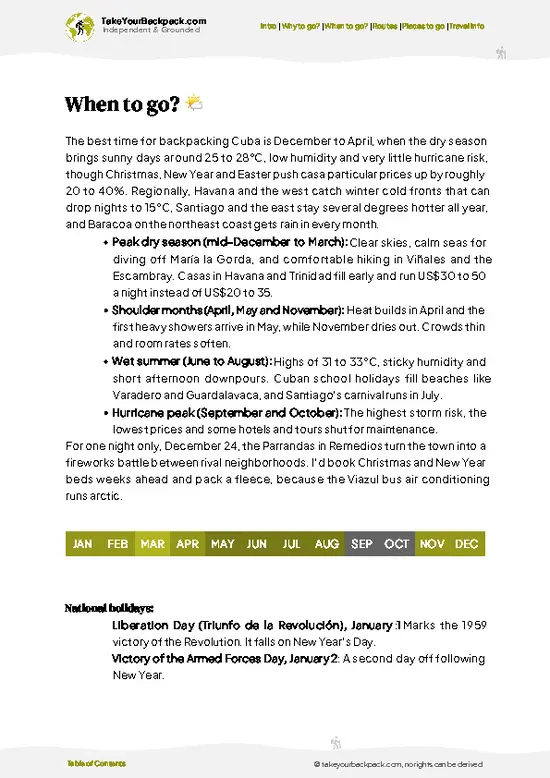
Seasonality in Cuba plays a crucial role in shaping the experience of visiting its cities. The dry season, typically from November to April, offers the most pleasant weather. Expect warm temperatures and lower humidity, making it ideal for exploring. However, this is also peak tourist season. Crowds swell, and prices for accommodations and activities rise significantly.

Shoulder seasons, like late spring and early fall, present a mixed bag. While temperatures can be hotter and humidity higher, the trade-off is fewer tourists and lower costs. This is when you can experience a more authentic vibe, but be prepared for the occasional rain shower.

Summer brings intense heat and humidity, along with the risk of hurricanes. While it’s less crowded, the sweltering conditions can be uncomfortable … read more 👉
Seasonality in Cuba plays a crucial role in shaping the experience of visiting its cities. The dry season, typically from November to April, offers the most pleasant weather. Expect warm temperatures and lower humidity, making it ideal for exploring. However, this is also peak tourist season. Crowds swell, and prices for accommodations and activities rise significantly.

Shoulder seasons, like late spring and early fall, present a mixed bag. While temperatures can be hotter and humidity higher, the trade-off is fewer tourists and lower costs. This is when you can experience a more authentic vibe, but be prepared for the occasional rain shower.

Summer brings intense heat and humidity, along with the risk of hurricanes. While it’s less crowded, the sweltering conditions can be uncomfortable for city exploration.

Cultural events often occur during peak tourist months, offering vibrant local experiences. Missing these can mean losing out on the essence of Cuban culture. Weigh the desire for fewer crowds against the chance to engage with local traditions.

Understanding these seasonal dynamics is essential for planning a trip that balances comfort, cost, and cultural immersion.

city hoppingHow to Combine cities Into One Trip

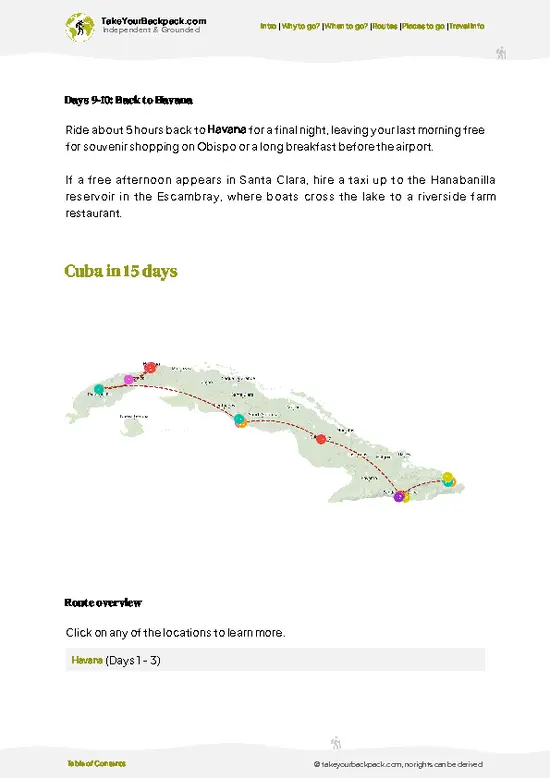
Traveling through Cuba requires a smart approach to maximize your experience. Start by clustering cities by region. The western part, including Havana and Viñales, is a great introduction. Then, head east to Trinidad and Cienfuegos, which are close enough to explore in a few days. Finally, finish in Santiago de Cuba for a taste of the island’s rich history.

When planning, consider the travel time between cities. Havana to Viñales takes about two to three hours by bus, while Trinidad to Cienfuegos is just an hour. Allocate at least two to three days in each city to soak up the local culture, food, and music. Rushing through will leave you with a checklist rather than memories.

A common mistake is trying to see too much too quickly. While it’s tempting to tick off cities, depth often trumps read more 👉
Traveling through Cuba requires a smart approach to maximize your experience. Start by clustering cities by region. The western part, including Havana and Viñales, is a great introduction. Then, head east to Trinidad and Cienfuegos, which are close enough to explore in a few days. Finally, finish in Santiago de Cuba for a taste of the island’s rich history.

When planning, consider the travel time between cities. Havana to Viñales takes about two to three hours by bus, while Trinidad to Cienfuegos is just an hour. Allocate at least two to three days in each city to soak up the local culture, food, and music. Rushing through will leave you with a checklist rather than memories.

A common mistake is trying to see too much too quickly. While it’s tempting to tick off cities, depth often trumps breadth. Budget for comfortable transport options; the local buses can be slow and crowded. Prioritize experiences that resonate with you, whether it’s a salsa class in Havana or a hike in Viñales.

Flexibility is key. Allow for spontaneous detours or longer stays if a place captivates you. Balancing speed with depth will yield the most rewarding journey through Cuba’s vibrant cities.

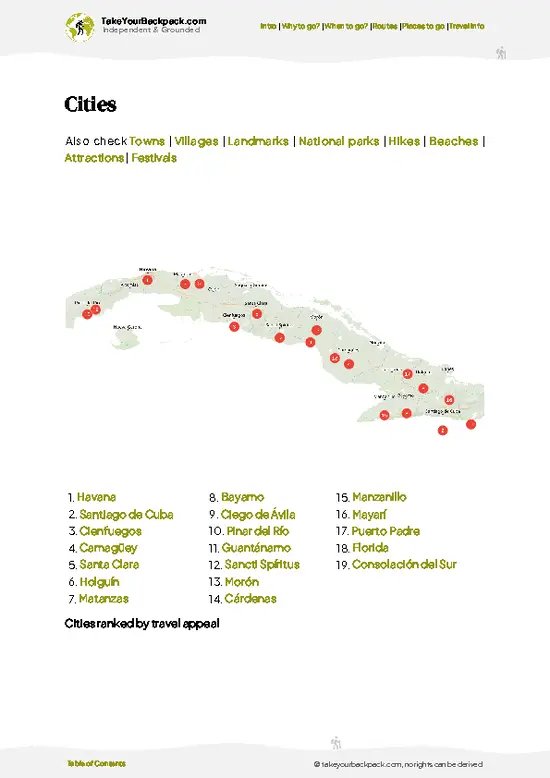
The ListHighly Recommended cities of Cuba

1 Havana

Malecón seawall, colonial plazas, street music

Walk from crumbling mansions to lively squares, tracing the city’s contrasts as locals gather along the coast and music drifts through the air.

Cuba - Havana

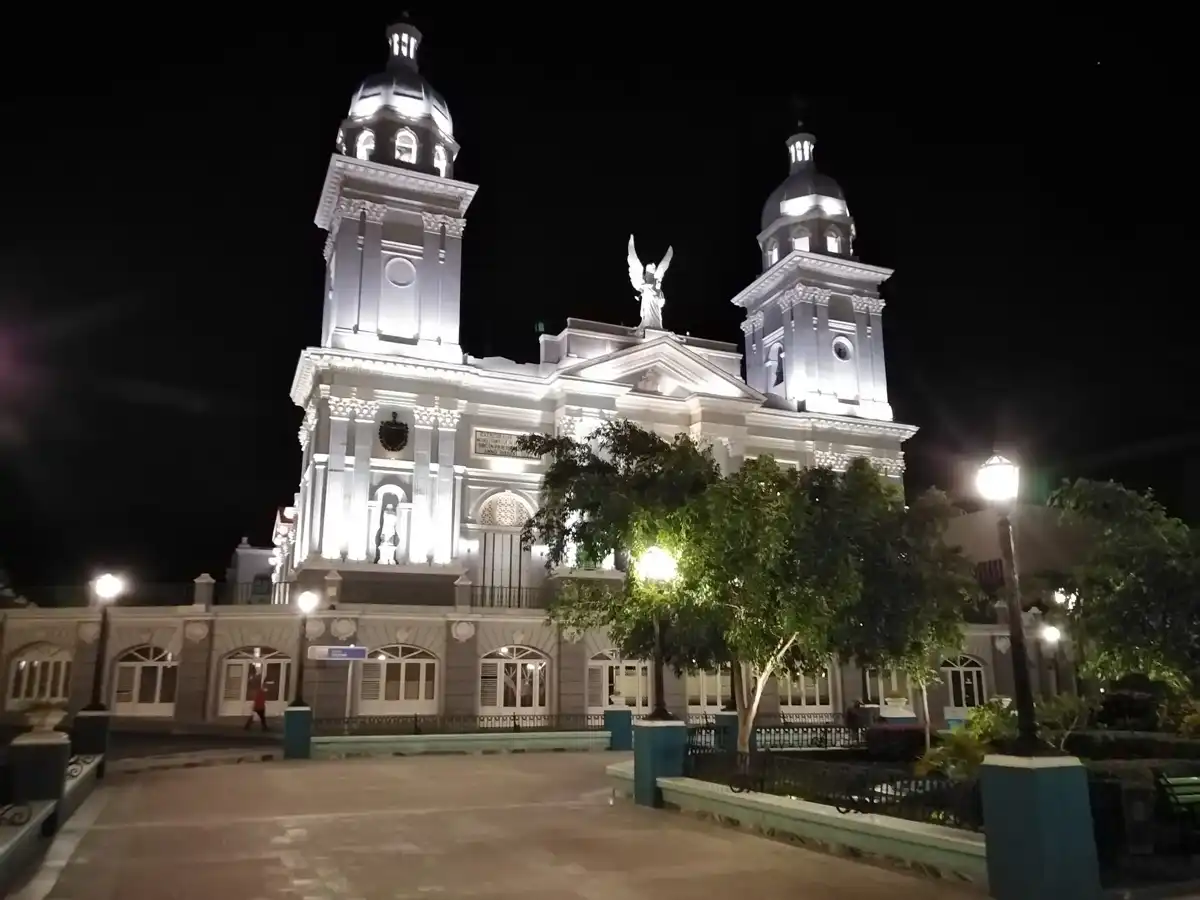
2 Santiago de Cuba

steep hills, carnival traditions, Afro-Caribbean culture

Climb vibrant neighborhoods built on slopes, join street celebrations, and experience a city where music and history shape every encounter.

cuba-city-santiago-de-cuba
© Google | Marcelo Cirilo

3 Cienfuegos

French architecture, seaside boulevard, yacht harbor

Admire orderly streets and elegant facades, then linger along the waterfront where sailboats and sea breezes shape the city’s mood.

4 Camagüey

maze-like alleys, clay pot plazas, pastel houses

Lose yourself in winding streets designed to confuse pirates, where hidden squares and colorful facades reward those who explore on foot.

5 Santa Clara

Che Guevara sites, student life, public art

Visit memorials and murals, feel the energy of university crowds, and discover a city shaped by its revolutionary legacy and creative spirit.

6 Holguín

hilltop views, leafy plazas, city parks

Climb city hills for panoramic views, relax in shaded squares, and experience a slower pace away from Cuba’s main tourist routes.

7 Matanzas

river bridges, Afro-Cuban music, neoclassical facades

Wander a city where rivers cut through neighborhoods, local rhythms echo from open windows, and faded architecture hints at a layered past.

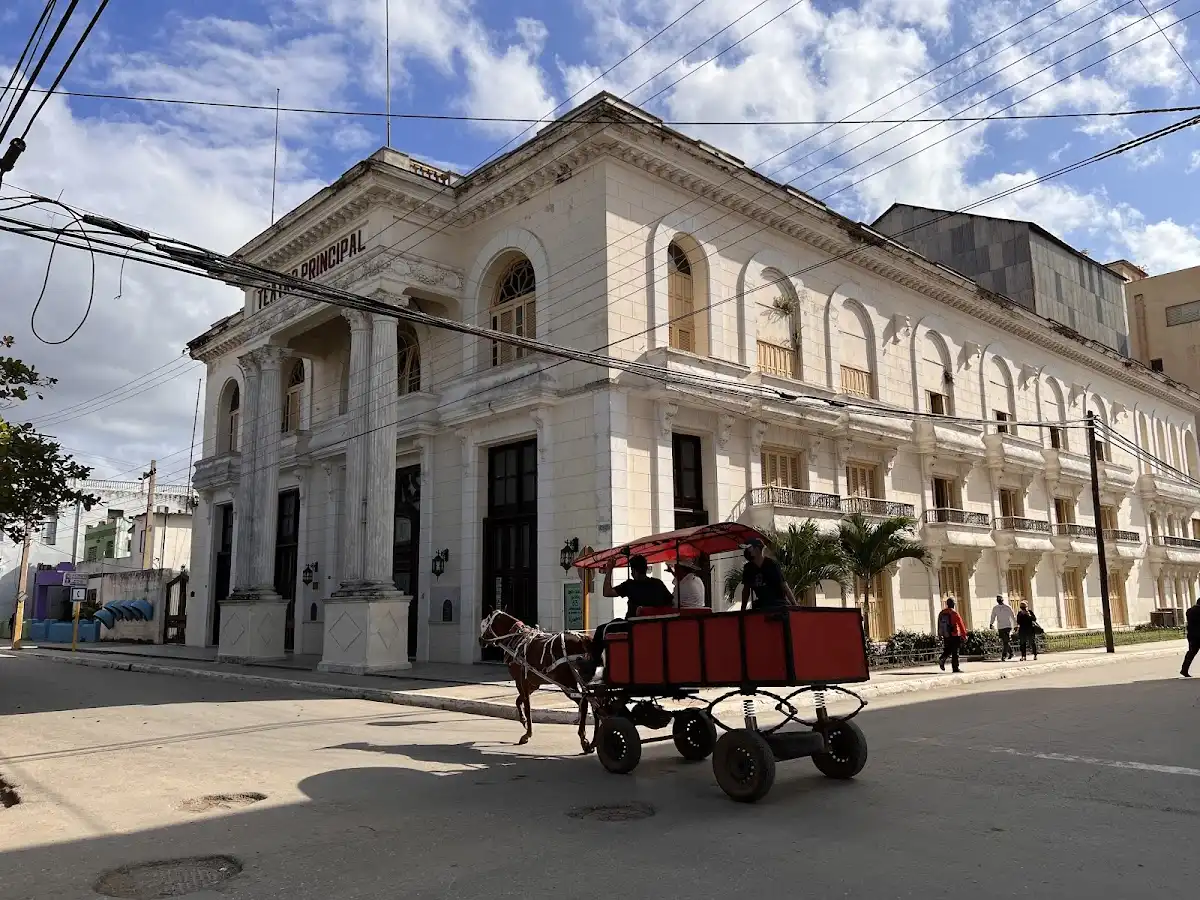
8 Bayamo

horse-drawn carriages, independence history, quiet streets

Ride through calm avenues in a city where Cuba’s independence movement began, and evenings bring locals out for slow, social strolls.

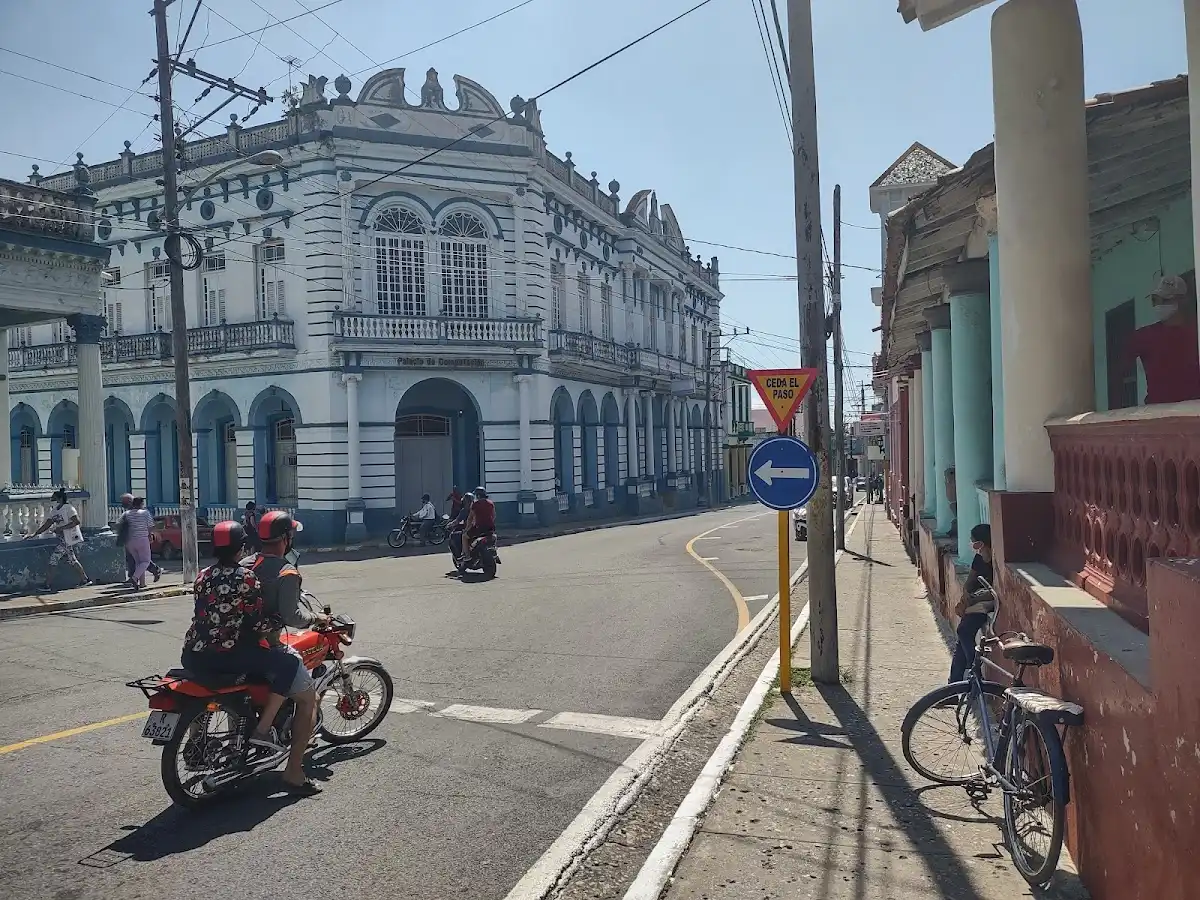
9 Ciego de Ávila

central boulevard, modernist buildings, inland crossroads

Stroll wide avenues lined with mid-century structures in a city that serves as a practical stopover for travelers heading to Cuba’s northern keys.

cuba-city-ciego-de-avila
© Google |

10 Pinar del Río

tobacco farms, limestone hills, rural markets

Travel through a city surrounded by farmland, where the scent of drying tobacco and views of green valleys define the local experience.

cuba-city-pinar-del-rio
© Google |

11 Guantánamo

mountain backdrop, Haitian influence, local markets

Experience a city framed by distant peaks, where cross-cultural traditions and lively street commerce set it apart from the rest of Cuba.

12 Sancti Spiritus

arched bridges, cobbled lanes, pastel buildings

Cross centuries-old bridges into a compact center, where narrow streets and painted facades reflect the city’s colonial roots.

13 Morón

railway junction, lagoon access, sugar legacy

Travel through a crossroads town that links inland Cuba to the cays, with a landscape marked by canals, rail lines, and agricultural history.

14 Cárdenas

bicycle taxis, sugar industry, grid streets

Navigate a city of straight avenues and working-class neighborhoods, where pedal-powered transport and industrial heritage shape daily life.

15 Manzanillo

seafront promenade, seafood stalls, Moorish architecture

Walk the waterfront at sunset, sample fresh catch from street vendors, and spot ornate buildings with unexpected design influences.

16 Mayarí

mining town, mountain views, river valley

Venture into a place where hills rise above the plains, and the legacy of mining shapes both the scenery and the local economy.

17 Puerto Padre

windy bay, lighthouse, sugar port

Feel the breeze off the broad bay, explore the lighthouse, and watch ships come and go from a town shaped by the sugar trade.

cuba-city-puerto-padre
© Google |

18 Florida

cattle ranches, citrus groves, grid layout

Navigate a town built for work and trade, surrounded by fields and orchards that supply much of the region’s fresh produce.

19 Consolación del Sur

tobacco barns, rural lanes, limestone outcrops

Cycle past drying sheds and rocky hills in a town that serves as a gateway to Cuba’s most productive tobacco region.

Think you know Cuba?

Prove you’re a true local — uncover 9 lesser-known cities in Cuba that locals tend to keep to themselves.
Loading the map 🌍

Expert viewWhat You Should Know

Transport Hubs
Cuba’s transport system is a mixed bag. Major cities like Havana and Santiago de Cuba serve as the primary hubs, but don’t expect seamless connections. Buses, while the most reliable option, can be slow and often overbooked. If you’re looking to hop between cities, prepare for delays and a lack of air conditioning. Private taxis are available but can be pricey, especially for longer distances. If you’re on a budget, consider shared taxis, which can be a fun way to meet locals, but they come with the risk of cramped quarters and unpredictable schedules.

Urban Pacing
Cuba’s cities have a rhythm all their own. You’ll find a slower pace, which can be refreshing but also frustrating if you’re used to the hustle of other destinations. Take your time to soak in the local culture, … read more 👉
Transport Hubs
Cuba’s transport system is a mixed bag. Major cities like Havana and Santiago de Cuba serve as the primary hubs, but don’t expect seamless connections. Buses, while the most reliable option, can be slow and often overbooked. If you’re looking to hop between cities, prepare for delays and a lack of air conditioning. Private taxis are available but can be pricey, especially for longer distances. If you’re on a budget, consider shared taxis, which can be a fun way to meet locals, but they come with the risk of cramped quarters and unpredictable schedules.

Urban Pacing
Cuba’s cities have a rhythm all their own. You’ll find a slower pace, which can be refreshing but also frustrating if you’re used to the hustle of other destinations. Take your time to soak in the local culture, but be aware that this leisurely vibe can lead to longer waits for services and transportation. If you’re trying to cram too many cities into a short trip, you’ll miss the nuances that make each place unique. Aim for three to four cities for a balanced experience, allowing at least two to three days in each to truly engage with the local scene.

Local Costs
Costs can vary widely depending on where you are and how you choose to travel. Eating at local paladares (private restaurants) is generally affordable and gives you a taste of authentic Cuban cuisine, but prices can spike in tourist-heavy areas. Accommodations range from budget hostels to mid-range casas particulares, which offer a more personal touch. Expect to spend more in cities that attract tourists, but remember that the experience often justifies the cost. If you’re pinching pennies, stick to local markets for food and avoid tourist traps that charge inflated prices for mediocre experiences.

Trade-offs: Quick Exploration vs. Deep Immersion
The temptation to see as much as possible can lead to a rushed experience. If you’re hopping from city to city, you might catch the highlights but miss the heart of Cuba. Each city has its own character, shaped by history, music, and local traditions. If you choose to explore quickly, you’ll likely find yourself in a cycle of travel fatigue. Instead, consider focusing on fewer cities and diving deeper into each one. This approach allows for spontaneous encounters and a richer understanding of the culture.

Planning and Prioritizing
When planning your trip, think about what you want to get out of it. Are you after the vibrant arts scene, historical landmarks, or the beach? Each city offers a different flavor. Prioritize based on your interests, but also be flexible. Infrastructure can be unpredictable, so allow for some wiggle room in your itinerary. If you find a city that resonates with you, don’t hesitate to extend your stay.

Safety & Cultural Considerations
Cuba is generally safe for travelers, but like anywhere, stay aware of your surroundings. Petty crime can occur, especially in crowded areas. Engage with locals respectfully; they’re often eager to share their stories and culture. Learning a few basic Spanish phrases can go a long way in building rapport. Remember, you’re not just a tourist; you’re a guest in their home. Embrace the local customs and be open to the unexpected.

Cuba is a place where the journey is as important as the destination. By understanding the trade-offs and planning wisely, you can create a travel experience that’s not just about checking boxes, but about connecting with the soul of the island.

✈️ The backpacker research shortcutCuba Travel Guide

An offline-friendly backpacking guide with optimized travel routes, ranked highlights, transport advice, and the best areas to stay.
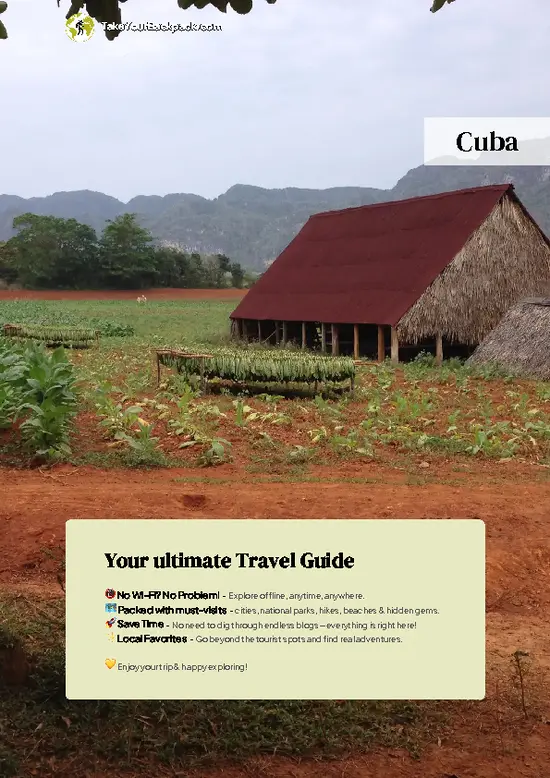
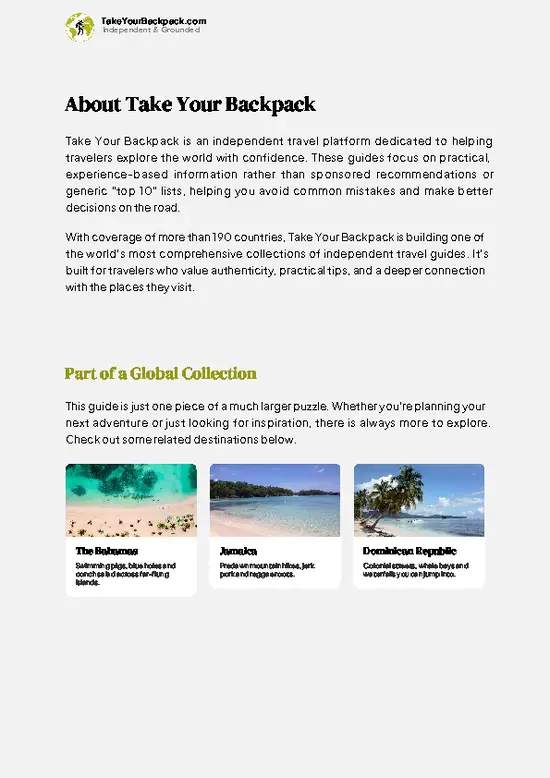
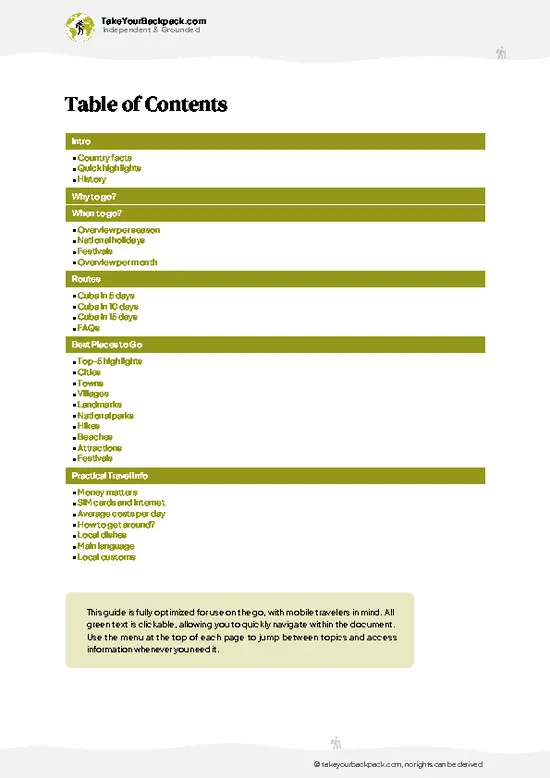
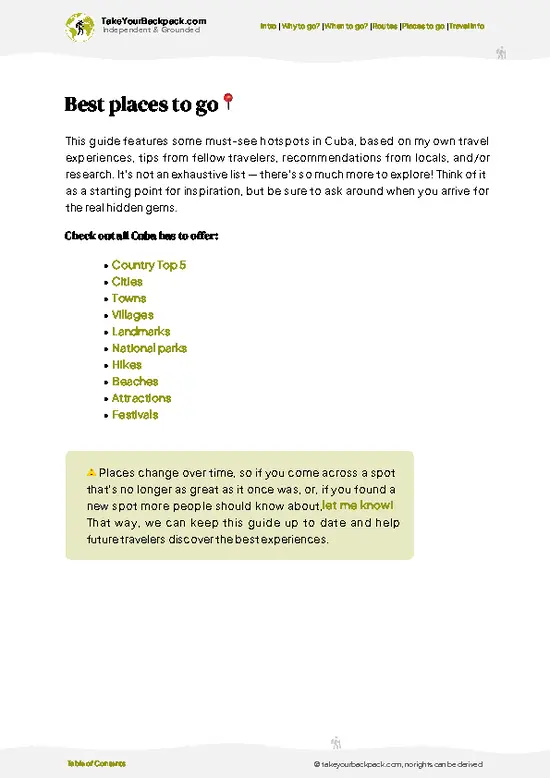
example page 0 from our offline Travel Guide for Cuba
example page 1 from our offline Travel Guide for Cuba
example page 2 from our offline Travel Guide for Cuba
example page 3 from our offline Travel Guide for Cuba
example page 4 from our offline Travel Guide for Cuba
example page 5 from our offline Travel Guide for Cuba
example page 6 from our offline Travel Guide for Cuba
example page 7 from our offline Travel Guide for Cuba
The digital guide (450 pages) contains:
121 highlights, ranked by travel appeal
Optimized 5, 10 & 15-day travel routes
Cities, national parks, landmarks, beaches
How to get around
Offline-friendly for travel without Wi-Fi
👉 Click to see all 30+ guide features

📅 Plan smarter in minutes, not weeks
Month by month travel advice
Festivals & national holidays
Budget expectations

🗺️ Go to the right places, skip the overrated ones
Honest pros & cons of destinations
Top hikes, parks & viewpoints
Lesser-known places most travelers miss
Clear “worth it vs skip it” guidance

🛏️ Travel smoothly without rookie mistakes
Best areas to stay
Transport systems explained simply
Common scams & safety advice
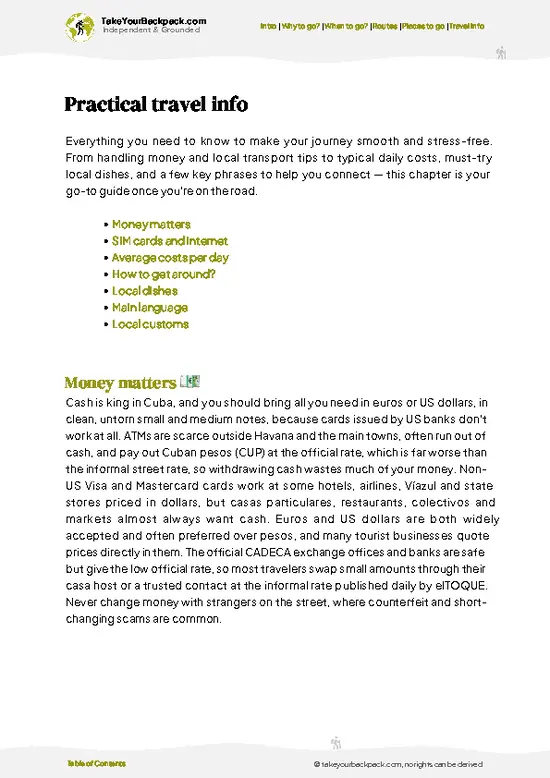
SIM cards, money & practical tips

🌍 Understand the country, not just visit it
Culture & traditions
52 Essential phrases & customs
Festivals worth planning around
Traveler-friendly historical context
Insights that make places more meaningful

📱 Built for real travel conditions
Fully downloadable PDF
Works completely offline
Optimized for phone use
Useful in remote areas & buses
Everything in one place
Save weeks of stressful planning
Get instant access to your full guide. 30‑day money-back guarantee.
+ Add another guide for just US$7.80

By proceeding you agree to our terms.
Sent to your inbox immediately after payment • 100% Secure Checkout
Best Backpacking Travel Advisor 2025 tourism awardBest Backpacking
Travel Advisor
2025
What others say about Take Your Backpack Guides:
⭐⭐⭐⭐⭐
Fantastic, amazing amount of information!
⭐⭐⭐⭐⭐
My goodness this is amazing, it's what I've been looking for hats off too you!
⭐⭐⭐⭐⭐
I think this is absolutely BRILLIANT
⭐⭐⭐⭐
Very complete and informative. It's still missing places, but I gotta to commend you
⭐⭐⭐⭐⭐
This is truly amazing, thank you, can't wait to explore it with my kids!
⭐⭐⭐⭐⭐
Awesome resource, thank you!
⭐⭐⭐⭐⭐
This is amazing! Can't wait to explore the ones I haven't seen
⭐⭐⭐⭐
I love this! Well done, great idea.
⭐⭐⭐⭐⭐
Thanks for taking the time to make this gem!
⭐⭐⭐⭐⭐
This might be the best website I've ever seen.
⭐⭐⭐⭐⭐
Congratulations, and thank you so much for your work; it's incredibly valuable.
⭐⭐⭐⭐
In all seriousness I think you did a great job pointing out the important spots
⭐⭐⭐⭐⭐
10/10 very good
⭐⭐⭐⭐⭐
As someone who's only just starting to visit regularly this is awesome, thank you.
⭐⭐⭐⭐
Thank you very much! I'm going to visit my dad, it's going to be very useful!
⭐⭐⭐⭐⭐
This is really cool! We'll be travelling for the first time and this definitely come in handy.
⭐⭐⭐⭐⭐
You are now our minister of culture, congratulations 👨‍💼
⭐⭐⭐⭐⭐
Just wanted to tell you that this is a pearl! Going to follow your recommendations.
⭐⭐⭐⭐⭐
This is so cool. I'll definitely be using the resource for my travels soon.
⭐⭐⭐⭐⭐
This is very impressive! Good work.
⭐⭐⭐⭐⭐
This is an amazing and informative site. Very well done!

🛏️ Where to stay?Where to Stay: Cuba Edition

Yes — there are hostels and plenty of budget accommodation in Cuba, from private casas particulares (homestays) to small hostales and guesthouses; expect basic rooms, variable Wi‑Fi and services, and a common preference for cash or tourist cards in many places.
In Havana, Habana Vieja offers the most cheap hostels and casas with instant access to historic sights and nightlife but is noisy and crowded; Centro Habana is cheaper with good transport links but can feel rough and cramped; Vedado is quieter with more modern guesthouses and later nightlife but fewer ultra‑budget beds; Miramar is safer and quiet with limited budget choices and longer transit to central attractions; outside Havana, … read more 👉
Yes — there are hostels and plenty of budget accommodation in Cuba, from private casas particulares (homestays) to small hostales and guesthouses; expect basic rooms, variable Wi‑Fi and services, and a common preference for cash or tourist cards in many places.
In Havana, Habana Vieja offers the most cheap hostels and casas with instant access to historic sights and nightlife but is noisy and crowded; Centro Habana is cheaper with good transport links but can feel rough and cramped; Vedado is quieter with more modern guesthouses and later nightlife but fewer ultra‑budget beds; Miramar is safer and quiet with limited budget choices and longer transit to central attractions; outside Havana, Trinidad and Viñales concentrate cheap stays near key sights with minimal night services, while Santiago de Cuba has a lively scene but fewer tourist beds.

If you enjoy meeting fellow travelers, consider choosing hostels with high ratings for atmosphere. On the other hand, if you prefer having your own space, a hotel might be a better option.

CubaExplore Beyond This Category

👋 Meet the founderWho’s Behind Take Your Backpack?

Johan, backpacker and founder of TakeYourBackpackHi, I’m Johan (Netherlands 🇳🇱), the creator of TakeYourBackpack. Over the past decade, I’ve backpacked through 80+ countries across six continents, gaining extensive experience with independent travel, long-term trips, and overland routes.

This site is built on a combination of firsthand travel experience and carefully curated insights from other backpackers. Many guides are based on places I’ve personally visited, while others bring together tips, observations, and practical advice shared by trusted travelers I’ve met along the way.

The goal is to provide realistic, experience-driven guidance — not generic itineraries — so you can explore destinations with better context, clearer expectations, and more confidence.

Get full Cuba guide •
Instant download • 121 highlights • Full Offline guide