×

Cuba🇨🇺 | citiesCamagüeyTangled lanes, clay tinajones, sculpted plazas, ballet | things to do and best time to go

Explore Playa BibijaguaExplore Cienfuegos

Backpacking in Camagüey
UNESCO World Heritage site
🏆 Top pickcity ranked #5
By Johan Kruseman 🇳🇱 | Updated October 22, 2026

Camagüey’s street plan was deliberately tangled, with crooked lanes, dead ends and small plazas, and the layout has helped earn the center UNESCO status. Maps fail here. The city sits in central Cuba, roughly midway along the island, and it suits travelers who like wandering over ticking off sights. On my first afternoon I trusted a phone map, walked a loop of nearly an hour, and ended up back at the same church. It taught me to follow the tinaja clay jars and the plazas instead. Wandering costs only time, and that time is the best value here, so skip taxis within the center. Nightlife is mild and beaches are absent, so party seekers should pass. Anyone who wants quiet colonial streets will be happy. The loop finished at a courtyard with a cracked blue tinaja collecting rainwater.

Discover everything you want to know in the 📖 Cuba Travel Guide.


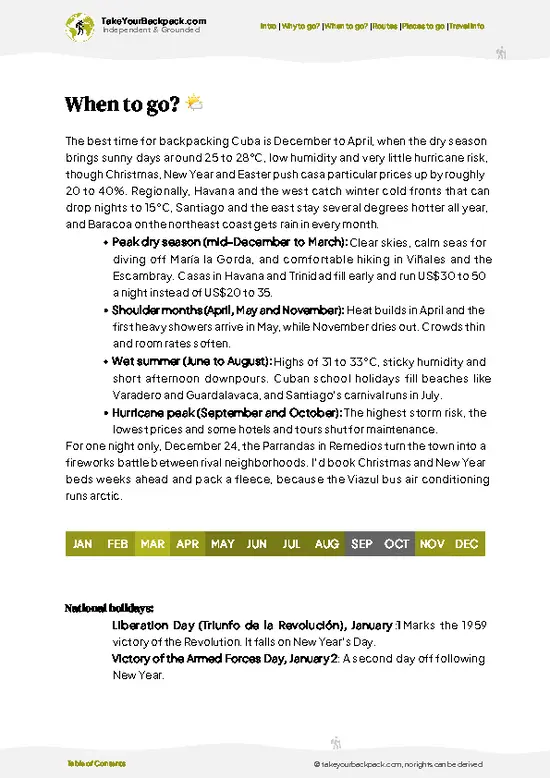
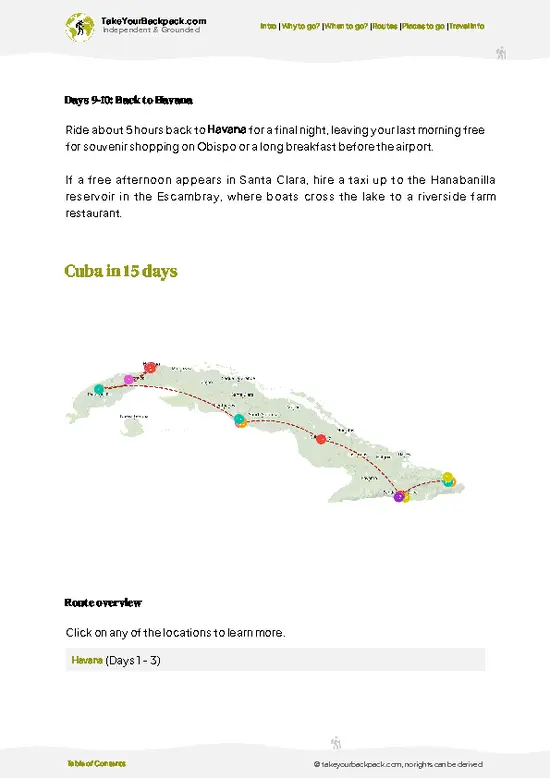
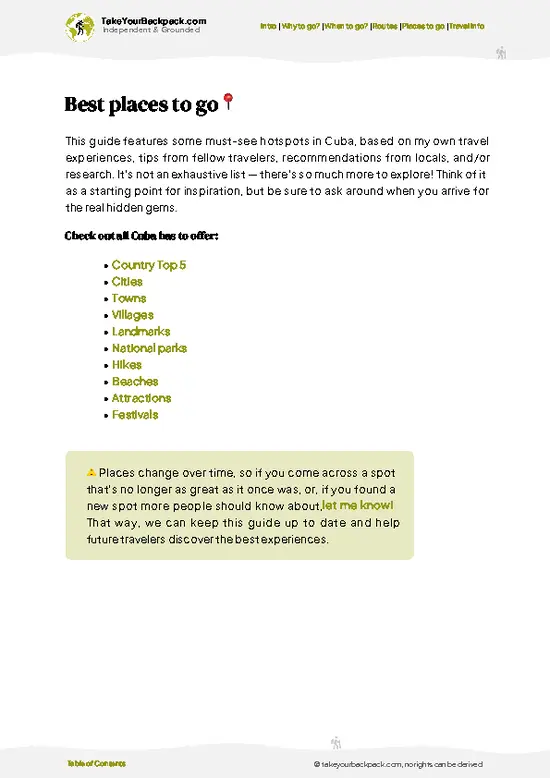
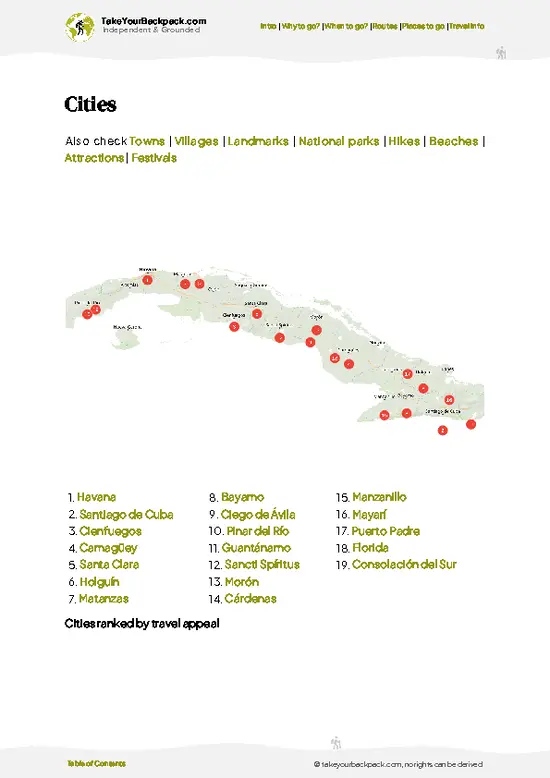
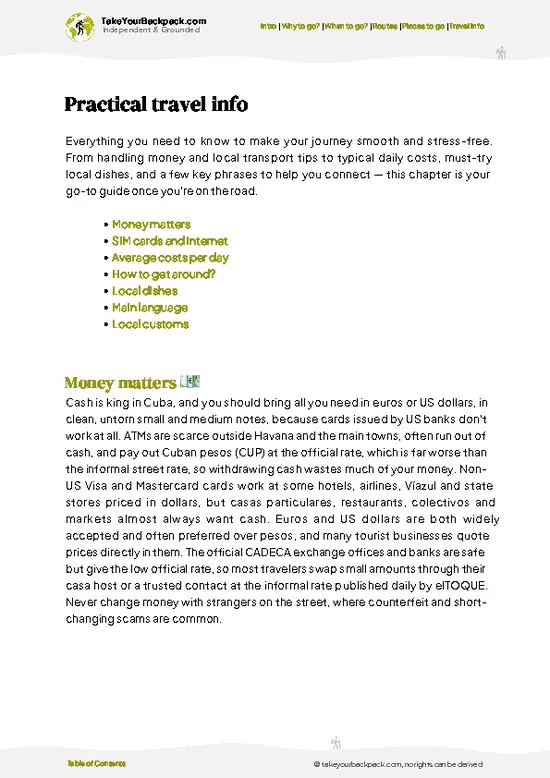
example page 0 from our offline Travel Guide for Cuba
example page 1 from our offline Travel Guide for Cuba
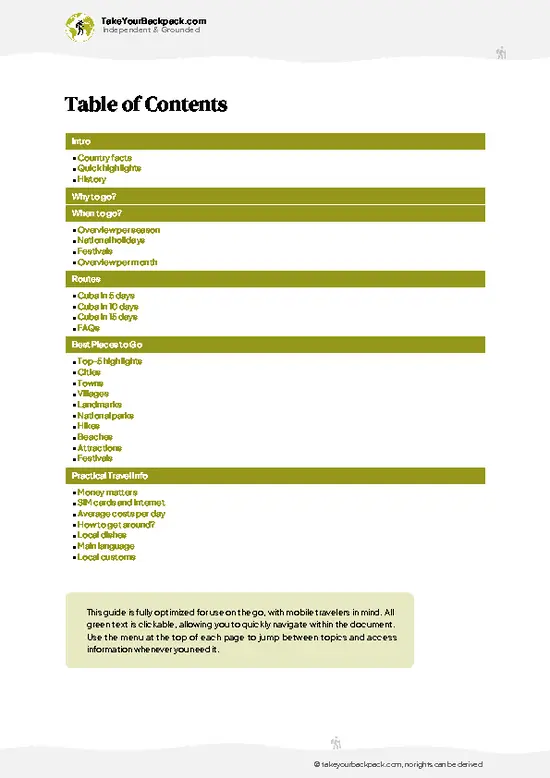
example page 2 from our offline Travel Guide for Cuba
example page 3 from our offline Travel Guide for Cuba
example page 4 from our offline Travel Guide for Cuba
example page 5 from our offline Travel Guide for Cuba
example page 6 from our offline Travel Guide for Cuba
example page 7 from our offline Travel Guide for Cuba
Loading the map 🌍
CLICK TO FILTER
cities
towns
villages
landmarks
national parks
hikes
beaches
attractions
festivals
SHOW COUNTRY’S BESTSHOW ALL

✨ Why go?
Ranked #5 city in Cuba
Why visitors keep coming back

Camagüey earns a stop because it gives you a colonial center without the tour-bus crush of Trinidad. Streets are walkable, so you can spend a day or two on foot among more than a dozen plazas and churches, with locals far outnumbering visitors. Casas particulares are plentiful, and many sit within a few blocks of the main square, so breakfast on a rooftop or in a courtyard is easy to find. The city also has a real arts scene, with the ballet company and galleries giving evenings something to do beyond the usual music bar. It works well as a break on the long haul between Santa Clara or Sancti Spíritus and Santiago de Cuba, since the Viazul bus and train both stop here. Pace yourself: two nights is plenty, three if you love Plaza San Juan de Dios mornings. Anyone chasing nightlife or beaches should treat it as a short, slow stop.

💡 HighlightsWhat this place is best known for

  1. Plaza San Juan de Dios: the best-preserved square, ringed by pastel colonial houses and a former hospital with a courtyard. Come in the morning for the light. Free to wander, about 30 minutes.
  2. Plaza del Carmen: life-size bronze figures of local women gossiping, chatting and sweeping, by sculptor Martha Jiménez. Visit late afternoon. Free, 30 to 45 minutes. Her studio next door is open for a few dollars.
  3. Iglesia de Nuestra Señora de la Merced: the city’s grandest church, with a painted interior and catacombs under the altar. Open most days, best before noon. About US$2, 30 to 45 minutes.
  4. Casa Natal de Ignacio Agramonte: museum in the birthplace of the independence hero, packed with period furnishings and weapons. Morning is quietest. About US$2, one hour.
  5. Museo Provincial Ignacio Agramonte: a former
… read more 👉
  1. Plaza San Juan de Dios: the best-preserved square, ringed by pastel colonial houses and a former hospital with a courtyard. Come in the morning for the light. Free to wander, about 30 minutes.
  2. Plaza del Carmen: life-size bronze figures of local women gossiping, chatting and sweeping, by sculptor Martha Jiménez. Visit late afternoon. Free, 30 to 45 minutes. Her studio next door is open for a few dollars.
  3. Iglesia de Nuestra Señora de la Merced: the city’s grandest church, with a painted interior and catacombs under the altar. Open most days, best before noon. About US$2, 30 to 45 minutes.
  4. Casa Natal de Ignacio Agramonte: museum in the birthplace of the independence hero, packed with period furnishings and weapons. Morning is quietest. About US$2, one hour.
  5. Museo Provincial Ignacio Agramonte: a former Spanish cavalry barracks with colonial art and local history exhibits. About US$2, one hour.
  6. Plaza de los Trabajadores: lively square faced by the Iglesia de la Merced and the Casa Natal de Agramonte, with a lot of local hanging out in the evening. Free, 30 minutes.
  7. Taller de Cerámica and tinajón courtyards: the city’s big clay jars are everywhere, and workshops show how they are made. Weekday mornings are best. Free to US$3, up to an hour.
  8. Teatro Principal: home to the Ballet de Camagüey, one of Cuba’s best companies. Evening shows on weekends are cheap, usually under US$10, 2 hours.
Beyond the city, Camagüey makes a base for the beaches of Santa Lucía and Cayo Sabinal on the north coast. The Iglesia de la Merced and the Casa Natal fit neatly into one morning, since they are only a few blocks apart.
Spotted a mistake or missing something? Contact us.

🏘️ NeighborhoodsWhere things are and how it's laid out

Camagüey’s center is a maze of crooked lanes and small plazas, and you can cover all of it on foot, so skip the taxis here.
  • Plaza San Juan de Dios and the Historic Center: The colonial core, a UNESCO World Heritage area, is where you should spend most of your time. Ocher and blue houses surround a quiet square, with galleries and courtyard cafés a few steps away. It costs nothing to wander and it is compact, so one full day is enough.
  • Plaza de los Trabajadores and Calle República: The pedestrian shopping street runs between the main plazas and is the best place for cheap peso pizza, ice cream and people-watching. It gets loud and busy by day, so pass through rather than linger.
  • Plaza del Carmen: The famous life-size bronze figures of neighbors chatting are here, along with Martha Jiménez’s studio.
… read more 👉
Camagüey’s center is a maze of crooked lanes and small plazas, and you can cover all of it on foot, so skip the taxis here.
  • Plaza San Juan de Dios and the Historic Center: The colonial core, a UNESCO World Heritage area, is where you should spend most of your time. Ocher and blue houses surround a quiet square, with galleries and courtyard cafés a few steps away. It costs nothing to wander and it is compact, so one full day is enough.
  • Plaza de los Trabajadores and Calle República: The pedestrian shopping street runs between the main plazas and is the best place for cheap peso pizza, ice cream and people-watching. It gets loud and busy by day, so pass through rather than linger.
  • Plaza del Carmen: The famous life-size bronze figures of neighbors chatting are here, along with Martha Jiménez’s studio. The area is small, so twenty minutes is enough. Worth it for the photos and the pottery.
  • Casino Campestre: Walk or take a bicitaxi out to the big park along the Hatibonico River. It is green and local, with weekend families, but offers little to see. Go for a breather, not as a highlight.
  • Railway and bus station area: Functional and a 20-minute walk from the center. Nothing to see, but the bicitaxis here are the most convenient way to haul a backpack.

⌛️ 1 dayA smart one-day plan

8:00 AM, Plaza San Juan de Dios: Start here because the light is soft, the square is nearly empty and the colonial houses are at their best. Have coffee in a courtyard, then walk ten minutes west through the lanes.
9:30 AM, Casa Natal de Ignacio Agramonte: A quick tour of the hero’s home gives context for the city’s independence streak. Stroll on to the church nearby.
11:00 AM, Iglesia de la Merced: See the painted nave and the catacombs, then take a lunch break at a paladar around the corner.
1:00 PM, Plaza del Carmen: Meet the bronze neighbors on their benches, then peek into the ceramic studio. Walk slowly and let the streets surprise you.
3:30 PM, Calle Maceo and Parque Agramonte: Browse the shops, then rest at the central park with its equestrian statue of the hero.
5:00 PM, Cementerio de … read more 👉
8:00 AM, Plaza San Juan de Dios: Start here because the light is soft, the square is nearly empty and the colonial houses are at their best. Have coffee in a courtyard, then walk ten minutes west through the lanes.
9:30 AM, Casa Natal de Ignacio Agramonte: A quick tour of the hero’s home gives context for the city’s independence streak. Stroll on to the church nearby.
11:00 AM, Iglesia de la Merced: See the painted nave and the catacombs, then take a lunch break at a paladar around the corner.
1:00 PM, Plaza del Carmen: Meet the bronze neighbors on their benches, then peek into the ceramic studio. Walk slowly and let the streets surprise you.
3:30 PM, Calle Maceo and Parque Agramonte: Browse the shops, then rest at the central park with its equestrian statue of the hero.
5:00 PM, Cementerio de Camagüey: A less-visited stop west of the center. The old tombs and carved marble tell stories of the cattle barons. Take a taxi or bici-taxi if you tire.
7:30 PM, Teatro Principal or Plaza de los Trabajadores: Catch ballet if there is a show, or end with a local music night in the square.

🌤️ When to go?Seasonal considerations and timing

The dry months of November to April give Camagüey the most comfortable walking weather.
  • Dry Season (Nov to Apr): Days reach 27 to 30°C (81 to 86°F) with cooler evenings near 18 to 20°C (64 to 68°F). Daylight lasts about 11 hours. Casas particulares cost the most and book up around Christmas and New Year.
  • Wet Season (May to Oct): Expect 31 to 34°C (88 to 93°F), heavy humidity and afternoon downpours that flood the narrow streets. Daylight stretches to roughly 13 hours. Rooms are easier to find and bargaining works better.
  • Hurricane Risk (Aug to Oct): Storms are possible, and Camagüey sits inland, so impact is usually rain rather than wind damage.
  • Festivals: The San Juan festivities in late June bring parades, music and street parties, with heavy crowds and noise.
Aim for February, when the heat is mild and the plazas are lively but not packed.

source: climatestotravel.comJANJanuary: highly recommended for travelingFEBFebruary: excellent for travelingMARMarch: excellent for travelingAPRApril: highly recommended for travelingMAYMay: fair for travelingJUNJune: fair for travelingJULJuly: fair for travelingAUGAugust: fair for travelingSEPSeptember: fair for travelingOCTOctober: good for travelingNOVNovember: highly recommended for travelingDECDecember: highly recommended for traveling

✈️ The backpacker research shortcutCuba Travel Guide

An offline-friendly backpacking guide with optimized travel routes, ranked highlights, transport advice, and the best areas to stay.
example page 0 from our offline Travel Guide for Cuba
example page 1 from our offline Travel Guide for Cuba
example page 2 from our offline Travel Guide for Cuba
example page 3 from our offline Travel Guide for Cuba
example page 4 from our offline Travel Guide for Cuba
example page 5 from our offline Travel Guide for Cuba
example page 6 from our offline Travel Guide for Cuba
example page 7 from our offline Travel Guide for Cuba
The digital guide (327 pages) contains:
✅ 115 highlights, ranked by travel appeal
✅ Optimized 5, 10 & 15-day travel routes
✅ Cities, national parks, landmarks, beaches
✅ How to get around
✅ Offline-friendly for travel without Wi-Fi
👉 Click to see all 30+ guide features

📅 Plan smarter in minutes, not weeks
✅ Month by month travel advice
✅ Festivals & national holidays
✅ Budget expectations

🗺️ Go to the right places, skip the overrated ones
✅ Honest pros & cons of destinations
✅ Top hikes, parks & viewpoints
✅ Lesser-known places most travelers miss
✅ Clear “worth it vs skip it” guidance

🛏️ Travel smoothly without rookie mistakes
✅ Best areas to stay
✅ Transport systems explained simply
✅ Common scams & safety advice
✅ SIM cards, money & practical tips

🌍 Understand the country, not just visit it
✅ Culture & traditions
✅ 52 Essential phrases & customs
✅ Festivals worth planning around
✅ Traveler-friendly historical context
✅ Insights that make places more meaningful

📱 Built for real travel conditions
✅ Fully downloadable PDF
✅ Works completely offline
✅ Optimized for phone use
✅ Useful in remote areas & buses
✅ Everything in one place
Stop searching, start planning
Get instant access to your full guide. 30‑day money-back guarantee.
+ Add another guide for just

By proceeding you agree to our terms.
Sent to your inbox immediately after payment • 100% Secure Checkout
Best Backpacking Travel Advisor 2025 tourism awardBest Backpacking
Travel Advisor
2025
What others say about Take Your Backpack Guides:
⭐⭐⭐⭐⭐
Fantastic, amazing amount of information!
⭐⭐⭐⭐⭐
My goodness this is amazing, it's what I've been looking for hats off too you!
⭐⭐⭐⭐⭐
I think this is absolutely BRILLIANT
⭐⭐⭐⭐
Very complete and informative. It's still missing places, but I gotta to commend you
⭐⭐⭐⭐⭐
This is truly amazing, thank you, can't wait to explore it with my kids!
⭐⭐⭐⭐⭐
Awesome resource, thank you!
⭐⭐⭐⭐⭐
This is amazing! Can't wait to explore the ones I haven't seen
⭐⭐⭐⭐
I love this! Well done, great idea.
⭐⭐⭐⭐⭐
Thanks for taking the time to make this gem!
⭐⭐⭐⭐⭐
This might be the best website I've ever seen.
⭐⭐⭐⭐⭐
Congratulations, and thank you so much for your work; it's incredibly valuable.
⭐⭐⭐⭐
In all seriousness I think you did a great job pointing out the important spots
⭐⭐⭐⭐⭐
10/10 very good
⭐⭐⭐⭐⭐
As someone who's only just starting to visit regularly this is awesome, thank you.
⭐⭐⭐⭐
Thank you very much! I'm going to visit my dad, it's going to be very useful!
⭐⭐⭐⭐⭐
This is really cool! We'll be travelling for the first time and this definitely come in handy.
⭐⭐⭐⭐⭐
You are now our minister of culture, congratulations 👨‍💼
⭐⭐⭐⭐⭐
Just wanted to tell you that this is a pearl! Going to follow your recommendations.
⭐⭐⭐⭐⭐
This is so cool. I'll definitely be using the resource for my travels soon.
⭐⭐⭐⭐⭐
This is very impressive! Good work.
⭐⭐⭐⭐⭐
This is an amazing and informative site. Very well done!

🛏️ Where to stay?Best areas and accommodation options

The historic center is the best area for a budget bed in Camagüey, followed by the calmer streets just outside it near the Plaza de los Trabajadores. Cuba has no hostel scene to speak of, so budget beds are rooms in casas particulares, licensed private homes. Camagüey has plenty, usually US$15 to 30 a night for a double, often with breakfast available for US$3 to 5 extra. Staying central means you walk everywhere, and that saves taxi fares and time.

Night safety is good in the center, as streets are lit around the main plazas and locals sit out on doorsteps well into the evening. The tradeoff … read more 👉
The historic center is the best area for a budget bed in Camagüey, followed by the calmer streets just outside it near the Plaza de los Trabajadores. Cuba has no hostel scene to speak of, so budget beds are rooms in casas particulares, licensed private homes. Camagüey has plenty, usually US$15 to 30 a night for a double, often with breakfast available for US$3 to 5 extra. Staying central means you walk everywhere, and that saves taxi fares and time.

Night safety is good in the center, as streets are lit around the main plazas and locals sit out on doorsteps well into the evening. The tradeoff is noise: rooms facing the plazas or pedestrian streets get music and street chatter until late, so ask for an interior room or one upstairs. Streets farther from the core are quieter and slightly cheaper but dimmer at night.

For transport links, the center is a short bicitaxi ride from the Viazul bus station and train station. Many hosts can arrange onward taxis, bus tickets and tours, which saves legwork. Book ahead around Christmas and during the late June festival. Otherwise walking door to door usually finds a room.

🚌 Getting aroundMoving around without the hassle

Camagüey punishes anyone who hops into the first cocotaxi or horse cart without agreeing on the fare, because foreigners quoted US$5 to 10 for a ride that locals pay US$1 to 2 for lose the most money here. The historic center is a maze of crooked streets and small plazas, and it is best explored on foot. Traffic is light, buses are crowded and unpredictable, and fuel shortages disrupt schedules, so plan on flexibility.
  • Walking is the best use of your time in the center, where the main plazas, churches and galleries sit within about 15 to 20 minutes of each other. It costs nothing, you see the courtyards and alleys that no vehicle reaches, and the flat streets are easy on the legs. The cobbles are uneven, so wear sturdy sandals or shoes.
  • Bici-taxis are three-wheeled pedal taxis that charge roughly
… read more 👉
Camagüey punishes anyone who hops into the first cocotaxi or horse cart without agreeing on the fare, because foreigners quoted US$5 to 10 for a ride that locals pay US$1 to 2 for lose the most money here. The historic center is a maze of crooked streets and small plazas, and it is best explored on foot. Traffic is light, buses are crowded and unpredictable, and fuel shortages disrupt schedules, so plan on flexibility.
  • Walking is the best use of your time in the center, where the main plazas, churches and galleries sit within about 15 to 20 minutes of each other. It costs nothing, you see the courtyards and alleys that no vehicle reaches, and the flat streets are easy on the legs. The cobbles are uneven, so wear sturdy sandals or shoes.
  • Bici-taxis are three-wheeled pedal taxis that charge roughly US$1 to 3 for a short hop. They are slower than a car but cheap, breezy and good for tired legs or a bag-heavy walk to the bus station. Agree on the price before you sit down, and skip them for anything under ten minutes on foot.
  • Cocotaxis are yellow, three-wheeled motor taxis. Rides across town run about US$2 to 5, which is a fair bargain when you split the fare between two or three people. They are noisy and bumpy, yet faster than pedaling, so use them for the outer districts and the train or bus stations.
  • Horse carts and city buses suit different travelers. Local buses cost a few cents but are packed and irregular, so I would skip them unless you are on a tight budget and have time to spare. Horse carts follow set routes for about US$0.50 to 1 and give the cheapest glimpse of local life, though they are slow.
  • Classic taxis are the old American cars and modern sedans waiting around the main squares. A cross-town trip costs about US$3 to 6 and the stations run US$4 to 8. They are the most comfortable and fastest option, and they give the best value for early departures when nothing else is running.

👛 Costs (as of 22 October 2026)How expensive it really is

Camagüey costs a backpacker about US$38 to 55 a day, and the total in this table of US$47 assumes high-season dorm pricing. Cuba has no true hostel scene, so beds are mostly rooms in family homes, and prices are quoted in US dollars or paid in pesos at the informal exchange rate.
CategoryBudget RangeLocal Reality
Dorm or shared room (high season, Nov to Apr)US$10 to 15A single bed in a shared room or a cheap private room split between two people.
Dorm or shared room (off-season, May to Oct)US$8 to 12Hosts bargain more readily, and a stay of several nights often brings a discount.
MealsUS$15 to 22Breakfast at your room runs US$3 to 5, a pizza or peso-priced sandwich US$1 to 3, and a dinner at a private restaurant US$8 to 14.
Local transportUS$2 to 5Bici-taxis and shared taxis cover short hops between
… read more 👉
Camagüey costs a backpacker about US$38 to 55 a day, and the total in this table of US$47 assumes high-season dorm pricing. Cuba has no true hostel scene, so beds are mostly rooms in family homes, and prices are quoted in US dollars or paid in pesos at the informal exchange rate.
CategoryBudget RangeLocal Reality
Dorm or shared room (high season, Nov to Apr)US$10 to 15A single bed in a shared room or a cheap private room split between two people.
Dorm or shared room (off-season, May to Oct)US$8 to 12Hosts bargain more readily, and a stay of several nights often brings a discount.
MealsUS$15 to 22Breakfast at your room runs US$3 to 5, a pizza or peso-priced sandwich US$1 to 3, and a dinner at a private restaurant US$8 to 14.
Local transportUS$2 to 5Bici-taxis and shared taxis cover short hops between plazas and the train or bus stations.
City transport passNot availableNo pass exists. You pay each ride, and the old center is walkable.
Basic activities and entry feesUS$3 to 6Museums and churches charge small fees, and the clay tinajones courtyards cost little or nothing. Evening shows at cultural venues are cheap.
MiscellaneousUS$3 to 6Bottled water, snacks, a coffee, and tips for musicians or guides.
Total Daily BudgetUS$47Roughly US$38 to 55 depending on how often you eat out.
Bring enough cash in small bills, since cards are rarely accepted. To save money, eat your main meal at a private restaurant at lunch, when set menus cost less, and buy fruit and snacks at the street stalls near Plaza del Carmen.


source: cubatravel.cu
⚠️ Prices can change and everyone travels differently, so take this as a rough guide. Hope it helps you plan your adventure!

🚌 Day tripsShort trips worth adding

Camagüey is a decent base for day trips, though public transport is thin, so shared taxis and organized transfers do most of the work.
Playa Santa Lucía:
The long white-sand beach on the north coast is the main escape, about 100 km away and 1.5 to 2 hours by road. Shared taxis or tours cost roughly US$10 to 20 round trip, with entry to the resort area free on a day visit. Beach clubs and food are pricey, so bring snacks. Go between November and April, and bring cash because card use is limited. First-timers often fail to arrange the return ride and get stuck, so book it with the driver before leaving.
👉 Explore Playa Santa Lucía
Cayo Sabinal:
A quieter coastal area north of the city has wild beaches and an old lighthouse. It takes about 2.5 to 3 hours each way, and few public options exist, so … read more 👉
Camagüey is a decent base for day trips, though public transport is thin, so shared taxis and organized transfers do most of the work.
Playa Santa Lucía:
The long white-sand beach on the north coast is the main escape, about 100 km away and 1.5 to 2 hours by road. Shared taxis or tours cost roughly US$10 to 20 round trip, with entry to the resort area free on a day visit. Beach clubs and food are pricey, so bring snacks. Go between November and April, and bring cash because card use is limited. First-timers often fail to arrange the return ride and get stuck, so book it with the driver before leaving.
👉 Explore Playa Santa Lucía
Cayo Sabinal:
A quieter coastal area north of the city has wild beaches and an old lighthouse. It takes about 2.5 to 3 hours each way, and few public options exist, so you need a hired car or tour at about US$30 to 50 per person. Choose dry months, because the unpaved road is rough after rain. Pack water and food, since there are almost no services.

Sierra de Cubitas:
This hilly area to the north has caves, farmland and small rural communities, about 1 to 1.5 hours away. It suits travelers who want countryside and horse riding without a long journey, with costs around US$20 to 40 including a driver. Visit in the dry months. The caves can be slippery, so wear shoes with grip.

🍲 FoodLocal Flavors for Backpackers

Camagüey is known for its giant clay tinajones, huge earthenware jars once used to collect rainwater, and the city’s cooking leans on pork, cassava and sweet treats. Try the local cheese, which comes from the surrounding cattle country, and turrón de maní, a chewy peanut candy sold on the street. The local specialty cake of Camagüey and sweet dulce de leche appear in bakeries.

For eating, wander Calle República and the pedestrian plazas for peso pizzas, sandwiches and ice cream at low prices, usually under US$1. Paladares, family-run restaurants, serve roast pork, rice and beans, and fried plantains for roughly US$5 to 10. Casas particulares also cook dinner at home for about US$6 to 10, which is often the best food in the city.

For drinks, look for a courtyard bar around Plaza San Juan … read more 👉
Camagüey is known for its giant clay tinajones, huge earthenware jars once used to collect rainwater, and the city’s cooking leans on pork, cassava and sweet treats. Try the local cheese, which comes from the surrounding cattle country, and turrón de maní, a chewy peanut candy sold on the street. The local specialty cake of Camagüey and sweet dulce de leche appear in bakeries.

For eating, wander Calle República and the pedestrian plazas for peso pizzas, sandwiches and ice cream at low prices, usually under US$1. Paladares, family-run restaurants, serve roast pork, rice and beans, and fried plantains for roughly US$5 to 10. Casas particulares also cook dinner at home for about US$6 to 10, which is often the best food in the city.

For drinks, look for a courtyard bar around Plaza San Juan de Dios, where a mojito or a local Tínima beer runs about US$1.50 to 3, and sip it under the old colonial arches while music drifts through the square.

🛡️ SafetyTraveler Safety Guide

Camagüey is a calm city where violent crime against travelers is rare, and the biggest problems are small hustles. Jineteros, the street touts, may offer cigars, restaurants or rooms and take commission, so decline politely and walk on. Taxi drivers outside the stations may quote inflated prices, so agree the fare first. Bag snatching and pickpocketing happen occasionally in crowded areas like Calle República and around the stations, so keep valuables in a front pocket or zipped bag. The old center is walkable at night, but some side streets are poorly lit and have uneven pavement, so carry a small flashlight and watch your footing. Solo travelers, including women, usually find the city relaxed, though persistent attention and catcalls happen. A firm no is enough. Carry cash in small amounts, since ATMs can run empty.

FAQFrequently asked questions about Camagüey

Two full days is enough for Camagüey, one for the historic center and plazas and one for the Plaza del Carmen, a museum or two and the cooking of a local paladar. Add a third day if you want Playa Santa Lucía, about 1.5 to 2 hours away by road. A casa particular costs roughly US$15 to 30 a night.
Camagüey is safe for solo backpackers, with violent crime rare and the center walkable at night. The main annoyances are touts and taxi drivers quoting inflated fares, which a firm no and an agreed price solve. Keep bags zipped on Calle República and near the bus and train stations, and carry a flashlight for dim side streets.
Camagüey is known for its UNESCO-listed colonial center, built as a maze of crooked streets to confuse pirates. The city is also famous for its giant clay tinajones, the life-size sculptures in Plaza del Carmen and its artistic and musical culture. A day on foot costs almost nothing, and the nearest big beach is Playa Santa Lucía, about 100 km north.
⚠️ Things can change over time, so always validate details locally before you go.

Other Cuban cities near Camagüey

Explore more nearby:

  • Florida—Carretera Central, sugar chimneys, railway halt, baseball talk| 35 km away
  • Ciego de Ávila—Midway stop, Boulevard benches, trova nights, bicycle taxis| 101 km away
  • Morón—Bronze rooster, milky lagoon, cays gateway, sugar museum| 107 km away

💡 Not sure where to go next?
Create a personalized itinerary for Cuba including Camagüey and the places that fit your trip.

Generate my itinerary

👉 Discover all cities

Or checkout all Cuba has to offer (think cities, towns, villages, national parks, hikes, beaches, festivals)
Country photo of Cuba

We 💚 feedbackIs it worth it?

Camagüey is best on a weekday morning in the cooler months, when the plazas are empty and the stone is still cool. I would book two nights, skip the map app, and let the lanes lead you. It is a gentle city, not a thrilling one.

✈️ When did I visit Cuba?
As part of my 1.5 year travel around the world trip, I visited Cuba for 6 weeks in February, March 2016, being extremely lucky that that coincided with the free concert of The Rolling Stones.

✍️ Help improve this page!
The information on this page is based on my own backpacking experience in Cuba, supplemented with up-to-date research and feedback from other travelers. Travel details can change, so if you notice anything outdated or incomplete, feel free to let me know.


🙋‍♂️ Give feedback

👋 Meet the founderWho’s Behind Take Your Backpack?

Johan, backpacker and founder of TakeYourBackpackHi, I’m Johan (Netherlands 🇳🇱), the creator of TakeYourBackpack. Over the past 3 decades, I’ve backpacked through 90+ countries across six continents, gaining extensive experience with independent travel, long-term trips, and overland routes.

This site is built on a combination of firsthand travel experience and carefully curated insights from other backpackers. Many guides are based on places I’ve personally visited, while others bring together tips, observations, and practical advice shared by trusted travelers I’ve met along the way.

The goal is to provide realistic, experience-driven guidance — not generic itineraries — so you can explore destinations with better context, clearer expectations, and more confidence.