×

Cuba🇨🇺 | attractionsCastillo de la Real FuerzaGiraldilla weathervane, moat and drawbridge, coral-stone walls, harbor rooftop | things to do and best time to go

Explore Castillo de los Tres Reyes del MorroExplore Che Guevara Mausoleum

Backpacking in Castillo de la Real Fuerza
👍 Recommendedattraction ranked #8
By Johan Kruseman 🇳🇱 | Updated October 20, 2026

The Castillo de la Real Fuerza is known as one of the oldest surviving stone forts in the Americas, and the bronze weathervane on its tower, La Giraldilla, is the symbol printed on Havana Club rum labels. What gets overlooked is the maritime museum inside and the open rooftop view over the harbor. It sits in Cuba’s capital, on Plaza de Armas in Old Havana. Go for the moat, the thick walls and the view, and skip the dim, thin displays if time is short. My mistake was arriving at closing time, assuming a fort keeps tourist hours, and I only got a look from the plaza. Go in the morning, since staff close rooms early and the tower is the point. Bring small bills for any entry fee.

Discover everything you want to know in the 📖 Cuba Travel Guide.


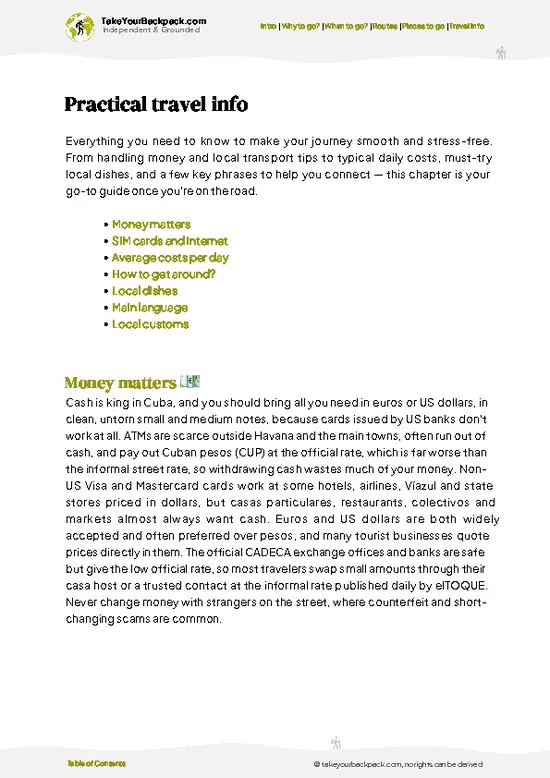
example page 0 from our offline Travel Guide for Cuba
example page 1 from our offline Travel Guide for Cuba
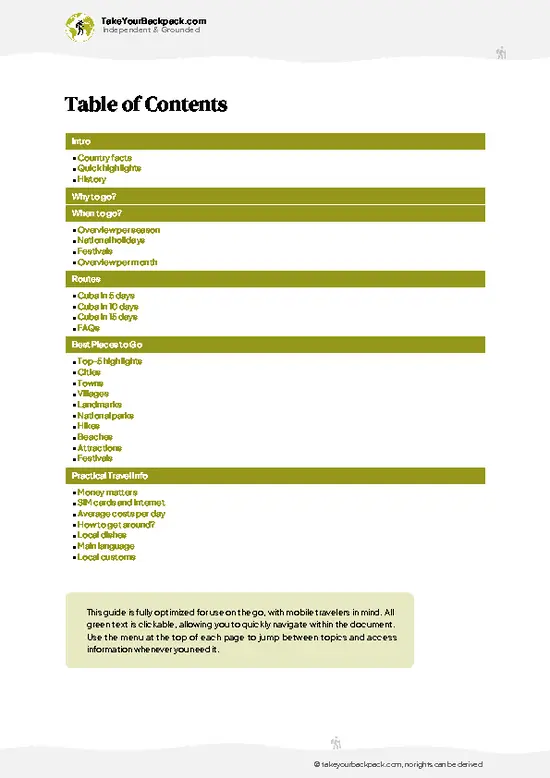
example page 2 from our offline Travel Guide for Cuba
example page 3 from our offline Travel Guide for Cuba
example page 4 from our offline Travel Guide for Cuba
example page 5 from our offline Travel Guide for Cuba
example page 6 from our offline Travel Guide for Cuba
example page 7 from our offline Travel Guide for Cuba
Loading the map 🌍
CLICK TO FILTER
cities
towns
villages
landmarks
national parks
hikes
beaches
attractions
festivals
SHOW COUNTRY’S BESTSHOW ALL

✨ Why go?
Ranked #8 attraction in Cuba
The unique appeal for travelers

Castillo de la Real Fuerza gives you Havana’s colonial story in one compact, walkable block, and it costs little time. It was finished in the 1500s, so you are standing in a fort that predates most of the city’s famous baroque cathedral and mansions around it. Its moat and thick coral-stone walls show what defending a Spanish treasure port really meant, and the setting beside Plaza de Armas makes it an easy anchor for a morning of Old Havana. The La Giraldilla figure on the tower is the city’s best-known emblem, and seeing the story behind it makes the logo you meet on bottles and souvenirs finally mean something. It is also a calm break from the hustle outside, with shade, stone steps and harbor air. Pair it with the nearby squares and you cover several centuries of Cuban history on foot, with no taxi needed.

💡 HighlightsThe experiences that define the visit

  1. La Giraldilla: the bronze weathervane figure atop the corner tower, the emblem of Havana. A replica flies on the tower, so look for the story behind it.
  2. The moat and drawbridge approach: you cross water to enter, a clear reminder this was built to stop attackers.
  3. Thick coral-stone walls: the fort’s ramparts show the fortress design of 16th-century Spain, and the texture of the stone is worth a close look.
  4. Maritime museum rooms: models, navigation tools and items from shipwrecks tied to the Spanish fleets that used Havana as a gathering port.
  5. Rooftop terrace and tower views: a wide look across the harbor entrance and the rooftops of Old Havana.
  6. Inner courtyard: a quiet, shaded space with cannons and arches, good for a pause out of the sun.
  7. Plaza de Armas setting: the leafy square outside has a secondhand
… read more 👉
  1. La Giraldilla: the bronze weathervane figure atop the corner tower, the emblem of Havana. A replica flies on the tower, so look for the story behind it.
  2. The moat and drawbridge approach: you cross water to enter, a clear reminder this was built to stop attackers.
  3. Thick coral-stone walls: the fort’s ramparts show the fortress design of 16th-century Spain, and the texture of the stone is worth a close look.
  4. Maritime museum rooms: models, navigation tools and items from shipwrecks tied to the Spanish fleets that used Havana as a gathering port.
  5. Rooftop terrace and tower views: a wide look across the harbor entrance and the rooftops of Old Havana.
  6. Inner courtyard: a quiet, shaded space with cannons and arches, good for a pause out of the sun.
  7. Plaza de Armas setting: the leafy square outside has a secondhand book market, a good spot to browse before or after.
The plaza outside is free to wander, while entering the fort itself costs a few dollars.
Spotted a mistake or missing something? Contact us.

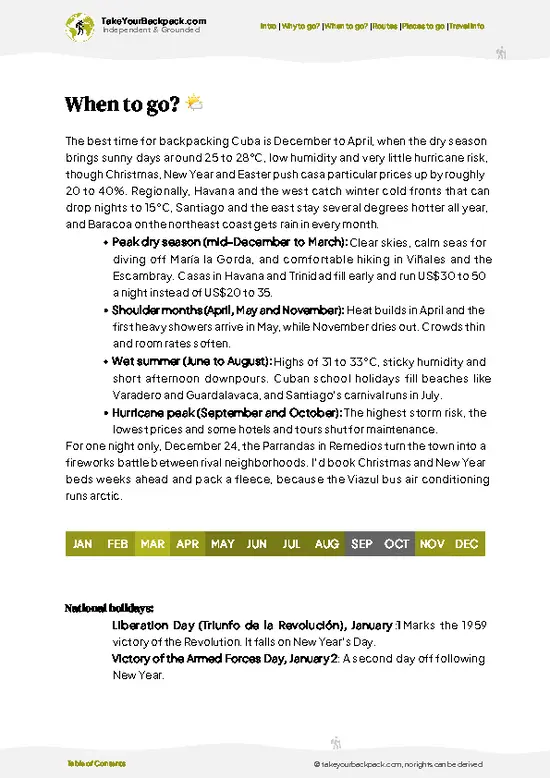
🌤️ When to go?When to go for the best experience

  • Dry Season (November to April): Havana runs 22 to 29°C (72 to 84°F) with low humidity, and the fortress's stone ramparts stay comfortable for a walk. Daylight lasts roughly 11 to 12 hours. Cruise-ship groups and Plaza de Armas book sellers fill the surrounding square, and December to February prices for rooms run highest.
  • Wet Season (May to October): Expect 25 to 32°C (77 to 90°F), heavy humidity and afternoon downpours that last an hour or two. Daylight stretches to about 13 hours. Crowds thin out and casa particular rates drop.
  • Hurricane Window (August to October): Storms can close the seawall and shut sights for a day or two, so keep your dates flexible.
  • Time of Day: The museum interior is small, so mornings give you cooler air and fewer tour groups.
Aim for late November or March, when the … read more 👉
  • Dry Season (November to April): Havana runs 22 to 29°C (72 to 84°F) with low humidity, and the fortress's stone ramparts stay comfortable for a walk. Daylight lasts roughly 11 to 12 hours. Cruise-ship groups and Plaza de Armas book sellers fill the surrounding square, and December to February prices for rooms run highest.
  • Wet Season (May to October): Expect 25 to 32°C (77 to 90°F), heavy humidity and afternoon downpours that last an hour or two. Daylight stretches to about 13 hours. Crowds thin out and casa particular rates drop.
  • Hurricane Window (August to October): Storms can close the seawall and shut sights for a day or two, so keep your dates flexible.
  • Time of Day: The museum interior is small, so mornings give you cooler air and fewer tour groups.
Aim for late November or March, when the weather is mild and rates have not reached their peak.


source: climatestotravel.comJANJanuary: highly recommended for travelingFEBFebruary: highly recommended for travelingMARMarch: highly recommended for travelingAPRApril: excellent for travelingMAYMay: good for travelingJUNJune: good for travelingJULJuly: good for travelingAUGAugust: fair for travelingSEPSeptember: fair for travelingOCTOctober: good for travelingNOVNovember: excellent for travelingDECDecember: highly recommended for traveling
when-to-go

✈️ The backpacker research shortcutCuba Travel Guide

An offline-friendly backpacking guide with optimized travel routes, ranked highlights, transport advice, and the best areas to stay.
example page 0 from our offline Travel Guide for Cuba
example page 1 from our offline Travel Guide for Cuba
example page 2 from our offline Travel Guide for Cuba
example page 3 from our offline Travel Guide for Cuba
example page 4 from our offline Travel Guide for Cuba
example page 5 from our offline Travel Guide for Cuba
example page 6 from our offline Travel Guide for Cuba
example page 7 from our offline Travel Guide for Cuba
The digital guide (327 pages) contains:
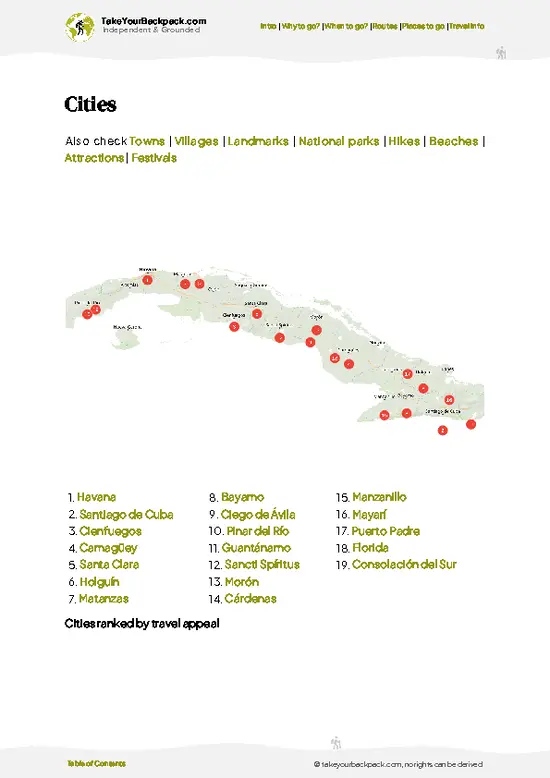
✅ 113 highlights, ranked by travel appeal
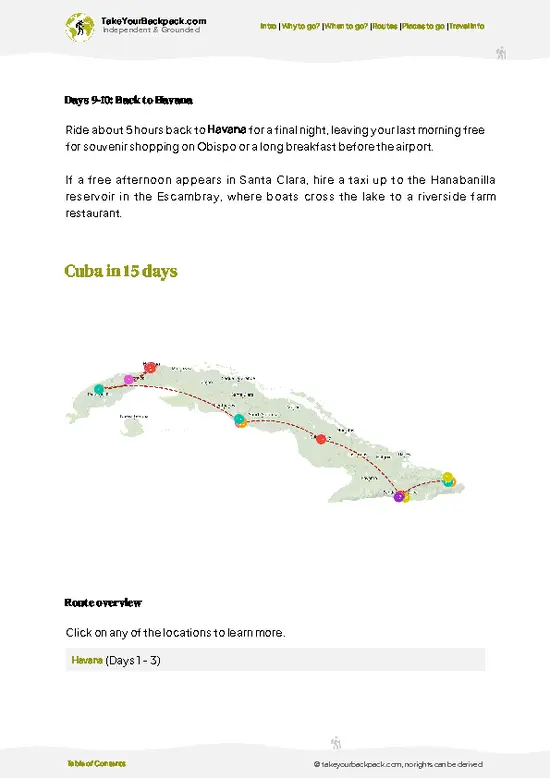
✅ Optimized 5, 10 & 15-day travel routes
✅ Cities, national parks, landmarks, beaches
✅ How to get around
✅ Offline-friendly for travel without Wi-Fi
👉 Click to see all 30+ guide features

📅 Plan smarter in minutes, not weeks
✅ Month by month travel advice
✅ Festivals & national holidays
✅ Budget expectations

🗺️ Go to the right places, skip the overrated ones
✅ Honest pros & cons of destinations
✅ Top hikes, parks & viewpoints
✅ Lesser-known places most travelers miss
✅ Clear “worth it vs skip it” guidance

🛏️ Travel smoothly without rookie mistakes
✅ Best areas to stay
✅ Transport systems explained simply
✅ Common scams & safety advice
✅ SIM cards, money & practical tips

🌍 Understand the country, not just visit it
✅ Culture & traditions
✅ 52 Essential phrases & customs
✅ Festivals worth planning around
✅ Traveler-friendly historical context
✅ Insights that make places more meaningful

📱 Built for real travel conditions
✅ Fully downloadable PDF
✅ Works completely offline
✅ Optimized for phone use
✅ Useful in remote areas & buses
✅ Everything in one place
Stop searching, start planning
Get instant access to your full guide. 30‑day money-back guarantee.
+ Add another guide for just

By proceeding you agree to our terms.
Sent to your inbox immediately after payment • 100% Secure Checkout
Best Backpacking Travel Advisor 2025 tourism awardBest Backpacking
Travel Advisor
2025
What others say about Take Your Backpack Guides:
⭐⭐⭐⭐⭐
Fantastic, amazing amount of information!
⭐⭐⭐⭐⭐
My goodness this is amazing, it's what I've been looking for hats off too you!
⭐⭐⭐⭐⭐
I think this is absolutely BRILLIANT
⭐⭐⭐⭐
Very complete and informative. It's still missing places, but I gotta to commend you
⭐⭐⭐⭐⭐
This is truly amazing, thank you, can't wait to explore it with my kids!
⭐⭐⭐⭐⭐
Awesome resource, thank you!
⭐⭐⭐⭐⭐
This is amazing! Can't wait to explore the ones I haven't seen
⭐⭐⭐⭐
I love this! Well done, great idea.
⭐⭐⭐⭐⭐
Thanks for taking the time to make this gem!
⭐⭐⭐⭐⭐
This might be the best website I've ever seen.
⭐⭐⭐⭐⭐
Congratulations, and thank you so much for your work; it's incredibly valuable.
⭐⭐⭐⭐
In all seriousness I think you did a great job pointing out the important spots
⭐⭐⭐⭐⭐
10/10 very good
⭐⭐⭐⭐⭐
As someone who's only just starting to visit regularly this is awesome, thank you.
⭐⭐⭐⭐
Thank you very much! I'm going to visit my dad, it's going to be very useful!
⭐⭐⭐⭐⭐
This is really cool! We'll be travelling for the first time and this definitely come in handy.
⭐⭐⭐⭐⭐
You are now our minister of culture, congratulations 👨‍💼
⭐⭐⭐⭐⭐
Just wanted to tell you that this is a pearl! Going to follow your recommendations.
⭐⭐⭐⭐⭐
This is so cool. I'll definitely be using the resource for my travels soon.
⭐⭐⭐⭐⭐
This is very impressive! Good work.
⭐⭐⭐⭐⭐
This is an amazing and informative site. Very well done!

🛏️ Where to stay?Best areas to stay in Cuba

Old Havana (La Habana Vieja) is the place to sleep, because Castillo de la Real Fuerza sits on its edge beside Plaza de Armas and you can walk there in minutes. Most budget travelers rent a room in a private home (casa particular), which is safer and more social than anything else in the city. Hosts often serve breakfast, arrange taxis and share local tips over a rooftop chat. The streets around Obispo and Mercaderes are busy with other backpackers, music venues and cheap eateries, so you are rarely alone at night. Stick to the lit, populated lanes after dark and keep valuables out of sight.

… read more 👉
Old Havana (La Habana Vieja) is the place to sleep, because Castillo de la Real Fuerza sits on its edge beside Plaza de Armas and you can walk there in minutes. Most budget travelers rent a room in a private home (casa particular), which is safer and more social than anything else in the city. Hosts often serve breakfast, arrange taxis and share local tips over a rooftop chat. The streets around Obispo and Mercaderes are busy with other backpackers, music venues and cheap eateries, so you are rarely alone at night. Stick to the lit, populated lanes after dark and keep valuables out of sight.

Centro Habana, a short walk west, has cheaper rooms and a rawer, more local feel, though streets are rougher and less lit. It suits confident travelers who want lower prices and do not mind crumbling buildings. Vedado is further out and quieter, with a younger crowd and good nightlife, but it needs a taxi or a long walk to reach the fortress.

👛 Costs (as of 20 October 2026)Typical daily expenses

Castillo de la Real Fuerza costs most backpackers about US$38 to 77 a day in Havana, with the fortress itself a small share of that. Travelers pay in Cuban pesos or, in many private businesses, in foreign currency or cards, so check each place first.
CategoryBudget RangeLocal Reality
Entrance ticketUS$2 to 5Covers the ramparts and the small maritime museum inside the fortress.
Tower accessUS$0 to 2The Giraldilla weather vane on top is a replica, and the climb is brief.
Accommodation (high season)US$20 to 35A room in a private home in Old Havana, usually with air conditioning.
FoodUS$10 to 20Paladar lunches and simple dinners cost more than state cafeterias but taste better.
Local transportUS$1 to 5Old Havana is walkable, and shared taxis (colectivos) cost more for longer rides.
Drinks and extrasUS$5
… read more 👉
Castillo de la Real Fuerza costs most backpackers about US$38 to 77 a day in Havana, with the fortress itself a small share of that. Travelers pay in Cuban pesos or, in many private businesses, in foreign currency or cards, so check each place first.
CategoryBudget RangeLocal Reality
Entrance ticketUS$2 to 5Covers the ramparts and the small maritime museum inside the fortress.
Tower accessUS$0 to 2The Giraldilla weather vane on top is a replica, and the climb is brief.
Accommodation (high season)US$20 to 35A room in a private home in Old Havana, usually with air conditioning.
FoodUS$10 to 20Paladar lunches and simple dinners cost more than state cafeterias but taste better.
Local transportUS$1 to 5Old Havana is walkable, and shared taxis (colectivos) cost more for longer rides.
Drinks and extrasUS$5 to 10A mojito on Plaza de Armas costs more than one in a side street.
Total Daily BudgetUS$38 to 77Average is about US$55 for a careful traveler.


source: visitarcuba.org
⚠️ Prices can change and everyone travels differently, so take this as a rough guide. Hope it helps you plan your adventure!

FAQTraveler FAQ

Plan on 1 to 1.5 hours at Castillo de la Real Fuerza, since the museum is compact and the ramparts are short. Add another hour if you want to wander Plaza de Armas and the book market next door. Most travelers combine it with Old Havana on a half-day walk.
Castillo de la Real Fuerza is worth the small fee, roughly US$2 to 5, if you like maritime history and harbor views. Built in the 1500s, it is among the oldest stone fortresses in the Americas. The museum is modest, so skip it only if you are short on time.
Walk from anywhere in Old Havana, since Castillo de la Real Fuerza stands beside Plaza de Armas on the harbor side. From Parque Central it is about 15 minutes on foot, and from Vedado a taxi takes 15 to 25 minutes and costs roughly US$6 to 12. Old American cars and colectivos also run from Centro Habana.
⚠️ Things can change over time, so always validate details locally before you go.

Other Cuban attractions near Castillo de la Real Fuerza

Explore more nearby:

  • Museo de la Ciudad—Captains General palace, royal palm courtyard, throne room, wood-block street| 0 km away
  • Museo del Tabaco—Cigar bands, rolling tools, Taíno origins, Plaza Vieja| 0 km away
  • Museo del Ron Havana Club—Rum tour and tasting, sugar-mill model, copper stills, aging barrels| 1 km away

💡 Not sure where to go next?
Create a personalized itinerary for Cuba including Castillo de la Real Fuerza and the places that fit your trip.

Generate my itinerary

👉 Discover all attractions

Or checkout all Cuba has to offer (think cities, towns, villages, national parks, hikes, beaches, festivals)
Country photo of Cuba

We 💚 feedbackIs it worth it?

Castillo de la Real Fuerza works best as the first stop on a walk through Old Havana, paired with Plaza de Armas, the nearby cathedral square and then the harbor road toward El Morro. I would go early, keep it to an hour, and save energy for the bigger forts across the water.

✈️ When did I visit Cuba?
As part of my 1.5 year travel around the world trip, I visited Cuba for 6 weeks in February, March 2016, being extremely lucky that that coincided with the free concert of The Rolling Stones.

✍️ Help improve this page!
The information on this page is based on my own backpacking experience in Cuba, supplemented with up-to-date research and feedback from other travelers. Travel details can change, so if you notice anything outdated or incomplete, feel free to let me know.


🙋‍♂️ Give feedback

👋 Meet the founderWho’s Behind Take Your Backpack?

Johan, backpacker and founder of TakeYourBackpackHi, I’m Johan (Netherlands 🇳🇱), the creator of TakeYourBackpack. Over the past 3 decades, I’ve backpacked through 90+ countries across six continents, gaining extensive experience with independent travel, long-term trips, and overland routes.

This site is built on a combination of firsthand travel experience and carefully curated insights from other backpackers. Many guides are based on places I’ve personally visited, while others bring together tips, observations, and practical advice shared by trusted travelers I’ve met along the way.

The goal is to provide realistic, experience-driven guidance — not generic itineraries — so you can explore destinations with better context, clearer expectations, and more confidence.