
×

Cuba🇨🇺 | beachesCayo JutíasMangrove causeway, starfish shallows, charcoal-grilled lobster, day-trip cay | things to do and best time to go

Explore Teatro Tomás TerryExplore Cayo Levisa

Backpacking in Cayo Jutías
🏆 Top pickbeach ranked #4
By Johan Kruseman 🇳🇱 | Updated October 22, 2026

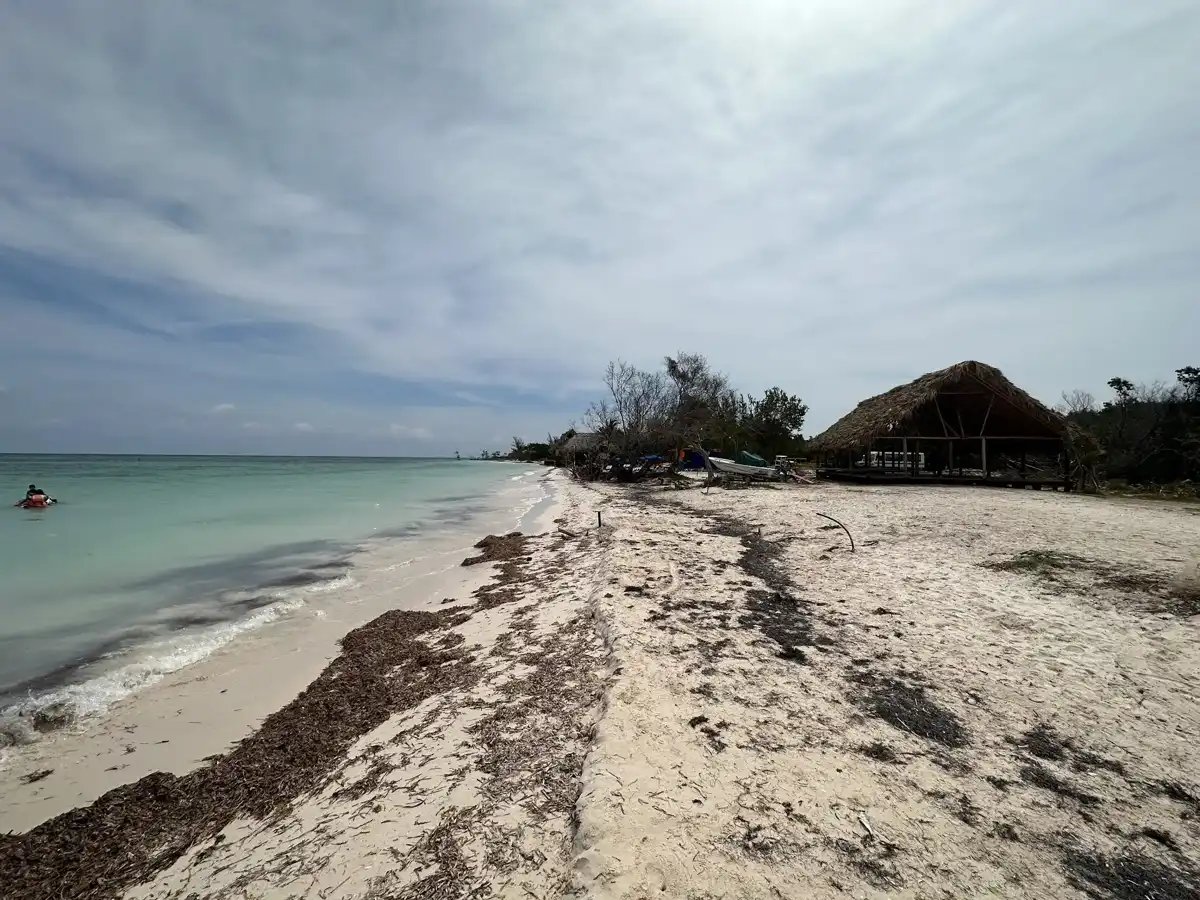
Go midweek and you can have a kilometer of pale sand almost to yourself, which is the best argument for Cayo Jutías beach. It sits on a small cay joined to the north coast of Pinar del Río province in Cuba by a long stone causeway across mangrove flats. The sand is fine and clean, the water is shallow, calm and clear, and the cay has very little built on it. Snorkeling is fine near the reef edge but not a reason to come, and there is no real surf or diving here. Food is a couple of beach shacks serving lobster and fish, pricey for what you get, and there are no beds on the cay itself. On my way in, a farmer’s horse cart pulled up beside our car on the causeway and the driver pointed out a pink flamingo standing in the shallows. Skip the midday weekend crush and bring your own water and snacks.

Discover everything you want to know in the 📖 Cuba Travel Guide.


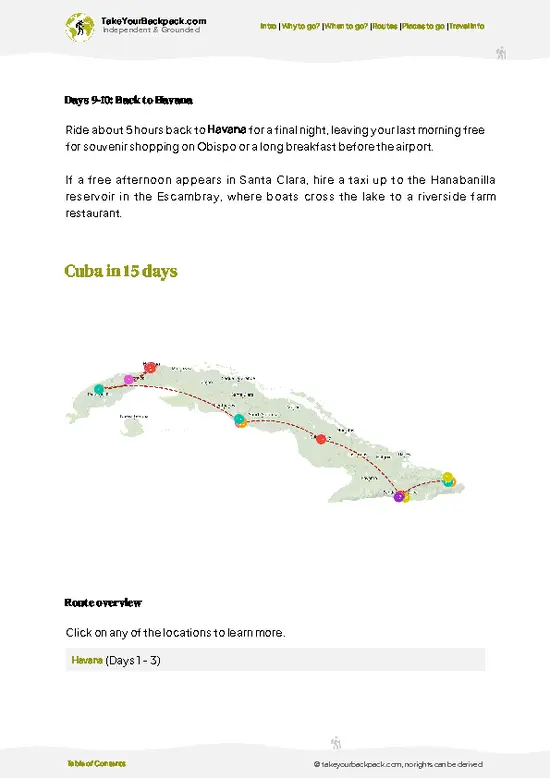
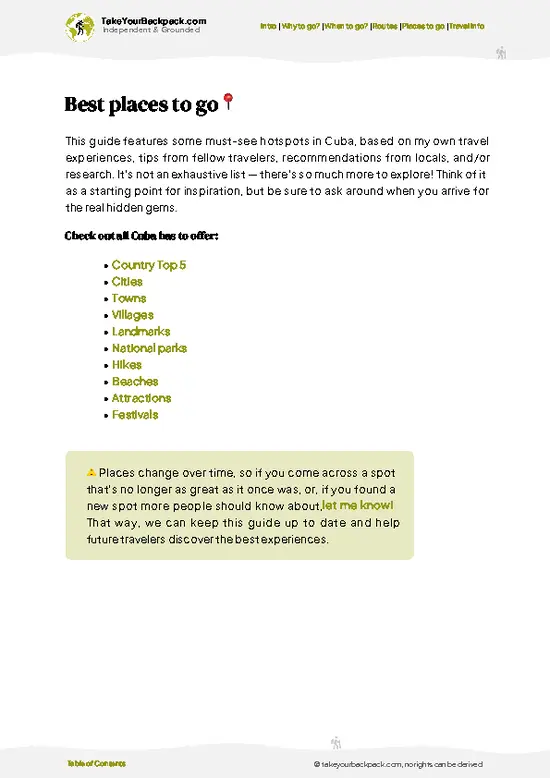
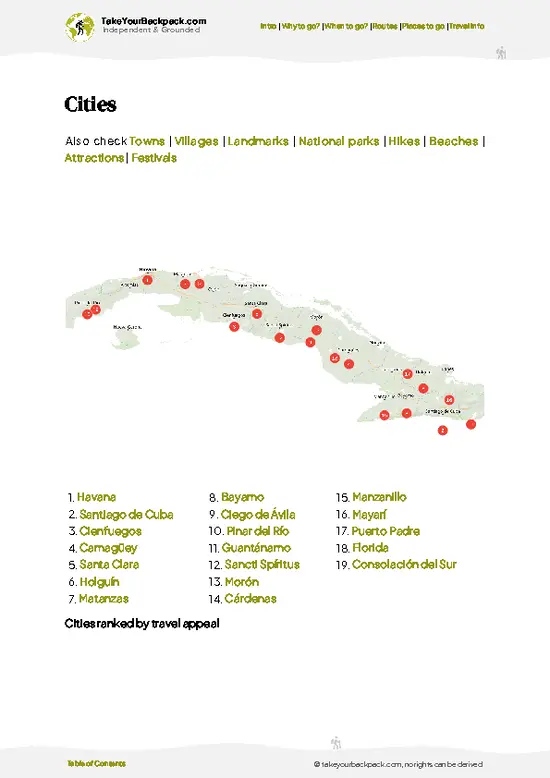
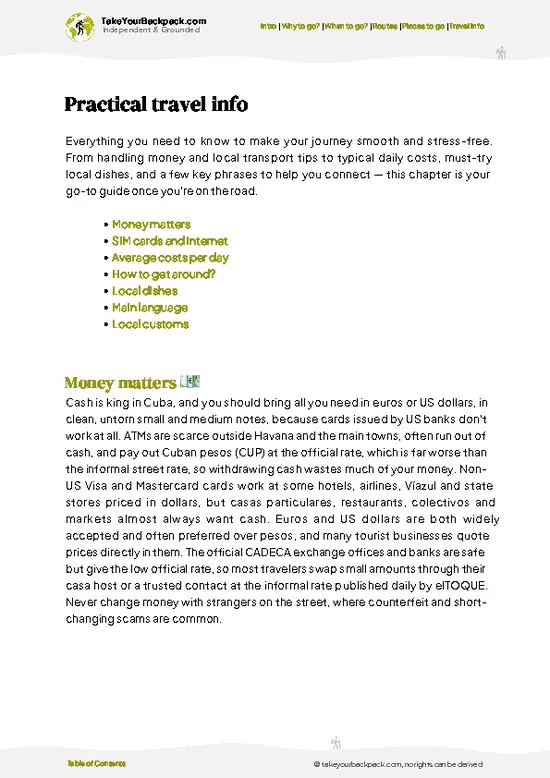
example page 0 from our offline Travel Guide for Cuba
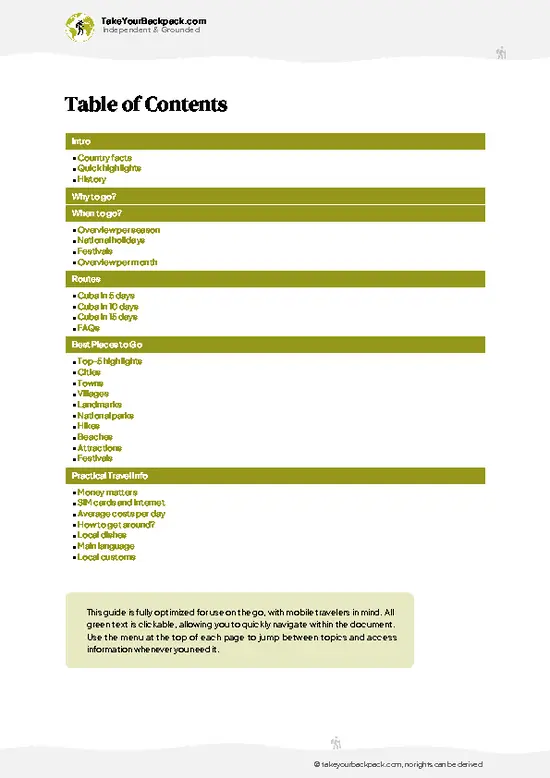
example page 1 from our offline Travel Guide for Cuba
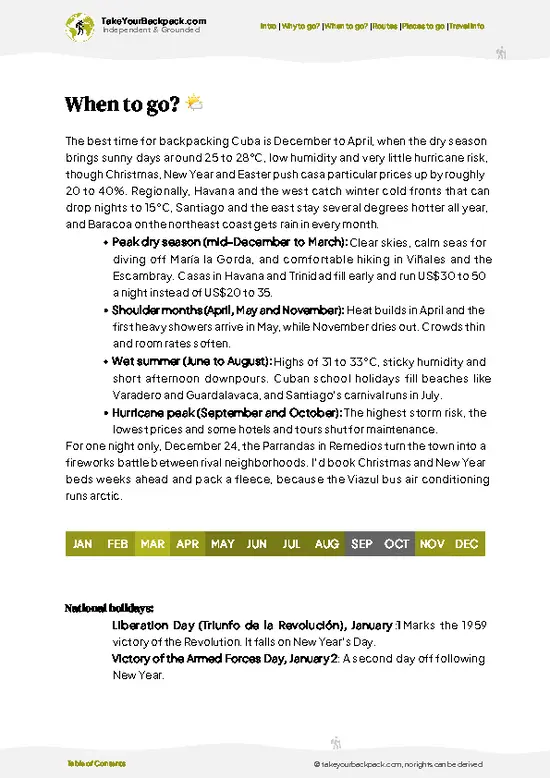
example page 2 from our offline Travel Guide for Cuba
example page 3 from our offline Travel Guide for Cuba
example page 4 from our offline Travel Guide for Cuba
example page 5 from our offline Travel Guide for Cuba
example page 6 from our offline Travel Guide for Cuba
example page 7 from our offline Travel Guide for Cuba
Loading the map 🌍
CLICK TO FILTER
cities
towns
villages
landmarks
national parks
hikes
beaches
attractions
festivals
SHOW COUNTRY’S BESTSHOW ALL

✨ Why go?
Ranked #4 beach in Cuba
The unique appeal for travelers

Cayo Jutías beach earns its stop for two reasons: it is the easiest proper white-sand beach from the tobacco country around Viñales, and it is calm enough that you can float for an hour without touching a wave. The pause is the point. After days of hiking limestone valleys and riding in shared taxis, you get a flat, warm sea and a hammock-like stillness. Look for the starfish beds in the shallows toward the western end, where orange and red stars sit on the sandy bottom in knee-deep water. The cay also works as a connector on a western Cuba loop, a clean break between the mountains and the capital. The social scene is light. You will meet other backpackers over a cold beer at the shack, but there is no nightlife, and everyone leaves by late afternoon. Arrive with a day plan and the long causeway … read more 👉
Cayo Jutías beach earns its stop for two reasons: it is the easiest proper white-sand beach from the tobacco country around Viñales, and it is calm enough that you can float for an hour without touching a wave. The pause is the point. After days of hiking limestone valleys and riding in shared taxis, you get a flat, warm sea and a hammock-like stillness. Look for the starfish beds in the shallows toward the western end, where orange and red stars sit on the sandy bottom in knee-deep water. The cay also works as a connector on a western Cuba loop, a clean break between the mountains and the capital. The social scene is light. You will meet other backpackers over a cold beer at the shack, but there is no nightlife, and everyone leaves by late afternoon. Arrive with a day plan and the long causeway over the mangroves becomes part of the trip, with herons and the occasional crab on the roadside.

💡 HighlightsPlaces and moments you shouldn't skip

  1. The white-sand beach: a long, narrow strip of powdery sand with sea grape and casuarina trees giving patches of shade. The water stays shallow and clear far out, so it suits slow swimming and long walks along the waterline.
  2. The starfish shallows: toward the western end, large orange and red starfish rest on the seabed in water you can wade through. Look, take photos, and leave them in the water.
  3. Snorkeling the reef edge: a short swim or boat hop takes you to patches of coral with parrotfish, sergeant majors and sponges. It is modest compared with Cuba’s best dive coasts, but the calm water makes it easy for beginners.
  4. The mangrove causeway: the stone road across the flats to the cay is an experience of its own. Egrets and herons stand in the shallows, and the water changes from green to turquoise
… read more 👉
  1. The white-sand beach: a long, narrow strip of powdery sand with sea grape and casuarina trees giving patches of shade. The water stays shallow and clear far out, so it suits slow swimming and long walks along the waterline.
  2. The starfish shallows: toward the western end, large orange and red starfish rest on the seabed in water you can wade through. Look, take photos, and leave them in the water.
  3. Snorkeling the reef edge: a short swim or boat hop takes you to patches of coral with parrotfish, sergeant majors and sponges. It is modest compared with Cuba’s best dive coasts, but the calm water makes it easy for beginners.
  4. The mangrove causeway: the stone road across the flats to the cay is an experience of its own. Egrets and herons stand in the shallows, and the water changes from green to turquoise as you approach the beach.
  5. Grilled lobster and fish at the beach shacks: the cay’s main meal is simple seafood cooked over charcoal and eaten with rice and salad. Order it on arrival, because it takes time to prepare, and eat it with your feet in the sand.
Cayo Jutías beach itself costs the least of all: a walk and a swim along the sand and the starfish shallows cost nothing beyond the small cay access fee.
Spotted a mistake or missing something? Contact us.
🌤️ When to go?When to go for the best experience

  • Dry Season (November to April): Cayo Jutías beach is at its best, with sunny days of 24 to 29°C (75 to 84°F), low humidity and calm, clear water. Daylight runs roughly 10.5 to 12 hours. Casas particulares in Viñales and the day-trip taxis cost the most from December to March.
  • Hot, Wet Season (May to October): Expect 30 to 33°C (86 to 91°F), heavy humidity and afternoon downpours. Days stretch to about 13 hours, so you can still get a beach morning in. Prices soften and the sand is emptier, though the white sand looks duller under cloud.
  • Hurricane Window (August to October): Storms can close the causeway road and cancel transport for days. Seas turn choppy and the water clouds.
  • Crowds: Midday from January to March brings the most day-trippers. Weekdays and early mornings are quieter in every month.
… read more 👉
  • Dry Season (November to April): Cayo Jutías beach is at its best, with sunny days of 24 to 29°C (75 to 84°F), low humidity and calm, clear water. Daylight runs roughly 10.5 to 12 hours. Casas particulares in Viñales and the day-trip taxis cost the most from December to March.
  • Hot, Wet Season (May to October): Expect 30 to 33°C (86 to 91°F), heavy humidity and afternoon downpours. Days stretch to about 13 hours, so you can still get a beach morning in. Prices soften and the sand is emptier, though the white sand looks duller under cloud.
  • Hurricane Window (August to October): Storms can close the causeway road and cancel transport for days. Seas turn choppy and the water clouds.
  • Crowds: Midday from January to March brings the most day-trippers. Weekdays and early mornings are quieter in every month.
Arrive before 10 a.m. or after 3 p.m. to get the beach and the light mostly to yourself.


source: climatestotravel.comJANJanuary: highly recommended for travelingFEBFebruary: highly recommended for travelingMARMarch: highly recommended for travelingAPRApril: excellent for travelingMAYMay: fair for travelingJUNJune: fair for travelingJULJuly: fair for travelingAUGAugust: fair for travelingSEPSeptember: fair for travelingOCTOctober: fair for travelingNOVNovember: excellent for travelingDECDecember: highly recommended for traveling
cuba-beach-cayo-jutias
© Google | Claudio Libera

✈️ The backpacker research shortcutCuba Travel Guide

An offline-friendly backpacking guide with optimized travel routes, ranked highlights, transport advice, and the best areas to stay.
example page 0 from our offline Travel Guide for Cuba
example page 1 from our offline Travel Guide for Cuba
example page 2 from our offline Travel Guide for Cuba
example page 3 from our offline Travel Guide for Cuba
example page 4 from our offline Travel Guide for Cuba
example page 5 from our offline Travel Guide for Cuba
example page 6 from our offline Travel Guide for Cuba
example page 7 from our offline Travel Guide for Cuba
The digital guide (327 pages) contains:
✅ 113 highlights, ranked by travel appeal
✅ Optimized 5, 10 & 15-day travel routes
✅ Cities, national parks, landmarks, beaches
✅ How to get around
✅ Offline-friendly for travel without Wi-Fi
👉 Click to see all 30+ guide features

📅 Plan smarter in minutes, not weeks
✅ Month by month travel advice
✅ Festivals & national holidays
✅ Budget expectations

🗺️ Go to the right places, skip the overrated ones
✅ Honest pros & cons of destinations
✅ Top hikes, parks & viewpoints
✅ Lesser-known places most travelers miss
✅ Clear “worth it vs skip it” guidance

🛏️ Travel smoothly without rookie mistakes
✅ Best areas to stay
✅ Transport systems explained simply
✅ Common scams & safety advice
✅ SIM cards, money & practical tips

🌍 Understand the country, not just visit it
✅ Culture & traditions
✅ 52 Essential phrases & customs
✅ Festivals worth planning around
✅ Traveler-friendly historical context
✅ Insights that make places more meaningful

📱 Built for real travel conditions
✅ Fully downloadable PDF
✅ Works completely offline
✅ Optimized for phone use
✅ Useful in remote areas & buses
✅ Everything in one place
Stop searching, start planning
Get instant access to your full guide. 30‑day money-back guarantee.
+ Add another guide for just

By proceeding you agree to our terms.
Sent to your inbox immediately after payment • 100% Secure Checkout
Best Backpacking Travel Advisor 2025 tourism awardBest Backpacking
Travel Advisor
2025
What others say about Take Your Backpack Guides:
⭐⭐⭐⭐⭐
Fantastic, amazing amount of information!
⭐⭐⭐⭐⭐
My goodness this is amazing, it's what I've been looking for hats off too you!
⭐⭐⭐⭐⭐
I think this is absolutely BRILLIANT
⭐⭐⭐⭐
Very complete and informative. It's still missing places, but I gotta to commend you
⭐⭐⭐⭐⭐
This is truly amazing, thank you, can't wait to explore it with my kids!
⭐⭐⭐⭐⭐
Awesome resource, thank you!
⭐⭐⭐⭐⭐
This is amazing! Can't wait to explore the ones I haven't seen
⭐⭐⭐⭐
I love this! Well done, great idea.
⭐⭐⭐⭐⭐
Thanks for taking the time to make this gem!
⭐⭐⭐⭐⭐
This might be the best website I've ever seen.
⭐⭐⭐⭐⭐
Congratulations, and thank you so much for your work; it's incredibly valuable.
⭐⭐⭐⭐
In all seriousness I think you did a great job pointing out the important spots
⭐⭐⭐⭐⭐
10/10 very good
⭐⭐⭐⭐⭐
As someone who's only just starting to visit regularly this is awesome, thank you.
⭐⭐⭐⭐
Thank you very much! I'm going to visit my dad, it's going to be very useful!
⭐⭐⭐⭐⭐
This is really cool! We'll be travelling for the first time and this definitely come in handy.
⭐⭐⭐⭐⭐
You are now our minister of culture, congratulations 👨‍💼
⭐⭐⭐⭐⭐
Just wanted to tell you that this is a pearl! Going to follow your recommendations.
⭐⭐⭐⭐⭐
This is so cool. I'll definitely be using the resource for my travels soon.
⭐⭐⭐⭐⭐
This is very impressive! Good work.
⭐⭐⭐⭐⭐
This is an amazing and informative site. Very well done!

🛏️ Where to stay?Choosing the right base

Viñales town is where you stay, because the beach itself has only a small cluster of seafront restaurants and no lodging worth planning around. The town sits roughly 60 to 75 km from the cayo, about 1.5 hours by road, and it is the social hub of western Cuba for backpackers. Rooms in family-run casas particulares along the main street and its side lanes cost around US$20 to 35 a night double, and breakfast on a shaded terrace is usually extra at US$4 to 6. Hosts there arrange taxis, shared rides to the cayo and horseback or hiking trips, and they are the best way to find other travelers to split … read more 👉
Viñales town is where you stay, because the beach itself has only a small cluster of seafront restaurants and no lodging worth planning around. The town sits roughly 60 to 75 km from the cayo, about 1.5 hours by road, and it is the social hub of western Cuba for backpackers. Rooms in family-run casas particulares along the main street and its side lanes cost around US$20 to 35 a night double, and breakfast on a shaded terrace is usually extra at US$4 to 6. Hosts there arrange taxis, shared rides to the cayo and horseback or hiking trips, and they are the best way to find other travelers to split a car with. The streets near the central plaza give you restaurants, music and easy evening company. The quieter edges toward the valley trade a short walk for rooftop views, birdsong and roosters at dawn. Staying on the beach side, in the fishing village of Santa Lucía to the east, suits people wanting solitude, but options are few and nightlife is almost nil. Book Viñales ahead from December to March, since the best-located rooms fill quickly.

🛡️ SafetySafety Tips and Common Scams in Cayo Jutías

Cayo Jutías beach is calm and easy. The water is shallow, warm and mostly flat, with a gentle slope and almost no surf, so strong swimmers and beginners alike can wade out a long way. Currents are mild, though the tide can pull a little along the sandbar at the northern end. Starfish sit in the shallows and are best left in the water. Sea urchins and sharp coral fragments turn up near the rocky patches, so water shoes help if you wander off the sand. Shade is thin. The sun is strong all year, and by midday the sand is hot, so bring a hat, reef-safe sunscreen and plenty of water, since prices at the restaurants run higher than in town. Mosquitoes and sand flies bite at dusk and on the mangrove-side causeway, so repellent is worth carrying. Petty theft is rare, but keep your bag and cash in … read more 👉
Cayo Jutías beach is calm and easy. The water is shallow, warm and mostly flat, with a gentle slope and almost no surf, so strong swimmers and beginners alike can wade out a long way. Currents are mild, though the tide can pull a little along the sandbar at the northern end. Starfish sit in the shallows and are best left in the water. Sea urchins and sharp coral fragments turn up near the rocky patches, so water shoes help if you wander off the sand. Shade is thin. The sun is strong all year, and by midday the sand is hot, so bring a hat, reef-safe sunscreen and plenty of water, since prices at the restaurants run higher than in town. Mosquitoes and sand flies bite at dusk and on the mangrove-side causeway, so repellent is worth carrying. Petty theft is rare, but keep your bag and cash in sight while you swim. There are no lifeguards or flags, so choose a spot near other people.

FAQFrequently asked questions about Cayo Jutías

Most backpackers reach Cayo Jutías beach from Viñales by taxi, which takes about 1.5 hours each way and costs roughly US$50 to 80 for the whole car, so splitting among four people is cheaper. Some casa hosts arrange a shared ride or tour for around US$15 to 25 per person. The route runs through Santa Lucía and then out along the causeway over the mangroves. Public transport does not reach the cayo, and renting a car or scooter in Viñales is another option.
Cayo Jutías beach is excellent for swimming and relaxing, with warm, shallow, calm turquoise water along a long stretch of white sand. Surfing is not an option because there is almost no swell. Snorkeling is decent but modest, with starfish in the shallows and small fish around the reef patches and rocks near the western end. Basic snorkel gear is rented on site for around US$5 to 10, though bringing your own mask gives you better quality.
Cayo Jutías beach charges a vehicle toll at the causeway entrance, typically around US$5 to 10 per person depending on the arrangement, usually paid in cash. The beach itself has no separate entry gate once you are on the cayo. Sun loungers and umbrellas cost around US$2 to 5, and meals at the seafront restaurants run roughly US$8 to 15. Bring cash, as cards and ATMs are not available there.
⚠️ Things can change over time, so always validate details locally before you go.

Other Cuban beaches near Cayo Jutías

Explore more nearby:

  • Cayo Levisa—Ferry from Palma Rubia, offshore dive sites, one-resort cay, starry nights| 57 km away
  • Playa Bibijagua—Black sand, Isla de la Juventud, weekend domino crowds, pine shade| 163 km away
  • Playa Mégano—Casuarina shade, Playas del Este, beach-bar lunch, Havana weekend crowds| 197 km away

💡 Not sure where to go next?
Create a personalized itinerary for Cuba including Cayo Jutías and the places that fit your trip.

Generate my itinerary

👉 Discover all beaches

Or checkout all Cuba has to offer (think cities, towns, villages, national parks, hikes, beaches, festivals)
Country photo of Cuba

We 💚 feedbackKey takeaways before you go

Cayo Jutías beach fits best as a single lazy day between hiking and tobacco farms in Viñales and a night in a quiet coastal town further west. I would go on a weekday, pack lunch and sunscreen, and skip trying to cram it between two other big activities.

✈️ When did I visit Cuba?
As part of my 1.5 year travel around the world trip, I visited Cuba for 6 weeks in February, March 2016, being extremely lucky that that coincided with the free concert of The Rolling Stones.

✍️ Help improve this page!
The information on this page is based on my own backpacking experience in Cuba, supplemented with up-to-date research and feedback from other travelers. Travel details can change, so if you notice anything outdated or incomplete, feel free to let me know.


🙋‍♂️ Give feedback

👋 Meet the founderWho’s Behind Take Your Backpack?

Johan, backpacker and founder of TakeYourBackpackHi, I’m Johan (Netherlands 🇳🇱), the creator of TakeYourBackpack. Over the past 3 decades, I’ve backpacked through 90+ countries across six continents, gaining extensive experience with independent travel, long-term trips, and overland routes.

This site is built on a combination of firsthand travel experience and carefully curated insights from other backpackers. Many guides are based on places I’ve personally visited, while others bring together tips, observations, and practical advice shared by trusted travelers I’ve met along the way.

The goal is to provide realistic, experience-driven guidance — not generic itineraries — so you can explore destinations with better context, clearer expectations, and more confidence.