×

Cuba🇨🇺 | best beachesDiscover the 10 Best beaches Across Cuba

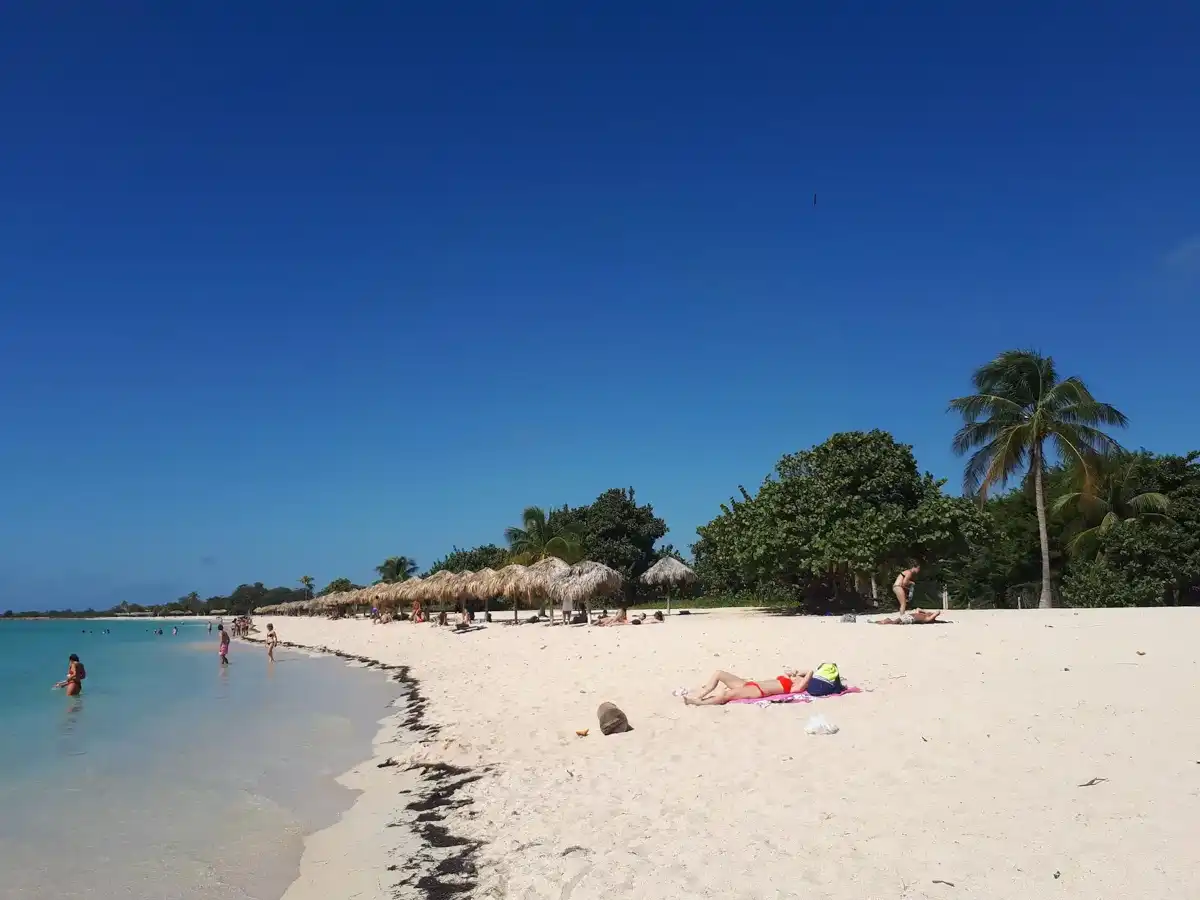
Beaches in Cuba split into two worlds. The resort strips of Varadero and the northern cays (Cayo Coco, Cayo Santa María) have the whitest sand and clearest water, but they run on all-inclusive hotels, causeway access and prices that make little sense for a backpacker. Skip them unless you want a day pass. The southern coast near Trinidad and the quieter eastern shores near Santiago and Baracoa offer darker sand, fewer crowds and casas particulares within reach. For independent travelers, Playa Ancón region value and easy buses win. Choose resort polish or local texture, because Cuba rarely gives you both.

By Johan Kruseman 🇳🇱 | Updated October 23, 2026
Explore the best attractions in Cuba

Why go?What Makes Them Special

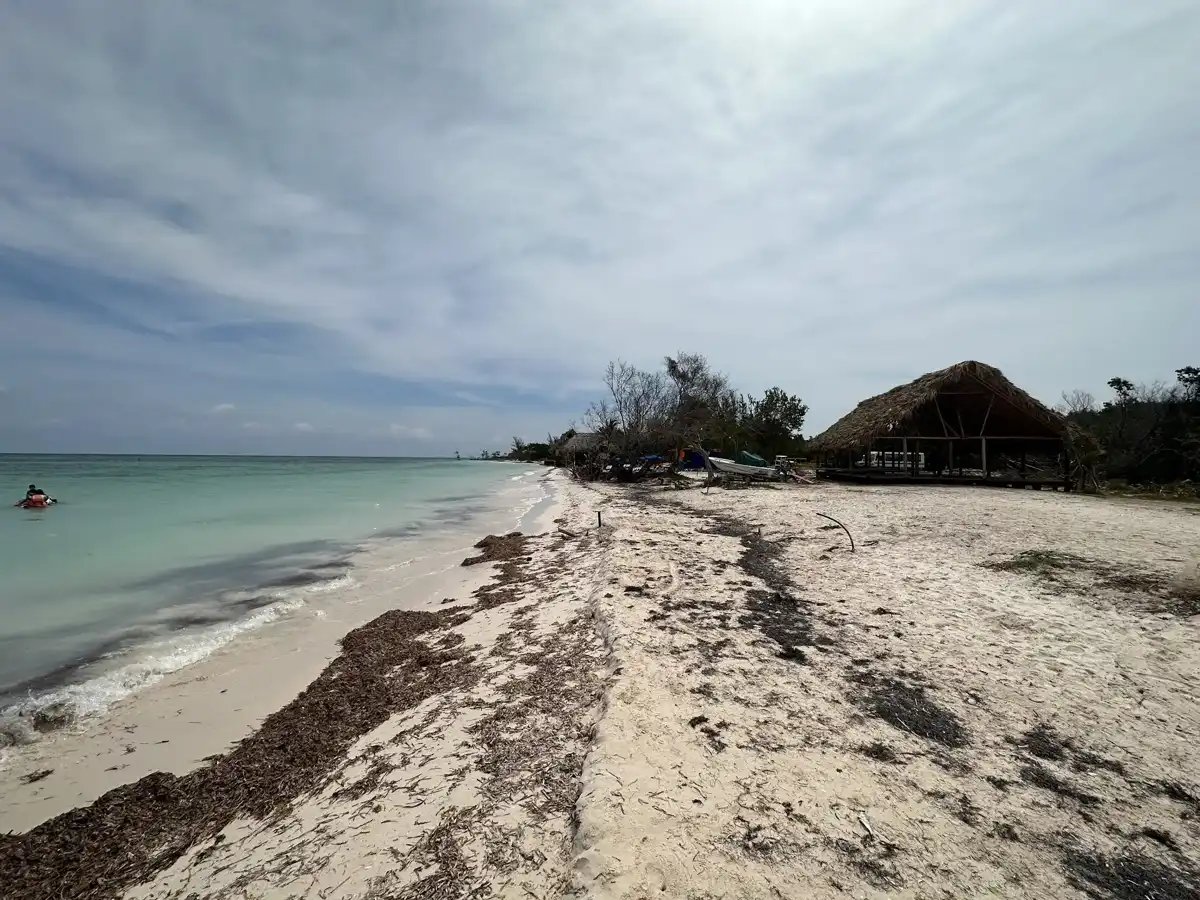
Cuba is the largest island in the Caribbean, with roughly 5,700 kilometers of coastline, so sand is never far. What sets it apart is how little of that coast is developed. Decades of state control of land and tourism limited private building, which left long stretches without condos, chains or beach clubs. The exception is the enclave model: the government concentrates foreign-currency tourism in a few resort zones, mostly on the north coast and cays, where hotels are state-partnered and often walled off from local life.

The climate is warm year-round, with sea temperatures typically between 26 and 30°C. Reefs, including a long barrier system off the north and south coasts, give good snorkeling and calm, shallow water on many shores.

Before choosing Cuba for beaches, know the limits. Infrastructure … read more 👉
Cuba is the largest island in the Caribbean, with roughly 5,700 kilometers of coastline, so sand is never far. What sets it apart is how little of that coast is developed. Decades of state control of land and tourism limited private building, which left long stretches without condos, chains or beach clubs. The exception is the enclave model: the government concentrates foreign-currency tourism in a few resort zones, mostly on the north coast and cays, where hotels are state-partnered and often walled off from local life.

The climate is warm year-round, with sea temperatures typically between 26 and 30°C. Reefs, including a long barrier system off the north and south coasts, give good snorkeling and calm, shallow water on many shores.

Before choosing Cuba for beaches, know the limits. Infrastructure is thin: expect few shaded rest areas, basic food, limited drinks and sometimes no running water outside resorts. Cash matters, since card acceptance is unreliable and ATMs can fail. Power cuts and fuel shortages affect transport and services. Many cays require a hotel booking or a paid transfer to reach. If you want turnkey comfort at low cost, other Caribbean islands do it more easily. If you want empty sand and local company, Cuba is strong, provided you plan around cash and transport.
How the List Was Created
The list of best beaches in Cuba is created based on beauty, vibe, water quality, activities, and surrounding scenery. If you feel a beach is missing in this list, please let us know.

When to go?Best Time to Visit Cuba for beaches

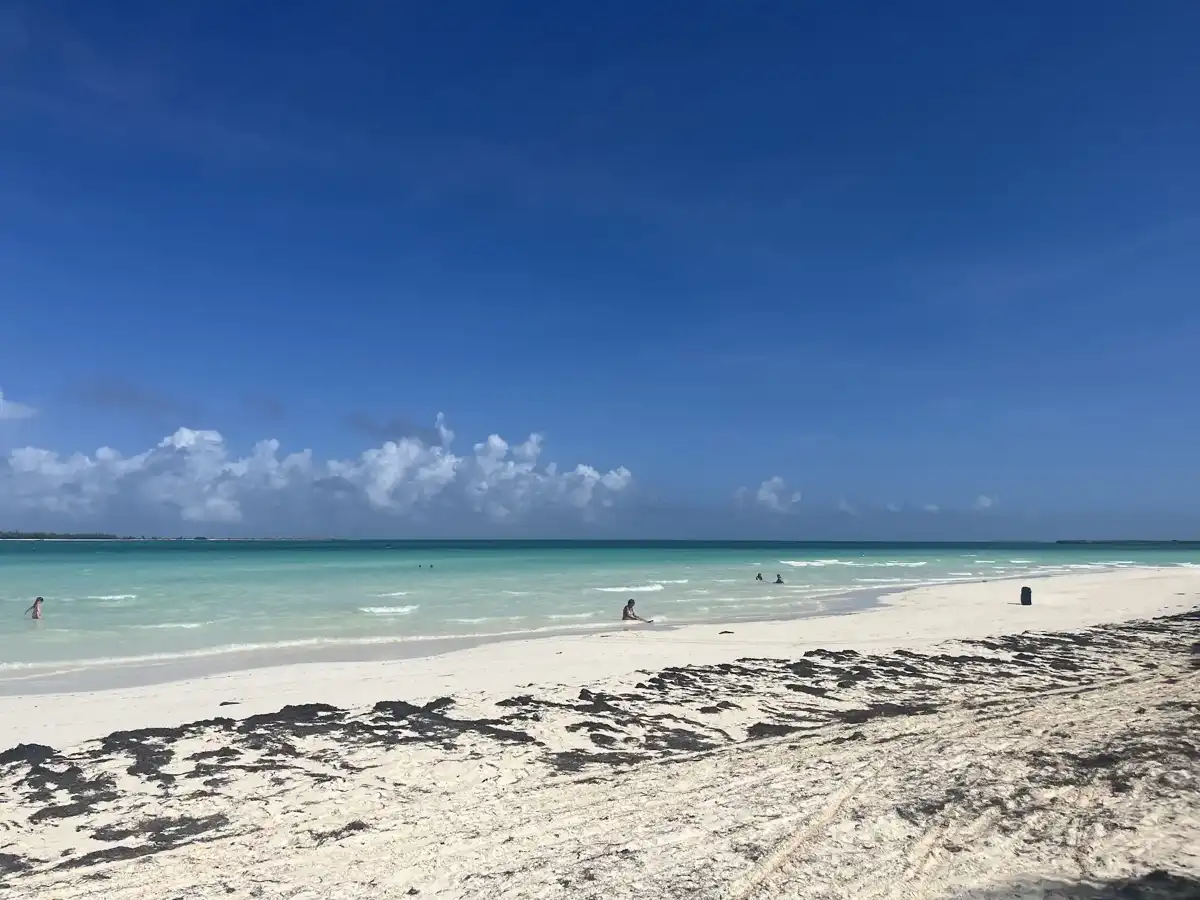
Best months: November to April: The best months for beaches in Cuba are November to April, the dry season, when days are sunny, humidity is lower and rain is scarce. Daytime highs run about 26 to 30°C, seas stay near 25 to 27°C, and monthly rainfall is often under 60 mm.
Shoulder seasons and peak crowds: May and October are workable shoulder months, hotter and more humid, with rainfall rising to roughly 100 to 200 mm. Late December to March is the peak, especially around Christmas and New Year, when resort rates can climb 30 to 60 percent and casas particulares in Trinidad and Varadero fill early. Book ahead for those weeks. Cuban school holidays in July and August also pack the public beaches near Havana and Varadero with domestic visitors.
What to skip: June to October is the wet and hurricane … read more 👉
Best months: November to April: The best months for beaches in Cuba are November to April, the dry season, when days are sunny, humidity is lower and rain is scarce. Daytime highs run about 26 to 30°C, seas stay near 25 to 27°C, and monthly rainfall is often under 60 mm.
Shoulder seasons and peak crowds: May and October are workable shoulder months, hotter and more humid, with rainfall rising to roughly 100 to 200 mm. Late December to March is the peak, especially around Christmas and New Year, when resort rates can climb 30 to 60 percent and casas particulares in Trinidad and Varadero fill early. Book ahead for those weeks. Cuban school holidays in July and August also pack the public beaches near Havana and Varadero with domestic visitors.
What to skip: June to October is the wet and hurricane season, with highs of 31 to 34°C, heavy afternoon storms and rainfall that can exceed 150 to 250 mm a month. Peak storm risk runs from August to October. The upside is lower prices, often 20 to 40 percent below winter, but cancelled transport and rough seas make it a poor choice for a beach-focused trip.
Regional differences: The north coast can get windy, cooler fronts and rougher seas from December to February. The south coast stays calmer and warmer in those months. The east, around Baracoa, is wetter and gets rain in any season.

beach hoppingHow to Combine beaches Into One Trip

How many days to plan: A trip combining several beaches in Cuba needs 10 to 14 days, since long distances and slow transport eat time. Anything under a week means choosing one region and staying put.
Which regions group well: Group stops by coast, not by name recognition. Havana, Varadero and the central north cays cluster along the north. Trinidad and the Ancón peninsula sit on the south-central coast near Cienfuegos. The east, around Santiago and Baracoa, is a separate trip, far from everything else. A sensible direction is west to east: fly into Havana, work through Varadero or Trinidad, and finish in the east, then fly back from Santiago or Holguín.
Time per stop and travel times: Give each beach base 2 to 3 nights. One night is not enough after a long bus ride. Havana to Varadero takes … read more 👉
How many days to plan: A trip combining several beaches in Cuba needs 10 to 14 days, since long distances and slow transport eat time. Anything under a week means choosing one region and staying put.
Which regions group well: Group stops by coast, not by name recognition. Havana, Varadero and the central north cays cluster along the north. Trinidad and the Ancón peninsula sit on the south-central coast near Cienfuegos. The east, around Santiago and Baracoa, is a separate trip, far from everything else. A sensible direction is west to east: fly into Havana, work through Varadero or Trinidad, and finish in the east, then fly back from Santiago or Holguín.
Time per stop and travel times: Give each beach base 2 to 3 nights. One night is not enough after a long bus ride. Havana to Varadero takes about 2 to 3 hours by road, Havana to Trinidad roughly 5 to 6 hours, and Trinidad to Santiago 10 to 12 hours. Viazul buses and shared taxis are the usual choices, and a domestic flight from Havana to Santiago or Holguín saves a full day.
Planning mistakes: The common error is trying to cover both ends of the island on a short trip. Pick two regions at most. Another is booking beach days right after an overnight journey. Leave a buffer, and reserve buses a few days ahead in winter, because seats sell out.

The ListHighly Recommended beaches of Cuba

1 Playa Pilar

Tall dunes, Cayo Guillermo, Hemingway’s boat, quiet western end

Climb the high dunes for a view of sandbars under turquoise water, then walk beyond the sunbeds to the empty western stretch.

2 Playa Paraíso

Cayo Largo, waist-deep turquoise, starfish shallows, Cayo Iguana trips

Walk the waterline to neighboring Playa Sirena, then take a catamaran to Cayo Rico or meet the rock iguanas on Cayo Iguana.

3 Cayo Levisa

Ferry from Palma Rubia, offshore dive sites, one-resort cay, starry nights

Board the mainland boat to a calm north-facing shore, then snorkel the seagrass or dive black coral walls off the cay.

cuba-beach-cayo-levisa
© Google | Aurélie Peché

4 Cayo Jutías

Mangrove causeway, starfish shallows, charcoal-grilled lobster, day-trip cay

Cross a stone causeway over mangrove flats to a long, quiet strip of fine sand, with starfish in the western shallows.

cuba-beach-cayo-jutias
© Google | Claudio Libera

5 Playa Ancón

Four-kilometer sand, Trinidad access, catamaran cays, beach-shack plates

Wade far out over a gently sloping seabed, then book a half-day catamaran trip to nearby cays with snorkel stops.

cuba-beach-playa-ancon
© Google | Wouter U

6 Guardalavaca

Public crescent, near-shore coral, Taíno burial museum, paladar lobster

Walk onto an open public beach, snorkel the nearby coral, and add an hour at the pre-Columbian burial site inland.

cuba-beach-guardalavaca
© Google | Rafael Richtscheid

7 Playa Esmeralda

Emerald shallows, raked sand, sunset shore

Swim in shallow, clear water without a current, or follow the sand east to neighboring coves on a long walk.

8 Playa Pesquero

Resort-lined shore, day passes, near-shore coral, village-side grills

Walk a wide curve of pale sand at dawn, snorkel the coral close in, and head to Guardalavaca for lunch.

cuba-beach-playa-pesquero
© Google |

9 Playa Santa Lucía

Shark dive, barrier reef, Nuevitas road flamingos, fishing village

Dive to about 25 to 30 meters for a supervised bull shark feeding, or snorkel coral gardens inside the offshore reef.

10 Playa Maguana

Palm-lined bay, reef-sheltered water, Baracoa coast road, coconut dishes

Drive the coast road past cacao farms to a palm-fringed bay where waist-deep water stays calm behind the reef.

11 Playa Girón

Rocky shoreline, ladder swims, Cueva de los Peces, Bay of Pigs museum

Climb down a ladder into reef-edge water, then visit the flooded sinkhole and the invasion museum on the main road.

12 Playa Larga

Zapata birdwatching, rocky-shelf snorkeling, shore dives, lobster terraces

Step off a coral shelf into reef water at dawn, then follow a guide into the Zapata wetlands for rare birds.

13 Jibacoa

Small coves, close reef, river valley rides, family-home dinners

Swim straight out to a nearshore reef, then spend a day on horseback through farmland and palm groves inland.

cuba-beach-jibacoa
© Google | Randolfo Santos

14 Playa Rancho Luna

Cienfuegos dive shops, shore reef, casuarina shade, gray-gold sand

Step into the water with a mask and reach living reef within minutes, or book a boat dive to coral walls.

15 Playa Los Flamencos

Flamingo lagoons, Cayo Coco causeway, knee-deep shallows, El Bagá park

Listen for flamingos in the lagoons behind the dunes, then wade far out over pale sand in calm, waist-deep water.

16 Playa Yuraguanal

Resort-backed arc, sea grape shade, nearshore reef, Holguín coast

Wade into calm, clear shallows along a pale sand arc, snorkel the reef close to shore and retreat to sea grape shade at midday.

17 Playa La Boca

Puerto Padre bay mouth, windmills, Fuerte de la Loma, local families

Paddle in a sheltered bay beside local families, then climb the old fort hill for views over Puerto Padre’s channel.

18 Playa Mégano

Casuarina shade, Playas del Este, beach-bar lunch, Havana weekend crowds

Settle under casuarinas for an easy swim and kiosk lunch, or walk the sand toward Santa María when families fill the weekend.

19 Playa Bonita

Cayo Sabinal crescent, catamaran access, casuarina shade, no services

Cross Nuevitas Bay by catamaran from Playa Santa Lucía to a quiet crescent of pale sand, shallow turquoise water and shaded picnic spots.

20 Playa Blanca

Pale sand near Gibara, frigate birds, fishing boats, casa suppers

Float in shallow water along an uncrowded shore, then head into Gibara for a seafront stroll and a seafood dinner.

21 Playa Caletones

Limestone coves, rock pools, picnic spots, Gibara evenings

Scramble along pale limestone ledges to sheltered pools for snorkeling, then carry lunch with you and return to Gibara for dinner.

22 Playa Bibijagua

Black sand, Isla de la Juventud, weekend domino crowds, pine shade

Wade across dark sand into clear, shallow water, and join Nueva Gerona families who bring music and coolers on weekends.

23 Playa Siboney

Granjita Siboney, gray-sand crescent, fried fish stalls, Santiago day trip

Visit the farmhouse behind the 1953 Moncada assault, then swim off the coarse sand and eat whole fried fish by the surf.

24 Cayo Saetía

Safari trucks, zebras and ostriches, calm bay, beach grill

Ride an open truck past grazing zebras and buffalo, then swim in shallow water and eat grilled fish by the sand.

cuba-beach-cayo-saetia
© Google | Delia Reyes

25 Playa Tortuga

Turtle nesting sand, Cayo Largo del Sur, calm shallows, no vendors

Walk a long, empty shoreline where turtles lay eggs in warm months, then float in clear, gently sloping water with your own food and shade.

26 Playa Las Coloradas

Granma landing, mangrove boardwalk, yacht replica, muddy shore

Trace the route of the 1956 rebel landing along a mangrove trail, past a full-size replica of the cramped Granma yacht.

Think you know Cuba?

Prove you’re a true local — uncover 16 lesser-known beaches in Cuba that locals tend to keep to themselves.
Loading the map 🌍

Expert viewWhat You Should Know

How many beaches to visit: I advise two or three beach stops on a typical two-week trip, not five. Transport is slow, and every extra stop costs a travel day, which reduces the sand time you came for. Three gives you one resort-style option, one local-feeling coast and one rest day without feeling rushed.
Which kind to prioritize: Budget backpackers should favor public beaches near towns with casas particulares, where food and rooms cost far less. Choose the resort cays only if you want the clearest water and calm shallows, and accept that day passes or hotel-priced meals come with them. Snorkelers should pick reef-backed shores. Those who prefer quiet should head to the less visited south and east, where facilities are minimal and you must bring water and snacks. Families and anyone wanting … read more 👉
How many beaches to visit: I advise two or three beach stops on a typical two-week trip, not five. Transport is slow, and every extra stop costs a travel day, which reduces the sand time you came for. Three gives you one resort-style option, one local-feeling coast and one rest day without feeling rushed.
Which kind to prioritize: Budget backpackers should favor public beaches near towns with casas particulares, where food and rooms cost far less. Choose the resort cays only if you want the clearest water and calm shallows, and accept that day passes or hotel-priced meals come with them. Snorkelers should pick reef-backed shores. Those who prefer quiet should head to the less visited south and east, where facilities are minimal and you must bring water and snacks. Families and anyone wanting shade and toilets are better off near the resort zones.
What it costs: A realistic budget is US$35 to 60 a day for a casa particular room (US$20 to 40), meals (US$8 to 20) and local transport. Beach entry is usually free at public shores, though resort day passes run roughly US$30 to 80 including food and drinks. Sun-lounger and umbrella rental is typically US$3 to 10. Boat trips to reefs or cays are about US$20 to 50. Viazul bus fares to beach regions range from US$6 to 25 per leg. Cash in a hard currency such as euros or US dollars is often more useful than cards, and exchange rates vary, so confirm what you will pay before you buy.
Safety and culture: Water is generally safe for swimming, but currents can be strong on the north coast in winter, and lifeguards are not common outside resorts. Shade is limited, so bring sunscreen, which is expensive and hard to find locally. Sea urchins on rocky patches are common, so reef shoes help. Keep valuables out of sight, since petty theft from bags left on the sand happens. Touts offering rides, lobster or rooms are persistent but rarely dangerous. A firm no works.

Cubans use the same public beaches, so dress and behavior are relaxed but not rowdy. Ask before photographing locals. Take your trash with you, as bins are scarce. Tipping beach staff a small amount, US$1 to 2, is appreciated.
What to skip: Skip any beach that requires a long, expensive taxi for only a few hours of sand. If a day trip costs more than a night in a casa, stay overnight nearby instead.

✈️ The backpacker research shortcutCuba Travel Guide

An offline-friendly backpacking guide with optimized travel routes, ranked highlights, transport advice, and the best areas to stay.
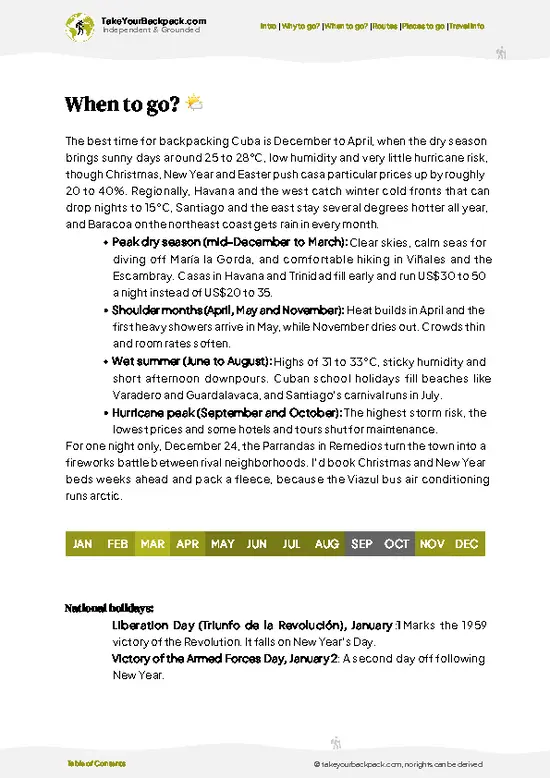
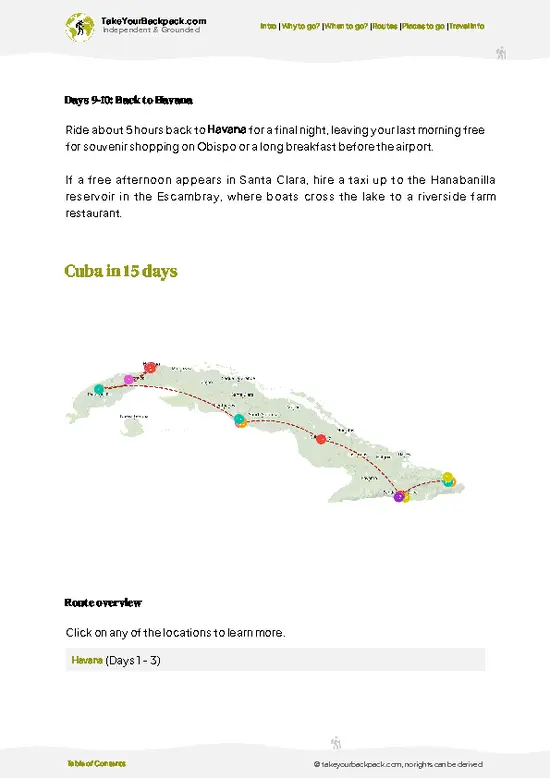
example page 0 from our offline Travel Guide for Cuba
example page 1 from our offline Travel Guide for Cuba
example page 2 from our offline Travel Guide for Cuba
example page 3 from our offline Travel Guide for Cuba
example page 4 from our offline Travel Guide for Cuba
example page 5 from our offline Travel Guide for Cuba
example page 6 from our offline Travel Guide for Cuba
example page 7 from our offline Travel Guide for Cuba
The digital guide (327 pages) contains:
✅ 113 highlights, ranked by travel appeal
✅ Optimized 5, 10 & 15-day travel routes
✅ Cities, national parks, landmarks, beaches
✅ How to get around
✅ Offline-friendly for travel without Wi-Fi
👉 Click to see all 30+ guide features

📅 Plan smarter in minutes, not weeks
✅ Month by month travel advice
✅ Festivals & national holidays
✅ Budget expectations

🗺️ Go to the right places, skip the overrated ones
✅ Honest pros & cons of destinations
✅ Top hikes, parks & viewpoints
✅ Lesser-known places most travelers miss
✅ Clear “worth it vs skip it” guidance

🛏️ Travel smoothly without rookie mistakes
✅ Best areas to stay
✅ Transport systems explained simply
✅ Common scams & safety advice
✅ SIM cards, money & practical tips

🌍 Understand the country, not just visit it
✅ Culture & traditions
✅ 52 Essential phrases & customs
✅ Festivals worth planning around
✅ Traveler-friendly historical context
✅ Insights that make places more meaningful

📱 Built for real travel conditions
✅ Fully downloadable PDF
✅ Works completely offline
✅ Optimized for phone use
✅ Useful in remote areas & buses
✅ Everything in one place
Stop searching, start planning
Get instant access to your full guide. 30‑day money-back guarantee.
+ Add another guide for just

By proceeding you agree to our terms.
Sent to your inbox immediately after payment • 100% Secure Checkout
Best Backpacking Travel Advisor 2025 tourism awardBest Backpacking
Travel Advisor
2025
What others say about Take Your Backpack Guides:
⭐⭐⭐⭐⭐
Fantastic, amazing amount of information!
⭐⭐⭐⭐⭐
My goodness this is amazing, it's what I've been looking for hats off too you!
⭐⭐⭐⭐⭐
I think this is absolutely BRILLIANT
⭐⭐⭐⭐
Very complete and informative. It's still missing places, but I gotta to commend you
⭐⭐⭐⭐⭐
This is truly amazing, thank you, can't wait to explore it with my kids!
⭐⭐⭐⭐⭐
Awesome resource, thank you!
⭐⭐⭐⭐⭐
This is amazing! Can't wait to explore the ones I haven't seen
⭐⭐⭐⭐
I love this! Well done, great idea.
⭐⭐⭐⭐⭐
Thanks for taking the time to make this gem!
⭐⭐⭐⭐⭐
This might be the best website I've ever seen.
⭐⭐⭐⭐⭐
Congratulations, and thank you so much for your work; it's incredibly valuable.
⭐⭐⭐⭐
In all seriousness I think you did a great job pointing out the important spots
⭐⭐⭐⭐⭐
10/10 very good
⭐⭐⭐⭐⭐
As someone who's only just starting to visit regularly this is awesome, thank you.
⭐⭐⭐⭐
Thank you very much! I'm going to visit my dad, it's going to be very useful!
⭐⭐⭐⭐⭐
This is really cool! We'll be travelling for the first time and this definitely come in handy.
⭐⭐⭐⭐⭐
You are now our minister of culture, congratulations 👨‍💼
⭐⭐⭐⭐⭐
Just wanted to tell you that this is a pearl! Going to follow your recommendations.
⭐⭐⭐⭐⭐
This is so cool. I'll definitely be using the resource for my travels soon.
⭐⭐⭐⭐⭐
This is very impressive! Good work.
⭐⭐⭐⭐⭐
This is an amazing and informative site. Very well done!

🛏️ Where to stay?Top Places to Consider Staying

Cuba has a small number of true hostels (mostly in Havana, Viñales and Trinidad, with dorm beds at roughly US$8 to 15), but most budget travelers stay in casas particulares, licensed private homestays where a double room usually runs US$20 to 35 and breakfast is often available for a few dollars more. In Havana, Habana Vieja puts you within walking distance of the main sights but is loud and touristy, Centro Habana is cheaper and more local but gritty, with more petty theft and blackouts, and Vedado is leafier and quieter, with the city’s best live music and late bars a short taxi ride from the old town. In Trinidad and Viñales, rooms within a few blocks of the central plaza or main street put … read more 👉
Cuba has a small number of true hostels (mostly in Havana, Viñales and Trinidad, with dorm beds at roughly US$8 to 15), but most budget travelers stay in casas particulares, licensed private homestays where a double room usually runs US$20 to 35 and breakfast is often available for a few dollars more. In Havana, Habana Vieja puts you within walking distance of the main sights but is loud and touristy, Centro Habana is cheaper and more local but gritty, with more petty theft and blackouts, and Vedado is leafier and quieter, with the city’s best live music and late bars a short taxi ride from the old town. In Trinidad and Viñales, rooms within a few blocks of the central plaza or main street put you close to the evening music and restaurants, while streets farther out are quieter and slightly cheaper.

If you enjoy meeting fellow travelers, consider choosing hostels with high ratings for atmosphere. On the other hand, if you prefer having your own space, a hotel might be a better option.

CubaMore Places Across Cuba

👋 Meet the founderWho’s Behind Take Your Backpack?

Johan, backpacker and founder of TakeYourBackpackHi, I’m Johan (Netherlands 🇳🇱), the creator of TakeYourBackpack. Over the past 3 decades, I’ve backpacked through 90+ countries across six continents, gaining extensive experience with independent travel, long-term trips, and overland routes.

This site is built on a combination of firsthand travel experience and carefully curated insights from other backpackers. Many guides are based on places I’ve personally visited, while others bring together tips, observations, and practical advice shared by trusted travelers I’ve met along the way.

The goal is to provide realistic, experience-driven guidance — not generic itineraries — so you can explore destinations with better context, clearer expectations, and more confidence.