×

Cuba🇨🇺 | beachesPlaya BlancaPale sand near Gibara, frigate birds, fishing boats, casa suppers | things to do and best time to go

Explore Playa PesqueroExplore Playa Tortuga

Backpacking in Playa Blanca
👌 Worth visitingbeach ranked #20
By Johan Kruseman 🇳🇱 | Updated October 22, 2026

Playa Blanca rewards you with space: on most days you can walk its sand and see more frigate birds than people. It sits on the north coast of Cuba, east of the fishing town of Gibara in Holguín province. I expected resort-style sun loungers and found a fisherman mending a net under a sea grape tree, who gave me a cold guava juice. Skip it for nightlife or reef diving. Come for calm, shallow water and cheap casa meals nearby. Best for slow travelers, worst for party seekers.

Discover everything you want to know in the 📖 Cuba Travel Guide.


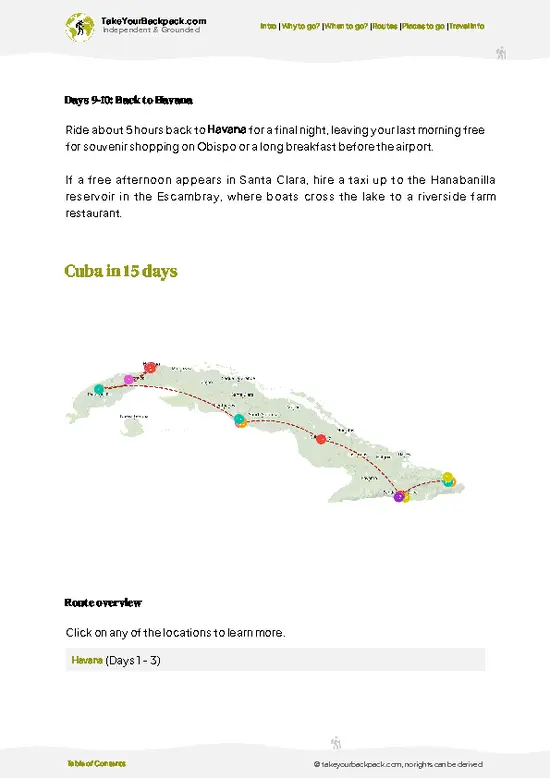
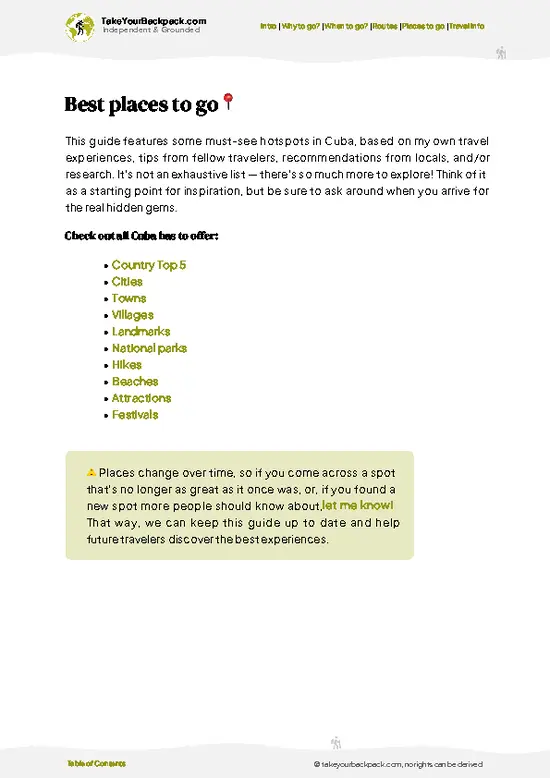
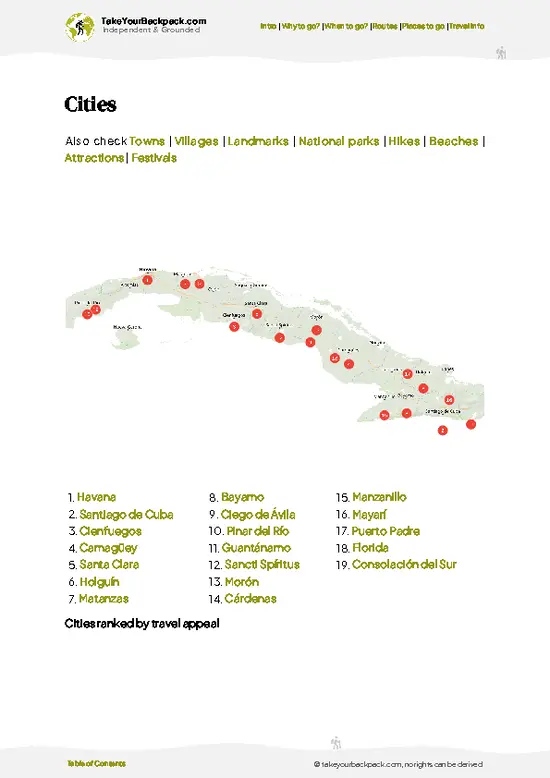
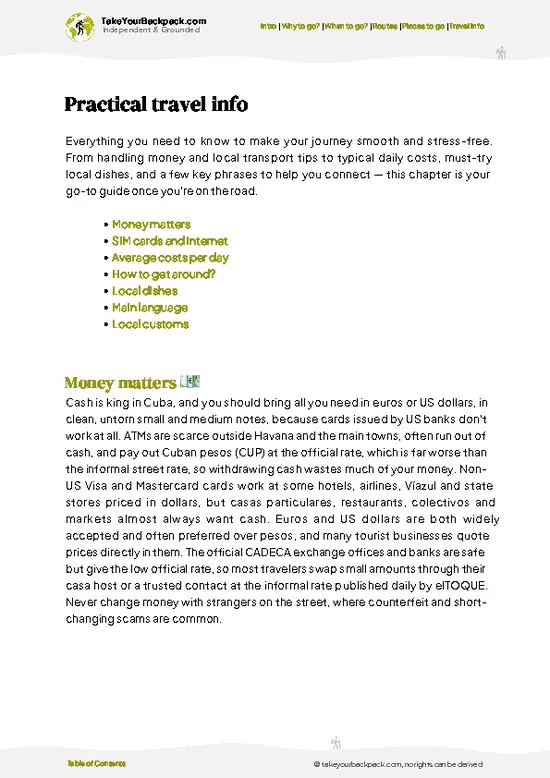
example page 0 from our offline Travel Guide for Cuba
example page 1 from our offline Travel Guide for Cuba
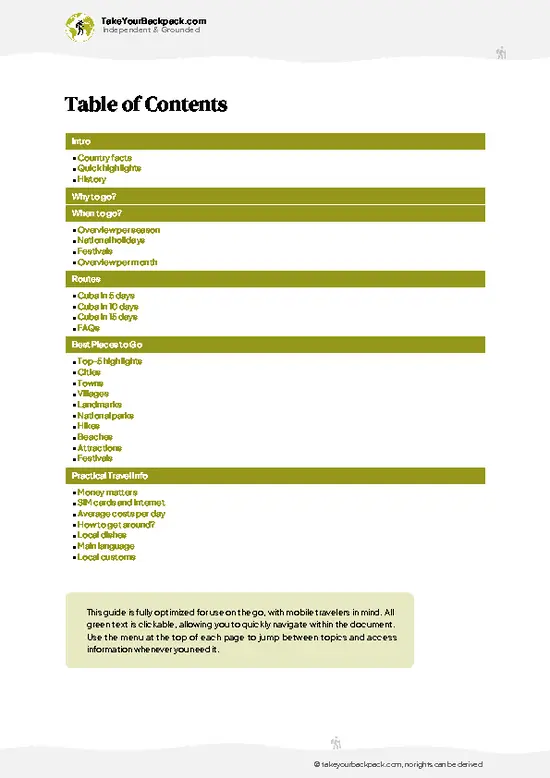
example page 2 from our offline Travel Guide for Cuba
example page 3 from our offline Travel Guide for Cuba
example page 4 from our offline Travel Guide for Cuba
example page 5 from our offline Travel Guide for Cuba
example page 6 from our offline Travel Guide for Cuba
example page 7 from our offline Travel Guide for Cuba
Loading the map 🌍
CLICK TO FILTER
cities
towns
villages
landmarks
national parks
hikes
beaches
attractions
festivals
SHOW COUNTRY’S BESTSHOW ALL

✨ Why go?
Ranked #20 beach in Cuba
What makes it a must-see beach

Playa Blanca works because of its position near Gibara, a faded colonial port where casas particulares are cheap and the food is home-cooked. You stay in town, then spend a day on pale sand without resort prices or wristbands. The second reason is the contrast: Gibara has the culture, the beach has the quiet. Many travelers also use it as a pause between Holguín and the busier Guardalavaca coast, giving a rest day that costs almost nothing.

💡 HighlightsWhat this place is best known for

  1. Swimming on the pale sand: The beach is known for its light, fine sand and calm, shallow water, which makes it easy for a long, unhurried swim.
  2. Gibara waterfront walk: Gibara’s seafront has pastel colonial facades and old Spanish fortifications. It’s a good evening stroll once the heat eases.
  3. La Silla de Gibara: This saddle-shaped hill rises above the coast. Local history links the area to Columbus’s 1492 landfall, and the hill is a landmark you can spot from the water.
  4. Fishing boat watching: Small boats come and go along this coast, and you can often buy the day’s catch or have it grilled at a nearby house.
  5. Gibara casa dinners: Evenings here are low-key, with seafood and rice in family-run houses rather than clubs.
Playa Blanca and the Gibara waterfront walk fit well in one day, with the beach … read more 👉
  1. Swimming on the pale sand: The beach is known for its light, fine sand and calm, shallow water, which makes it easy for a long, unhurried swim.
  2. Gibara waterfront walk: Gibara’s seafront has pastel colonial facades and old Spanish fortifications. It’s a good evening stroll once the heat eases.
  3. La Silla de Gibara: This saddle-shaped hill rises above the coast. Local history links the area to Columbus’s 1492 landfall, and the hill is a landmark you can spot from the water.
  4. Fishing boat watching: Small boats come and go along this coast, and you can often buy the day’s catch or have it grilled at a nearby house.
  5. Gibara casa dinners: Evenings here are low-key, with seafood and rice in family-run houses rather than clubs.
Playa Blanca and the Gibara waterfront walk fit well in one day, with the beach for the hot hours and the town for the cooler evening.
Spotted a mistake or missing something? Contact us.

🌤️ When to go?Weather, crowds, and seasonal trade-offs

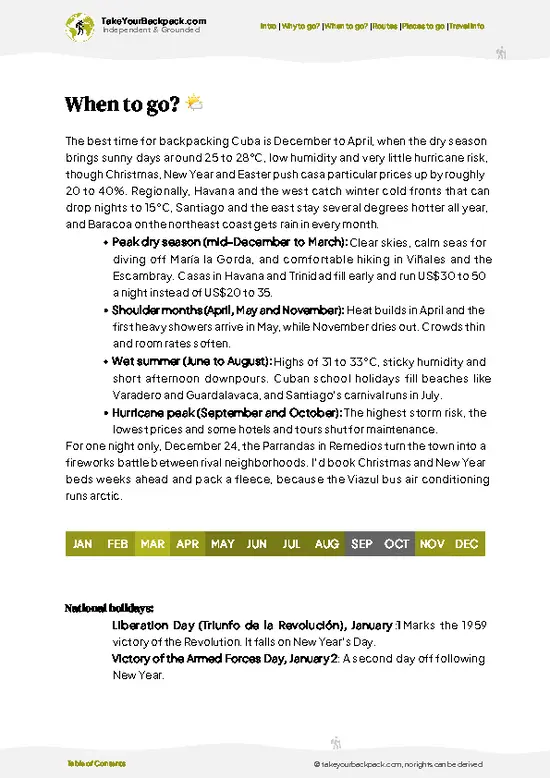
  • Dry Season (November to April): Days run 26 to 30°C (79 to 86°F) with calm, clear water and about 11 to 12 hours of daylight. Cuban and Canadian holiday crowds peak in December, January and Easter week, and prices rise.
  • Wet Season (May to October): Expect 30 to 34°C (86 to 93°F), afternoon storms, heavy humidity and 13 to 14 hours of daylight. Rooms get cheaper and the sand empties. Hurricane risk peaks from August to October.
Book a casa particular early if you land in late December.

source: climatestotravel.comJANJanuary: highly recommended for travelingFEBFebruary: highly recommended for travelingMARMarch: highly recommended for travelingAPRApril: highly recommended for travelingMAYMay: fair for travelingJUNJune: fair for travelingJULJuly: fair for travelingAUGAugust: fair for travelingSEPSeptember: below average for travelingOCTOctober: below average for travelingNOVNovember: highly recommended for travelingDECDecember: highly recommended for traveling
when-to-go

✈️ The backpacker research shortcutCuba Travel Guide

An offline-friendly backpacking guide with optimized travel routes, ranked highlights, transport advice, and the best areas to stay.
example page 0 from our offline Travel Guide for Cuba
example page 1 from our offline Travel Guide for Cuba
example page 2 from our offline Travel Guide for Cuba
example page 3 from our offline Travel Guide for Cuba
example page 4 from our offline Travel Guide for Cuba
example page 5 from our offline Travel Guide for Cuba
example page 6 from our offline Travel Guide for Cuba
example page 7 from our offline Travel Guide for Cuba
The digital guide (327 pages) contains:
✅ 113 highlights, ranked by travel appeal
✅ Optimized 5, 10 & 15-day travel routes
✅ Cities, national parks, landmarks, beaches
✅ How to get around
✅ Offline-friendly for travel without Wi-Fi
👉 Click to see all 30+ guide features

📅 Plan smarter in minutes, not weeks
✅ Month by month travel advice
✅ Festivals & national holidays
✅ Budget expectations

🗺️ Go to the right places, skip the overrated ones
✅ Honest pros & cons of destinations
✅ Top hikes, parks & viewpoints
✅ Lesser-known places most travelers miss
✅ Clear “worth it vs skip it” guidance

🛏️ Travel smoothly without rookie mistakes
✅ Best areas to stay
✅ Transport systems explained simply
✅ Common scams & safety advice
✅ SIM cards, money & practical tips

🌍 Understand the country, not just visit it
✅ Culture & traditions
✅ 52 Essential phrases & customs
✅ Festivals worth planning around
✅ Traveler-friendly historical context
✅ Insights that make places more meaningful

📱 Built for real travel conditions
✅ Fully downloadable PDF
✅ Works completely offline
✅ Optimized for phone use
✅ Useful in remote areas & buses
✅ Everything in one place
Stop searching, start planning
Get instant access to your full guide. 30‑day money-back guarantee.
+ Add another guide for just

By proceeding you agree to our terms.
Sent to your inbox immediately after payment • 100% Secure Checkout
Best Backpacking Travel Advisor 2025 tourism awardBest Backpacking
Travel Advisor
2025
What others say about Take Your Backpack Guides:
⭐⭐⭐⭐⭐
Fantastic, amazing amount of information!
⭐⭐⭐⭐⭐
My goodness this is amazing, it's what I've been looking for hats off too you!
⭐⭐⭐⭐⭐
I think this is absolutely BRILLIANT
⭐⭐⭐⭐
Very complete and informative. It's still missing places, but I gotta to commend you
⭐⭐⭐⭐⭐
This is truly amazing, thank you, can't wait to explore it with my kids!
⭐⭐⭐⭐⭐
Awesome resource, thank you!
⭐⭐⭐⭐⭐
This is amazing! Can't wait to explore the ones I haven't seen
⭐⭐⭐⭐
I love this! Well done, great idea.
⭐⭐⭐⭐⭐
Thanks for taking the time to make this gem!
⭐⭐⭐⭐⭐
This might be the best website I've ever seen.
⭐⭐⭐⭐⭐
Congratulations, and thank you so much for your work; it's incredibly valuable.
⭐⭐⭐⭐
In all seriousness I think you did a great job pointing out the important spots
⭐⭐⭐⭐⭐
10/10 very good
⭐⭐⭐⭐⭐
As someone who's only just starting to visit regularly this is awesome, thank you.
⭐⭐⭐⭐
Thank you very much! I'm going to visit my dad, it's going to be very useful!
⭐⭐⭐⭐⭐
This is really cool! We'll be travelling for the first time and this definitely come in handy.
⭐⭐⭐⭐⭐
You are now our minister of culture, congratulations 👨‍💼
⭐⭐⭐⭐⭐
Just wanted to tell you that this is a pearl! Going to follow your recommendations.
⭐⭐⭐⭐⭐
This is so cool. I'll definitely be using the resource for my travels soon.
⭐⭐⭐⭐⭐
This is very impressive! Good work.
⭐⭐⭐⭐⭐
This is an amazing and informative site. Very well done!

🛏️ Where to stay?How to pick the right area

The most practical area to sleep is Guardalavaca, the small resort town to the east, where licensed family-run rooms cost roughly US$25 to 40 a night and a taxi reaches Playa Blanca in under 30 minutes. The strip near Playa Guardalavaca has the most travelers, plus a handful of paladares and shared taxis, so meeting other backpackers is easy. Rafael Freyre village is quieter and cheaper, but you will be on your own for company. Holguín city, about 55 km inland, has a livelier social scene and rooms from US$20 to 35, though you commit to daily transfers.

🛡️ SafetyStaying Safe: What Travelers Should Know

Playa Blanca is calm and shallow, with a reef-sheltered bay that rarely produces rips or heavy surf. Water is warm year-round and good for easy swimming. The sun is the main issue, since shade is limited, so bring a hat and reef-safe sunscreen. Afternoon storms can roll in during summer, and the sea turns choppy when northern fronts pass in winter. Theft is uncommon, but keep your phone and cash with you rather than leaving them unattended on the sand.

FAQCommon questions from travelers

Playa Blanca lies north of Holguín on Cuba’s northeast coast, and the easiest way there is a taxi or rental car. From Holguín it is about 55 to 60 km, roughly 1 to 1.5 hours, and a private taxi costs around US$40 to 60 one way. From Guardalavaca you can cover the short stretch in about 25 minutes by taxi for US$10 to 20.
Playa Blanca is best for swimming and relaxed snorkeling, not surfing. The bay is shallow, warm and sheltered by a reef, so waves are small and good for beginners. Visibility for snorkeling is usually best from December to April, and you can bring your own mask since gear rental is limited.
Playa Blanca can be reached without paying to enter the sand itself, as Cuban beaches are public. Charges come from extras such as sun loungers, food and drinks, which usually run US$2 to 10 per person. If you arrive via an all-inclusive resort day pass, expect roughly US$30 to 60 per adult.
⚠️ Things can change over time, so always validate details locally before you go.

Other Cuban beaches near Playa Blanca

Explore more nearby:

  • Playa Pesquero—Resort-lined shore, day passes, near-shore coral, village-side grills| 8 km away
  • Playa Yuraguanal—Resort-backed arc, sea grape shade, nearshore reef, Holguín coast| 12 km away
  • Playa Esmeralda—Emerald shallows, raked sand, sunset shore| 14 km away

💡 Not sure where to go next?
Create a personalized itinerary for Cuba including Playa Blanca and the places that fit your trip.

Generate my itinerary

👉 Discover all beaches

Or checkout all Cuba has to offer (think cities, towns, villages, national parks, hikes, beaches, festivals)
Country photo of Cuba

We 💚 feedbackIs it worth it?

Playa Blanca has almost no shade or services, so first-timers often arrive unprepared. I would bring water, snacks and a hat, and arrange lunch with your host in Gibara beforehand.

✈️ When did I visit Cuba?
As part of my 1.5 year travel around the world trip, I visited Cuba for 6 weeks in February, March 2016, being extremely lucky that that coincided with the free concert of The Rolling Stones.

✍️ Help improve this page!
The information on this page is based on my own backpacking experience in Cuba, supplemented with up-to-date research and feedback from other travelers. Travel details can change, so if you notice anything outdated or incomplete, feel free to let me know.


🙋‍♂️ Give feedback

👋 Meet the founderWho’s Behind Take Your Backpack?

Johan, backpacker and founder of TakeYourBackpackHi, I’m Johan (Netherlands 🇳🇱), the creator of TakeYourBackpack. Over the past 3 decades, I’ve backpacked through 90+ countries across six continents, gaining extensive experience with independent travel, long-term trips, and overland routes.

This site is built on a combination of firsthand travel experience and carefully curated insights from other backpackers. Many guides are based on places I’ve personally visited, while others bring together tips, observations, and practical advice shared by trusted travelers I’ve met along the way.

The goal is to provide realistic, experience-driven guidance — not generic itineraries — so you can explore destinations with better context, clearer expectations, and more confidence.