×

Curaçao🇨🇼 | attractionsCuraloe Aloe Vera PlantationAloe rows, leaf cutting, raw gel, dusty red earth | things to do and best time to go

Explore Mikvé Israel-Emanuel Synagogue & Jewish Cultural Historical MuseExplore Curaçao Ostrich Farm

Backpacking in Curaloe Aloe Vera Plantation
👍 Recommendedattraction ranked #3
By Johan Kruseman 🇳🇱 | Updated October 23, 2026

Curaloe Aloe Vera Plantation gives you a rainy-day or midday-heat escape from the beach circuit, with a guided walk that costs little to nothing and takes well under an hour. It sits east of Willemstad in Curaçao, an easy detour if you have a rental car or can split a taxi. Expect small groups rather than crowds, and a shop at the end that is clearly there to sell you aloe creams and gels. Skip the shop pressure by deciding your budget before you walk in. It is not a thrill ride, and there is no big view, so keep your expectations modest. What you get is a rare look at a crop that once drove part of the island’s economy, explained by people who work with it daily. Go in the morning, wear closed shoes for the dusty rows, and ask to see how the thick, spiky leaves are cut open to reveal the clear gel inside.

Discover everything you want to know in the 📖 Curaçao Travel Guide.


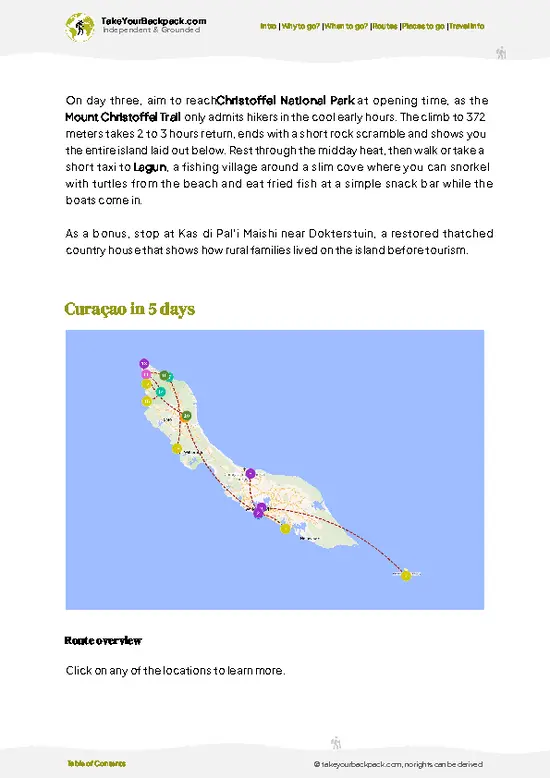
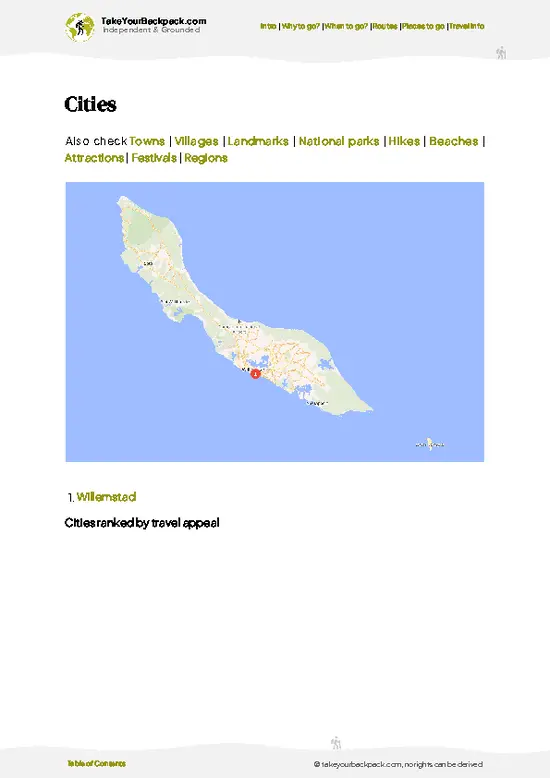
example page 0 from our offline Travel Guide for Curaçao
example page 1 from our offline Travel Guide for Curaçao
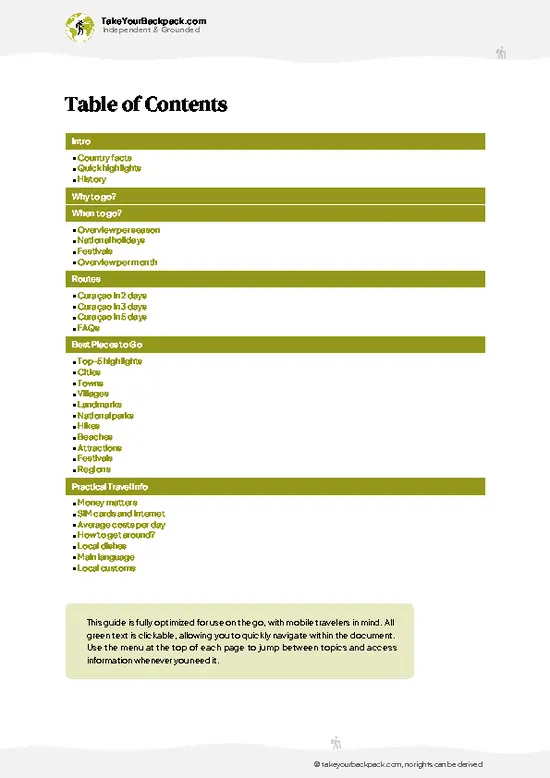
example page 2 from our offline Travel Guide for Curaçao
example page 3 from our offline Travel Guide for Curaçao
example page 4 from our offline Travel Guide for Curaçao
example page 5 from our offline Travel Guide for Curaçao
example page 6 from our offline Travel Guide for Curaçao
example page 7 from our offline Travel Guide for Curaçao
Loading the map 🌍
CLICK TO FILTER
cities
towns
villages
landmarks
national parks
hikes
beaches
attractions
festivals
regions
SHOW COUNTRY’S BESTSHOW ALL

✨ Why go?
Ranked #3 attraction in Curaçao
What sets this place apart

Curaloe Aloe Vera Plantation is one of the few places on the island where you can see what Curaçao’s farmland was actually used for. Most visitors know the island through Willemstad’s pastel waterfront and its beaches, so a walk among rows of aloe plants adds a layer the coast never shows. Aloe grew here because the dry, thorny landscape suits it, and the island once exported it in quantity. That makes the visit a short, concrete lesson in why Curaçao looks and feels the way it does inland.
The second reason is how easy it is to fit in. You do not need a full day, boots or a guide book. A short guided tour and a stroll around the fields fit between a morning snorkel and a late lunch. For backpackers who have been staring at turquoise water for days, it breaks up the routine, costs little, and … read more 👉
Curaloe Aloe Vera Plantation is one of the few places on the island where you can see what Curaçao’s farmland was actually used for. Most visitors know the island through Willemstad’s pastel waterfront and its beaches, so a walk among rows of aloe plants adds a layer the coast never shows. Aloe grew here because the dry, thorny landscape suits it, and the island once exported it in quantity. That makes the visit a short, concrete lesson in why Curaçao looks and feels the way it does inland.
The second reason is how easy it is to fit in. You do not need a full day, boots or a guide book. A short guided tour and a stroll around the fields fit between a morning snorkel and a late lunch. For backpackers who have been staring at turquoise water for days, it breaks up the routine, costs little, and gives you a better story than another beach photo. You can also finally understand what is in the bottle of after-sun gel you have been buying.

💡 HighlightsDon't-miss highlights and experiences

  1. The guided plantation tour: The main reason to come. A staff guide walks you through the grounds, explains how aloe is grown in dry, rocky soil and why this crop suited the island, and answers questions in plain language.
  2. The aloe fields: Rows of low, spiky rosettes under strong sun, with the dusty red-brown earth of Curaçao’s interior around them. Good for photos and for seeing how the plants are spaced and harvested.
  3. Leaf-cutting demonstration: Seeing a thick leaf sliced open and the clear gel scraped out makes the process real. You also see how much of the leaf is thrown away and how little is usable gel.
  4. Aloe history and uses talk: The guide covers how aloe reached the island, how it was exported, and what it is used for today, from skin care to health products. It gives the plantation its
… read more 👉
  1. The guided plantation tour: The main reason to come. A staff guide walks you through the grounds, explains how aloe is grown in dry, rocky soil and why this crop suited the island, and answers questions in plain language.
  2. The aloe fields: Rows of low, spiky rosettes under strong sun, with the dusty red-brown earth of Curaçao’s interior around them. Good for photos and for seeing how the plants are spaced and harvested.
  3. Leaf-cutting demonstration: Seeing a thick leaf sliced open and the clear gel scraped out makes the process real. You also see how much of the leaf is thrown away and how little is usable gel.
  4. Aloe history and uses talk: The guide covers how aloe reached the island, how it was exported, and what it is used for today, from skin care to health products. It gives the plantation its context.
  5. Fresh gel on your skin: Rubbing raw gel from a freshly cut leaf on your arm is the simplest way to understand the product. Cool and slightly slippery, it is a quick fix if you have been sunburned.
  6. The Curaloe shop: Where the tour ends. Creams, gels and other aloe products made from the plantation’s crop are on sale. Useful for sunburn and for gifts that are actually local.
The guided farm tour at Curaloe Aloe Vera Plantation costs about US$10 and runs Monday to Friday, while the shop is free to browse.
Spotted a mistake or missing something? Contact us.

Things to do near Curaloe Aloe Vera Plantation

Ratings based on Tripadvisor reviews. When you book through this link, you support our work at no extra cost to you.

🌤️ When to go?Seasonal considerations and timing

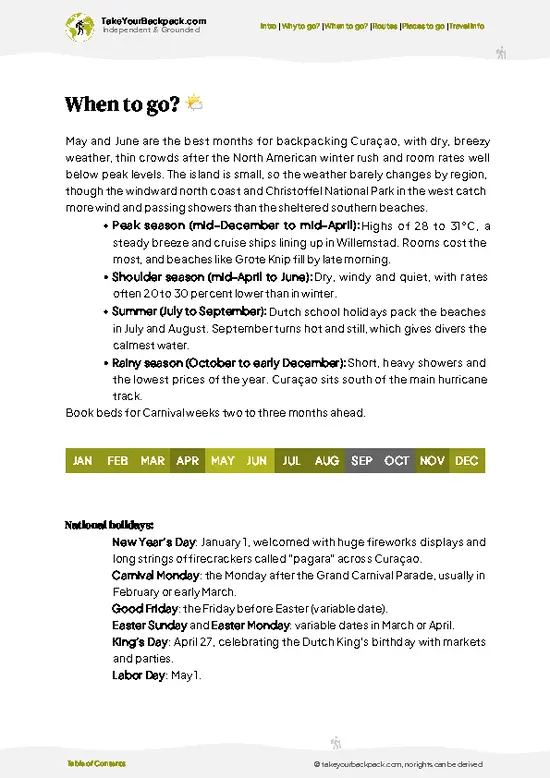
  • Dry Season (February to September): Showers are rare and trade winds keep the plantation yard bearable, with highs of 29 to 32°C (84 to 90°F) and lows near 25°C (77°F). Light rain on the island sits at its lowest, so the farm tour and the open-air aloe fields stay comfortable.
  • Rainy Season (October to January): Expect short, heavy downpours, humidity that makes the afternoons sticky, and similar temperatures of 28 to 31°C (82 to 88°F). Rain usually passes within an hour, and the tour room and the factory shop stay dry.
  • Crowds and Prices: Cruise-ship days and the December to April holiday stretch bring tour buses and the busiest groups. Beds across the island cost the most then, while May to June and September to November are noticeably cheaper.
  • Daylight: The sun rises and sets within about an
… read more 👉
  • Dry Season (February to September): Showers are rare and trade winds keep the plantation yard bearable, with highs of 29 to 32°C (84 to 90°F) and lows near 25°C (77°F). Light rain on the island sits at its lowest, so the farm tour and the open-air aloe fields stay comfortable.
  • Rainy Season (October to January): Expect short, heavy downpours, humidity that makes the afternoons sticky, and similar temperatures of 28 to 31°C (82 to 88°F). Rain usually passes within an hour, and the tour room and the factory shop stay dry.
  • Crowds and Prices: Cruise-ship days and the December to April holiday stretch bring tour buses and the busiest groups. Beds across the island cost the most then, while May to June and September to November are noticeably cheaper.
  • Daylight: The sun rises and sets within about an hour of the same time all year, so a mid-morning visit works in any month and leaves the afternoon free for beaches.
Arrive on a weekday morning, ideally when no cruise ship is in port, and you will likely get a smaller group and more of the guide’s attention.


source: climatestotravel.comJANJanuary: excellent for travelingFEBFebruary: excellent for travelingMARMarch: excellent for travelingAPRApril: excellent for travelingMAYMay: highly recommended for travelingJUNJune: good for travelingJULJuly: good for travelingAUGAugust: fair for travelingSEPSeptember: fair for travelingOCTOctober: good for travelingNOVNovember: highly recommended for travelingDECDecember: good for traveling
when-to-go

✈️ The backpacker research shortcutCuraçao Travel Guide

An offline-friendly backpacking guide with optimized travel routes, ranked highlights, transport advice, and the best areas to stay.
example page 0 from our offline Travel Guide for Curaçao
example page 1 from our offline Travel Guide for Curaçao
example page 2 from our offline Travel Guide for Curaçao
example page 3 from our offline Travel Guide for Curaçao
example page 4 from our offline Travel Guide for Curaçao
example page 5 from our offline Travel Guide for Curaçao
example page 6 from our offline Travel Guide for Curaçao
example page 7 from our offline Travel Guide for Curaçao
The digital guide (126 pages) contains:
✅ 33 highlights, ranked by travel appeal
✅ Optimized 2, 3 & 5-day travel routes
✅ Cities, national parks, landmarks, beaches
✅ How to get around
✅ Offline-friendly for travel without Wi-Fi
👉 Click to see all 30+ guide features

📅 Plan smarter in minutes, not weeks
✅ Month by month travel advice
✅ Festivals & national holidays
✅ Budget expectations

🗺️ Go to the right places, skip the overrated ones
✅ Honest pros & cons of destinations
✅ Top hikes, parks & viewpoints
✅ Lesser-known places most travelers miss
✅ Clear “worth it vs skip it” guidance

🛏️ Travel smoothly without rookie mistakes
✅ Best areas to stay
✅ Transport systems explained simply
✅ Common scams & safety advice
✅ SIM cards, money & practical tips

🌍 Understand the country, not just visit it
✅ Culture & traditions
✅ 52 Essential phrases & customs
✅ Festivals worth planning around
✅ Traveler-friendly historical context
✅ Insights that make places more meaningful

📱 Built for real travel conditions
✅ Fully downloadable PDF
✅ Works completely offline
✅ Optimized for phone use
✅ Useful in remote areas & buses
✅ Everything in one place
Stop searching, start planning
Get instant access to your full guide. 30‑day money-back guarantee.
+ Add another guide for just

By proceeding you agree to our terms.
Sent to your inbox immediately after payment • 100% Secure Checkout
Best Backpacking Travel Advisor 2025 tourism awardBest Backpacking
Travel Advisor
2025
What others say about Take Your Backpack Guides:
⭐⭐⭐⭐⭐
Fantastic, amazing amount of information!
⭐⭐⭐⭐⭐
My goodness this is amazing, it's what I've been looking for hats off too you!
⭐⭐⭐⭐⭐
I think this is absolutely BRILLIANT
⭐⭐⭐⭐
Very complete and informative. It's still missing places, but I gotta to commend you
⭐⭐⭐⭐⭐
This is truly amazing, thank you, can't wait to explore it with my kids!
⭐⭐⭐⭐⭐
Awesome resource, thank you!
⭐⭐⭐⭐⭐
This is amazing! Can't wait to explore the ones I haven't seen
⭐⭐⭐⭐
I love this! Well done, great idea.
⭐⭐⭐⭐⭐
Thanks for taking the time to make this gem!
⭐⭐⭐⭐⭐
This might be the best website I've ever seen.
⭐⭐⭐⭐⭐
Congratulations, and thank you so much for your work; it's incredibly valuable.
⭐⭐⭐⭐
In all seriousness I think you did a great job pointing out the important spots
⭐⭐⭐⭐⭐
10/10 very good
⭐⭐⭐⭐⭐
As someone who's only just starting to visit regularly this is awesome, thank you.
⭐⭐⭐⭐
Thank you very much! I'm going to visit my dad, it's going to be very useful!
⭐⭐⭐⭐⭐
This is really cool! We'll be travelling for the first time and this definitely come in handy.
⭐⭐⭐⭐⭐
You are now our minister of culture, congratulations 👨‍💼
⭐⭐⭐⭐⭐
Just wanted to tell you that this is a pearl! Going to follow your recommendations.
⭐⭐⭐⭐⭐
This is so cool. I'll definitely be using the resource for my travels soon.
⭐⭐⭐⭐⭐
This is very impressive! Good work.
⭐⭐⭐⭐⭐
This is an amazing and informative site. Very well done!

🛏️ Where to stay?Best areas to stay in Curaçao

Willemstad is the best base for backpackers, with Punda and Otrobanda the two sides to choose from. The plantation sits on the east side of the island near Santa Rosa and Groot Sint Joris, roughly 20 to 30 minutes from the city center by car, so you sleep where the social life is and visit as a half-day trip.
Otrobanda is the stronger pick for solo travelers. It has the island’s densest cluster of budget guesthouses and hostels, a walkable waterfront, cheap local lunch counters, and an easy meeting point with other travelers over a Presidente beer in the evening. Punda, across the Queen Emma pontoon … read more 👉
Willemstad is the best base for backpackers, with Punda and Otrobanda the two sides to choose from. The plantation sits on the east side of the island near Santa Rosa and Groot Sint Joris, roughly 20 to 30 minutes from the city center by car, so you sleep where the social life is and visit as a half-day trip.
Otrobanda is the stronger pick for solo travelers. It has the island’s densest cluster of budget guesthouses and hostels, a walkable waterfront, cheap local lunch counters, and an easy meeting point with other travelers over a Presidente beer in the evening. Punda, across the Queen Emma pontoon bridge, is better if you want shops, the floating market, and the main bus terminal close at hand. Both are well lit and busy until late, though you should still take a taxi after dark between neighborhoods you do not know.
Pietermaai, just east of Punda, suits travelers who want a quieter, more design-led stay with restaurants and bars on the doorstep. Rates are higher there, so it works better for couples or pairs splitting a room.
If you rent a car, Jan Thiel and the southern beaches are a fun, sandy alternative, but a car is almost essential from there.

👛 Costs (as of 23 October 2026)Money, prices, and spending tips

A visit to Curaloe Aloe Vera Plantation fits a daily budget of about US$95 to 140 per person, with the guided tour itself costing only a small part of it. The farm is one stop in a day that also covers getting out of Willemstad and eating nearby. Prices below are rough current ranges, and you pay in Antillean guilders or US dollars.
CategoryBudget RangeLocal Reality
Plantation tourUS$0 to 15Walking the grounds and the shop is usually free, while a guided factory and field tour costs a modest fee.
Aloe productsUS$5 to 25Gels, soaps and creams are sold on site. Small items suit a backpack and carry-on liquid limits.
TransportUS$10 to 50Local buses to the east side are cheap but infrequent. A taxi from Willemstad costs roughly US$30 to 40 each way, and a rental car runs about US$35 to 55 a day.
Food
… read more 👉
A visit to Curaloe Aloe Vera Plantation fits a daily budget of about US$95 to 140 per person, with the guided tour itself costing only a small part of it. The farm is one stop in a day that also covers getting out of Willemstad and eating nearby. Prices below are rough current ranges, and you pay in Antillean guilders or US dollars.
CategoryBudget RangeLocal Reality
Plantation tourUS$0 to 15Walking the grounds and the shop is usually free, while a guided factory and field tour costs a modest fee.
Aloe productsUS$5 to 25Gels, soaps and creams are sold on site. Small items suit a backpack and carry-on liquid limits.
TransportUS$10 to 50Local buses to the east side are cheap but infrequent. A taxi from Willemstad costs roughly US$30 to 40 each way, and a rental car runs about US$35 to 55 a day.
Food and drinkUS$12 to 30Snack stalls and local restaurants near Santa Rosa serve stews and fried fish at lower prices than the resorts.
Accommodation (high season)US$35 to 70Dorm beds and simple private rooms in Otrobanda or Punda. Low season is often US$10 to 20 cheaper.
Total Daily BudgetUS$95 to 140Based on one tour, one local meal, a rental car or taxi, and one night in high season.
⚠️ Prices can change and everyone travels differently, so take this as a rough guide. Hope it helps you plan your adventure!

FAQTraveler FAQ

Plan on one to two hours at Curaloe Aloe Vera Plantation, which covers the guided walk through the aloe fields, a look at the processing area, and time in the shop. Add about 20 to 30 minutes each way from Willemstad. Combined with Santa Rosa lunch stops or a look at nearby Sint Joris Bay, it fills a relaxed half day.
Curaloe Aloe Vera Plantation is good value if you like seeing how a product is made, since the tour is short and cheap, at roughly US$0 to 15. You see the actual fields and learn why aloe thrived on the dry island, and the shop sells products at lower prices than airport stores. If you only care for beaches and diving, it can be skipped without regret.
Curaloe Aloe Vera Plantation lies on the east side of the island, about 20 to 30 minutes by car from Willemstad. A rental car at about US$35 to 55 a day is the easiest way, and a taxi costs roughly US$30 to 40 each way. Local buses run toward the east side, but they are infrequent, so check the return times before you go.
⚠️ Things can change over time, so always validate details locally before you go.

Other Curaçaoan attractions near Curaloe Aloe Vera Plantation

Explore more nearby:


💡 Not sure where to go next?
Create a personalized itinerary for Curaçao including Curaloe Aloe Vera Plantation and the places that fit your trip.

Generate my itinerary

👉 Discover all attractions

Or checkout all Curaçao has to offer (think cities, towns, villages, national parks, hikes, beaches, festivals)
Country photo of Curaçao

We 💚 feedbackSumming up the experience

Curaloe Aloe Vera Plantation needs about an hour, and no more. Do the tour, rub some fresh gel on any sunburn, and leave by midday so you still have an afternoon for the coast. If you want a souvenir, buy one small tube in the shop instead of a bag of bottles. A bigger stop would be a stretch.

✍️ Help improve this page!
The information on this page is based on in-depth research, insights shared by experienced travelers, and feedback from the local travel community in Curaçao. While every effort is made to keep the information accurate and current, conditions can change — so if you spot anything incorrect or outdated, please get in touch.


🙋‍♂️ Give feedback

👋 Meet the founderWho’s Behind Take Your Backpack?

Johan, backpacker and founder of TakeYourBackpackHi, I’m Johan (Netherlands 🇳🇱), the creator of TakeYourBackpack. Over the past 3 decades, I’ve backpacked through 90+ countries across six continents, gaining extensive experience with independent travel, long-term trips, and overland routes.

This site is built on a combination of firsthand travel experience and carefully curated insights from other backpackers. Many guides are based on places I’ve personally visited, while others bring together tips, observations, and practical advice shared by trusted travelers I’ve met along the way.

The goal is to provide realistic, experience-driven guidance — not generic itineraries — so you can explore destinations with better context, clearer expectations, and more confidence.