×

Curaçao🇨🇼 | best attractionsExplore the 4 Best attractions in Curaçao

Curaçao packs its attractions into an island barely 60 kilometers long, so the real choice is coast or city. The sheltered south has easy beaches, reefs and Willemstad’s harbor streets. The wild north is rockier, quieter and needs wheels. For independent travel, go early, before the tour buses arrive around 10:30, and bring cash for small entry fees.

By Johan Kruseman 🇳🇱 | Updated October 23, 2026
Explore the best festivals in Curaçao

Why go?Key Factors That Shape the Experience

Curaçao suits attractions because a small Dutch-Caribbean island holds layers you rarely find side by side: a colonial trading-port past, a Papiamentu-speaking local culture and a dry, sunny climate. It sits outside the main hurricane belt, so weather rarely cancels plans. The island is arid, with cactus country inland and calm leeward waters on the south coast, which is why reef and shore access is so easy.

Know before you choose it: public transport is thin outside Willemstad, so a rental car (roughly US$35 to 60 a day) or taxis are the norm. Many top beaches charge entry or chair fees, and prices are quoted in Antillean guilders but paid mostly in US dollars. It is not a bargain island, yet quality is high and distances are short.
Why These Made the Cut
The list of best attractions in Curaçao is created based on cultural significance or entertainment value. If you feel a attraction is missing in this list, please let us know.

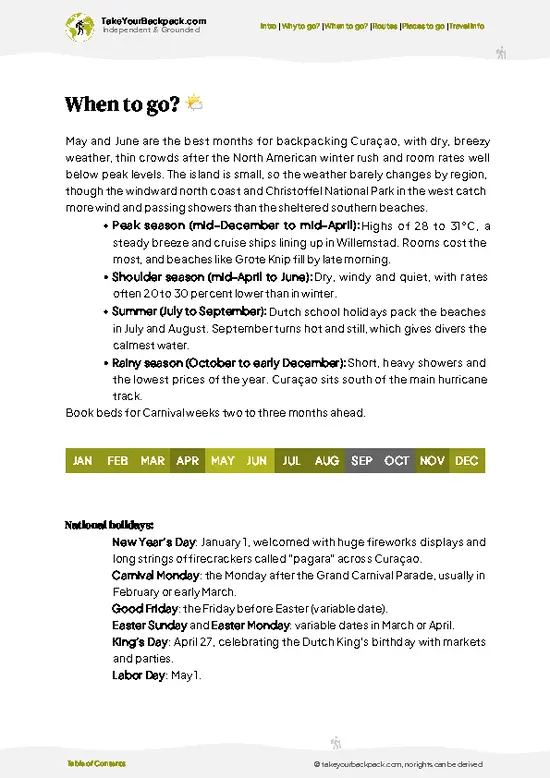
When to go?Optimal Periods for Travel

Best months and weather: The best months are April to June and September to November, when the island is sunny, lightly crowded and the sea sits around 27 to 28°C. Curaçao is dry year-round, with roughly 400 to 550 mm of rain, mostly falling in short bursts between October and January. Temperatures stay near 28 to 31°C all year, cooled by steady trade winds.
Peak periods and prices: Mid-December to April is high season, when flights and hotels climb noticeably, often 20 to 40 percent above shoulder rates. Dutch school holidays in July and August also fill beaches, and Carnival season (January to February) busies Willemstad. Book popular spots a day ahead then, and arrive early. Hurricanes rarely hit directly, so the autumn shoulder is a safe, cheaper bet.

attraction hoppingPlanning Your Route Efficiently

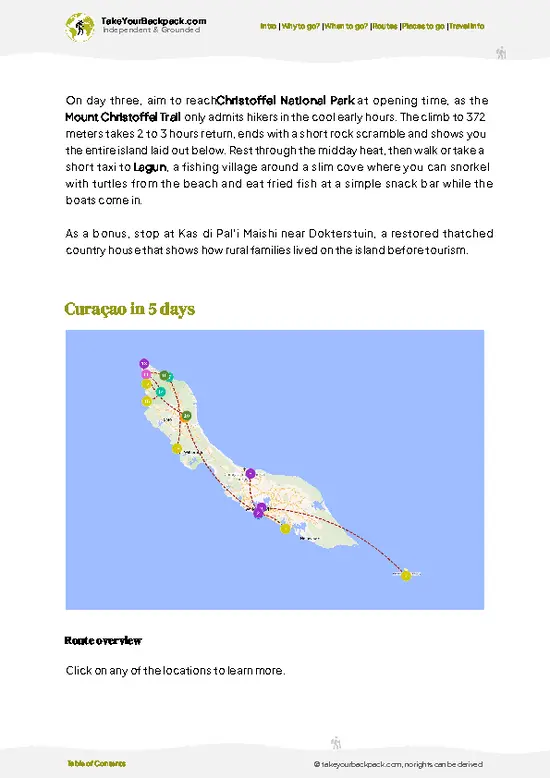
Days needed: A trip combining several attractions in Curaçao needs 5 to 7 days, enough to cover both coasts without rushing. Start in Willemstad, where the airport sits only 10 to 15 minutes away, then work outward.
Direction and pacing: Move from the city to the south and east coast, then finish with the west and north. Drives between regions run 30 to 60 minutes, and most stops need 1.5 to 3 hours, or half a day for beaches and snorkeling. The usual mistake is cramming west and east into one day, which means long driving for little time on site. Instead, base yourself in one area for two or three nights and make single loops. Skip midday driving on dusty north roads, and aim for early starts since afternoons are hot.

The ListHighly Recommended attractions of Curaçao

1 Kura Hulanda Museum

Slave-ship hold replica, 18th-century courtyard, West African gold, Papiamentu roots

Trace the Atlantic slave trade through shackles, documents and a cramped ship-hold reconstruction, then sit in the quiet courtyard where captives were once held.

curacao-attraction-kura-hulanda-museum
© Google |

2 Hofi Pastor

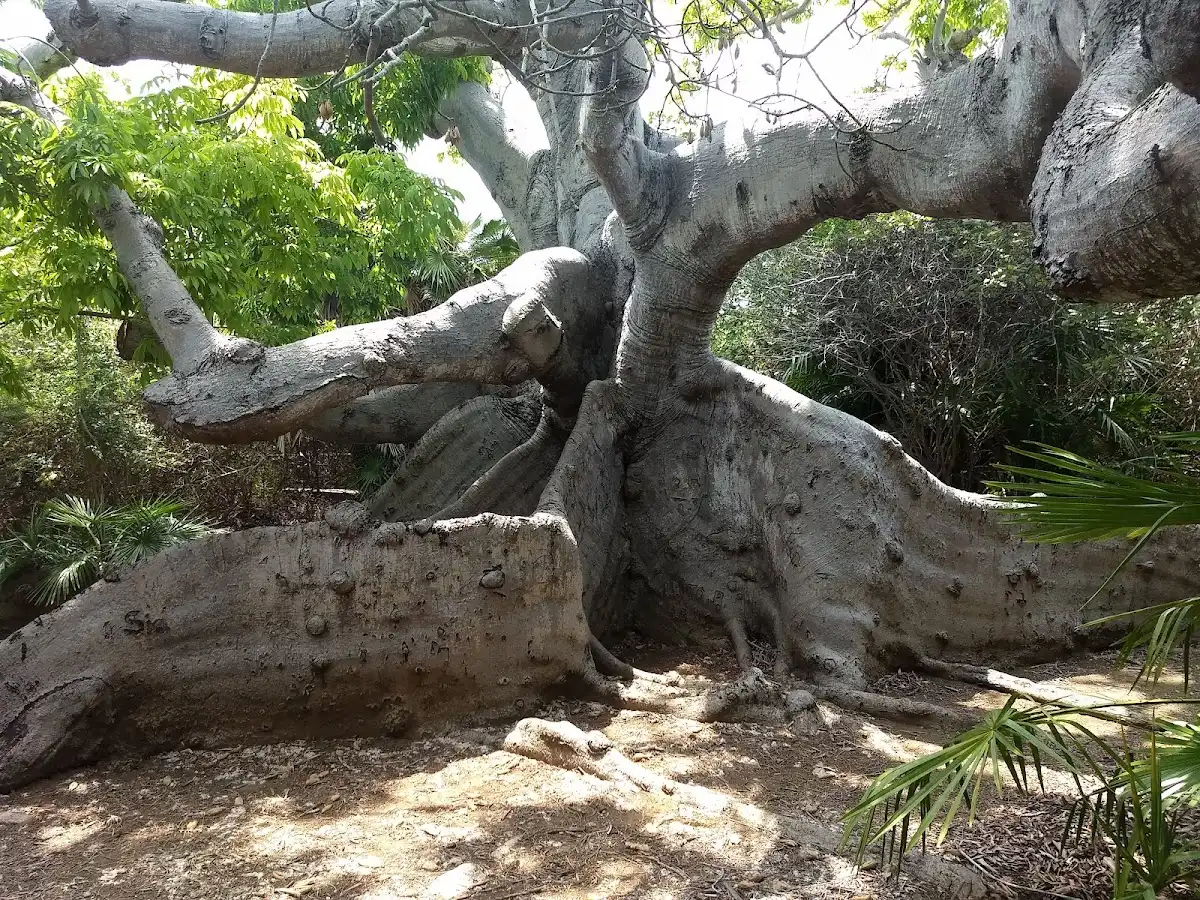
800-year-old kapok tree, red and yellow loops, thorny dry bush, village-church entrance

Walk two short loops through cactus and divi-divi scrub to a huge buttressed kapok, with birdsong and basking lizards along the way.

curacao-attraction-hofi-pastor
© Google |

3 Curaloe Aloe Vera Plantation

Aloe rows, leaf cutting, raw gel, dusty red earth

Walk the dry, rocky fields with a guide, watch a thick leaf sliced open, and rub the cool gel on your skin.

4 Curaçao Ostrich Farm

Ostrich feeding, egg stand, safari truck, ostrich burgers

Feed snapping ostriches from a cup, step onto an unhatched egg that holds your weight, then ride through the pens before a lean ostrich lunch.

curacao-attraction-curacao-ostrich-farm
© Google |
Loading the map 🌍

Expert viewTips and Advice from Travelers

How many to visit: I advise one main attraction per day, with a second only if it is close. Over a week that means roughly 6 to 8 stops. Heat and winds drain energy quickly, and water sites take a full morning to enjoy properly.
Prioritizing by style: Beach and reef lovers should spend most days on water sites, which cost the least and give the most. Culture seekers should lean on Willemstad’s history and markets, which are mostly free to wander. Nature fans should spend one early morning in the dry north, where trails are best before the heat. Adventure types can add a cave or kayak outing.
Budget: Plan US$40 to 90 a day on attractions and transport without a car. Beach entry or chair fees run about US$3 to 10. Museum tickets run US$6 to 15, and guided snorkel or boat outings US$40 to 80. A … read more 👉
How many to visit: I advise one main attraction per day, with a second only if it is close. Over a week that means roughly 6 to 8 stops. Heat and winds drain energy quickly, and water sites take a full morning to enjoy properly.
Prioritizing by style: Beach and reef lovers should spend most days on water sites, which cost the least and give the most. Culture seekers should lean on Willemstad’s history and markets, which are mostly free to wander. Nature fans should spend one early morning in the dry north, where trails are best before the heat. Adventure types can add a cave or kayak outing.
Budget: Plan US$40 to 90 a day on attractions and transport without a car. Beach entry or chair fees run about US$3 to 10. Museum tickets run US$6 to 15, and guided snorkel or boat outings US$40 to 80. A rental car adds US$35 to 60 daily, plus fuel. Shared taxis and buses are cheaper but infrequent after late afternoon.
Safety and culture: The main risk is car break-ins at beach parking lots, so never leave valuables in the vehicle, and lock up. Sun is strong, and sea urchins and sharp coral are common, so wear reef shoes and reef-safe sunscreen. Dress modestly away from beaches, and greet people with a “bon dia” before asking for anything. Respect posted no-entry signs on private land and protected areas. Strong currents and waves hit the north coast, so swim only at sheltered spots. Carry water, cash and small bills.
Honestly, a car is the best investment if you plan more than three outings.

✈️ The backpacker research shortcutCuraçao Travel Guide

An offline-friendly backpacking guide with optimized travel routes, ranked highlights, transport advice, and the best areas to stay.
example page 0 from our offline Travel Guide for Curaçao
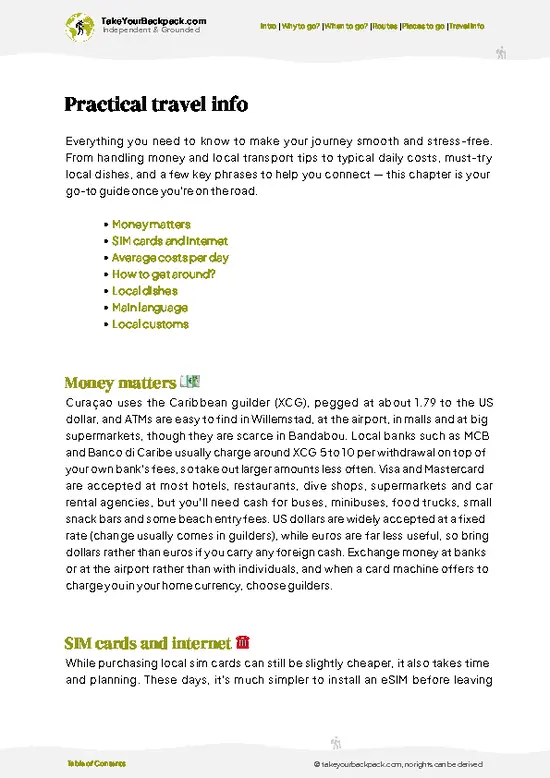
example page 1 from our offline Travel Guide for Curaçao
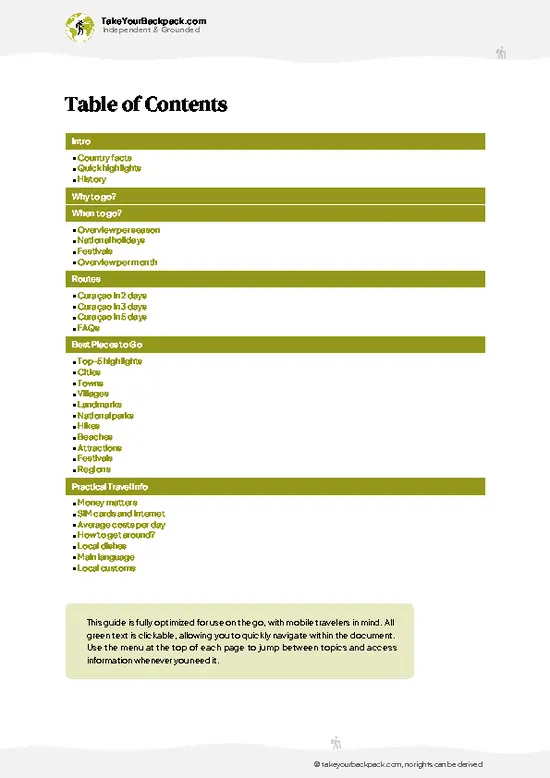
example page 2 from our offline Travel Guide for Curaçao
example page 3 from our offline Travel Guide for Curaçao
example page 4 from our offline Travel Guide for Curaçao
example page 5 from our offline Travel Guide for Curaçao
example page 6 from our offline Travel Guide for Curaçao
example page 7 from our offline Travel Guide for Curaçao
The digital guide (126 pages) contains:
✅ 33 highlights, ranked by travel appeal
✅ Optimized 2, 3 & 5-day travel routes
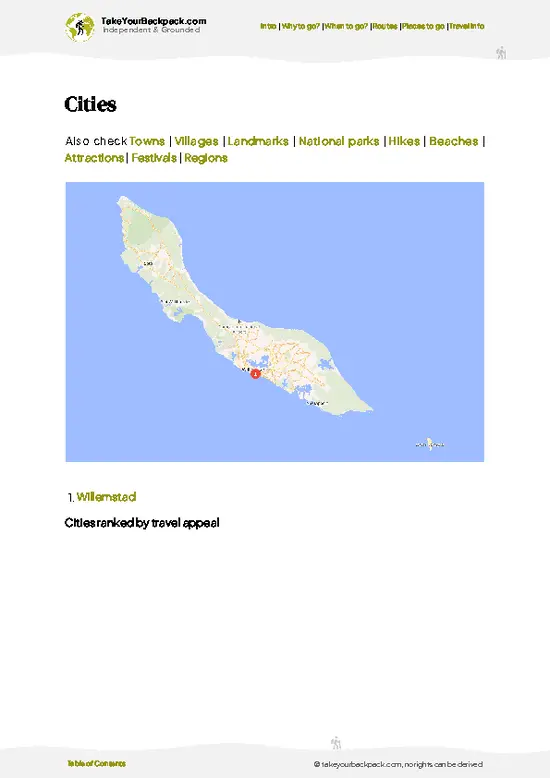
✅ Cities, national parks, landmarks, beaches
✅ How to get around
✅ Offline-friendly for travel without Wi-Fi
👉 Click to see all 30+ guide features

📅 Plan smarter in minutes, not weeks
✅ Month by month travel advice
✅ Festivals & national holidays
✅ Budget expectations

🗺️ Go to the right places, skip the overrated ones
✅ Honest pros & cons of destinations
✅ Top hikes, parks & viewpoints
✅ Lesser-known places most travelers miss
✅ Clear “worth it vs skip it” guidance

🛏️ Travel smoothly without rookie mistakes
✅ Best areas to stay
✅ Transport systems explained simply
✅ Common scams & safety advice
✅ SIM cards, money & practical tips

🌍 Understand the country, not just visit it
✅ Culture & traditions
✅ 52 Essential phrases & customs
✅ Festivals worth planning around
✅ Traveler-friendly historical context
✅ Insights that make places more meaningful

📱 Built for real travel conditions
✅ Fully downloadable PDF
✅ Works completely offline
✅ Optimized for phone use
✅ Useful in remote areas & buses
✅ Everything in one place
Stop searching, start planning
Get instant access to your full guide. 30‑day money-back guarantee.
+ Add another guide for just

By proceeding you agree to our terms.
Sent to your inbox immediately after payment • 100% Secure Checkout
Best Backpacking Travel Advisor 2025 tourism awardBest Backpacking
Travel Advisor
2025
What others say about Take Your Backpack Guides:
⭐⭐⭐⭐⭐
Fantastic, amazing amount of information!
⭐⭐⭐⭐⭐
My goodness this is amazing, it's what I've been looking for hats off too you!
⭐⭐⭐⭐⭐
I think this is absolutely BRILLIANT
⭐⭐⭐⭐
Very complete and informative. It's still missing places, but I gotta to commend you
⭐⭐⭐⭐⭐
This is truly amazing, thank you, can't wait to explore it with my kids!
⭐⭐⭐⭐⭐
Awesome resource, thank you!
⭐⭐⭐⭐⭐
This is amazing! Can't wait to explore the ones I haven't seen
⭐⭐⭐⭐
I love this! Well done, great idea.
⭐⭐⭐⭐⭐
Thanks for taking the time to make this gem!
⭐⭐⭐⭐⭐
This might be the best website I've ever seen.
⭐⭐⭐⭐⭐
Congratulations, and thank you so much for your work; it's incredibly valuable.
⭐⭐⭐⭐
In all seriousness I think you did a great job pointing out the important spots
⭐⭐⭐⭐⭐
10/10 very good
⭐⭐⭐⭐⭐
As someone who's only just starting to visit regularly this is awesome, thank you.
⭐⭐⭐⭐
Thank you very much! I'm going to visit my dad, it's going to be very useful!
⭐⭐⭐⭐⭐
This is really cool! We'll be travelling for the first time and this definitely come in handy.
⭐⭐⭐⭐⭐
You are now our minister of culture, congratulations 👨‍💼
⭐⭐⭐⭐⭐
Just wanted to tell you that this is a pearl! Going to follow your recommendations.
⭐⭐⭐⭐⭐
This is so cool. I'll definitely be using the resource for my travels soon.
⭐⭐⭐⭐⭐
This is very impressive! Good work.
⭐⭐⭐⭐⭐
This is an amazing and informative site. Very well done!

🛏️ Where to stay?Best Stay Options in Curaçao

Curaçao has only a handful of true hostels, with dorm beds around Cg 55 to 80 (US$30 to 45), so most backpackers end up in guesthouses, small apartments or private rooms at Cg 125 to 215 (US$70 to 120) a night. In Willemstad, Pietermaai has the best mix of budget guesthouses, bars and late-night restaurants within walking distance of the old town, while Punda puts you beside the shopping streets and waterfront but goes quiet after dark, and Otrobanda is cheaper and right by the main bus terminal, though some of its back streets feel sketchy at night. Outside the capital, Jan Thiel trades city access for beaches and a calmer, resort-like feel, and Westpunt is the pick for snorkeling and silence … read more 👉
Curaçao has only a handful of true hostels, with dorm beds around Cg 55 to 80 (US$30 to 45), so most backpackers end up in guesthouses, small apartments or private rooms at Cg 125 to 215 (US$70 to 120) a night. In Willemstad, Pietermaai has the best mix of budget guesthouses, bars and late-night restaurants within walking distance of the old town, while Punda puts you beside the shopping streets and waterfront but goes quiet after dark, and Otrobanda is cheaper and right by the main bus terminal, though some of its back streets feel sketchy at night. Outside the capital, Jan Thiel trades city access for beaches and a calmer, resort-like feel, and Westpunt is the pick for snorkeling and silence if you have a rental car, since buses there are infrequent.

If you enjoy meeting fellow travelers, consider choosing hostels with high ratings for atmosphere. On the other hand, if you prefer having your own space, a hotel might be a better option.

CuraçaoWhere to Go Next

👋 Meet the founderWho’s Behind Take Your Backpack?

Johan, backpacker and founder of TakeYourBackpackHi, I’m Johan (Netherlands 🇳🇱), the creator of TakeYourBackpack. Over the past 3 decades, I’ve backpacked through 90+ countries across six continents, gaining extensive experience with independent travel, long-term trips, and overland routes.

This site is built on a combination of firsthand travel experience and carefully curated insights from other backpackers. Many guides are based on places I’ve personally visited, while others bring together tips, observations, and practical advice shared by trusted travelers I’ve met along the way.

The goal is to provide realistic, experience-driven guidance — not generic itineraries — so you can explore destinations with better context, clearer expectations, and more confidence.