×

Curaçao🇨🇼 | national parksDen Dunki National ParkThorn-scrub trails, Spanish Water views, Fort Beekenburg ruins, Jan Thiel beach | things to do and best time to go

Explore Shete Boka National ParkExplore Scharloo

Backpacking in Den Dunki
👍 Recommendednational park ranked #4
By Johan Kruseman 🇳🇱 | Updated October 22, 2026

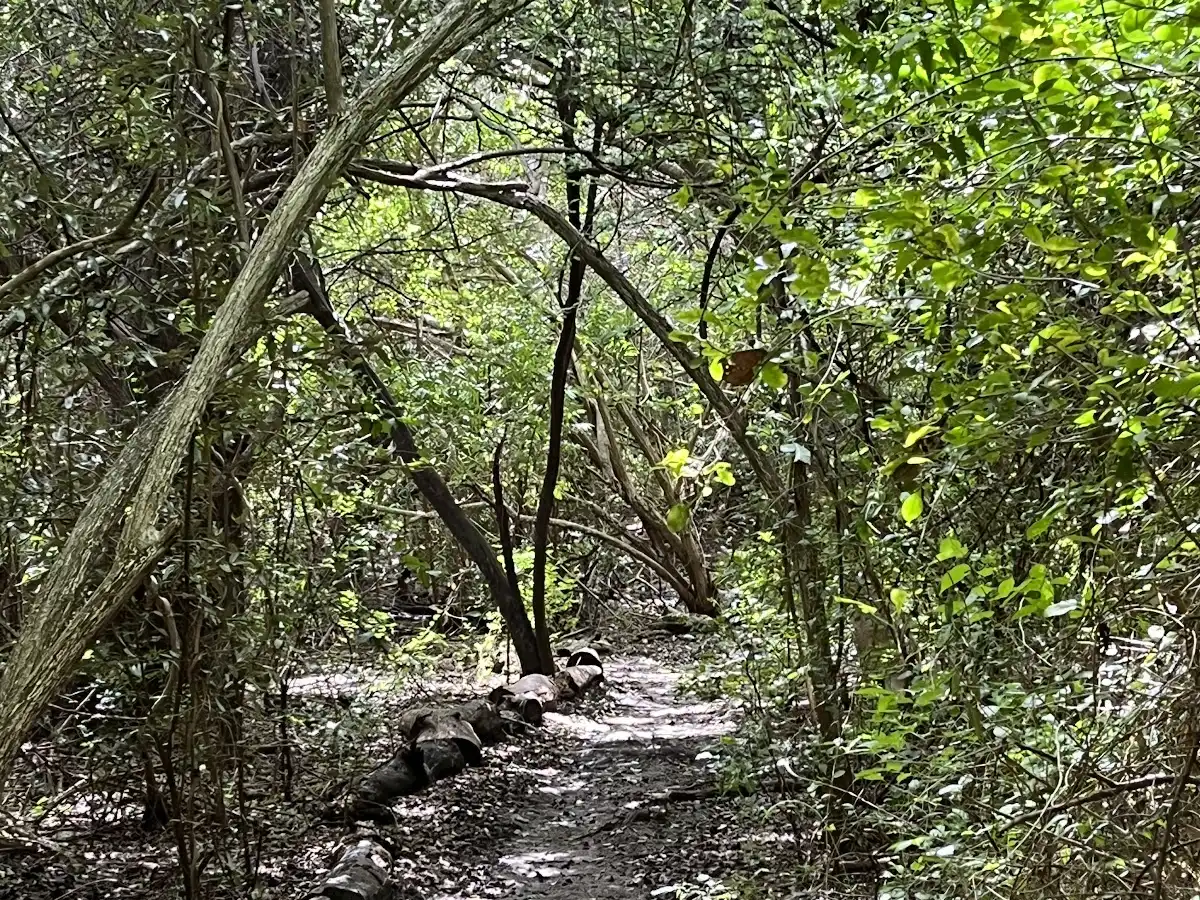
The first thing you notice is the sound: dry leaves ticking in the trade wind and a lizard bolting through scrub as you step off the road. Den Dunki National Park sits on the southeast side of Curaçao, a short drive from Willemstad, in the same thorny, cactus-studded country that covers much of the island. Walks here are about the terrain itself: gray-green brush, columnar cacti, windbent trees and the odd iguana sunning on a rock, with glimpses of blue water between the thorns. Don’t expect rainforest, big mammals or long wilderness treks. Shade is thin, and the paths are short enough to finish in a morning. The upside is that you will rarely share them with a crowd, and the quiet is the draw. Go early, bring more water than seems reasonable, and wear closed shoes, because everything here scratches.

Discover everything you want to know in the 📖 Curaçao Travel Guide.


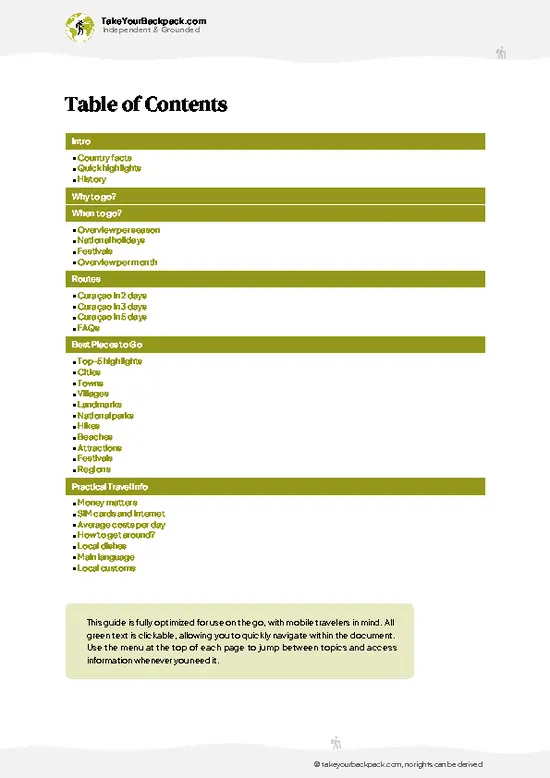
example page 0 from our offline Travel Guide for Curaçao
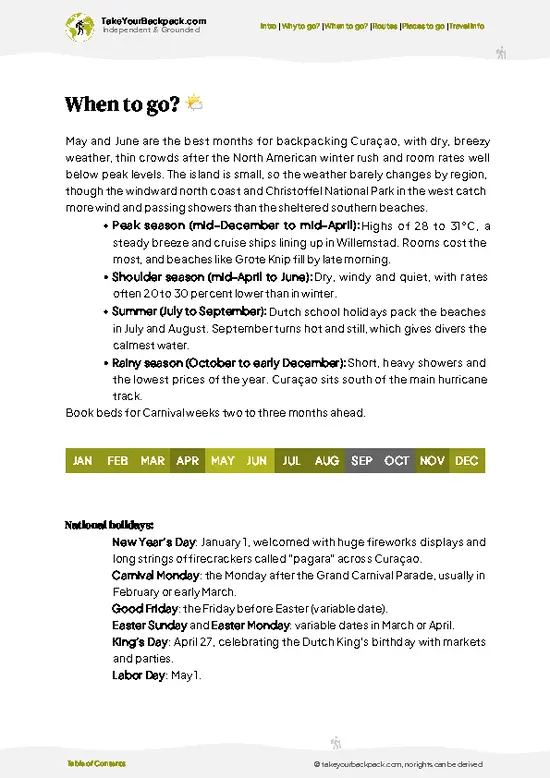
example page 1 from our offline Travel Guide for Curaçao
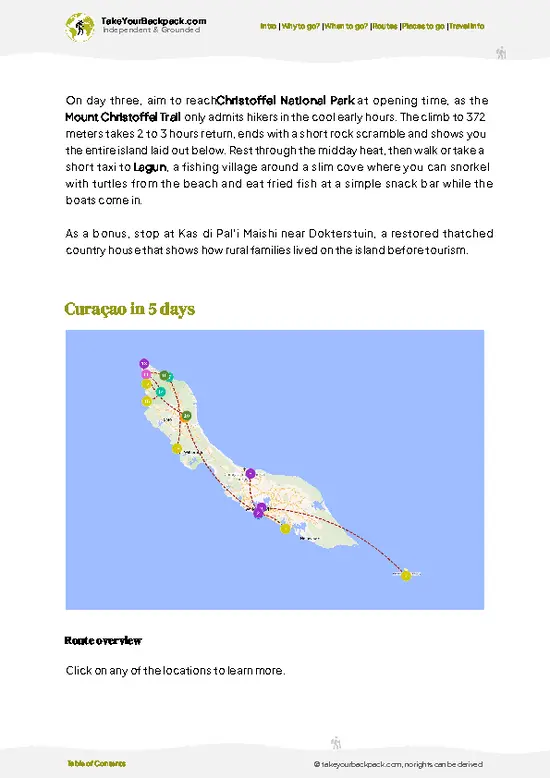
example page 2 from our offline Travel Guide for Curaçao
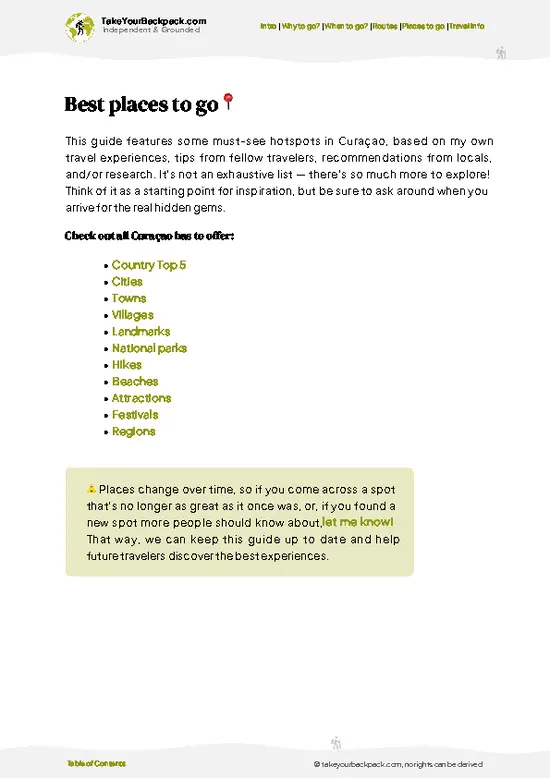
example page 3 from our offline Travel Guide for Curaçao
example page 4 from our offline Travel Guide for Curaçao
example page 5 from our offline Travel Guide for Curaçao
example page 6 from our offline Travel Guide for Curaçao
example page 7 from our offline Travel Guide for Curaçao
Loading the map 🌍
CLICK TO FILTER
cities
towns
villages
landmarks
national parks
hikes
beaches
attractions
festivals
regions
SHOW COUNTRY’S BESTSHOW ALL

✨ Why go?
Ranked #4 national park in Curaçao
Reasons people choose to explore here

Backpackers pick Den Dunki National Park because it gives you a slice of Curaçao’s dry thorn-scrub interior without a tour bus or a guide. You can reach it on your own from Willemstad, wander at your own pace, and be back at a cheap guesthouse or hostel by lunch. That independence matters on an island where many visitors only see the resort beaches and a rental-car loop.

The park also fits neatly beside the Spanish Water and Jan Thiel side of the island, so a morning on foot can lead straight into an afternoon swim. If you travel without a fixed itinerary, that flexibility is the real draw. Walkers who like noticing small things, such as cactus flowers, lizards, birds in the brush and the smell of baked earth, will get more from it than people hunting for a headline sight. Treat it as a quiet, low-key add-on to the better-known coast.

💡 HighlightsPlaces and moments you shouldn't skip

  1. Fort Beekenburg: A stone fort on the Caracas Bay peninsula, built in the early 1700s to guard the entrance to Spanish Water. The ruins and the wide bay view make it the most historic stop nearby.
  2. Spanish Water: A large, sheltered inland bay with many coves. The calm water and the sailboats at anchor make it a pleasant place to look out over from the shore.
  3. Jan Thiel Beach: A sandy beach with easy entry into the water and a relaxed afternoon scene. It works well after a hot morning on dry trails.
  4. Caracas Bay: A deep bay with views across the water toward the peninsula. The shoreline road gives you short stops for photos.
  5. Thorn-scrub walks: The walking itself is the point, among divi-divi trees bent by the wind, tall cacti and hardy brush. Look for iguanas and small lizards along the paths.
Den Dunki … read more 👉
  1. Fort Beekenburg: A stone fort on the Caracas Bay peninsula, built in the early 1700s to guard the entrance to Spanish Water. The ruins and the wide bay view make it the most historic stop nearby.
  2. Spanish Water: A large, sheltered inland bay with many coves. The calm water and the sailboats at anchor make it a pleasant place to look out over from the shore.
  3. Jan Thiel Beach: A sandy beach with easy entry into the water and a relaxed afternoon scene. It works well after a hot morning on dry trails.
  4. Caracas Bay: A deep bay with views across the water toward the peninsula. The shoreline road gives you short stops for photos.
  5. Thorn-scrub walks: The walking itself is the point, among divi-divi trees bent by the wind, tall cacti and hardy brush. Look for iguanas and small lizards along the paths.
Den Dunki National Park and the nearby stops fit comfortably into a single day, with about two hours on foot and the rest left for the fort and a swim.
Spotted a mistake or missing something? Contact us.

Things to do near Den Dunki National Park

Ratings based on Tripadvisor reviews. When you book through this link, you support our work at no extra cost to you.

🌤️ When to go?When to go for the best experience

The best window for Den Dunki National Park is December to April, when the dry northeast trade winds keep hiking comfortable.
  • Dry Season (Dec to Apr): Highs of 28 to 31°C (82 to 88°F), steady breeze, little rain. Hotel and flight prices are highest, and the few trails see their most visitors.
  • Wet Season (Oct to Jan peak): Short, heavy downpours in October to December, with highs near 30 to 32°C (86 to 90°F). Dirt tracks turn muddy, and the dry scrub turns green for a few weeks.
  • Hot Months (May to Sep): 30 to 33°C (86 to 91°F) with humid, less windy afternoons. Rooms are cheaper, and you will often have the trails to yourself.
  • Daylight: Days run about 11 to 13 hours across the year, so a start soon after dawn gets you the cooler hours in any season.
Start walking right after first light, since the … read more 👉
The best window for Den Dunki National Park is December to April, when the dry northeast trade winds keep hiking comfortable.
  • Dry Season (Dec to Apr): Highs of 28 to 31°C (82 to 88°F), steady breeze, little rain. Hotel and flight prices are highest, and the few trails see their most visitors.
  • Wet Season (Oct to Jan peak): Short, heavy downpours in October to December, with highs near 30 to 32°C (86 to 90°F). Dirt tracks turn muddy, and the dry scrub turns green for a few weeks.
  • Hot Months (May to Sep): 30 to 33°C (86 to 91°F) with humid, less windy afternoons. Rooms are cheaper, and you will often have the trails to yourself.
  • Daylight: Days run about 11 to 13 hours across the year, so a start soon after dawn gets you the cooler hours in any season.
Start walking right after first light, since the shade is thin and midday heat is the real limiter.


source: climatestotravel.comJANJanuary: highly recommended for travelingFEBFebruary: highly recommended for travelingMARMarch: highly recommended for travelingAPRApril: highly recommended for travelingMAYMay: excellent for travelingJUNJune: excellent for travelingJULJuly: excellent for travelingAUGAugust: excellent for travelingSEPSeptember: highly recommended for travelingOCTOctober: fair for travelingNOVNovember: fair for travelingDECDecember: good for traveling
curacao-national-park-den-dunki-national-park v1
© Google |

✈️ The backpacker research shortcutCuraçao Travel Guide

An offline-friendly backpacking guide with optimized travel routes, ranked highlights, transport advice, and the best areas to stay.
example page 0 from our offline Travel Guide for Curaçao
example page 1 from our offline Travel Guide for Curaçao
example page 2 from our offline Travel Guide for Curaçao
example page 3 from our offline Travel Guide for Curaçao
example page 4 from our offline Travel Guide for Curaçao
example page 5 from our offline Travel Guide for Curaçao
example page 6 from our offline Travel Guide for Curaçao
example page 7 from our offline Travel Guide for Curaçao
The digital guide (126 pages) contains:
✅ 33 highlights, ranked by travel appeal
✅ Optimized 2, 3 & 5-day travel routes
✅ Cities, national parks, landmarks, beaches
✅ How to get around
✅ Offline-friendly for travel without Wi-Fi
👉 Click to see all 30+ guide features

📅 Plan smarter in minutes, not weeks
✅ Month by month travel advice
✅ Festivals & national holidays
✅ Budget expectations

🗺️ Go to the right places, skip the overrated ones
✅ Honest pros & cons of destinations
✅ Top hikes, parks & viewpoints
✅ Lesser-known places most travelers miss
✅ Clear “worth it vs skip it” guidance

🛏️ Travel smoothly without rookie mistakes
✅ Best areas to stay
✅ Transport systems explained simply
✅ Common scams & safety advice
✅ SIM cards, money & practical tips

🌍 Understand the country, not just visit it
✅ Culture & traditions
✅ 52 Essential phrases & customs
✅ Festivals worth planning around
✅ Traveler-friendly historical context
✅ Insights that make places more meaningful

📱 Built for real travel conditions
✅ Fully downloadable PDF
✅ Works completely offline
✅ Optimized for phone use
✅ Useful in remote areas & buses
✅ Everything in one place
Stop searching, start planning
Get instant access to your full guide. 30‑day money-back guarantee.
+ Add another guide for just

By proceeding you agree to our terms.
Sent to your inbox immediately after payment • 100% Secure Checkout
Best Backpacking Travel Advisor 2025 tourism awardBest Backpacking
Travel Advisor
2025
What others say about Take Your Backpack Guides:
⭐⭐⭐⭐⭐
Fantastic, amazing amount of information!
⭐⭐⭐⭐⭐
My goodness this is amazing, it's what I've been looking for hats off too you!
⭐⭐⭐⭐⭐
I think this is absolutely BRILLIANT
⭐⭐⭐⭐
Very complete and informative. It's still missing places, but I gotta to commend you
⭐⭐⭐⭐⭐
This is truly amazing, thank you, can't wait to explore it with my kids!
⭐⭐⭐⭐⭐
Awesome resource, thank you!
⭐⭐⭐⭐⭐
This is amazing! Can't wait to explore the ones I haven't seen
⭐⭐⭐⭐
I love this! Well done, great idea.
⭐⭐⭐⭐⭐
Thanks for taking the time to make this gem!
⭐⭐⭐⭐⭐
This might be the best website I've ever seen.
⭐⭐⭐⭐⭐
Congratulations, and thank you so much for your work; it's incredibly valuable.
⭐⭐⭐⭐
In all seriousness I think you did a great job pointing out the important spots
⭐⭐⭐⭐⭐
10/10 very good
⭐⭐⭐⭐⭐
As someone who's only just starting to visit regularly this is awesome, thank you.
⭐⭐⭐⭐
Thank you very much! I'm going to visit my dad, it's going to be very useful!
⭐⭐⭐⭐⭐
This is really cool! We'll be travelling for the first time and this definitely come in handy.
⭐⭐⭐⭐⭐
You are now our minister of culture, congratulations 👨‍💼
⭐⭐⭐⭐⭐
Just wanted to tell you that this is a pearl! Going to follow your recommendations.
⭐⭐⭐⭐⭐
This is so cool. I'll definitely be using the resource for my travels soon.
⭐⭐⭐⭐⭐
This is very impressive! Good work.
⭐⭐⭐⭐⭐
This is an amazing and informative site. Very well done!

🛏️ Where to stay?Where staying makes the most sense

Stay in Willemstad or Jan Thiel, because Den Dunki National Park has no lodging, camping or huts of its own. Both are close enough that you can be on the trails within 10 to 20 minutes by car.

Willemstad suits backpackers who want hostels, guesthouses and cheap eats. Dorm beds run about US$25 to 40 a night, and private rooms in small guesthouses start around US$55 to 90. Punda and Otrobanda have the most choice, and you can walk to restaurants, the floating market and the waterfront. Buses run from the central terminal, which keeps costs down if you skip a rental car.

Jan Thiel is the closest … read more 👉
Stay in Willemstad or Jan Thiel, because Den Dunki National Park has no lodging, camping or huts of its own. Both are close enough that you can be on the trails within 10 to 20 minutes by car.

Willemstad suits backpackers who want hostels, guesthouses and cheap eats. Dorm beds run about US$25 to 40 a night, and private rooms in small guesthouses start around US$55 to 90. Punda and Otrobanda have the most choice, and you can walk to restaurants, the floating market and the waterfront. Buses run from the central terminal, which keeps costs down if you skip a rental car.

Jan Thiel is the closest to the park, with the south exit leading toward the salt pans where flamingos feed. It is resort territory, so expect apartments and villas rather than dorms. Studios and small apartments usually cost US$80 to 150 a night, and splitting one between two or three people makes the price reasonable. Supermarkets and beach restaurants are within reach, though evenings are quieter than in town.

Spanish Water, next door, has a few guesthouses and waterside apartments at similar prices. Book ahead from December to April, when the best-value rooms go first.

👛 Costs (as of 22 October 2026)Money, prices, and spending tips

A day at Den Dunki National Park costs roughly US$0 to 6 for a backpacker, with a total daily budget of US$100 once lodging is counted. Most of that goes to a bed and getting around rather than the park itself.
CategoryBudget RangeLocal Reality
Entrance feeUS$0 to 6Access is cheap or free depending on the gate and arrangements, so carry small cash in case.
Accommodation (high season)US$25 to 60Willemstad dorms and basic rooms are cheapest. Jan Thiel apartments cost more per night but suit groups sharing.
Local transportUS$4 to 25Public buses cost a few dollars per ride but run less often toward Jan Thiel. Taxis and ride shares cover the short trip from Willemstad at a higher price.
Food and suppliesUS$15 to 35Local snack bars and supermarkets keep meals cheap. Beach restaurants in Jan Thiel run
… read more 👉
A day at Den Dunki National Park costs roughly US$0 to 6 for a backpacker, with a total daily budget of US$100 once lodging is counted. Most of that goes to a bed and getting around rather than the park itself.
CategoryBudget RangeLocal Reality
Entrance feeUS$0 to 6Access is cheap or free depending on the gate and arrangements, so carry small cash in case.
Accommodation (high season)US$25 to 60Willemstad dorms and basic rooms are cheapest. Jan Thiel apartments cost more per night but suit groups sharing.
Local transportUS$4 to 25Public buses cost a few dollars per ride but run less often toward Jan Thiel. Taxis and ride shares cover the short trip from Willemstad at a higher price.
Food and suppliesUS$15 to 35Local snack bars and supermarkets keep meals cheap. Beach restaurants in Jan Thiel run pricey. Bring water, as there are no shops on the trails.
ExtrasUS$5 to 15Insect repellent, sunscreen and a drink at the salt pans or a nearby beach. Travelers pay in Antillean guilders or US dollars.
Total Daily BudgetUS$49 to 141About US$100 for a comfortable mid-range day.
⚠️ Prices can change and everyone travels differently, so take this as a rough guide. Hope it helps you plan your adventure!

🥾 TrailsPlan your hike in Den Dunki: routes, terrain, and sights

Den Dunki National Park is a walker’s park rather than a trekker’s one, and the experience is about easy exploration of dry coastal country. The ground is rocky and sandy, with limestone outcrops, scattered cacti and low thorny trees that offer almost no shade. Expect short walks of about one to two hours, mostly flat or gently rolling.
  • Terrain: Rocky, dusty tracks with loose stones in places. Closed shoes protect you from thorns, and a hat is more useful than a rain jacket.
  • Difficulty: Easy for most walkers, though heat and sun make it feel harder than the distance suggests.
  • Scenery: Cactus fences,
… read more 👉
Den Dunki National Park is a walker’s park rather than a trekker’s one, and the experience is about easy exploration of dry coastal country. The ground is rocky and sandy, with limestone outcrops, scattered cacti and low thorny trees that offer almost no shade. Expect short walks of about one to two hours, mostly flat or gently rolling.
  • Terrain: Rocky, dusty tracks with loose stones in places. Closed shoes protect you from thorns, and a hat is more useful than a rain jacket.
  • Difficulty: Easy for most walkers, though heat and sun make it feel harder than the distance suggests.
  • Scenery: Cactus fences, wind-sculpted trees and glimpses of the sea between the brush.
  • Wildlife: Iguanas and small lizards are the most likely sightings, along with birds that move through the scrub. Early hours give you the best chance of seeing them.
  • Best timing: Start soon after dawn, when the air is cooler and the animals are active. By midday the open ground is hot.
Getting there is easiest by taxi or rental car from Willemstad, since public buses to this side of the island are infrequent and do not run to every trailhead. Many travelers link the park with a swim at a nearby beach afterward. It is rarely crowded, and you may meet few other walkers. Check locally before you go for current entry arrangements, and carry plenty of water, sunscreen and a snack, because there are few places to buy supplies along the way.
⚠️ Hiking info can sometimes be outdated or inaccurate. Before you hit the trail, check the latest conditions with locals. If you do spot anything that's off, I'd love to hear from you, so I can update it for fellow travelers.

🛡️ SafetyStaying Safe: What Travelers Should Know

Den Dunki National Park is a low-risk place to hike, and the main hazards are heat and sun. The trails through the mangroves are flat and easy to follow, but shade is patchy and the air feels heavy by late morning. Walk early, carry plenty of water, wear a hat and closed shoes, and expect a sweaty, slow pace rather than a challenge.

Mud and standing water appear after rain, so footing can get slick near the mangroves. Mosquitoes and biting midges gather at dawn and dusk, and repellent helps a lot. Watch for thorny cactus and sharp limestone beside the paths, and stay on marked routes.

Wildlife is mild. Iguanas, lizards and birds are common, and the flamingos near the Jan Thiel salt pans should be watched from a distance so they are not flushed. Do not feed animals. Keep valuables out of … read more 👉
Den Dunki National Park is a low-risk place to hike, and the main hazards are heat and sun. The trails through the mangroves are flat and easy to follow, but shade is patchy and the air feels heavy by late morning. Walk early, carry plenty of water, wear a hat and closed shoes, and expect a sweaty, slow pace rather than a challenge.

Mud and standing water appear after rain, so footing can get slick near the mangroves. Mosquitoes and biting midges gather at dawn and dusk, and repellent helps a lot. Watch for thorny cactus and sharp limestone beside the paths, and stay on marked routes.

Wildlife is mild. Iguanas, lizards and birds are common, and the flamingos near the Jan Thiel salt pans should be watched from a distance so they are not flushed. Do not feed animals. Keep valuables out of sight in parked cars at trailheads, and carry a charged phone.

FAQCommon questions from travelers

Half a day is enough for Den Dunki National Park, since the mangrove trails and the Slave Bridge can be walked in two to three hours. Add another hour if you continue to the Jan Thiel salt pans, where flamingos feed near the south exit. Pair it with a beach afternoon in Jan Thiel or an evening in Willemstad to fill a full day.
Yes, you can reach Den Dunki National Park without a car, though it takes planning. Willemstad is about 15 minutes away by car, and taxis or ride shares cover the trip for roughly US$15 to 25 each way. Buses from the Willemstad terminal head toward Jan Thiel at a few dollars a ride, but they run less often, so check return times.
Entrance to Den Dunki National Park is cheap or free, typically under US$6, and no special permit is required for a normal day visit. Bring small cash in case a fee is requested at the gate. Guided visits or group activities, if arranged, may cost extra, and prices can change, so confirm locally before you go.
⚠️ Things can change over time, so always validate details locally before you go.

Other Curaçaoan national parks near Den Dunki

Explore more nearby:


💡 Not sure where to go next?
Create a personalized itinerary for Curaçao including Den Dunki and the places that fit your trip.

Generate my itinerary

👉 Discover all national parks

Or checkout all Curaçao has to offer (think cities, towns, villages, national parks, hikes, beaches, festivals)
Country photo of Curaçao

We 💚 feedbackWhat to keep in mind

Den Dunki National Park suits curious, self-sufficient walkers who like quiet corners better than famous sights, and anyone with a spare morning in Curaçao. I would go at first light, wear sturdy shoes and carry two liters of water. If you want waterfalls or big wildlife, skip it. If you like cactus, lizards and empty paths, stay a while.

✍️ Help improve this page!
The information on this page is based on in-depth research, insights shared by experienced travelers, and feedback from the local travel community in Curaçao. While every effort is made to keep the information accurate and current, conditions can change — so if you spot anything incorrect or outdated, please get in touch.


🙋‍♂️ Give feedback

👋 Meet the founderWho’s Behind Take Your Backpack?

Johan, backpacker and founder of TakeYourBackpackHi, I’m Johan (Netherlands 🇳🇱), the creator of TakeYourBackpack. Over the past 3 decades, I’ve backpacked through 90+ countries across six continents, gaining extensive experience with independent travel, long-term trips, and overland routes.

This site is built on a combination of firsthand travel experience and carefully curated insights from other backpackers. Many guides are based on places I’ve personally visited, while others bring together tips, observations, and practical advice shared by trusted travelers I’ve met along the way.

The goal is to provide realistic, experience-driven guidance — not generic itineraries — so you can explore destinations with better context, clearer expectations, and more confidence.