×

Curaçao🇨🇼 | best national parksExplore the 2 Best national parks in Curaçao

Curaçao has no sprawling wilderness reserves. Its national parks are compact, arid and mostly coastal, so they cost little and need no permits or guides. The west end has the cactus hills and the rugged north shore, while the east side holds quieter lagoon and shoreline areas. Independent travelers do best with a rental car and an early start, because the heat arrives by 10 a.m. and the best light is gone by lunch.

By Johan Kruseman 🇳🇱 | Updated October 23, 2026
Explore the best hikes in Curaçao

Why go?Key Factors That Shape the Experience

Curaçao suits short, low-effort nature stops better than big expeditions. The island is small, flat to gently hilly, and sits outside the hurricane belt, so conditions stay predictable. Its dry climate means cactus scrub, salt flats and rocky coves rather than forest, and the old plantation (landhuis) history shapes what land is protected today. Distances are short, which makes independent travel easy.

Know before you choose it: there are no multi-day treks, no backcountry camping culture and very little shade. Public buses reach few trailheads, so a rental car matters. Carry more water than seems sensible, wear a hat and reef-safe sunscreen, and treat the parks as half-day adventures paired with swimming, which is how locals use them.
Our Approach to Ranking
The list of best national parks in Curaçao is created based on landscapes, wildlife, adventure opportunities, facilities, and overall experience. If you feel a national park is missing in this list, please let us know.

When to go?Optimal Periods for Travel

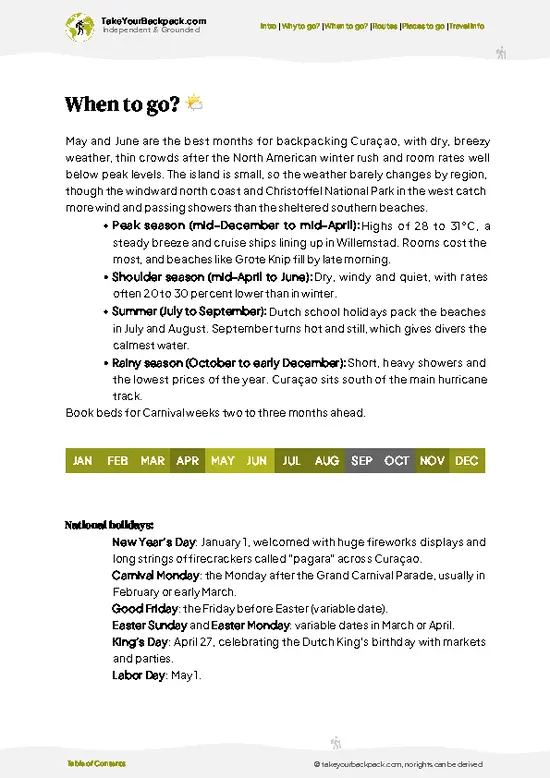
Best months and shoulder seasons: The best months are February to June, when trade winds keep daytime highs near 29 to 31°C and rain is rare. Curaçao is dry year-round, with roughly 500 to 600 mm falling annually, mostly in the wetter months of October to January. Even then, showers are short and trails dry fast.

Peak periods and prices: Peak season runs mid-December to April, when flights and rooms cost 20 to 40 percent more and weekend beaches fill. September and October are hottest (up to 32 to 33°C, humid) but cheapest. Whatever the month, start walks at sunrise, around 6 to 7 a.m., before the heat builds. Park gates generally follow daylight hours, so plan to finish by early afternoon.

national park hoppingPlanning Your Route Efficiently

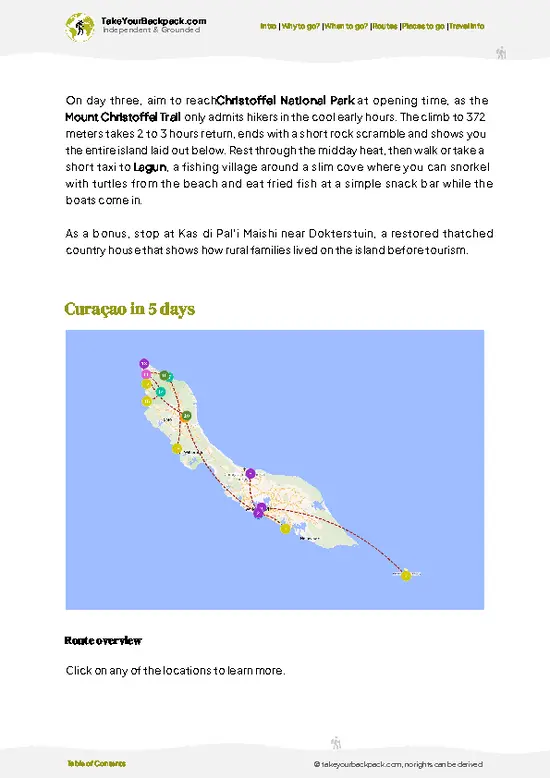
How many days to allow: A trip combining several parks needs 3 to 5 days, and you can cover the whole island in that time because the drive from end to end is only about 1 to 1.5 hours. Base yourself near Willemstad, the transport hub, and treat the west and east as separate day trips.

Direction and pacing: Head west first, since that side needs the earliest start for cooler hiking, then do the east on a gentler day. Allow 2 to 4 hours per stop, plus 45 to 75 minutes of driving between ends of the island. The common mistake is stacking two hikes in one midday stretch, which leaves you baking and rushed. Instead, pair one morning walk with an afternoon swim or snorkel. Another is relying on buses, which are infrequent and rarely reach trailheads, so book a car early in high season.

The ListHighly Recommended national parks of Curaçao

1 Shete Boka National Park

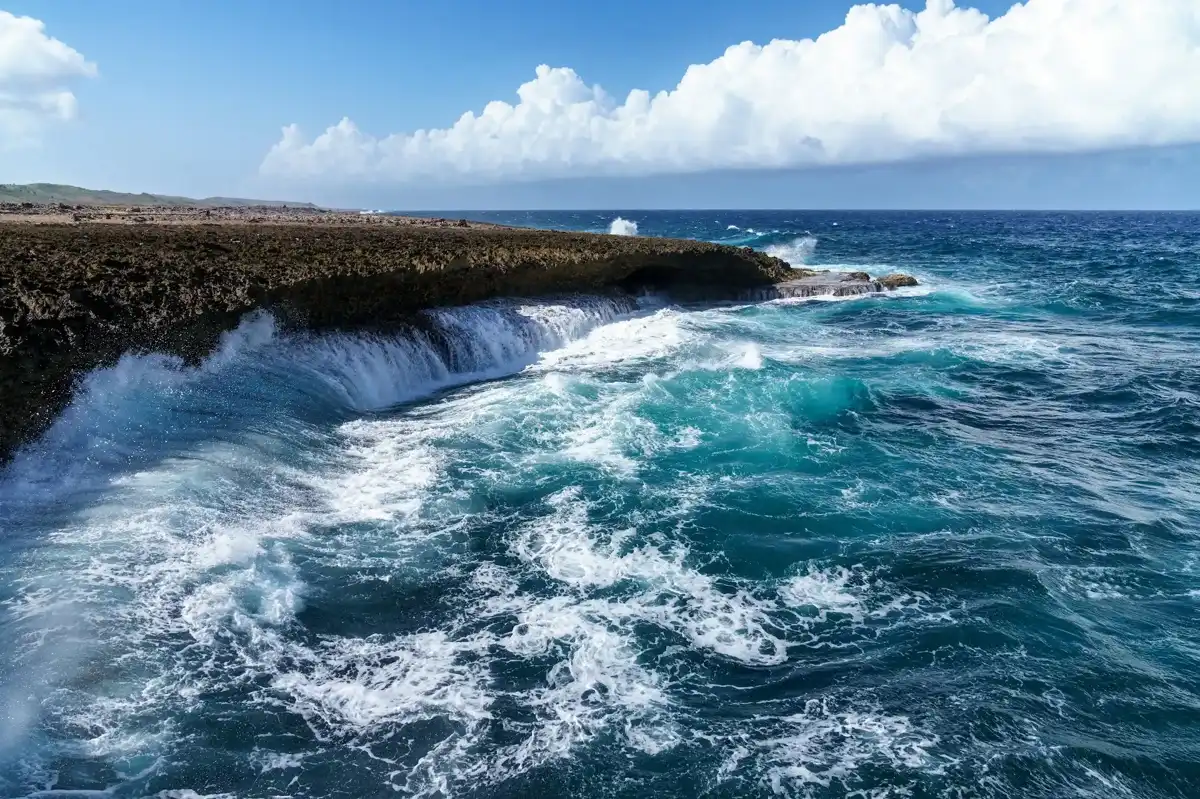
Blowholes, Boka Tabla cave, north-coast cliffs, nesting turtles

Hike the limestone coast between surf-battered inlets, step down into a sea cave and feel the swell thunder in.

2 Den Dunki National Park

Thorn-scrub trails, Spanish Water views, Fort Beekenburg ruins, Jan Thiel beach

Walk short, shadeless paths through windbent divi-divi and tall cacti, then finish with bay views, an old fort and an easy swim.

curacao-national-park-den-dunki-national-park
© Google |
Loading the map 🌍

Expert viewTips and Advice from Travelers

How many to visit: Two to three parks is the right number. The island is small and the heat limits you to one outing per morning, so more means repeats and rushed afternoons. Pick one rugged hiking-focused area and one shoreline or water-based area for contrast.

Prioritizing by travel style: Hikers should prioritize the cactus hills and north coast and go at sunrise. Snorkelers and relaxed travelers should favor shoreline areas with calm water. Birders do best at dawn near the lagoons and salt ponds, where flamingos and other waders gather.

What it costs: Entry fees are modest, typically US$5 to 15 per visit, and some small sites charge a few dollars for parking or facilities. Guides are optional; a guided walk or boat outing runs US$30 to 70. A rental car is the main cost at about US$35 … read more 👉
How many to visit: Two to three parks is the right number. The island is small and the heat limits you to one outing per morning, so more means repeats and rushed afternoons. Pick one rugged hiking-focused area and one shoreline or water-based area for contrast.

Prioritizing by travel style: Hikers should prioritize the cactus hills and north coast and go at sunrise. Snorkelers and relaxed travelers should favor shoreline areas with calm water. Birders do best at dawn near the lagoons and salt ponds, where flamingos and other waders gather.

What it costs: Entry fees are modest, typically US$5 to 15 per visit, and some small sites charge a few dollars for parking or facilities. Guides are optional; a guided walk or boat outing runs US$30 to 70. A rental car is the main cost at about US$35 to 60 a day, and fuel is cheap thanks to short distances. Budget travelers can plan on US$50 to 90 a day all in, including a car share, groceries and one park visit. Bring cash in small bills, since some entrances are cash-only, and prices are quoted in US dollars or Netherlands Antillean guilders (ANG).

Safety and etiquette: The main risk is heat and dehydration. Carry at least 2 to 3 liters per person, wear closed shoes because cacti and sharp volcanic rock cut easily, and stay on marked paths. Never leave valuables visible in a parked car, as break-ins happen at popular trailheads and beaches. Currents and waves on the exposed north coast are strong, so swim only in sheltered coves. Goats and iguanas are common, so do not feed wildlife. Respect private land and old plantation fences, and take your trash out, since bins are scarce. Greet locals with a friendly “bon dia” and you will get helpful directions.

✈️ The backpacker research shortcutCuraçao Travel Guide

An offline-friendly backpacking guide with optimized travel routes, ranked highlights, transport advice, and the best areas to stay.
example page 0 from our offline Travel Guide for Curaçao
example page 1 from our offline Travel Guide for Curaçao
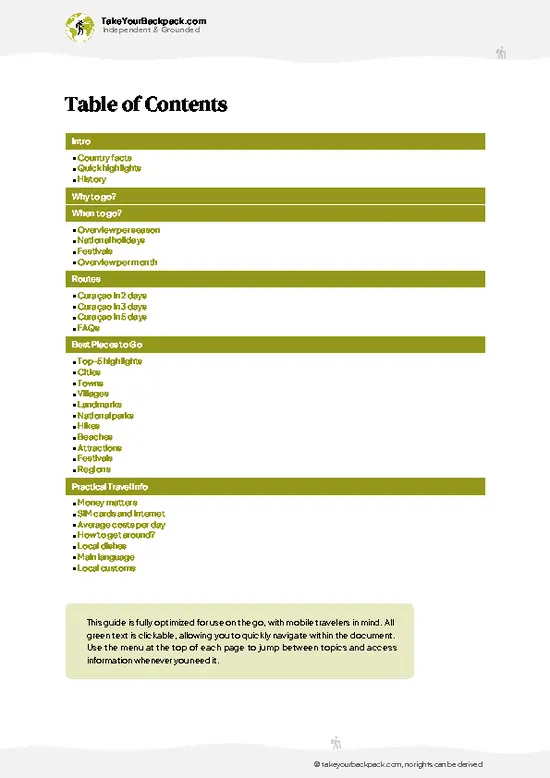
example page 2 from our offline Travel Guide for Curaçao
example page 3 from our offline Travel Guide for Curaçao
example page 4 from our offline Travel Guide for Curaçao
example page 5 from our offline Travel Guide for Curaçao
example page 6 from our offline Travel Guide for Curaçao
example page 7 from our offline Travel Guide for Curaçao
The digital guide (126 pages) contains:
✅ 33 highlights, ranked by travel appeal
✅ Optimized 2, 3 & 5-day travel routes
✅ Cities, national parks, landmarks, beaches
✅ How to get around
✅ Offline-friendly for travel without Wi-Fi
👉 Click to see all 30+ guide features

📅 Plan smarter in minutes, not weeks
✅ Month by month travel advice
✅ Festivals & national holidays
✅ Budget expectations

🗺️ Go to the right places, skip the overrated ones
✅ Honest pros & cons of destinations
✅ Top hikes, parks & viewpoints
✅ Lesser-known places most travelers miss
✅ Clear “worth it vs skip it” guidance

🛏️ Travel smoothly without rookie mistakes
✅ Best areas to stay
✅ Transport systems explained simply
✅ Common scams & safety advice
✅ SIM cards, money & practical tips

🌍 Understand the country, not just visit it
✅ Culture & traditions
✅ 52 Essential phrases & customs
✅ Festivals worth planning around
✅ Traveler-friendly historical context
✅ Insights that make places more meaningful

📱 Built for real travel conditions
✅ Fully downloadable PDF
✅ Works completely offline
✅ Optimized for phone use
✅ Useful in remote areas & buses
✅ Everything in one place
Stop searching, start planning
Get instant access to your full guide. 30‑day money-back guarantee.
+ Add another guide for just

By proceeding you agree to our terms.
Sent to your inbox immediately after payment • 100% Secure Checkout
Best Backpacking Travel Advisor 2025 tourism awardBest Backpacking
Travel Advisor
2025
What others say about Take Your Backpack Guides:
⭐⭐⭐⭐⭐
Fantastic, amazing amount of information!
⭐⭐⭐⭐⭐
My goodness this is amazing, it's what I've been looking for hats off too you!
⭐⭐⭐⭐⭐
I think this is absolutely BRILLIANT
⭐⭐⭐⭐
Very complete and informative. It's still missing places, but I gotta to commend you
⭐⭐⭐⭐⭐
This is truly amazing, thank you, can't wait to explore it with my kids!
⭐⭐⭐⭐⭐
Awesome resource, thank you!
⭐⭐⭐⭐⭐
This is amazing! Can't wait to explore the ones I haven't seen
⭐⭐⭐⭐
I love this! Well done, great idea.
⭐⭐⭐⭐⭐
Thanks for taking the time to make this gem!
⭐⭐⭐⭐⭐
This might be the best website I've ever seen.
⭐⭐⭐⭐⭐
Congratulations, and thank you so much for your work; it's incredibly valuable.
⭐⭐⭐⭐
In all seriousness I think you did a great job pointing out the important spots
⭐⭐⭐⭐⭐
10/10 very good
⭐⭐⭐⭐⭐
As someone who's only just starting to visit regularly this is awesome, thank you.
⭐⭐⭐⭐
Thank you very much! I'm going to visit my dad, it's going to be very useful!
⭐⭐⭐⭐⭐
This is really cool! We'll be travelling for the first time and this definitely come in handy.
⭐⭐⭐⭐⭐
You are now our minister of culture, congratulations 👨‍💼
⭐⭐⭐⭐⭐
Just wanted to tell you that this is a pearl! Going to follow your recommendations.
⭐⭐⭐⭐⭐
This is so cool. I'll definitely be using the resource for my travels soon.
⭐⭐⭐⭐⭐
This is very impressive! Good work.
⭐⭐⭐⭐⭐
This is an amazing and informative site. Very well done!

🛏️ Where to stay?Where to Base Yourself

Curaçao has only a handful of true hostels, with dorm beds around Cg 55 to 80 (US$30 to 45), so most backpackers end up in guesthouses, small apartments or private rooms at Cg 125 to 215 (US$70 to 120) a night. In Willemstad, Pietermaai has the best mix of budget guesthouses, bars and late-night restaurants within walking distance of the old town, while Punda puts you beside the shopping streets and waterfront but goes quiet after dark, and Otrobanda is cheaper and right by the main bus terminal, though some of its back streets feel sketchy at night. Outside the capital, Jan Thiel trades city access for beaches and a calmer, resort-like feel, and Westpunt is the pick for snorkeling and silence … read more 👉
Curaçao has only a handful of true hostels, with dorm beds around Cg 55 to 80 (US$30 to 45), so most backpackers end up in guesthouses, small apartments or private rooms at Cg 125 to 215 (US$70 to 120) a night. In Willemstad, Pietermaai has the best mix of budget guesthouses, bars and late-night restaurants within walking distance of the old town, while Punda puts you beside the shopping streets and waterfront but goes quiet after dark, and Otrobanda is cheaper and right by the main bus terminal, though some of its back streets feel sketchy at night. Outside the capital, Jan Thiel trades city access for beaches and a calmer, resort-like feel, and Westpunt is the pick for snorkeling and silence if you have a rental car, since buses there are infrequent.

If you enjoy meeting fellow travelers, consider choosing hostels with high ratings for atmosphere. On the other hand, if you prefer having your own space, a hotel might be a better option.

CuraçaoExpand Your Journey

👋 Meet the founderWho’s Behind Take Your Backpack?

Johan, backpacker and founder of TakeYourBackpackHi, I’m Johan (Netherlands 🇳🇱), the creator of TakeYourBackpack. Over the past 3 decades, I’ve backpacked through 90+ countries across six continents, gaining extensive experience with independent travel, long-term trips, and overland routes.

This site is built on a combination of firsthand travel experience and carefully curated insights from other backpackers. Many guides are based on places I’ve personally visited, while others bring together tips, observations, and practical advice shared by trusted travelers I’ve met along the way.

The goal is to provide realistic, experience-driven guidance — not generic itineraries — so you can explore destinations with better context, clearer expectations, and more confidence.