×

Curaçao🇨🇼 | regionsScharlooMerchant mansions, saffron and cobalt facades, quiet lanes, guesthouse base | things to do and best time to go

Explore Den Dunki National ParkExplore Barber

Backpacking in Scharloo
🏆 Top pickregion ranked #1
By Johan Kruseman 🇳🇱 | Updated October 22, 2026

Not so long ago Scharloo was the part of Willemstad respectable people crossed the street to avoid, a run of sagging merchant mansions with a rough reputation after dark. Today the restored facades glow in saffron, rose and cobalt, and the district sits in Curaçao’s capital, just behind the Punda waterfront, across the Waaigat inlet. You still get peeling shutters and the odd empty plot, which keeps it from feeling staged, and there’s no beach or hiking here at all. Sleeping in Scharloo means quiet streets and a guesthouse with character, but you’ll walk or hop a bus for supper options, while a Punda room puts you in the thick of the cafés for a higher price and more noise. For a backpacker, Scharloo wins. Do your wandering early, when the stucco is in shade and the lanes are empty. Architecture lovers and slow walkers will adore it. Anyone craving nightlife or sand will be restless.

Discover everything you want to know in the 📖 Curaçao Travel Guide.


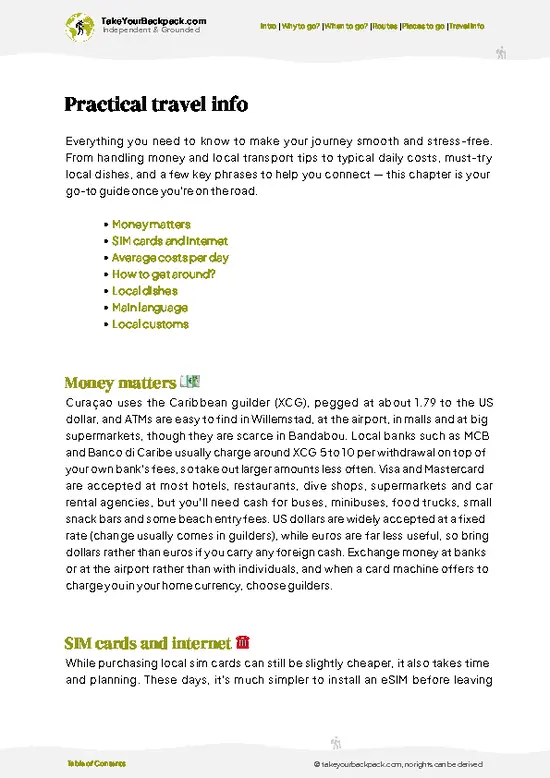
example page 0 from our offline Travel Guide for Curaçao
example page 1 from our offline Travel Guide for Curaçao
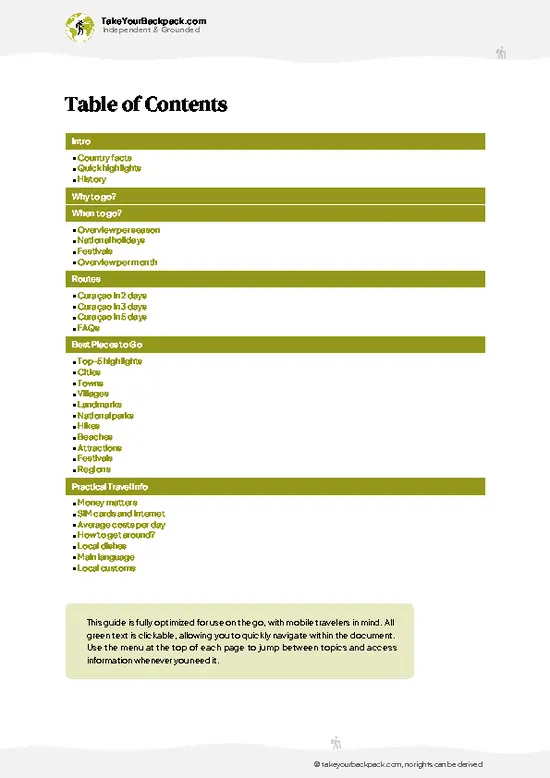
example page 2 from our offline Travel Guide for Curaçao
example page 3 from our offline Travel Guide for Curaçao
example page 4 from our offline Travel Guide for Curaçao
example page 5 from our offline Travel Guide for Curaçao
example page 6 from our offline Travel Guide for Curaçao
example page 7 from our offline Travel Guide for Curaçao
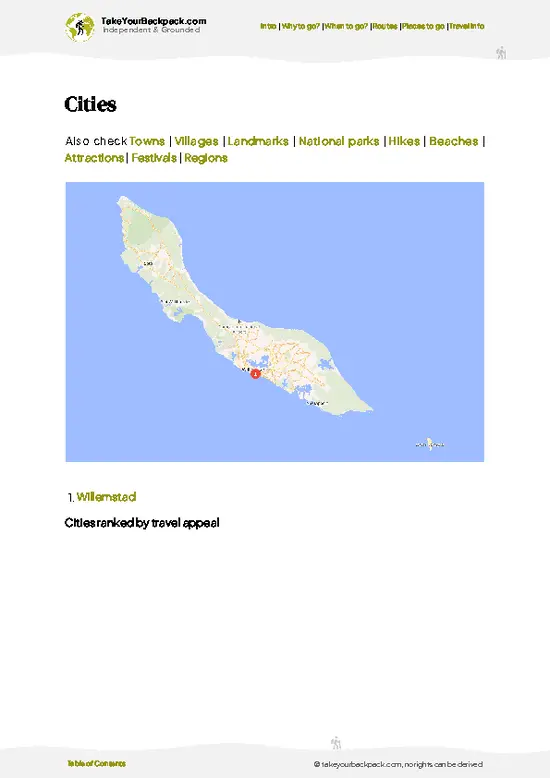
Loading the map 🌍
CLICK TO FILTER
cities
towns
villages
landmarks
national parks
hikes
beaches
attractions
festivals
regions
SHOW COUNTRY’S BESTSHOW ALL

✨ Why go?
Ranked #1 region in Curaçao
Why visitors keep coming back

Scharloo gives you the cleanest look at Willemstad’s Dutch colonial heritage without the cruise-ship crush of the waterfront. The district is part of the UNESCO-listed historic center, and its rows of 18th and 19th century merchant houses along Scharlooweg are the reason most people come. You can read the city’s history in the gables, the tall windows and the colors, and it takes an afternoon rather than a week.

The second draw is position. From Scharloo you walk across to Punda for the Mikvé Israel-Emanuel Synagogue, the Floating Market and old forts, then cross the Queen Emma pontoon bridge to Otrobanda for museums and hilltop views. Everything sits on foot, so you can skip a rental car for several days and still cover the whole heritage core, saving the island’s beaches for a separate day by bus or shared ride.

💡 HighlightsWhat this place is best known for

  1. Scharlooweg mansions (Scharloo Abou): the row of merchant houses that built Scharloo’s name, with carved gables, tall shutters and bold paint. Walk it slowly, because the best details are above eye level.
  2. Handelskade waterfront facades: the pastel buildings across the inlet in Punda, including the Penha building from the early 1700s. This is the shot everyone searches for, best from the Otrobanda side.
  3. Queen Emma Pontoon Bridge: a floating footbridge that swings open for ships and links Punda to Otrobanda. Crossing it while it sways is free and oddly satisfying.
  4. Mikvé Israel-Emanuel Synagogue: dating from 1732, with a sand floor and a small museum attached. Entry is roughly US$10, and a visit takes about 45 minutes.
  5. Floating Market: Venezuelan boats moor along the quay and sell fruit and fish
… read more 👉
  1. Scharlooweg mansions (Scharloo Abou): the row of merchant houses that built Scharloo’s name, with carved gables, tall shutters and bold paint. Walk it slowly, because the best details are above eye level.
  2. Handelskade waterfront facades: the pastel buildings across the inlet in Punda, including the Penha building from the early 1700s. This is the shot everyone searches for, best from the Otrobanda side.
  3. Queen Emma Pontoon Bridge: a floating footbridge that swings open for ships and links Punda to Otrobanda. Crossing it while it sways is free and oddly satisfying.
  4. Mikvé Israel-Emanuel Synagogue: dating from 1732, with a sand floor and a small museum attached. Entry is roughly US$10, and a visit takes about 45 minutes.
  5. Floating Market: Venezuelan boats moor along the quay and sell fruit and fish from the decks. Go early for the best produce and fewer tour groups.
  6. Marshe Bieuw (Old Market): a local lunch hall in Punda where cooks serve stewed goat, fried fish and funchi at shared tables. Tourists skip it, residents queue.
  7. Fort Amsterdam: the old Dutch fort in Punda, now holding the governor’s offices and a bright yellow church with a cannonball lodged in its wall. Walk through the gate and look.
  8. Kura Hulanda Museum: in Otrobanda, a thorough account of the Atlantic slave trade set in restored courtyards. Allow a couple of hours. Entry costs about US$10.
  9. Fort Nassau: a hilltop fort over the harbor entrance with the best panorama of the ships and the whole city. Few people come up, and it’s especially good late in the day.
  10. Brionplein: the square on the Otrobanda end of the pontoon bridge, where locals gather and drink in the evening, away from the Punda crowds.
Scharloo suits a morning stroll along Scharlooweg followed by an afternoon at the Mikvé Israel-Emanuel Synagogue and a late lunch at Marshe Bieuw.
Spotted a mistake or missing something? Contact us.

Things to do around Scharloo

Ratings based on Tripadvisor reviews. When you book through this link, you support our work at no extra cost to you.

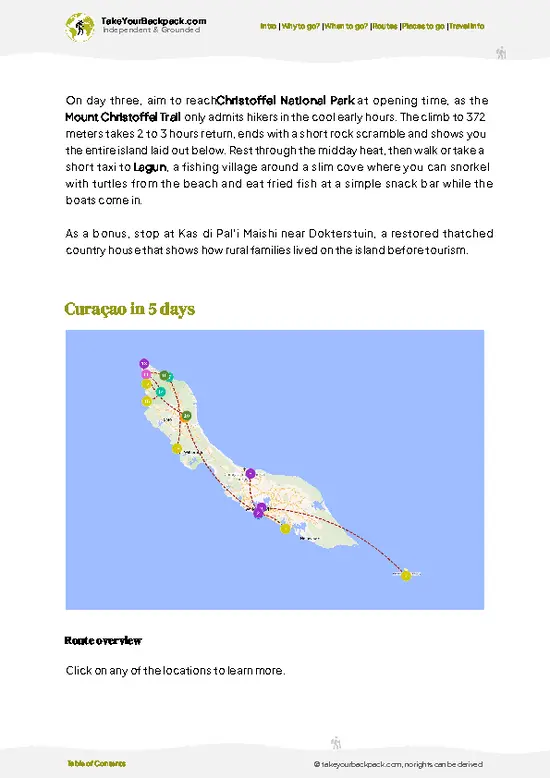
⌛️ 5 daysHow to make the most of Scharloo

Day 1: Scharloo: Start on Scharlooweg before the heat and the traffic build, because the mansions look best in low light and you will have the street nearly to yourself. Spend the rest of the day drifting through the back lanes. Everything here is walkable, which sets the rhythm for the whole trip: Willemstad rewards feet, not wheels.
Day 2: Punda: Cross to Punda for the Floating Market while the boats are freshest, then visit the synagogue and Fort Amsterdam. Lunch at Marshe Bieuw. Punda is compact, so you can see it in a single day without rushing, and the shops close early on Sundays.
Day 3: Otrobanda: Take the pontoon bridge, which opens for ships, so check the water before you commit to a tight schedule. Spend the morning at Kura Hulanda and the evening on Brionplein. The detour is Fort … read more 👉
Day 1: Scharloo: Start on Scharlooweg before the heat and the traffic build, because the mansions look best in low light and you will have the street nearly to yourself. Spend the rest of the day drifting through the back lanes. Everything here is walkable, which sets the rhythm for the whole trip: Willemstad rewards feet, not wheels.
Day 2: Punda: Cross to Punda for the Floating Market while the boats are freshest, then visit the synagogue and Fort Amsterdam. Lunch at Marshe Bieuw. Punda is compact, so you can see it in a single day without rushing, and the shops close early on Sundays.
Day 3: Otrobanda: Take the pontoon bridge, which opens for ships, so check the water before you commit to a tight schedule. Spend the morning at Kura Hulanda and the evening on Brionplein. The detour is Fort Nassau, a short taxi or steep walk up from Otrobanda, which adds the best skyline in the city without leaving the day’s plan.
Day 4: Beach day: Buses leave from the terminal near Punda, but they thin out later in the day, so plan the return before you leave. Pick one beach and stay put rather than chasing several.
Day 5: Scharloo: Return to Scharlooweg for a last slow walk, then take the long way along Handelskade to see the facades from the water side. If you only get one day, make it Day 1: the street at first light is the reason you came.

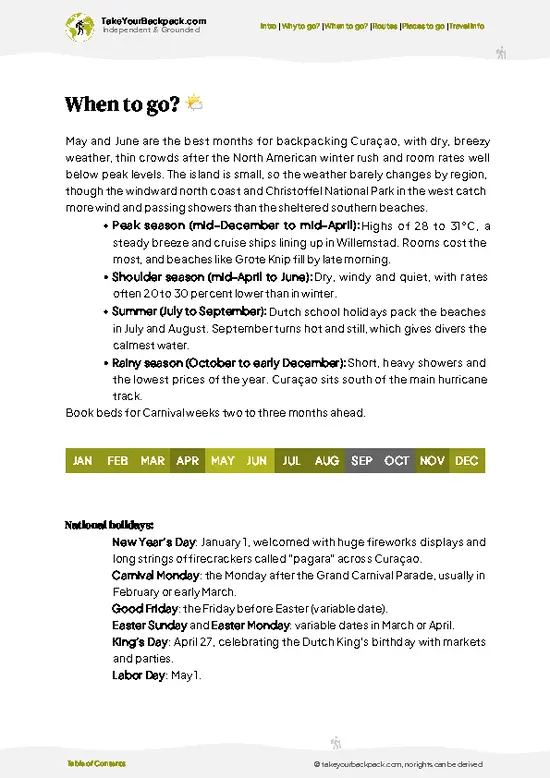
🌤️ When to go?Best time to visit Scharloo

  • Dry Season (February to September): Scharloo sees little rain, and the trade winds keep the streets tolerable at 29 to 32°C (84 to 90°F) by day and 24 to 26°C (75 to 79°F) at night. Cruise ships dock in Willemstad on many days, so the Handelskade crowds thin out only in the evenings.
  • Rainy Season (October to January): Short, heavy showers arrive mostly in November and December, usually passing within an hour. Temperatures stay at 28 to 31°C (82 to 88°F), the air is stickier, and the winds ease. Hotel and guesthouse rates drop noticeably outside the holiday weeks.
  • Carnival (January to February): The big parade rolls through Willemstad on the Sunday before Ash Wednesday. Rooms near the center fill early and prices jump.
  • Daylight: Days run about 11 to 13 hours, so evenings for strolling the murals
… read more 👉
  • Dry Season (February to September): Scharloo sees little rain, and the trade winds keep the streets tolerable at 29 to 32°C (84 to 90°F) by day and 24 to 26°C (75 to 79°F) at night. Cruise ships dock in Willemstad on many days, so the Handelskade crowds thin out only in the evenings.
  • Rainy Season (October to January): Short, heavy showers arrive mostly in November and December, usually passing within an hour. Temperatures stay at 28 to 31°C (82 to 88°F), the air is stickier, and the winds ease. Hotel and guesthouse rates drop noticeably outside the holiday weeks.
  • Carnival (January to February): The big parade rolls through Willemstad on the Sunday before Ash Wednesday. Rooms near the center fill early and prices jump.
  • Daylight: Days run about 11 to 13 hours, so evenings for strolling the murals and old merchant houses are always available.
Book Carnival weekend at least two months ahead, or visit in May or June for lower rates and a calm waterfront.


source: climatestotravel.comJANJanuary: excellent for travelingFEBFebruary: excellent for travelingMARMarch: excellent for travelingAPRApril: excellent for travelingMAYMay: highly recommended for travelingJUNJune: highly recommended for travelingJULJuly: highly recommended for travelingAUGAugust: highly recommended for travelingSEPSeptember: highly recommended for travelingOCTOctober: good for travelingNOVNovember: good for travelingDECDecember: excellent for traveling
when-to-go

✈️ The backpacker research shortcutCuraçao Travel Guide

An offline-friendly backpacking guide with optimized travel routes, ranked highlights, transport advice, and the best areas to stay.
example page 0 from our offline Travel Guide for Curaçao
example page 1 from our offline Travel Guide for Curaçao
example page 2 from our offline Travel Guide for Curaçao
example page 3 from our offline Travel Guide for Curaçao
example page 4 from our offline Travel Guide for Curaçao
example page 5 from our offline Travel Guide for Curaçao
example page 6 from our offline Travel Guide for Curaçao
example page 7 from our offline Travel Guide for Curaçao
The digital guide (126 pages) contains:
✅ 36 highlights, ranked by travel appeal
✅ Optimized 2, 3 & 5-day travel routes
✅ Cities, national parks, landmarks, beaches
✅ How to get around
✅ Offline-friendly for travel without Wi-Fi
👉 Click to see all 30+ guide features

📅 Plan smarter in minutes, not weeks
✅ Month by month travel advice
✅ Festivals & national holidays
✅ Budget expectations

🗺️ Go to the right places, skip the overrated ones
✅ Honest pros & cons of destinations
✅ Top hikes, parks & viewpoints
✅ Lesser-known places most travelers miss
✅ Clear “worth it vs skip it” guidance

🛏️ Travel smoothly without rookie mistakes
✅ Best areas to stay
✅ Transport systems explained simply
✅ Common scams & safety advice
✅ SIM cards, money & practical tips

🌍 Understand the country, not just visit it
✅ Culture & traditions
✅ 52 Essential phrases & customs
✅ Festivals worth planning around
✅ Traveler-friendly historical context
✅ Insights that make places more meaningful

📱 Built for real travel conditions
✅ Fully downloadable PDF
✅ Works completely offline
✅ Optimized for phone use
✅ Useful in remote areas & buses
✅ Everything in one place
Stop searching, start planning
Get instant access to your full guide. 30‑day money-back guarantee.
+ Add another guide for just

By proceeding you agree to our terms.
Sent to your inbox immediately after payment • 100% Secure Checkout
Best Backpacking Travel Advisor 2025 tourism awardBest Backpacking
Travel Advisor
2025
What others say about Take Your Backpack Guides:
⭐⭐⭐⭐⭐
Fantastic, amazing amount of information!
⭐⭐⭐⭐⭐
My goodness this is amazing, it's what I've been looking for hats off too you!
⭐⭐⭐⭐⭐
I think this is absolutely BRILLIANT
⭐⭐⭐⭐
Very complete and informative. It's still missing places, but I gotta to commend you
⭐⭐⭐⭐⭐
This is truly amazing, thank you, can't wait to explore it with my kids!
⭐⭐⭐⭐⭐
Awesome resource, thank you!
⭐⭐⭐⭐⭐
This is amazing! Can't wait to explore the ones I haven't seen
⭐⭐⭐⭐
I love this! Well done, great idea.
⭐⭐⭐⭐⭐
Thanks for taking the time to make this gem!
⭐⭐⭐⭐⭐
This might be the best website I've ever seen.
⭐⭐⭐⭐⭐
Congratulations, and thank you so much for your work; it's incredibly valuable.
⭐⭐⭐⭐
In all seriousness I think you did a great job pointing out the important spots
⭐⭐⭐⭐⭐
10/10 very good
⭐⭐⭐⭐⭐
As someone who's only just starting to visit regularly this is awesome, thank you.
⭐⭐⭐⭐
Thank you very much! I'm going to visit my dad, it's going to be very useful!
⭐⭐⭐⭐⭐
This is really cool! We'll be travelling for the first time and this definitely come in handy.
⭐⭐⭐⭐⭐
You are now our minister of culture, congratulations 👨‍💼
⭐⭐⭐⭐⭐
Just wanted to tell you that this is a pearl! Going to follow your recommendations.
⭐⭐⭐⭐⭐
This is so cool. I'll definitely be using the resource for my travels soon.
⭐⭐⭐⭐⭐
This is very impressive! Good work.
⭐⭐⭐⭐⭐
This is an amazing and informative site. Very well done!

🛏️ Where to stay?Best areas to stay in Curaçao

Scharloo itself is the quieter option, a neighborhood of restored 18th and 19th century merchant houses where you sleep in a historic setting and walk to the center in minutes. It is safe by day, but the streets empty after dark, so social travelers should also look at the neighboring areas.
Pietermaai is the strongest pick for most backpackers. It sits a 10 minute walk from Scharloo along the seafront, with a cluster of bars, small restaurants and guesthouses, and it is where you will most easily meet other travelers over a sundowner. Evenings feel lively yet relaxed, and the area is well lit … read more 👉
Scharloo itself is the quieter option, a neighborhood of restored 18th and 19th century merchant houses where you sleep in a historic setting and walk to the center in minutes. It is safe by day, but the streets empty after dark, so social travelers should also look at the neighboring areas.
Pietermaai is the strongest pick for most backpackers. It sits a 10 minute walk from Scharloo along the seafront, with a cluster of bars, small restaurants and guesthouses, and it is where you will most easily meet other travelers over a sundowner. Evenings feel lively yet relaxed, and the area is well lit and used to visitors.
Punda, the main historic center, suits those who want to be close to the shops, floating market and the pontoon bridge. It is busy at daytime but quiet at night, and the budget rooms there tend to be basic.
Otrobanda, across the water, has a more local feel, with narrow lanes, murals and the Kura Hulanda area. It is convenient for the bus terminal and the nightlife along the Rif Fort waterfront, though you should take a taxi back late at night rather than walk the quiet side streets.
If you want beaches and diving, consider staying out towards Jan Thiel or Westpunt later in your trip, but for your first nights, Pietermaai and Scharloo give the best mix of safety, sociability and easy walking.

🚌 Getting aroundGetting around like a local

Scharloo is small enough to cover entirely on foot, and the walk to Punda and Otrobanda across the Queen Emma pontoon bridge takes 10 to 15 minutes. Walking stops making sense once you head for the beaches or Westpunt, which are 30 to 60 minutes away by road. Most backpackers combine walking in town with buses and the occasional rental car or taxi, and the system works if you accept that it runs on island time.
  • Walking: Costs nothing, takes no planning, and gets you to the Pietermaai district, Kura Hulanda and the floating market in a few minutes. Do it early, before the heat builds, and you will get the most out of the town.
  • Public buses: Fares are about US$1.50 to 2 for a ride within Willemstad, and the main terminals sit at Punda and Otrobanda. They are cheap but slow, thin out after sunset,
… read more 👉
Scharloo is small enough to cover entirely on foot, and the walk to Punda and Otrobanda across the Queen Emma pontoon bridge takes 10 to 15 minutes. Walking stops making sense once you head for the beaches or Westpunt, which are 30 to 60 minutes away by road. Most backpackers combine walking in town with buses and the occasional rental car or taxi, and the system works if you accept that it runs on island time.
  • Walking: Costs nothing, takes no planning, and gets you to the Pietermaai district, Kura Hulanda and the floating market in a few minutes. Do it early, before the heat builds, and you will get the most out of the town.
  • Public buses: Fares are about US$1.50 to 2 for a ride within Willemstad, and the main terminals sit at Punda and Otrobanda. They are cheap but slow, thin out after sunset, and rarely run on Sundays, so they suit weekday trips but not tight schedules. Ask the driver for timing, since schedules are loose.
  • Taxis: Rides are not metered, so agree on the fare first. Expect about US$10 to 15 across town and US$25 to 30 to the airport, a 15 to 20 minute drive. Splitting a ride between three or four people brings the price down to something close to a bus trip, with air conditioning thrown in.
  • Rental car: From roughly US$35 to 60 a day, and the real way to reach Grote Knip, Shete Boka and the north coast. Parking in Scharloo is tight, so leave the car at your lodging and pick it up only on beach days.
  • Bicycle or scooter: Possible for short hops around the waterfront and Pietermaai, but traffic on the main roads is fast and the heat takes the fun out of longer rides.
For the best value, walk everything in town, then rent a car for just two days and drive to the west and north coast in one loop. That costs less than repeated taxis and saves hours of waiting at bus stops.

🍲 FoodLocal Cuisine & Drinks

Start with keshi yena, a ball of Gouda or Edam stuffed with spiced chicken or beef, raisins and olives, baked until the rind turns soft and the inside smells of smoky cheese. Stobá, a thick stew of goat or beef, comes with funchi, a firm cornmeal side that mops up the sauce. Kadushi, a cactus soup, tastes earthy and slightly sour. Fresh fish like wahoo and snapper arrive grilled with creole sauce, tangy with peppers and tomato.
Wash it all down with a cold Amstel Bright, once brewed on the island, or a glass of Curaçao liqueur, whose blue color is more famous than its orange bitterness. Sweet tooths should try pastechi, fried pastries filled with cheese or meat, which are a staple breakfast.
For budget meals, head to the Plasa Bieu market hall in Punda, where women dish out lunch plates from … read more 👉
Start with keshi yena, a ball of Gouda or Edam stuffed with spiced chicken or beef, raisins and olives, baked until the rind turns soft and the inside smells of smoky cheese. Stobá, a thick stew of goat or beef, comes with funchi, a firm cornmeal side that mops up the sauce. Kadushi, a cactus soup, tastes earthy and slightly sour. Fresh fish like wahoo and snapper arrive grilled with creole sauce, tangy with peppers and tomato.
Wash it all down with a cold Amstel Bright, once brewed on the island, or a glass of Curaçao liqueur, whose blue color is more famous than its orange bitterness. Sweet tooths should try pastechi, fried pastries filled with cheese or meat, which are a staple breakfast.
For budget meals, head to the Plasa Bieu market hall in Punda, where women dish out lunch plates from open kitchens at roughly US$7 to 12. The floating market on the water sells fruit and fish straight from Venezuelan boats. In the evening, Pietermaai has café terraces and casual restaurants, and the snèks, small roadside food trucks, serve burgers and fried snacks late.
Locals eat lunch as the main meal, usually from noon to 2 pm, and many places close after. Service can be unhurried, so settle in. A 10 percent service charge is often added, and tipping extra is a small gesture, not an obligation. Tap water is safe to drink.

FAQCommon questions from travelers

Two to three days is enough for Scharloo and its neighbors, which together make up the Willemstad UNESCO World Heritage center. One day covers the restored merchant houses, the Pietermaai waterfront and the floating market, and a second brings in Otrobanda, Kura Hulanda and the Queen Emma bridge. Add a day if you want museum visits, and more only if you plan beach trips from here.
In Scharloo you can walk almost everywhere, including across the pontoon bridge to Otrobanda in about 10 to 15 minutes. Public buses cost around US$1.50 to 2 per ride and leave from the Punda and Otrobanda terminals, though they run less often in the evenings and on Sundays. Taxis cost roughly US$10 to 15 within town and US$25 to 30 to the airport, so share them when you can.
Scharloo is known for its brightly painted Dutch colonial merchant houses, built in the 18th and 19th centuries by wealthy traders and later restored after decades of neglect. It is part of the UNESCO-listed historic center of Willemstad, along with Punda, Otrobanda and Pietermaai. Today the area draws visitors for architecture walks, street art, and easy access to the nearby floating market and waterfront cafés.
⚠️ Things can change over time, so always validate details locally before you go.

Other destinations worth considering

Scharloo isn’t the only highlight in Curaçao. Explore all what Curaçao has to offer.
Country photo of Curaçao

We 💚 feedbackKey takeaways before you go

Scharloo is a place visitors rush past on their way to the beaches, then regret not seeing properly. Don’t make that mistake. Give the mansions a slow morning, not a ten-minute photo stop, and bring water and a hat, since there is little shade on Scharlooweg. Walk it first and book your beach day afterward.

✍️ Help improve this page!
The information on this page is based on in-depth research, insights shared by experienced travelers, and feedback from the local travel community in Curaçao. While every effort is made to keep the information accurate and current, conditions can change — so if you spot anything incorrect or outdated, please get in touch.


🙋‍♂️ Give feedback

👋 Meet the founderWho’s Behind Take Your Backpack?

Johan, backpacker and founder of TakeYourBackpackHi, I’m Johan (Netherlands 🇳🇱), the creator of TakeYourBackpack. Over the past 3 decades, I’ve backpacked through 90+ countries across six continents, gaining extensive experience with independent travel, long-term trips, and overland routes.

This site is built on a combination of firsthand travel experience and carefully curated insights from other backpackers. Many guides are based on places I’ve personally visited, while others bring together tips, observations, and practical advice shared by trusted travelers I’ve met along the way.

The goal is to provide realistic, experience-driven guidance — not generic itineraries — so you can explore destinations with better context, clearer expectations, and more confidence.