v2.webp)
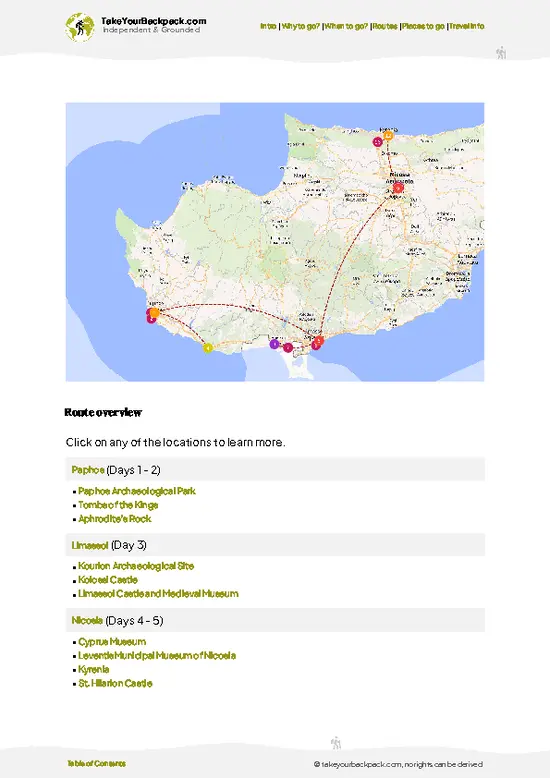
- Greco-Roman Theatre — The site’s signature spot: an impressively preserved theatre perched on the cliff with sweeping sea views, excellent acoustics, and the real feel of watching something where Romans and Byzantines once gathered. Still used for performances today, so you can imagine it full again.
- House of Eustolios (Roman villa) — A big domestic complex with well-preserved rooms and colourful floor mosaics that give a clear picture of wealthy life in Kourion; the way the rooms are laid out and roofless today makes it easy to visualise daily routines and how earthquakes changed the city.
- House of the Gladiators — Named for its striking floor mosaic showing armed fighters, this seaside villa is small but memorable; the artwork and the exposed floors are a nice, close-up dose of Roman
- Greco-Roman Theatre — The site’s signature spot: an impressively preserved theatre perched on the cliff with sweeping sea views, excellent acoustics, and the real feel of watching something where Romans and Byzantines once gathered. Still used for performances today, so you can imagine it full again.
- House of Eustolios (Roman villa) — A big domestic complex with well-preserved rooms and colourful floor mosaics that give a clear picture of wealthy life in Kourion; the way the rooms are laid out and roofless today makes it easy to visualise daily routines and how earthquakes changed the city.
- House of the Gladiators — Named for its striking floor mosaic showing armed fighters, this seaside villa is small but memorable; the artwork and the exposed floors are a nice, close-up dose of Roman decorative taste without a museum glass case between you and the stones.
- Paleochristian Basilica and Baptistery — Early Christian worship complex with a richly patterned baptismal pool and mosaic floors; visiting here really connects the archaeological layers with the island’s shift to Christianity.
- Episcopal Basilica (Bishop’s complex) — The remains of the bishop’s church and adjoining buildings have intricate mosaic fragments and architectural details that show Kourion’s later high status as an ecclesiastical centre.
- Roman Baths — A compact, readable bath complex with remnants of the hypocaust system and changing rooms; a practical stop if you like imagining how townspeople relaxed and socialised centuries ago.
- Ancient Stadium — A small, intimate stadium where athletics and local contests were held; it’s less touristy than the theatre and gives a good sense of civic life and games in antiquity.
- Agora and Public Quarter — The market and administrative heart of the ancient city: columns, paving and building foundations that reveal how trade and politics were organised—great for wandering slowly and piecing the city plan together.
- City Walls and Gateways — Stretches of fortification and surviving gate structures that show Kourion’s defensive layout; walking along them helps you read the city’s changing fortunes and its relationship to the coast.
- Kourion Archaeological Site Museum / Visitor Centre — Small but useful: original finds, explanatory displays and models that put the ruins in context. Handy before or after a site walk so the mosaics and pottery you saw start to make more sense.
Spotted a mistake or missing something? Contact us.

Limassol Cruise Terminal Traditional and Modern Cyprus Tour

Pafos - Archaeology & Beauty tour from Limassol

Explore the Wonders of Cyprus from Limassol

Discover Heritage of Cyprus: Private Tour from Limassol

Ancient Kourion Tour with Paphos Town from Limassol

Curium, Kolossi & Limassol Discovery – Private Shore Tour


 Best Backpacking
.jpg) Hi, I’m Johan (Netherlands 🇳🇱), the creator of TakeYourBackpack. Over the past 3 decades, I’ve backpacked through 90+ countries across six continents, gaining extensive experience with independent travel, long-term trips, and overland routes.
Hi, I’m Johan (Netherlands 🇳🇱), the creator of TakeYourBackpack. Over the past 3 decades, I’ve backpacked through 90+ countries across six continents, gaining extensive experience with independent travel, long-term trips, and overland routes.