×

DR Congo🇨🇩 | national parksGaramba National ParkElephant migration, open grass plains, rare giraffe | things to do and best time to go

Explore Lendu Plateau TrailExplore Kahuzi-Biega National Park

Backpacking in Garamba
UNESCO World Heritage site
🌟 Highlightnational park ranked #4
By Johan Kruseman 🇳🇱 | Updated June 15, 2026

Most guides gloss over this, but here’s the real surprise: Garamba National Park is one of the last places in Africa where you might—just might—see wild northern white rhinos, though your odds are slimmer than a dry season river. Garamba sits in the far northeast of DR Congo, close to the South Sudan border, and it’s a world apart from the more accessible parks in the country. For backpackers, Garamba is a paradox: the scenery is raw and cinematic, with endless savanna and gallery forests, and the wildlife is legendary if elusive, but hiking is limited and strictly guided due to security and conservation rules. Getting here is expensive and logistically tough—think charter flights or bone-rattling overland hauls. Entrance fees are high, crowds are non-existent, and camping is possible but basic, with few budget options. Compared to Virunga or Salonga, Garamba is wilder, less forgiving, and far less trafficked—rewarding if you’re prepared, punishing if you’re not.

Discover everything you want to know in the 📖 DR Congo Travel Guide.
Safety warning

The current risk level for DR Congo is high. Check the advice before going.


Get your DR Congo guide
95 ranked highlights, routes & tips, works offline (372 pages)
Loading the map 🌍
CLICK TO FILTER
cities
towns
landmarks
national parks
hikes
beaches
attractions
festivals
regions
SHOW COUNTRY’S BESTSHOW ALL

✨ Why go?
Ranked #4 national park in DR Congo
The unique appeal for travelers

Garamba National Park in the DR Congo attracts backpackers for several compelling reasons. First, the opportunity for independent exploration is a major draw. Unlike many parks that require guided tours, Garamba allows you to roam its vast landscapes at your own pace. This freedom is liberating, especially for those who thrive on self-guided adventures.

Budget-conscious travelers will appreciate the camping options and nearby hostels that keep costs manageable. You can pitch a tent under the stars or find a simple place to rest your head after a day of hiking. This flexibility in accommodation means you can allocate more of your budget to experiences that matter, like wildlife spotting or cultural interactions.

The trail variety is another highlight. Whether you’re looking for a challenging … read more 👉
Garamba National Park in the DR Congo attracts backpackers for several compelling reasons. First, the opportunity for independent exploration is a major draw. Unlike many parks that require guided tours, Garamba allows you to roam its vast landscapes at your own pace. This freedom is liberating, especially for those who thrive on self-guided adventures.

Budget-conscious travelers will appreciate the camping options and nearby hostels that keep costs manageable. You can pitch a tent under the stars or find a simple place to rest your head after a day of hiking. This flexibility in accommodation means you can allocate more of your budget to experiences that matter, like wildlife spotting or cultural interactions.

The trail variety is another highlight. Whether you’re looking for a challenging trek or a leisurely stroll, Garamba offers routes that cater to different skill levels. Just be aware that some trails can be less maintained, so a good pair of boots is essential.

In summary, Garamba National Park is perfect for those who want to immerse themselves in nature without the constraints of organized tours, making it a unique destination in the DR Congo.
Want to include Garamba National Park in your DR Congo route?
Create a personalized DR Congo itinerary that includes Garamba National Park and the places that fit your trip — based on your travel style, budget, and available time. Get your route in seconds.

Generate my trip

💡 HighlightsDon't-miss highlights and experiences

  • Giant savanna elephants — The park’s headline act: large herds and lone bulls moving across open plains. Watching them feed and interact is unforgettable; trackers and guides can often get you into good viewing spots (with rangers, not solo).
  • Kordofan giraffe — One of the last refuges for this smaller, elegant giraffe subspecies in central Africa. They stand out against the flat horizon and are great for close photo ops when they’re grazing near acacia patches.
  • Endless savanna plains and termite-mound seas — Wide horizons dotted with towering termite mounds and scattered trees give Garamba a cinematic, almost prehistoric feel. Sunsets here are dramatic for a reason.
  • Seasonal marshes and gallery forests — Floodplains and riverine strips break up the dry savanna and attract hippos, crocodiles
read more 👉
  • Giant savanna elephants — The park’s headline act: large herds and lone bulls moving across open plains. Watching them feed and interact is unforgettable; trackers and guides can often get you into good viewing spots (with rangers, not solo).
  • Kordofan giraffe — One of the last refuges for this smaller, elegant giraffe subspecies in central Africa. They stand out against the flat horizon and are great for close photo ops when they’re grazing near acacia patches.
  • Endless savanna plains and termite-mound seas — Wide horizons dotted with towering termite mounds and scattered trees give Garamba a cinematic, almost prehistoric feel. Sunsets here are dramatic for a reason.
  • Seasonal marshes and gallery forests — Floodplains and riverine strips break up the dry savanna and attract hippos, crocodiles and large concentrations of antelope. These wet corridors also concentrate predators and make wildlife sightings easier.
  • Birdlife hotspots — Waterbirds, raptors and Sahel-to-savanna species pile into the park’s wetlands and trees. If you like birds, mornings along the marshes and riverine forests are rewarding — expect diverse species and great binocular action.
  • Guided walking and tracking — You can do short guided walks and on-foot tracking to read spoor, see feeding signs and get close to smaller species and birds. It’s raw and personal; expect to go with armed rangers and experienced guides for safety.
  • Conservation history and remote wilderness — Garamba’s UNESCO status and its role as a former stronghold for species like the northern white rhino give it a weighty conservation story. The park’s remoteness means fewer tourists and a true “wild” feel — not polished lodges, but authentic wilderness.
Spotted a mistake or missing something? Contact us.
🌤️ When to go?Weather, crowds, and seasonal trade-offs


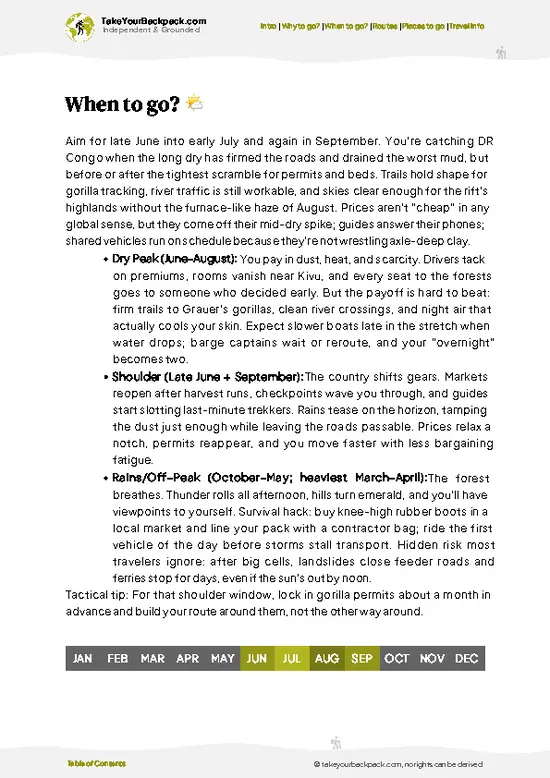
  • Weather: The dry season from December to February and June to September is your best bet. Expect less mud and fewer mosquitoes, making trails more accessible and wildlife spotting easier. The wet season, March to May and October to November, brings heavy rains that can turn paths into quagmires and limit visibility.

  • Temperature: Temperatures hover between 20-30°C (68-86°F) year-round. The dry season tends to be slightly cooler, especially at night, which can be a relief after hot days. The wet season feels hotter and more humid, which can sap your energy faster.

  • Daylight Hours: Near the equator, daylight is consistent—about 12 hours daily. Sunrise around 6:00 AM and sunset near 6:00 PM give you a reliable window for trekking and game drives without surprises.

  • Crowds: Garamba is remote
read more 👉

  • Weather: The dry season from December to February and June to September is your best bet. Expect less mud and fewer mosquitoes, making trails more accessible and wildlife spotting easier. The wet season, March to May and October to November, brings heavy rains that can turn paths into quagmires and limit visibility.

  • Temperature: Temperatures hover between 20-30°C (68-86°F) year-round. The dry season tends to be slightly cooler, especially at night, which can be a relief after hot days. The wet season feels hotter and more humid, which can sap your energy faster.

  • Daylight Hours: Near the equator, daylight is consistent—about 12 hours daily. Sunrise around 6:00 AM and sunset near 6:00 PM give you a reliable window for trekking and game drives without surprises.

  • Crowds: Garamba is remote and rarely crowded, but the dry season sees a modest uptick in visitors. You won’t be elbow-to-elbow, but expect more guides and vehicles during peak months.

  • Seasonal Activities: Dry months are prime for wildlife viewing, especially large mammals gathering near waterholes. The wet season offers lush landscapes and birdwatching but at the cost of tougher logistics.

  • Price Fluctuations: Expect higher rates during the dry season when demand peaks. The wet season can offer lower prices but factor in potential extra costs for transport delays or gear replacements due to mud and rain.


Pro-tip: Prioritize the dry season for a smoother, more rewarding experience—your boots and budget will thank you.


source: climatestotravel.comJANJanuary: excellent for travelingFEBFebruary: excellent for travelingMARMarch: fair for travelingAPRApril: fair for travelingMAYMay: fair for travelingJUNJune: excellent for travelingJULJuly: excellent for travelingAUGAugust: excellent for travelingSEPSeptember: excellent for travelingOCTOctober: fair for travelingNOVNovember: fair for travelingDECDecember: excellent for traveling
when-to-go

✈️ The backpacker research shortcutDR Congo Travel Guide

An offline-friendly backpacking guide with optimized travel routes, ranked highlights, transport advice, and the best areas to stay.
example page 0 from our offline Travel Guide for Democratic Republic of the Congo
example page 1 from our offline Travel Guide for Democratic Republic of the Congo
example page 2 from our offline Travel Guide for Democratic Republic of the Congo
example page 3 from our offline Travel Guide for Democratic Republic of the Congo
example page 4 from our offline Travel Guide for Democratic Republic of the Congo
example page 5 from our offline Travel Guide for Democratic Republic of the Congo
example page 6 from our offline Travel Guide for Democratic Republic of the Congo
example page 7 from our offline Travel Guide for Democratic Republic of the Congo
The digital guide (372 pages) contains:
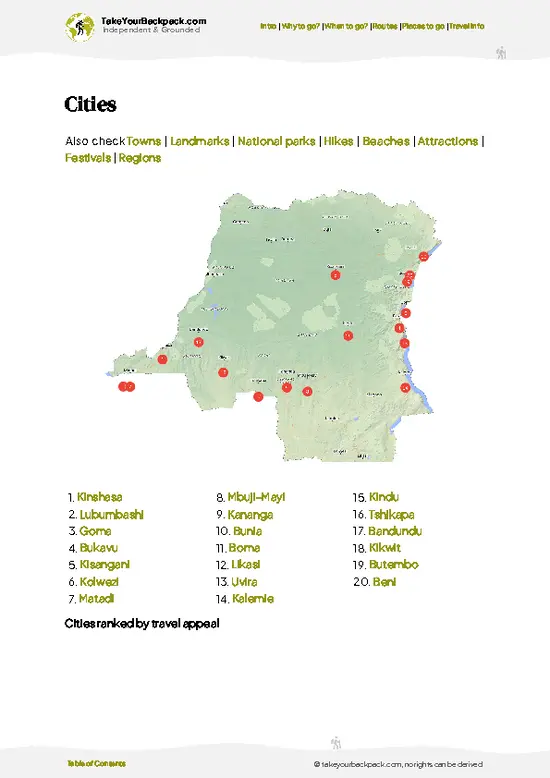
95 highlights, ranked by travel appeal
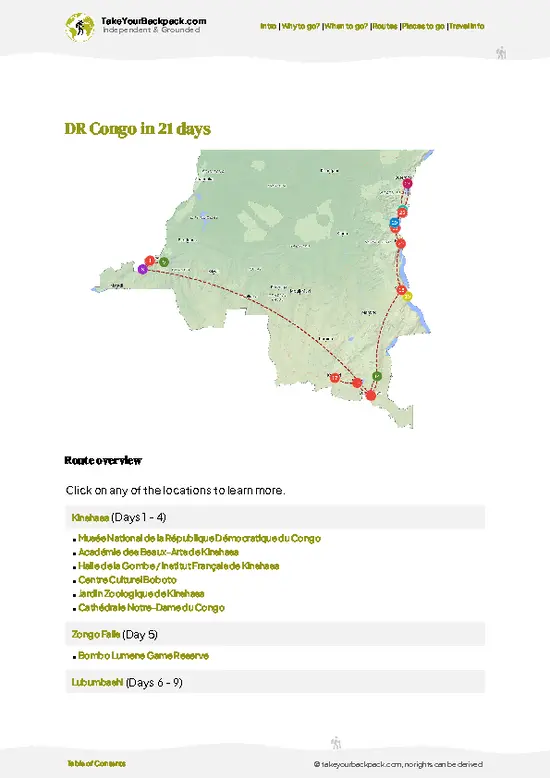
Optimized 7, 14 & 21-day travel routes
Cities, national parks, landmarks, beaches
How to get around
Offline-friendly for travel without Wi-Fi
👉 Click to see all 30+ guide features

📅 Plan smarter in minutes, not weeks
Month by month travel advice
Festivals & national holidays
Budget expectations

🗺️ Go to the right places, skip the overrated ones
Honest pros & cons of destinations
Top hikes, parks & viewpoints
Lesser-known places most travelers miss
Clear “worth it vs skip it” guidance

🛏️ Travel smoothly without rookie mistakes
Best areas to stay
Transport systems explained simply
Common scams & safety advice
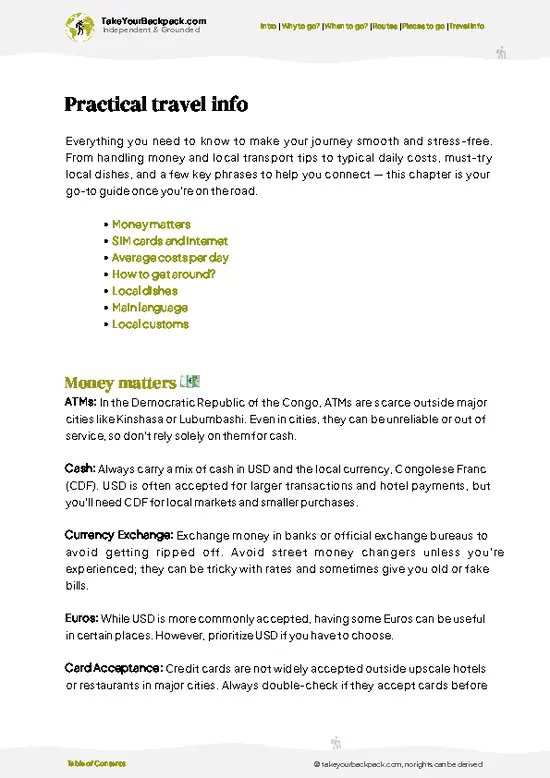
SIM cards, money & practical tips

🌍 Understand the country, not just visit it
Culture & traditions
52 Essential phrases & customs
Festivals worth planning around
Traveler-friendly historical context
Insights that make places more meaningful

📱 Built for real travel conditions
Fully downloadable PDF
Works completely offline
Optimized for phone use
Useful in remote areas & buses
Everything in one place
Save weeks of stressful planning
Get instant access to your full guide. 30‑day money-back guarantee.


By proceeding you agree to our terms.
Sent to your inbox immediately after payment • 100% Secure Checkout
Best Backpacking Travel Advisor 2025 tourism awardBest Backpacking
Travel Advisor
2025
What others say about Take Your Backpack Guides:
⭐⭐⭐⭐⭐
Fantastic, amazing amount of information!
⭐⭐⭐⭐⭐
My goodness this is amazing, it's what I've been looking for hats off too you!
⭐⭐⭐⭐⭐
I think this is absolutely BRILLIANT
⭐⭐⭐⭐
Very complete and informative. It's still missing places, but I gotta to commend you
⭐⭐⭐⭐⭐
This is truly amazing, thank you, can't wait to explore it with my kids!
⭐⭐⭐⭐⭐
Awesome resource, thank you!
⭐⭐⭐⭐⭐
This is amazing! Can't wait to explore the ones I haven't seen
⭐⭐⭐⭐
I love this! Well done, great idea.
⭐⭐⭐⭐⭐
Thanks for taking the time to make this gem!
⭐⭐⭐⭐⭐
This might be the best website I've ever seen.
⭐⭐⭐⭐⭐
Congratulations, and thank you so much for your work; it's incredibly valuable.
⭐⭐⭐⭐
In all seriousness I think you did a great job pointing out the important spots
⭐⭐⭐⭐⭐
10/10 very good
⭐⭐⭐⭐⭐
As someone who's only just starting to visit regularly this is awesome, thank you.
⭐⭐⭐⭐
Thank you very much! I'm going to visit my dad, it's going to be very useful!
⭐⭐⭐⭐⭐
This is really cool! We'll be travelling for the first time and this definitely come in handy.
⭐⭐⭐⭐⭐
You are now our minister of culture, congratulations 👨‍💼
⭐⭐⭐⭐⭐
Just wanted to tell you that this is a pearl! Going to follow your recommendations.
⭐⭐⭐⭐⭐
This is so cool. I'll definitely be using the resource for my travels soon.
⭐⭐⭐⭐⭐
This is very impressive! Good work.
⭐⭐⭐⭐⭐
This is an amazing and informative site. Very well done!

🛏️ Where to stay?How to pick the right area

Garamba National Park in DR Congo is a wild, remote paradise, but finding a place to stay can be tricky. Inside the park, options are limited. The park has a few basic campsites, but they often require prior arrangements with park management. These sites offer a raw experience, close to nature, but amenities are minimal. Bring your own gear and be prepared for a rugged stay.

For a bit more comfort, consider heading to nearby towns like Dungu or Niangara. Dungu has a few guesthouses that cater to travelers, though don’t expect luxury. These spots provide a chance to interact with locals and get … read more 👉
Garamba National Park in DR Congo is a wild, remote paradise, but finding a place to stay can be tricky. Inside the park, options are limited. The park has a few basic campsites, but they often require prior arrangements with park management. These sites offer a raw experience, close to nature, but amenities are minimal. Bring your own gear and be prepared for a rugged stay.

For a bit more comfort, consider heading to nearby towns like Dungu or Niangara. Dungu has a few guesthouses that cater to travelers, though don’t expect luxury. These spots provide a chance to interact with locals and get a feel for the region. Niangara is smaller but can serve as a base for exploring the park.

Be aware of the logistics. Transportation can be a challenge, so plan your movements carefully. Roads can be rough, and public transport is limited. Always check the security situation before heading out, as conditions can change rapidly.

Ultimately, the key is to prioritize your energy and budget for the experiences inside the park. The wildlife and landscapes are worth every effort.

👛 Costs (as of 26 May 2026)How expensive it really is

Visiting Garamba National Park in DR Congo requires careful budgeting. Entry fees typically range from $10 to $20 per person. This fee grants you access to the park, but it’s just the beginning.

Guided tours are essential for navigating the park safely. Expect to pay between $50 and $100 for a half-day tour. Full-day tours can cost upwards of $150. These prices can vary based on the guide’s experience and the size of your group.

Accommodations near the park are limited. Basic lodges start around $30 per night, while more comfortable options can reach $100 or more. Always confirm what’s included—some lodges may charge extra for meals or amenities.

Transportation to the park is another factor. If you’re traveling from a major city like Kisangani, budget for around $100 for a round-trip taxi … read more 👉
Visiting Garamba National Park in DR Congo requires careful budgeting. Entry fees typically range from $10 to $20 per person. This fee grants you access to the park, but it’s just the beginning.

Guided tours are essential for navigating the park safely. Expect to pay between $50 and $100 for a half-day tour. Full-day tours can cost upwards of $150. These prices can vary based on the guide’s experience and the size of your group.

Accommodations near the park are limited. Basic lodges start around $30 per night, while more comfortable options can reach $100 or more. Always confirm what’s included—some lodges may charge extra for meals or amenities.

Transportation to the park is another factor. If you’re traveling from a major city like Kisangani, budget for around $100 for a round-trip taxi or arranged transport. Public transport is cheaper but can be unreliable.

Lastly, consider additional costs for park activities, such as wildlife tracking or cultural experiences. These can add another $20 to $50 to your daily budget.

Plan for these expenses to avoid surprises. Prioritize your spending on guided experiences and safety to make the most of your visit.


source: congotourisme.org
⚠️ Prices can change and everyone travels differently, so take this as a rough guide. Hope it helps you plan your adventure!

🥾 TrailsHiking Garamba national park: highlights and difficulty

Garamba National Park is a hidden gem in the Democratic Republic of the Congo, perfect for those seeking a unique hiking experience. The park’s landscape is a mix of savannah, dense forests, and wetlands, providing a stunning backdrop for your trek. You might catch a glimpse of elephants, giraffes, and even the rare shoebill stork if you’re lucky. Just be prepared for some rugged terrain—this isn’t a walk in the park, but the rewards are absolutely worth it.

There are a couple of designated trails that you can explore:
  • Trail Name: Ngiri Trail
    • Length: 10 km
    • Estimated Duration: 3-4 hours
    • Difficulty
read more 👉
Garamba National Park is a hidden gem in the Democratic Republic of the Congo, perfect for those seeking a unique hiking experience. The park’s landscape is a mix of savannah, dense forests, and wetlands, providing a stunning backdrop for your trek. You might catch a glimpse of elephants, giraffes, and even the rare shoebill stork if you’re lucky. Just be prepared for some rugged terrain—this isn’t a walk in the park, but the rewards are absolutely worth it.

There are a couple of designated trails that you can explore:
  • Trail Name: Ngiri Trail
    • Length: 10 km
    • Estimated Duration: 3-4 hours
    • Difficulty Level: Moderate
    • Key Features: Scenic views of the wetlands, opportunities to spot various bird species, and a chance to see herds of elephants.
    • Terrain: Mostly flat with some muddy sections, especially during the rainy season.
  • Trail Name: Batwa Trail
    • Length: 15 km
    • Estimated Duration: 5-6 hours
    • Difficulty Level: Challenging
    • Key Features: Dense forest, potential wildlife encounters, and cultural insights into local communities.
    • Terrain: Hilly with uneven ground, roots, and rocks to navigate.

Reaching Garamba can be a bit of an adventure in itself. Public transport isn’t super reliable, but you can usually find a bus or shared taxi from nearby towns like Dungu or Zongo. Just be ready for a bumpy ride! The park isn’t overly crowded, which is a plus if you’re looking for solitude, but it’s always a good idea to check in advance. As for entrance fees, they’re quite reasonable, but make sure to have some cash on hand, as card payments aren’t common.
⚠️ Hiking info can sometimes be outdated or inaccurate. Before you hit the trail, check the latest conditions with locals. If you do spot anything that's off, I'd love to hear from you, so I can update it for fellow travelers.

🛡️ SafetyTraveler Safety Guide

Garamba National Park in DR Congo offers a unique experience, but it’s essential to be prepared. The weather can shift quickly; afternoon storms are common, so pack a reliable rain jacket and quick-dry gear. The terrain varies, with some steep sections and uneven footing. Good hiking boots are non-negotiable.

Navigation can be tricky; trails aren’t always well-marked, so a GPS device or a reliable map is crucial. River crossings may occur, and while they’re generally manageable, be cautious of water levels after heavy rains.

Wildlife encounters are a highlight, but respect is key. Keep a safe distance from animals, and never approach them. Familiarize yourself with local wildlife behavior to avoid surprises.

Lastly, don’t underestimate the importance of hydration and snacks. The park’s … read more 👉
Garamba National Park in DR Congo offers a unique experience, but it’s essential to be prepared. The weather can shift quickly; afternoon storms are common, so pack a reliable rain jacket and quick-dry gear. The terrain varies, with some steep sections and uneven footing. Good hiking boots are non-negotiable.

Navigation can be tricky; trails aren’t always well-marked, so a GPS device or a reliable map is crucial. River crossings may occur, and while they’re generally manageable, be cautious of water levels after heavy rains.

Wildlife encounters are a highlight, but respect is key. Keep a safe distance from animals, and never approach them. Familiarize yourself with local wildlife behavior to avoid surprises.

Lastly, don’t underestimate the importance of hydration and snacks. The park’s remote nature means you’ll need to be self-sufficient. Prepare well, and you’ll preserve your energy for the moments that truly matter.

Other Congolese national parks near Garamba

Explore more nearby:


💡 Not sure where to go next?
Create a personalized itinerary for DR Congo including Garamba and the places that fit your trip.

Generate my itinerary

👉 Discover all national parks

Or checkout all DR Congo has to offer (think cities, towns, villages, national parks, hikes, beaches, festivals)
Country photo of DR Congo

We 💚 feedbackSumming up the experience

Garamba National Park is raw and untamed, a place where nature’s power feels palpable. You’ll likely encounter elephants roaming freely, which is a thrill, but don’t underestimate the park’s remoteness. Bring extra supplies; the nearest town isn’t just a quick drive away. The best surprise? The vibrant local culture that thrives just outside the park’s boundaries. Engage with the communities; they’ll enrich your experience. Just remember, this isn’t a polished tourist spot—embrace the wild and be prepared for the unexpected.

✍️ Help improve this page!
The information on this page is based on in-depth research, insights shared by experienced travelers, and feedback from the local travel community in DR Congo. While every effort is made to keep the information accurate and current, conditions can change — so if you spot anything incorrect or outdated, please get in touch.


🙋‍♂️ Give feedback

👋 Meet the founderWho’s Behind Take Your Backpack?

Johan, backpacker and founder of TakeYourBackpackHi, I’m Johan (Netherlands 🇳🇱), the creator of TakeYourBackpack. Over the past decade, I’ve backpacked through 80+ countries across six continents, gaining extensive experience with independent travel, long-term trips, and overland routes.

This site is built on a combination of firsthand travel experience and carefully curated insights from other backpackers. Many guides are based on places I’ve personally visited, while others bring together tips, observations, and practical advice shared by trusted travelers I’ve met along the way.

The goal is to provide realistic, experience-driven guidance — not generic itineraries — so you can explore destinations with better context, clearer expectations, and more confidence.

Get full DR Congo guide •
Instant download • 95 highlights • Full Offline guide