×

DR Congo🇨🇩 | festivalsKinshasa International Film FestivalAfrican cinema, director Q&As, Lingala debates, terrace rumba | things to do and best time to go

Explore Congo BiennaleExplore Fête de la Musique

Backpacking in Kinshasa International Film
🌟 Highlightfestival ranked #4
By Johan Kruseman 🇳🇱 | Updated October 22, 2026

Kinshasa International Film Festival puts African cinema, filmmakers and Congolese audiences in the same rooms, so you can talk to a director after a screening without queuing or paying festival-circuit prices. It takes place in the Democratic Republic of the Congo’s capital, Kinshasa, a huge city on the south bank of the Congo River, with the action centered in the Gombe district. Expect Congolese and wider African features, shorts and documentaries, plus panels and a loud, friendly crowd that argues about films as hard as it argues about football. Venues are scattered, so you will spend real time in traffic. That is the cost, and the city’s street life and rumba nights pay it back. Skip it if you want polished, red-carpet logistics. Go if you like filmmakers, curious locals and a city that has never been tidied for tourists. Not ideal for travelers who dislike crowds or improvised schedules.

Discover everything you want to know in the 📖 DR Congo Travel Guide.
Safety warning

The current risk level for DR Congo is high. Check the advice before going.


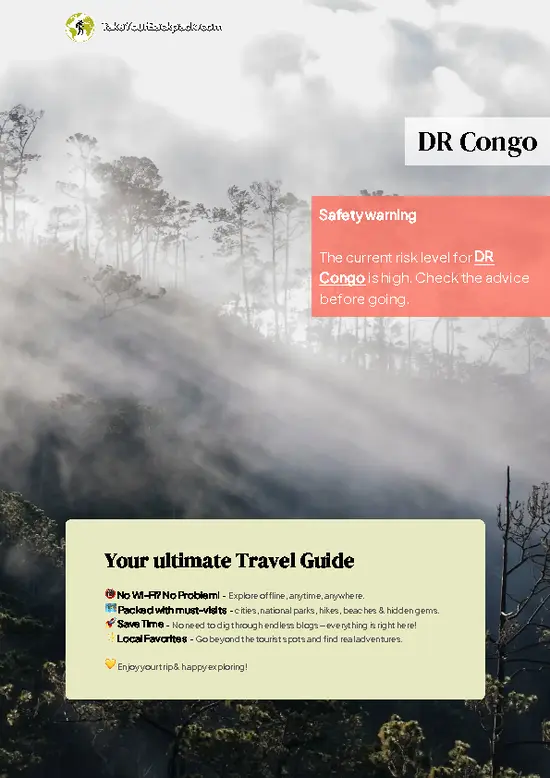
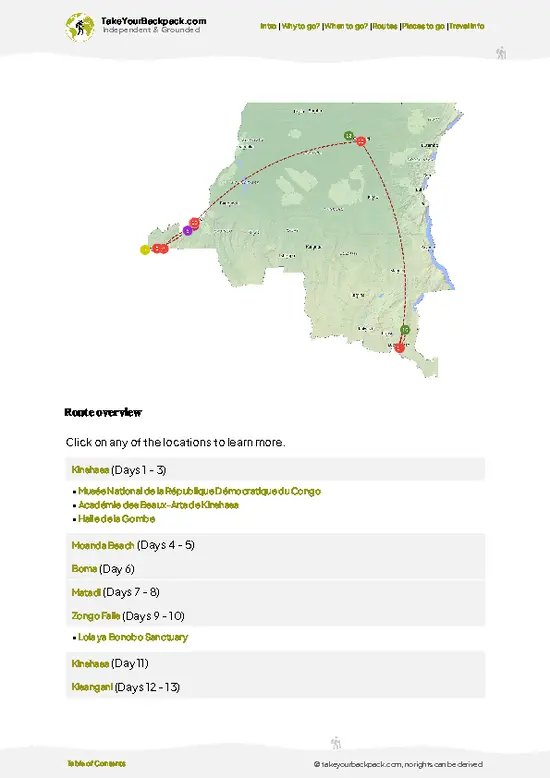
example page 0 from our offline Travel Guide for Democratic Republic of the Congo
example page 1 from our offline Travel Guide for Democratic Republic of the Congo
example page 2 from our offline Travel Guide for Democratic Republic of the Congo
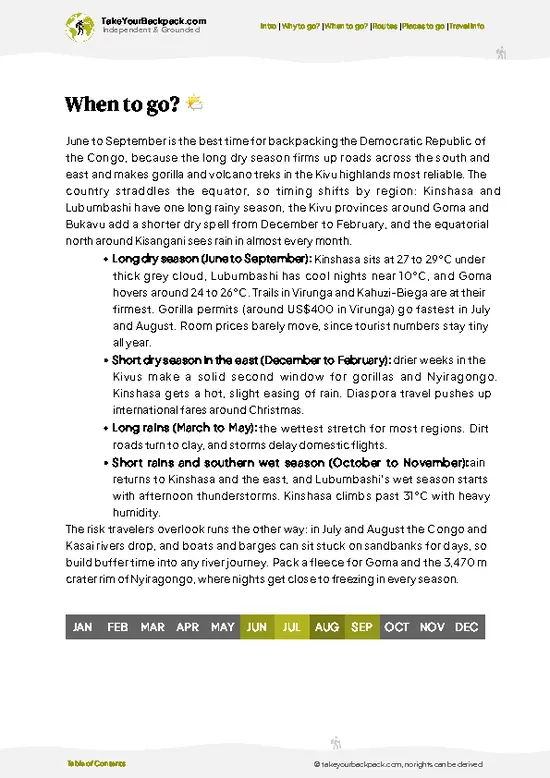
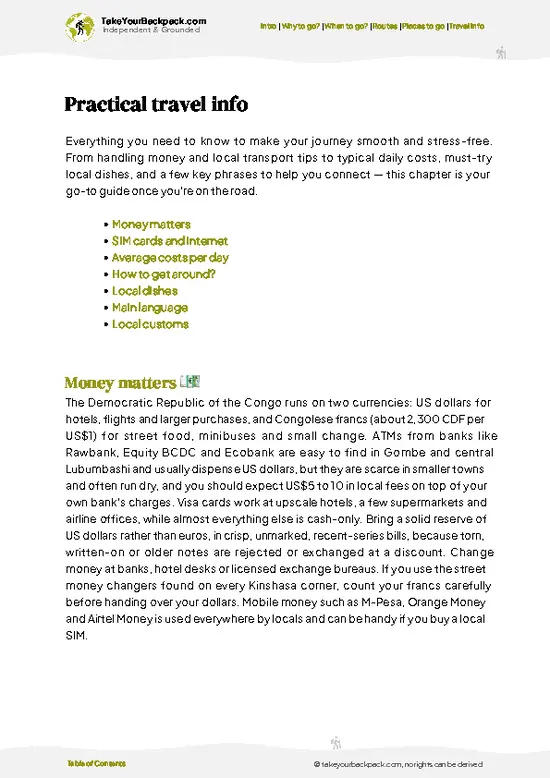
example page 3 from our offline Travel Guide for Democratic Republic of the Congo
example page 4 from our offline Travel Guide for Democratic Republic of the Congo
example page 5 from our offline Travel Guide for Democratic Republic of the Congo
example page 6 from our offline Travel Guide for Democratic Republic of the Congo
example page 7 from our offline Travel Guide for Democratic Republic of the Congo
Loading the map 🌍
CLICK TO FILTER
cities
towns
landmarks
national parks
hikes
beaches
attractions
festivals
regions
SHOW COUNTRY’S BESTSHOW ALL

✨ Why go?
Ranked #4 festival in DR Congo
The unique appeal for travelers

Kinshasa International Film Festival gives you a reason to visit a capital most backpackers only see on a map, and an instant social circle once you arrive. Screenings pull in Congolese filmmakers, students and critics, and conversation spills out of the cinema into nearby bars and terraces. That is how you get invited to a rumba night in a neighborhood you would never have found alone. The second reason is context. Watching a Congolese film in Kinshasa, with local viewers reacting out loud, teaches you more about the country’s humor, politics and music than a week of sightseeing. Many films deal with life in the city along the Congo River, so the streets outside the screening room explain the story you just saw. It also anchors a longer route: pair it with a river crossing to Brazzaville, … read more 👉
Kinshasa International Film Festival gives you a reason to visit a capital most backpackers only see on a map, and an instant social circle once you arrive. Screenings pull in Congolese filmmakers, students and critics, and conversation spills out of the cinema into nearby bars and terraces. That is how you get invited to a rumba night in a neighborhood you would never have found alone. The second reason is context. Watching a Congolese film in Kinshasa, with local viewers reacting out loud, teaches you more about the country’s humor, politics and music than a week of sightseeing. Many films deal with life in the city along the Congo River, so the streets outside the screening room explain the story you just saw. It also anchors a longer route: pair it with a river crossing to Brazzaville, a few days around the capital, or onward travel inside the country. Plan early, because visas and permits for the DRC take effort.

💡 HighlightsWhat this place is best known for

  1. Main screenings in Gombe: The core of the festival is the program of features, documentaries and shorts shown in Gombe venues. The audience is the draw, vocal and fast to laugh, so a film plays differently here than at a European festival.
  2. Q&A sessions with directors: After many screenings, filmmakers take questions in French and often Lingala. They are informal, you can usually approach people afterward, and you hear how films get made with little funding.
  3. Short film and documentary programs: These are the best place to see young Congolese voices, often shot in Kinshasa’s communes. They are short enough to fit several into an afternoon, and they cover subjects you will not see in mainstream releases.
  4. Workshops and panels: Industry talks bring together producers, actors and students to discuss
… read more 👉
  1. Main screenings in Gombe: The core of the festival is the program of features, documentaries and shorts shown in Gombe venues. The audience is the draw, vocal and fast to laugh, so a film plays differently here than at a European festival.
  2. Q&A sessions with directors: After many screenings, filmmakers take questions in French and often Lingala. They are informal, you can usually approach people afterward, and you hear how films get made with little funding.
  3. Short film and documentary programs: These are the best place to see young Congolese voices, often shot in Kinshasa’s communes. They are short enough to fit several into an afternoon, and they cover subjects you will not see in mainstream releases.
  4. Workshops and panels: Industry talks bring together producers, actors and students to discuss distribution, training and funding in Central Africa. Sit in even if you are not in film. You will understand what local cinema is up against.
  5. Evenings of rumba and street food: After the last screening, the city takes over. Grilled fish, skewers and cold Primus beer on a terrace, with Congolese rumba or soukous playing, are the festival’s unofficial second program.
Kinshasa International Film Festival is best started with a main screening in Gombe on the opening days, because that is where you meet the filmmakers and locals who will point you to everything else on the schedule.
Spotted a mistake or missing something? Contact us.

🌤️ When to go?When is the celebration of Kinshasa International Film Festival?

The Kinshasa International Film Festival, often called Quinzaine du Cinéma Congolais or Kinshasa Film Festival in its local editions, has been held in Kinshasa in the dry months, with screenings at venues in Gombe and around the city center; exact dates shift by edition, so check the organizers shortly before booking.
  • Best day: Opening night has the most energy, with directors and press in the room. Midweek screenings are quieter and easier for seats.
  • Weather: Dry-season days run about 28 to 31°C (82 to 88°F), with humid evenings near 20°C (68°F). Bring a light rain jacket anyway, plus sunscreen and a refillable bottle.
  • Booking: Reserve a bed two to three weeks ahead. Rooms in Gombe can rise 20 to 40 percent during the event.
  • Crowds: Kinshasa traffic jams peak at morning and late afternoon rush
… read more 👉
The Kinshasa International Film Festival, often called Quinzaine du Cinéma Congolais or Kinshasa Film Festival in its local editions, has been held in Kinshasa in the dry months, with screenings at venues in Gombe and around the city center; exact dates shift by edition, so check the organizers shortly before booking.
  • Best day: Opening night has the most energy, with directors and press in the room. Midweek screenings are quieter and easier for seats.
  • Weather: Dry-season days run about 28 to 31°C (82 to 88°F), with humid evenings near 20°C (68°F). Bring a light rain jacket anyway, plus sunscreen and a refillable bottle.
  • Booking: Reserve a bed two to three weeks ahead. Rooms in Gombe can rise 20 to 40 percent during the event.
  • Crowds: Kinshasa traffic jams peak at morning and late afternoon rush hours. Arrive at the venue early and leave screenings before the evening crush, or wait it out over a drink.
Check screening times the day before, as schedules often change.


source: climatestotravel.comJANJanuary: not recommended for travelingFEBFebruary: not recommended for travelingMARMarch: not recommended for travelingAPRApril: not recommended for travelingMAYMay: not recommended for travelingJUNJune: excellent for travelingJULJuly: not recommended for travelingAUGAugust: not recommended for travelingSEPSeptember: not recommended for travelingOCTOctober: not recommended for travelingNOVNovember: not recommended for travelingDECDecember: not recommended for traveling

✈️ The backpacker research shortcutDR Congo Travel Guide

An offline-friendly backpacking guide with optimized travel routes, ranked highlights, transport advice, and the best areas to stay.
example page 0 from our offline Travel Guide for Democratic Republic of the Congo
example page 1 from our offline Travel Guide for Democratic Republic of the Congo
example page 2 from our offline Travel Guide for Democratic Republic of the Congo
example page 3 from our offline Travel Guide for Democratic Republic of the Congo
example page 4 from our offline Travel Guide for Democratic Republic of the Congo
example page 5 from our offline Travel Guide for Democratic Republic of the Congo
example page 6 from our offline Travel Guide for Democratic Republic of the Congo
example page 7 from our offline Travel Guide for Democratic Republic of the Congo
The digital guide (330 pages) contains:
✅ 76 highlights, ranked by travel appeal
✅ Optimized 7, 14 & 21-day travel routes
✅ Cities, national parks, landmarks, beaches
✅ How to get around
✅ Offline-friendly for travel without Wi-Fi
👉 Click to see all 30+ guide features

📅 Plan smarter in minutes, not weeks
✅ Month by month travel advice
✅ Festivals & national holidays
✅ Budget expectations

🗺️ Go to the right places, skip the overrated ones
✅ Honest pros & cons of destinations
✅ Top hikes, parks & viewpoints
✅ Lesser-known places most travelers miss
✅ Clear “worth it vs skip it” guidance

🛏️ Travel smoothly without rookie mistakes
✅ Best areas to stay
✅ Transport systems explained simply
✅ Common scams & safety advice
✅ SIM cards, money & practical tips

🌍 Understand the country, not just visit it
✅ Culture & traditions
✅ 52 Essential phrases & customs
✅ Festivals worth planning around
✅ Traveler-friendly historical context
✅ Insights that make places more meaningful

📱 Built for real travel conditions
✅ Fully downloadable PDF
✅ Works completely offline
✅ Optimized for phone use
✅ Useful in remote areas & buses
✅ Everything in one place
Stop searching, start planning
Get instant access to your full guide. 30‑day money-back guarantee.
+ Add another guide for just

By proceeding you agree to our terms.
Sent to your inbox immediately after payment • 100% Secure Checkout
Best Backpacking Travel Advisor 2025 tourism awardBest Backpacking
Travel Advisor
2025
What others say about Take Your Backpack Guides:
⭐⭐⭐⭐⭐
Fantastic, amazing amount of information!
⭐⭐⭐⭐⭐
My goodness this is amazing, it's what I've been looking for hats off too you!
⭐⭐⭐⭐⭐
I think this is absolutely BRILLIANT
⭐⭐⭐⭐
Very complete and informative. It's still missing places, but I gotta to commend you
⭐⭐⭐⭐⭐
This is truly amazing, thank you, can't wait to explore it with my kids!
⭐⭐⭐⭐⭐
Awesome resource, thank you!
⭐⭐⭐⭐⭐
This is amazing! Can't wait to explore the ones I haven't seen
⭐⭐⭐⭐
I love this! Well done, great idea.
⭐⭐⭐⭐⭐
Thanks for taking the time to make this gem!
⭐⭐⭐⭐⭐
This might be the best website I've ever seen.
⭐⭐⭐⭐⭐
Congratulations, and thank you so much for your work; it's incredibly valuable.
⭐⭐⭐⭐
In all seriousness I think you did a great job pointing out the important spots
⭐⭐⭐⭐⭐
10/10 very good
⭐⭐⭐⭐⭐
As someone who's only just starting to visit regularly this is awesome, thank you.
⭐⭐⭐⭐
Thank you very much! I'm going to visit my dad, it's going to be very useful!
⭐⭐⭐⭐⭐
This is really cool! We'll be travelling for the first time and this definitely come in handy.
⭐⭐⭐⭐⭐
You are now our minister of culture, congratulations 👨‍💼
⭐⭐⭐⭐⭐
Just wanted to tell you that this is a pearl! Going to follow your recommendations.
⭐⭐⭐⭐⭐
This is so cool. I'll definitely be using the resource for my travels soon.
⭐⭐⭐⭐⭐
This is very impressive! Good work.
⭐⭐⭐⭐⭐
This is an amazing and informative site. Very well done!

🛏️ Where to stay?Best areas to stay in DR Congo

Gombe is the most practical area to stay for the festival, because it holds the main cultural venues, embassies, restaurants and the most reliable electricity and security in Kinshasa. Expect a quieter, more administrative feel, with leafy avenues and plenty of taxis at hand. Budget beds here cost more than elsewhere in the city, but you save on transport and can walk between many screenings in daylight.

If you want a more social scene, look at Ngaliema, along the river west of Gombe. Expatriates, NGO workers and journalists live here, so guesthouses and small lodges tend to attract people who … read more 👉
Gombe is the most practical area to stay for the festival, because it holds the main cultural venues, embassies, restaurants and the most reliable electricity and security in Kinshasa. Expect a quieter, more administrative feel, with leafy avenues and plenty of taxis at hand. Budget beds here cost more than elsewhere in the city, but you save on transport and can walk between many screenings in daylight.

If you want a more social scene, look at Ngaliema, along the river west of Gombe. Expatriates, NGO workers and journalists live here, so guesthouses and small lodges tend to attract people who like to talk about films and travel. Evening restaurants are within a short taxi ride.

Limete is a cheaper option, with local restaurants, markets and a livelier street life. It suits travelers comfortable with a little more chaos, and it connects to Gombe along the main boulevard in 20 to 40 minutes depending on traffic.

Whichever area you choose, book accommodation with a generator and a gated entrance. Use taxis arranged by your host after dark, and keep films-and-night plans within one neighborhood so you aren’t crossing the city late.

👛 Costs (as of 22 October 2026)What things cost and how to budget

The Kinshasa International Film Festival costs a backpacker roughly US$80 to 145 a day, including a mid-range bed in Gombe or Ngaliema. Kinshasa is one of the pricier cities in Africa, so budgets run higher than the region suggests.
CategoryBudget RangeLocal Reality
Festival ticketsUS$0 to 10Many screenings are free or carry a small entry fee; special galas can cost more.
AccommodationUS$35 to 80Basic guesthouse rooms start near US$35, with safer options in Gombe closer to US$60 to 80 in high season.
Local transportUS$8 to 20Taxis cost US$3 to 8 per trip within the center; moto-taxis are cheaper but riskier. Negotiate before you board.
Food & drinksUS$12 to 25Street meals cost US$2 to 5, restaurant plates US$8 to 15, and a large beer US$2 to 4.
Miscellaneous expensesUS$5 to 10Water, SIM data, small
… read more 👉
The Kinshasa International Film Festival costs a backpacker roughly US$80 to 145 a day, including a mid-range bed in Gombe or Ngaliema. Kinshasa is one of the pricier cities in Africa, so budgets run higher than the region suggests.
CategoryBudget RangeLocal Reality
Festival ticketsUS$0 to 10Many screenings are free or carry a small entry fee; special galas can cost more.
AccommodationUS$35 to 80Basic guesthouse rooms start near US$35, with safer options in Gombe closer to US$60 to 80 in high season.
Local transportUS$8 to 20Taxis cost US$3 to 8 per trip within the center; moto-taxis are cheaper but riskier. Negotiate before you board.
Food & drinksUS$12 to 25Street meals cost US$2 to 5, restaurant plates US$8 to 15, and a large beer US$2 to 4.
Miscellaneous expensesUS$5 to 10Water, SIM data, small tips and the occasional festival souvenir.
Total Daily BudgetUS$80 to 145Based on high-season accommodation and typical daily spending.


source: congotourisme.org
⚠️ Prices can change and everyone travels differently, so take this as a rough guide. Hope it helps you plan your adventure!

🍲 FoodLocal Cuisine & Drinks

Around the Kinshasa International Film Festival, the food is the everyday Kinshasa kind, eaten between screenings. Look for poulet à la moambe, chicken in a rich palm-nut sauce, served with chikwangue (steamed cassava bread) or rice. Liboke de poisson, fish steamed in a leaf parcel, comes smoky and tender, and it’s the dish I would order first.

Outside the venues, expect street vendors selling grilled corn, fried plantain, brochettes and beignets. Order a plate of pondu (cassava leaves cooked down with fish or palm oil) at a casual restaurant for the real local flavor. Portions are generous, and sharing a plate with new friends is normal.

For drinks, Primus and Skol beers arrive in large bottles meant to be shared, and Tembo or sugary sodas such as Vitalo and Coca-Cola keep things cold in … read more 👉
Around the Kinshasa International Film Festival, the food is the everyday Kinshasa kind, eaten between screenings. Look for poulet à la moambe, chicken in a rich palm-nut sauce, served with chikwangue (steamed cassava bread) or rice. Liboke de poisson, fish steamed in a leaf parcel, comes smoky and tender, and it’s the dish I would order first.

Outside the venues, expect street vendors selling grilled corn, fried plantain, brochettes and beignets. Order a plate of pondu (cassava leaves cooked down with fish or palm oil) at a casual restaurant for the real local flavor. Portions are generous, and sharing a plate with new friends is normal.

For drinks, Primus and Skol beers arrive in large bottles meant to be shared, and Tembo or sugary sodas such as Vitalo and Coca-Cola keep things cold in the heat. Bottled water is the safe choice.

Cash is king. Bring small US dollar bills and Congolese francs for change, since vendors rarely take cards and often lack change for large notes. Ask the price before ordering, and expect cooking to take 20 to 30 minutes when a place makes your meal fresh.

FAQFrequently asked questions about Kinshasa International Film

Kinshasa International Film Festival is held in Kinshasa during the drier months of the year, though the exact dates change with each edition. Screenings usually run for several days at venues in Gombe and the city center. Confirm the dates with the organizers about a month ahead so you can book a bed in Gombe or Ngaliema.
Attending Kinshasa International Film Festival typically costs US$0 to 10 for entry, since many screenings are free or very cheap. The larger expense is accommodation at US$35 to 80 a night, plus about US$12 to 25 a day for food and drinks. Overall, plan roughly US$80 to 145 a day, including taxis at US$3 to 8 a trip.
For most Kinshasa International Film Festival screenings, advance tickets are not required, and you can pay at the door in cash. Galas and special events can fill up, so buy early for those if sales are announced. Accommodation is the item to book ahead, ideally two to three weeks before arrival, particularly in Gombe.
⚠️ Things can change over time, so always validate details locally before you go.

Other Congolese festivals near Kinshasa International Film

Explore more nearby:


💡 Not sure where to go next?
Create a personalized itinerary for DR Congo including Kinshasa International Film and the places that fit your trip.

Generate my itinerary

👉 Discover all festivals

Or checkout all DR Congo has to offer (think cities, towns, villages, national parks, hikes, beaches, festivals)
Country photo of DR Congo

We 💚 feedbackIs it worth it?

Kinshasa International Film Festival works best as the center of a longer Central Africa route. I would add a few days around the capital, such as the Musée National and the bonobos at Lola ya Bonobo, then a ferry hop to Brazzaville. Bring printed copies of your documents and a fixer or local host, and keep your evenings loose for rumba.

✍️ Help improve this page!
The information on this page is based on in-depth research, insights shared by experienced travelers, and feedback from the local travel community in DR Congo. While every effort is made to keep the information accurate and current, conditions can change — so if you spot anything incorrect or outdated, please get in touch.


🙋‍♂️ Give feedback

👋 Meet the founderWho’s Behind Take Your Backpack?

Johan, backpacker and founder of TakeYourBackpackHi, I’m Johan (Netherlands 🇳🇱), the creator of TakeYourBackpack. Over the past 3 decades, I’ve backpacked through 90+ countries across six continents, gaining extensive experience with independent travel, long-term trips, and overland routes.

This site is built on a combination of firsthand travel experience and carefully curated insights from other backpackers. Many guides are based on places I’ve personally visited, while others bring together tips, observations, and practical advice shared by trusted travelers I’ve met along the way.

The goal is to provide realistic, experience-driven guidance — not generic itineraries — so you can explore destinations with better context, clearer expectations, and more confidence.