×

DR Congo🇨🇩 | festivalsCongo Biennaleinternational artists, contemporary exhibitions, citywide venues | things to do and best time to go

Explore InongoExplore Congo International Film Festival

Backpacking in Congo Biennale
🏆 Top pickfestival ranked #3
By Johan Kruseman 🇳🇱 | Updated September 3, 2026

Here’s what most guides miss: Congo Biennale isn’t just a festival—it’s a full-throttle collision of contemporary African art, music, and activism, and you’ll see more local artists than international headliners. That flips the script on the usual “imported spectacle” you might expect. Held in the heart of Kinshasa, DR Congo’s sprawling, electric capital, the Biennale transforms warehouses, galleries, and even city streets into living canvases. This isn’t a tourist parade; it’s a gathering of artists, students, and the city’s creative underground, pulsing with experimental music, performance art, and urgent political themes. The crowd is young, outspoken, and ready to debate you over a Primus beer. Expect two weeks of organized chaos—sometimes the schedule changes on a whim, but that’s part of the adventure. If you want polished, skip it. If you want raw, real, and unpredictable, Congo Biennale is worth every ounce of effort.

Discover everything you want to know in the 📖 DR Congo Travel Guide.
Safety warning

The current risk level for DR Congo is high. Check the advice before going.


Get your DR Congo guide
95 ranked highlights, routes & tips, works offline (372 pages)
Loading the map 🌍
CLICK TO FILTER
cities
towns
landmarks
national parks
hikes
beaches
attractions
festivals
regions
SHOW COUNTRY’S BESTSHOW ALL

✨ Why go?
Ranked #3 festival in DR Congo
The unique appeal for travelers

Backpackers plan their routes around the Congo Biennale for a reason. This festival is a magnet for social energy, drawing in artists and travelers alike, creating a temporary community that pulses with creativity. It’s not just about the art; it’s about cultural immersion in a vibrant atmosphere that feels alive. Compared to similar events worldwide, it’s affordable, allowing you to stretch your budget for other adventures. Plus, it seamlessly fits into longer travel plans, offering a unique waypoint in the rich tapestry of the DR Congo. Don’t miss this chance to connect, explore, and experience something truly special.
Want to include Congo Biennale in your DR Congo route?
Create a personalized DR Congo itinerary that includes Congo Biennale and the places that fit your trip — based on your travel style, budget, and available time. Get your route in seconds.

Generate my trip

💡 HighlightsWhat this place is best known for

  • Site-specific contemporary art exhibitions — huge rooms, abandoned warehouses and unexpected public corners get turned into galleries showing sculpture, installation, video and mixed-media work that foregrounds Congolese and pan-African voices. The contrast of raw urban settings with carefully crafted pieces is part of the thrill.
  • Live performance mashups: music, dance, spoken word — you’ll catch traditional rhythms rubbed up against experimental electronics, spontaneous street dances, and intense spoken-word sets. It’s loud, kinetic and often improvised, so the energy feels immediate and local rather than polished for tourists.
  • Public art takeovers and walking tours — murals, temporary sculptures and pop-up pieces spread across neighborhoods, turning a city walk into a scavenger hunt.
read more 👉
  • Site-specific contemporary art exhibitions — huge rooms, abandoned warehouses and unexpected public corners get turned into galleries showing sculpture, installation, video and mixed-media work that foregrounds Congolese and pan-African voices. The contrast of raw urban settings with carefully crafted pieces is part of the thrill.
  • Live performance mashups: music, dance, spoken word — you’ll catch traditional rhythms rubbed up against experimental electronics, spontaneous street dances, and intense spoken-word sets. It’s loud, kinetic and often improvised, so the energy feels immediate and local rather than polished for tourists.
  • Public art takeovers and walking tours — murals, temporary sculptures and pop-up pieces spread across neighborhoods, turning a city walk into a scavenger hunt. Seeing art integrated into everyday streets gives you a much better sense of place than a single museum ever could.
  • Hands-on workshops and artist residencies — short courses, print sessions, drumming and collaborative projects let you make something or watch a work evolve over days. It’s a real chance to meet artists, ask odd questions and take home a story, not just a souvenir.
  • Panels, debates and cultural exchange — public talks and salons dig into history, identity and politics, often led by the artists themselves. Expect frank, local conversations that broaden your understanding of the artworks and the society that produces them.
Spotted a mistake or missing something? Contact us.
🌤️ When to go?When is the celebration of Congo Biennale?


  • Topic: Weather – DR Congo’s rainy season runs roughly November to April, turning streets into mud traps and dampening festival vibes. Aim for the dry months, May to October, when the air is clearer and your gear stays dry.

  • Topic: Temperature – Expect highs around 28-30°C (82-86°F) during the dry season, with nights cooling to 18-20°C (64-68°F). It’s warm but manageable, perfect for long days outdoors without overheating.

  • Topic: Daylight Hours – Near the equator, daylight is steady year-round, about 12 hours daily. This consistency means you can plan your festival days without worrying about early nightfall cutting your exploration short.

  • Topic: Crowds – The Biennale draws local and international art lovers, but it’s not a crush-fest. Visiting early in the festival cycle can score
read more 👉

  • Topic: Weather – DR Congo’s rainy season runs roughly November to April, turning streets into mud traps and dampening festival vibes. Aim for the dry months, May to October, when the air is clearer and your gear stays dry.

  • Topic: Temperature – Expect highs around 28-30°C (82-86°F) during the dry season, with nights cooling to 18-20°C (64-68°F). It’s warm but manageable, perfect for long days outdoors without overheating.

  • Topic: Daylight Hours – Near the equator, daylight is steady year-round, about 12 hours daily. This consistency means you can plan your festival days without worrying about early nightfall cutting your exploration short.

  • Topic: Crowds – The Biennale draws local and international art lovers, but it’s not a crush-fest. Visiting early in the festival cycle can score you quieter galleries and more meaningful interactions before peak attendance.

  • Topic: Seasonal Activities – Dry season aligns with other cultural events and easier travel logistics, letting you layer your experience with side trips to nearby markets or natural sites without weather delays.

  • Topic: Price Fluctuations – Accommodation and flights spike during the Biennale’s peak weeks, especially in July and August. Booking early or targeting fringe dates can save you serious cash and stress.


Pro-tip: Lock in your trip for the dry season’s start—May or June—when the festival buzz is building but the crowds and prices haven’t peaked yet. This timing keeps your energy high and your wallet happy.


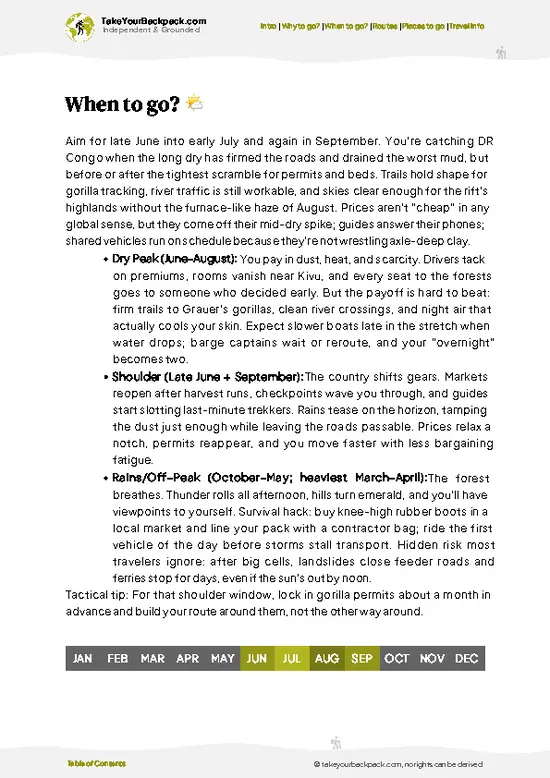
source: climatestotravel.comJANJanuary: not recommended for travelingFEBFebruary: not recommended for travelingMARMarch: not recommended for travelingAPRApril: not recommended for travelingMAYMay: excellent for travelingJUNJune: not recommended for travelingJULJuly: not recommended for travelingAUGAugust: not recommended for travelingSEPSeptember: not recommended for travelingOCTOctober: not recommended for travelingNOVNovember: not recommended for travelingDECDecember: not recommended for traveling

✈️ The backpacker research shortcutDR Congo Travel Guide

An offline-friendly backpacking guide with optimized travel routes, ranked highlights, transport advice, and the best areas to stay.
example page 0 from our offline Travel Guide for Democratic Republic of the Congo
example page 1 from our offline Travel Guide for Democratic Republic of the Congo
example page 2 from our offline Travel Guide for Democratic Republic of the Congo
example page 3 from our offline Travel Guide for Democratic Republic of the Congo
example page 4 from our offline Travel Guide for Democratic Republic of the Congo
example page 5 from our offline Travel Guide for Democratic Republic of the Congo
example page 6 from our offline Travel Guide for Democratic Republic of the Congo
example page 7 from our offline Travel Guide for Democratic Republic of the Congo
The digital guide (372 pages) contains:
95 highlights, ranked by travel appeal
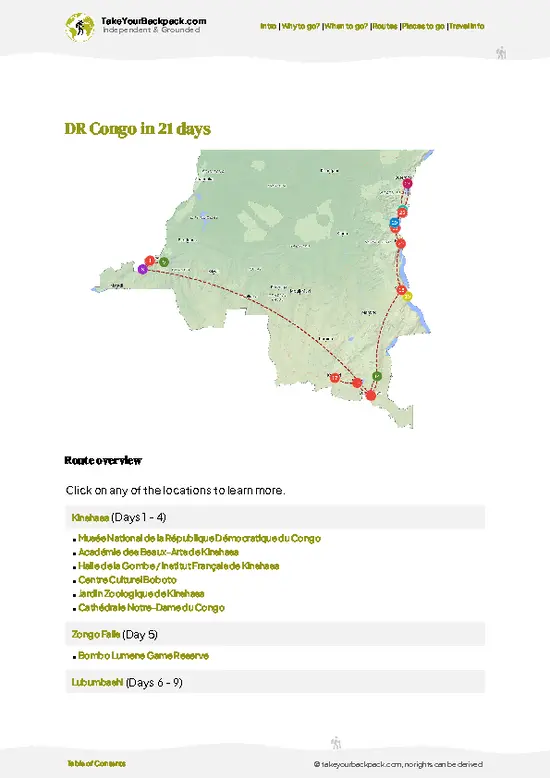
Optimized 7, 14 & 21-day travel routes
Cities, national parks, landmarks, beaches
How to get around
Offline-friendly for travel without Wi-Fi
👉 Click to see all 30+ guide features

📅 Plan smarter in minutes, not weeks
Month by month travel advice
Festivals & national holidays
Budget expectations

🗺️ Go to the right places, skip the overrated ones
Honest pros & cons of destinations
Top hikes, parks & viewpoints
Lesser-known places most travelers miss
Clear “worth it vs skip it” guidance

🛏️ Travel smoothly without rookie mistakes
Best areas to stay
Transport systems explained simply
Common scams & safety advice
SIM cards, money & practical tips

🌍 Understand the country, not just visit it
Culture & traditions
52 Essential phrases & customs
Festivals worth planning around
Traveler-friendly historical context
Insights that make places more meaningful

📱 Built for real travel conditions
Fully downloadable PDF
Works completely offline
Optimized for phone use
Useful in remote areas & buses
Everything in one place
Save weeks of stressful planning
Get instant access to your full guide. 30‑day money-back guarantee.
+ Add another guide for just R$44.25

By proceeding you agree to our terms.
Sent to your inbox immediately after payment • 100% Secure Checkout
Best Backpacking Travel Advisor 2025 tourism awardBest Backpacking
Travel Advisor
2025
What others say about Take Your Backpack Guides:
⭐⭐⭐⭐⭐
Fantastic, amazing amount of information!
⭐⭐⭐⭐⭐
My goodness this is amazing, it's what I've been looking for hats off too you!
⭐⭐⭐⭐⭐
I think this is absolutely BRILLIANT
⭐⭐⭐⭐
Very complete and informative. It's still missing places, but I gotta to commend you
⭐⭐⭐⭐⭐
This is truly amazing, thank you, can't wait to explore it with my kids!
⭐⭐⭐⭐⭐
Awesome resource, thank you!
⭐⭐⭐⭐⭐
This is amazing! Can't wait to explore the ones I haven't seen
⭐⭐⭐⭐
I love this! Well done, great idea.
⭐⭐⭐⭐⭐
Thanks for taking the time to make this gem!
⭐⭐⭐⭐⭐
This might be the best website I've ever seen.
⭐⭐⭐⭐⭐
Congratulations, and thank you so much for your work; it's incredibly valuable.
⭐⭐⭐⭐
In all seriousness I think you did a great job pointing out the important spots
⭐⭐⭐⭐⭐
10/10 very good
⭐⭐⭐⭐⭐
As someone who's only just starting to visit regularly this is awesome, thank you.
⭐⭐⭐⭐
Thank you very much! I'm going to visit my dad, it's going to be very useful!
⭐⭐⭐⭐⭐
This is really cool! We'll be travelling for the first time and this definitely come in handy.
⭐⭐⭐⭐⭐
You are now our minister of culture, congratulations 👨‍💼
⭐⭐⭐⭐⭐
Just wanted to tell you that this is a pearl! Going to follow your recommendations.
⭐⭐⭐⭐⭐
This is so cool. I'll definitely be using the resource for my travels soon.
⭐⭐⭐⭐⭐
This is very impressive! Good work.
⭐⭐⭐⭐⭐
This is an amazing and informative site. Very well done!

🛏️ Where to stay?Choosing the right base

For the Congo Biennale, focus your stay in Gombe. This lively neighborhood buzzes with energy, making it a hotspot for backpackers. You’ll find a mix of budget-friendly guesthouses and vibrant hostels where you can swap stories with fellow travelers.

Gombe is safe, with plenty of cafes and markets nearby, perfect for fueling up before a day of exploration. Plus, its proximity to the festival means you won’t waste time commuting.

Another option is Kinshasa’s central districts, where you can soak in local culture while keeping your budget intact. Just remember to stay aware of your surroundings, … read more 👉
For the Congo Biennale, focus your stay in Gombe. This lively neighborhood buzzes with energy, making it a hotspot for backpackers. You’ll find a mix of budget-friendly guesthouses and vibrant hostels where you can swap stories with fellow travelers.

Gombe is safe, with plenty of cafes and markets nearby, perfect for fueling up before a day of exploration. Plus, its proximity to the festival means you won’t waste time commuting.

Another option is Kinshasa’s central districts, where you can soak in local culture while keeping your budget intact. Just remember to stay aware of your surroundings, and you’ll preserve your energy for the festival’s unforgettable moments.

👛 Costs (as of 3 September 2026)How expensive it really is

The Congo Biennale in DR Congo is an exhilarating experience, but navigating the costs can be tricky. Here’s a breakdown to keep your budget intact while you soak in the art and culture.
  • Festival Tickets: Expect to pay around €10 to €30 for a general admission ticket. Special events or workshops may cost more, so check the schedule in advance to avoid surprises.
  • Accommodation: Options vary widely. Budget hostels start at about €10 per night, while mid-range hotels can range from €30 to €70. For a more comfortable stay, consider boutique hotels, which can go up to €150. Book early to secure the best rates.
  • Local Transport: Public transport is affordable. A bus ride costs around €0.50, while taxis can range from €5 to €15 depending on the distance. Always negotiate the fare beforehand to avoid
read more 👉
The Congo Biennale in DR Congo is an exhilarating experience, but navigating the costs can be tricky. Here’s a breakdown to keep your budget intact while you soak in the art and culture.
  • Festival Tickets: Expect to pay around €10 to €30 for a general admission ticket. Special events or workshops may cost more, so check the schedule in advance to avoid surprises.
  • Accommodation: Options vary widely. Budget hostels start at about €10 per night, while mid-range hotels can range from €30 to €70. For a more comfortable stay, consider boutique hotels, which can go up to €150. Book early to secure the best rates.
  • Local Transport: Public transport is affordable. A bus ride costs around €0.50, while taxis can range from €5 to €15 depending on the distance. Always negotiate the fare beforehand to avoid being overcharged.
  • Food & Drinks: Street food is a fantastic way to experience local flavors, with meals costing between €2 and €5. Dining in restaurants will set you back about €10 to €20 for a decent meal. Don’t forget to budget for drinks, which can add another €1 to €5 per beverage.
  • Miscellaneous Expenses: This includes souvenirs, tips, and any unexpected costs. Set aside around €20 to €50 for these extras. It’s wise to have a little cushion for spontaneous adventures or local experiences.

Being aware of these costs will help you navigate the festival without draining your energy or budget. Enjoy the journey!


source: congotourisme.org
⚠️ Prices can change and everyone travels differently, so take this as a rough guide. Hope it helps you plan your adventure!

🍲 FoodLocal Cuisine & Drinks

At the Congo Biennale, food and drink pulse with local flavor. Dive into moambe, a rich chicken stew, or savor fufu, a starchy staple that pairs perfectly with just about anything. Street stalls buzz with energy, serving up grilled fish and plantains that are crispy on the outside and soft within.

Don’t miss the chance to sip on malewa, a refreshing palm wine that captures the spirit of the festival.

Etiquette matters here; sharing is common, so don’t hesitate to offer a taste. Lines can be long, so bring cash—vendors often skip card payments. Serving sizes are generous, so pace yourself; you’ll want to try it all!

FAQCommon questions from travelers

Congo Biennale typically takes place every two years, usually around October or November, lasting about two weeks. The exact dates can vary depending on the edition and organization.
Attendance to Congo Biennale is generally free, as it is a public art festival aimed at promoting contemporary African art. However, some special events or exhibitions within the festival might have a small entrance fee, usually under 10 USD.
No, tickets are generally not required in advance for the main events of Congo Biennale. Visitors can attend most exhibitions and performances on a walk-in basis, but it is advisable to check for any specific events that might require prior registration.
⚠️ Things can change over time, so always validate details locally before you go.

Other Congolese festivals near Congo Biennale

Explore more nearby:


💡 Not sure where to go next?
Create a personalized itinerary for DR Congo including Congo Biennale and the places that fit your trip.

Generate my itinerary

👉 Discover all festivals

Or checkout all DR Congo has to offer (think cities, towns, villages, national parks, hikes, beaches, festivals)
Country photo of DR Congo

We 💚 feedbackParting advice and final tips

The DR Congo pulses with creativity during the Biennale. Expect raw energy and bold art that challenges norms. But watch your wallet; prices can spike unexpectedly. Embrace the chaos, and you’ll find moments that spark joy—like discovering a local artist who blows your mind.

✍️ Help improve this page!
The information on this page is based on in-depth research, insights shared by experienced travelers, and feedback from the local travel community in DR Congo. While every effort is made to keep the information accurate and current, conditions can change — so if you spot anything incorrect or outdated, please get in touch.


🙋‍♂️ Give feedback

👋 Meet the founderWho’s Behind Take Your Backpack?

Johan, backpacker and founder of TakeYourBackpackHi, I’m Johan (Netherlands 🇳🇱), the creator of TakeYourBackpack. Over the past decade, I’ve backpacked through 80+ countries across six continents, gaining extensive experience with independent travel, long-term trips, and overland routes.

This site is built on a combination of firsthand travel experience and carefully curated insights from other backpackers. Many guides are based on places I’ve personally visited, while others bring together tips, observations, and practical advice shared by trusted travelers I’ve met along the way.

The goal is to provide realistic, experience-driven guidance — not generic itineraries — so you can explore destinations with better context, clearer expectations, and more confidence.

Get full DR Congo guide •
Instant download • 95 highlights • Full Offline guide