×

DR Congo🇨🇩 | national parksLola ya BonoboBonobo sanctuary, forest enclosures, primate rehabilitation | things to do and best time to go

Explore Kahuzi-Biega National ParkExplore Maiko National Park

Backpacking in Lola ya Bonobo
👌 Worth visitingnational park ranked #10
By Johan Kruseman 🇳🇱 | Updated September 3, 2026

The first real fork in the road at Lola ya Bonobo is whether to visit independently or book through a local operator—this isn’t just about price, but about how much hassle you’re willing to absorb. Lola ya Bonobo sits just outside Kinshasa, DR Congo, and it’s not a national park in the classic sense, but a sanctuary for orphaned bonobos. For backpackers, the draw is raw: close-up primate encounters, forest trails, and a rare sense of purpose. But don’t expect sweeping wilderness or multi-day hikes—this is a managed reserve, not Virunga or Salonga. Entry fees are higher than you’d guess, public transport is patchy, and camping isn’t allowed. The upside? Fewer crowds, a focused mission, and a vibe that’s more grassroots than glossy. If you want wild, Virunga’s volcanoes and gorillas are the heavyweight; if you want heart and access, Lola delivers—just know what you’re signing up for.

Discover everything you want to know in the 📖 DR Congo Travel Guide.
Safety warning

The current risk level for DR Congo is high. Check the advice before going.


Get your DR Congo guide
95 ranked highlights, routes & tips, works offline (372 pages)
Loading the map 🌍
CLICK TO FILTER
cities
towns
landmarks
national parks
hikes
beaches
attractions
festivals
regions
SHOW COUNTRY’S BESTSHOW ALL

✨ Why go?
Ranked #10 national park in DR Congo
Why Lola ya Bonobo should be on your travel list

Backpackers flock to Lola ya Bonobo in the DR Congo for its unique blend of independent exploration and affordable options. The park is a haven for those who want to experience the wild without breaking the bank. Nearby, you’ll find budget camping and hostels that cater to the adventurous spirit, allowing you to stretch your funds while enjoying the lush surroundings.

The trail variety is another draw. Whether you’re up for a challenging hike or a leisurely stroll, there’s something for everyone. This flexibility makes it an excellent choice for self-guided travelers. You can wander at your own pace, soaking in the sights and sounds of the park without the constraints of a tour group.

However, be prepared for some logistical challenges. Trail markings can be sparse, so a good map or GPS … read more 👉
Backpackers flock to Lola ya Bonobo in the DR Congo for its unique blend of independent exploration and affordable options. The park is a haven for those who want to experience the wild without breaking the bank. Nearby, you’ll find budget camping and hostels that cater to the adventurous spirit, allowing you to stretch your funds while enjoying the lush surroundings.

The trail variety is another draw. Whether you’re up for a challenging hike or a leisurely stroll, there’s something for everyone. This flexibility makes it an excellent choice for self-guided travelers. You can wander at your own pace, soaking in the sights and sounds of the park without the constraints of a tour group.

However, be prepared for some logistical challenges. Trail markings can be sparse, so a good map or GPS is essential. With a little planning, you can avoid the pitfalls and fully enjoy the rich biodiversity and serene atmosphere that Lola ya Bonobo offers.
Want to include Lola ya Bonobo in your DR Congo route?
Create a personalized DR Congo itinerary that includes Lola ya Bonobo and the places that fit your trip — based on your travel style, budget, and available time. Get your route in seconds.

Generate my trip

💡 HighlightsDon't-miss highlights and experiences

  • Bonobo viewing and social groups — Watching these curious, peaceful apes interact is the whole point: you’ll see play, grooming, and their famously gentle social behavior up close in a semi-natural setting, which feels more like peeking into a family than a zoo exhibit.
  • Infant and rehabilitation sessions — The sanctuary cares for rescued babies and you’ll often catch feeding or enrichment sessions where tiny bonobos clamber on caretakers’ laps; it’s a rare chance to see juvenile play and the rehab process that prepares them for the forest.
  • Guided conservation talks — Short, on-site talks by local staff explain what drives bonobo rescue, rewilding efforts, and community programs; they’re honest, grassroots briefings that make the encounter meaningful rather than just cute photos.
  • Forest
read more 👉
  • Bonobo viewing and social groups — Watching these curious, peaceful apes interact is the whole point: you’ll see play, grooming, and their famously gentle social behavior up close in a semi-natural setting, which feels more like peeking into a family than a zoo exhibit.
  • Infant and rehabilitation sessions — The sanctuary cares for rescued babies and you’ll often catch feeding or enrichment sessions where tiny bonobos clamber on caretakers’ laps; it’s a rare chance to see juvenile play and the rehab process that prepares them for the forest.
  • Guided conservation talks — Short, on-site talks by local staff explain what drives bonobo rescue, rewilding efforts, and community programs; they’re honest, grassroots briefings that make the encounter meaningful rather than just cute photos.
  • Forest trails and habitat walks — The site sits in a patch of Congo forest, and gentle trails let you walk among native trees and listen to birds and insects — not hardcore hiking, but authentic forest atmosphere and good for slow wildlife watching.
  • Botanical diversity and medicinal plants — Guides point out local tree species and plants used by communities; if you care about ecology, these spots show how bonobos and people rely on the same plant resources.
  • Close-up enrichment demonstrations — Staff often set up puzzle feeders and enrichment items; seeing a bonobo figure out a toy or tool gives a real sense of their intelligence and personality.
  • Community and cultural connections — Visits usually include meeting the people behind the sanctuary — local keepers, vets, and educators — which highlights the human side of conservation and how local communities are part of the solution.
Spotted a mistake or missing something? Contact us.

🌤️ When to go?Weather, crowds, and seasonal trade-offs


  • Weather: The dry season from June to September is your best bet. Rainfall drops significantly, making trails less slippery and wildlife spotting easier. The wet season, from October to May, brings heavy rains that can turn paths into mud traps and limit access.

  • Temperature: Expect daytime highs around 25-28°C (77-82°F) year-round, with nights cooling to 18-20°C (64-68°F). The dry season feels more comfortable, as humidity drops, reducing that sticky, exhausting heat.

  • Daylight Hours: DR Congo sits near the equator, so daylight stays steady at about 12 hours daily. No drastic shifts, but plan hikes early to avoid midday heat and afternoon showers during the wet season.

  • Crowds: Lola ya Bonobo is off the beaten path, so crowds are minimal year-round. Still, visiting during the dry season
read more 👉

  • Weather: The dry season from June to September is your best bet. Rainfall drops significantly, making trails less slippery and wildlife spotting easier. The wet season, from October to May, brings heavy rains that can turn paths into mud traps and limit access.

  • Temperature: Expect daytime highs around 25-28°C (77-82°F) year-round, with nights cooling to 18-20°C (64-68°F). The dry season feels more comfortable, as humidity drops, reducing that sticky, exhausting heat.

  • Daylight Hours: DR Congo sits near the equator, so daylight stays steady at about 12 hours daily. No drastic shifts, but plan hikes early to avoid midday heat and afternoon showers during the wet season.

  • Crowds: Lola ya Bonobo is off the beaten path, so crowds are minimal year-round. Still, visiting during the dry season means more reliable access and a better chance to see active bonobos without the hassle of weather delays.

  • Seasonal Activities: The dry months favor trekking and wildlife observation. The wet season limits these activities and can close some trails, so plan accordingly to avoid wasted days.

  • Price Fluctuations: Prices for guides and accommodations tend to rise slightly during the dry season due to higher demand. However, the premium is worth it for smoother logistics and better wildlife encounters.


Pro-tip: Aim for the early dry season (June-July) to catch the best balance of weather, wildlife activity, and manageable prices—skip the soggy slog and save your energy for the bonobos.


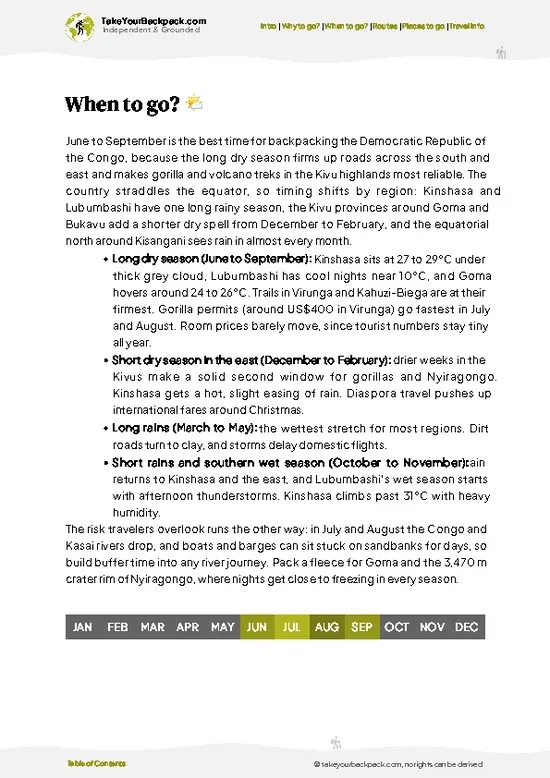
source: climatestotravel.comJANJanuary: fair for travelingFEBFebruary: fair for travelingMARMarch: fair for travelingAPRApril: fair for travelingMAYMay: fair for travelingJUNJune: excellent for travelingJULJuly: excellent for travelingAUGAugust: highly recommended for travelingSEPSeptember: highly recommended for travelingOCTOctober: fair for travelingNOVNovember: fair for travelingDECDecember: fair for traveling
when-to-go

✈️ The backpacker research shortcutDR Congo Travel Guide

An offline-friendly backpacking guide with optimized travel routes, ranked highlights, transport advice, and the best areas to stay.
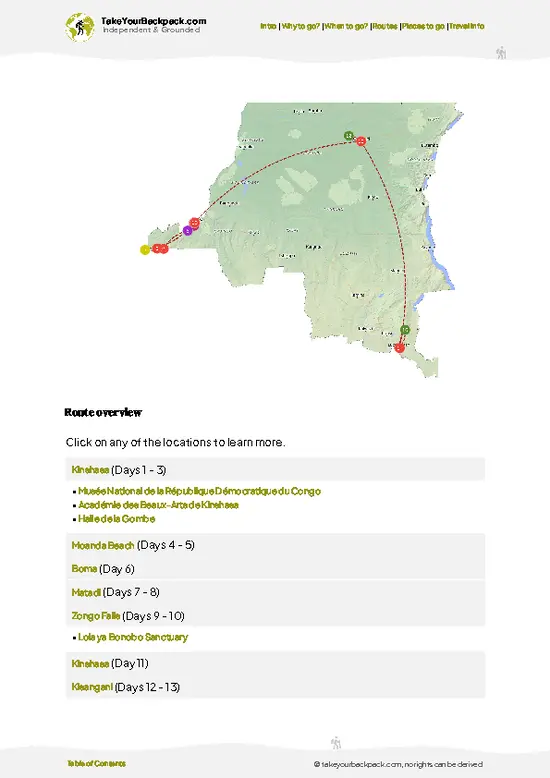
example page 0 from our offline Travel Guide for Democratic Republic of the Congo
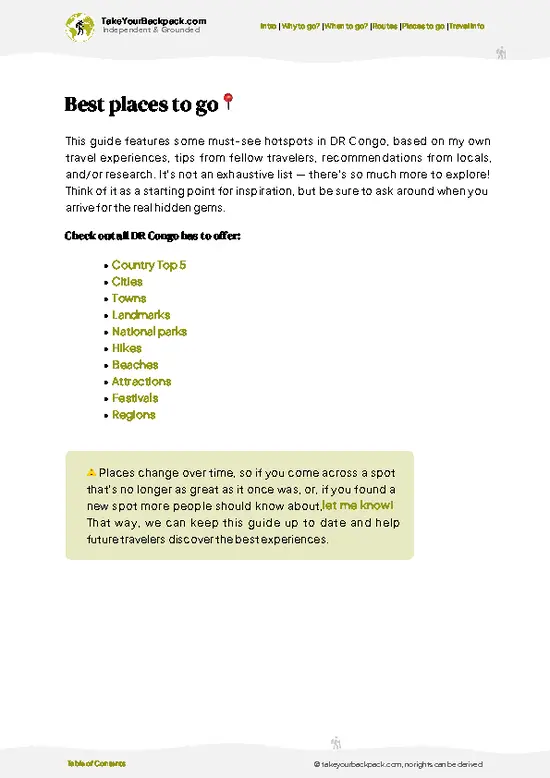
example page 1 from our offline Travel Guide for Democratic Republic of the Congo
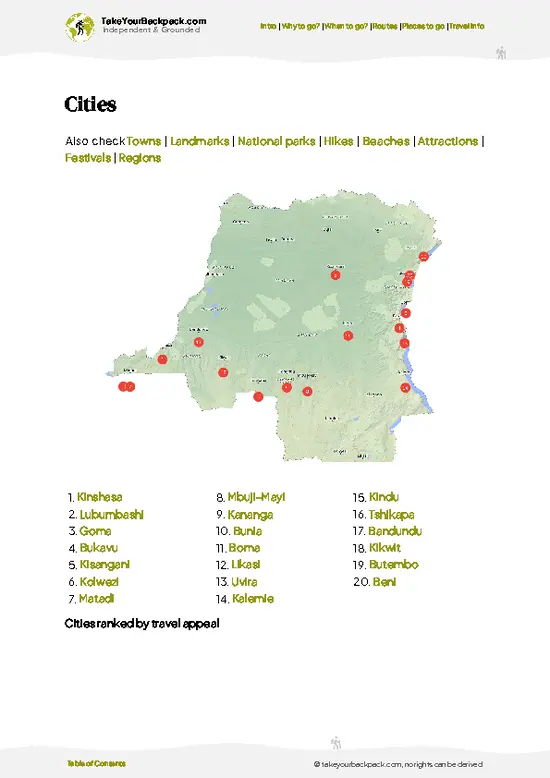
example page 2 from our offline Travel Guide for Democratic Republic of the Congo
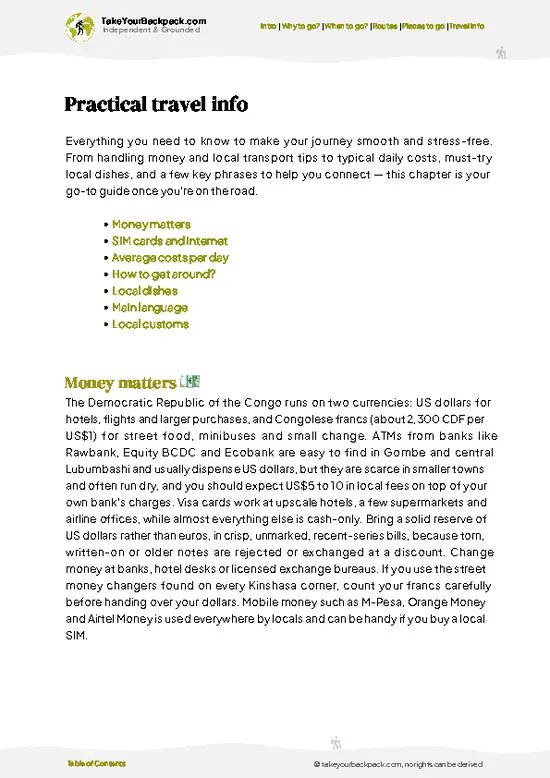
example page 3 from our offline Travel Guide for Democratic Republic of the Congo
example page 4 from our offline Travel Guide for Democratic Republic of the Congo
example page 5 from our offline Travel Guide for Democratic Republic of the Congo
example page 6 from our offline Travel Guide for Democratic Republic of the Congo
example page 7 from our offline Travel Guide for Democratic Republic of the Congo
The digital guide (372 pages) contains:
95 highlights, ranked by travel appeal
Optimized 7, 14 & 21-day travel routes
Cities, national parks, landmarks, beaches
How to get around
Offline-friendly for travel without Wi-Fi
👉 Click to see all 30+ guide features

📅 Plan smarter in minutes, not weeks
Month by month travel advice
Festivals & national holidays
Budget expectations

🗺️ Go to the right places, skip the overrated ones
Honest pros & cons of destinations
Top hikes, parks & viewpoints
Lesser-known places most travelers miss
Clear “worth it vs skip it” guidance

🛏️ Travel smoothly without rookie mistakes
Best areas to stay
Transport systems explained simply
Common scams & safety advice
SIM cards, money & practical tips

🌍 Understand the country, not just visit it
Culture & traditions
52 Essential phrases & customs
Festivals worth planning around
Traveler-friendly historical context
Insights that make places more meaningful

📱 Built for real travel conditions
Fully downloadable PDF
Works completely offline
Optimized for phone use
Useful in remote areas & buses
Everything in one place
Save weeks of stressful planning
Get instant access to your full guide. 30‑day money-back guarantee.
+ Add another guide for just US$7.80

By proceeding you agree to our terms.
Sent to your inbox immediately after payment • 100% Secure Checkout
Best Backpacking Travel Advisor 2025 tourism awardBest Backpacking
Travel Advisor
2025
What others say about Take Your Backpack Guides:
⭐⭐⭐⭐⭐
Fantastic, amazing amount of information!
⭐⭐⭐⭐⭐
My goodness this is amazing, it's what I've been looking for hats off too you!
⭐⭐⭐⭐⭐
I think this is absolutely BRILLIANT
⭐⭐⭐⭐
Very complete and informative. It's still missing places, but I gotta to commend you
⭐⭐⭐⭐⭐
This is truly amazing, thank you, can't wait to explore it with my kids!
⭐⭐⭐⭐⭐
Awesome resource, thank you!
⭐⭐⭐⭐⭐
This is amazing! Can't wait to explore the ones I haven't seen
⭐⭐⭐⭐
I love this! Well done, great idea.
⭐⭐⭐⭐⭐
Thanks for taking the time to make this gem!
⭐⭐⭐⭐⭐
This might be the best website I've ever seen.
⭐⭐⭐⭐⭐
Congratulations, and thank you so much for your work; it's incredibly valuable.
⭐⭐⭐⭐
In all seriousness I think you did a great job pointing out the important spots
⭐⭐⭐⭐⭐
10/10 very good
⭐⭐⭐⭐⭐
As someone who's only just starting to visit regularly this is awesome, thank you.
⭐⭐⭐⭐
Thank you very much! I'm going to visit my dad, it's going to be very useful!
⭐⭐⭐⭐⭐
This is really cool! We'll be travelling for the first time and this definitely come in handy.
⭐⭐⭐⭐⭐
You are now our minister of culture, congratulations 👨‍💼
⭐⭐⭐⭐⭐
Just wanted to tell you that this is a pearl! Going to follow your recommendations.
⭐⭐⭐⭐⭐
This is so cool. I'll definitely be using the resource for my travels soon.
⭐⭐⭐⭐⭐
This is very impressive! Good work.
⭐⭐⭐⭐⭐
This is an amazing and informative site. Very well done!

🛏️ Where to stay?Best areas and accommodation options

For backpackers heading to Lola ya Bonobo in DR Congo, accommodation options are limited but authentic. Inside the national park, you won’t find traditional hotels. Instead, the park offers basic lodges that provide a unique experience. Expect simple amenities, but the proximity to bonobos and the surrounding nature is worth it.

If you prefer more options, head to the nearby town of Kinshasa. It’s about a three-hour drive from the park. Here, you can find budget-friendly guesthouses and hostels that cater to backpackers. Look for places like Hotel Kimpwanza or the more rustic La Belle Époque. … read more 👉
For backpackers heading to Lola ya Bonobo in DR Congo, accommodation options are limited but authentic. Inside the national park, you won’t find traditional hotels. Instead, the park offers basic lodges that provide a unique experience. Expect simple amenities, but the proximity to bonobos and the surrounding nature is worth it.

If you prefer more options, head to the nearby town of Kinshasa. It’s about a three-hour drive from the park. Here, you can find budget-friendly guesthouses and hostels that cater to backpackers. Look for places like Hotel Kimpwanza or the more rustic La Belle Époque. Both offer a glimpse into local life and are great for meeting fellow travelers.

Be aware of transportation costs and availability; they can add up quickly. Hiring a local guide is often necessary for navigating both the park and the surrounding areas. This not only enhances your experience but also supports the local economy. Prioritize your budget for these essentials, so you can fully enjoy the moments that matter in this incredible part of the world.

👛 Costs (as of 3 September 2026)How expensive it really is

Visiting Lola ya Bonobo in DR Congo requires careful budgeting. Entry fees typically range from $10 to $20 per person. This fee grants access to the sanctuary and its educational programs.

Accommodation options vary widely. Basic lodges start around $30 per night, while more comfortable options can go up to $100. If you’re looking for a unique experience, consider eco-lodges, which may cost between $70 and $150.

Transportation is another key expense. A round-trip from Kinshasa to Lola ya Bonobo can cost between $100 and $200, depending on your mode of travel. Local transport options, like taxis or shared vehicles, are generally affordable but can add up.

Food is usually inexpensive. Expect to spend around $5 to $15 per meal, depending on whether you’re dining at local eateries or opting … read more 👉
Visiting Lola ya Bonobo in DR Congo requires careful budgeting. Entry fees typically range from $10 to $20 per person. This fee grants access to the sanctuary and its educational programs.

Accommodation options vary widely. Basic lodges start around $30 per night, while more comfortable options can go up to $100. If you’re looking for a unique experience, consider eco-lodges, which may cost between $70 and $150.

Transportation is another key expense. A round-trip from Kinshasa to Lola ya Bonobo can cost between $100 and $200, depending on your mode of travel. Local transport options, like taxis or shared vehicles, are generally affordable but can add up.

Food is usually inexpensive. Expect to spend around $5 to $15 per meal, depending on whether you’re dining at local eateries or opting for more upscale options.

Plan for additional costs. Guided tours can range from $50 to $100, depending on the length and inclusivity. Always factor in tips for guides and staff, as this is customary.

Budgeting wisely means you can focus on the experience rather than the expenses. Keep these figures in mind to avoid surprises and enjoy your time with the bonobos.


source: congotourisme.org
⚠️ Prices can change and everyone travels differently, so take this as a rough guide. Hope it helps you plan your adventure!

🥾 TrailsScenic routes and wildlife spotting in Lola ya Bonobo

Lola ya Bonobo is a hidden gem in the Democratic Republic of the Congo, perfect for those looking to escape the hustle and bustle. The park is primarily known for its efforts in bonobo conservation, but the hiking opportunities are equally rewarding. Picture lush rainforests, winding rivers, and the chance to spot some unique wildlife. The terrain varies from flat, easy paths to more rugged sections, so there’s something for everyone, whether you’re a newbie or a seasoned hiker.

One of the standout trails is the Bonobo Trail. Here are the details:
  • Length: 6 km
  • Estimated Duration: 2-3 hours
  • Difficulty
read more 👉
Lola ya Bonobo is a hidden gem in the Democratic Republic of the Congo, perfect for those looking to escape the hustle and bustle. The park is primarily known for its efforts in bonobo conservation, but the hiking opportunities are equally rewarding. Picture lush rainforests, winding rivers, and the chance to spot some unique wildlife. The terrain varies from flat, easy paths to more rugged sections, so there’s something for everyone, whether you’re a newbie or a seasoned hiker.

One of the standout trails is the Bonobo Trail. Here are the details:
  • Length: 6 km
  • Estimated Duration: 2-3 hours
  • Difficulty Level: Moderate
  • Key Features: Chance to see bonobos in their natural habitat, diverse plant life, and scenic views of the forest canopy.
  • Terrain: Mostly flat with some rocky sections; good hiking shoes recommended.

Reaching the park can be an adventure in itself. Public transport options are limited but available, usually involving a combination of taxis and local buses from Kinshasa. It’s best to check local schedules ahead of time. The park isn’t overly crowded, which is a blessing; you’ll likely have some peace and quiet while soaking in nature. Entrance fees are fairly reasonable, but it’s a good idea to have cash on hand, as card payments might not be accepted. Just remember to pack your sense of adventure!
⚠️ Hiking info can sometimes be outdated or inaccurate. Before you hit the trail, check the latest conditions with locals. If you do spot anything that's off, I'd love to hear from you, so I can update it for fellow travelers.

🛡️ SafetyScams, Hazards, and Annoyances

Lola ya Bonobo in DR Congo is generally a well-managed park, but there are practical realities to consider. The weather can shift quickly; pack for both sun and rain. Trails can be muddy and uneven, so sturdy footwear is essential. Navigation is straightforward, but keep an eye on trail markers to avoid getting sidetracked.

Wildlife encounters, especially with bonobos, are a highlight. Maintain a respectful distance and avoid feeding them. This keeps both you and the animals safe.

Be mindful of your pace. The terrain can be steep in places, and taking breaks will help you conserve energy. Lastly, consider timing your visit; the dry season offers the best conditions for hiking. With the right preparation, you can focus on enjoying the experience without unnecessary stress.

FAQCommon questions from travelers

1 day is sufficient to visit Lola ya Bonobo. The sanctuary visit typically lasts around 2 to 3 hours, allowing time to see the bonobos and learn about conservation efforts.
No, you cannot visit Lola ya Bonobo without a car. The sanctuary is located about 15 kilometers from Kinshasa, and public transport options are limited and unreliable, so arranging private transport or a tour is necessary.
Yes, there is an entrance fee to visit Lola ya Bonobo. The fee is approximately 10 USD per person, which supports the sanctuary's conservation and care programs.
⚠️ Things can change over time, so always validate details locally before you go.

Other Congolese national parks near Lola ya Bonobo

Explore more nearby:


💡 Not sure where to go next?
Create a personalized itinerary for DR Congo including Lola ya Bonobo and the places that fit your trip.

Generate my itinerary

👉 Discover all national parks

Or checkout all DR Congo has to offer (think cities, towns, villages, national parks, hikes, beaches, festivals)
Country photo of DR Congo

We 💚 feedbackIs it worth it?

Lola ya Bonobo is a breath of fresh air in the heart of the DR Congo. The vibe is relaxed, with a genuine commitment to conservation that feels palpable. You’ll be surprised by how close you can get to the bonobos; their playful antics are a highlight. Just a heads-up: the roads can be rough, so budget extra time for travel. Embrace the journey—it’s all part of the experience. Enjoy the moments that matter.

✍️ Help improve this page!
The information on this page is based on in-depth research, insights shared by experienced travelers, and feedback from the local travel community in DR Congo. While every effort is made to keep the information accurate and current, conditions can change — so if you spot anything incorrect or outdated, please get in touch.


🙋‍♂️ Give feedback

👋 Meet the founderWho’s Behind Take Your Backpack?

Johan, backpacker and founder of TakeYourBackpackHi, I’m Johan (Netherlands 🇳🇱), the creator of TakeYourBackpack. Over the past decade, I’ve backpacked through 80+ countries across six continents, gaining extensive experience with independent travel, long-term trips, and overland routes.

This site is built on a combination of firsthand travel experience and carefully curated insights from other backpackers. Many guides are based on places I’ve personally visited, while others bring together tips, observations, and practical advice shared by trusted travelers I’ve met along the way.

The goal is to provide realistic, experience-driven guidance — not generic itineraries — so you can explore destinations with better context, clearer expectations, and more confidence.

Get full DR Congo guide •
Instant download • 95 highlights • Full Offline guide