
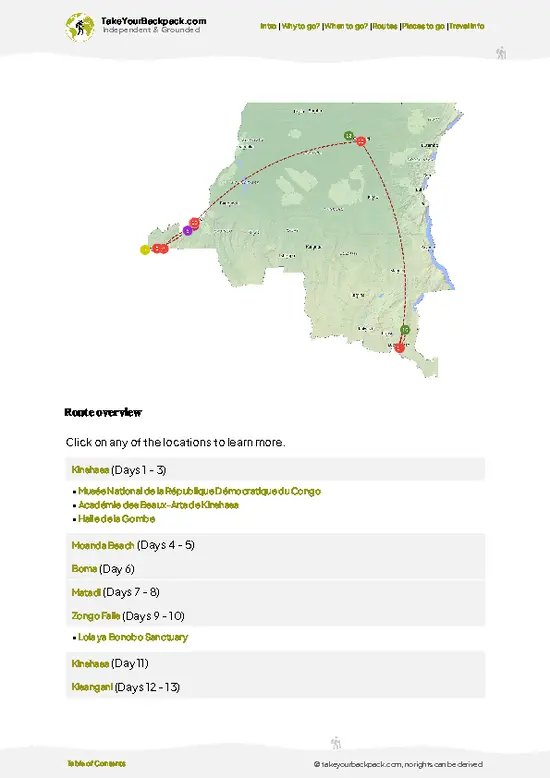
- Primary lowland Congo rainforest — Towering, multilayered forest that feels genuinely old-growth: giant buttressed trees, dense understory and a sense that you’re walking through one of the planet’s great, intact rainforests. The scale and humidity make every hike feel immersive.
- Tshuapa River corridors — Slow meandering waterways lined with flooded forest and riverine life. Travel by dugout canoe to see kingfishers, otters, and the shifting colors of the forest reflected in the water—the river is also the easiest way to access the deeper parts of the park.
- Seasonally flooded swamp forests — Patches of inundated forest and marshes that open up at certain times of year, creating unique habitats for fish, reptiles and waterbirds. The contrast between dry-track jungle and flooded forest is
- Primary lowland Congo rainforest — Towering, multilayered forest that feels genuinely old-growth: giant buttressed trees, dense understory and a sense that you’re walking through one of the planet’s great, intact rainforests. The scale and humidity make every hike feel immersive.
- Tshuapa River corridors — Slow meandering waterways lined with flooded forest and riverine life. Travel by dugout canoe to see kingfishers, otters, and the shifting colors of the forest reflected in the water—the river is also the easiest way to access the deeper parts of the park.
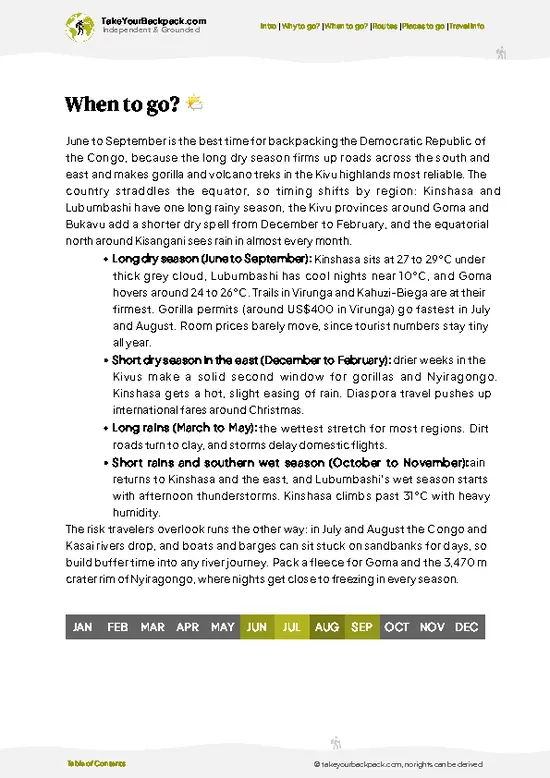
- Seasonally flooded swamp forests — Patches of inundated forest and marshes that open up at certain times of year, creating unique habitats for fish, reptiles and waterbirds. The contrast between dry-track jungle and flooded forest is striking and photogenic.
- Primate hotspots — The park is part of the larger Congo Basin primate landscape, supporting diverse monkey species and other forest apes. With luck and a good local guide you’ll encounter mixed-species troops and hear the booming calls that give the forest character.
- Exceptional birdlife — Dense canopy specialists, secretive understorey species and seasonal migrants make Tshuapa a fine place for birding. Look for forest raptors, hornbills and colourful passerines that favor the thick, dark interior.
- Rugged hiking and bush routes — There aren’t groomed trails like in Western parks; instead you get narrow footpaths and swamp crossings that reward effort with solitude and wildlife. Days can be muddy and slow, but the payoff is raw, off-grid exploration.
- Forest-edge villages and traditional knowledge — Local communities live on the park’s edge and often guide hunters’ trails, seasonal fishing spots and plant uses. A guided walk with a local tracker gives access to animal signs and practical knowledge you won’t read in a guidebook.
Spotted a mistake or missing something? Contact us.

 Best Backpacking

 Hi, I’m Johan (Netherlands 🇳🇱), the creator of TakeYourBackpack. Over the past 3 decades, I’ve backpacked through 90+ countries across six continents, gaining extensive experience with independent travel, long-term trips, and overland routes.