×

Dominican Republic🇩🇴 | attractionsAlcázar de Colón Museumstone palace, colonial artifacts, riverside plaza | things to do and best time to go

Explore Zona Colonial (historic district and museums clusterExplore Museo de las Casas Reales

Backpacking in Alcázar de Colón Museum
🏆 Top pickattraction ranked #3
By Johan Kruseman 🇳🇱 | Updated May 16, 2026

Here’s what nobody tells you until you’re sweating in the midday sun: the Alcázar de Colón Museum is one of the rare, air-conditioned sanctuaries in Santo Domingo’s Colonial Zone. That’s not just a comfort perk—it’s a tactical advantage when you’re backpacking through the Dominican Republic’s capital and the Caribbean humidity is melting your resolve. The Alcázar sits right in the heart of the Zona Colonial, a UNESCO World Heritage site that’s more than just a pretty backdrop for selfies. Here’s the straight talk: the museum itself is a stone mansion built by Diego Columbus, son of Christopher, and it’s got the kind of heavy, lived-in history you can feel in your bones. Yes, you’ll share the halls with school groups and cruise ship crowds, and the entry fee is steeper than most local museums. But if you want to actually stand inside the oldest European palace in the Americas—touching the bones of colonial power instead of just reading about it—this is where the Dominican story gets real, not just Instagrammable.

Discover everything you want to know in the 📖 Dominican Republic Travel Guide.
Loading the map 🌍
CLICK TO FILTER
cities
towns
landmarks
national parks
hikes
beaches
attractions
festivals
regions
SHOW COUNTRY’S BESTSHOW ALL

✨ Why go?
Ranked #3 attraction in Dominican Republic
What makes it a must-see attraction

The Alcázar de Colón Museum isn’t just another pretty colonial building plastered across your Instagram feed—it’s a heavyweight in the Dominican Republic’s story. Sure, it draws crowds, especially during peak hours, and yes, the entry fee isn’t dirt cheap for backpackers used to stretching every peso. But here’s the kicker: this place is the real deal. It’s the former residence of Diego Columbus, son of Christopher Columbus, and walking through its rooms is like stepping into the early 1500s, when the New World was still a wild, uncharted puzzle. The museum’s collection of period furniture, weaponry, and art isn’t just decoration—it’s a window into the clash of cultures and the birth of a nation.

For backpackers grinding through the Caribbean circuit, the Alcázar is a milestone that anchors … read more 👉
The Alcázar de Colón Museum isn’t just another pretty colonial building plastered across your Instagram feed—it’s a heavyweight in the Dominican Republic’s story. Sure, it draws crowds, especially during peak hours, and yes, the entry fee isn’t dirt cheap for backpackers used to stretching every peso. But here’s the kicker: this place is the real deal. It’s the former residence of Diego Columbus, son of Christopher Columbus, and walking through its rooms is like stepping into the early 1500s, when the New World was still a wild, uncharted puzzle. The museum’s collection of period furniture, weaponry, and art isn’t just decoration—it’s a window into the clash of cultures and the birth of a nation.

For backpackers grinding through the Caribbean circuit, the Alcázar is a milestone that anchors your journey in history, not just beaches and parties. It’s a chance to slow down and absorb the layers beneath the postcard-perfect Santo Domingo. The adrenaline here isn’t from thrills but from the weight of history pressing in, the kind that makes you rethink the stories you thought you knew. If you’re after something that punches above its tourist reputation, this museum delivers.
Want to include Alcázar de Colón Museum in your Dominican Republic route?
Create a personalized Dominican Republic itinerary that includes Alcázar de Colón Museum and the places that fit your trip — based on your travel style, budget, and available time. Get your route in seconds.

Generate my trip

💡 HighlightsPlaces and moments you shouldn't skip

The Grand Courtyard
Forget the filtered photos—this is where the drama of colonial power actually played out. The courtyard is not just a pretty backdrop; it’s the original stage for diplomatic receptions, royal decrees, and the kind of political intrigue that would make a Netflix producer drool. Stand here and you’re in the literal footsteps of Diego Columbus (yes, the son of that Columbus), plus a parade of conquistadors, clerics, and schemers. The stone under your boots is the same stone that heard the first whispers of New World conquest.


The Audience Hall
This is the room where the big decisions happened—treaties, punishments, alliances, and betrayals. The hall is heavy with the kind of atmosphere you can’t fake: thick walls, high ceilings, and a sense of history that’s more than just … read more 👉
The Grand Courtyard
Forget the filtered photos—this is where the drama of colonial power actually played out. The courtyard is not just a pretty backdrop; it’s the original stage for diplomatic receptions, royal decrees, and the kind of political intrigue that would make a Netflix producer drool. Stand here and you’re in the literal footsteps of Diego Columbus (yes, the son of that Columbus), plus a parade of conquistadors, clerics, and schemers. The stone under your boots is the same stone that heard the first whispers of New World conquest.


The Audience Hall
This is the room where the big decisions happened—treaties, punishments, alliances, and betrayals. The hall is heavy with the kind of atmosphere you can’t fake: thick walls, high ceilings, and a sense of history that’s more than just a plaque. The furniture is a mix of original and period-accurate pieces, so you get a real sense of how power was performed. It’s not a sterile museum setup; it’s a living reminder that the Caribbean’s fate was shaped right here, in real time.


The View from the Balcony
Skip the selfie-stick crowd and actually look out over the Ozama River. This is the vantage point that made the Alcázar the nerve center of the Spanish Americas. You can see why they picked this spot: the river was the lifeline for trade, defense, and escape. The breeze is real, the view is strategic, and it’s easy to imagine ships arriving with gold, rumors, or trouble. No filter needed—this is the kind of panorama that shaped empires.


The Armory Collection
This isn’t just a lineup of rusty swords and helmets. The armory here is a crash course in colonial warfare, with weapons and armor that actually saw action. You’ll see Spanish rapiers, Moorish-influenced helmets, and even some indigenous Taino artifacts. It’s a rare, tactile look at the collision of cultures—less about glory, more about survival. If you want to understand how the conquest was won (and lost), this room tells the story in steel and scars.


The Chapel
Small, shadowy, and easy to miss—don’t. The chapel is where the Columbus family prayed for victory, forgiveness, or maybe just a little luck. The altarpiece is a genuine artifact, and the space feels intimate in a way that’s almost unsettling. It’s a reminder that for all the gold and power, everyone here was still hedging their bets with the divine. If you want a break from the grandiosity, this is where you’ll find the human side of history.


The Nighttime Illumination
If you can, swing by after dark. The Alcázar lit up at night is a different beast—less postcard, more fortress. The crowds thin out, the stone glows, and the whole place feels like it’s holding its breath. It’s the best time to wander, imagine, and let the ghosts of history have the last word. No influencer hype—just you, the moonlight, and five centuries of stories.
Spotted a mistake or missing something? Contact us.
🌤️ When to go?Choosing the right time of year


  • Weather: The Dominican Republic is tropical, so expect heat and humidity year-round. From June to November, the rainy season kicks in with frequent afternoon showers and a risk of hurricanes, which can dampen your visit to Alcázar de Colón. The drier months from December to April offer more reliable sunshine and less humidity, making exploration more comfortable.

  • Temperature: Daytime highs hover between 28-32°C (82-90°F) most of the year. Nights cool down to around 20-24°C (68-75°F), which is pleasant for evening strolls. The cooler, drier months of January and February feel less sticky, which is a big plus when you’re wandering through a historic museum.

  • Daylight Hours: Daylight is fairly consistent, roughly 11 to 12 hours daily. Longer daylight in spring and summer means more time to explore,
read more 👉

  • Weather: The Dominican Republic is tropical, so expect heat and humidity year-round. From June to November, the rainy season kicks in with frequent afternoon showers and a risk of hurricanes, which can dampen your visit to Alcázar de Colón. The drier months from December to April offer more reliable sunshine and less humidity, making exploration more comfortable.

  • Temperature: Daytime highs hover between 28-32°C (82-90°F) most of the year. Nights cool down to around 20-24°C (68-75°F), which is pleasant for evening strolls. The cooler, drier months of January and February feel less sticky, which is a big plus when you’re wandering through a historic museum.

  • Daylight Hours: Daylight is fairly consistent, roughly 11 to 12 hours daily. Longer daylight in spring and summer means more time to explore, but also more intense sun—pack sunscreen and a hat.

  • Crowds: Tourist traffic peaks from December through April, especially around Christmas and Easter. Alcázar de Colón gets busy, so expect lines and less room to breathe. The off-season months, particularly May and October, offer a quieter, more intimate experience.

  • Seasonal Activities: Cultural events and festivals in Santo Domingo often cluster around the dry season, adding layers of local color but also crowds. Visiting outside these times means fewer distractions and a more focused dive into the museum’s history.

  • Price Fluctuations: Accommodation and flights spike during the high season (December to April). Museum entry fees stay stable, but overall trip costs rise. Traveling in the shoulder months like November or May can save you serious cash without sacrificing much in experience.


Pro-tip: Aim for late April or early November—weather’s decent, crowds thin, and prices dip. You’ll get the Alcázar de Colón experience with room to breathe and your wallet intact.


source: climatestotravel.comJANJanuary: highly recommended for travelingFEBFebruary: highly recommended for travelingMARMarch: highly recommended for travelingAPRApril: highly recommended for travelingMAYMay: highly recommended for travelingJUNJune: fair for travelingJULJuly: fair for travelingAUGAugust: fair for travelingSEPSeptember: fair for travelingOCTOctober: good for travelingNOVNovember: highly recommended for travelingDECDecember: highly recommended for traveling
dominican-republic-attraction-alcazar-de-colon-museum
© Google |

✈️ The backpacker research shortcutDominican Republic Travel Guide

An offline-friendly backpacking guide with optimized travel routes, ranked highlights, transport advice, and the best areas to stay.
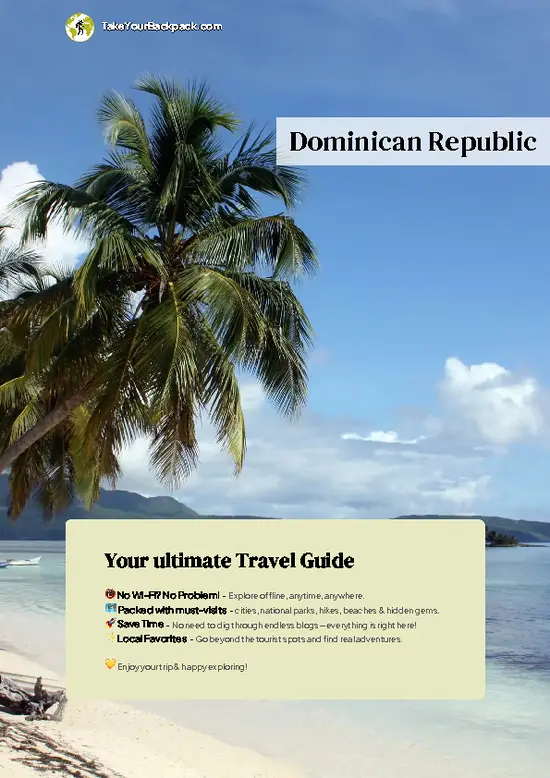
example page 0 from our offline Travel Guide for Dominican Republic
example page 1 from our offline Travel Guide for Dominican Republic
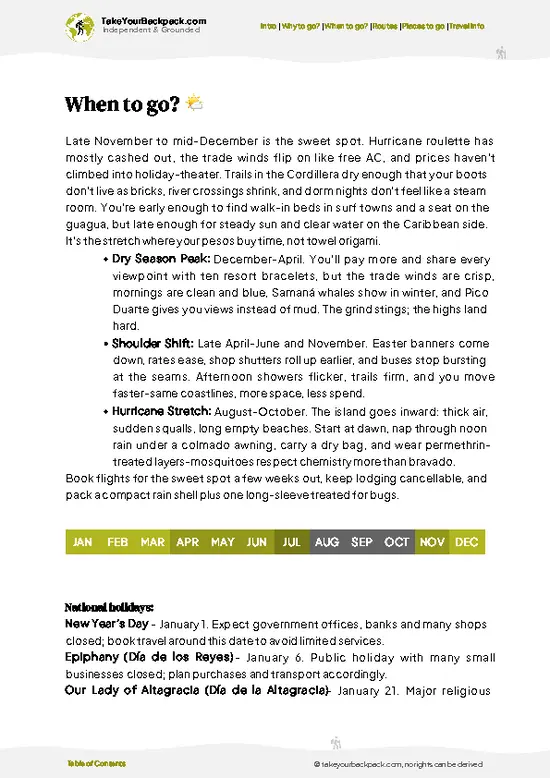
example page 2 from our offline Travel Guide for Dominican Republic
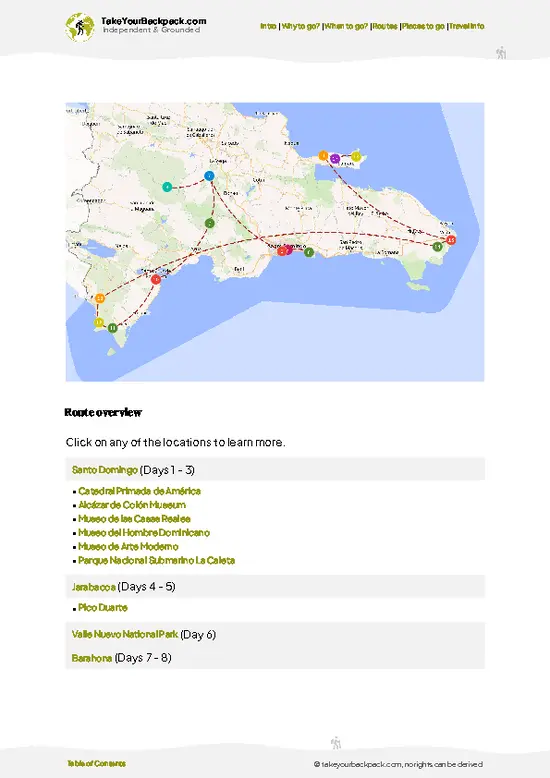
example page 3 from our offline Travel Guide for Dominican Republic
example page 4 from our offline Travel Guide for Dominican Republic
example page 5 from our offline Travel Guide for Dominican Republic
example page 6 from our offline Travel Guide for Dominican Republic
example page 7 from our offline Travel Guide for Dominican Republic
The digital guide (431 pages) contains:
119 highlights, ranked by travel appeal
Optimized 5, 10 & 15-day travel routes
Cities, national parks, landmarks, beaches
How to get around
Offline-friendly for travel without Wi-Fi
👉 Click to see all 30+ guide features

📅 Plan smarter in minutes, not weeks
Month by month travel advice
Festivals & national holidays
Budget expectations

🗺️ Go to the right places, skip the overrated ones
Honest pros & cons of destinations
Top hikes, parks & viewpoints
Lesser-known places most travelers miss
Clear “worth it vs skip it” guidance

🛏️ Travel smoothly without rookie mistakes
Best areas to stay
Transport systems explained simply
Common scams & safety advice
SIM cards, money & practical tips

🌍 Understand the country, not just visit it
Culture & traditions
52 Essential phrases & customs
Festivals worth planning around
Traveler-friendly historical context
Insights that make places more meaningful

📱 Built for real travel conditions
Fully downloadable PDF
Works completely offline
Optimized for phone use
Useful in remote areas & buses
Everything in one place
Save weeks of stressful planning
Get instant access to your full guide. 30‑day money-back guarantee.


By proceeding you agree to our terms.
Sent to your inbox immediately after payment • 100% Secure Checkout
Best Backpacking Travel Advisor 2025 tourism awardBest Backpacking
Travel Advisor
2025
What others say about Take Your Backpack Guides:
⭐⭐⭐⭐⭐
Fantastic, amazing amount of information!
⭐⭐⭐⭐⭐
My goodness this is amazing, it's what I've been looking for hats off too you!
⭐⭐⭐⭐⭐
I think this is absolutely BRILLIANT
⭐⭐⭐⭐
Very complete and informative. It's still missing places, but I gotta to commend you
⭐⭐⭐⭐⭐
This is truly amazing, thank you, can't wait to explore it with my kids!
⭐⭐⭐⭐⭐
Awesome resource, thank you!
⭐⭐⭐⭐⭐
This is amazing! Can't wait to explore the ones I haven't seen
⭐⭐⭐⭐
I love this! Well done, great idea.
⭐⭐⭐⭐⭐
Thanks for taking the time to make this gem!
⭐⭐⭐⭐⭐
This might be the best website I've ever seen.
⭐⭐⭐⭐⭐
Congratulations, and thank you so much for your work; it's incredibly valuable.
⭐⭐⭐⭐
In all seriousness I think you did a great job pointing out the important spots
⭐⭐⭐⭐⭐
10/10 very good
⭐⭐⭐⭐⭐
As someone who's only just starting to visit regularly this is awesome, thank you.
⭐⭐⭐⭐
Thank you very much! I'm going to visit my dad, it's going to be very useful!
⭐⭐⭐⭐⭐
This is really cool! We'll be travelling for the first time and this definitely come in handy.
⭐⭐⭐⭐⭐
You are now our minister of culture, congratulations 👨‍💼
⭐⭐⭐⭐⭐
Just wanted to tell you that this is a pearl! Going to follow your recommendations.
⭐⭐⭐⭐⭐
This is so cool. I'll definitely be using the resource for my travels soon.
⭐⭐⭐⭐⭐
This is very impressive! Good work.
⭐⭐⭐⭐⭐
This is an amazing and informative site. Very well done!

🛏️ Where to stay?Where staying makes the most sense

The Alcázar de Colón Museum sits smack in the heart of Santo Domingo’s Colonial Zone, a place that’s both a magnet for tourists and a living, breathing neighborhood. If you’re chasing the Instagram-perfect cobblestone streets and pastel facades, expect crowds. This isn’t a secret hideaway; it’s the epicenter of history and culture in the city. But here’s the kicker: the real magic isn’t just in the museum itself—it’s in the pulse of the Colonial Zone after hours, when the day-trippers fade and the locals take over.

For backpackers, the best places to stay are right inside or just on the edges … read more 👉
The Alcázar de Colón Museum sits smack in the heart of Santo Domingo’s Colonial Zone, a place that’s both a magnet for tourists and a living, breathing neighborhood. If you’re chasing the Instagram-perfect cobblestone streets and pastel facades, expect crowds. This isn’t a secret hideaway; it’s the epicenter of history and culture in the city. But here’s the kicker: the real magic isn’t just in the museum itself—it’s in the pulse of the Colonial Zone after hours, when the day-trippers fade and the locals take over.

For backpackers, the best places to stay are right inside or just on the edges of this Colonial Zone. This area is safe, walkable, and packed with social spots where you can meet other travelers without feeling like you’re stuck in a tourist bubble. You’ll find a mix of budget guesthouses, hostels, and small inns that cater to solo adventurers looking for a genuine vibe, not just a cheap bed. Staying here means you’re steps away from the Alcázar, but also close to lively plazas, street food vendors, and bars where the real stories unfold.

If you stray too far, you lose that electric mix of history and nightlife. Too close, and you might get swallowed by tourist crowds during the day. The sweet spot is this neighborhood’s edges—close enough to soak in the history, far enough to catch the local rhythm. That’s where the Alcázar stops being just a museum and starts being part of your story.

👛 Costs (as of 25 July 2025)Money, prices, and spending tips

As of the most recent estimates, the Alcázar de Colón Museum in Santo Domingo charges an entrance fee ranging from RD$100 to RD$200, depending on the visitor's age and status. Additional costs may apply for guided tours.

source: visitdominicanrepublic.org
⚠️ Prices can change and everyone travels differently, so take this as a rough guide. Hope it helps you plan your adventure!

Other Dominican attractions near Alcázar de Colón Museum

Explore more nearby:


💡 Not sure where to go next?
Create a personalized itinerary for Dominican Republic including Alcázar de Colón Museum and the places that fit your trip.

Generate my itinerary

👉 Discover all attractions

Or checkout all Dominican Republic has to offer (think cities, towns, villages, national parks, hikes, beaches, festivals)
Country photo of Dominican Republic

We 💚 feedbackIs it worth it?

The Alcázar de Colón isn’t some quiet, untouched relic—you’ll share the space with groups snapping selfies and school tours buzzing through. But here’s the kicker: beyond the crowd, the real draw is how the place feels like a time capsule of colonial ambition and brutal power plays. The furniture, the creaky wooden floors, even the courtyard—each corner whispers stories you won’t get from a guidebook. If you can tune out the noise, you’ll find a raw, gritty slice of history that sticks with you long after you leave.

✍️ Help improve this page!
The information on this page is based on in-depth research, insights shared by experienced travelers, and feedback from the local travel community in Dominican Republic. While every effort is made to keep the information accurate and current, conditions can change — so if you spot anything incorrect or outdated, please get in touch.


🙋‍♂️ Give feedback

👋 Meet the founderWho’s Behind Take Your Backpack?

Johan, backpacker and founder of TakeYourBackpackHi, I’m Johan (Netherlands 🇳🇱), the creator of TakeYourBackpack. Over the past decade, I’ve backpacked through 80+ countries across six continents, gaining extensive experience with independent travel, long-term trips, and overland routes.

This site is built on a combination of firsthand travel experience and carefully curated insights from other backpackers. Many guides are based on places I’ve personally visited, while others bring together tips, observations, and practical advice shared by trusted travelers I’ve met along the way.

The goal is to provide realistic, experience-driven guidance — not generic itineraries — so you can explore destinations with better context, clearer expectations, and more confidence.

Get full country guide •
Instant download • 119 highlights • Full Offline guide