×

Dominican Republic🇩🇴 | national parksArmando Bermúdez National ParkPico Duarte trek, La Compartición camp, pine forest, mule trails | things to do and best time to go

Explore Sendero de la Cueva de los IndiosExplore Parque Nacional José del Carmen Ramírez

Backpacking in Armando Bermúdez
👍 Recommendednational park ranked #10
By Johan Kruseman 🇳🇱 | Updated October 20, 2026

Your thighs are screaming on the third hour of a muddy climb through pine and cloud forest, and a mule train plods past with someone’s groceries, entirely unbothered. That’s Armando Bermúdez National Park, in the north of the Dominican Republic’s Cordillera Central, on the flank of Pico Duarte. Good: cool air, rivers you can drink beside after filtering, Hispaniolan pine forest, and the Caribbean’s highest summit. Bad: you need a guide, a permit, and knees that forgive. Wildlife is more about birdsong than sightings, and crowds stay thin outside holiday weekends. The reward is a campsite where you wake to frost on your tent and a rooster-proof silence at La Compartición.

Discover everything you want to know in the 📖 Dominican Republic Travel Guide.


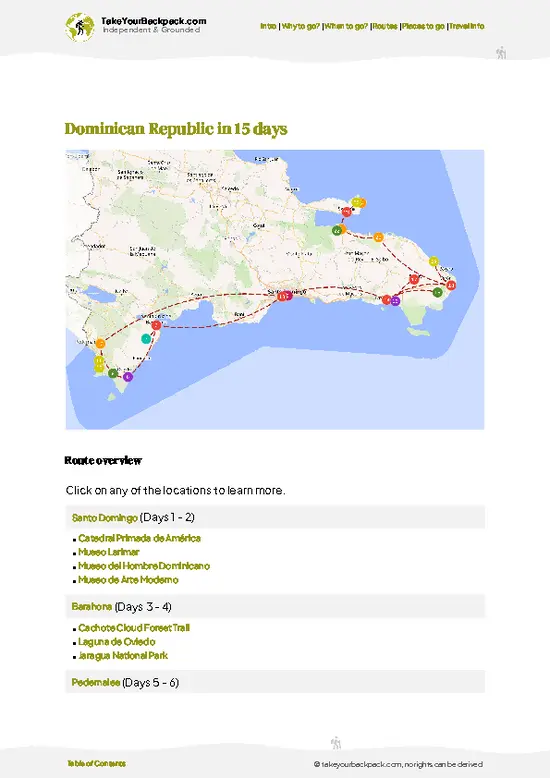
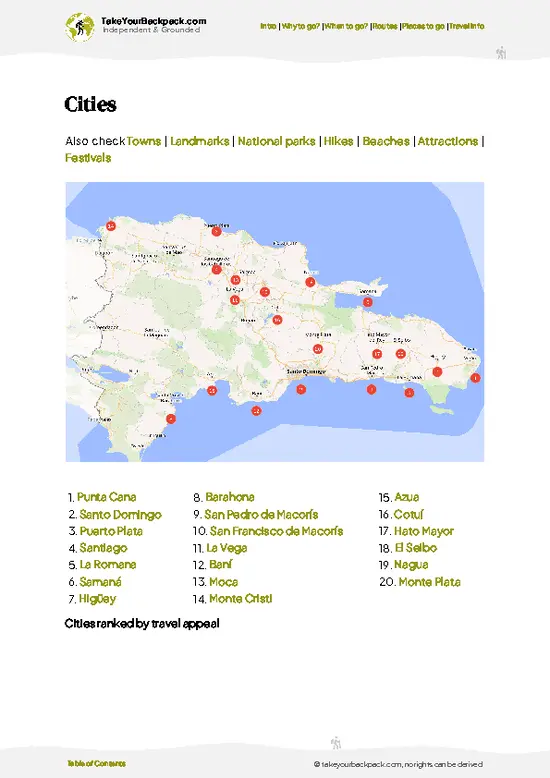
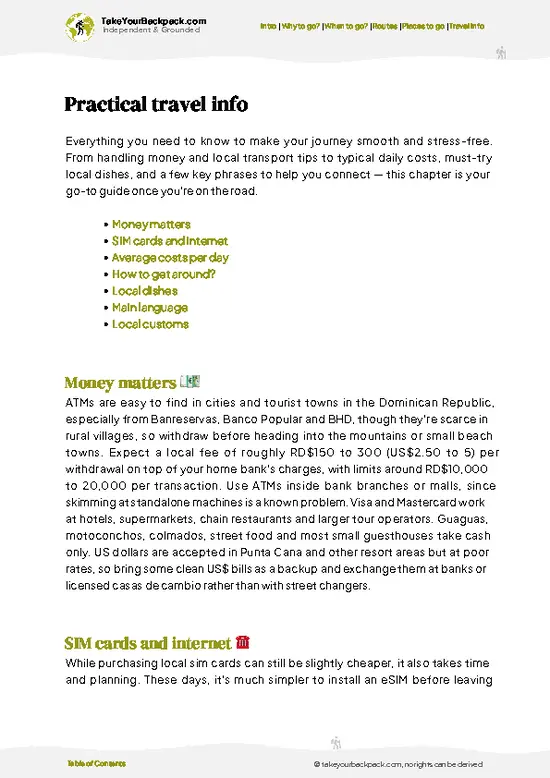
example page 0 from our offline Travel Guide for Dominican Republic
example page 1 from our offline Travel Guide for Dominican Republic
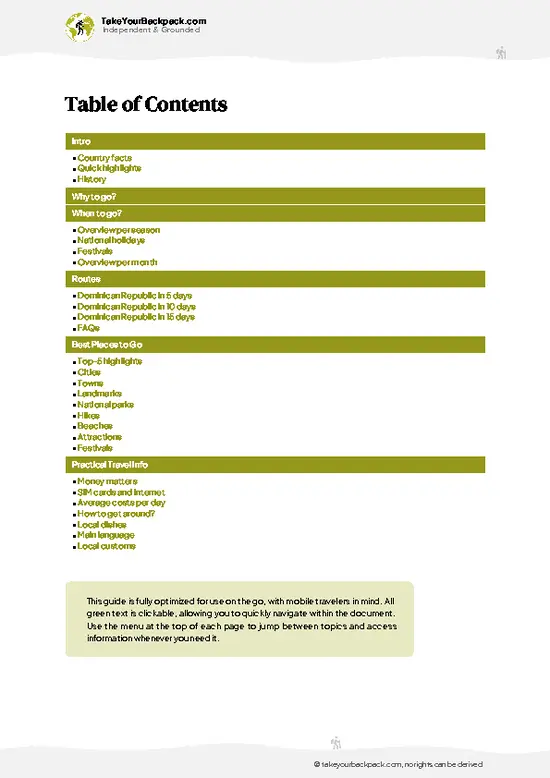
example page 2 from our offline Travel Guide for Dominican Republic
example page 3 from our offline Travel Guide for Dominican Republic
example page 4 from our offline Travel Guide for Dominican Republic
example page 5 from our offline Travel Guide for Dominican Republic
example page 6 from our offline Travel Guide for Dominican Republic
example page 7 from our offline Travel Guide for Dominican Republic
Loading the map 🌍
CLICK TO FILTER
cities
towns
landmarks
national parks
hikes
beaches
attractions
festivals
SHOW COUNTRY’S BESTSHOW ALL

✨ Why go?
Ranked #10 national park in Dominican Republic
The unique appeal for travelers

Armando Bermúdez National Park is the gateway to the standard route up Pico Duarte, and that single objective is why most backpackers come. Nothing else in the Caribbean tops it at about 3,098 meters, and you earn it on foot, over several days, with no road shortcut. Camping is the whole model here: you sleep in basic ranger shelters and tent areas along the trail, so lodging costs stay low and the days stay simple. The park suits self-reliant hikers who don’t need tour packaging, though the mandatory local guide and mule handler mean you travel in a small team rather than alone. That makes it friendlier than it sounds. You carry little, eat food cooked by your crew, and spend evenings by a fire at altitude where the nights drop close to freezing. Expect a real expedition feel, with ordinary logistics.

💡 HighlightsDon't-miss highlights and experiences

  1. Pico Duarte summit: The highest point in the Caribbean, reached at dawn after an overnight camp, with views across the Cordillera Central when the cloud lets you see.
  2. La Ciénaga trailhead: The usual start of the hike, a farming hamlet where guides, mules and permits come together, and where you get your first look at the ridgeline.
  3. La Compartición: The classic overnight camp in a pine-ringed clearing, cold enough at night to make a sleeping bag feel like a good decision.
  4. Valle de Tetero: A high grassy savanna of meadow and scattered pines, with an open feel unlike the forest below it.
  5. Los Tablones: A stretch of cloud forest and rocky trail with a camp used on the route, where mist threads between the trees.
  6. Río Mendoza and Yaque del Norte headwaters: Clear mountain streams that feed the country’s
… read more 👉
  1. Pico Duarte summit: The highest point in the Caribbean, reached at dawn after an overnight camp, with views across the Cordillera Central when the cloud lets you see.
  2. La Ciénaga trailhead: The usual start of the hike, a farming hamlet where guides, mules and permits come together, and where you get your first look at the ridgeline.
  3. La Compartición: The classic overnight camp in a pine-ringed clearing, cold enough at night to make a sleeping bag feel like a good decision.
  4. Valle de Tetero: A high grassy savanna of meadow and scattered pines, with an open feel unlike the forest below it.
  5. Los Tablones: A stretch of cloud forest and rocky trail with a camp used on the route, where mist threads between the trees.
  6. Río Mendoza and Yaque del Norte headwaters: Clear mountain streams that feed the country’s longest river, good for filling bottles (treated) and cooling your feet.
  7. Hispaniolan pine forest: Tall native pine that dominates the upper slopes, home to birds such as the Hispaniolan trogon and the palmchat’s higher-country neighbors.
Wandering the streams and pine forest along the trail costs nothing beyond the park entry you already pay for the hike.
Spotted a mistake or missing something? Contact us.

Things to do near Armando Bermúdez National Park

Ratings based on Tripadvisor reviews. When you book through this link, you support our work at no extra cost to you.

🌤️ When to go?Best time to explore Armando Bermúdez

  • December to March: Dry, stable weather makes the Pico Duarte summit push most reliable. Days in the valleys run 20-27°C (68-81°F), while nights at La Compartición and the summit can drop to 0-5°C (32-41°F), with frost possible.
  • April to June: Afternoon showers build, trails turn muddy, but crowds thin. Expect 15-26°C (59-79°F) at mid-elevation.
  • July to October: Hottest and wettest, with hurricane-season storms and swollen rivers. Temperatures reach 28°C (82°F) low down, and trails can be closed.
  • Holidays and weekends: Christmas, New Year and Semana Santa fill guide and mule slots, and prices rise. Daylight runs roughly 11 to 13.5 hours.
Book guides at least a week ahead for January to March, and aim for a midweek start.

source: climatestotravel.comJANJanuary: excellent for travelingFEBFebruary: excellent for travelingMARMarch: highly recommended for travelingAPRApril: highly recommended for travelingMAYMay: fair for travelingJUNJune: below average for travelingJULJuly: below average for travelingAUGAugust: below average for travelingSEPSeptember: below average for travelingOCTOctober: fair for travelingNOVNovember: fair for travelingDECDecember: excellent for traveling
when-to-go

✈️ The backpacker research shortcutDominican Republic Travel Guide

An offline-friendly backpacking guide with optimized travel routes, ranked highlights, transport advice, and the best areas to stay.
example page 0 from our offline Travel Guide for Dominican Republic
example page 1 from our offline Travel Guide for Dominican Republic
example page 2 from our offline Travel Guide for Dominican Republic
example page 3 from our offline Travel Guide for Dominican Republic
example page 4 from our offline Travel Guide for Dominican Republic
example page 5 from our offline Travel Guide for Dominican Republic
example page 6 from our offline Travel Guide for Dominican Republic
example page 7 from our offline Travel Guide for Dominican Republic
The digital guide (336 pages) contains:
✅ 112 highlights, ranked by travel appeal
✅ Optimized 5, 10 & 15-day travel routes
✅ Cities, national parks, landmarks, beaches
✅ How to get around
✅ Offline-friendly for travel without Wi-Fi
👉 Click to see all 30+ guide features

📅 Plan smarter in minutes, not weeks
✅ Month by month travel advice
✅ Festivals & national holidays
✅ Budget expectations

🗺️ Go to the right places, skip the overrated ones
✅ Honest pros & cons of destinations
✅ Top hikes, parks & viewpoints
✅ Lesser-known places most travelers miss
✅ Clear “worth it vs skip it” guidance

🛏️ Travel smoothly without rookie mistakes
✅ Best areas to stay
✅ Transport systems explained simply
✅ Common scams & safety advice
✅ SIM cards, money & practical tips

🌍 Understand the country, not just visit it
✅ Culture & traditions
✅ 52 Essential phrases & customs
✅ Festivals worth planning around
✅ Traveler-friendly historical context
✅ Insights that make places more meaningful

📱 Built for real travel conditions
✅ Fully downloadable PDF
✅ Works completely offline
✅ Optimized for phone use
✅ Useful in remote areas & buses
✅ Everything in one place
Stop searching, start planning
Get instant access to your full guide. 30‑day money-back guarantee.
+ Add another guide for just

By proceeding you agree to our terms.
Sent to your inbox immediately after payment • 100% Secure Checkout
Best Backpacking Travel Advisor 2025 tourism awardBest Backpacking
Travel Advisor
2025
What others say about Take Your Backpack Guides:
⭐⭐⭐⭐⭐
Fantastic, amazing amount of information!
⭐⭐⭐⭐⭐
My goodness this is amazing, it's what I've been looking for hats off too you!
⭐⭐⭐⭐⭐
I think this is absolutely BRILLIANT
⭐⭐⭐⭐
Very complete and informative. It's still missing places, but I gotta to commend you
⭐⭐⭐⭐⭐
This is truly amazing, thank you, can't wait to explore it with my kids!
⭐⭐⭐⭐⭐
Awesome resource, thank you!
⭐⭐⭐⭐⭐
This is amazing! Can't wait to explore the ones I haven't seen
⭐⭐⭐⭐
I love this! Well done, great idea.
⭐⭐⭐⭐⭐
Thanks for taking the time to make this gem!
⭐⭐⭐⭐⭐
This might be the best website I've ever seen.
⭐⭐⭐⭐⭐
Congratulations, and thank you so much for your work; it's incredibly valuable.
⭐⭐⭐⭐
In all seriousness I think you did a great job pointing out the important spots
⭐⭐⭐⭐⭐
10/10 very good
⭐⭐⭐⭐⭐
As someone who's only just starting to visit regularly this is awesome, thank you.
⭐⭐⭐⭐
Thank you very much! I'm going to visit my dad, it's going to be very useful!
⭐⭐⭐⭐⭐
This is really cool! We'll be travelling for the first time and this definitely come in handy.
⭐⭐⭐⭐⭐
You are now our minister of culture, congratulations 👨‍💼
⭐⭐⭐⭐⭐
Just wanted to tell you that this is a pearl! Going to follow your recommendations.
⭐⭐⭐⭐⭐
This is so cool. I'll definitely be using the resource for my travels soon.
⭐⭐⭐⭐⭐
This is very impressive! Good work.
⭐⭐⭐⭐⭐
This is an amazing and informative site. Very well done!

🛏️ Where to stay?Best areas to stay in Dominican Republic

Nothing comfortable exists inside Armando Bermúdez National Park, so most backpackers sleep in Jarabacoa, the main base, about 1.5 hours by road from the La Ciénaga trailhead. Jarabacoa has hostels and guesthouses at roughly US$15 to 40 a night, plus cafes and agencies that arrange guides, mules and permits. Closer to the trail, La Ciénaga village has simple family-run cabins and rooms at about US$15 to 30, handy for a pre-dawn start. Inside the park, the only options are basic ranger-run shelters and camping at La Compartición, Aguita Fría and Los Tablones, typically US$5 to 10 per person. Bring … read more 👉
Nothing comfortable exists inside Armando Bermúdez National Park, so most backpackers sleep in Jarabacoa, the main base, about 1.5 hours by road from the La Ciénaga trailhead. Jarabacoa has hostels and guesthouses at roughly US$15 to 40 a night, plus cafes and agencies that arrange guides, mules and permits. Closer to the trail, La Ciénaga village has simple family-run cabins and rooms at about US$15 to 30, handy for a pre-dawn start. Inside the park, the only options are basic ranger-run shelters and camping at La Compartición, Aguita Fría and Los Tablones, typically US$5 to 10 per person. Bring a warm sleeping bag, because nights are cold. The alternative approach is from San Juan de la Maguana on the Las Lagunas route, which has more remote lodging. Constanza, a highland town with simple hotels, also works as a base for the Valle Nuevo side.

👛 Costs (as of 20 October 2026)Money, prices, and spending tips

Armando Bermúdez National Park costs around US$63 to 130 per person per day for a typical Pico Duarte trek, with the total below based on high-season rates.
CategoryBudget RangeLocal Reality
Entrance feeUS$3 to 5Paid at the ranger post; foreign visitors pay more than locals.
GuideUS$20 to 30Mandatory, charged per day and often split among the group.
Mule and muleteerUS$20 to 30Optional for carrying gear, priced per animal per day.
AccommodationUS$5 to 30Camping or shelters are cheapest; Jarabacoa guesthouses cost more.
Food and suppliesUS$10 to 20Meals are often arranged through the guide; stock up in Jarabacoa.
Local transportUS$5 to 15Shared taxis or motorcycle rides to La Ciénaga from Jarabacoa.
Total Daily BudgetUS$63 to 130Mid-range estimate of about US$95 per person per day.
⚠️ Prices can change and everyone travels differently, so take this as a rough guide. Hope it helps you plan your adventure!

🥾 TrailsTrail guide for Armando Bermúdez national park

Armando Bermúdez National Park offers a small number of serious multiday routes rather than casual loops, and all of them need a guide arranged through the park authorities.
  • La Ciénaga route to Pico Duarte: The most popular approach, roughly 23 km one way, usually done in 2 to 3 days up and down. Difficult, with steep climbs, mud after rain, and long days at altitude. Terrain moves from farmland to pine forest to open savanna and cloud forest.
  • Mata Grande route: A longer, quieter alternative from the north side, typically 3 to 4 days. Difficult, with fewer hikers, more remote camps and sustained
… read more 👉
Armando Bermúdez National Park offers a small number of serious multiday routes rather than casual loops, and all of them need a guide arranged through the park authorities.
  • La Ciénaga route to Pico Duarte: The most popular approach, roughly 23 km one way, usually done in 2 to 3 days up and down. Difficult, with steep climbs, mud after rain, and long days at altitude. Terrain moves from farmland to pine forest to open savanna and cloud forest.
  • Mata Grande route: A longer, quieter alternative from the north side, typically 3 to 4 days. Difficult, with fewer hikers, more remote camps and sustained climbing.
  • Short trailhead walks: Easy day outings around La Ciénaga and the Yaque del Norte valley, a few hours on dirt tracks past farms and river crossings.
  • Wildlife: Expect birdlife most of all, including the Hispaniolan woodpecker and the endemic palm crow in lower forest. Large mammals are rare.
  • Weather: Nights at the top can drop to near freezing, so bring warm layers and rain protection.
Reaching the park without a vehicle takes effort: public transport gets you to the town of Jarabacoa, and from there you arrange a local pickup or a hired truck for the rough road to La Ciénaga. Crowds stay modest most of the year, though Semana Santa and long weekends fill the camps. An entrance fee applies, paid in local currency at the ranger post, and your guide and mule fees are separate.
⚠️ Hiking info can sometimes be outdated or inaccurate. Before you hit the trail, check the latest conditions with locals. If you do spot anything that's off, I'd love to hear from you, so I can update it for fellow travelers.

🛡️ SafetyStaying Safe: What Travelers Should Know

Armando Bermúdez is straightforward and well managed, but the real challenge is the cold and the length. The standard route is roughly 23 km (14 miles) each way from La Ciénaga, with steady climbs to over 3,000 meters (9,800 feet), so pace yourself and drink often. Nights near the summit can fall near freezing, and rain turns the clay paths slick, so pack a proper jacket, a rain shell and waterproof boots. Entry requires a registered guide, which keeps navigation simple. Rivers rise quickly after heavy rain, so wait rather than force a crossing. There is no dangerous wildlife, though mules have right of way on narrow stretches. Carry out all trash and keep fires to designated spots.

FAQTraveler FAQ

Plan on 2 to 3 days for Armando Bermúdez National Park if you want to reach Pico Duarte, at 3,098 meters the highest peak in the Caribbean. The usual route from La Ciénaga covers roughly 23 km each way, with nights at La Compartición. Fit hikers do a fast 2-day push, while 3 days allows a relaxed summit and descent.
Armando Bermúdez National Park is reachable without a car, though the final stretch needs local transport. Buses run from Santo Domingo to Jarabacoa in about 2.5 to 3 hours, and from there a shared taxi or motorcycle covers the roughly 1.5-hour trip to La Ciénaga. Many hikers hire a pickup through their guide for about US$15 to 40.
Armando Bermúdez National Park charges an entrance fee, roughly US$3 to 5 for foreigners, paid at the ranger station in La Ciénaga. A registered guide is mandatory for Pico Duarte and typically costs US$20 to 30 per day. Arrange permits through the park office or a Jarabacoa agency, ideally a few days ahead in peak season.
⚠️ Things can change over time, so always validate details locally before you go.

Other Dominican national parks near Armando Bermúdez

Explore more nearby:


💡 Not sure where to go next?
Create a personalized itinerary for Dominican Republic including Armando Bermúdez and the places that fit your trip.

Generate my itinerary

👉 Discover all national parks

Or checkout all Dominican Republic has to offer (think cities, towns, villages, national parks, hikes, beaches, festivals)
Country photo of Dominican Republic

We 💚 feedbackIs it worth it?

Armando Bermúdez National Park rewards stubborn, cheerful hikers who like earning a view and don’t mind sleeping cold. If that’s you, go. Pack a proper sleeping bag and a rain shell, and hire your guide through the park office early, because summit dawns book up on holiday weekends.

✍️ Help improve this page!
The information on this page is based on in-depth research, insights shared by experienced travelers, and feedback from the local travel community in Dominican Republic. While every effort is made to keep the information accurate and current, conditions can change — so if you spot anything incorrect or outdated, please get in touch.


🙋‍♂️ Give feedback

👋 Meet the founderWho’s Behind Take Your Backpack?

Johan, backpacker and founder of TakeYourBackpackHi, I’m Johan (Netherlands 🇳🇱), the creator of TakeYourBackpack. Over the past 3 decades, I’ve backpacked through 90+ countries across six continents, gaining extensive experience with independent travel, long-term trips, and overland routes.

This site is built on a combination of firsthand travel experience and carefully curated insights from other backpackers. Many guides are based on places I’ve personally visited, while others bring together tips, observations, and practical advice shared by trusted travelers I’ve met along the way.

The goal is to provide realistic, experience-driven guidance — not generic itineraries — so you can explore destinations with better context, clearer expectations, and more confidence.