×

Dominican Republic🇩🇴 | best national parksDiscover the 10 Best national parks Across Dominican Republic

Dominican Republic has more than a dozen national parks, and they do not behave like a matched set. The southwest is dry cactus country where the roads thin out and a rented truck earns its fee. The north coast mixes mangroves, caves and limestone with easy guagua access. The Cordillera Central is cool, steep and occasionally cold enough to surprise people who packed only flip-flops. Entry fees are modest, but guides are often mandatory, so the real bill appears at the trailhead. Independent travel is very doable, though it rewards anyone who can wave down a motoconcho without panic. Crowds cluster near resorts and vanish everywhere else.

By Johan Kruseman 🇳🇱 | Updated October 20, 2026
Explore the best hikes in Dominican Republic

Why go?Key Factors That Shape the Experience

Dominican Republic packs an absurd range of terrain into an island it shares with Haiti: the highest peak in the Caribbean, below-sea-level desert, rainforest, mangrove swamp and coral-fringed coast, all within a few hours of each other by road. That compression is the real selling point. A traveler can swap pine forest for cactus scrub in a single day without a flight.

The country also has an unusually early conservation history for the region, and protected areas cover a sizable share of the land and nearby sea. The catch is infrastructure. Trails are often lightly marked, local guides are frequently required rather than optional, and visitor centers range from tidy to theoretical. Public transport reaches town centers well, then abandons you at the park gate, where a motorbike taxi or … read more 👉
Dominican Republic packs an absurd range of terrain into an island it shares with Haiti: the highest peak in the Caribbean, below-sea-level desert, rainforest, mangrove swamp and coral-fringed coast, all within a few hours of each other by road. That compression is the real selling point. A traveler can swap pine forest for cactus scrub in a single day without a flight.

The country also has an unusually early conservation history for the region, and protected areas cover a sizable share of the land and nearby sea. The catch is infrastructure. Trails are often lightly marked, local guides are frequently required rather than optional, and visitor centers range from tidy to theoretical. Public transport reaches town centers well, then abandons you at the park gate, where a motorbike taxi or a negotiated ride fills the gap.

Before choosing the country for its parks, accept that this is not a self-guided hiking destination in the Alpine sense. Hiring a local guide is part of the deal, and it keeps money in nearby villages. Expect heat, humidity and mud depending on the region, and expect the beach next door to lure at least half your group away from the trail. Spanish helps enormously, even at a modest level.
Our Approach to Ranking
The list of best national parks in Dominican Republic is created based on landscapes, wildlife, adventure opportunities, facilities, and overall experience. If you feel a national park is missing in this list, please let us know.

When to go?Timing Your Visit for the Best Experience

Best months: The best months for national parks in Dominican Republic are December to April, when the dry season brings less mud, firmer trails and clearer views. Daytime temperatures along the coast sit around 28 to 32°C (82 to 90°F), which is warm but manageable before noon.
Shoulder and wet seasons: May to June and November are shoulder months. Showers arrive mostly as afternoon downpours, and prices at lodging drop noticeably compared with the winter high. From roughly July to October humidity peaks, rain gets heavier and hurricane season runs, with the greatest storm risk typically in August to October. Rivers rise, trails turn to slick clay, and boat or cave trips can be canceled with little notice.
Regional differences: The southwest is far drier than the rest of the country and can be … read more 👉
Best months: The best months for national parks in Dominican Republic are December to April, when the dry season brings less mud, firmer trails and clearer views. Daytime temperatures along the coast sit around 28 to 32°C (82 to 90°F), which is warm but manageable before noon.
Shoulder and wet seasons: May to June and November are shoulder months. Showers arrive mostly as afternoon downpours, and prices at lodging drop noticeably compared with the winter high. From roughly July to October humidity peaks, rain gets heavier and hurricane season runs, with the greatest storm risk typically in August to October. Rivers rise, trails turn to slick clay, and boat or cave trips can be canceled with little notice.
Regional differences: The southwest is far drier than the rest of the country and can be brutally hot, so start at dawn year-round. The north coast gets its rain mostly from November to January, which surprises people who assumed winter meant sunshine everywhere. In the Cordillera Central, nights at altitude can fall near freezing from December to February, so a real jacket is not optional.
Crowds and prices: Christmas through Easter is peak season, and Holy Week brings Dominican families to rivers and beaches in large numbers. Book rooms ahead then. Outside those weeks, parks are quiet and guides are easier to bargain with.

national park hoppingSuggested Travel Strategies

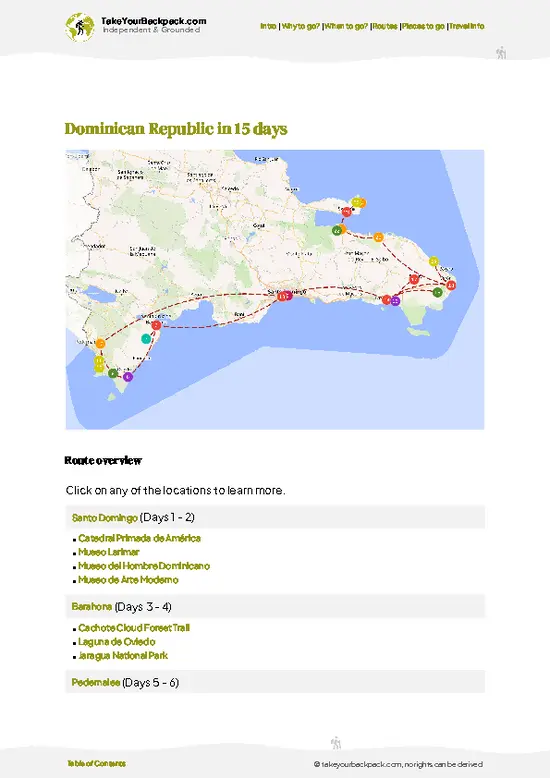
How long to allow: A trip combining several national parks in Dominican Republic needs 10 to 14 days for a comfortable pace, and a week if you accept fewer stops and more time in vehicles.
Grouping regions: The country divides into clusters that work well together. The north coast around Puerto Plata, Sosúa and Samaná links easily by road, and the Cordillera Central sits a few hours inland via Santiago, Jarabacoa or Constanza. The southwest, reached through Barahona, is a long way from everything else. A sensible direction is to start in Santo Domingo, the main transport hub, go north and into the mountains, then loop south and west before returning, or run the same loop in reverse.
Time per stop and between regions: Plan one to two days per park, and more if a summit or multi-day trek is the … read more 👉
How long to allow: A trip combining several national parks in Dominican Republic needs 10 to 14 days for a comfortable pace, and a week if you accept fewer stops and more time in vehicles.
Grouping regions: The country divides into clusters that work well together. The north coast around Puerto Plata, Sosúa and Samaná links easily by road, and the Cordillera Central sits a few hours inland via Santiago, Jarabacoa or Constanza. The southwest, reached through Barahona, is a long way from everything else. A sensible direction is to start in Santo Domingo, the main transport hub, go north and into the mountains, then loop south and west before returning, or run the same loop in reverse.
Time per stop and between regions: Plan one to two days per park, and more if a summit or multi-day trek is the point. Santo Domingo to Jarabacoa takes roughly 2.5 to 3.5 hours, Santiago to Puerto Plata about 1.5 to 2 hours, and Santo Domingo to Barahona 3.5 to 4.5 hours. Mountain roads are slower than the map implies.
Common planning mistakes: The classic error is cramming the south and north coasts into one weekend, which is mostly a bus ride with a view of the highway. Another is trusting a map’s drive time and ignoring traffic around Santo Domingo. Build in a slack day, book guides the evening before, and travel between regions in the morning, since afternoon rain and fading light both slow things down.

The ListMust-Visit national parks in Dominican Republic

1 Parque Nacional del Este

Cueva del Puente, Isla Saona, Bayahibe entrance, Taíno pictographs

Hike flat dry forest to a natural stone arch and painted Taíno caves, saving the Saona beaches for early or late hours.

dominican-republic-national-park-parque-nacional-del-este
© Google | Rinaldo Timpano

2 Los Haitises National Park

Karst islets, Taíno caves, mangrove kayaking, seabird islet

Cruise between rounded green limestone islets to caves with Taíno pictographs, then drift through mangroves where pelicans and frigatebirds roost.

dominican-republic-national-park-los-haitises-national-park
© Google | Malousek Miroslav

3 Jaragua National Park

Bahía de las Águilas, Laguna de Oviedo, thorn forest, Taíno cave art

Trek through cactus scrub to an empty curved beach, then add a flamingo lagoon and limestone caves holding Taíno rock art.

dominican-republic-national-park-jaragua-national-park
© Google | Ariandra Álvarez

4 Valle Nuevo National Park

Cordillera highlands, frosty meadows, Aguas Blancas falls, night skies

Drive a rutted mountain road to pine-ringed meadows where frost can crust the grass at dawn and a tiered waterfall falls through a gorge.

dominican-republic-national-park-valle-nuevo-national-park
© Google |

5 Sierra de Bahoruco National Park

Cloud forest, Hispaniolan trogon, pine ridges, Hoyo de Pelempito

Rise from thorn scrub through pine to dripping, orchid-hung cloud forest, with endemic birds at dawn and views toward Lake Enriquillo.

6 Isla Cabritos National Park

Lake Enriquillo, below sea level, rhinoceros iguanas, cactus island

Cross a salt lake by boat from La Azufrada to a cactus-covered island where iguanas patrol the trails and crocodiles drift offshore.

7 Monte Cristi National Park

El Morro headland, Siete Hermanos cays, desert scrub, mangrove boat trips

Climb a flat-topped headland for views over cactus forest and salt flats, then boat out to quiet cays with clear snorkeling water.

8 Parque Nacional Submarino La Caleta

Hickory wreck, scuttled ship, reef dives, underwater park

Dive or snorkel a short boat ride offshore to a deliberately sunk ship, now a reef frequented by parrotfish and barracuda.

9 Salto de la Jalda National Park

40-meter waterfall, plunge pool, cacao approach, weekend crowds

Descend a steep clay path past cacao farms to a cold, deep pool beneath a tall waterfall, best reached midweek.

dominican-republic-national-park-salto-de-la-jalda-national-park
© Google |

10 Armando Bermúdez National Park

Pico Duarte trek, La Compartición camp, pine forest, mule trails

Hike with a guide and permit through pine and cloud forest to the Caribbean’s highest summit, camping in frosty air along the way.

11 Ébano Verde Scientific Reserve

Misty cloud forest, Jarabacoa road, waterfalls, ranger-led trails

Walk ranger-guided trails through cool, muddy cloud forest where mist, birdsong and waterfalls replace beaches and crowds.

12 Parque Nacional El Morro

Dawn headland climb, Monte Cristi, flamingo lagoons, dry-forest trails

Start before the heat to scale a limestone headland, then look for flamingos in salt-edged lagoons and iguanas among the cacti.

dominican-republic-national-park-parque-nacional-el-morro
© Google |

13 Parque Nacional Cabo Cabrón

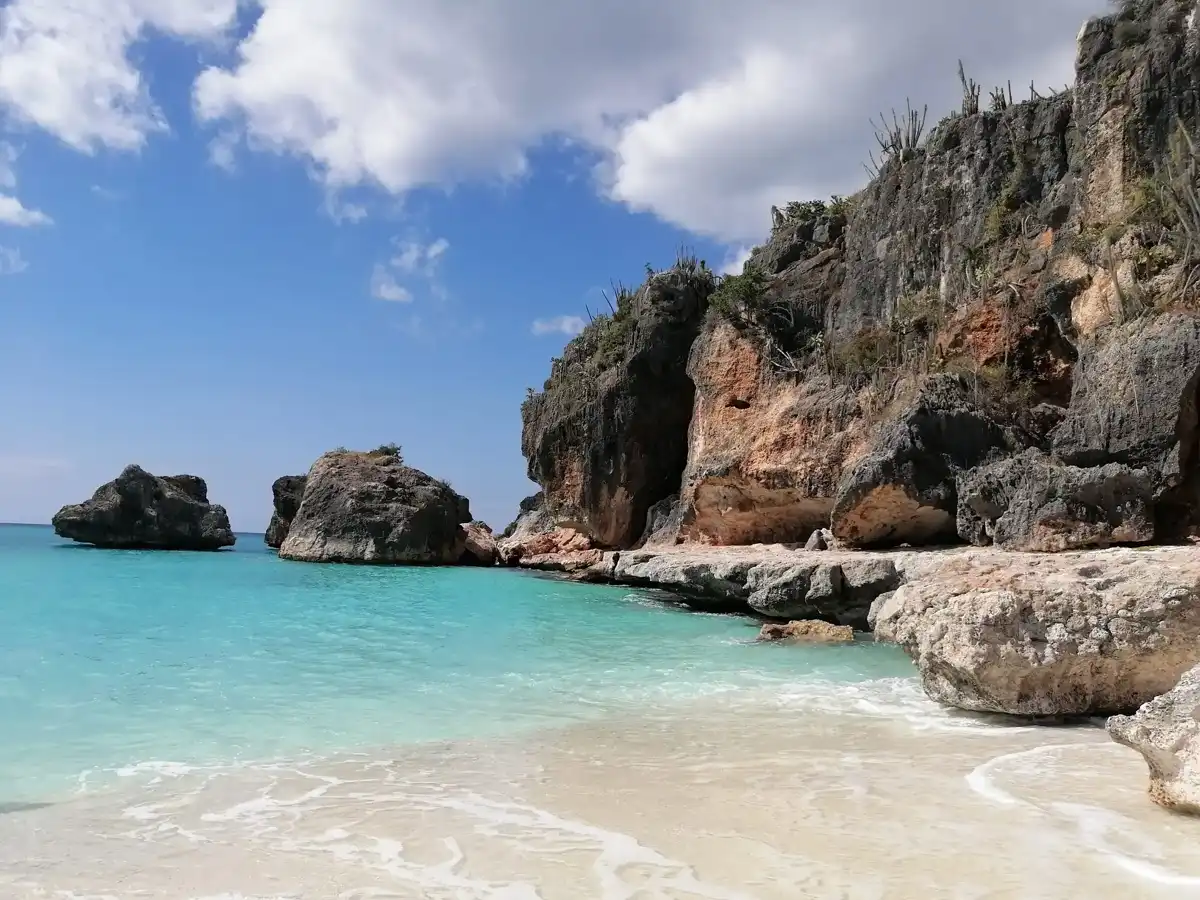
Atlantic cliffs, Playa Frontón, sea caves, Las Galeras trails

Scramble along a rocky coastal trail past sea-carved caves to a cliff-backed beach where Atlantic swells break against limestone.

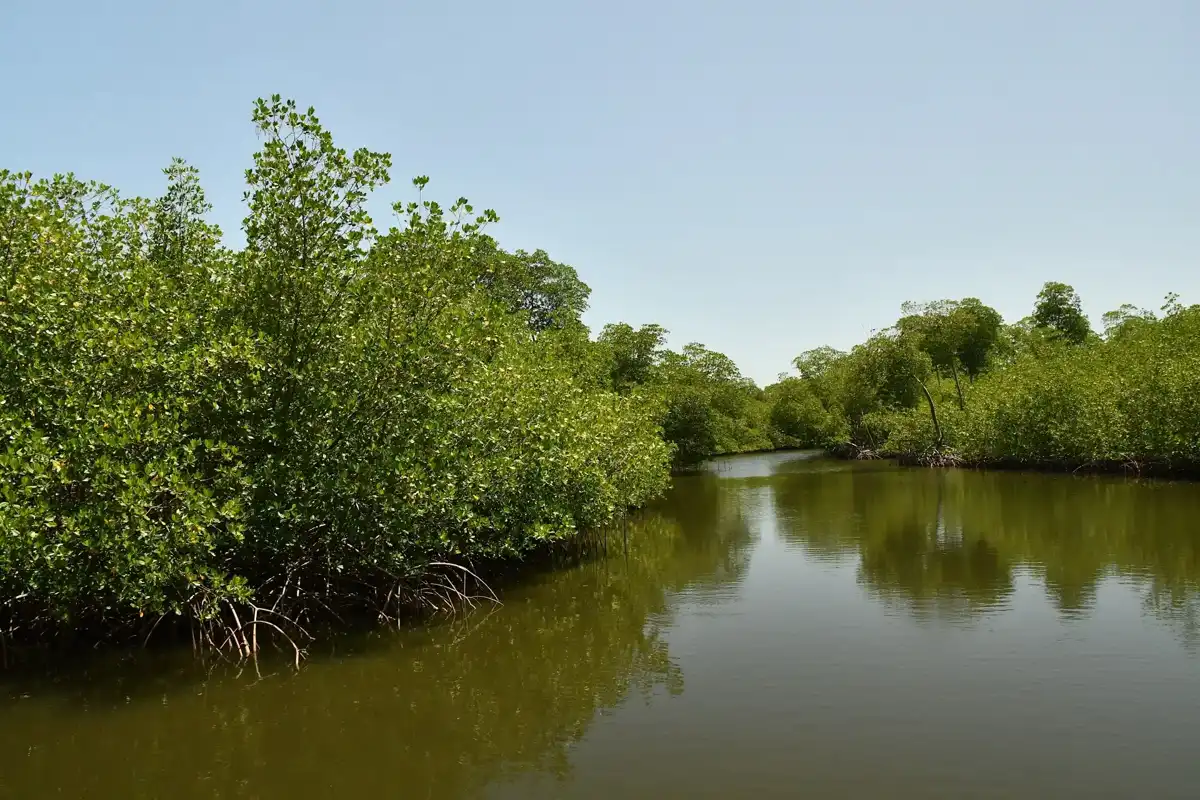
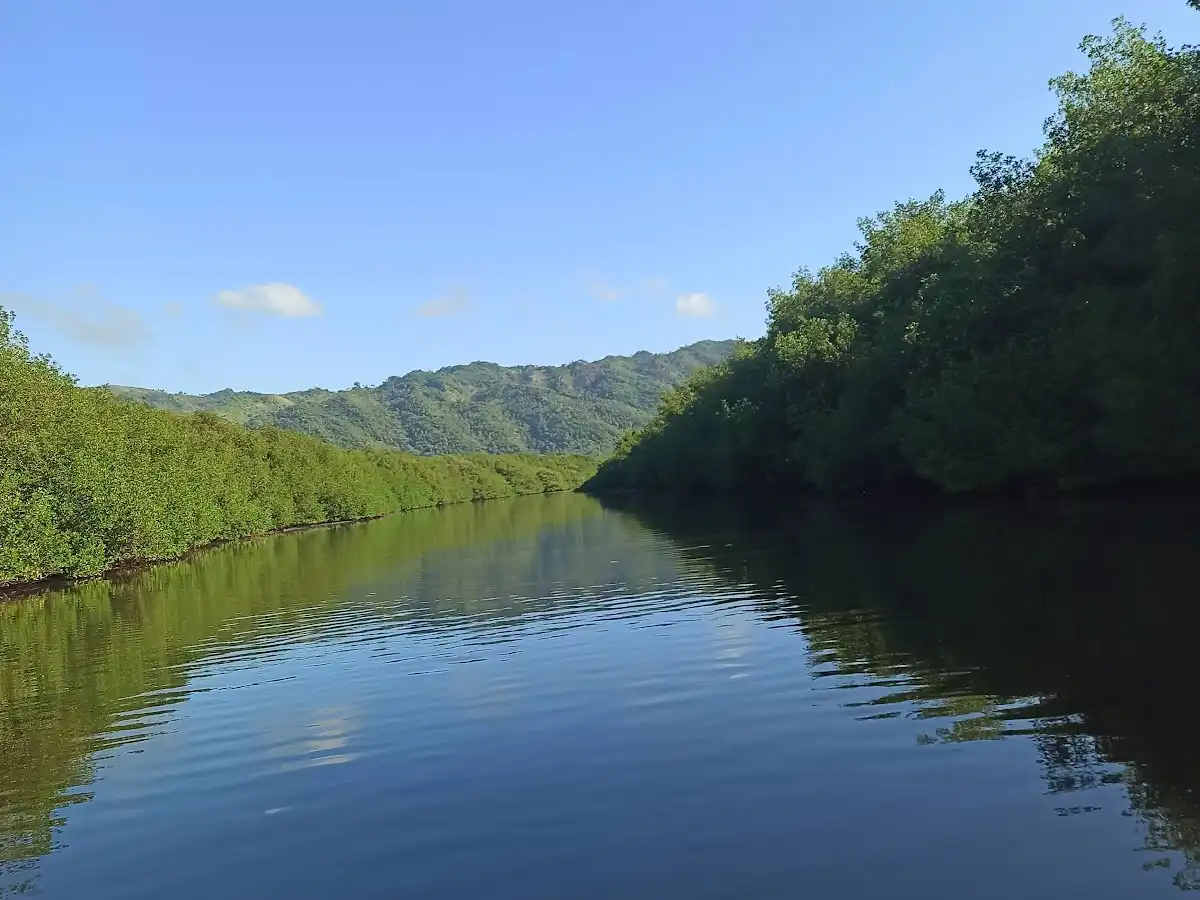
14 Parque Nacional Manglares del Bajo Yuna

Yuna River channels, mangrove roots, Sabana de la Mar, heron flats

Drift by boat through a maze of red-mangrove channels where herons, egrets and kingfishers feed at the river mouth.

dominican-republic-national-park-parque-nacional-manglares-del-bajo-yuna
© Google |

15 Loma Quita Espuela Scientific Reserve

Cacao farms, cloud-forest ridge, muddy summit climb, farm stays

Climb a muddy ridge through orchid-laden cloud forest, then taste fresh chocolate on a family cacao farm and eat at a rural table.

16 Parque Nacional Loma Nalga de Maco

Border ridges, Loma Nalga de Maco summit, Artibonito headwaters, remote cloud forest

Climb mossy ridges near the Haitian border for far views, with cold headwater streams, endemic birds and almost no other hikers.

17 Aniana Vargas National Park

Karst caves, dry forest, palmchat birding, farm lanes

Follow a local guide through thorny dry forest and limestone caves, with endemic parrots overhead and cacao plots along the park edge.

18 Parque Nacional José del Carmen Ramírez

Pico Duarte, La Ciénaga start, Valle de Lilís, highland camps

Trek several days from a mountain farming valley through pine and cloud forest to a summit often lifted above a sea of cloud.

dominican-republic-national-park-parque-nacional-jose-del-carmen-ramirez
© Google | Aridio Delgado A.

19 Parque Nacional Cabo Francés Viejo

Limestone cliff coast, Laguna Gri-Gri, coastal scrub, Río San Juan

Walk early along weathered clifftops above rough surf, then explore mangrove channels by small boat near the fishing town of Río San Juan.

20 Parque Nacional Francisco Alberto Caamaño Deñó

Playa Caracoles, Río Nizao mouth, shoreline walk, Peravia coast

Walk a wild stretch of Caribbean sand where a river meets the sea, with pelicans working the waves and thorny scrub behind.

Think you know Dominican Republic?

Prove you’re a true local — uncover 10 lesser-known national parks in Dominican Republic that locals tend to keep to themselves.
Loading the map 🌍

Expert viewInsights from Locals and Experts

How many to visit: I advise three to four national parks on a single trip. That is enough to see a coastal, a mountain and a dry-country landscape without turning the holiday into a series of gate queues. Beyond four, you start paying more in transport and guide fees than you gain in variety, and fatigue makes everything blur together.
Choosing by travel style: Hikers should prioritize the mountain parks, where trekking is the real draw and the cool air is a relief. Travelers who want caves, mangroves and water should favor the north and northeast coastal parks, which are easiest to reach by guagua and the most forgiving for first-timers. The southwest desert and lake parks suit people with a high tolerance for heat and a taste for emptiness. Skip any park that mainly offers a boat ride from … read more 👉
How many to visit: I advise three to four national parks on a single trip. That is enough to see a coastal, a mountain and a dry-country landscape without turning the holiday into a series of gate queues. Beyond four, you start paying more in transport and guide fees than you gain in variety, and fatigue makes everything blur together.
Choosing by travel style: Hikers should prioritize the mountain parks, where trekking is the real draw and the cool air is a relief. Travelers who want caves, mangroves and water should favor the north and northeast coastal parks, which are easiest to reach by guagua and the most forgiving for first-timers. The southwest desert and lake parks suit people with a high tolerance for heat and a taste for emptiness. Skip any park that mainly offers a boat ride from a resort pier at tour-bus prices. You will pay more, share it with 40 strangers and see roughly what you would see for less elsewhere.
What it costs: Budget about US$40 to 70 a day for a backpacker mixing parks with cheap guesthouses and local food, which is roughly 2,300 to 4,000 Dominican pesos. Entry fees are usually modest, often around US$2 to 10 for foreigners, but guides add US$15 to 40 per group for half-day outings and more for summit treks that run overnight. Local transport by guagua or motoconcho adds US$2 to 10 per hop. Multi-day mountain treks can reach US$100 to 200 per person all-in with mules, camping and meals. Bring cash in pesos, because card machines at park gates are optimistic at best.
Safety and etiquette: Parks themselves are generally safe, but trail conditions are the bigger risk. Rain turns clay paths into slides, river crossings rise fast, and few areas have rescue services close by. Hire a guide even where it is not strictly required, carry two liters of water per person and a headlamp, and start early. Do not swim in rivers after heavy rain. Cell coverage disappears in the mountains, so tell your guesthouse where you are going.
Respect and local habits: Guides are often from the nearby village, and tipping 10 to 15 percent is normal and appreciated. A greeting in Spanish before negotiating goes a long way. Keep to marked paths, pack out trash and avoid feeding wildlife. At crowded river or cave sites, agree on the price before you start, not afterward.

✈️ The backpacker research shortcutDominican Republic Travel Guide

An offline-friendly backpacking guide with optimized travel routes, ranked highlights, transport advice, and the best areas to stay.
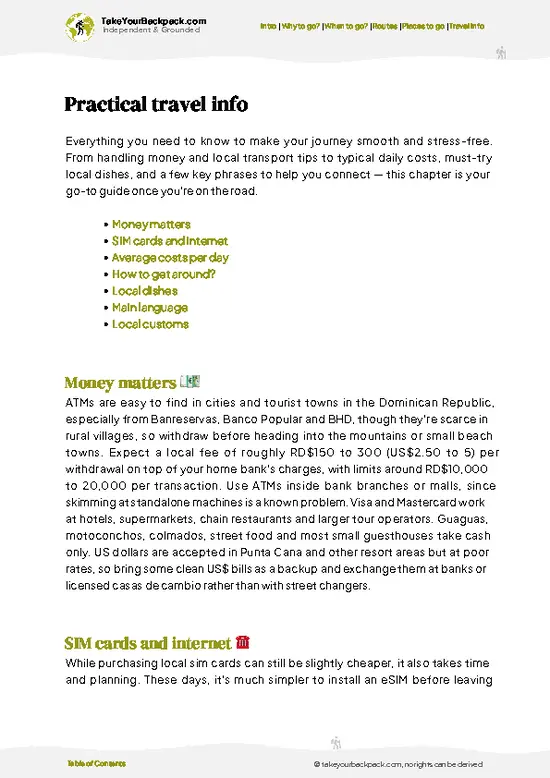
example page 0 from our offline Travel Guide for Dominican Republic
example page 1 from our offline Travel Guide for Dominican Republic
example page 2 from our offline Travel Guide for Dominican Republic
example page 3 from our offline Travel Guide for Dominican Republic
example page 4 from our offline Travel Guide for Dominican Republic
example page 5 from our offline Travel Guide for Dominican Republic
example page 6 from our offline Travel Guide for Dominican Republic
example page 7 from our offline Travel Guide for Dominican Republic
The digital guide (336 pages) contains:
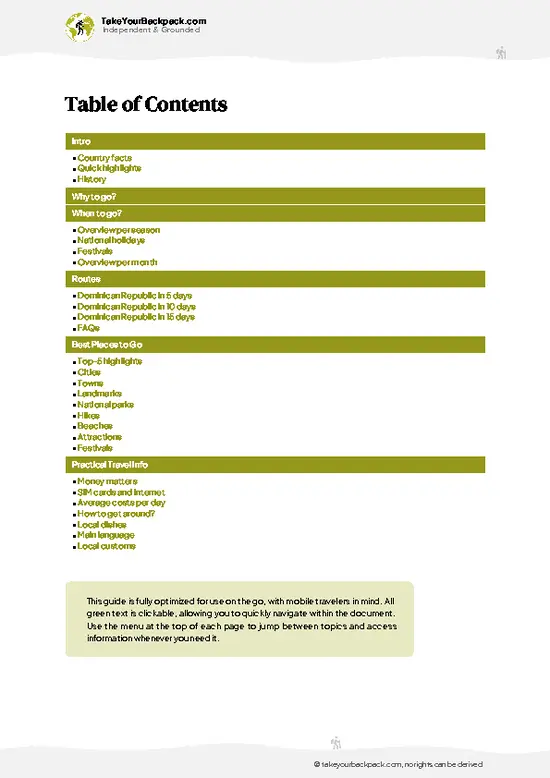
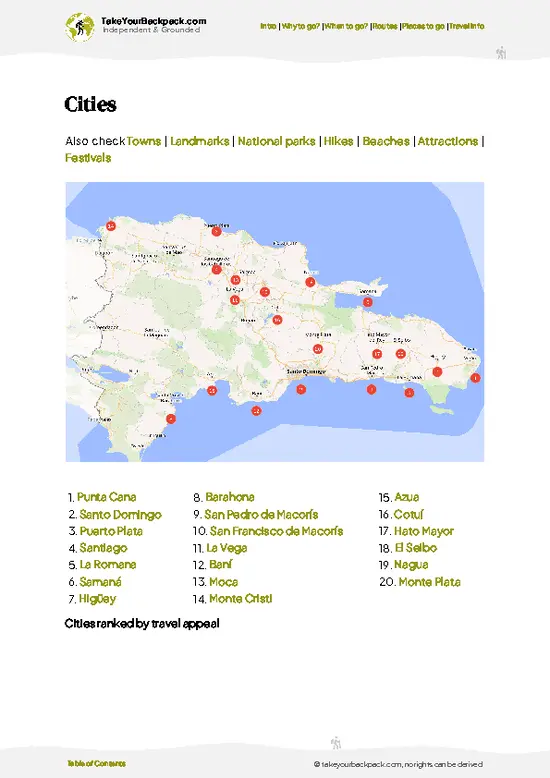
✅ 112 highlights, ranked by travel appeal
✅ Optimized 5, 10 & 15-day travel routes
✅ Cities, national parks, landmarks, beaches
✅ How to get around
✅ Offline-friendly for travel without Wi-Fi
👉 Click to see all 30+ guide features

📅 Plan smarter in minutes, not weeks
✅ Month by month travel advice
✅ Festivals & national holidays
✅ Budget expectations

🗺️ Go to the right places, skip the overrated ones
✅ Honest pros & cons of destinations
✅ Top hikes, parks & viewpoints
✅ Lesser-known places most travelers miss
✅ Clear “worth it vs skip it” guidance

🛏️ Travel smoothly without rookie mistakes
✅ Best areas to stay
✅ Transport systems explained simply
✅ Common scams & safety advice
✅ SIM cards, money & practical tips

🌍 Understand the country, not just visit it
✅ Culture & traditions
✅ 52 Essential phrases & customs
✅ Festivals worth planning around
✅ Traveler-friendly historical context
✅ Insights that make places more meaningful

📱 Built for real travel conditions
✅ Fully downloadable PDF
✅ Works completely offline
✅ Optimized for phone use
✅ Useful in remote areas & buses
✅ Everything in one place
Stop searching, start planning
Get instant access to your full guide. 30‑day money-back guarantee.
+ Add another guide for just

By proceeding you agree to our terms.
Sent to your inbox immediately after payment • 100% Secure Checkout
Best Backpacking Travel Advisor 2025 tourism awardBest Backpacking
Travel Advisor
2025
What others say about Take Your Backpack Guides:
⭐⭐⭐⭐⭐
Fantastic, amazing amount of information!
⭐⭐⭐⭐⭐
My goodness this is amazing, it's what I've been looking for hats off too you!
⭐⭐⭐⭐⭐
I think this is absolutely BRILLIANT
⭐⭐⭐⭐
Very complete and informative. It's still missing places, but I gotta to commend you
⭐⭐⭐⭐⭐
This is truly amazing, thank you, can't wait to explore it with my kids!
⭐⭐⭐⭐⭐
Awesome resource, thank you!
⭐⭐⭐⭐⭐
This is amazing! Can't wait to explore the ones I haven't seen
⭐⭐⭐⭐
I love this! Well done, great idea.
⭐⭐⭐⭐⭐
Thanks for taking the time to make this gem!
⭐⭐⭐⭐⭐
This might be the best website I've ever seen.
⭐⭐⭐⭐⭐
Congratulations, and thank you so much for your work; it's incredibly valuable.
⭐⭐⭐⭐
In all seriousness I think you did a great job pointing out the important spots
⭐⭐⭐⭐⭐
10/10 very good
⭐⭐⭐⭐⭐
As someone who's only just starting to visit regularly this is awesome, thank you.
⭐⭐⭐⭐
Thank you very much! I'm going to visit my dad, it's going to be very useful!
⭐⭐⭐⭐⭐
This is really cool! We'll be travelling for the first time and this definitely come in handy.
⭐⭐⭐⭐⭐
You are now our minister of culture, congratulations 👨‍💼
⭐⭐⭐⭐⭐
Just wanted to tell you that this is a pearl! Going to follow your recommendations.
⭐⭐⭐⭐⭐
This is so cool. I'll definitely be using the resource for my travels soon.
⭐⭐⭐⭐⭐
This is very impressive! Good work.
⭐⭐⭐⭐⭐
This is an amazing and informative site. Very well done!

🛏️ Where to stay?Best Places to Stay in Dominican Republic

Hostels and budget guesthouses exist across the Dominican Republic, with dorm beds typically running RD$700 to 1,500 (US$12 to 25) and simple private rooms from about RD$1,800 (US$30). The densest cluster is in Santo Domingo’s Zona Colonial, where you can walk to the main historic sights and weekend bars but should expect street noise and take care on quieter side streets after dark. Elsewhere, Cabarete has surfer and kiter hostels in a lively beach-bar strip, Las Terrenas is calmer with good guesthouse value, Jarabacoa suits quiet mountain stays, and Bávaro’s Los Corales area offers the few budget beds near Punta Cana’s resort beaches.

If you enjoy meeting fellow travelers, consider choosing … read more 👉
Hostels and budget guesthouses exist across the Dominican Republic, with dorm beds typically running RD$700 to 1,500 (US$12 to 25) and simple private rooms from about RD$1,800 (US$30). The densest cluster is in Santo Domingo’s Zona Colonial, where you can walk to the main historic sights and weekend bars but should expect street noise and take care on quieter side streets after dark. Elsewhere, Cabarete has surfer and kiter hostels in a lively beach-bar strip, Las Terrenas is calmer with good guesthouse value, Jarabacoa suits quiet mountain stays, and Bávaro’s Los Corales area offers the few budget beds near Punta Cana’s resort beaches.

If you enjoy meeting fellow travelers, consider choosing hostels with high ratings for atmosphere. On the other hand, if you prefer having your own space, a hotel might be a better option.

Dominican RepublicExplore Dominican Republic

👋 Meet the founderWho’s Behind Take Your Backpack?

Johan, backpacker and founder of TakeYourBackpackHi, I’m Johan (Netherlands 🇳🇱), the creator of TakeYourBackpack. Over the past 3 decades, I’ve backpacked through 90+ countries across six continents, gaining extensive experience with independent travel, long-term trips, and overland routes.

This site is built on a combination of firsthand travel experience and carefully curated insights from other backpackers. Many guides are based on places I’ve personally visited, while others bring together tips, observations, and practical advice shared by trusted travelers I’ve met along the way.

The goal is to provide realistic, experience-driven guidance — not generic itineraries — so you can explore destinations with better context, clearer expectations, and more confidence.