
×

Dominican Republic🇩🇴 | citiesEl SeiboCattle ranches, old church, cacao plots, Saturday market | things to do and best time to go

Explore CotuíExplore Hato Mayor

Backpacking in El Seibo
👌 Worth visitingcity ranked #18
By Johan Kruseman 🇳🇱 | Updated October 20, 2026

Years ago, El Seibo was a cattle town travelers crossed without stopping, usually on the way to somewhere with sand. It still has few visitors, which is the point. The town sits in the eastern Dominican Republic, inland from the coast, and the hills behind it hold ranches and cacao. Services are thin, so carry cash and plan transport the day before, since guaguas thin out by late afternoon. Slow-travel fans and ranch-country curious people will like it. Beach seekers and nightlife chasers won’t.

Discover everything you want to know in the 📖 Dominican Republic Travel Guide.


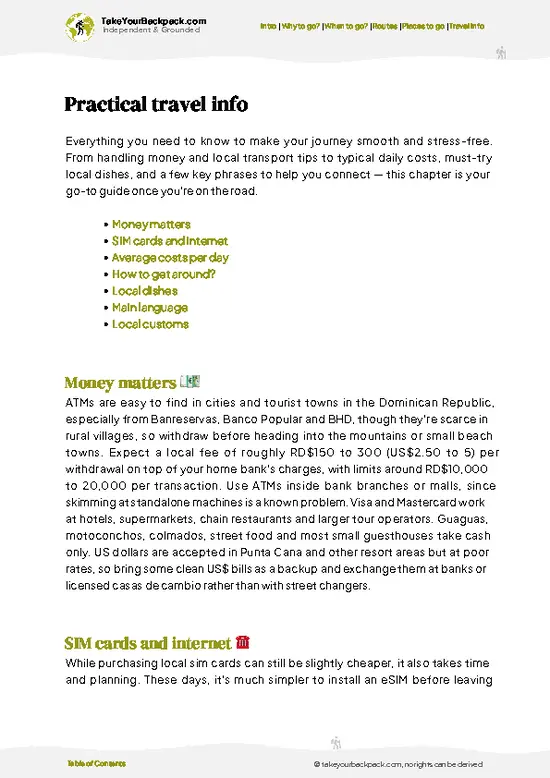
example page 0 from our offline Travel Guide for Dominican Republic
example page 1 from our offline Travel Guide for Dominican Republic
example page 2 from our offline Travel Guide for Dominican Republic
example page 3 from our offline Travel Guide for Dominican Republic
example page 4 from our offline Travel Guide for Dominican Republic
example page 5 from our offline Travel Guide for Dominican Republic
example page 6 from our offline Travel Guide for Dominican Republic
example page 7 from our offline Travel Guide for Dominican Republic
Loading the map 🌍
CLICK TO FILTER
cities
towns
landmarks
national parks
hikes
beaches
attractions
festivals
SHOW COUNTRY’S BESTSHOW ALL

✨ Why go?
Ranked #18 city in Dominican Republic
What makes this city worth visiting

El Seibo works for backpackers who want a real Dominican town with no tour-bus layer. Its main draw is a quiet central plaza and colonial-era church where locals actually sit, and the cattle-country hills around it, which make for scenic rides and farm visits. Guesthouses are few and basic, so it suits a one or two night stop rather than a base. Food is simple, mostly fried and stewed comfort plates at plaza-side spots. Onward buses toward Higüey and the east coast are easy enough to catch in the morning.

💡 HighlightsTop highlights of El Seibo

  1. Iglesia de Santa Cruz del Seibo: The town’s landmark church, among the oldest in the east, with a plain, weathered facade facing the plaza. Free entry, 20 to 30 minutes, best in the morning between services.
  2. Parque Central: Shaded benches, vendors and domino games. Free, an hour is plenty, and early evening is when the town comes out.
  3. Old colonial streets: A short walk past low houses with pastel walls and wooden shutters. Free, 30 to 45 minutes, best in cooler morning light.
  4. Local cattle ranches: Ranch-country around town can be visited by arrangement with locals, with horses and milking demonstrations. Expect roughly US$15 to 40, 2 to 3 hours, mornings are best.
  5. Cacao and farm plots: Small farms on the outskirts show how cacao is dried and processed. Usually US$5 to 15 with a guide, 1 to 2 hours,
… read more 👉
  1. Iglesia de Santa Cruz del Seibo: The town’s landmark church, among the oldest in the east, with a plain, weathered facade facing the plaza. Free entry, 20 to 30 minutes, best in the morning between services.
  2. Parque Central: Shaded benches, vendors and domino games. Free, an hour is plenty, and early evening is when the town comes out.
  3. Old colonial streets: A short walk past low houses with pastel walls and wooden shutters. Free, 30 to 45 minutes, best in cooler morning light.
  4. Local cattle ranches: Ranch-country around town can be visited by arrangement with locals, with horses and milking demonstrations. Expect roughly US$15 to 40, 2 to 3 hours, mornings are best.
  5. Cacao and farm plots: Small farms on the outskirts show how cacao is dried and processed. Usually US$5 to 15 with a guide, 1 to 2 hours, dry mornings work best.
  6. Saturday market streets: Produce, cheese and cheap clothes spill out around the center. Free to wander, 45 minutes, go before noon.
El Seibo makes a good base for day trips to Miches, the Laguna Redonda and Laguna Limón area, and the beaches around Higüey. The church and the central park combine well in one easy evening.
Spotted a mistake or missing something? Contact us.

Things to do near El Seibo

Ratings based on Tripadvisor reviews. When you book through this link, you support our work at no extra cost to you.

🏘️ NeighborhoodsWhere things are and how it's laid out

El Seibo is compact, so you can cover it on foot in an afternoon, and that is the smarter plan since taxis here are motorcycles that treat red lights as decoration.
  • Parque Central and the Church area: The Catholic church of Santa Cruz faces the main square, and the cafés and colmados around it are where the town gathers. Go in the early evening when the heat drops and benches fill up.
  • Calle Mella and the market streets: Shops, fruit stands and cheap lunch counters sit here. Arrive before noon, since stalls thin out in the afternoon heat.
  • Barrio outskirts toward the cattle country: Ranches and open pasture start within minutes. Hire a motoconcho rather than walk, as there is little shade and nothing to buy on the way.

⌛️ 1 dayHow to make the most of one day

A slow small-town morning-to-evening wander. 8:00 AM: Parque Central. Grab coffee and a fried breakfast from a plaza vendor, then watch the town wake up.
9:30 AM: Iglesia de Santa Cruz. Walk across the plaza and look inside before it heats up. The old stonework is the reason to linger.
11:00 AM: Colonial side streets. Wander the quiet lanes behind the church, chat with shopkeepers, and note the pastel facades.
1:00 PM: Lunch at a comedor. Order the plate of the day with rice, beans and stewed meat, then rest through the midday heat.
3:30 PM: Ranch or cacao farm outskirts. Arrange a short local ride or a motoconcho out to a farm that most visitors never see. It shows the working side of the region.
6:00 PM: Back at the plaza. Sit on a bench as families gather and the lights come on.

🌤️ When to go?Weather, crowds, and seasonal trade-offs

  • Dry months (December to April): Days run about 27 to 31°C (81 to 88°F) with lower humidity and the easiest walking. Beaches nearby fill up around Christmas and Easter, and prices rise.
  • Wet months (May to November): Afternoon downpours are common, with 29 to 33°C (84 to 91°F) and heavy humidity. Hurricane risk peaks from August to October, though rooms are cheaper and quieter.
  • Daylight: Days stay fairly even through the year, roughly 11 to 13 hours.
Visit in February or March for the best balance of dry roads and manageable prices.

source: climatestotravel.comJANJanuary: excellent for travelingFEBFebruary: excellent for travelingMARMarch: excellent for travelingAPRApril: excellent for travelingMAYMay: fair for travelingJUNJune: fair for travelingJULJuly: fair for travelingAUGAugust: fair for travelingSEPSeptember: fair for travelingOCTOctober: fair for travelingNOVNovember: good for travelingDECDecember: highly recommended for traveling
when-to-go

✈️ The backpacker research shortcutDominican Republic Travel Guide

An offline-friendly backpacking guide with optimized travel routes, ranked highlights, transport advice, and the best areas to stay.
example page 0 from our offline Travel Guide for Dominican Republic
example page 1 from our offline Travel Guide for Dominican Republic
example page 2 from our offline Travel Guide for Dominican Republic
example page 3 from our offline Travel Guide for Dominican Republic
example page 4 from our offline Travel Guide for Dominican Republic
example page 5 from our offline Travel Guide for Dominican Republic
example page 6 from our offline Travel Guide for Dominican Republic
example page 7 from our offline Travel Guide for Dominican Republic
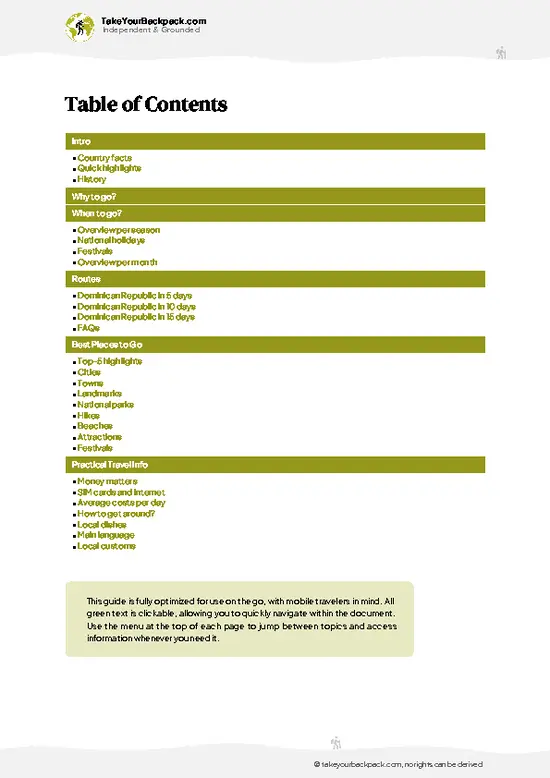
The digital guide (336 pages) contains:
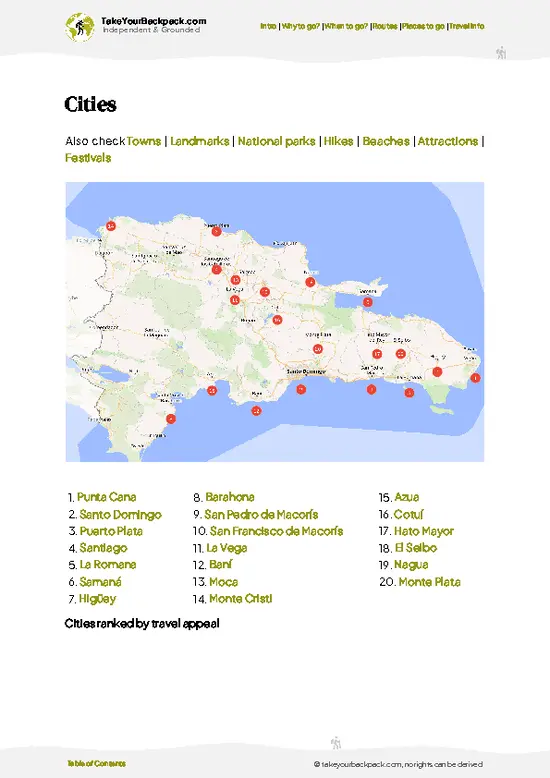
✅ 108 highlights, ranked by travel appeal
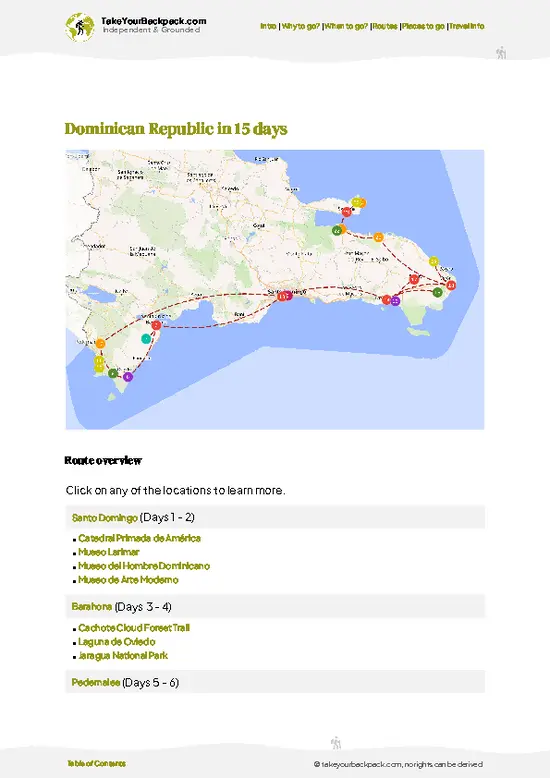
✅ Optimized 5, 10 & 15-day travel routes
✅ Cities, national parks, landmarks, beaches
✅ How to get around
✅ Offline-friendly for travel without Wi-Fi
👉 Click to see all 30+ guide features

📅 Plan smarter in minutes, not weeks
✅ Month by month travel advice
✅ Festivals & national holidays
✅ Budget expectations

🗺️ Go to the right places, skip the overrated ones
✅ Honest pros & cons of destinations
✅ Top hikes, parks & viewpoints
✅ Lesser-known places most travelers miss
✅ Clear “worth it vs skip it” guidance

🛏️ Travel smoothly without rookie mistakes
✅ Best areas to stay
✅ Transport systems explained simply
✅ Common scams & safety advice
✅ SIM cards, money & practical tips

🌍 Understand the country, not just visit it
✅ Culture & traditions
✅ 52 Essential phrases & customs
✅ Festivals worth planning around
✅ Traveler-friendly historical context
✅ Insights that make places more meaningful

📱 Built for real travel conditions
✅ Fully downloadable PDF
✅ Works completely offline
✅ Optimized for phone use
✅ Useful in remote areas & buses
✅ Everything in one place
Stop searching, start planning
Get instant access to your full guide. 30‑day money-back guarantee.
+ Add another guide for just

By proceeding you agree to our terms.
Sent to your inbox immediately after payment • 100% Secure Checkout
Best Backpacking Travel Advisor 2025 tourism awardBest Backpacking
Travel Advisor
2025
What others say about Take Your Backpack Guides:
⭐⭐⭐⭐⭐
Fantastic, amazing amount of information!
⭐⭐⭐⭐⭐
My goodness this is amazing, it's what I've been looking for hats off too you!
⭐⭐⭐⭐⭐
I think this is absolutely BRILLIANT
⭐⭐⭐⭐
Very complete and informative. It's still missing places, but I gotta to commend you
⭐⭐⭐⭐⭐
This is truly amazing, thank you, can't wait to explore it with my kids!
⭐⭐⭐⭐⭐
Awesome resource, thank you!
⭐⭐⭐⭐⭐
This is amazing! Can't wait to explore the ones I haven't seen
⭐⭐⭐⭐
I love this! Well done, great idea.
⭐⭐⭐⭐⭐
Thanks for taking the time to make this gem!
⭐⭐⭐⭐⭐
This might be the best website I've ever seen.
⭐⭐⭐⭐⭐
Congratulations, and thank you so much for your work; it's incredibly valuable.
⭐⭐⭐⭐
In all seriousness I think you did a great job pointing out the important spots
⭐⭐⭐⭐⭐
10/10 very good
⭐⭐⭐⭐⭐
As someone who's only just starting to visit regularly this is awesome, thank you.
⭐⭐⭐⭐
Thank you very much! I'm going to visit my dad, it's going to be very useful!
⭐⭐⭐⭐⭐
This is really cool! We'll be travelling for the first time and this definitely come in handy.
⭐⭐⭐⭐⭐
You are now our minister of culture, congratulations 👨‍💼
⭐⭐⭐⭐⭐
Just wanted to tell you that this is a pearl! Going to follow your recommendations.
⭐⭐⭐⭐⭐
This is so cool. I'll definitely be using the resource for my travels soon.
⭐⭐⭐⭐⭐
This is very impressive! Good work.
⭐⭐⭐⭐⭐
This is an amazing and informative site. Very well done!

🛏️ Where to stay?How to pick the right area

Stay in the streets around the central park, where the few small guesthouses and budget hotels are concentrated. El Seibo has almost no hostels, so expect simple private rooms, often with a fan or air-conditioning, rather than dorm beds. Walking distance to food and the bus stops is the main advantage, and the center is calm at night apart from music from colmados on weekends. If you want dorms and nightlife, base yourself in a larger coastal town and visit El Seibo as a day trip.

🚌 Getting aroundGetting around like a local

Hiring a private taxi from Santo Domingo or Punta Cana for the whole trip to El Seibo is the mistake that burns the most cash, when guaguas (minibuses) do it for a fraction. Take a bus or minibus to Hato Mayor or La Romana, then switch to a local ride. Yes, it feels like a scavenger hunt. It is also a lot cheaper.
  • Walking: The center is small and flat, and you can cross it in 15 minutes. Carry water, because shade is scarce at midday.
  • Motoconcho: Motorcycle taxis cost about US$0.50 to 1.50 within town and US$2 to 5 to nearby villages. Agree on the price first, and ask for a helmet, which is rarely offered but sometimes exists.
  • Guagua: Minibuses and shared cars link El Seibo with Hato Mayor, Higüey and Santo Domingo, usually US$2 to 6 depending on the leg. They leave when full, so go in the morning,
… read more 👉
Hiring a private taxi from Santo Domingo or Punta Cana for the whole trip to El Seibo is the mistake that burns the most cash, when guaguas (minibuses) do it for a fraction. Take a bus or minibus to Hato Mayor or La Romana, then switch to a local ride. Yes, it feels like a scavenger hunt. It is also a lot cheaper.
  • Walking: The center is small and flat, and you can cross it in 15 minutes. Carry water, because shade is scarce at midday.
  • Motoconcho: Motorcycle taxis cost about US$0.50 to 1.50 within town and US$2 to 5 to nearby villages. Agree on the price first, and ask for a helmet, which is rarely offered but sometimes exists.
  • Guagua: Minibuses and shared cars link El Seibo with Hato Mayor, Higüey and Santo Domingo, usually US$2 to 6 depending on the leg. They leave when full, so go in the morning, as services thin out by late afternoon.
  • Private car or taxi: A taxi to the Punta Cana area runs roughly US$60 to 90 and is only worth it when split among several people.

👛 Costs (as of 20 October 2026)What things cost and how to budget

El Seibo costs a backpacker roughly US$32 to 50 a day, and the total below is US$38.
CategoryBudget RangeLocal Reality
Dorm accommodation (high season)US$18 to 25Few dorms exist, so this is a simple private room
Dorm accommodation (off-season)US$14 to 20Negotiable when guesthouses are empty
MealsUS$8 to 12Comedor lunches and street snacks
Local transportUS$3 to 5Motoconchos and guaguas
City transport passUS$0None exists
Basic activities/entry feesUS$2 to 5Mostly free walking and ranch-country views
MiscellaneousUS$3 to 5Water, beer, mobile data
Total Daily BudgetUS$38Based on high-season lodging
Carry small cash and eat your main meal at lunchtime, when set plates cost less than evening menus.
⚠️ Prices can change and everyone travels differently, so take this as a rough guide. Hope it helps you plan your adventure!

🚌 Day tripsBest day trips from El Seibo

El Seibo sits in cattle and sugar country between the capital and the east coast, which makes it a decent base for rural outings, though public transport is slow.
Miches:
The road north climbs through hills to a coast of coconut palms and quiet beaches. Allow about 1.5 hours each way and US$10 to 20 round trip by guagua and motoconcho. Go early, as the last rides back leave in the afternoon.
👉 Explore Miches
Hato Mayor:
A short ride west brings you to a quiet provincial town with a lively central market. Costs run about US$3 to 6 return, and the trip takes around 40 minutes each way. Dry months are best.

Higüey:
The huge Basilica de Nuestra Señora de la Altagracia is the country’s main pilgrimage site. Plan about 1 to 1.5 hours each way and US$6 to 12 total. Cover your shoulders and knees, which first-timers often forget.
👉 Explore Higüey

🍲 FoodLocal Flavors for Backpackers

El Seibo is cattle country, so look for beef and fresh dairy, especially the soft white queso de hierro and fried cheese at breakfast. Roadside stalls sell chicharrón and tropical fruit like mango, sapodilla and passion fruit when in season. Small comedores serve cheap plates of rice, beans and stewed meat at lunch, and the market is the place for juice. At night, colmados around the park serve cold Presidente beer and rum. Sit down, order a bottle and share it, as is the local habit.

🛡️ SafetyStaying Safe: What Travelers Should Know

El Seibo is a calm provincial town where petty theft and motorcycle traffic are the main concerns. Keep your phone out of sight when riding a motoconcho and ask for a helmet. Solo travelers can walk the center in the evening, but the quieter side streets after dark are better skipped. Overcharging happens, so settle fares before you ride. Carry small bills, since breaking large ones can be a hassle.

FAQTraveler FAQ

One day covers El Seibo itself, and two days let you add a trip to Miches or Higüey. The center takes just a few hours on foot, and rural rides cost about US$3 to 20 round trip. Stay longer only if you want slow ranch-country time.
El Seibo is a quiet provincial town where solo backpackers rarely face more than petty annoyances. Walk the central streets in the evening, but skip dark side streets and negotiate motoconcho fares in advance. Rides cost about US$0.50 to 1.50 in town.
El Seibo is known for cattle ranching, its Santa Cruz church on the main square and a rural, unhurried feel. It lies in the east, about two to three hours by road from Santo Domingo. Backpackers use it as a quiet stop between the capital and the Miches coast.
⚠️ Things can change over time, so always validate details locally before you go.

Other Dominican cities near El Seibo

Explore more nearby:

  • Hato Mayor—Livestock country, fried cheese, colmado evenings| 22 km away
  • La Romana—Altos de Chavón, cigar rollers, Casa de Campo marina, Parque Central| 38 km away
  • Higüey—Concrete basilica, pilgrim festivals, old sanctuary, motoconcho grid| 38 km away

💡 Not sure where to go next?
Create a personalized itinerary for Dominican Republic including El Seibo and the places that fit your trip.

Generate my itinerary

👉 Discover all cities

Or checkout all Dominican Republic has to offer (think cities, towns, villages, national parks, hikes, beaches, festivals)
Country photo of Dominican Republic

We 💚 feedbackSumming up the experience

El Seibo suits slow travelers who like talking to strangers over a plastic chair and a cold Presidente. I’d bring small bills, stay one night, and leave the schedule empty.

✍️ Help improve this page!
The information on this page is based on in-depth research, insights shared by experienced travelers, and feedback from the local travel community in Dominican Republic. While every effort is made to keep the information accurate and current, conditions can change — so if you spot anything incorrect or outdated, please get in touch.


🙋‍♂️ Give feedback

👋 Meet the founderWho’s Behind Take Your Backpack?

Johan, backpacker and founder of TakeYourBackpackHi, I’m Johan (Netherlands 🇳🇱), the creator of TakeYourBackpack. Over the past 3 decades, I’ve backpacked through 90+ countries across six continents, gaining extensive experience with independent travel, long-term trips, and overland routes.

This site is built on a combination of firsthand travel experience and carefully curated insights from other backpackers. Many guides are based on places I’ve personally visited, while others bring together tips, observations, and practical advice shared by trusted travelers I’ve met along the way.

The goal is to provide realistic, experience-driven guidance — not generic itineraries — so you can explore destinations with better context, clearer expectations, and more confidence.