×

Dominican Republic🇩🇴 | citiesLa RomanaAltos de Chavón, cigar rollers, Casa de Campo marina, Parque Central | things to do and best time to go

Explore Playa SosúaExplore Pueblo Viejo

Backpacking in La Romana
🏆 Top pickcity ranked #5
By Johan Kruseman 🇳🇱 | Updated October 20, 2026

The decision in La Romana is whether to spend your days on the resort beaches of Bayahibe and Casa de Campo or stay in town, and what tips it is your wallet and your patience. The resort strip costs more in money and in transfers, and the comfort is real but sealed off from daily life. Staying in town costs a little in sand and sea views, yet gives you local food, motoconchos and a real Dominican Saturday night for far less. For a backpacker, town wins, with beach days done as quick hops. La Romana sits in the southeast of Dominican Republic, on the Caribbean coast east of Santo Domingo. It suits travelers who like a working sugar-and-cigar city with a few surprises, and bores anyone wanting a party hostel scene. It is hot, a bit scruffy and short on backpacker infrastructure. Bring cash in pesos for small purchases, since many local spots do not take cards.

Discover everything you want to know in the 📖 Dominican Republic Travel Guide.


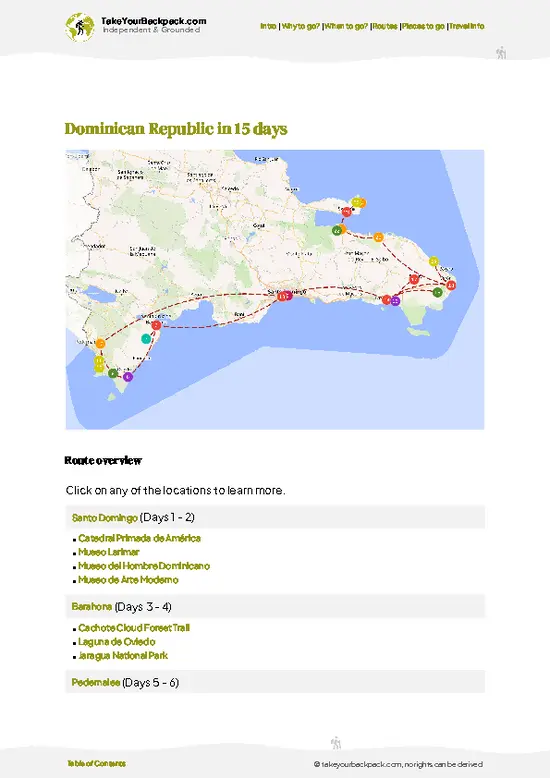
example page 0 from our offline Travel Guide for Dominican Republic
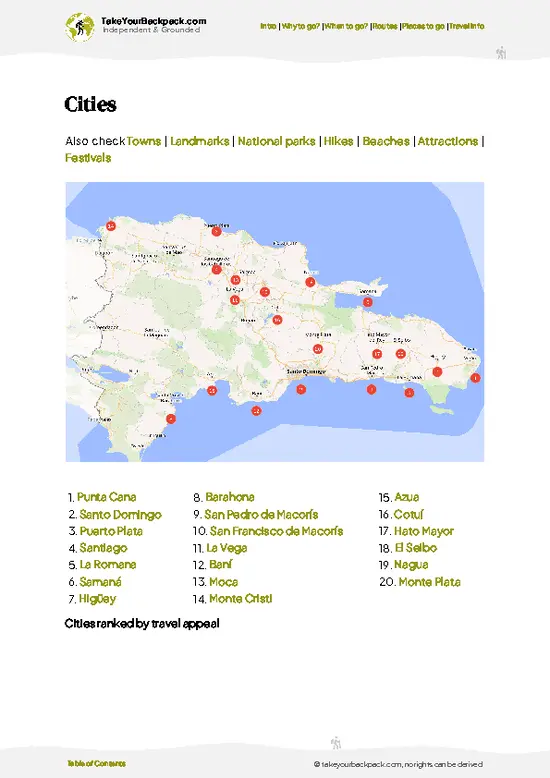
example page 1 from our offline Travel Guide for Dominican Republic
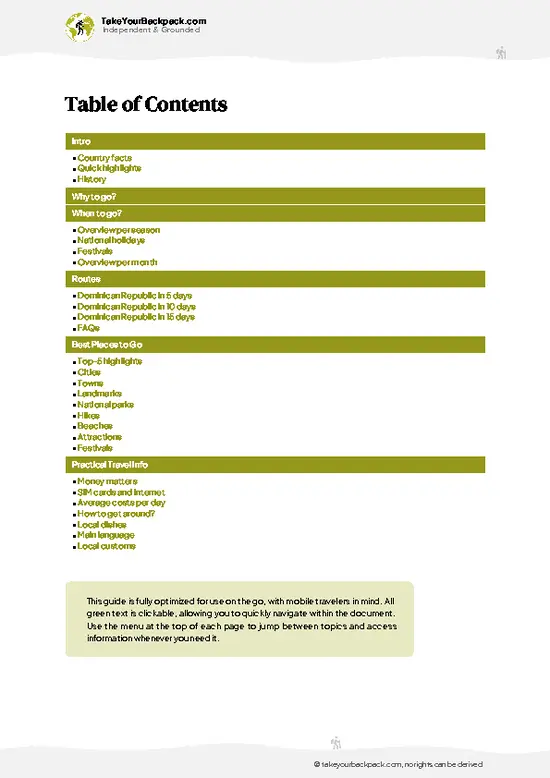
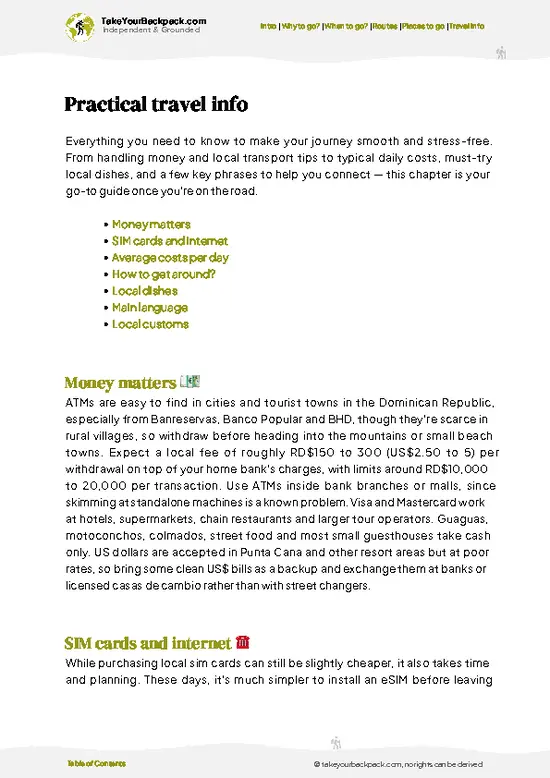
example page 2 from our offline Travel Guide for Dominican Republic
example page 3 from our offline Travel Guide for Dominican Republic
example page 4 from our offline Travel Guide for Dominican Republic
example page 5 from our offline Travel Guide for Dominican Republic
example page 6 from our offline Travel Guide for Dominican Republic
example page 7 from our offline Travel Guide for Dominican Republic
Loading the map 🌍
CLICK TO FILTER
cities
towns
landmarks
national parks
hikes
beaches
attractions
festivals
SHOW COUNTRY’S BESTSHOW ALL

✨ Why go?
Ranked #5 city in Dominican Republic
Reasons people choose to visit here

La Romana earns its place on a southeast route as a practical, ungussied base rather than a sightseeing marathon. The city itself has only a handful of real sights, but it is the working hub that sits between the capital and the party-and-beach end of the island, so buses pass through constantly and you can swap one coast for another without backtracking. Its real draw is access: the white-sand beaches and the Altos de Chavón hilltop village are close, and you can sleep in a normal neighborhood instead of a gated compound. Food is another reason. Corner comedores serve a full plate of rice, beans and stewed meat for little money, and the evening plazas fill with domino players and loud bachata. Hostel choice is thin, so expect small guesthouses and budget hotels. Walkability is fair in the … read more 👉
La Romana earns its place on a southeast route as a practical, ungussied base rather than a sightseeing marathon. The city itself has only a handful of real sights, but it is the working hub that sits between the capital and the party-and-beach end of the island, so buses pass through constantly and you can swap one coast for another without backtracking. Its real draw is access: the white-sand beaches and the Altos de Chavón hilltop village are close, and you can sleep in a normal neighborhood instead of a gated compound. Food is another reason. Corner comedores serve a full plate of rice, beans and stewed meat for little money, and the evening plazas fill with domino players and loud bachata. Hostel choice is thin, so expect small guesthouses and budget hotels. Walkability is fair in the center and poor beyond it, where motoconchos fill the gap. Treat it as two or three nights, not a month.

💡 HighlightsThe experiences that define the visit

  1. Altos de Chavón: a stone-built replica of a 16th-century Mediterranean village, perched above the Chavón River, with cobbled lanes, a small church and an amphitheater seating several thousand. Go in the morning before the heat and tour groups. Entry is roughly US$5 to 10 depending on the day, and 1.5 to 2 hours is plenty.
  2. Chavón River viewpoint: the overlook beside the village shows the green gorge below, good for photos at golden hour. Free with village entry, 20 to 30 minutes.
  3. Iglesia de Santa Irene: the town’s main church on Parque Central, with a calm, cooler interior and local life spilling out onto the square. Free, 15 to 30 minutes, best late afternoon.
  4. Parque Central: where the city meets in the evening, with vendors, kids on bikes and old men arguing over dominoes. Free, an hour of people-watching
… read more 👉
  1. Altos de Chavón: a stone-built replica of a 16th-century Mediterranean village, perched above the Chavón River, with cobbled lanes, a small church and an amphitheater seating several thousand. Go in the morning before the heat and tour groups. Entry is roughly US$5 to 10 depending on the day, and 1.5 to 2 hours is plenty.
  2. Chavón River viewpoint: the overlook beside the village shows the green gorge below, good for photos at golden hour. Free with village entry, 20 to 30 minutes.
  3. Iglesia de Santa Irene: the town’s main church on Parque Central, with a calm, cooler interior and local life spilling out onto the square. Free, 15 to 30 minutes, best late afternoon.
  4. Parque Central: where the city meets in the evening, with vendors, kids on bikes and old men arguing over dominoes. Free, an hour of people-watching after 5 PM is ideal.
  5. Museo Arqueológico Regional de Altos de Chavón: a small museum of pre-Columbian Taíno pottery and artifacts, which gives context to the island before the Spanish. Around US$5 to 8, about 45 minutes.
  6. Casa de Campo marina area: a manicured waterfront of yachts, restaurants and shops, handy for a stroll and a drink even on a budget. Entry to the resort grounds can require a pass at the gate, and an hour or two is enough, best at dusk.
  7. Local cigar workshops: the area’s tobacco and cigar tradition can be seen in small shops where rollers work by hand. Free to watch, purchases from around US$5, 30 to 45 minutes.
For day trips, the white beaches and diving of Bayahibe, Saona Island and the national park of Parque Nacional del Este are all close by. Altos de Chavón is the one to do first, since it is the most distinctive sight near La Romana and easy to fit into a single morning.
Spotted a mistake or missing something? Contact us.

Things to do in La Romana

Ratings based on Tripadvisor reviews. When you book through this link, you support our work at no extra cost to you.

🏘️ NeighborhoodsWhere things are and how it's laid out

La Romana splits into a few pockets, and none of them takes more than a sweaty afternoon to cover. Pick by what you want to do, because the distances are short but the heat is not.
  • Downtown and Parque Duarte: The walkable heart, with the pale-walled Santa Rosa de Lima church, a plaza full of shoeshine men and domino games, and plain comedores serving rice, beans and stewed chicken. It is the best use of a free morning, costs nothing, and the only comfort you give up is shade.
  • Altos de Chavón: A hilltop replica of a 16th-century Mediterranean village above the Chavón River, built in the 1970s, with an amphitheater, galleries and cobbled lanes. Entry runs roughly US$15 to 20 and the place is lovely but a little too tidy. Go early, before the tour buses.
  • Casa de Campo: A gated resort of golf, polo
… read more 👉
La Romana splits into a few pockets, and none of them takes more than a sweaty afternoon to cover. Pick by what you want to do, because the distances are short but the heat is not.
  • Downtown and Parque Duarte: The walkable heart, with the pale-walled Santa Rosa de Lima church, a plaza full of shoeshine men and domino games, and plain comedores serving rice, beans and stewed chicken. It is the best use of a free morning, costs nothing, and the only comfort you give up is shade.
  • Altos de Chavón: A hilltop replica of a 16th-century Mediterranean village above the Chavón River, built in the 1970s, with an amphitheater, galleries and cobbled lanes. Entry runs roughly US$15 to 20 and the place is lovely but a little too tidy. Go early, before the tour buses.
  • Casa de Campo: A gated resort of golf, polo and marina restaurants. Walking is pointless here because everything sits behind guard posts, and prices climb fast. Visit Marina Chavón for a drink, then leave.
  • Bayahíbe: A fishing village about 25 minutes east, with a beach strip, boat captains and cheap grilled fish. It gives a backpacker the most for the money, and the main street is walkable in ten minutes.

⌛️ 1 dayHow to make the most of one day

8:30 AM: Altos de Chavón. Start here while it is cool and quiet. Walk the cobbled lanes, look into the stone church and take in the river gorge from the overlook. Take a taxi or arrange a motoconcho back toward town afterward.
11:30 AM: Museo Arqueológico. Stay nearby for a short look at Taíno artifacts, which makes the hilltop village feel less like a film set and more like part of a deeper story.
1:00 PM: Comedor lunch near the center. Eat a plate of rice, beans and chicken or pork at a simple local spot, the best value meal in town. Rest through the worst of the heat.
3:30 PM: Cigar workshop. Visit a small local rolling shop away from the main streets, where you can see tobacco hand-rolled and chat with the workers. This is not on most itineraries, and it is cheap to buy a souvenir.
5:00 PM: … read more 👉
8:30 AM: Altos de Chavón. Start here while it is cool and quiet. Walk the cobbled lanes, look into the stone church and take in the river gorge from the overlook. Take a taxi or arrange a motoconcho back toward town afterward.
11:30 AM: Museo Arqueológico. Stay nearby for a short look at Taíno artifacts, which makes the hilltop village feel less like a film set and more like part of a deeper story.
1:00 PM: Comedor lunch near the center. Eat a plate of rice, beans and chicken or pork at a simple local spot, the best value meal in town. Rest through the worst of the heat.
3:30 PM: Cigar workshop. Visit a small local rolling shop away from the main streets, where you can see tobacco hand-rolled and chat with the workers. This is not on most itineraries, and it is cheap to buy a souvenir.
5:00 PM: Iglesia de Santa Irene and Parque Central. Walk over as the light softens and the square wakes up. Grab a cold drink, sit on a bench and watch the domino games.
7:30 PM: Evening along the marina. Take a taxi to the Casa de Campo marina for a sunset stroll and a beer by the yachts, then head back to your guesthouse by taxi.

🌤️ When to go?Weather, crowds, and seasonal trade-offs

December through April is the easiest window, with dry days and sea breezes.
  • Dry Season (December to April): Days reach 29 to 31°C (84 to 88°F), nights drop to about 20 to 22°C (68 to 72°F), and rain is brief. Crowds and beach prices peak around Christmas and Easter.
  • Shoulder Months (May and November): Showers arrive in the afternoon, yet beaches stay quiet and rooms get cheaper. Expect 30 to 32°C (86 to 90°F).
  • Wet and Hurricane Season (June to October): Humid, 31 to 34°C (88 to 93°F), with heavy downpours and the highest storm risk from August to October. Deals are plentiful, and Bayahíbe boat trips can be cancelled when seas get rough.
Daylight stretches about 11 hours in December and 13 in June, so plan outdoor days around that. Book beds early for Christmas week, or aim for late January when prices ease.

source: climatestotravel.comJANJanuary: excellent for travelingFEBFebruary: excellent for travelingMARMarch: excellent for travelingAPRApril: highly recommended for travelingMAYMay: good for travelingJUNJune: fair for travelingJULJuly: fair for travelingAUGAugust: fair for travelingSEPSeptember: fair for travelingOCTOctober: good for travelingNOVNovember: good for travelingDECDecember: highly recommended for traveling
dominican-republic-city-la-romana v1
© Google |

✈️ The backpacker research shortcutDominican Republic Travel Guide

An offline-friendly backpacking guide with optimized travel routes, ranked highlights, transport advice, and the best areas to stay.
example page 0 from our offline Travel Guide for Dominican Republic
example page 1 from our offline Travel Guide for Dominican Republic
example page 2 from our offline Travel Guide for Dominican Republic
example page 3 from our offline Travel Guide for Dominican Republic
example page 4 from our offline Travel Guide for Dominican Republic
example page 5 from our offline Travel Guide for Dominican Republic
example page 6 from our offline Travel Guide for Dominican Republic
example page 7 from our offline Travel Guide for Dominican Republic
The digital guide (336 pages) contains:
✅ 112 highlights, ranked by travel appeal
✅ Optimized 5, 10 & 15-day travel routes
✅ Cities, national parks, landmarks, beaches
✅ How to get around
✅ Offline-friendly for travel without Wi-Fi
👉 Click to see all 30+ guide features

📅 Plan smarter in minutes, not weeks
✅ Month by month travel advice
✅ Festivals & national holidays
✅ Budget expectations

🗺️ Go to the right places, skip the overrated ones
✅ Honest pros & cons of destinations
✅ Top hikes, parks & viewpoints
✅ Lesser-known places most travelers miss
✅ Clear “worth it vs skip it” guidance

🛏️ Travel smoothly without rookie mistakes
✅ Best areas to stay
✅ Transport systems explained simply
✅ Common scams & safety advice
✅ SIM cards, money & practical tips

🌍 Understand the country, not just visit it
✅ Culture & traditions
✅ 52 Essential phrases & customs
✅ Festivals worth planning around
✅ Traveler-friendly historical context
✅ Insights that make places more meaningful

📱 Built for real travel conditions
✅ Fully downloadable PDF
✅ Works completely offline
✅ Optimized for phone use
✅ Useful in remote areas & buses
✅ Everything in one place
Stop searching, start planning
Get instant access to your full guide. 30‑day money-back guarantee.
+ Add another guide for just

By proceeding you agree to our terms.
Sent to your inbox immediately after payment • 100% Secure Checkout
Best Backpacking Travel Advisor 2025 tourism awardBest Backpacking
Travel Advisor
2025
What others say about Take Your Backpack Guides:
⭐⭐⭐⭐⭐
Fantastic, amazing amount of information!
⭐⭐⭐⭐⭐
My goodness this is amazing, it's what I've been looking for hats off too you!
⭐⭐⭐⭐⭐
I think this is absolutely BRILLIANT
⭐⭐⭐⭐
Very complete and informative. It's still missing places, but I gotta to commend you
⭐⭐⭐⭐⭐
This is truly amazing, thank you, can't wait to explore it with my kids!
⭐⭐⭐⭐⭐
Awesome resource, thank you!
⭐⭐⭐⭐⭐
This is amazing! Can't wait to explore the ones I haven't seen
⭐⭐⭐⭐
I love this! Well done, great idea.
⭐⭐⭐⭐⭐
Thanks for taking the time to make this gem!
⭐⭐⭐⭐⭐
This might be the best website I've ever seen.
⭐⭐⭐⭐⭐
Congratulations, and thank you so much for your work; it's incredibly valuable.
⭐⭐⭐⭐
In all seriousness I think you did a great job pointing out the important spots
⭐⭐⭐⭐⭐
10/10 very good
⭐⭐⭐⭐⭐
As someone who's only just starting to visit regularly this is awesome, thank you.
⭐⭐⭐⭐
Thank you very much! I'm going to visit my dad, it's going to be very useful!
⭐⭐⭐⭐⭐
This is really cool! We'll be travelling for the first time and this definitely come in handy.
⭐⭐⭐⭐⭐
You are now our minister of culture, congratulations 👨‍💼
⭐⭐⭐⭐⭐
Just wanted to tell you that this is a pearl! Going to follow your recommendations.
⭐⭐⭐⭐⭐
This is so cool. I'll definitely be using the resource for my travels soon.
⭐⭐⭐⭐⭐
This is very impressive! Good work.
⭐⭐⭐⭐⭐
This is an amazing and informative site. Very well done!

🛏️ Where to stay?Choosing the right base

Bayahíbe is the better base for most backpackers, with the choice of the beach village or downtown La Romana for a cheaper bed. Bayahíbe has the most guesthouses and small budget rooms, a short walk to the sand, and dive shops and boat departures for Saona and Catalina islands on the doorstep. Nights are quiet, with a few beach bars winding down early, and lanes are lit near the main street. A guaguas link to La Romana runs through the day, but the last ones leave early evening, so check before dinner out of town.
Downtown La Romana suits you if you want rock-bottom rates, local comedores and the … read more 👉
Bayahíbe is the better base for most backpackers, with the choice of the beach village or downtown La Romana for a cheaper bed. Bayahíbe has the most guesthouses and small budget rooms, a short walk to the sand, and dive shops and boat departures for Saona and Catalina islands on the doorstep. Nights are quiet, with a few beach bars winding down early, and lanes are lit near the main street. A guaguas link to La Romana runs through the day, but the last ones leave early evening, so check before dinner out of town.
Downtown La Romana suits you if you want rock-bottom rates, local comedores and the bus terminal close by. Budget rooms are mostly basic guesthouses rather than backpacker hostels, so dorm beds are scarce. It is noisier, with motorbikes and music late on weekends, and less pleasant after dark, so take a motoconcho home rather than walking far. Avoid staying inside Casa de Campo, which is priced for golfers. Book ahead from December to Easter.

🚌 Getting aroundGetting around like a local

La Romana runs on motoconchos (motorbike taxis) and shared cars, with a short ride costing about US$0.50 to 1.50 in cash, pesos only, and no meter to argue over. The center is flat and compact, traffic is loud rather than slow, and there is no real city bus system.
  • Walking: Free, and perfectly sensible around Parque Duarte and the downtown blocks. Heat and sun are the cost, so go before 11 a.m. or after 4 p.m.
  • Motoconcho: The cheapest door-to-door option at roughly US$0.50 to 2 per ride, agreed beforehand. Helmets are a rumor, and you may share the seat with a bag of plantains. For short hops it gives the most value, provided you are comfortable with the odds.
  • Carros públicos: Shared cars on fixed routes, about US$0.40 to 1 within town. Cramped, but you pay for one seat while a stranger’s elbow
… read more 👉
La Romana runs on motoconchos (motorbike taxis) and shared cars, with a short ride costing about US$0.50 to 1.50 in cash, pesos only, and no meter to argue over. The center is flat and compact, traffic is loud rather than slow, and there is no real city bus system.
  • Walking: Free, and perfectly sensible around Parque Duarte and the downtown blocks. Heat and sun are the cost, so go before 11 a.m. or after 4 p.m.
  • Motoconcho: The cheapest door-to-door option at roughly US$0.50 to 2 per ride, agreed beforehand. Helmets are a rumor, and you may share the seat with a bag of plantains. For short hops it gives the most value, provided you are comfortable with the odds.
  • Carros públicos: Shared cars on fixed routes, about US$0.40 to 1 within town. Cramped, but you pay for one seat while a stranger’s elbow comes free. Say “parada” to stop.
  • Guaguas to Bayahíbe and beyond: Minibuses to Bayahíbe cost about US$1.50 to 3 and take 30 to 40 minutes. Intercity coaches to Santo Domingo take about 1.5 to 2 hours for US$4 to 7. They run frequently from early morning until early evening, and the air conditioning is set to arctic.
  • Taxis: A short ride is US$5 to 10, and Casa de Campo or the airport runs US$15 to 30. Agree the fare first. Worth it when you carry a backpack and a deadline, or at night.
For most backpackers, a mix of walking and motoconchos in town plus guaguas for longer hops is the least painful combination.

👛 Costs (as of 20 October 2026)How expensive it really is

La Romana costs a backpacker about US$45 to 60 a day, and the total below comes to US$52.
CategoryBudget RangeLocal Reality
Dorm (high season)US$15 to 25Beds are scarce, so a basic private room in Bayahíbe or downtown often costs about US$20 to 30; counted at US$18.
Dorm (off-season)US$10 to 18Rates ease from May to November, and haggling works on longer stays.
MealsUS$10 to 18Comedor plates run US$3 to 5, seafood on the beach US$8 to 12; counted at US$12.
Local transportUS$2 to 6Motoconchos and carros públicos at US$0.50 to 2 a ride; counted at US$4.
City transport passNot availableNo pass exists, so you pay per ride in cash; counted at US$0.
Basic activities and entry feesUS$5 to 20Altos de Chavón about US$15 to 20; island tours cost US$45 to 100 extra; counted at US$12.
MiscellaneousUS$3 to 8Water,
… read more 👉
La Romana costs a backpacker about US$45 to 60 a day, and the total below comes to US$52.
CategoryBudget RangeLocal Reality
Dorm (high season)US$15 to 25Beds are scarce, so a basic private room in Bayahíbe or downtown often costs about US$20 to 30; counted at US$18.
Dorm (off-season)US$10 to 18Rates ease from May to November, and haggling works on longer stays.
MealsUS$10 to 18Comedor plates run US$3 to 5, seafood on the beach US$8 to 12; counted at US$12.
Local transportUS$2 to 6Motoconchos and carros públicos at US$0.50 to 2 a ride; counted at US$4.
City transport passNot availableNo pass exists, so you pay per ride in cash; counted at US$0.
Basic activities and entry feesUS$5 to 20Altos de Chavón about US$15 to 20; island tours cost US$45 to 100 extra; counted at US$12.
MiscellaneousUS$3 to 8Water, snacks, sunscreen and tips; counted at US$6.
Total Daily BudgetUS$52Per person, per day, in high season.
To save money, eat the set lunch at downtown comedores and book island tours directly at the Bayahíbe boat offices rather than through a hotel desk.
⚠️ Prices can change and everyone travels differently, so take this as a rough guide. Hope it helps you plan your adventure!

🚌 Day tripsWhere to go beyond the main area

La Romana sits within easy reach of beaches, islands and caves, and every trip below is manageable in a day on a backpacker budget.Saona Island: The classic, and genuinely pretty, with powder sand and shallow natural pools. Group tours from Bayahíbe cost about US$60 to 100 including lunch, and the boat ride takes about an hour each way. Go in the dry season, and skip the mid-priced catamaran tours that stop for too long at the crowded pool. Bring cash for tips.
Catalina Island: A smaller, quieter spot for snorkeling and reef, with a boat trip from Bayahíbe of about 45 minutes and tours of US$45 to 80. The common mistake is forgetting reef-safe sunscreen and a towel, since there is little shade. Calm mornings are best.
Altos de Chavón and Chavón River: A short ride from town, about 20 minutes, … read more 👉
La Romana sits within easy reach of beaches, islands and caves, and every trip below is manageable in a day on a backpacker budget.Saona Island: The classic, and genuinely pretty, with powder sand and shallow natural pools. Group tours from Bayahíbe cost about US$60 to 100 including lunch, and the boat ride takes about an hour each way. Go in the dry season, and skip the mid-priced catamaran tours that stop for too long at the crowded pool. Bring cash for tips.
Catalina Island: A smaller, quieter spot for snorkeling and reef, with a boat trip from Bayahíbe of about 45 minutes and tours of US$45 to 80. The common mistake is forgetting reef-safe sunscreen and a towel, since there is little shade. Calm mornings are best.
Altos de Chavón and Chavón River: A short ride from town, about 20 minutes, and easy to do for under US$30 with entry and a motoconcho or taxi. Go early, and consider the river boat trip for a different angle.
👉 Explore Altos de ChavónSanto Domingo Colonial Zone: A long day, but doable: 1.5 to 2 hours each way by coach for US$4 to 7. Start before 7 a.m. to see the Alcázar de Colón and cobbled streets, with a small budget for lunch and entry fees of US$5 to 10.
👉 Explore Santo Domingo

🍲 FoodLocal Cuisine & Drinks

Seafood is the local difference here, thanks to the nearby fishing communities. Look for pescado frito or grilled chillo (red snapper) with tostones in Bayahíbe, where beach shacks serve the catch with a squeeze of lime and cold Presidente beer. In town, comedores around Parque Duarte do the daily la bandera plate for about US$3 to 5, and the smell of frying plantains drifts across the plaza by lunchtime. Try chivo guisado (stewed goat) on weekends, which is common in the eastern provinces, and fresh coco frío sold from carts for around US$1 to 2. Street food such as yaniqueques (fried dough) and pastelitos fills the gaps between meals, and the central market is the place for cheap fruit like mango, passion fruit and soursop. Evenings mean rum and Cokes at open-air colmados, where tables spill … read more 👉
Seafood is the local difference here, thanks to the nearby fishing communities. Look for pescado frito or grilled chillo (red snapper) with tostones in Bayahíbe, where beach shacks serve the catch with a squeeze of lime and cold Presidente beer. In town, comedores around Parque Duarte do the daily la bandera plate for about US$3 to 5, and the smell of frying plantains drifts across the plaza by lunchtime. Try chivo guisado (stewed goat) on weekends, which is common in the eastern provinces, and fresh coco frío sold from carts for around US$1 to 2. Street food such as yaniqueques (fried dough) and pastelitos fills the gaps between meals, and the central market is the place for cheap fruit like mango, passion fruit and soursop. Evenings mean rum and Cokes at open-air colmados, where tables spill onto the sidewalk and the music is not optional. Casa de Campo’s marina restaurants are pleasant, but you pay resort prices, so go for a drink rather than a full meal.

🛡️ SafetyScams, Hazards, and Annoyances

La Romana is calm in the daytime and needs only normal city habits. Petty theft is the main issue, mostly phone grabs from motorbikes and bag snatches in crowded spots like the market and bus terminal, so carry your phone in a front pocket and keep your bag on the side away from the road. After dark, take a taxi or motoconcho rather than walking between neighborhoods, and avoid empty side streets downtown. Solo travelers, including women, do fine here, though expect constant attention and calls of “mi amor” that you can answer with a polite smile and keep walking. Tour touts on the street and in Bayahíbe may quote inflated prices or claim an official status, so book through your guesthouse or a boat office with posted rates. Agree motoconcho fares beforehand, and carry small bills for change. Drink water from bottles only.

FAQTraveler FAQ

Two days is enough for La Romana itself, with one day for downtown and Altos de Chavón, and a second for Bayahíbe’s beach. Add a third day if you want a Saona Island tour, which costs about US$60 to 100 and takes a full day. Santo Domingo is about 1.5 to 2 hours away by coach, so a day trip there is possible.
Yes, La Romana is manageable for solo backpackers who use ordinary city sense. Most problems are petty theft and tour touts, so keep your phone out of sight on the street and agree prices before riding a motoconcho (US$0.50 to 2). After dark, take a taxi rather than walking between neighborhoods, and stay in Bayahíbe if you want a quieter base.
La Romana is known for Altos de Chavón, the hilltop replica of a Mediterranean village with an amphitheater, and for the Casa de Campo resort with its golf courses and marina. It is also the gateway to Bayahíbe and boat trips to Saona and Catalina islands, about 25 to 30 minutes by road to the departure point. The town itself has a sugar industry history and a plain downtown plaza around Parque Duarte.
⚠️ Things can change over time, so always validate details locally before you go.

Other Dominican cities near La Romana

Explore more nearby:

  • Higüey—Concrete basilica, pilgrim festivals, old sanctuary, motoconcho grid| 33 km away
  • San Pedro de Macorís—Cocolo heritage, wooden Victorian houses, Tetelo Vargas stadium, ingenio ruins| 36 km away
  • El Seibo—Cattle ranches, old church, cacao plots, Saturday market| 38 km away

💡 Not sure where to go next?
Create a personalized itinerary for Dominican Republic including La Romana and the places that fit your trip.

Generate my itinerary

👉 Discover all cities

Or checkout all Dominican Republic has to offer (think cities, towns, villages, national parks, hikes, beaches, festivals)
Country photo of Dominican Republic

We 💚 feedbackFinal thoughts on visiting La Romana

La Romana trips go wrong when travelers book a resort package and never see the city itself. Skip that and stay in town, then visit the beaches by day. I would spend the first morning at Altos de Chavón, carry small pesos for motoconchos and snacks, and save the evening for the plaza.

✍️ Help improve this page!
The information on this page is based on in-depth research, insights shared by experienced travelers, and feedback from the local travel community in Dominican Republic. While every effort is made to keep the information accurate and current, conditions can change — so if you spot anything incorrect or outdated, please get in touch.


🙋‍♂️ Give feedback

👋 Meet the founderWho’s Behind Take Your Backpack?

Johan, backpacker and founder of TakeYourBackpackHi, I’m Johan (Netherlands 🇳🇱), the creator of TakeYourBackpack. Over the past 3 decades, I’ve backpacked through 90+ countries across six continents, gaining extensive experience with independent travel, long-term trips, and overland routes.

This site is built on a combination of firsthand travel experience and carefully curated insights from other backpackers. Many guides are based on places I’ve personally visited, while others bring together tips, observations, and practical advice shared by trusted travelers I’ve met along the way.

The goal is to provide realistic, experience-driven guidance — not generic itineraries — so you can explore destinations with better context, clearer expectations, and more confidence.