×

Dominican Republic🇩🇴 | best citiesDiscover the 10 Best cities Across Dominican Republic

In the Dominican Republic, cities pulse with a unique rhythm, each offering a distinct flavor for the backpacker. Major hubs like Santo Domingo and Santiago buzz with cultural richness, vibrant nightlife, and robust transport connections, making them ideal for those seeking a lively experience. In contrast, smaller urban centers like Jarabacoa and Puerto Plata provide a more laid-back vibe, perfect for immersing yourself in local life.

Choosing the right city impacts everything from your budget and safety to the ease of travel and cultural immersion. Seasonal nuances also play a role; peak tourist times can inflate prices and crowd popular spots. Understanding these dynamics will help you navigate your adventure with confidence.

By Johan Kruseman 🇳🇱 | Updated September 5, 2026
Explore the best towns in Dominican Republic

Why go?Key Factors That Shape the Experience

In the Dominican Republic, cities pulse with a cultural diversity that’s hard to find elsewhere in the Caribbean. The blend of Taino, African, and European influences creates a rich tapestry of traditions, music, and cuisine. This isn’t just a vacation spot; it’s a living history lesson where every street corner has a story to tell.

Historical depth is another defining feature. Cities like Santo Domingo, the oldest continuously inhabited European settlement in the Americas, showcase colonial architecture alongside modern vibrancy. This juxtaposition offers travelers a chance to walk through centuries of history, but it also means navigating a complex urban landscape where the past and present collide.

Geographically, the Dominican Republic is a gateway to both lush mountains and stunning … read more 👉
In the Dominican Republic, cities pulse with a cultural diversity that’s hard to find elsewhere in the Caribbean. The blend of Taino, African, and European influences creates a rich tapestry of traditions, music, and cuisine. This isn’t just a vacation spot; it’s a living history lesson where every street corner has a story to tell.

Historical depth is another defining feature. Cities like Santo Domingo, the oldest continuously inhabited European settlement in the Americas, showcase colonial architecture alongside modern vibrancy. This juxtaposition offers travelers a chance to walk through centuries of history, but it also means navigating a complex urban landscape where the past and present collide.

Geographically, the Dominican Republic is a gateway to both lush mountains and stunning coastlines. However, this can lead to trade-offs. While you might be tempted to explore every corner, travel times can stretch, and the infrastructure varies. Some areas are well-connected, while others require patience and planning.

The climate also plays a role. The tropical weather can be a double-edged sword; it invites exploration but can also deter those unprepared for the heat. Understanding these nuances is crucial. The Dominican Republic offers a unique urban experience, but it demands a willingness to embrace its quirks and challenges.
Why These Made the Cut
The list of best cities in Dominican Republic is created based on culture, vibe, attractions, transport ease, and local charm. If you feel a city is missing in this list, please let us know.

When to go?Timing Your Visit for the Best Experience

Seasonality plays a significant role in the Dominican Republic, affecting everything from temperatures to crowds. The peak tourist season typically runs from December to April. During these months, the weather is pleasantly warm and dry, making it ideal for outdoor activities. However, this is also when cities can feel like sardine cans, with tourists flocking to popular spots. Expect higher prices and longer lines, but also vibrant energy and numerous cultural events.

Shoulder seasons, like late spring and early fall, offer a different experience. Crowds thin out, and prices drop, making it easier to explore without feeling rushed. However, the weather can be a mixed bag. Late spring might still have some lingering humidity, while early fall can bring occasional rain. These months are great … read more 👉
Seasonality plays a significant role in the Dominican Republic, affecting everything from temperatures to crowds. The peak tourist season typically runs from December to April. During these months, the weather is pleasantly warm and dry, making it ideal for outdoor activities. However, this is also when cities can feel like sardine cans, with tourists flocking to popular spots. Expect higher prices and longer lines, but also vibrant energy and numerous cultural events.

Shoulder seasons, like late spring and early fall, offer a different experience. Crowds thin out, and prices drop, making it easier to explore without feeling rushed. However, the weather can be a mixed bag. Late spring might still have some lingering humidity, while early fall can bring occasional rain. These months are great for those who prefer a more relaxed atmosphere, but travelers should be prepared for the possibility of unpredictable weather.

Off-peak periods can be tempting, especially for budget-conscious travelers. However, this is when many cultural events and festivals occur, which can be a major draw. Missing out on these experiences might feel like a missed opportunity. Balancing the desire for fewer crowds with the chance to immerse in local culture is key when planning a visit.

city hoppingSuggested Travel Strategies

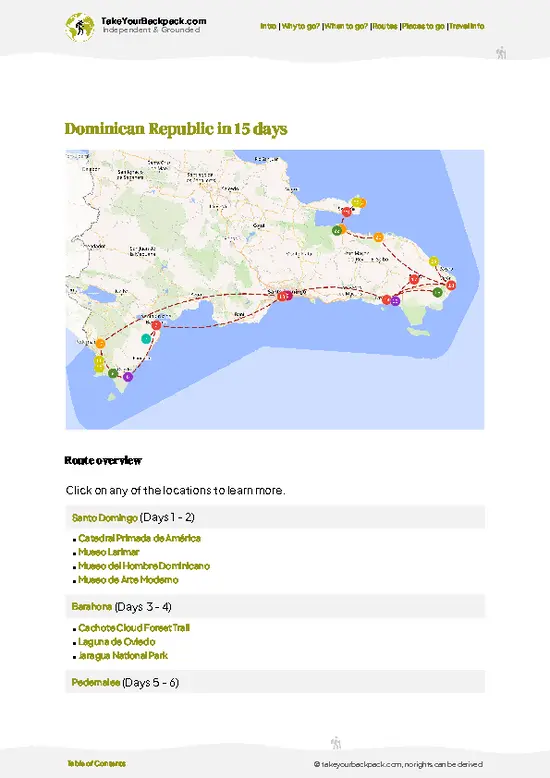
Traveling through the Dominican Republic can feel like a game of Tetris. The key is to cluster cities by region. Start in the north with Puerto Plata and Santiago, then head south to Santo Domingo. This route keeps travel time manageable while allowing for a rich experience.

Typical travel times between these cities range from one to three hours, depending on traffic and road conditions. Expect to spend at least a full day in each city to soak in the local culture, food, and sights. Rushing through will leave you with a postcard view but no real connection.

Common pitfalls include trying to see too much too quickly. The temptation to hop from one city to another can lead to exhaustion. It’s better to savor a few places than to collect them like souvenirs.

Trade-offs are everywhere. Speed … read more 👉
Traveling through the Dominican Republic can feel like a game of Tetris. The key is to cluster cities by region. Start in the north with Puerto Plata and Santiago, then head south to Santo Domingo. This route keeps travel time manageable while allowing for a rich experience.

Typical travel times between these cities range from one to three hours, depending on traffic and road conditions. Expect to spend at least a full day in each city to soak in the local culture, food, and sights. Rushing through will leave you with a postcard view but no real connection.

Common pitfalls include trying to see too much too quickly. The temptation to hop from one city to another can lead to exhaustion. It’s better to savor a few places than to collect them like souvenirs.

Trade-offs are everywhere. Speed means less depth; comfort often comes at a price. Budget travelers might find themselves crammed into a bus, while those willing to splurge can enjoy a private transfer.

Flexibility is crucial. Plans can change, and sometimes the best experiences come from unexpected detours. Prioritize what matters most: whether it’s the vibrant nightlife of Santo Domingo or the serene beaches of the north, choose wisely and enjoy the ride.

The ListMust-Visit cities in Dominican Republic

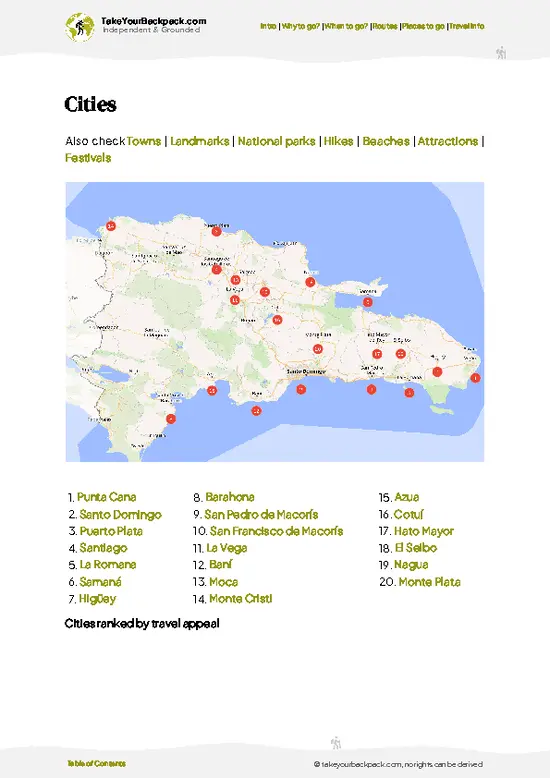
1 Punta Cana

resort strip, white sand beaches, airport hub

Arrive at the country’s busiest airport, then choose from a stretch of beaches and large resorts tailored to international visitors.

2 Santo Domingo

colonial zone, riverside boulevard, urban nightlife

Walk centuries-old streets, sample diverse nightlife, and experience a city where history and modern life intersect at every turn.

3 Puerto Plata

Victorian architecture, cable car, seaside promenade

Ride the cable car for sweeping views, stroll past ornate buildings, and enjoy the city’s lively waterfront atmosphere.

4 Santiago

cultural centers, cigar factories, urban parks

Engage with local arts, tour working cigar factories, and relax in green spaces that break up the city’s urban sprawl.

5 La Romana

sugar refinery, golf resorts, port city

Balance industrial heritage with modern amenities in a city that serves as a launch point for island excursions and resort stays.

dominican-republic-city-la-romana v1
© Google |

6 Samaná

peninsula, whale watching, palm-fringed bay

Arrive for seasonal whale migrations and stay to discover secluded beaches, forested hills, and a laid-back port atmosphere.

dominican-republic-city-samana
© Google |

7 Higuey

basilica, pilgrimage site, busy crossroads

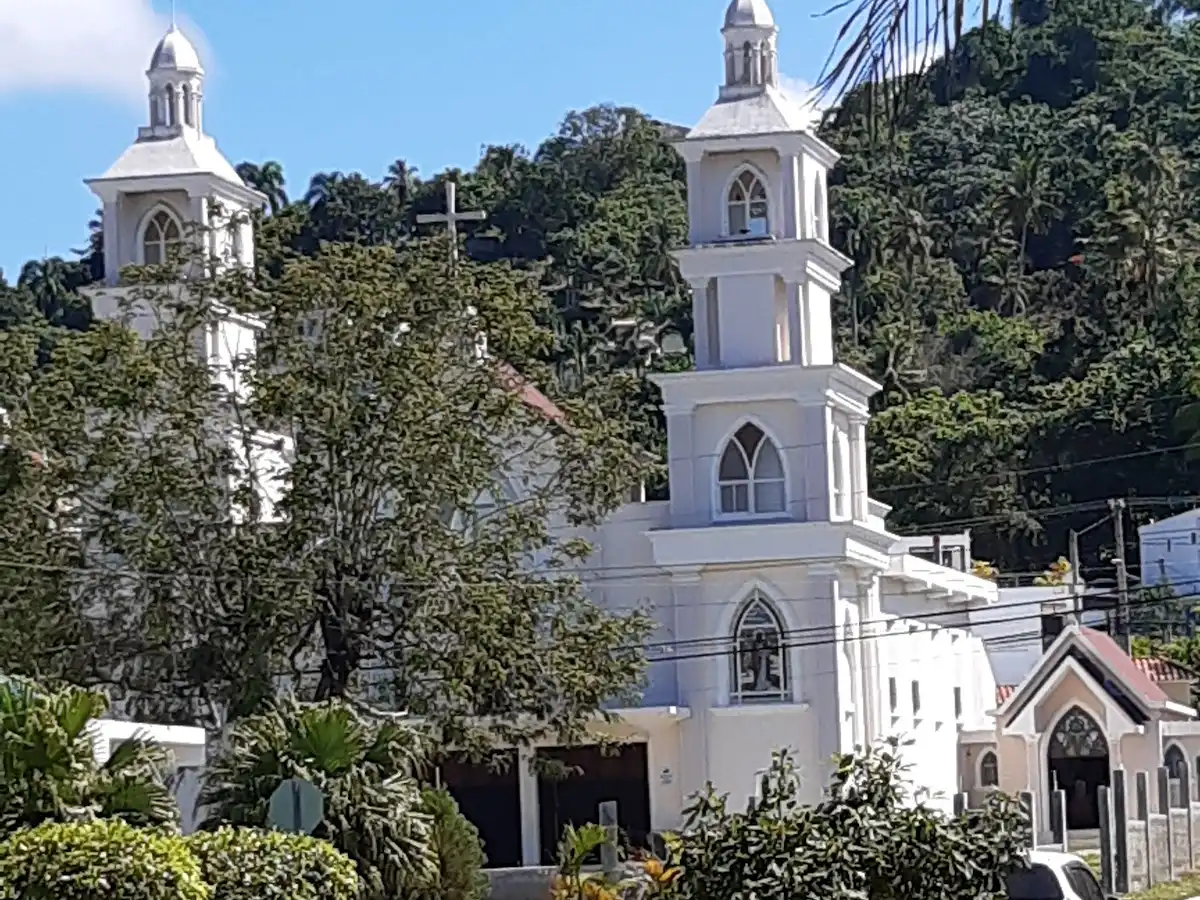
Visit the imposing basilica, witness religious devotion, and navigate a city that serves as a gateway to the eastern region.

dominican-republic-city-higuey
© Google |

8 Barahona

coastal cliffs, local markets, untamed beaches

Navigate rugged coastlines and browse lively produce stalls before venturing to remote beaches where the Caribbean meets the mountains.

9 San Pedro de Macorís

sugar mills, baseball legacy, riverfront

Trace the city’s industrial roots along the river, and experience a place where baseball and sugar have shaped daily rhythms.

10 San Francisco de Macorís

cacao plantations, student life, central park

Stroll through a city energized by its university, then venture out to see how cacao is grown and processed nearby.

dominican-republic-city-san-francisco-de-macoris
© Google |

11 La Vega

carnival traditions, fertile plains, cathedral

Plan your visit around carnival season or explore the city’s agricultural roots and imposing cathedral in the central square.

12 Baní

sand dunes, mango groves, artisan workshops

Walk among shifting dunes, sample local fruit, and discover craftspeople who keep traditional skills alive in a sunbaked landscape.

13 Moca

coffee farms, tree-lined avenues, local bakeries

Sip fresh coffee in a town known for its bakeries, and explore the green hills that supply much of the region’s produce.

14 Monte Cristi

coastal cliffs, salt flats, mangrove estuary

Wander among wind-carved landscapes, explore tidal wetlands, and observe daily life in a town shaped by the sea and salt trade.

15 Azua

dry valleys, roadside eateries, tobacco fields

Drive through arid plains, stop for hearty local meals, and observe tobacco farming that defines the region’s economy.

16 Cotuí

gold mines, reservoir, rural markets

Observe daily life in a mining town, visit the large reservoir, and browse markets that serve the surrounding countryside.

17 Hato Mayor

citrus groves, limestone caves, small-town plazas

Explore citrus farms and nearby caves, then unwind in a central plaza that anchors daily life in this agricultural town.

18 El Seibo

cattle ranches, colonial church, rural festivals

Experience a slower pace in a town defined by ranching, religious traditions, and annual festivities rooted in local history.

19 Nagua

Atlantic coastline, rice paddies, fishing port

Travel along the northern coast, watch fishermen at work, and see how rice cultivation shapes the landscape around the town.

20 Monte Plata

waterfalls, cattle pastures, rural villages

Venture into the countryside to find waterfalls and open pastures, with small communities scattered across the landscape.

21 San Juan de la Maguana

mountain basin, Taino heritage, agricultural hub

Experience a city surrounded by fertile land, where indigenous history and farming traditions remain central to daily life.

22 Bonao

mountain foothills, art murals, cacao farms

Wander through streets lined with murals, then head into the hills for a taste of rural life and fresh cacao.

23 Villa Altagracia

pine forests, roadside fruit stands, commuter town

Pass through pine-shaded hills, stop for fresh fruit, and see how proximity to the capital shapes this busy transit point.

24 Pueblo Viejo

mining history, inland hills, small-town pace

Explore traces of gold mining, wander quiet streets, and observe a community shaped by its past and rural surroundings.

25 Mao

banana plantations, river valley, agricultural fairs

Visit a city at the heart of the northwest’s farming region, where banana crops and seasonal fairs define the calendar.

Think you know Dominican Republic?

Prove you’re a true local — uncover 15 lesser-known cities in Dominican Republic that locals tend to keep to themselves.
Loading the map 🌍

Expert viewInsights from Locals and Experts

Essential vs. Overrated: Navigating the Dominican Republic’s Urban Landscape


In the Dominican Republic, the urban experience can feel like a high-stakes game of musical chairs. You can either hop from city to city, trying to catch the rhythm, or you can settle in and soak up the local vibe. I recommend aiming for about three to four cities. This strikes a balance between breadth and depth, allowing you to taste the local culture without feeling like a frantic tourist on a scavenger hunt.

Transport Hubs


The transport infrastructure is a mixed bag. Major cities are generally well-connected, but the quality of roads can vary dramatically. Expect some delays, especially if you’re relying on public transport. Buses are the lifeblood of intercity travel, but they can be as punctual as a cat at … read more 👉

Essential vs. Overrated: Navigating the Dominican Republic’s Urban Landscape


In the Dominican Republic, the urban experience can feel like a high-stakes game of musical chairs. You can either hop from city to city, trying to catch the rhythm, or you can settle in and soak up the local vibe. I recommend aiming for about three to four cities. This strikes a balance between breadth and depth, allowing you to taste the local culture without feeling like a frantic tourist on a scavenger hunt.

Transport Hubs


The transport infrastructure is a mixed bag. Major cities are generally well-connected, but the quality of roads can vary dramatically. Expect some delays, especially if you’re relying on public transport. Buses are the lifeblood of intercity travel, but they can be as punctual as a cat at a dog show. If you’re in a hurry, consider hiring a car or using ride-sharing apps where available. Just remember: driving here is like playing a video game on hard mode.

The trade-off? You can save time by flying between major hubs, but you’ll miss the quirky roadside stops that make the journey memorable. Think of it as a culinary adventure; sometimes the best meals are found at the roadside stands, not the fancy restaurants.

Urban Pacing


Cities in the Dominican Republic have their own unique rhythms. Some pulse with energy, while others move at a more leisurely pace. If you’re looking for a fast-paced experience, you’ll find it in the bustling markets and nightlife. But don’t underestimate the charm of a slower city where you can sip coffee and watch life unfold.

The key is to match your travel style with the city’s vibe. If you’re a go-getter, you might find yourself frustrated in a laid-back locale. Conversely, if you’re looking to unwind, a high-energy city might leave you feeling overwhelmed.

Local Costs


Budgeting can be tricky. Costs can vary widely depending on where you are. In tourist-heavy areas, prices can skyrocket, while local spots offer a more authentic experience at a fraction of the cost. Street food is a must-try; it’s cheap, delicious, and a great way to mingle with locals.

However, the trade-off here is that you might need to navigate language barriers and cultural nuances. Don’t be surprised if your attempt at ordering a meal turns into a game of charades. Embrace it; it’s part of the adventure.

Exploring vs. Immersion


The age-old question: do you explore more cities quickly or dive deep into fewer? If you’re on a tight schedule, you might feel the pressure to tick off as many cities as possible. But here’s the catch: rushing through can lead to a superficial experience. You’ll miss the stories behind the street art, the laughter in local cafes, and the warmth of community gatherings.

On the flip side, immersing yourself in a single city allows you to build connections and truly understand the local culture. You’ll find that the longer you stay, the more layers you uncover. Just be prepared for the occasional awkward moment when you realize you’ve been pronouncing “gracias” wrong for days.

Safety & Cultural Considerations


Safety is generally manageable, but like anywhere, it pays to stay aware. Stick to well-lit areas at night and keep your belongings close. Engaging with locals can enhance your experience, but be respectful of cultural norms. What’s acceptable in one city might raise eyebrows in another.

The trade-off? You might miss out on some experiences if you’re overly cautious, but it’s better to err on the side of safety.

In the end, the Dominican Republic offers a rich tapestry of urban experiences. Whether you choose to dart around or settle in, the key is to embrace the chaos and find joy in the journey.

✈️ The backpacker research shortcutDominican Republic Travel Guide

An offline-friendly backpacking guide with optimized travel routes, ranked highlights, transport advice, and the best areas to stay.
example page 0 from our offline Travel Guide for Dominican Republic
example page 1 from our offline Travel Guide for Dominican Republic
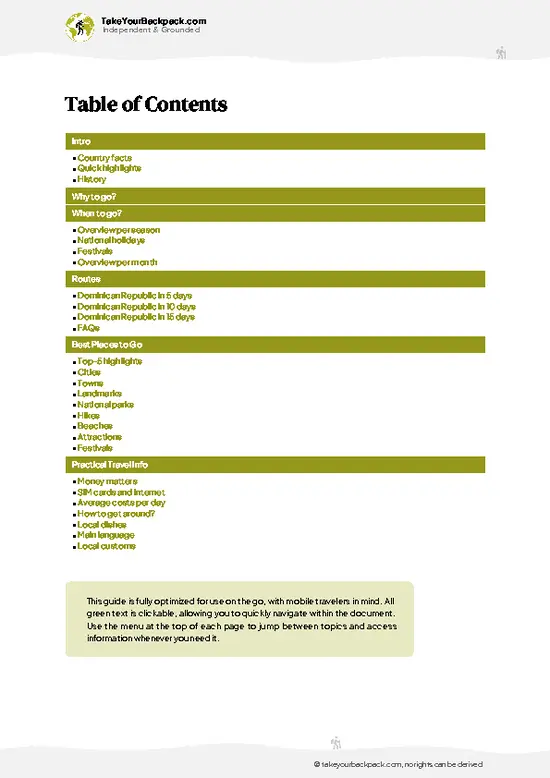
example page 2 from our offline Travel Guide for Dominican Republic
example page 3 from our offline Travel Guide for Dominican Republic
example page 4 from our offline Travel Guide for Dominican Republic
example page 5 from our offline Travel Guide for Dominican Republic
example page 6 from our offline Travel Guide for Dominican Republic
example page 7 from our offline Travel Guide for Dominican Republic
The digital guide (418 pages) contains:
116 highlights, ranked by travel appeal
Optimized 5, 10 & 15-day travel routes
Cities, national parks, landmarks, beaches
How to get around
Offline-friendly for travel without Wi-Fi
👉 Click to see all 30+ guide features

📅 Plan smarter in minutes, not weeks
Month by month travel advice
Festivals & national holidays
Budget expectations

🗺️ Go to the right places, skip the overrated ones
Honest pros & cons of destinations
Top hikes, parks & viewpoints
Lesser-known places most travelers miss
Clear “worth it vs skip it” guidance

🛏️ Travel smoothly without rookie mistakes
Best areas to stay
Transport systems explained simply
Common scams & safety advice
SIM cards, money & practical tips

🌍 Understand the country, not just visit it
Culture & traditions
52 Essential phrases & customs
Festivals worth planning around
Traveler-friendly historical context
Insights that make places more meaningful

📱 Built for real travel conditions
Fully downloadable PDF
Works completely offline
Optimized for phone use
Useful in remote areas & buses
Everything in one place
Save weeks of stressful planning
Get instant access to your full guide. 30‑day money-back guarantee.
+ Add another guide for just US$7.80

By proceeding you agree to our terms.
Sent to your inbox immediately after payment • 100% Secure Checkout
Best Backpacking Travel Advisor 2025 tourism awardBest Backpacking
Travel Advisor
2025
What others say about Take Your Backpack Guides:
⭐⭐⭐⭐⭐
Fantastic, amazing amount of information!
⭐⭐⭐⭐⭐
My goodness this is amazing, it's what I've been looking for hats off too you!
⭐⭐⭐⭐⭐
I think this is absolutely BRILLIANT
⭐⭐⭐⭐
Very complete and informative. It's still missing places, but I gotta to commend you
⭐⭐⭐⭐⭐
This is truly amazing, thank you, can't wait to explore it with my kids!
⭐⭐⭐⭐⭐
Awesome resource, thank you!
⭐⭐⭐⭐⭐
This is amazing! Can't wait to explore the ones I haven't seen
⭐⭐⭐⭐
I love this! Well done, great idea.
⭐⭐⭐⭐⭐
Thanks for taking the time to make this gem!
⭐⭐⭐⭐⭐
This might be the best website I've ever seen.
⭐⭐⭐⭐⭐
Congratulations, and thank you so much for your work; it's incredibly valuable.
⭐⭐⭐⭐
In all seriousness I think you did a great job pointing out the important spots
⭐⭐⭐⭐⭐
10/10 very good
⭐⭐⭐⭐⭐
As someone who's only just starting to visit regularly this is awesome, thank you.
⭐⭐⭐⭐
Thank you very much! I'm going to visit my dad, it's going to be very useful!
⭐⭐⭐⭐⭐
This is really cool! We'll be travelling for the first time and this definitely come in handy.
⭐⭐⭐⭐⭐
You are now our minister of culture, congratulations 👨‍💼
⭐⭐⭐⭐⭐
Just wanted to tell you that this is a pearl! Going to follow your recommendations.
⭐⭐⭐⭐⭐
This is so cool. I'll definitely be using the resource for my travels soon.
⭐⭐⭐⭐⭐
This is very impressive! Good work.
⭐⭐⭐⭐⭐
This is an amazing and informative site. Very well done!

🛏️ Where to stay?Top Areas to Stay

Yes — hostels and budget accommodation are common in the Dominican Republic, concentrated in major hubs and beach towns: Santo Domingo (Zona Colonial), Punta Cana/Bávaro, Puerto Plata region (Sosua/Cabarete), Samaná (Las Terrenas) and Bayahibe.

Santo Domingo gives best access to historic sights and transit but is busy and noisier; Punta Cana/Bávaro offers easy beach access and many budget rooms near resorts but tends to be pricier and poorly served by public transport; Cabarete is ideal for watersports and nightlife but can be touristy and boisterous at night while Sosua has very cheap stays but mixed safety after dark; Las Terrenas is quieter with chill beaches and some affordable guesthouses … read more 👉
Yes — hostels and budget accommodation are common in the Dominican Republic, concentrated in major hubs and beach towns: Santo Domingo (Zona Colonial), Punta Cana/Bávaro, Puerto Plata region (Sosua/Cabarete), Samaná (Las Terrenas) and Bayahibe.

Santo Domingo gives best access to historic sights and transit but is busy and noisier; Punta Cana/Bávaro offers easy beach access and many budget rooms near resorts but tends to be pricier and poorly served by public transport; Cabarete is ideal for watersports and nightlife but can be touristy and boisterous at night while Sosua has very cheap stays but mixed safety after dark; Las Terrenas is quieter with chill beaches and some affordable guesthouses but fewer dorm-style hostels; Bayahibe is small, cheap for Saona Island trips but has limited services and little nightlife.

If you enjoy meeting fellow travelers, consider choosing hostels with high ratings for atmosphere. On the other hand, if you prefer having your own space, a hotel might be a better option.

Dominican RepublicDiscover the Country

👋 Meet the founderWho’s Behind Take Your Backpack?

Johan, backpacker and founder of TakeYourBackpackHi, I’m Johan (Netherlands 🇳🇱), the creator of TakeYourBackpack. Over the past decade, I’ve backpacked through 80+ countries across six continents, gaining extensive experience with independent travel, long-term trips, and overland routes.

This site is built on a combination of firsthand travel experience and carefully curated insights from other backpackers. Many guides are based on places I’ve personally visited, while others bring together tips, observations, and practical advice shared by trusted travelers I’ve met along the way.

The goal is to provide realistic, experience-driven guidance — not generic itineraries — so you can explore destinations with better context, clearer expectations, and more confidence.

Get full country guide •
Instant download • 116 highlights • Full Offline guide