×

Dominican Republic🇩🇴 | citiesMaoRice and banana fields, Yaque del Norte, goat lunch, February Carnival | things to do and best time to go

Explore Villa AltagraciaExplore La Vega

Backpacking in Mao
👀 For curious travelerscity ranked #25
By Johan Kruseman 🇳🇱 | Updated October 22, 2026

Mao is a farm town, not a beach town, even though the northwest coast sits close enough to tempt the assumption. It lies in the northwest of the Dominican Republic, in the Yaque del Norte valley, west of Santiago. Rice, bananas, and motoconchos define it. Skip it if you want hostel scenes or nightlife. Come for ordinary Dominican life with no tour bus in sight. A first day goes well with a morning at the market, a long lunch of goat, and an evening on the park benches.

Discover everything you want to know in the 📖 Dominican Republic Travel Guide.


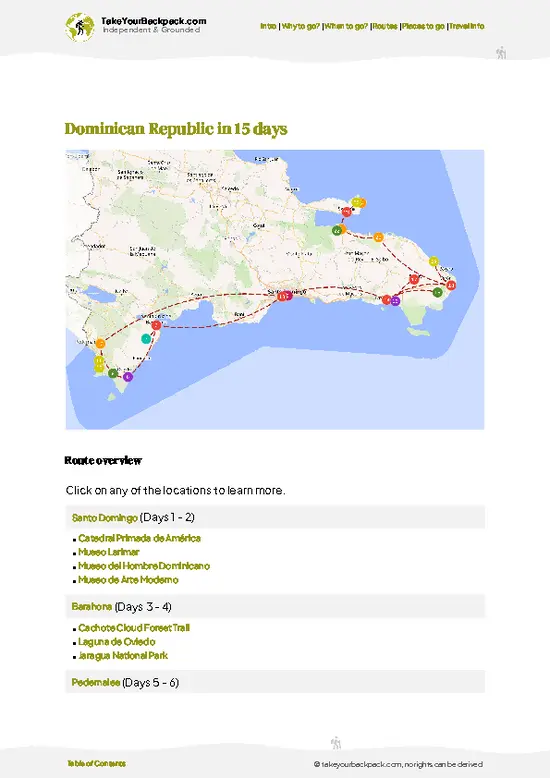
example page 0 from our offline Travel Guide for Dominican Republic
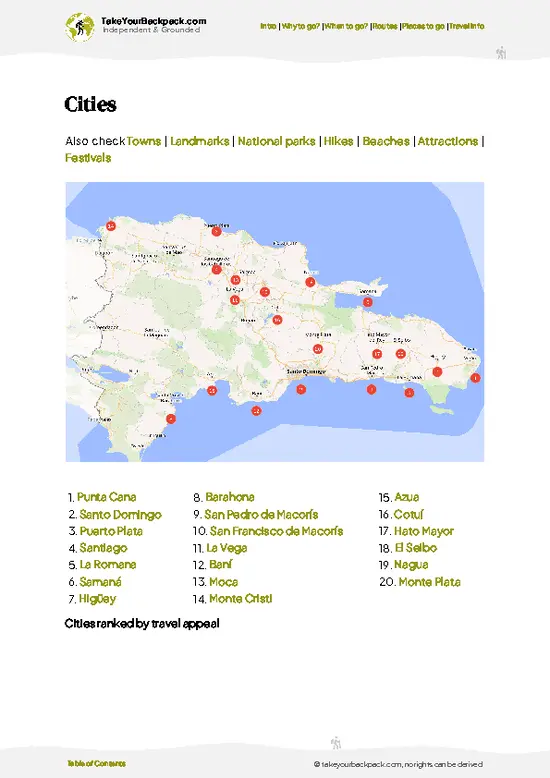
example page 1 from our offline Travel Guide for Dominican Republic
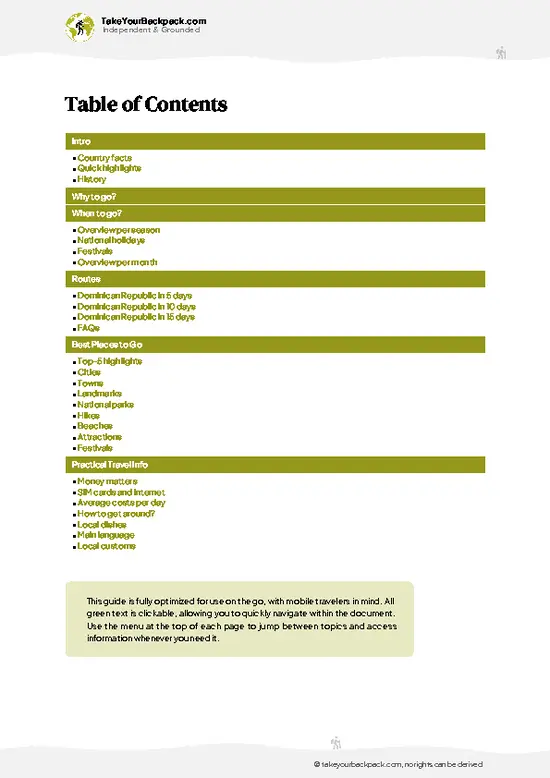
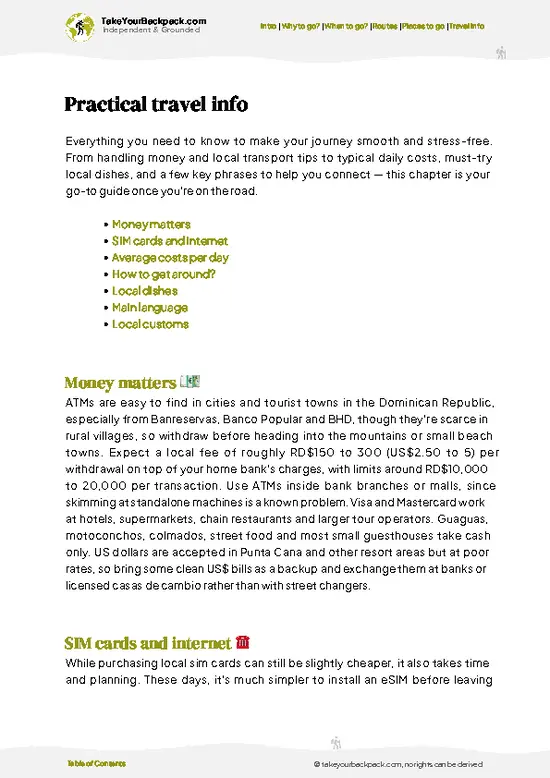
example page 2 from our offline Travel Guide for Dominican Republic
example page 3 from our offline Travel Guide for Dominican Republic
example page 4 from our offline Travel Guide for Dominican Republic
example page 5 from our offline Travel Guide for Dominican Republic
example page 6 from our offline Travel Guide for Dominican Republic
example page 7 from our offline Travel Guide for Dominican Republic
Loading the map 🌍
CLICK TO FILTER
cities
towns
landmarks
national parks
hikes
beaches
attractions
festivals
SHOW COUNTRY’S BESTSHOW ALL

✨ Why go?
Ranked #25 city in Dominican Republic
What makes it a must-see city

Mao works for backpackers who want a break from the resort circuit and a real look at the Línea Noroeste. It is a practical overnight between Santiago and the far northwest, with guaguas passing through constantly. Eating is the main draw, especially chivo liniero, the region’s goat stew seasoned with oregano. The town is flat and walkable, and almost nobody speaks English, so your Spanish gets a workout. Plan one or two nights, not a week, and use it to reset before the coast.

💡 HighlightsPlaces and moments you shouldn't skip

  1. Parque Central: The town’s living room, where families, domino players, and motoconcho drivers gather. Go at dusk when it cools down. Free, 30 to 60 minutes.
  2. Yaque del Norte riverbank: The country’s longest river runs through the valley, and its banks give a calm walk past irrigated fields. Early morning is best. Free, about 1 hour.
  3. Mercado municipal: Produce, cheese, and cheap snacks in a noisy, sweaty hall. Mornings are liveliest. Buying fruit costs a few dollars. About 1 hour.
  4. Chivo liniero lunch: Goat with fried plantain at a local comedor is the dish to try here. Expect US$6 to 10 and about 1 hour.
  5. Rice and banana fields: The surrounding Valverde farmland is among the country’s main producers of both. A bike or motoconcho ride on side roads shows it best in the morning. Free to ride, 2 to
… read more 👉
  1. Parque Central: The town’s living room, where families, domino players, and motoconcho drivers gather. Go at dusk when it cools down. Free, 30 to 60 minutes.
  2. Yaque del Norte riverbank: The country’s longest river runs through the valley, and its banks give a calm walk past irrigated fields. Early morning is best. Free, about 1 hour.
  3. Mercado municipal: Produce, cheese, and cheap snacks in a noisy, sweaty hall. Mornings are liveliest. Buying fruit costs a few dollars. About 1 hour.
  4. Chivo liniero lunch: Goat with fried plantain at a local comedor is the dish to try here. Expect US$6 to 10 and about 1 hour.
  5. Rice and banana fields: The surrounding Valverde farmland is among the country’s main producers of both. A bike or motoconcho ride on side roads shows it best in the morning. Free to ride, 2 to 3 hours.
  6. Mao Carnival: Held on weekends in February, with costumed characters, drums, and street parties. Free to watch, plan on an evening.
Mao also puts you within reach of day trips to Monte Cristi’s El Morro hill, Cayo Arena (Paradise Island) offshore, and the Laguna Saladilla wetland. The park and riverbank cost nothing, so they are the cheapest stops here.
Spotted a mistake or missing something? Contact us.

Things to do near Mao

Ratings based on Tripadvisor reviews. When you book through this link, you support our work at no extra cost to you.

🏘️ NeighborhoodsWhere things are and how it's laid out

Mao is compact, flat and walkable, which is lucky, because the heat will vote against any grand itinerary. The smarter move is to treat it as three zones and do each in the cooler morning or evening.
  • Centro and Parque Duarte: The grid around the main plaza holds the church, banks, pharmacies and cheap comedores. Everything is within ten minutes on foot, so skip the motoconcho and save your pesos for fried cheese.
  • Avenida Mella and the Río Mao side: Busier, louder and lined with shops, fruit carts and the bus offices. Come for banana and rice country errands, not for sightseeing, and cross the main avenue at corners, since traffic treats lanes as suggestions.
  • Outskirts and banana fields: Farmland, small villages and the river lie a short motoconcho ride out. Go early, agree the fare first, and bring water.

⌛️ 1 dayWhat you can realistically do in a day

8:00 AM, Mercado municipal: Start with coffee and a fried breakfast, then wander the stalls while the produce is fresh. Walk to the park afterward.
10:00 AM, Parque Central: Sit, watch the town wake up, and check the church and shops around the square. Take a motoconcho to the river.
11:30 AM, Yaque del Norte riverbank: Stroll the banks and the farm tracks beside the irrigation channels, an area few visitors see.
1:30 PM, Chivo liniero lunch: Eat goat at a local comedor, then rest through the afternoon heat.
4:30 PM, Rice and banana fields: Ride out on a motoconcho for the low light over the plantations.
7:00 PM, Parque Central: Finish with a cold Presidente and people-watching.

🌤️ When to go?Best time to visit Mao

Mao sits in the hot Cibao northwest, so the cooler, drier months from December to March are the easiest for walking and farm visits.
  • December to March: Days reach about 29 to 32°C (84 to 90°F), nights drop to roughly 19 to 22°C (66 to 72°F), and showers are rare.
  • April to June: Hotter and more humid, with afternoon downpours.
  • July to October: Peak heat near 34°C (93°F) and the main hurricane risk.
  • Holidays: Carnival in February and Christmas fill buses and lift fares.
Book onward buses a day ahead around holidays.

source: climatestotravel.comJANJanuary: excellent for travelingFEBFebruary: excellent for travelingMARMarch: excellent for travelingAPRApril: excellent for travelingMAYMay: good for travelingJUNJune: fair for travelingJULJuly: fair for travelingAUGAugust: fair for travelingSEPSeptember: fair for travelingOCTOctober: fair for travelingNOVNovember: good for travelingDECDecember: excellent for traveling
when-to-go

✈️ The backpacker research shortcutDominican Republic Travel Guide

An offline-friendly backpacking guide with optimized travel routes, ranked highlights, transport advice, and the best areas to stay.
example page 0 from our offline Travel Guide for Dominican Republic
example page 1 from our offline Travel Guide for Dominican Republic
example page 2 from our offline Travel Guide for Dominican Republic
example page 3 from our offline Travel Guide for Dominican Republic
example page 4 from our offline Travel Guide for Dominican Republic
example page 5 from our offline Travel Guide for Dominican Republic
example page 6 from our offline Travel Guide for Dominican Republic
example page 7 from our offline Travel Guide for Dominican Republic
The digital guide (336 pages) contains:
✅ 108 highlights, ranked by travel appeal
✅ Optimized 5, 10 & 15-day travel routes
✅ Cities, national parks, landmarks, beaches
✅ How to get around
✅ Offline-friendly for travel without Wi-Fi
👉 Click to see all 30+ guide features

📅 Plan smarter in minutes, not weeks
✅ Month by month travel advice
✅ Festivals & national holidays
✅ Budget expectations

🗺️ Go to the right places, skip the overrated ones
✅ Honest pros & cons of destinations
✅ Top hikes, parks & viewpoints
✅ Lesser-known places most travelers miss
✅ Clear “worth it vs skip it” guidance

🛏️ Travel smoothly without rookie mistakes
✅ Best areas to stay
✅ Transport systems explained simply
✅ Common scams & safety advice
✅ SIM cards, money & practical tips

🌍 Understand the country, not just visit it
✅ Culture & traditions
✅ 52 Essential phrases & customs
✅ Festivals worth planning around
✅ Traveler-friendly historical context
✅ Insights that make places more meaningful

📱 Built for real travel conditions
✅ Fully downloadable PDF
✅ Works completely offline
✅ Optimized for phone use
✅ Useful in remote areas & buses
✅ Everything in one place
Stop searching, start planning
Get instant access to your full guide. 30‑day money-back guarantee.
+ Add another guide for just

By proceeding you agree to our terms.
Sent to your inbox immediately after payment • 100% Secure Checkout
Best Backpacking Travel Advisor 2025 tourism awardBest Backpacking
Travel Advisor
2025
What others say about Take Your Backpack Guides:
⭐⭐⭐⭐⭐
Fantastic, amazing amount of information!
⭐⭐⭐⭐⭐
My goodness this is amazing, it's what I've been looking for hats off too you!
⭐⭐⭐⭐⭐
I think this is absolutely BRILLIANT
⭐⭐⭐⭐
Very complete and informative. It's still missing places, but I gotta to commend you
⭐⭐⭐⭐⭐
This is truly amazing, thank you, can't wait to explore it with my kids!
⭐⭐⭐⭐⭐
Awesome resource, thank you!
⭐⭐⭐⭐⭐
This is amazing! Can't wait to explore the ones I haven't seen
⭐⭐⭐⭐
I love this! Well done, great idea.
⭐⭐⭐⭐⭐
Thanks for taking the time to make this gem!
⭐⭐⭐⭐⭐
This might be the best website I've ever seen.
⭐⭐⭐⭐⭐
Congratulations, and thank you so much for your work; it's incredibly valuable.
⭐⭐⭐⭐
In all seriousness I think you did a great job pointing out the important spots
⭐⭐⭐⭐⭐
10/10 very good
⭐⭐⭐⭐⭐
As someone who's only just starting to visit regularly this is awesome, thank you.
⭐⭐⭐⭐
Thank you very much! I'm going to visit my dad, it's going to be very useful!
⭐⭐⭐⭐⭐
This is really cool! We'll be travelling for the first time and this definitely come in handy.
⭐⭐⭐⭐⭐
You are now our minister of culture, congratulations 👨‍💼
⭐⭐⭐⭐⭐
Just wanted to tell you that this is a pearl! Going to follow your recommendations.
⭐⭐⭐⭐⭐
This is so cool. I'll definitely be using the resource for my travels soon.
⭐⭐⭐⭐⭐
This is very impressive! Good work.
⭐⭐⭐⭐⭐
This is an amazing and informative site. Very well done!

🛏️ Where to stay?Choosing the right base

The best bet for a budget bed in Mao is the central streets near Parque Duarte. Hostels are scarce, so you will mostly find small family-run hotels and guesthouses, usually US$15 to 30 a night for a private room. Being central means restaurants, ATMs and bus offices are a short walk, and you rarely need a taxi after dark. Expect some motorbike noise, so ask for a room away from the street. If you want more beds and choice, Santiago, about an hour away, is the fallback base.

🚌 Getting aroundTransportation options and practical tips

Mao has no train, and the intercity buses and minibuses drop you on or near the central avenues, so reaching the plaza is a 5 to 15 minute walk or a US$1 motoconcho hop. Public transport here is informal, which means schedules are a rumor and departure happens when the vehicle is full.
  • Walking: The center is flat and small, so most of what you need sits within 1 km. Go before 11 a.m., unless you enjoy being poached.
  • Motoconcho: Motorbike taxis cost about US$0.50 to 1.50 per hop in town. There is no meter, so agree the price first and decline the three-person load.
  • Carros públicos: Shared cars on fixed routes cost about US$0.50 to 1. Ask which corner your route starts from, since drivers wait there and will not wait for you.
  • Intercity buses and guaguas: Santiago takes roughly 1 to 1.5 hours for
… read more 👉
Mao has no train, and the intercity buses and minibuses drop you on or near the central avenues, so reaching the plaza is a 5 to 15 minute walk or a US$1 motoconcho hop. Public transport here is informal, which means schedules are a rumor and departure happens when the vehicle is full.
  • Walking: The center is flat and small, so most of what you need sits within 1 km. Go before 11 a.m., unless you enjoy being poached.
  • Motoconcho: Motorbike taxis cost about US$0.50 to 1.50 per hop in town. There is no meter, so agree the price first and decline the three-person load.
  • Carros públicos: Shared cars on fixed routes cost about US$0.50 to 1. Ask which corner your route starts from, since drivers wait there and will not wait for you.
  • Intercity buses and guaguas: Santiago takes roughly 1 to 1.5 hours for about US$2 to 4, and Puerto Plata or Santo Domingo are longer. Expect an early start to be the cooler, calmer option, with air conditioning set to arctic.

👛 Costs (as of 22 October 2026)Travel costs and budget guide for Mao

Mao costs roughly US$38 to 50 a day for a backpacker, and the total below is US$43 with a high-season room. Most spending goes to a private room, since dorms are rare.
CategoryBudget RangeLocal Reality
Accommodation (high season)US$18 to 25Basic guesthouse room
Accommodation (off-season)US$14 to 20Negotiable midweek
MealsUS$9 to 12Comedores and street food
Local transportUS$2 to 3Motoconchos and carros públicos
City transport passUS$0None exists, pay per ride
Activities and entry feesUS$3 to 5Mostly free sights, river or farm visits
MiscellaneousUS$3 to 5Water, SIM data, snacks
Total Daily BudgetUS$43Using high-season room
Eat the set lunch at a comedor, since it is the cheapest full meal of the day.
⚠️ Prices can change and everyone travels differently, so take this as a rough guide. Hope it helps you plan your adventure!

🚌 Day tripsExploring the surroundings

Mao is a handy base for the northwest, with beaches, rivers and a big city all within a couple of hours.Santiago de los Caballeros: The country’s second city has the Monumento a los Héroes, a cigar scene and a lively center. The bus takes 1 to 1.5 hours and costs about US$2 to 4 each way, so US$15 to 25 covers lunch and entry fees. Arrive early, because afternoon return buses fill up.
Monte Cristi: Salt flats, a quiet malecón and El Morro hill with sweeping views. Allow about 45 minutes to an hour by guagua for roughly US$2 to 3, plus US$10 to 20 for a moto or guide to El Morro. Go in the cooler months, and carry water, since shade is scarce.
👉 Explore Monte CristiValverde and the Río Yaque del Norte: Riverside stops and farms show the banana and rice economy up close. It is a short ride, so … read more 👉
Mao is a handy base for the northwest, with beaches, rivers and a big city all within a couple of hours.Santiago de los Caballeros: The country’s second city has the Monumento a los Héroes, a cigar scene and a lively center. The bus takes 1 to 1.5 hours and costs about US$2 to 4 each way, so US$15 to 25 covers lunch and entry fees. Arrive early, because afternoon return buses fill up.
Monte Cristi: Salt flats, a quiet malecón and El Morro hill with sweeping views. Allow about 45 minutes to an hour by guagua for roughly US$2 to 3, plus US$10 to 20 for a moto or guide to El Morro. Go in the cooler months, and carry water, since shade is scarce.
👉 Explore Monte CristiValverde and the Río Yaque del Norte: Riverside stops and farms show the banana and rice economy up close. It is a short ride, so budget US$5 to 12 with a motoconcho driver. First-timers often skip agreeing the return fare.

🍲 FoodLocal Flavors for Backpackers

Mao is banana country, so expect plátanos in every form, from mangú at breakfast to crisp tostones beside grilled meat. Rice is a local crop too, and a plate of arroz con pollo or stewed goat with rice is common at lunch. The cheapest meals, around US$3 to 6, are at comedores near the plaza and the bus offices, plus street carts selling fried cheese, yuca and fresh juice in the evening. Cool off with jugo de chinola (passion fruit) or cold Presidente at a corner colmado.

🛡️ SafetyTraveler Safety Guide

Mao is a working agricultural town where daily life is relaxed, and most problems are petty. Keep your phone out of sight on the street, since motorbike snatch thefts happen in busy areas. After dark, stay on the main central streets and take a motoconcho instead of walking unlit side roads. Solo travelers get plenty of curiosity and attempts at overcharging, which a firm, friendly price check handles. Carry only the cash you need.

FAQCommon questions from travelers

Mao works best as a 1 day stop, or 2 days if you add a day trip. The town itself takes a few hours to walk, while Santiago is about 1 to 1.5 hours away and Monte Cristi roughly 45 minutes to an hour.
Mao is reasonably safe for solo backpackers who use normal city sense. Phone snatching from motorbikes is the main risk, so keep devices tucked away, and take a motoconcho for about US$0.50 to 1.50 instead of walking quiet streets at night.
Mao is known for bananas, rice and agriculture, and sits in the northwest Cibao region. Travelers use it as a low-key base, with Parque Duarte in the center and day trips to Monte Cristi or Santiago for around US$2 to 4 each way by bus.
⚠️ Things can change over time, so always validate details locally before you go.

Other Dominican cities near Mao

Explore more nearby:

  • Santiago—Hero monument terrace, cigar factories, Centro León, Calle del Sol| 42 km away
  • Puerto Plata—Isabel de Torres cable car, Victorian center, amber museum, rum distillery| 49 km away
  • Moca—Cocoa farms, Sagrado Corazón church, Cibao market, plaza colmados| 61 km away

💡 Not sure where to go next?
Create a personalized itinerary for Dominican Republic including Mao and the places that fit your trip.

Generate my itinerary

👉 Discover all cities

Or checkout all Dominican Republic has to offer (think cities, towns, villages, national parks, hikes, beaches, festivals)
Country photo of Dominican Republic

We 💚 feedbackFinal thoughts on visiting Mao

Mao rewards anyone who bothers to look at the fields around it. Most people only see the highway strip. Ask a motoconcho driver to take you down a farm road in the morning, and carry small bills.

✍️ Help improve this page!
The information on this page is based on in-depth research, insights shared by experienced travelers, and feedback from the local travel community in Dominican Republic. While every effort is made to keep the information accurate and current, conditions can change — so if you spot anything incorrect or outdated, please get in touch.


🙋‍♂️ Give feedback

👋 Meet the founderWho’s Behind Take Your Backpack?

Johan, backpacker and founder of TakeYourBackpackHi, I’m Johan (Netherlands 🇳🇱), the creator of TakeYourBackpack. Over the past 3 decades, I’ve backpacked through 90+ countries across six continents, gaining extensive experience with independent travel, long-term trips, and overland routes.

This site is built on a combination of firsthand travel experience and carefully curated insights from other backpackers. Many guides are based on places I’ve personally visited, while others bring together tips, observations, and practical advice shared by trusted travelers I’ve met along the way.

The goal is to provide realistic, experience-driven guidance — not generic itineraries — so you can explore destinations with better context, clearer expectations, and more confidence.