×

Dominican Republic🇩🇴 | citiesSantiagocultural centers, cigar factories, urban parks | things to do and best time to go

Explore Punta CanaExplore Santo Domingo

Backpacking in Santiago
🏆 Top pickcity ranked #4
By Johan Kruseman 🇳🇱 | Updated June 1, 2026

Everyone talks about Santiago for one thing: baseball. Big names, big stadium, big pride. Fun, yes—but what matters more to you as a traveler is that this is the Dominican Republic’s working heartbeat, not a beach bubble. Santiago sits in the Cibao Valley in the north-central part of the country, between the touristy coasts and the rural mountains. For backpackers, it’s a trade: fewer postcard views, more real life. You get cheap food, solid guaguas to everywhere, and a downtown where Parque Duarte, the Monumento a los Héroes, and small museums give you just enough “sightseeing” to justify the stop. Nightlife is loud, bachata-heavy, and very local; meeting Dominicans is easy, meeting other backpackers less so. It’s generally safe if you stay street-smart. Compared to Puerto Plata or Cabarete, Santiago is grittier, cheaper, and more about people than scenery.

Discover everything you want to know in the 📖 Dominican Republic Travel Guide.
Loading the map 🌍
CLICK TO FILTER
cities
towns
landmarks
national parks
hikes
beaches
attractions
festivals
regions
SHOW COUNTRY’S BESTSHOW ALL

✨ Why go?
Ranked #4 city in Dominican Republic
Why visitors keep coming back

Santiago, Dominican Republic, is a strategic basecamp for backpackers looking to balance time, money, and comfort. The city offers a rich tapestry of local culture and affordability, making it easy to stretch your budget while diving into authentic experiences. You’ll find a variety of hostels that cater to different vibes, from social hubs to quieter retreats, all at reasonable prices.

The walkability of Santiago is a game-changer; you can explore bustling markets, vibrant street art, and local eateries without needing to rely on public transport. Speaking of food, the culinary scene is a delightful mix of street food and sit-down restaurants, ensuring you can eat well without breaking the bank.

When the sun sets, the nightlife kicks in, offering everything from laid-back bars to lively … read more 👉
Santiago, Dominican Republic, is a strategic basecamp for backpackers looking to balance time, money, and comfort. The city offers a rich tapestry of local culture and affordability, making it easy to stretch your budget while diving into authentic experiences. You’ll find a variety of hostels that cater to different vibes, from social hubs to quieter retreats, all at reasonable prices.

The walkability of Santiago is a game-changer; you can explore bustling markets, vibrant street art, and local eateries without needing to rely on public transport. Speaking of food, the culinary scene is a delightful mix of street food and sit-down restaurants, ensuring you can eat well without breaking the bank.

When the sun sets, the nightlife kicks in, offering everything from laid-back bars to lively dance spots. Plus, Santiago serves as a convenient launchpad for day trips to nearby attractions, making it easy to maximize your time. If you’re looking for a city that combines character with practical logistics, Santiago is worth more than just a quick stop.
Want to include Santiago in your Dominican Republic route?
Create a personalized Dominican Republic itinerary that includes Santiago and the places that fit your trip — based on your travel style, budget, and available time. Get your route in seconds.

Generate my trip

💡 HighlightsWhat this place is best known for

  • Monumento a los Héroes de la Restauración — The city’s skyline icon: a towering monument on a hill with sweeping views of Santiago, great for photos, a bit of history about the Restoration War, and local vendors selling cold drinks after the climb.
  • Centro León (Centro Cultural León Jimenes) — The best stop for curated culture in Santiago: rotating art shows, permanent exhibits on regional history and folk traditions, and a sculpture garden that gives a clear sense of Cibao identity.
  • Gran Teatro del Cibao Alejandro Grullón — A handsome, active theater that hosts concerts, ballet and local productions; catching a show or simply touring the lobby gives you a feel for Santiago’s contemporary arts scene.
  • Catedral de Santiago Apóstol — The city’s main cathedral in the heart of downtown; architecturally
read more 👉
  • Monumento a los Héroes de la Restauración — The city’s skyline icon: a towering monument on a hill with sweeping views of Santiago, great for photos, a bit of history about the Restoration War, and local vendors selling cold drinks after the climb.
  • Centro León (Centro Cultural León Jimenes) — The best stop for curated culture in Santiago: rotating art shows, permanent exhibits on regional history and folk traditions, and a sculpture garden that gives a clear sense of Cibao identity.
  • Gran Teatro del Cibao Alejandro Grullón — A handsome, active theater that hosts concerts, ballet and local productions; catching a show or simply touring the lobby gives you a feel for Santiago’s contemporary arts scene.
  • Catedral de Santiago Apóstol — The city’s main cathedral in the heart of downtown; architecturally interesting, regularly used by locals, and surrounded by the plazas and cafés where everyday life happens.
  • Parque Duarte (Parque Central) — The city’s social living room: benches, trees, food stalls and a steady stream of people-watching. Good place to absorb everyday Dominican rhythm and grab a street snack.
  • Estadio Cibao — Home of Águilas Cibaeñas and a true local ritual: if you can time a winter baseball game, you’ll see Santiago at its most animated — music, food, and passionate fans.
  • Mercado Modelo / Mercado Central — A bustling market where you can buy local produce, spices, Dominican crafts and cheap eats; it’s noisy, colorful and one of the best places to practice bargaining and sample the city’s flavors.
  • Museo del Tabaco — Small but focused on the Cibao’s tobacco culture: exhibits on cultivation and cigar-making, and often nearby you can see rollers at work or buy locally made cigars.
  • Casa de la Cultura / Galerías locales — Scattered around downtown you’ll find municipal cultural centers and small galleries showcasing local painters, folk-artisans and rotating exhibitions — great for discovering emerging Dominican artists.
  • Los Miradores around the Monumento (viewpoints & public art walks) — Not one single museum, but a cluster of viewpoints, murals and public sculptures on the Monumento hill and adjacent avenues; short walks here reward you with panoramic cityscapes and street art that tells local stories.
A few excellent day trips just outside Santiago: the mountain towns of Jarabacoa and Constanza for rivers, waterfalls and cool air, and the beaches/historic attractions around nearby Puerto Plata.
Spotted a mistake or missing something? Contact us.

Things to do around Santiago

Ratings based on Tripadvisor reviews. When you book through this link, you support our work at no extra cost to you.

🏘️ NeighborhoodsUnderstanding the local layout

Santiago, Dominican Republic, offers a mix of vibrant culture and practical logistics for backpackers. Here’s a breakdown of key neighborhoods to help you navigate your choices.

Centro Histórico: This is the heart of Santiago, where colonial architecture meets local life. It’s walkable, with plenty of cafes and shops. Costs are moderate, making it ideal for short stays. Nightlife is lively but not overwhelming, perfect for those who want to soak in the local vibe without the chaos.

Los Jardines: A bit more upscale, this neighborhood has a relaxed atmosphere with parks and green spaces. It’s slightly pricier but offers a comfortable stay. Public transport is accessible, making it easy to explore. Great for longer stays if you prefer a quieter environment with a touch of luxury.

La Zona Colonial: … read more 👉
Santiago, Dominican Republic, offers a mix of vibrant culture and practical logistics for backpackers. Here’s a breakdown of key neighborhoods to help you navigate your choices.

Centro Histórico: This is the heart of Santiago, where colonial architecture meets local life. It’s walkable, with plenty of cafes and shops. Costs are moderate, making it ideal for short stays. Nightlife is lively but not overwhelming, perfect for those who want to soak in the local vibe without the chaos.

Los Jardines: A bit more upscale, this neighborhood has a relaxed atmosphere with parks and green spaces. It’s slightly pricier but offers a comfortable stay. Public transport is accessible, making it easy to explore. Great for longer stays if you prefer a quieter environment with a touch of luxury.

La Zona Colonial: Known for its historic charm, this area is packed with museums and cultural sites. It’s a bit touristy, so prices can be higher, but the experience is rich. Walkability is excellent, and you can easily hop on public transport. Ideal for those who want to dive deep into history while enjoying a vibrant nightlife scene.

Los Cibao: A local favorite, this neighborhood is less frequented by tourists. It’s budget-friendly and offers authentic Dominican experiences. Walkability is decent, but you might need to rely on local transport. Perfect for backpackers looking to immerse themselves in everyday life.

⌛️ 1 dayHow to make the most of one day

Santiago, the second-largest city in the Dominican Republic, pulses with a unique blend of history and modernity. It’s a place where colonial architecture meets vibrant street life, and the local culture is as rich as the coffee grown in the surrounding mountains. You can dive into its heart without feeling rushed, making it perfect for a day trip.

Start your morning in the historic center, where the iconic Monumento a los Héroes de la Restauración stands tall. Grab a coffee at a nearby café—try the local brew, it’s a game changer. After your caffeine fix, stroll through the Parque Duarte, where locals gather, and soak in the atmosphere. The nearby Catedral de Santiago is worth a quick visit; its architecture tells stories of the city’s past.

As the sun climbs, head to the bustling Mercado … read more 👉
Santiago, the second-largest city in the Dominican Republic, pulses with a unique blend of history and modernity. It’s a place where colonial architecture meets vibrant street life, and the local culture is as rich as the coffee grown in the surrounding mountains. You can dive into its heart without feeling rushed, making it perfect for a day trip.

Start your morning in the historic center, where the iconic Monumento a los Héroes de la Restauración stands tall. Grab a coffee at a nearby café—try the local brew, it’s a game changer. After your caffeine fix, stroll through the Parque Duarte, where locals gather, and soak in the atmosphere. The nearby Catedral de Santiago is worth a quick visit; its architecture tells stories of the city’s past.

As the sun climbs, head to the bustling Mercado Modelo. This market isn’t just for tourists; it’s where locals shop. Browse through handmade crafts, and don’t miss the chance to sample some street food—empandas are a must. You’ll get a taste of authentic Dominican life here.

In the afternoon, make your way to the Centro León, a cultural center that showcases Dominican art and history. It’s not on every tourist’s radar, but it’s a treasure. The exhibits are engaging, and the gardens provide a peaceful escape.

As evening approaches, wander through the neighborhood of La Zona Colonial. The streets come alive with music and laughter. Find a local restaurant for dinner; try the sancocho, a hearty stew that’s a staple here.

End your day at a rooftop bar, sipping on a Presidente while watching the sunset over the city. Santiago isn’t just a stop; it’s an experience that lingers long after you leave.
Turn your Santiago visit into an Dominican Republic adventure
Build a complete Dominican Republic route with Santiago, hidden gems, must-see destinations, and realistic travel times included.

Generate my trip

🌤️ When to go?Choosing the right time of year


  • Topic: Weather – Santiago’s tropical climate means hot and humid conditions year-round, but the dry season from December to April offers more comfortable, less sticky days. Rainfall peaks in May through November, often with sudden downpours that can disrupt plans.

  • Topic: Temperature – Expect highs around 28-32°C (82-90°F) during the dry season, cooling slightly at night to 18-22°C (64-72°F). The wet season pushes temps higher and humidity can make it feel hotter than the numbers suggest.

  • Topic: Daylight Hours – Daylight is fairly consistent, roughly 11 to 12 hours year-round, so early starts or late afternoons are equally viable for exploring without worrying about losing daylight.

  • Topic: Crowds – Peak tourist influx aligns with the dry season, especially around Christmas and Easter,
read more 👉

  • Topic: Weather – Santiago’s tropical climate means hot and humid conditions year-round, but the dry season from December to April offers more comfortable, less sticky days. Rainfall peaks in May through November, often with sudden downpours that can disrupt plans.

  • Topic: Temperature – Expect highs around 28-32°C (82-90°F) during the dry season, cooling slightly at night to 18-22°C (64-72°F). The wet season pushes temps higher and humidity can make it feel hotter than the numbers suggest.

  • Topic: Daylight Hours – Daylight is fairly consistent, roughly 11 to 12 hours year-round, so early starts or late afternoons are equally viable for exploring without worrying about losing daylight.

  • Topic: Crowds – Peak tourist influx aligns with the dry season, especially around Christmas and Easter, which means busier hostels and higher prices. Off-peak months see fewer travelers, offering a quieter, more local vibe.

  • Topic: Seasonal Activities – Dry months are prime for hiking and outdoor adventures without the risk of rain interruptions. The wet season brings lush landscapes but can limit access to trails and outdoor events.

  • Topic: Price Fluctuations – Accommodation and flights spike during the dry season and holidays. Traveling in shoulder months like November or May can yield better deals without sacrificing too much on weather.


Pro-tip: Aim for late November or early December to catch a sweet spot of manageable crowds, improving prices, and decent weather—your backpacker’s jackpot.


source: climatestotravel.comJANJanuary: excellent for travelingFEBFebruary: excellent for travelingMARMarch: excellent for travelingAPRApril: excellent for travelingMAYMay: good for travelingJUNJune: fair for travelingJULJuly: fair for travelingAUGAugust: fair for travelingSEPSeptember: fair for travelingOCTOctober: fair for travelingNOVNovember: highly recommended for travelingDECDecember: excellent for traveling

✈️ The backpacker research shortcutDominican Republic Travel Guide

An offline-friendly backpacking guide with optimized travel routes, ranked highlights, transport advice, and the best areas to stay.
example page 0 from our offline Travel Guide for Dominican Republic
example page 1 from our offline Travel Guide for Dominican Republic
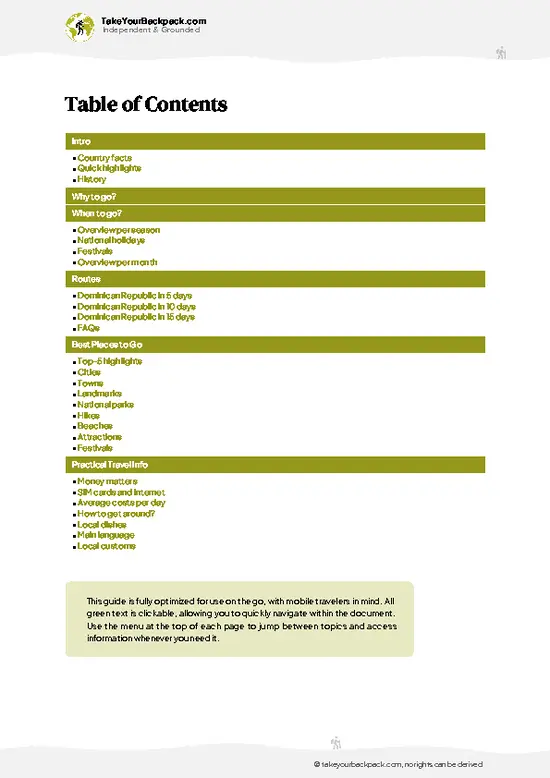
example page 2 from our offline Travel Guide for Dominican Republic
example page 3 from our offline Travel Guide for Dominican Republic
example page 4 from our offline Travel Guide for Dominican Republic
example page 5 from our offline Travel Guide for Dominican Republic
example page 6 from our offline Travel Guide for Dominican Republic
example page 7 from our offline Travel Guide for Dominican Republic
The digital guide (431 pages) contains:
119 highlights, ranked by travel appeal
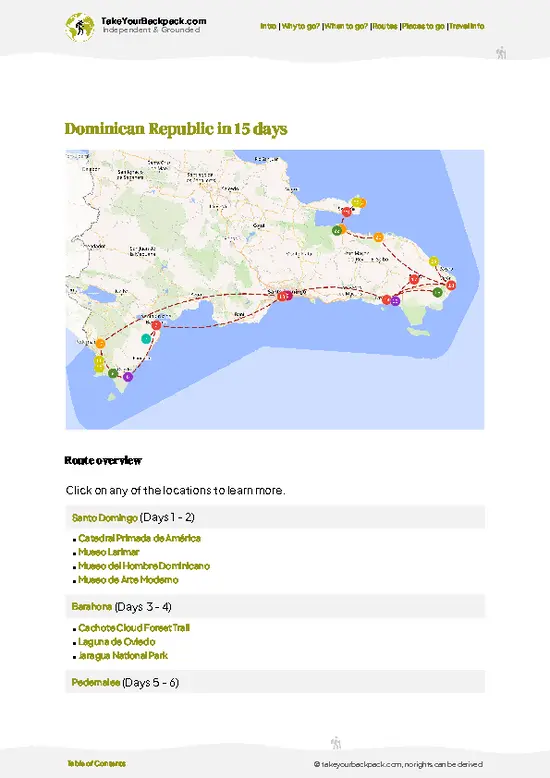
Optimized 5, 10 & 15-day travel routes
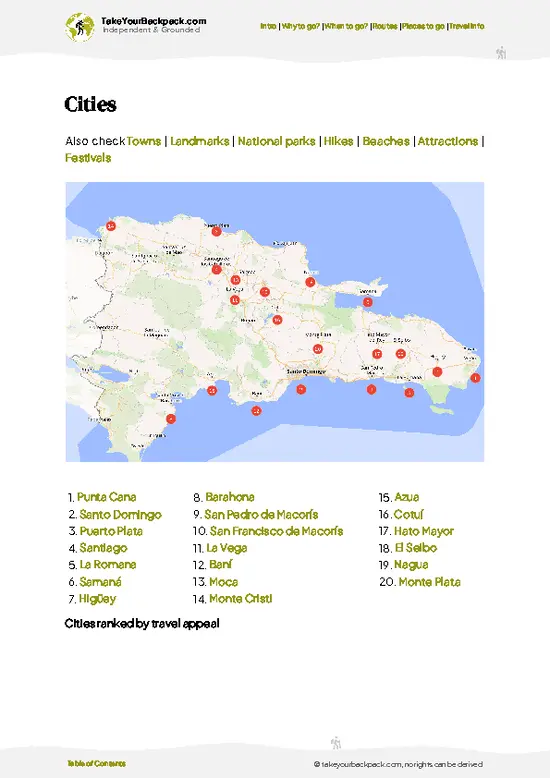
Cities, national parks, landmarks, beaches
How to get around
Offline-friendly for travel without Wi-Fi
👉 Click to see all 30+ guide features

📅 Plan smarter in minutes, not weeks
Month by month travel advice
Festivals & national holidays
Budget expectations

🗺️ Go to the right places, skip the overrated ones
Honest pros & cons of destinations
Top hikes, parks & viewpoints
Lesser-known places most travelers miss
Clear “worth it vs skip it” guidance

🛏️ Travel smoothly without rookie mistakes
Best areas to stay
Transport systems explained simply
Common scams & safety advice
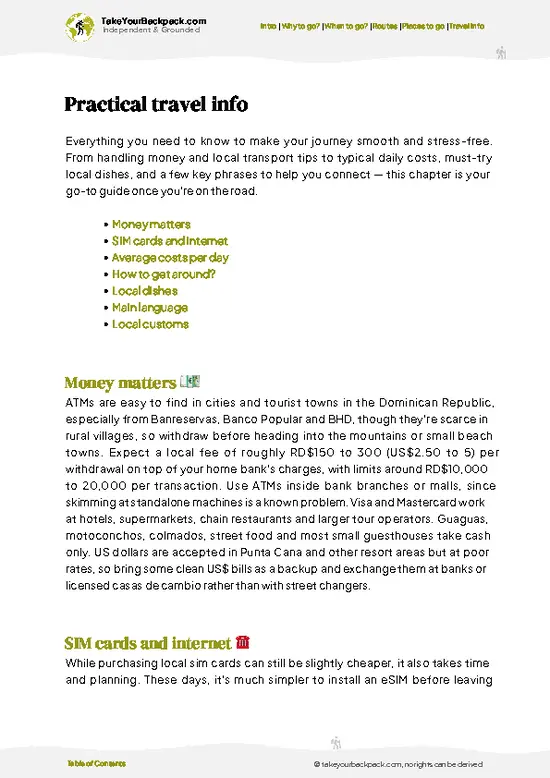
SIM cards, money & practical tips

🌍 Understand the country, not just visit it
Culture & traditions
52 Essential phrases & customs
Festivals worth planning around
Traveler-friendly historical context
Insights that make places more meaningful

📱 Built for real travel conditions
Fully downloadable PDF
Works completely offline
Optimized for phone use
Useful in remote areas & buses
Everything in one place
Save weeks of stressful planning
Get instant access to your full guide. 30‑day money-back guarantee.


By proceeding you agree to our terms.
Sent to your inbox immediately after payment • 100% Secure Checkout
Best Backpacking Travel Advisor 2025 tourism awardBest Backpacking
Travel Advisor
2025
What others say about Take Your Backpack Guides:
⭐⭐⭐⭐⭐
Fantastic, amazing amount of information!
⭐⭐⭐⭐⭐
My goodness this is amazing, it's what I've been looking for hats off too you!
⭐⭐⭐⭐⭐
I think this is absolutely BRILLIANT
⭐⭐⭐⭐
Very complete and informative. It's still missing places, but I gotta to commend you
⭐⭐⭐⭐⭐
This is truly amazing, thank you, can't wait to explore it with my kids!
⭐⭐⭐⭐⭐
Awesome resource, thank you!
⭐⭐⭐⭐⭐
This is amazing! Can't wait to explore the ones I haven't seen
⭐⭐⭐⭐
I love this! Well done, great idea.
⭐⭐⭐⭐⭐
Thanks for taking the time to make this gem!
⭐⭐⭐⭐⭐
This might be the best website I've ever seen.
⭐⭐⭐⭐⭐
Congratulations, and thank you so much for your work; it's incredibly valuable.
⭐⭐⭐⭐
In all seriousness I think you did a great job pointing out the important spots
⭐⭐⭐⭐⭐
10/10 very good
⭐⭐⭐⭐⭐
As someone who's only just starting to visit regularly this is awesome, thank you.
⭐⭐⭐⭐
Thank you very much! I'm going to visit my dad, it's going to be very useful!
⭐⭐⭐⭐⭐
This is really cool! We'll be travelling for the first time and this definitely come in handy.
⭐⭐⭐⭐⭐
You are now our minister of culture, congratulations 👨‍💼
⭐⭐⭐⭐⭐
Just wanted to tell you that this is a pearl! Going to follow your recommendations.
⭐⭐⭐⭐⭐
This is so cool. I'll definitely be using the resource for my travels soon.
⭐⭐⭐⭐⭐
This is very impressive! Good work.
⭐⭐⭐⭐⭐
This is an amazing and informative site. Very well done!

🛏️ Where to stay?Best areas to stay in Dominican Republic

In Santiago, Dominican Republic, the backpacker sweet spot is the area around Centro Histórico and the adjacent Ensanche Libertad. These neighborhoods strike a smart balance between safety, social buzz, and budget-friendly options. Centro Histórico is the city’s pulse—streets lined with colorful colonial buildings, lively plazas, and a steady flow of locals and travelers mingling. It’s where you’ll find the most hostels catering to solo backpackers, making it easy to connect without sacrificing security. The vibe here is casual but energized, with street vendors, cafes, and music spilling into … read more 👉
In Santiago, Dominican Republic, the backpacker sweet spot is the area around Centro Histórico and the adjacent Ensanche Libertad. These neighborhoods strike a smart balance between safety, social buzz, and budget-friendly options. Centro Histórico is the city’s pulse—streets lined with colorful colonial buildings, lively plazas, and a steady flow of locals and travelers mingling. It’s where you’ll find the most hostels catering to solo backpackers, making it easy to connect without sacrificing security. The vibe here is casual but energized, with street vendors, cafes, and music spilling into the sidewalks.

Just a short walk away, Ensanche Libertad offers a slightly quieter, more residential feel but still keeps you close to the action. It’s a practical choice for those who want to escape the touristy hustle without losing access to affordable eateries and public transport. Compared to other parts of Santiago, like the more upscale or industrial zones, these two neighborhoods provide a clear advantage: you’re not paying for unnecessary luxury, but you’re also not stuck in a sketchy or isolated spot. The trade-off here is minimal—comfort and safety meet affordability and social opportunities, making it a winning base for backpackers who want to experience Santiago’s authentic rhythm without overextending their budget or risking their peace of mind.

🚌 Getting aroundHow to get from A to B

Santiago in the Dominican Republic moves to a rhythm that’s part improvisation, part stubborn routine. It’s not a city where you’ll find neat timetables posted on every corner or buses that glide in like clockwork. Instead, expect a pulse driven by local intuition—drivers weaving through traffic with a sixth sense for openings, passengers hopping on and off wherever the mood strikes. This isn’t chaos; it’s a dance of calculated risk and local knowledge. Your challenge is to decode this flow, balancing your time, money, and comfort like a strategist plotting the best move on a board. Mastering Santiago’s transit means knowing when to save pesos by squeezing into a packed guagua or when to spend a bit more for a smoother ride that keeps your schedule intact.


  • Walking: The ultimate zero-cost
read more 👉
Santiago in the Dominican Republic moves to a rhythm that’s part improvisation, part stubborn routine. It’s not a city where you’ll find neat timetables posted on every corner or buses that glide in like clockwork. Instead, expect a pulse driven by local intuition—drivers weaving through traffic with a sixth sense for openings, passengers hopping on and off wherever the mood strikes. This isn’t chaos; it’s a dance of calculated risk and local knowledge. Your challenge is to decode this flow, balancing your time, money, and comfort like a strategist plotting the best move on a board. Mastering Santiago’s transit means knowing when to save pesos by squeezing into a packed guagua or when to spend a bit more for a smoother ride that keeps your schedule intact.


  • Walking: The ultimate zero-cost option. Santiago’s central neighborhoods are compact enough to explore on foot, especially the Colonial Zone and downtown. Walking gives you full control over your time and pace, but it’s slower and can be sweaty under the Caribbean sun. Ideal for short hops and soaking in street life without spending a peso.


  • Guagua (Local Bus): The budget traveler’s staple. Guaguas run roughly from 5:00 AM to 9:00 PM, with fares around 20-30 DOP (less than a dollar). They’re slow and often packed, but unbeatable for cost efficiency. Comfort is minimal—expect hard seats and no air conditioning—but the frequent stops mean you can hop off close to your destination, saving time on last-mile travel.


  • Motoconcho (Motorcycle Taxi): Fast and flexible, motoconchos dart through traffic like nimble chess pieces. They operate 24/7, with fares typically between 50-100 DOP depending on distance. They’re a great middle ground if you’re short on time but want to keep costs low. Comfort is basic and safety varies, so buckle up mentally and physically.


  • Taxi: Metered taxis are available but often negotiate fares upfront. Expect to pay 200-400 DOP for typical city rides. They offer a comfortable, air-conditioned environment and direct routes, saving you time and hassle. The trade-off is clear: more money for more comfort and speed, especially useful if you’re traveling with luggage or during off-hours.


  • Ride-Hailing Apps (Uber, Didi): These services bring predictability to Santiago’s otherwise fluid transit scene. Prices hover slightly above taxis but offer upfront fare estimates and cashless payments. Availability can fluctuate, especially outside peak hours. They strike a balance between comfort, speed, and cost, ideal for travelers who want to avoid bargaining and uncertainty.

👛 Costs (as of 9 August 2025)Money, prices, and spending tips

Backpacking in Santiago, Dominican Republic, offers a clear trade-off between cost and comfort, with prices that reflect its status as a less tourist-heavy city compared to the capital or beach resorts. Here’s the breakdown of what you’re likely to spend daily, based on recent estimates:
  • Dorm Accommodation (High Season): Expect to pay around $10 to $15 per night. High season pushes prices up slightly due to demand, but dorms remain basic and functional, often with shared bathrooms and minimal extras.
  • Dorm Accommodation (Off-Season): Prices drop to about $7 to $10 per night. Off-season means fewer tourists, so you can snag a bed in a clean, simple hostel dorm for less, though options might be more limited.
  • Meals: Budget around $5 to $10 per day if you stick to local eateries and street food.
read more 👉
Backpacking in Santiago, Dominican Republic, offers a clear trade-off between cost and comfort, with prices that reflect its status as a less tourist-heavy city compared to the capital or beach resorts. Here’s the breakdown of what you’re likely to spend daily, based on recent estimates:
  • Dorm Accommodation (High Season): Expect to pay around $10 to $15 per night. High season pushes prices up slightly due to demand, but dorms remain basic and functional, often with shared bathrooms and minimal extras.
  • Dorm Accommodation (Off-Season): Prices drop to about $7 to $10 per night. Off-season means fewer tourists, so you can snag a bed in a clean, simple hostel dorm for less, though options might be more limited.
  • Meals: Budget around $5 to $10 per day if you stick to local eateries and street food. Dominican staples like mangu, rice, beans, and grilled meats are filling and cheap. Avoid touristy spots if you want to keep costs down.
  • Local Transport: Getting around Santiago by local motoconcho (motorcycle taxis) or guaguas (shared minibuses) costs roughly $0.50 to $1 per ride. It’s cheap but can be chaotic and less comfortable.
  • City Transport Pass: Santiago doesn’t have a formal city transport pass system like larger metros. Budget travelers rely on individual rides, so factor in daily transport costs rather than a pass.
  • Basic Activities/Entry Fees: Most cultural sites and museums charge between $2 and $5. Nature spots or guided tours can run higher, around $10 to $20, but many public parks and plazas are free.
  • Miscellaneous Expenses: Include about $2 to $5 for essentials like bottled water, snacks, or occasional small purchases. Internet cafes or SIM cards for data are also inexpensive, usually under $5 for a decent package.

In total, you’re looking at a daily budget ranging from roughly $25 on the leanest days in off-season dorms and street food, up to about $50 if you opt for slightly more comfort or add a few paid activities. This range lets you decide how much you want to invest in comfort versus stretching your dollar, making Santiago a flexible destination for backpackers who want to balance cost with experience.


source: godominicanrepublic.com
⚠️ Prices can change and everyone travels differently, so take this as a rough guide. Hope it helps you plan your adventure!

🚌 Day tripsExploring the surroundings

Santiago, Dominican Republic, is a strategic launchpad for day trips that blend adventure with cultural immersion. Here’s how to make the most of your time, money, and comfort while exploring the surrounding treasures.

Cibao Valley
Just a short bus ride from Santiago, the Cibao Valley offers a lush landscape dotted with coffee and cacao plantations. Spend the day hiking through verdant hills, tasting fresh coffee, and learning about the local agricultural practices. The journey takes about an hour, and you can expect to spend around $10 on transport and snacks. The best time to visit is during the dry season, from December to April. A common mistake? Skipping the local guides who can enrich your experience with stories and insights.


Jarabacoa
Known as the “City of Everlasting Spring, … read more 👉
Santiago, Dominican Republic, is a strategic launchpad for day trips that blend adventure with cultural immersion. Here’s how to make the most of your time, money, and comfort while exploring the surrounding treasures.

Cibao Valley
Just a short bus ride from Santiago, the Cibao Valley offers a lush landscape dotted with coffee and cacao plantations. Spend the day hiking through verdant hills, tasting fresh coffee, and learning about the local agricultural practices. The journey takes about an hour, and you can expect to spend around $10 on transport and snacks. The best time to visit is during the dry season, from December to April. A common mistake? Skipping the local guides who can enrich your experience with stories and insights.


Jarabacoa
Known as the “City of Everlasting Spring,” Jarabacoa is a paradise for outdoor enthusiasts. It’s about a 45-minute drive from Santiago, making it perfect for a day of hiking, river rafting, or simply soaking in the stunning waterfalls. Budget around $15 for transport and a meal. The ideal time to go is early morning to beat the crowds and enjoy cooler temperatures. Many first-timers overlook the local eateries; don’t miss the chance to try the sancocho, a hearty stew that hits the spot after a day of adventure.
👉 Explore Jarabacoa

La Vega
La Vega, just a 30-minute bus ride away, is rich in history and culture. Visit the historic Catedral de La Inmaculada Concepción and explore the vibrant local markets. You can do this trip for about $5, including transport and a snack. The best time to visit is during the Carnival season in February, when the streets come alive with colorful parades. A common pitfall is sticking to the main attractions; take time to wander the backstreets for a more authentic experience.
👉 Explore La Vega

Puerto Plata
If you’re craving a beach day, Puerto Plata is your go-to, about an hour and a half from Santiago. Spend your day lounging on the golden sands or exploring the historic Fort San Felipe. Expect to spend around $20 for transport and a beachside meal. The summer months are bustling, but visiting in the shoulder season can offer a more relaxed vibe. Many backpackers miss the cable car ride up to Mount Isabel de Torres; don’t skip this for panoramic views.
👉 Explore Puerto Plata

These trips not only enhance your Santiago experience but also allow you to balance time, money, and comfort effectively. Choose wisely, and you’ll leave with memories that last a lifetime.
Want to know what more Dominican Republic offers?
The Dominican Republic Travel Guide describes 119 highlights, from cities to national parks, from beaches to hikes

Get the Travel Guide -

🍲 FoodEating & Drinking in Santiago

In Santiago, Dominican Republic, food and drink are not just sustenance; they’re a vibrant part of the culture. You can’t miss trying sancocho, a hearty stew packed with meats and root vegetables, perfect for sharing after a long day of exploring. Pair it with a side of mangú, mashed plantains that are creamy and comforting.

Street food is where the magic happens. Vendors line the streets with sizzling empanadas and yaroas, a local favorite of fries topped with cheese, meat, and sauce. The aroma wafts through the air, drawing you in. Markets buzz with life, offering fresh fruits like soursop and passion fruit—grab one for a refreshing snack.

When it comes to drinks, don’t overlook the local presidente beer or a glass of mamajuana, a unique concoction of rum, red wine, and herbs that’s said … read more 👉
In Santiago, Dominican Republic, food and drink are not just sustenance; they’re a vibrant part of the culture. You can’t miss trying sancocho, a hearty stew packed with meats and root vegetables, perfect for sharing after a long day of exploring. Pair it with a side of mangú, mashed plantains that are creamy and comforting.

Street food is where the magic happens. Vendors line the streets with sizzling empanadas and yaroas, a local favorite of fries topped with cheese, meat, and sauce. The aroma wafts through the air, drawing you in. Markets buzz with life, offering fresh fruits like soursop and passion fruit—grab one for a refreshing snack.

When it comes to drinks, don’t overlook the local presidente beer or a glass of mamajuana, a unique concoction of rum, red wine, and herbs that’s said to have medicinal properties. Etiquette here is relaxed; sharing food and drinks is common, so don’t hesitate to join in on the communal vibe.

Santiago’s culinary scene is a dance of flavors, where every bite tells a story. Embrace the local customs, and you’ll find that the best experiences often come from the simplest meals shared with new friends.

🛡️ SafetyStaying Safe: What Travelers Should Know

Santiago, Dominican Republic, is generally safe, but like any city, it has its nuances. Stay aware in crowded areas like Mercado Modelo, where pickpockets might lurk. Keep your belongings close and avoid flashy displays of wealth.

If you’re traveling solo, especially at night, stick to well-lit streets and avoid empty alleys. Taxis are reliable, but use reputable services or apps to avoid misunderstandings.

Common scams include overly friendly locals who may offer unsolicited help, often with an expectation of payment. Politely decline and keep moving. Street vendors can be persistent, but a firm “no, gracias” usually does the trick.

Overall, carry yourself with confidence. Trust your instincts, and don’t hesitate to ask locals for advice. They can be a great resource for navigating the city’s rhythm.

Other Dominican cities near Santiago

Explore more nearby:

  • Moca—coffee farms, tree-lined avenues, local bakeries| 20 km away
  • La Vega—carnival traditions, fertile plains, cathedral| 33 km away
  • Puerto Plata—Victorian architecture, cable car, seaside promenade| 36 km away

💡 Not sure where to go next?
Create a personalized itinerary for Dominican Republic including Santiago and the places that fit your trip.

Generate my itinerary

👉 Discover all cities

Or checkout all Dominican Republic has to offer (think cities, towns, villages, national parks, hikes, beaches, festivals)
Country photo of Dominican Republic

We 💚 feedbackKey takeaways before you go

Santiago has a pulse that’s hard to ignore. The streets hum with music, and the local food is a fiesta for your taste buds. Don’t miss the Mercado Modelo; it’s chaotic but bursting with authentic Dominican life. The best surprise? The warmth of the people—everyone’s eager to share a story or a smile. Just a heads-up: the traffic can be wild, so plan your outings wisely. Embrace the chaos, and you’ll find the heart of the city.

✍️ Help improve this page!
The information on this page is based on in-depth research, insights shared by experienced travelers, and feedback from the local travel community in Dominican Republic. While every effort is made to keep the information accurate and current, conditions can change — so if you spot anything incorrect or outdated, please get in touch.


🙋‍♂️ Give feedback

👋 Meet the founderWho’s Behind Take Your Backpack?

Johan, backpacker and founder of TakeYourBackpackHi, I’m Johan (Netherlands 🇳🇱), the creator of TakeYourBackpack. Over the past decade, I’ve backpacked through 80+ countries across six continents, gaining extensive experience with independent travel, long-term trips, and overland routes.

This site is built on a combination of firsthand travel experience and carefully curated insights from other backpackers. Many guides are based on places I’ve personally visited, while others bring together tips, observations, and practical advice shared by trusted travelers I’ve met along the way.

The goal is to provide realistic, experience-driven guidance — not generic itineraries — so you can explore destinations with better context, clearer expectations, and more confidence.

Get full country guide •
Instant download • 119 highlights • Full Offline guide